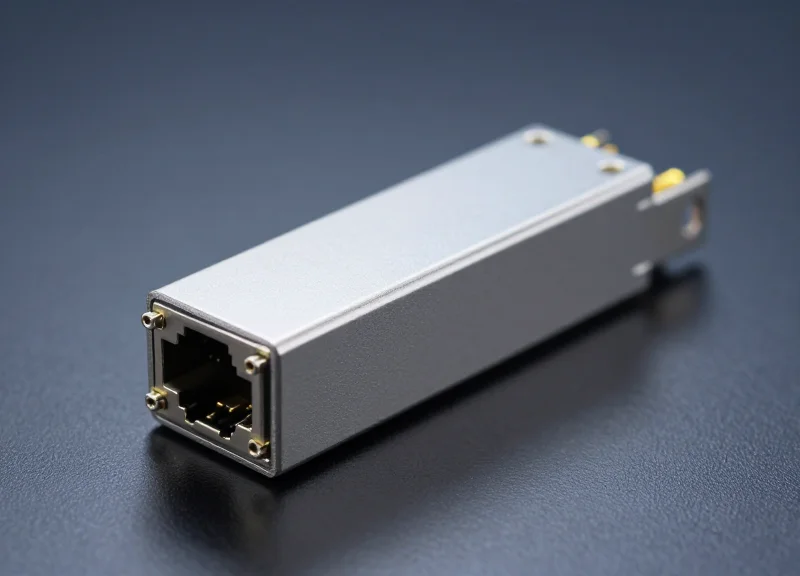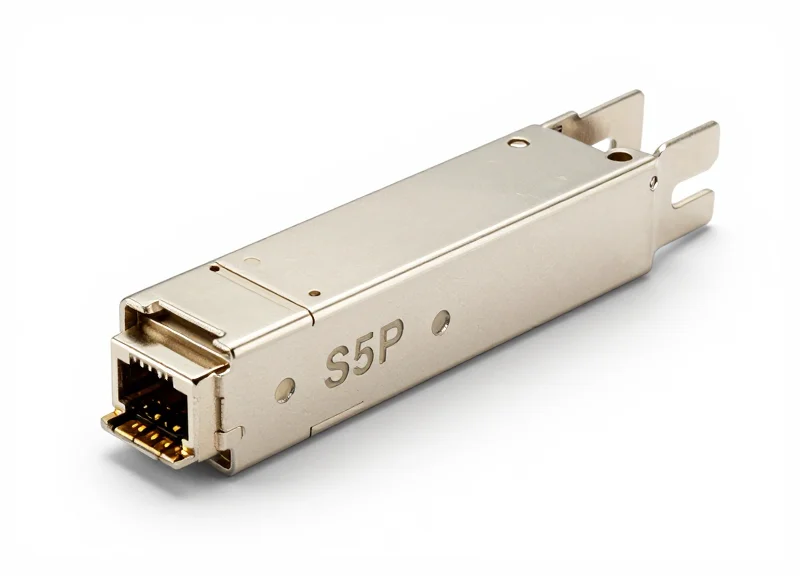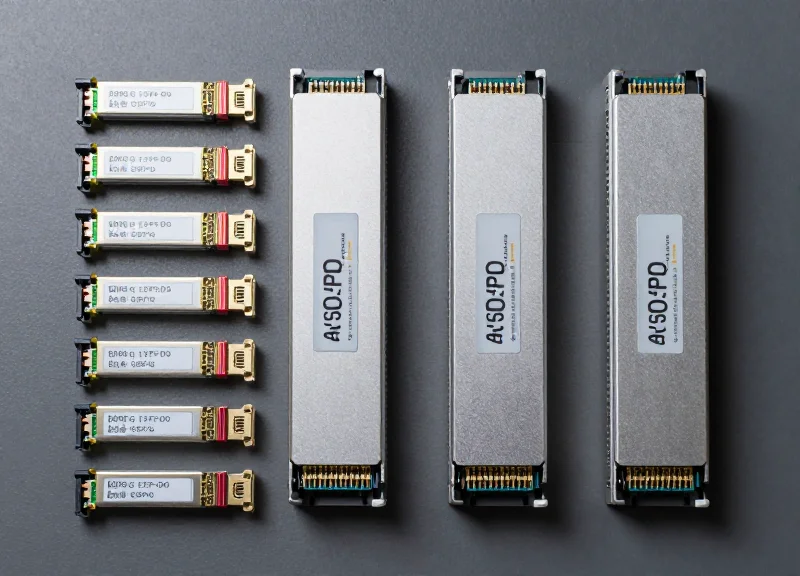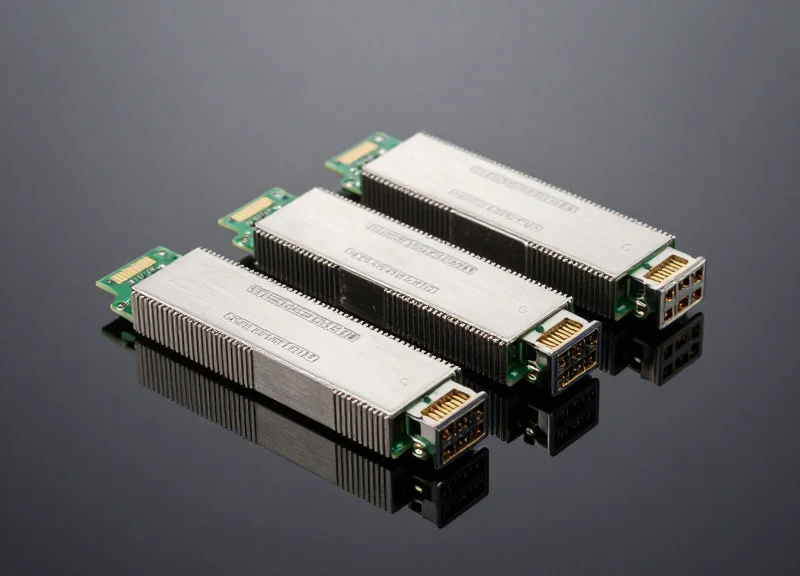
As data centers face unprecedented traffic growth, the 100G QSFP28 SR4 remains the gold standard for high-density, short-reach connectivity. This article explores how IT leaders can optimize their infrastructure spend through wholesale sourcing and tailored OEM/ODM solutions while maintaining peak network integrity.
The Strategic Role of 100G QSFP28 SR4 in Modern Networks

The Strategic Role of 100G QSFP28 SR4 in Modern Networks
In the current landscape of hyper-scale data centers and enterprise private clouds, the 100G QSFP28 SR4 optical transceiver has emerged as the industry standard for short-reach high-speed connectivity. By leveraging four lanes of 25Gbps over multimode fiber, the SR4 form factor provides an optimal balance of port density, power efficiency, and low latency that is essential for leaf-spine architectures. As organizations move away from legacy 10G and 40G infrastructure, the SR4 remains the most commercially viable path for 100G deployment over distances up to 100 meters, making it the primary choice for intra-rack and inter-rack connections.
Key Advantages of the SR4 Form Factor
The dominance of the QSFP28 SR4 variant is not incidental; it is driven by several technical and economic factors that favor large-scale deployment in modern server rooms. Its use of MPO-12 connectors simplifies cabling management, while its low power consumption—typically under 3.5W—reduces the thermal overhead on high-density switches. For network architects, the SR4 offers a versatile solution that supports both 100G-to-100G links and breakout configurations, allowing a single 100G port to connect to four individual 25G servers.
| Feature | QSFP28 SR4 | QSFP28 LR4 | QSFP28 PSM4 |
|---|---|---|---|
| Media Type | Multimode (MMF) | Singlemode (SMF) | Singlemode (SMF) |
| Max Distance | 100m (OM4) | 10km | 500m |
| Connector | MPO/MTP-12 | LC Duplex | MPO/MTP-12 |
| Typical Cost | Lowest | Highest | Moderate |
Why Wholesale Procurement is Essential in 2026
As network demand scales, the unit cost of optical transceivers becomes a significant portion of the total cost of ownership (TCO) for data center infrastructure. In 2026, purchasing 100G QSFP28 SR4 modules via wholesale channels and custom quotes allows enterprises to mitigate supply chain volatility while securing aggressive bulk pricing. Volume purchasing not only ensures hardware consistency across the fabric but also enables better long-term planning for spare parts inventory and phased network upgrades.
- Is the QSFP28 SR4 compatible with OM3 fiber?
Yes, but the reach is limited. While SR4 can reach 100 meters on OM4 multimode fiber, it is typically restricted to 70 meters when using legacy OM3 cabling. - Does SR4 support breakout mode?
Absolutely. One of the primary uses of the SR4 module is to break out a 100G port into four 25G channels using an MPO to 4xLC harness cable, maximizing port utility. - How does SR4 compare to the newer SR1.2 standards?
SR4 uses 4 parallel fiber pairs (8 fibers total), whereas newer standards like SR1.2 utilize 2-wavelength bidirectional tech. SR4 remains more widely adopted and cost-effective for 100G wholesale markets due to its established manufacturing ecosystem.
Key Technical Specifications and Performance Benchmarks
The Engineering Foundation: 850nm VCSEL and 100G Throughput
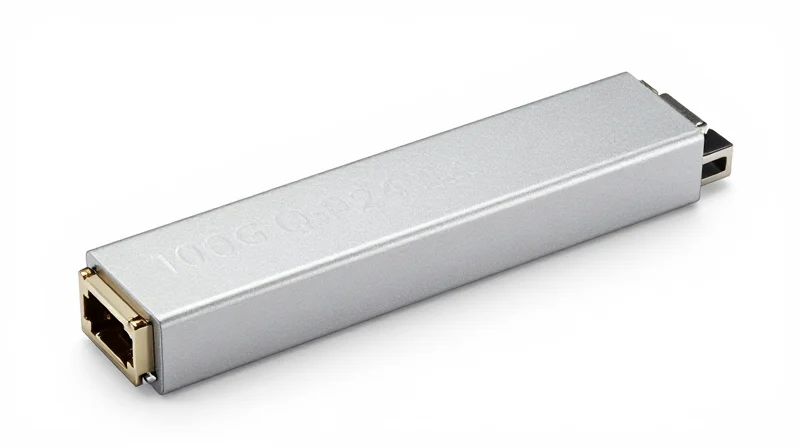
The 100G QSFP28 SR4 transceiver is engineered for high-density, short-reach applications, utilizing four independent transmit and receive channels. Each channel operates at a signaling rate of 25.78 Gbps, aggregating to a total bandwidth of 103.1 Gbps. By leveraging 850nm Vertical-Cavity Surface-Emitting Laser (VCSEL) technology, these modules achieve an optimal balance between low power consumption—typically under 2.5W—and high-speed data integrity, making them the industry standard for switch-to-switch interconnects in modern leaf-spine architectures.
| Parameter | Specification Detail | Performance Standard |
|---|---|---|
| Form Factor | QSFP28 | SFF-8665 / SFF-8636 Compliant |
| Wavelength | 850nm | Short-wavelength VCSEL Array |
| Interface | MPO-12 (MTP) | Parallel Optics (8/12 Fiber) |
| Max Power Consumption | 2.5W to 3.5W | Energy Efficient Class 4 |
| Reach (OM3 Fiber) | 70 Meters | IEEE 802.3bm BASE-SR4 |
| Reach (OM4 Fiber) | 100 Meters | IEEE 802.3bm BASE-SR4 |
| Reach (OM5 Fiber) | 150 Meters | SWDM Compatible Environments |
Connectivity Standards and Fiber Compatibility
The 100G SR4 module utilizes a male MPO-12 (or MTP) connector with an angled physical contact (APC) or ultra physical contact (UPC) interface, depending on specific network requirements. It uses 8 out of the 12 available fibers: 4 for transmitting (TX) and 4 for receiving (RX). This parallel optics approach allows for 'breakout' configurations, where a single 100G port can be split into four 25G SFP28 SR connections using a breakout cable, providing immense flexibility for legacy hardware integration and tiered bandwidth distribution.
Forward Error Correction (FEC) Requirements
Performance benchmarks for the QSFP28 SR4 are heavily reliant on the implementation of Host-RS-FEC (Reed-Solomon Forward Error Correction). While the raw Bit Error Rate (BER) of the optical link is approximately 5x10^-5, the application of RS-FEC on the host switch improves the effective BER to less than 10^-12. Wholesale buyers must ensure their network operating system (NOS) supports and has FEC enabled to guarantee link stability at the full 100-meter reach on OM4 fiber.
- Can I use LC duplex cables with 100G SR4?
No, the SR4 standard requires parallel fiber via MPO/MTP-12 connectors. For LC duplex 100G short-range applications, you would need a 100G-BiDi or 100G-SWDM4 module instead. - What is the operational temperature range for wholesale modules?
Commercial grade modules typically operate between 0°C to 70°C (32°F to 158°F). For rugged environments, industrial-grade versions supporting -40°C to 85°C are available through custom quotes. - Are these modules hot-swappable?
Yes, all QSFP28 SR4 modules following the MSA (Multi-Source Agreement) are fully hot-pluggable, allowing for maintenance without powering down the host switch.
The Economics of Wholesale: Reducing Total Cost of Ownership (TCO)

The economics of scaling a 100G network architecture rely heavily on the transition from reactive, small-batch purchasing to strategic wholesale procurement. By securing 100G QSFP28 SR4 modules in bulk, enterprises and data center operators can achieve a substantial reduction in Total Cost of Ownership (TCO) through tiered pricing models, consolidated logistics, and standardized hardware lifecycles. This shift not only lowers the immediate per-port investment but also enhances the long-term Return on Investment (ROI) by minimizing the administrative and technical complexities associated with fragmented supply chains.
Cost Breakdown: Wholesale vs. Retail Procurement
When evaluating the financial impact of 100G QSFP28 SR4 deployment, it is essential to look beyond the base unit price. Wholesale purchasing impacts several financial layers including procurement labor, shipping insurance, and sparing strategies.
| Cost Factor | Retail/Ad-hoc Purchase | Wholesale/Bulk Strategy |
|---|---|---|
| Average Unit Cost | Premium/List Price | 20% - 40% Volume Discount |
| Logistics & Freight | High (per shipment) | Low (consolidated bulk freight) |
| Quality Assurance | Variable per batch | Unified batch testing/Compliance |
| Inventory Overhead | Just-in-time (High risk) | Strategic Spares (Low risk) |
Maximizing ROI Through Batch Consistency
A critical, often overlooked technical advantage of wholesale purchasing is batch consistency. Procuring 100G QSFP28 SR4 modules in large quantities ensures that the internal VCSEL (Vertical-Cavity Surface-Emitting Laser) components and chipsets originate from the same manufacturing run. This uniformity reduces the margin of error in link budgets and simplifies the troubleshooting process for network engineers, as the optical characteristics remain consistent across thousands of ports. This technical predictability directly translates to lower OpEx by reducing the time spent on link tuning and maintenance.
Leveraging Custom Quotes for 2026 Deployments
In the current market, 'off-the-shelf' pricing rarely reflects the actual market value for large-scale deployments. Custom quotes allow procurement officers to negotiate terms based on project-specific timelines, long-term support agreements, and multi-year rollout phases. By locking in bulk pricing in 2026, organizations protect themselves against potential semiconductor supply fluctuations and inflationary pressures.
- How do wholesale quotes impact the initial CapEx?
Bulk pricing typically triggers significant volume discounts that can reduce initial capital expenditure by up to 35% compared to standard retail pricing, allowing for more extensive network coverage within the same budget. - Does wholesale procurement simplify warranty and support?
Yes. Wholesale agreements usually include unified warranty terms and dedicated technical support channels, ensuring that any hardware replacements are handled through a single, streamlined process rather than multiple individual claims. - What is the impact of bulk buying on spare parts management?
Wholesale purchasing enables a 'Self-Sparing' strategy where the cost savings from bulk buying allow organizations to keep a local inventory of 5-10% extra modules, virtually eliminating downtime caused by component failure.
OEM vs. ODM: Customizing Hardware for Specialized Infrastructure
OEM vs. ODM: Customizing Hardware for Specialized Infrastructure
Choosing between Original Equipment Manufacturer (OEM) and Original Design Manufacturer (ODM) pathways for 100G QSFP28 SR4 modules allows enterprises to balance off-the-shelf reliability with tailored performance specifications. While OEM focuses on rebranding established, high-quality hardware for seamless integration, ODM provides the architectural flexibility required to modify firmware, heat dissipation profiles, and diagnostic interfaces for unique high-frequency trading or hyperscale workloads.
Comparing OEM and ODM Production Models
| Feature | OEM Model | ODM Model |
|---|---|---|
| Design Ownership | Manufacturer-owned | Collaborative or Client-driven |
| Customization Depth | Surface-level (Labeling, Packaging) | Structural (Firmware, PCB Design) |
| Time-to-Market | Short (Stock available) | Longer (Design & Validation phases) |
| Cost Structure | Higher per-unit, lower NRE | Lower per-unit for high volumes |
For 100G QSFP28 SR4 wholesale buyers, the choice often hinges on 'interoperability requirements.' OEM solutions are typically pre-validated across major switch ecosystems (Cisco, Arista, Juniper), whereas ODM solutions offer the ability to write custom EEPROM data to bypass proprietary vendor locks or to optimize power consumption for dense rack configurations.
Strategic Advantages of Custom Hardware Branding
- Private Labeling and Branding
Wholesale purchasers can apply their own branding to the transceiver pull-tabs and labels, which is essential for VARs (Value Added Resellers) and managed service providers. - Firmware Optimization
Custom coding of the Digital Diagnostics Monitoring (DDM) interface allows for specialized telemetry data collection in proprietary monitoring software. - Hardware Hardening
ODM pathways allow for specialized thermal management solutions for modules operating in non-standard or harsh environmental conditions.
FAQ: Customizing 100G Infrastructure
- Can I request custom EEPROM coding for bulk orders?
Yes, most wholesale suppliers offer custom coding to ensure the QSFP28 SR4 modules are recognized as 'original' by specific switch hardware, avoiding compatibility warnings. - What is the typical MOQ for ODM services?
Original Design Manufacturing usually requires higher Minimum Order Quantities (MOQs), often starting at 500 to 1,000 units, to offset the non-recurring engineering (NRE) costs. - Does customization affect the warranty of 100G SR4 modules?
When purchasing wholesale, the warranty is provided by the manufacturer based on the custom spec. However, third-party firmware modifications done post-purchase may void standard warranties.
Compatibility Assurance and Rigorous Testing Standards

Compatibility assurance for 100G QSFP28 SR4 transceivers is a technical mandate achieved through precise EEPROM (Electrically Erasable Programmable Read-Only Memory) coding and real-world hardware verification. By replicating the specific vendor-locked signatures of leading OEMs such as Cisco, Juniper, and Arista, our wholesale modules eliminate 'unsupported transceiver' errors, ensuring seamless plug-and-play performance in mission-critical environments without compromising system stability.
Precision EEPROM Coding for Multi-Vendor Ecosystems
The primary barrier to third-party adoption is often the vendor's proprietary software lock. Our engineering process involves a deep-layer analysis of the SFF-8636 management interface. We customize the internal register data, including the Vendor Name, OUI, Part Number, and Serial Number, to match the host switch's expected parameters. This level of customization ensures that features like Digital Diagnostic Monitoring (DDM) provide accurate, real-time data to the Network Operating System (NOS).
Testing Protocols for Data Center Integrity
Every batch of wholesale 100G QSFP28 SR4 modules undergoes a multi-stage testing circuit. Beyond simple link tests, we utilize high-end traffic generators and protocol analyzers to simulate maximum load conditions, ensuring that the transceivers maintain performance under thermal stress and high-density traffic.
| Test Parameter | Technical Objective | Acceptance Standard |
|---|---|---|
| EEPROM Content Check | Verify vendor-specific code signatures | 100% Compatibility with Target Host |
| Bit Error Rate (BER) | Measure signal integrity under load | Less than 1E-12 (Post-FEC) |
| Eye Pattern Analysis | Assess optical waveform quality | Compliance with IEEE 802.3bm |
| Interoperability Test | Verify link-up on physical hardware | Cisco, Arista, Juniper, Dell, Mellanox |
Compatibility & Compliance FAQ
- Will using these modules void my switch warranty?
No. In most jurisdictions, including the US under the Magnuson-Moss Warranty Act, hardware manufacturers cannot void a warranty simply for using third-party peripherals unless the peripheral itself causes direct damage. - Can you provide custom coding for rare or legacy platforms?
Yes. Our lab maintains an extensive library of hardware signatures. We can provide custom coding for specific platforms like Brocade, Ciena, or older Extreme Networks switches upon request during the wholesale quoting process. - How is DDM/DOM functionality verified?
We test the Digital Diagnostic Monitoring interface to ensure accurate reporting of temperature, voltage, laser bias current, and optical power. This allows your monitoring software to trigger alerts before a hardware failure occurs.
Supply Chain Resilience and Global Logistics in 2026
Supply Chain Resilience and Global Logistics in 2026
In 2026, the procurement of 100G QSFP28 SR4 modules has transitioned from a period of scarcity-driven panic to one of strategic risk management. As enterprise and hyperscale data centers continue to expand, the resilience of the supply chain is no longer measured solely by inventory volume, but by the geographical diversification of manufacturing and the transparency of the logistics pipeline. For wholesale buyers, selecting a partner who has navigated the post-pandemic semiconductor landscape is critical to ensuring that multi-million dollar infrastructure projects remain on schedule and within budget.
The 2026 Semiconductor Landscape: Beyond the Shortage
While the extreme component shortages of previous years have largely normalized, the 2026 market remains sensitive to geopolitical shifts and localized raw material constraints. High-speed optical transceivers rely on critical sub-components such as Vertical-Cavity Surface-Emitting Lasers (VCSEL) and specialized Integrated Circuits (ICs). Leading manufacturers have adapted by implementing 'Just-in-Case' inventory models for these specific long-lead items, ensuring that bulk orders for 100G QSFP28 SR4 modules can be fulfilled even if primary silicon foundries experience temporary disruptions.
| Logistics Factor | 2023 Reality | 2026 Status | Strategic Benefit for Bulk Buyers |
|---|---|---|---|
| Average Lead Times | 8-12 Weeks | 2-4 Weeks | Faster project turnaround and reduced capital lock-up. |
| Shipping Reliability | High Volatility | Stabilized Hubs | Predictable arrival dates for multi-site deployments. |
| Component Availability | Inconsistent | Strategic Surplus | Price stability for large-volume custom quotes. |
| Logistics Costing | Peak Surcharges | Normalized Rates | Improved ROI on international wholesale shipments. |
Mitigating Logistical Risks in Bulk Procurement
- How does regional warehousing affect 100G wholesale timelines?
By utilizing regional distribution hubs in key markets, manufacturers can offer 'Next Day' or 'Same Week' shipping on standard 100G QSFP28 SR4 modules, drastically reducing the traditional trans-pacific transit times. - What measures ensure stock stability during geopolitical shifts?
Resilient suppliers utilize multi-sourcing strategies for PCAs and optical sub-assemblies, ensuring that trade restrictions or regional port closures do not halt the entire production line for 100G optics. - How can custom pricing protect against market volatility?
Fixed-rate wholesale agreements for 2026 allow buyers to lock in prices for 12-month periods, shielding infrastructure budgets from the fluctuations of the semiconductor spot market and global freight indices.
Ultimately, the success of a 100G deployment in 2026 hinges on a manufacturer's ability to provide a visible, end-to-end supply chain. From the initial custom quote to final site delivery, professional-grade logistics management ensures that high-density networking hardware arrives exactly when it is needed, preventing the costly idle time of engineering teams and data center space.
Future-Proofing Your Network: From 100G to 400G and Beyond

The Strategic Path to 400G and Beyond
Purchasing 100G QSFP28 SR4 modules in bulk is more than a solution for current bandwidth needs; it is a strategic bridge to the next generation of high-speed networking. Because the 100G SR4 standard utilizes a 4-lane parallel optic architecture (4x25G), it aligns perfectly with the multi-lane methodologies used in 400G (QSFP-DD) and 800G systems. By standardizing on 100G wholesale today, enterprises can build out high-density MPO/MTP cabling infrastructures that remain relevant as the industry moves toward PAM4 modulation and higher per-lane speeds.
Comparative Evolution of Optical Standards
| Standard | Form Factor | Lane Speed | Modulation | Cabling Support |
|---|---|---|---|---|
| 100G SR4 | QSFP28 | 4 x 25G | NRZ | MPO-12 (8 fibers) |
| 400G SR8 | QSFP-DD | 8 x 50G | PAM4 | MPO-16 / 24 |
| 400G SR4.2 | QSFP-DD | 4 x 100G | PAM4 | MPO-12 (8 fibers) |
| 800G SR8 | OSFP / QSFP-DD | 8 x 100G | PAM4 | MPO-16 / 24 |
Backward Compatibility and Port Density
One of the primary benefits of the QSFP28 form factor is its widespread support in modern 400G switches. Most QSFP-DD ports are backward compatible with QSFP28 modules through hardware adaptation or breakout configurations. This allows network engineers to deploy 400G-capable hardware at the core while continuing to use cost-effective 100G SR4 optics at the access layer. As demand grows, these 100G links can be swapped for 400G modules without replacing the underlying OM3 or OM4 fiber trunking, significantly lowering the total cost of ownership (TCO).
Migration FAQ
- Can I use 100G QSFP28 SR4 in a 400G QSFP-DD port?
Yes, most 400G QSFP-DD ports are designed to be backward compatible with 100G QSFP28 modules, allowing for phased upgrades of network equipment. - Does my current MPO-12 cabling support 400G?
Yes, MPO-12 cabling used for 100G SR4 can support 400G SR4.2 (BD4.2) standards, which use short-wave wavelength division multiplexing to deliver 400G over the same fiber count. - Why should I buy 100G wholesale if 400G is available?
100G SR4 remains the most cost-efficient price-per-bit solution for data center leaf-spine architectures where 400G is not yet required, allowing for better budget allocation toward infrastructure density.
Ultimately, future-proofing your network involves a balance between immediate capacity and long-term modularity. By securing wholesale pricing on 100G QSFP28 SR4 modules in 2026, you ensure a stable, high-performance environment that is ready to adopt the PAM4 modulation and multi-lambda technologies of the future without requiring a complete architectural overhaul.
Why Ubytelink is the Preferred Partner for Optical Solutions
Why Ubytelink is the Preferred Partner for Optical Solutions
Choosing Ubytelink as your wholesale partner for 100G QSFP28 SR4 modules ensures that your network infrastructure is built on a foundation of reliability, cost-efficiency, and technical precision. We bridge the gap between expensive OEM hardware and unverified generic optics by providing carrier-grade components that undergo 100% compatibility testing in our state-of-the-art labs, specifically calibrated for major switch environments including Cisco, Arista, and Juniper.
The Ubytelink Advantage: Engineering Excellence
Unlike standard distributors that move volume without validation, Ubytelink is an engineering-first organization. Every 100G QSFP28 SR4 module we ship is subjected to rigorous real-world traffic testing, ensuring BER (Bit Error Rate) performance that meets or exceeds industry standards. Our custom EEPROM coding capabilities allow us to provide bespoke solutions for complex data center architectures, effectively eliminating the risk of 'unsupported transceiver' errors during deployment.
Wholesale Value Comparison
| Service Feature | Ubytelink Wholesale | Generic Marketplace |
|---|---|---|
| Compatibility Testing | 100% Verified on Target Platforms | Random Batch Sampling |
| Pricing Model | Tiered Bulk & Custom Quotes | Fixed Retail with Limited Margin |
| Technical Support | Dedicated Engineering Access | Basic Customer Service |
| Warranty | Comprehensive Lifetime Warranty | Standard 1-Year Limited |
| Lead Times | Priority Global Logistics (2026) | Subject to Third-Party Brokers |
Frequently Asked Questions
- How does Ubytelink handle custom coding for bulk orders?
We maintain a comprehensive library of vendor-specific code. During the quoting process, you specify your switch hardware, and our engineers pre-program each 100G QSFP28 SR4 module to ensure seamless plug-and-play operation. - What are the typical lead times for 2026 wholesale orders?
Due to our supply chain resilience strategies, we maintain significant local inventory. Standard bulk orders typically ship within 3-5 business days, while large-scale custom production runs are managed via dedicated account timelines. - Do you offer volume-based discounts for recurring projects?
Yes. Our 2026 pricing structure includes aggressive tiered discounts for volume purchasers and long-term supply agreements designed to protect your project budget against market fluctuations. - What happens if a module fails after deployment?
Ubytelink provides an advanced replacement program for wholesale partners. If a technical issue is identified, we ship replacement units immediately to minimize network downtime while we perform root-cause analysis on the original hardware.
Ready to scale your network infrastructure with industry-leading reliability and price-to-performance? Don't settle for off-the-shelf limitations. Contact Ubytelink today for a personalized wholesale quote or to discuss our custom OEM/ODM options designed to meet your specific data center needs.