In the race for AI supremacy, the bottleneck has shifted from raw compute power to the fabric that binds the GPUs. As LLMs scale to trillions of parameters, the interconnect becomes the silent determinant of performance. This article provides a veteran perspective on whether NVIDIA's proprietary H100 interconnect justifies its premium over open standards when considering latency, power, and the bottom line.
The Critical Role of Interconnects in Generative AI

The Shift from Single-Chip Speed to Cluster-Wide Interconnectivity
The paradigm of AI development has moved past the capabilities of any single processor, regardless of its individual clock speed or memory capacity. As Large Language Models (LLMs) scale toward trillions of parameters, they must be partitioned across hundreds or thousands of GPUs using techniques like data, tensor, and pipeline parallelism. In this distributed architecture, the efficiency of the training process is no longer defined by the peak FLOPs of a solitary NVIDIA H100, but by the speed at which these chips synchronize. Without a high-performance interconnect, the raw power of the H100 remains untapped, trapped behind data bottlenecks that cause expensive compute resources to sit idle during gradient synchronization.
| Metric | Traditional Computing Focus | Generative AI Focus |
|---|---|---|
| Primary Unit | Single GPU/CPU | GPU Cluster / Superpod |
| Primary Bottleneck | Local Memory Bandwidth | Inter-node Fabric Bandwidth |
| Scaling Logic | Vertical (Better Chips) | Horizontal (Better Interconnects) |
| Latency Priority | Instruction Latency | Network Tail Latency |
Addressing the Communication Wall in AI Clusters
The 'communication wall' refers to the point where adding more GPUs provides diminishing returns because the time spent moving data exceeds the time spent on computation. NVIDIA H100 systems address this through specialized hardware like NVLink and support for InfiniBand, which provide the high throughput and low-latency Remote Direct Memory Access (RDMA) necessary to bypass the CPU and traditional networking overhead. In the H100 era, the interconnect is not just a peripheral; it is the backbone that determines the scalability of the entire AI infrastructure.
- Why is the interconnect more important than GPU clock speed for LLMs?
Because LLM training is inherently distributed; if GPUs cannot share data instantly across the network, they wait for the slowest link, rendering high local clock speeds irrelevant. - What role does the H100 play in reducing latency?
The H100 utilizes 4th Gen NVLink and specialized NVSwitch hardware to provide up to 900 GB/s of bidirectional bandwidth, significantly reducing synchronization time compared to PCIe-based alternatives. - How does the interconnect affect total cost of ownership (TCO)?
Efficient interconnects maximize GPU utilization; higher utilization means models train faster, reducing the number of compute hours billed and speeding up the time-to-market for AI products.
Technical Deep Dive: NVLink 4.0 and NVSwitch Architecture

The H100's performance is not just a result of its internal compute cores, but rather its ability to operate as part of a giant, unified machine via NVLink 4.0 and NVSwitch technology. By delivering 900 GB/s of bidirectional bandwidth—seven times the throughput of PCIe Gen5—NVLink 4.0 transforms individual GPUs into a cohesive compute fabric capable of handling the multi-trillion parameter models central to modern generative AI.
NVLink 4.0: Breaking the 900 GB/s Barrier
NVLink 4.0 serves as the fourth generation of NVIDIA's high-speed point-to-point interconnect. In the Hopper H100 architecture, each GPU features 18 NVLink 4.0 links. Each link provides 50 GB/s of bandwidth, totaling 900 GB/s. This is a 50% increase over the 600 GB/s found in the previous generation A100 (Ampere). This massive increase in bandwidth is critical for reducing 'tail latency' during the 'All-Reduce' operations common in distributed training, where gradients must be synchronized across thousands of cores simultaneously.
NVSwitch Architecture and Unified Memory
While NVLink provides the 'pipes,' the NVSwitch acts as the 'router.' The third-generation NVSwitch chip, built on the TSMC 4N process, contains 25.1 billion transistors and supports 64 ports of NVLink 4.0. This physical switch allows for a fully connected topology within an HGX H100 board. More importantly, it enables a unified memory space where any GPU can access the HBM3 memory of any other GPU in the fabric at near-local speeds. This effectively treats 8 or even 256 GPUs (in a SuperPOD configuration) as a single, massive GPU with terabytes of high-bandwidth memory.
| Feature | NVLink 4.0 (H100) | NVLink 3.0 (A100) | PCIe Gen5 |
|---|---|---|---|
| Total Bandwidth | 900 GB/s | 600 GB/s | 128 GB/s (x16) |
| Number of Links | 18 | 12 | 1 |
| In-Network Computing | SHARP v3 | SHARP v2 | None |
| Process Node | TSMC 4N | TSMC 7nm | N/A |
Hardware Acceleration: SHARP v3
A key technical advantage of the NVSwitch is the Scalable Hierarchical Aggregation and Reduction Protocol (SHARP) version 3. Unlike traditional networks where the CPU or GPU must compute the aggregation of data, SHARP v3 allows the NVSwitch itself to perform mathematical reductions (like summations or averages) directly in the network fabric. This offloads compute tasks from the GPU, reduces the amount of data traversing the links, and significantly accelerates the synchronization phase of large-scale AI training.
- Why is NVLink faster than PCIe for AI?
PCIe is a general-purpose bus designed for a wide range of peripherals, introducing higher overhead and lower lane density. NVLink is a specialized, low-latency protocol designed specifically for GPU-to-GPU communication, offering significantly higher bandwidth and native support for collective memory operations. - What is the NVLink Switch System?
It is an external rack-level switch that allows NVLink to scale beyond a single 8-GPU server, connecting up to 256 GPUs into a single NVLink fabric for massive scale-out performance. - Does NVLink 4.0 support older GPUs?
No, NVLink 4.0 is specifically designed for the Hopper architecture. While the concepts remain the same, physical and logical differences prevent it from being backward compatible with A100 (Ampere) systems.
Comparing the Challengers: InfiniBand and RoCEv2
Comparing the Challengers: InfiniBand and RoCEv2
The choice between InfiniBand and RoCEv2 (RDMA over Converged Ethernet) defines the efficiency of a GPU cluster. While InfiniBand is an inherently lossless, purpose-built fabric designed for high-performance computing (HPC), RoCEv2 attempts to bring similar Remote Direct Memory Access (RDMA) capabilities to the more ubiquitous Ethernet ecosystem. For NVIDIA H100 environments, InfiniBand remains the gold standard for performance, yet RoCEv2 is rapidly closing the gap for organizations that prioritize cost-effectiveness and backward compatibility.
InfiniBand: The High-Performance Gold Standard
InfiniBand (IB) is unique because it is designed from the ground up as a lossless network. Unlike Ethernet, which relies on complex congestion control mechanisms to handle packet drops, IB uses credit-based flow control at the hardware level. This ensures that buffers never overflow, resulting in exceptionally low jitter and predictable latency. For H100 clusters running large-scale LLM training, where any 'tail latency' in a single node can stall thousands of GPUs, InfiniBand's reliability translates directly into higher hardware utilization and faster training times.
RoCEv2: The Case for Converged Ethernet
RoCEv2 encapsulates RDMA packets within UDP/IP, allowing it to traverse standard Ethernet switches. This is a massive advantage for enterprises with existing 400GbE or 800GbE infrastructure and specialized network engineering teams already familiar with IP routing. However, making Ethernet 'lossless' requires the implementation of Priority Flow Control (PFC) and Explicit Congestion Notification (ECN). While effective, these protocols are notoriously difficult to tune at scale compared to the plug-and-play lossless nature of InfiniBand.
| Feature | InfiniBand (NDR) | RoCEv2 (400G Ethernet) |
|---|---|---|
| Network Philosophy | Credit-based (Inherently Lossless) | PFC/ECN (Configured Lossless) |
| Typical Latency | 0.6 µs - 1.0 µs | 2.0 µs - 5.0 µs |
| CPU Overhead | Ultra-low (Full Offload) | Low (Requires RDMA NICs) |
| Scalability | Extremely High (Tens of thousands) | High (Requires careful tuning) |
| Ecosystem | NVIDIA/Mellanox dominant | Open, multi-vendor support |
Critical Trade-offs for H100 Deployments
- When is InfiniBand necessary?
InfiniBand is the preferred choice for massive clusters (thousands of GPUs) where training efficiency is the primary metric. Its adaptive routing and hardware-based congestion management minimize the 'all-reduce' synchronization bottlenecks common in AI workloads. - Can RoCEv2 match InfiniBand's performance?
In smaller to medium clusters, the performance delta is often negligible if the network is properly tuned. However, RoCEv2 often requires more engineering overhead to prevent 'incast' congestion issues that InfiniBand handles natively. - What are the cost implications?
RoCEv2 typically offers a lower Total Cost of Ownership (TCO) because it utilizes standard Ethernet switches and cables. It also avoids vendor lock-in, allowing for a mix of hardware from Arista, Cisco, or Broadcom alongside NVIDIA GPUs.
Latency Benchmarks: Impact on Synchronous Training

In synchronous distributed training, the performance of the entire cluster is tethered to the slowest communication path. Latency—the time elapsed for a single packet to traverse the network—becomes the primary bottleneck during collective communication phases like All-Reduce and All-to-All. While bandwidth determines how much data can be moved, latency determines how quickly the GPUs can resume computation after a synchronization barrier. NVIDIA's H100 NVLink 4.0 minimizes this 'dead time' by providing sub-microsecond latency, whereas even high-end alternatives like InfiniBand NDR or RoCEv2 introduce microsecond-level overheads that compound across thousands of training iterations.
Comparative Latency Benchmarks
| Interconnect Technology | Typical Latency (Node-to-Node) | Protocol Overhead | Congestion Sensitivity |
|---|---|---|---|
| NVLink 4.0 (NVSwitch) | < 1.0 µs | Negligible (Hardware-level) | Low (Fixed-topology) |
| InfiniBand NDR (400G) | 1.0 µs - 1.5 µs | Low (RDMA offload) | Medium (Adaptive routing) |
| RoCEv2 (400G Ethernet) | 2.0 µs - 5.0 µs | Moderate (UDP/IP Stack) | High (PFC requirement) |
Impact on Collective Communication: All-Reduce and All-to-All
Distributed deep learning relies on specific communication patterns to keep weights synchronized across GPUs. All-Reduce is the standard for Data Parallelism, where gradients are averaged across all nodes. In this scenario, high latency leads to 'jitter,' where minor fluctuations in network speed cause GPUs to idle. All-to-All is common in Mixture-of-Experts (MoE) models, requiring massive point-to-point exchanges. Because MoE models involve smaller, more frequent messages, they are disproportionately sensitive to latency. NVLink’s direct memory access (DMA) capabilities allow it to bypass the CPU and OS kernel entirely, ensuring that these small-packet exchanges do not stall the H100's Tensor Cores.
The Scalability Penalty of High Latency
As clusters scale from 8 GPUs to 8,000, the 'tail latency' (the slowest 1% of packets) becomes more significant than average latency. On Ethernet-based RoCEv2, packet loss and subsequent retries can spike latency to milliseconds, effectively pausing the entire training run. In contrast, the credit-based flow control of InfiniBand and the dedicated lanes of NVLink ensure predictable performance. For H100 deployments, choosing an interconnect with higher latency essentially reduces the effective TFLOPS of the hardware, as the GPUs spend a higher percentage of their duty cycle waiting for the network fabric to clear.
Latency FAQ for Distributed Training
- Why does latency matter more than bandwidth in small-batch training?
In small-batch training, communication happens more frequently but with less data per step. This makes the fixed overhead (latency) of starting a transfer a larger percentage of the total time than the time spent moving the data itself. - Can software optimizations like NCCL hide latency?
The NVIDIA Collective Communications Library (NCCL) uses techniques like pipelining to overlap compute and communication, but it cannot eliminate the physical floor set by the network hardware. High latency eventually breaks the pipeline efficiency. - Is RoCEv2 latency acceptable for H100 clusters?
It is acceptable for smaller clusters or less communication-intensive tasks, but at scale, the lack of hardware-native congestion control in standard Ethernet can lead to significant performance degradation compared to InfiniBand.
Power Consumption: The Energy Cost of High Bandwidth
The energy cost of high bandwidth is a critical constraint in H100 deployments, where the interconnect fabric can account for 10% to 20% of the total system power consumption. While the GPU silicon itself consumes the majority of the 700W TDP, moving data at 900 GB/s via NVLink or 400-800 Gbps via InfiniBand requires substantial electrical and optical power, making the 'picojoules per bit' (pJ/bit) metric just as vital as raw throughput for sustainable data center scaling.
The Efficiency Advantage of On-Package Interconnects
NVLink stands out as the most energy-efficient interconnect because it is optimized for short-reach communication. By utilizing high-density, low-voltage signaling directly between GPUs or via an NVSwitch within the same tray, it avoids the massive power overhead required for signal conditioning and retiming necessary in long-reach Ethernet or InfiniBand cables.
| Interconnect Type | Typical Bandwidth | Estimated Energy Efficiency (pJ/bit) | Primary Power Consumer |
|---|---|---|---|
| NVLink (On-Board) | 900 GB/s | ~1 - 2 pJ/bit | NVSwitch Silicon |
| InfiniBand (NDR) | 400 Gbps | ~5 - 10 pJ/bit | Optical Transceivers |
| RoCEv2 (Ethernet) | 400/800 Gbps | ~7 - 12 pJ/bit | Switch Fabric & Optics |
| PCIe Gen5 | 128 GB/s | ~3 - 5 pJ/bit | Root Complex/PHY |
Cooling Demands and Operational Costs
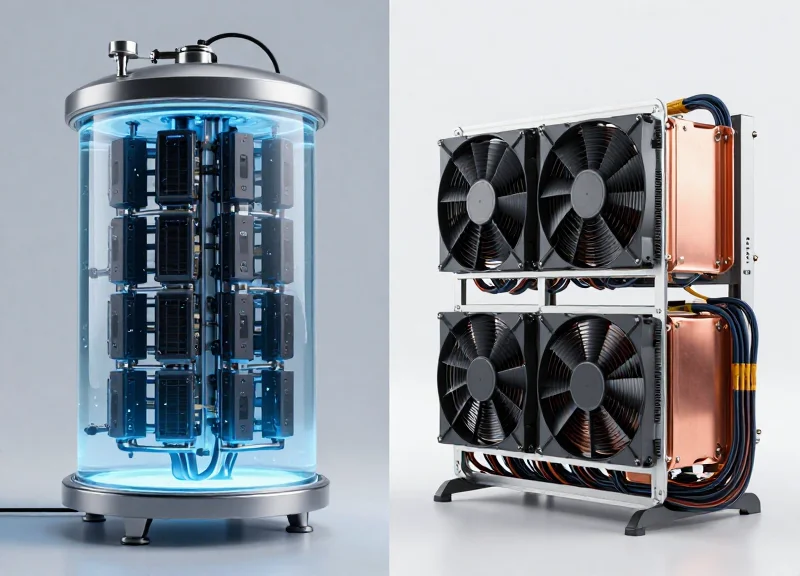
The heat generated by high-speed interconnects—particularly optical transceivers—adds a secondary layer of energy cost: cooling. For every watt consumed by the networking hardware, additional power is required for fans and liquid cooling systems to maintain optimal operating temperatures. In massive H100 clusters, opting for a more energy-efficient interconnect like NVLink for intra-node traffic can significantly lower the facility's Power Usage Effectiveness (PUE) and reduce long-term OpEx.
Key Energy Considerations for Data Center Architects
- How do optical transceivers affect the energy budget?
Optical modules used in InfiniBand and Ethernet are major power draws, often consuming 15-25W per port. As clusters scale, these modules can collectively consume kilowatts of power across the fabric. - Does NVLink scaling increase power exponentially?
No, while total power increases with more links, the efficiency stays relatively stable due to the integrated nature of the NVSwitch, making it more predictable than external networking. - What is the impact of cable length on power?
Active Optical Cables (AOC) and long-reach transceivers require more power to maintain signal integrity over distance compared to Direct Attach Copper (DAC) cables used for short runs.
Total Cost of Ownership (TCO): Beyond the Sticker Price
The Financial Logic of Interconnect Investment
While the initial sticker price of an H100 cluster utilizing NVLink and InfiniBand can be 25% to 40% higher than a comparable Ethernet-based setup, the Total Cost of Ownership (TCO) is often lower for large-scale LLM training. The primary driver of this paradox is GPU utilization; when an interconnect reduces synchronization bottlenecks, it ensures that the most expensive asset—the H100 GPU—spends more time computing and less time waiting for data. In high-performance environments, a 10% gain in communication efficiency can equate to millions of dollars in saved compute time over a three-year lifecycle.
CapEx vs. OpEx: The Premium Performance Tax
Capital expenditure (CapEx) for proprietary interconnects includes specialized NVSwitches, InfiniBand Host Channel Adapters (HCAs), and dedicated cabling. However, operational expenditure (OpEx) is where the performance gap manifests financially. Standard Ethernet deployments often suffer from 'incast' congestion and higher tail latencies, which lead to 'idle cycles.' If a cluster's interconnect causes a 20% drop in scaling efficiency, an organization effectively wastes 20% of its power, cooling, and hardware depreciation costs every hour the cluster runs.
| Cost Metric | NVLink + InfiniBand (Optimized) | RoCEv2 + Ethernet (Value-Oriented) |
|---|---|---|
| Upfront Hardware Cost | High (1.3x - 1.5x) | Standard (1.0x) |
| Scaling Efficiency (at 1k+ GPUs) | 90% - 95% | 70% - 85% |
| Power Efficiency per TeraFLOPS | Higher (Lower Idle Time) | Lower (Higher Idle Time) |
| Time-to-Market (Large Models) | Accelerated | Extended |
| Management Complexity | High (Specialized Skills) | Moderate (Ubiquitous Skills) |
Quantifying the Opportunity Cost
Beyond direct costs, the 'Time-to-Model' represents a critical competitive metric. For enterprises developing generative AI, being first to market with a superior model provides an advantage that outweighs hardware premiums. A faster interconnect allows for more frequent training iterations and hyperparameter tuning within the same calendar window. When factoring in the opportunity cost of delayed deployment, the premium for InfiniBand or NVLink often amortizes within the first 12 to 18 months of operation.
- Is the premium for NVLink always justified?
No. For small-scale clusters (under 32 GPUs) or inference-heavy workloads with low inter-node communication requirements, high-speed Ethernet (RoCEv2) provides a more cost-effective TCO profile. - How does power consumption affect TCO?
Proprietary fabrics are more power-efficient per unit of work. By finishing training tasks faster, the total energy consumed (kilowatt-hours per model) is lower, reducing cooling and utility costs. - What is the impact of technical debt?
Investing in non-standard fabrics may require specialized networking staff, increasing labor OpEx. Conversely, Ethernet leverages existing enterprise networking expertise, potentially lowering headcount costs.
Ecosystem Lock-in vs. Flexibility
The Strategic Choice: Proprietary Performance vs. Open Flexibility
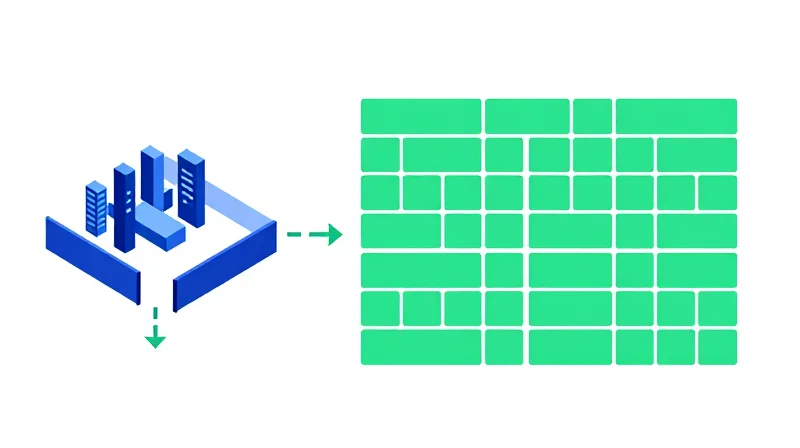
The decision to deploy NVIDIA H100 systems involves a fundamental trade-off between immediate, turnkey performance and long-term architectural sovereignty. While NVIDIA’s integrated stack provides the lowest latency and highest throughput for collective communication patterns today, it creates a 'walled garden' that dictates future hardware procurement and software development cycles. For many enterprises, the risk of vendor lock-in is a secondary concern to the immediate need for AI training speed, yet as clusters scale to tens of thousands of nodes, the lack of interoperability becomes a significant financial and operational bottleneck.
NVIDIA’s Vertical Integration: The Performance Premium
NVIDIA leverages its control over the entire stack—from the GPU silicon and NVLink fabric to the InfiniBand networking and CUDA software—to optimize every micro-interaction within a cluster. This vertical integration eliminates the 'finger-pointing' common in multi-vendor environments and ensures that features like SHARP (Scalable Hierarchical Aggregation and Reduction Protocol) work flawlessly out of the box. However, this synchronization comes at the cost of being unable to integrate specialized third-party accelerators or alternative networking hardware without sacrificing the very performance advantages that justify the H100's price point.
| Feature | NVIDIA NVLink/InfiniBand | Ultra Ethernet (UEC) | Compute Express Link (CXL) |
|---|---|---|---|
| Ecosystem | Proprietary (Closed) | Open Standard | Open Standard |
| Vendor Lock-in | High | Low | Low |
| Maturity | Production Ready | Emerging (v1.0) | Evolving (3.0+) |
| Primary Use Case | GPU-to-GPU Synchronization | Large-scale AI Fabrics | Memory Pooling/Coherency |
| Interoperability | Limited to NVIDIA | Multi-vendor Support | Universal (x86/ARM/GPU) |
The Rise of Open Alternatives: UEC and CXL
To counter the dominance of proprietary fabrics, the industry has rallied around the Ultra Ethernet Consortium (UEC) and Compute Express Link (CXL). UEC aims to modify standard Ethernet to handle the high-concurrency, lossless demands of AI traffic, providing an alternative to InfiniBand that works across diverse silicon. Meanwhile, CXL is revolutionizing how memory is shared across the data center, potentially reducing the need for expensive, proprietary GPU-to-GPU interconnects by allowing GPUs to access a shared pool of high-speed memory over a standardized bus. These technologies represent a shift toward a 'best-of-breed' data center philosophy where performance is achieved through standardized collaboration rather than monolithic control.
- Does choosing NVIDIA H100 lock me into their networking hardware?
While H100s can run on standard Ethernet, achieving maximum performance for large-scale training typically requires NVLink and InfiniBand, which are proprietary NVIDIA technologies. - Can I mix H100s with other GPUs in the same fabric?
In a proprietary NVLink environment, mixing different GPU vendors is not possible. Open standards like UEC are designed specifically to solve this, allowing heterogeneous accelerators to communicate efficiently. - When will UEC and CXL be viable alternatives to NVLink?
UEC-compliant hardware is expected to reach the market in late 2026 and 2025. CXL is already available but its more advanced fabric features (CXL 3.0) are still in the early stages of enterprise adoption.
Real-World Scaling: From Small Clusters to AI Supercomputers
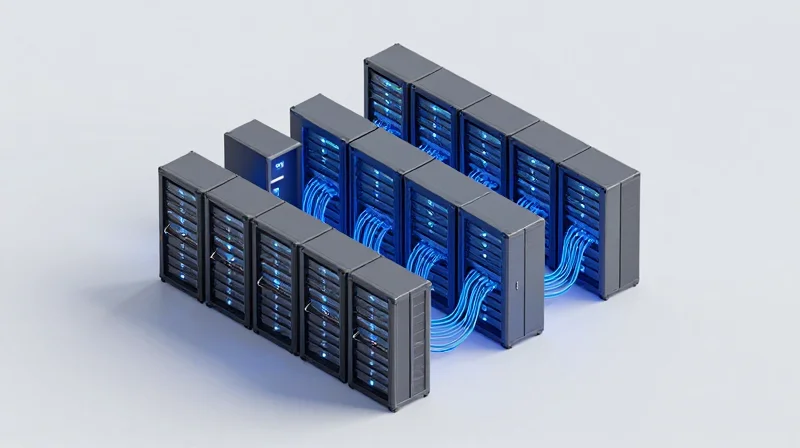
Scaling an H100 deployment requires balancing the extreme bandwidth of NVLink with the cost-effective reach of Ethernet; generally, NVLink is indispensable for intra-node and small cluster performance, while InfiniBand or RoCEv2 Ethernet becomes the strategic choice as deployments scale beyond the 256-GPU threshold. The 'Performance vs. Cost' pivot point is determined by the specific communication patterns of the workload, such as All-Reduce or All-to-All operations, which suffer exponentially as latency increases in larger, non-blocking topologies.
Small to Mid-Sized Clusters (8 to 128 GPUs)
For organizations running localized LLM fine-tuning or small-scale inference workloads, the H100's internal NVLink fabric is the primary performance driver. In these configurations, the overhead of managing complex Ethernet fabrics often outweighs the hardware savings. Within a single HGX H100 baseboard (8 GPUs), NVLink provides 900GB/s of bidirectional bandwidth per GPU, making it nearly impossible for any external alternative to compete without introducing significant bottlenecks.
Enterprise-Scale Clusters (128 to 1,024 GPUs)
As clusters grow into the mid-tier range, the choice between NVIDIA’s Quantum-2 InfiniBand and high-end 400G Ethernet (RoCEv2) becomes critical. While InfiniBand offers the lowest tail latency and congestion control, many enterprises opt for Ethernet at this stage to leverage existing network expertise and hardware flexibility. The trade-off is a 10-15% performance penalty in training synchronization, which may be acceptable if the CapEx savings on networking gear exceed the cost of the extended compute time.
| Cluster Size | Primary Interconnect | Primary Bottleneck | Cost-Efficiency Leader |
|---|---|---|---|
| 1-16 GPUs | NVLink / NVSwitch | Memory Bandwidth | NVLink (Proprietary) |
| 32-256 GPUs | InfiniBand / NVLink-Network | Inter-node Latency | InfiniBand |
| 512-2048+ GPUs | 400G Ethernet / UEC | Fabric Congestion | RoCEv2 / Ethernet |
AI Supercomputers (1,024+ GPUs)
At the supercomputing scale—where clusters power foundational model training—the interconnect accounts for up to 30% of the total system cost. Large-scale deployments often utilize a 'Rail-Optimized' topology. While InfiniBand has historically dominated this space, the emergence of the Ultra Ethernet Consortium (UEC) is creating a shift. For clusters exceeding 10,000 GPUs, the reliability and management scale of Ethernet often become more attractive than the raw latency advantages of proprietary fabrics, especially as software optimizations like DeepSpeed and Megatron-LM mitigate some network-level delays.
Scaling Decision FAQ
- When is NVLink strictly required?
NVLink is essential for any workload requiring frequent GPU-to-GPU memory access within a node, such as 3D parallelism in large-scale model training. - Can Ethernet replace InfiniBand in 512-GPU clusters?
Yes, provided the network supports RoCEv2 and has dedicated switches for the backend fabric to minimize packet loss and jitter. - What is the 'Scaling Tax'?
The 'Scaling Tax' refers to the diminishing returns in compute efficiency as more GPUs are added, primarily caused by the latency of the interconnect fabric relative to compute speed.
Future-Proofing Your AI Infrastructure
Navigating the Rapid Evolution of AI Fabrics
Future-proofing your AI infrastructure is less about selecting a single static interconnect and more about architecting a modular fabric that can accommodate the exponential growth in bandwidth requirements. While the NVIDIA H100 and its NVLink 4.0 interconnect currently define the performance ceiling, the roadmap toward the Blackwell (B100/B200) architecture and the rise of the Ultra Ethernet Consortium (UEC) suggest a shift toward massive scale-out capability and the integration of optical compute. To remain competitive, organizations must design power and cooling systems for higher densities and ensure that their physical network topology can support the transition from 400G/800G to 1.6T speeds without a complete forklift upgrade.
The Leap to NVLink 5.0 and Blackwell
The introduction of the NVIDIA Blackwell platform marks a significant evolution in interconnect density. NVLink 5.0 doubles the total bandwidth to 1.8 TB/s per GPU, a massive jump from the H100's 900 GB/s. This evolution necessitates a shift in how clusters are built; the move toward the NVL72 rack-scale architecture suggests that the 'node' is no longer the unit of compute, but rather the entire rack. Organizations investing today must ensure their data center facilities can handle the liquid cooling requirements that often accompany these high-density, next-generation interconnects.
Silicon Photonics: The End of the Copper Era?
As we push toward 1.6T and 3.2T per-lane speeds, traditional electrical signaling over copper reaches its physical limits due to signal degradation and heat. Silicon photonics—the integration of laser-based optical communication directly onto the silicon—is the most promising solution. Future AI infrastructures will likely replace heavy InfiniBand and Ethernet copper cables with integrated optical engines. This transition will drastically reduce latency and power consumption at the fabric level, allowing for geographically distributed GPU clusters that behave as a single coherent memory pool.
| Interconnect Generation | Associated GPU | Aggregate Bandwidth | Primary Physical Medium |
|---|---|---|---|
| NVLink 4.0 | H100 (Hopper) | 900 GB/s | OSFP Copper / Active Optical |
| NVLink 5.0 | B100/B200 (Blackwell) | 1,800 GB/s | Advanced Copper Backplanes / Liquid Cooled |
| Ultra Ethernet (UEC) | Multi-Vendor / H200+ | 800G - 1.6T | Standardized Optical Fiber |
| Photonic NVLink (Future) | X100 / Vera Rubin | 3.6 TB/s+ | Integrated Silicon Photonics |
Strategic Longevity FAQ
- Will H100 InfiniBand clusters be obsolete when Blackwell launches?
No. While Blackwell offers higher bandwidth, H100 clusters will remain highly effective for inference and mid-range model fine-tuning for the next 3-5 years. The key is ensuring your software stack (NCCL) is optimized to bridge different generations. - Is it worth waiting for Ultra Ethernet Consortium (UEC) hardware?
If you are building a hyperscale, multi-vendor cloud, yes. For dedicated NVIDIA-based training clusters, InfiniBand remains the lower-latency choice until UEC 1.0 hardware reaches full maturity in 2025. - How does liquid cooling impact interconnect future-proofing?
Next-gen interconnects like NVLink 5.0 generate significant heat at the transceiver level. Moving to liquid cooling now ensures your facility can handle the thermal requirements of future high-bandwidth optical engines.
While the NVIDIA H100's interconnect offers unparalleled performance for massive-scale training, the right choice depends on your specific workload, budget, and long-term scaling strategy. To ensure your data center is optimized for the next wave of AI innovation, contact our infrastructure specialists today for a custom TCO consultation.