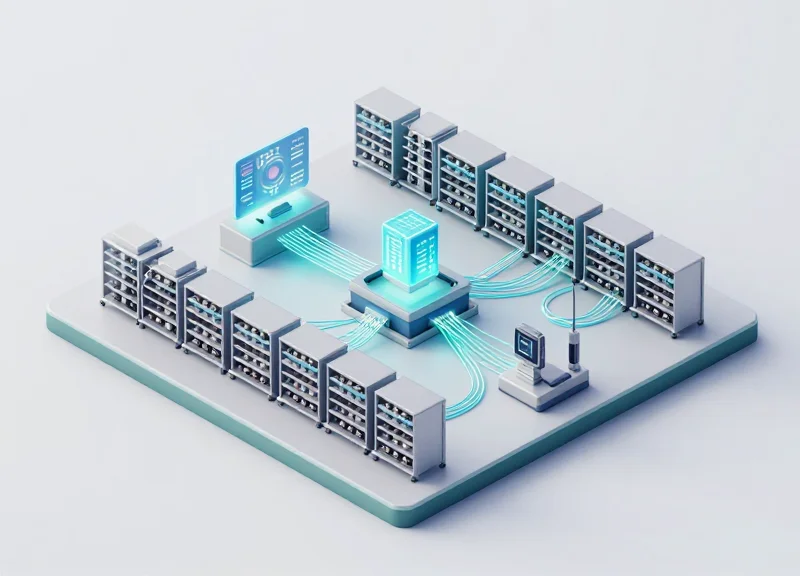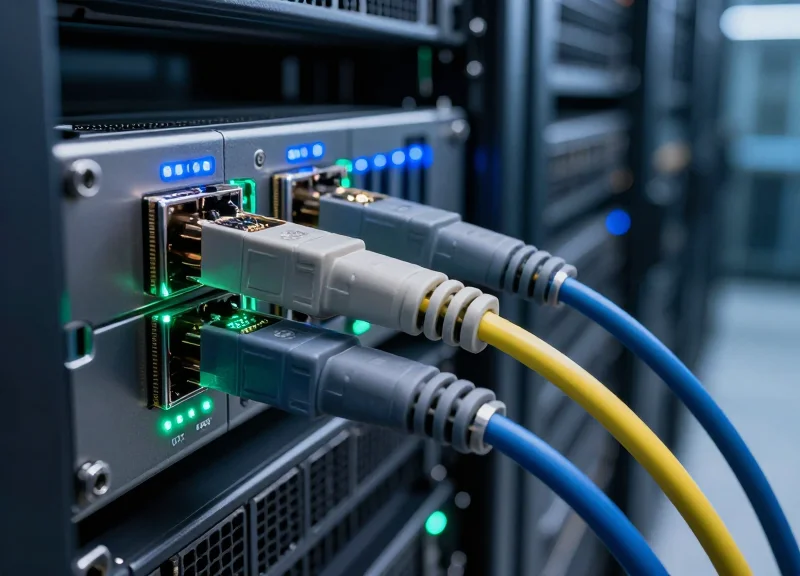
As data centers transition to 800G to meet the explosive demands of AI and cloud scaling, high-density racks face unprecedented challenges in power, cooling, and cable management. 800G Active Optical Cables (AOCs) offer the perfect balance of reach, power efficiency, and flexibility. Ubytelink provides the industry's most competitive wholesale pricing and tailored OEM/ODM services to help you scale seamlessly without compromising on reliability.
The Evolution of High-Density Racks: Why 800G AOC is Necessary

The Evolution of High-Density Racks: Why 800G AOC is Necessary
The transition to 800G Active Optical Cables (AOC) is necessitated by the convergence of massive AI workloads and the physical limitations of legacy copper infrastructure. As data centers evolve from 400G to 800G to support Large Language Models (LLMs) and complex neural networks, the demand for higher throughput per rack unit has hit a 'silicon wall.' Traditional copper interconnects cannot sustain the signal integrity required for 112G PAM4 signaling over the distances needed in modern high-density environments, making 800G AOC the essential standard for maintaining low latency and high reliability.
The Limitations of Passive Copper at 800G
Direct Attach Copper (DAC) cables have historically been the choice for short-reach applications due to their low cost. However, at 800G speeds, the physical bulk of copper becomes a liability. Thicker gauges are required to minimize signal loss, which leads to heavy, inflexible cable bundles that obstruct airflow in high-density racks. This creates thermal hotspots and increases cooling costs, whereas 800G AOCs utilize thin optical fibers that allow for maximum airflow and easier cable management.
| Feature | 800G DAC (Copper) | 800G AOC (Optical) |
|---|---|---|
| Maximum Reach | Up to 2 meters | Up to 100 meters |
| Cable Diameter | Thick and heavy | Thin and lightweight |
| Power Consumption | Zero (Passive) | Lower per-bit than predecessors |
| EMI Resistance | Susceptible | Immune to interference |
| Airflow Impact | Significant obstruction | Minimal impact |
Scaling for AI and Machine Learning Workloads
AI clusters require high-speed, non-blocking fabrics where thousands of GPUs communicate simultaneously. 800G AOCs provide the necessary bandwidth density to link these nodes without the bulk of copper or the complexity of field-terminated fiber. By utilizing 800G AOCs, wholesale buyers can future-proof their infrastructure, ensuring that the network backbone does not become a bottleneck for next-generation compute modules.
- Why can't I use 400G infrastructure for AI?
While 400G is still relevant, AI workloads scale more efficiently at 800G, reducing the number of ports and switches needed for the same total bandwidth, which lowers the overall Total Cost of Ownership (TCO). - What makes 800G AOC better for high-density racks?
AOCs offer superior bend radius and significantly less weight than copper, allowing for dense packing of equipment without compromising structural integrity or cooling efficiency. - Is the power consumption of 800G AOC a concern?
Modern 800G AOCs are designed with low-power DSPs and advanced optical components, often resulting in lower power-per-gigabit metrics than the previous generation of interconnects.
800G AOC vs. DAC vs. Transceivers: Selecting the Right Interconnect
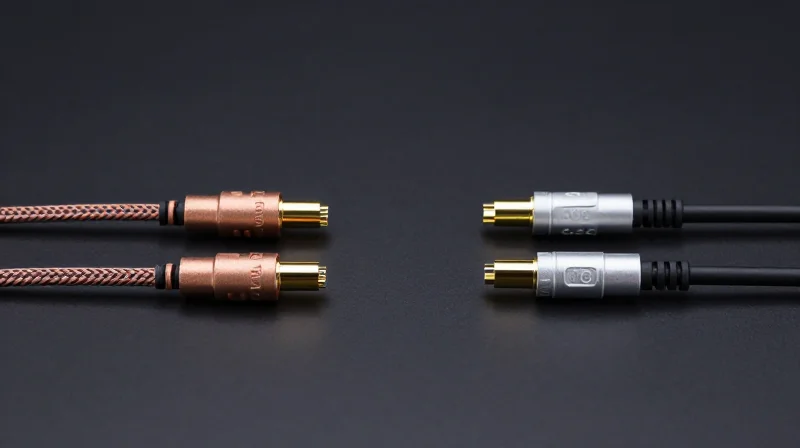
800G AOC vs. DAC vs. Transceivers: Selecting the Right Interconnect
Selecting the optimal 800G interconnect is no longer just about cost per port; it is a strategic decision involving thermal management, physical rack space, and signal integrity. At 800G speeds, the physical limitations of copper (DAC) become severe, while the cost and power consumption of discrete transceivers can become prohibitive for short-to-medium distances. 800G Active Optical Cables (AOCs) emerge as the 'sweet spot,' providing the flexibility and reach of fiber with a lower power profile and simplified deployment model compared to separate modules and patch cords.
The Performance Breakdown: DAC, AOC, and Optical Transceivers
| Feature | 800G DAC (Copper) | 800G AOC (Optical) | 800G Transceiver (Module) |
|---|---|---|---|
| Max Distance | Up to 2 meters | Up to 100 meters | Up to 10km (and beyond) |
| Power Consumption | Near Zero | ~14W - 16W per end | ~16W - 20W+ per end |
| Cable Diameter | Thick/Rigid | Thin/Flexible | Fiber Patch Cord (Thin) |
| Latency | Lowest | Low | Low |
| Best Use Case | In-Rack (Server to ToR) | Rack-to-Rack / Rows | Long-haul/DCI |
Why 800G AOC is the Sweet Spot for High-Density Racks
As AI clusters and high-performance computing (HPC) environments transition to 800G, the limitations of Direct Attach Copper (DAC) become a bottleneck. Because 800G signals degrade rapidly over copper, DAC cables are restricted to very short lengths, often less than 2 meters, making them impractical for anything beyond adjacent equipment. Furthermore, 800G DACs are thick and rigid, significantly obstructing airflow in high-density racks. AOCs solve this by using lightweight optical fiber that can span up to 100 meters while maintaining a much smaller bend radius and lower weight, facilitating superior airflow and easier cable management.
Compared to discrete optical transceivers, 800G AOCs offer a 'plug-and-play' simplicity. Because the optical ends are permanently attached, there is no risk of contaminated fiber end-faces, which is a leading cause of link failure in high-speed networks. Additionally, AOCs typically consume less power than discrete modules because the electrical-to-optical components are optimized for a fixed length, reducing the overall thermal load on the switch.
Common Questions on 800G Interconnect Selection
- When should I choose 800G DAC over AOC?
Use DAC only for very short distances (under 2m) within a single rack where cost is the primary driver and airflow is not a critical concern. - Do 800G AOCs support the same management interfaces as transceivers?
Yes, 800G AOCs typically utilize the OSFP or QSFP-DD800 form factors and comply with CMIS (Common Management Interface Specification) for full diagnostic visibility. - Is the power consumption difference between AOC and Transceivers significant?
In a single rack, the difference may seem small, but across a wholesale deployment of 1,000+ links, AOCs can save several kilowatts of power and reduce cooling requirements significantly.
Key Technical Specifications of 800G AOC Modules
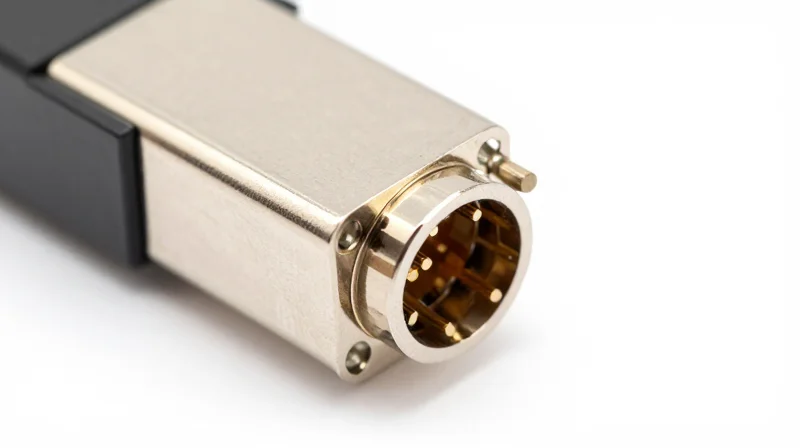
Key Technical Specifications of 800G AOC Modules
The performance of 800G Active Optical Cables (AOC) is defined by their ability to maintain signal integrity over an 8x100G architecture using sophisticated Digital Signal Processing (DSP). Unlike lower-tier interconnects, 800G AOCs leverage 112G PAM4 (Pulse Amplitude Modulation 4-level) technology to double the data rate per lane compared to 400G solutions. This allows for a total aggregate throughput of 800Gbps, making them the primary choice for wholesale purchasers outfitting AI-driven data centers where low latency and high reliability are non-negotiable.
Dominant Form Factors: OSFP vs. QSFP-DD800
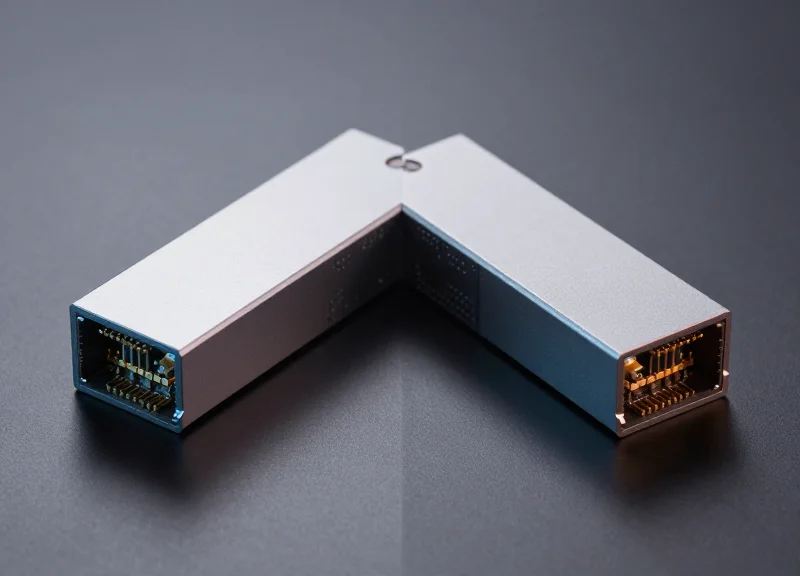
Hardware compatibility is central to any bulk procurement strategy. 800G AOCs are primarily available in two form factors: the Octal Small Form-factor Pluggable (OSFP) and the Quad Small Form-factor Pluggable Double Density (QSFP-DD800). Both support 8-lane electrical interfaces but differ in thermal management and backward compatibility.
| Feature | OSFP 800G AOC | QSFP-DD800 AOC |
|---|---|---|
| Electrical Interface | 8x100G (112G SerDes) | 8x100G (112G SerDes) |
| Thermal Management | Integrated Heat Sink (Superior) | Requires External Cooling Optimization |
| Backward Compatibility | Limited (via Adapters) | High (QSFP56/QSFP28) |
| Max Power Consumption | ~16W - 18W | ~14W - 17W |
Signal Integrity and Bit Error Rate (BER) Performance
To ensure stable transmission across multi-mode fiber (MMF), 800G AOCs utilize advanced Forward Error Correction (FEC). The Pre-FEC Bit Error Rate (BER) is typically maintained below 2.4E-4, which is the threshold required for the DSP to deliver a post-FEC error-free performance. For high-density racks, maintaining this low BER is critical to prevent packet loss during the intensive training cycles of Large Language Models (LLMs).
- What is the typical reach of an 800G AOC?
Most 800G AOCs are designed for short-reach applications within the same or adjacent racks, typically supporting distances from 1 meter up to 100 meters using OM4 multi-mode fiber. - Does 800G AOC support breakout configurations?
Yes, wholesale 800G AOCs can be customized as breakout cables, such as 800G to 2x400G (QSFP-DD/OSFP) or 800G to 8x100G (QSFP112), providing flexibility for tiered spine-leaf architectures. - What is the significance of 112G SerDes in 800G modules?
The 112G SerDes (Serializer/Deserializer) is the electrical engine of the module, allowing the 8-lane interface to match the high-speed throughput of modern 51.2T switches like the Broadcom Tomahawk 5.
Solving Thermal and Space Challenges in Modern Data Centers
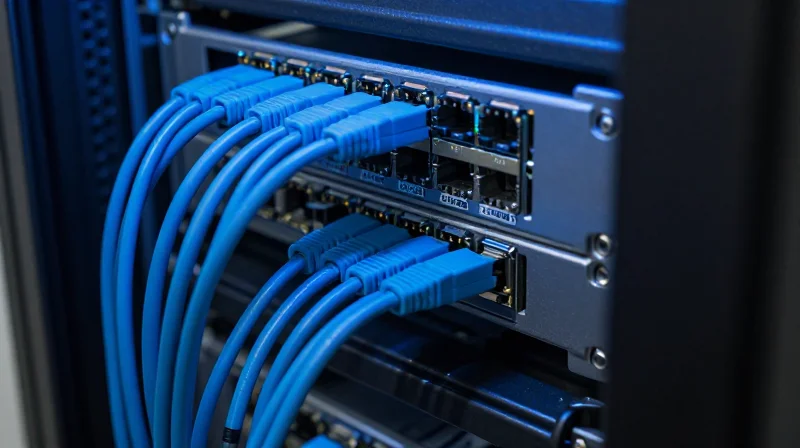
Solving Thermal and Space Challenges in Modern Data Centers
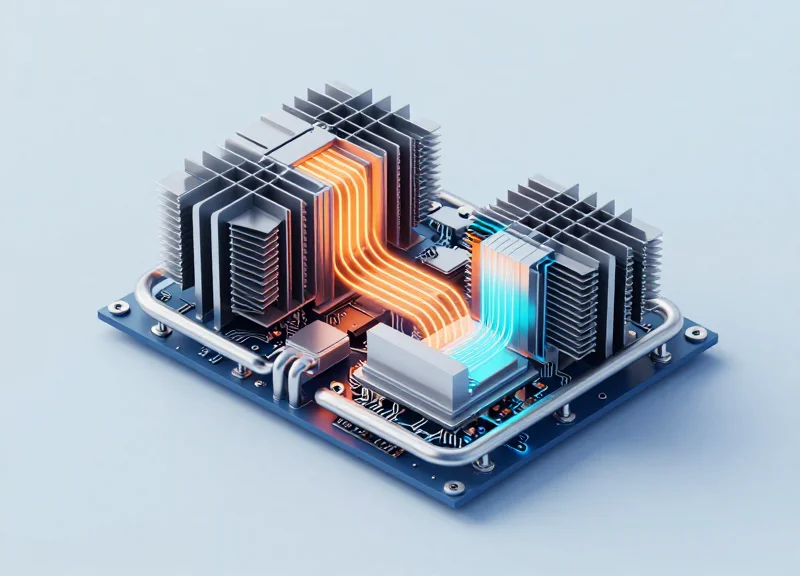
In the era of 800G networking, the physical volume of cabling becomes a critical factor in data center uptime and cooling efficiency. 800G Active Optical Cables (AOCs) offer a transformative solution by replacing heavy, rigid copper conductors with thin, flexible optical fibers integrated with low-power transceivers. This transition significantly reduces the physical footprint within cable management systems, ensuring that cooling fans can circulate air effectively around high-performance switches and servers, preventing the localized overheating common in AI-heavy workloads.
Overcoming the "Copper Wall" in Cable Density
As data rates hit 800G, traditional Direct Attach Copper (DAC) cables require thicker gauges (AWG) to maintain signal integrity over even short distances. This results in "cable dams" at the rear of the rack that block exhaust paths. 800G AOCs utilize high-speed VCSEL technology, allowing for a cable diameter that is often 50-70% thinner than a comparable DAC. This reduction is essential for maintaining the narrow thermal envelopes required by modern liquid-cooled and air-cooled HPC clusters.
| Feature | 800G DAC (Copper) | 800G AOC (Optical) |
|---|---|---|
| Cable Diameter (OD) | 8.0mm - 11.0mm (Bulky) | 3.0mm - 4.5mm (Slim) |
| Weight (per meter) | Approx. 450g+ | Approx. 50g - 70g |
| Bend Radius | Large/Stiff (Difficult to route) | Small/Flexible (Easy routing) |
| Airflow Obstruction | High (Blocks exhaust) | Minimal (Promotes circulation) |
Thermal Dissipation and Hardware Reliability
While AOCs contain active electronic components that consume power, modern 800G modules are optimized for high-efficiency thermal management. By using advanced Digital Signal Processors (DSPs) and low-voltage optical components, wholesale 800G AOCs minimize the heat generated at the port level. More importantly, they prevent the heat-trapping effects caused by bulky copper bundles that insulate nearby equipment. This dual-action benefit extends the lifespan of expensive networking hardware by keeping junction temperatures within safe operating limits.
- Why is bend radius important for 800G racks?
A smaller bend radius allows for tighter routing in high-density racks without risking signal loss or physical damage to the cable, which is critical in hyper-converged infrastructures. - How does 800G AOC impact cooling costs?
By improving airflow efficiency, AOCs reduce the static pressure and the energy required by chassis fans to push air through the rack, leading to improved Power Usage Effectiveness (PUE) scores. - Are AOCs better for vertical cable managers?
Yes, their light weight prevents the excessive mechanical stress on vertical managers and switch ports that often occurs with heavy 800G copper bundles.
The Economic Advantage of Wholesale 800G AOC Procurement
Wholesale procurement of 800G AOCs is the most effective strategy for data centers to scale bandwidth while minimizing both the price-per-gigabit and long-term operational expenses. By integrating the transceiver and fiber into a single, factory-terminated unit, AOCs remove the hidden costs of separate fiber patch cables and connector maintenance, while volume-based purchasing further compresses the capital expenditure required for massive 2026 infrastructure upgrades.
Analyzing the Total Cost of Ownership (TCO) for 800G AOCs
When evaluating the economic advantage of 800G AOCs, operators must look beyond the initial purchase price. The TCO advantage is driven by three main factors: reduced power consumption compared to older transceiver technologies, lower failure rates due to fewer physical connection points, and simplified deployment logistics. In high-density racks, the labor savings realized by installing a single AOC versus a transceiver-plus-fiber pair can reduce deployment time by up to 40%, directly impacting the project's bottom line.
| Procurement Scale | Relative Unit Cost | Economic Driver | Deployment Target |
|---|---|---|---|
| Single Unit (1-10) | 100% (MSRP) | Standard Retail Pricing | Lab Testing / Prototyping |
| Bulk Tier (10-50) | 85% - 90% | Volume Discounting | Small Rack Expansions |
| Wholesale (50+) | 70% - 80% | Direct Manufacturer Quote | Hyperscale / Enterprise Core |
Maximizing ROI with Custom Wholesale Quotes
Securing custom quotes from Ubytelink allows procurement teams to leverage market fluctuations to their advantage. In the fast-moving 2026 networking landscape, custom quotes often include benefits that standard pricing models omit, such as locked-in pricing for multi-phase rollouts and tailored cable lengths that eliminate the need for expensive cable management hardware. This tailored approach ensures that data centers do not over-purchase capacity while still benefiting from the economies of scale.
- How does wholesale procurement impact lead times?
Wholesale orders generally involve direct manufacturer allocation, which provides more predictable delivery schedules and priority in the production queue compared to spot-market retail purchases. - Can custom cable lengths be included in wholesale 800G AOC orders?
Yes. Wholesale procurement often allows for customized lengths (e.g., 3.5m or 7m) which optimize airflow and reduce weight in high-density racks, further lowering cooling costs. - What is the expected ROI period for 800G AOC vs. 400G systems?
Due to the doubled density and reduced power-per-bit, most enterprises see a full ROI within 18-24 months when purchasing at wholesale volumes, specifically through savings in floor space and energy.
Ultimately, the transition to 800G is an inevitability for high-performance computing (HPC) and AI workloads. By utilizing wholesale procurement channels, organizations can bridge the gap between their current performance requirements and future-proofed scalability without exceeding their budgetary constraints.
Customization with OEM/ODM: Tailoring Cables to Your Infrastructure
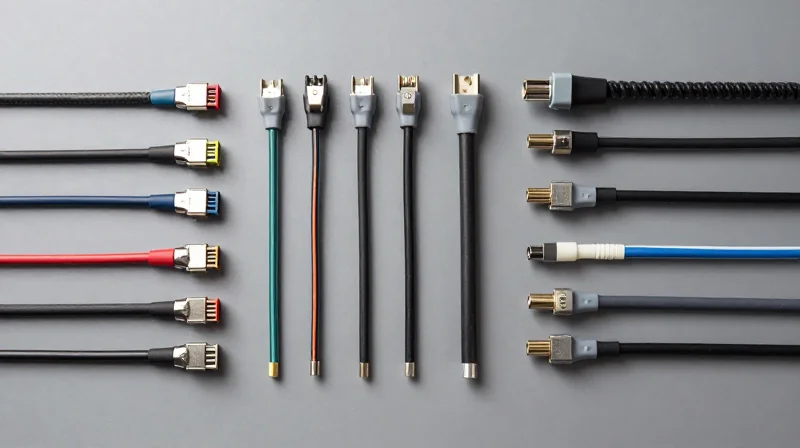
For organizations executing a bulk upgrade to 800G, standard specifications often create bottlenecks in physical cable management or software interoperability. Ubytelink provides a comprehensive OEM/ODM framework that allows data center architects to tailor Active Optical Cables (AOCs) to their specific infrastructure needs. By customizing the physical and digital attributes of the cable, operators can eliminate the risks of vendor lock-in and optimize the efficiency of their high-density cooling systems.
Precision Engineering: Custom Lengths and Physical Attributes
In high-density 800G environments, excess cable slack is more than just an aesthetic issue; it is a thermal hazard. Standard lengths often result in coiled cables that block exhaust vents, leading to localized hotspots. Ubytelink offers precision customization for cable lengths, allowing for increments as specific as 0.5 meters to ensure a 'perfect fit' from switch to server. Beyond length, we offer specialized jacket materials (LSZH, OFNP, or OFNR) to meet regional fire safety codes and custom pull-tab colors to simplify port identification in complex fabric topologies.
Multi-Vendor Firmware and Seamless Interoperability
One of the primary barriers when you buy 800G AOC for high-density racks wholesale is the varied firmware requirements of different hardware manufacturers. A cable that works in an NVIDIA switch may trigger an error in a Cisco or Arista environment. Ubytelink solves this through advanced EEPROM coding. We provide ODM services that program the internal microcontrollers of the 800G modules with vendor-specific signatures, ensuring 100% compatibility and unlocking full diagnostic capabilities via the host's CLI.
| Feature | Standard Wholesale Solution | Ubytelink Custom OEM/ODM |
|---|---|---|
| Cable Length | Fixed (1m, 3m, 5m, 7m) | Bespoke (Precision cm-level increments) |
| Firmware | Generic/Universal | Vendor-Specific (Cisco, Arista, NVIDIA, Juniper) |
| Labeling | Standard Manufacturer Tags | Private Labeling & Custom Serial Numbers |
| Jacket Type | PVC / Standard | LSZH / Plenum / Custom Colors |
| Packaging | Individual Plastic Bags | Rack-Ready Bulk Kits / Eco-Friendly Options |
Streamlining Deployment with Custom Logistics
Wholesale procurement is not just about the hardware; it is about the speed of deployment. Ubytelink supports ODM branding and logistical customization, such as kitting cables together based on specific rack diagrams or pre-applying serialized asset tags. This 'rack-ready' approach reduces on-site labor costs and minimizes the human error associated with manual cable labeling during large-scale 800G rollouts.
- Can Ubytelink provide dual-coded cables for multi-vendor links?
Yes, our ODM services include coding one end of the 800G AOC for a specific switch (e.g., Arista) and the other end for a different host (e.g., a server NIC), ensuring error-free communication across hybrid links. - Is there a Minimum Order Quantity (MOQ) for custom lengths?
While custom orders generally require a higher volume than stock items, Ubytelink maintains flexible MOQ thresholds for wholesale 800G clients to facilitate pilot deployments and proof-of-concept testing. - Do custom-coded cables support DDM/DOM monitoring?
Absolutely. Our custom firmware preserves all Digital Diagnostics Monitoring (DDM) functions, allowing your network management software to monitor power, temperature, and BER in real-time.
Quality Assurance and Reliability Standards for 800G Networks
Quality Assurance and Reliability Standards for 800G Networks
Reliability in 800G Active Optical Cable (AOC) deployments is a structural necessity rather than a luxury, as the extreme bandwidth density means a single component failure can disrupt massive volumes of critical data traffic. For wholesale buyers, ensuring that every unit meets strict IEEE 800GBASE-SR8 or MSA standards is the only way to safeguard against the high costs of network downtime and hardware replacement in congested, high-density environments.
Signal Integrity and PAM4 Performance Validation
The transition to 800G relies heavily on PAM4 (Pulse Amplitude Modulation 4-level) signaling, which is significantly more sensitive to noise and jitter than legacy NRZ formats. Professional-grade quality assurance protocols utilize advanced oscilloscopes and Bit Error Rate Testers (BERT) to perform eye diagram analysis. This ensures that the signal-to-noise ratio remains within acceptable thresholds, preventing packet loss and ensuring that the electrical-to-optical conversion within the cable ends is seamless over the entire specified length.
| Testing Protocol | Technical Focus | Impact on Reliability |
|---|---|---|
| BER Testing | Bit Error Rate Monitoring | Ensures data accuracy below the Pre-FEC threshold. |
| Eye Diagram Analysis | PAM4 Signal Linearity | Validates signal quality and identifies jitter issues. |
| Thermal Cycling | -40°C to +85°C Stress | Confirms component durability in fluctuating data center temperatures. |
| Interoperability Check | Multi-vendor Switch Testing | Guarantees compatibility with Cisco, Arista, and Mellanox hardware. |
Environmental Stress Screening (ESS) for Long-Term Uptime
To ensure 800G AOCs survive the multi-year lifecycle of a modern data center, they undergo Environmental Stress Screening (ESS). This involves high-temperature storage and humidity testing to simulate the rigorous conditions of a fully loaded high-density rack. By subjecting cables to these extremes before they reach the wholesale market, manufacturers can filter out units prone to 'infant mortality,' thereby increasing the Mean Time Between Failures (MTBF) and lowering the Total Cost of Ownership (TCO) for the end user.
- Why is Pre-FEC Bit Error Rate (BER) important for 800G?
800G networks use Forward Error Correction (FEC) to repair minor data errors, but if the raw (Pre-FEC) BER is too high, the FEC cannot keep up, leading to dropped packets. Testing ensures raw signal quality is high enough for the FEC to function perfectly. - How does 800G AOC reliability impact wholesale procurement?
Wholesale buyers face higher risks if a batch is faulty; therefore, verifying that the vendor performs 100% factory testing (rather than batch sampling) is critical for large-scale 800G deployments. - Do these cables meet QSFP-DD and OSFP MSA standards?
Yes, high-quality 800G AOCs are designed to comply with Multi-Source Agreements (MSA), ensuring that mechanical dimensions and electrical interfaces are consistent across different hardware manufacturers.
Future-Proofing Your Data Center for 1.6T and Beyond

The transition to 1.6T is not merely an increase in speed but a fundamental evolution in how data centers manage density, power, and thermal efficiency. By opting to buy 800G AOC for high-density racks wholesale today, operators are adopting the OSFP and QSFP-DD800 form factors that will likely persist into the 1.6T era, allowing for incremental upgrades rather than a complete infrastructure overhaul. This forward-looking approach ensures that the physical layer remains robust as per-lane rates move from 100G to 200G SerDes.
The Evolution of Data Center Interconnects: 400G to 1.6T
| Specification | 400G AOC | 800G AOC | 1.6T (Projected) |
|---|---|---|---|
| Per-lane Speed | 50G or 100G PAM4 | 100G PAM4 | 200G PAM4 |
| Form Factor | QSFP-DD / OSFP | QSFP-DD800 / OSFP800 | OSFP1600 / QSFP-DD1600 |
| Power Consumption | ~10W-12W | ~16W-20W | ~25W-30W |
| Typical Reach | 1m to 30m | 1m to 100m | 1m to 50m (Direct-Attach) |
Key Infrastructure Pillars for Future-Proofing
Preparing for 1.6T requires more than just high-speed cables; it demands a holistic view of the rack environment. High-density 800G deployments serve as a 'proving ground' for the thermal management and cable routing challenges that will intensify at the 1.6T level.
- Thermal Management Strategy
1.6T transceivers and AOCs will generate significantly more heat. Investing in 800G infrastructure today allows data centers to optimize liquid cooling or enhanced airflow designs that will be mandatory for the next generation. - Form Factor Standardization
By standardizing on OSFP or QSFP-DD800 designs now, you ensure that your switch ports and patch panels are compatible with dual-density configurations that support 1.6T breakout cables later. - Signal Integrity and Latency
800G AOCs utilize advanced DSPs and silicon photonics. Mastering the deployment of these technologies now minimizes the learning curve for the tighter signal margins required for 200G-per-lane architectures.
Strategic Wholesale Procurement as a Scalability Hedge
Securing custom quotes and bulk pricing for 800G AOCs in 2026 is more than a cost-saving measure; it is a strategic move to lock in hardware consistency. When you buy wholesale, you ensure that your entire fabric uses the same firmware and hardware revisions, which simplifies the eventual migration to 1.6T by providing a stable, predictable baseline for network monitoring and performance tuning.
- Will 800G AOCs be compatible with 1.6T ports?
In many cases, 1.6T ports will be backward compatible with 800G AOCs through the use of adapters or multi-rate ports, though the cable will still operate at 800G speeds. - Why should I buy 800G wholesale if 1.6T is coming?
Wholesale 800G purchasing provides the most immediate ROI for current AI and HPC workloads while establishing the rack-level density patterns required for the 1.6T lifecycle. - Does 1.6T require different fiber types?
While 800G AOCs are self-contained, the transition to 1.6T may require moving toward higher-grade multimode fiber or single-mode optical paths to handle increased bandwidth over longer distances.
Investing in 800G AOC technology is no longer optional for high-performance computing—it is a requirement for efficiency and growth. With Ubytelink's industry-leading wholesale pricing and expert OEM/ODM support, you can reduce your infrastructure expenses while maximizing operational uptime. Contact Ubytelink today for a custom quote and take the next step in scaling your network for the future.