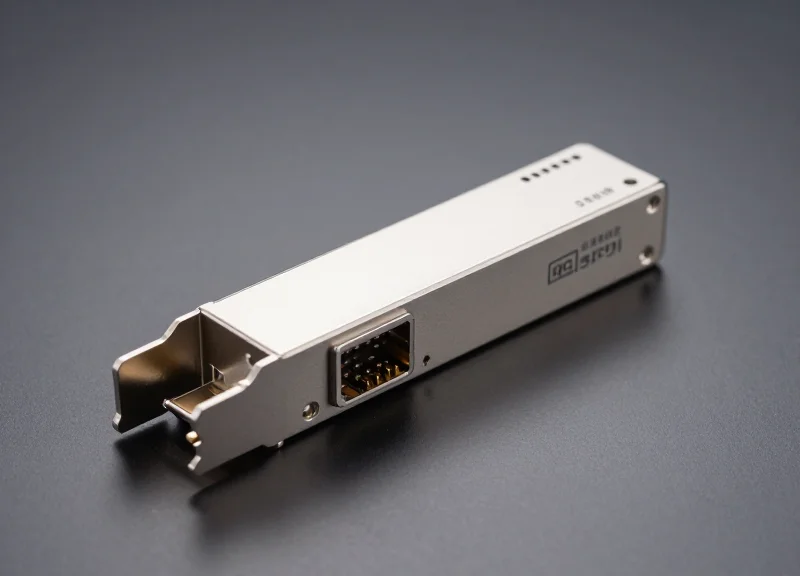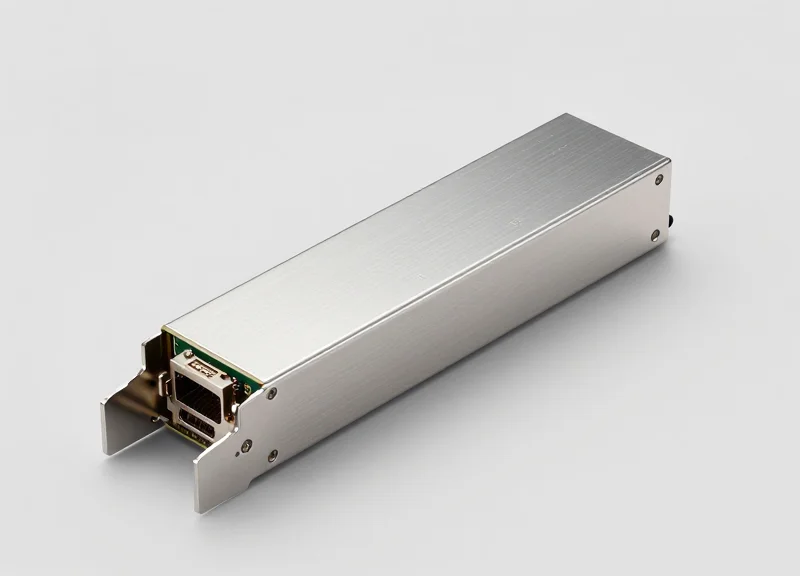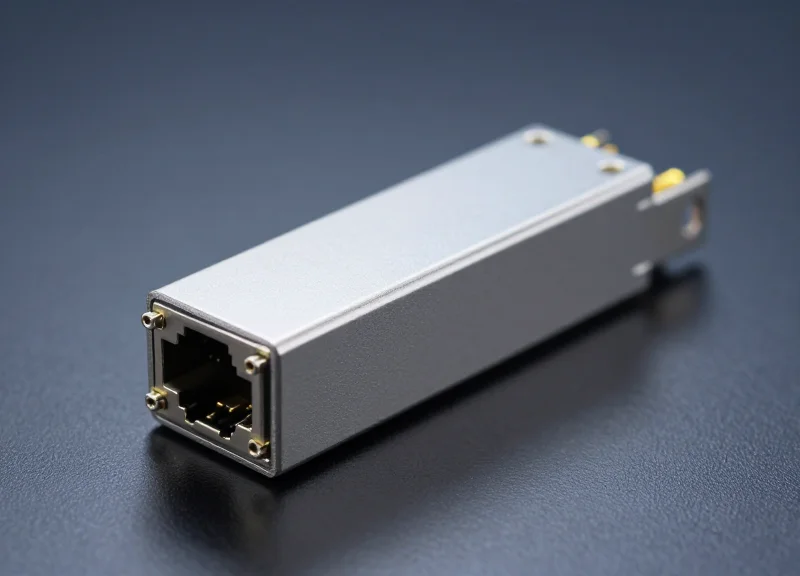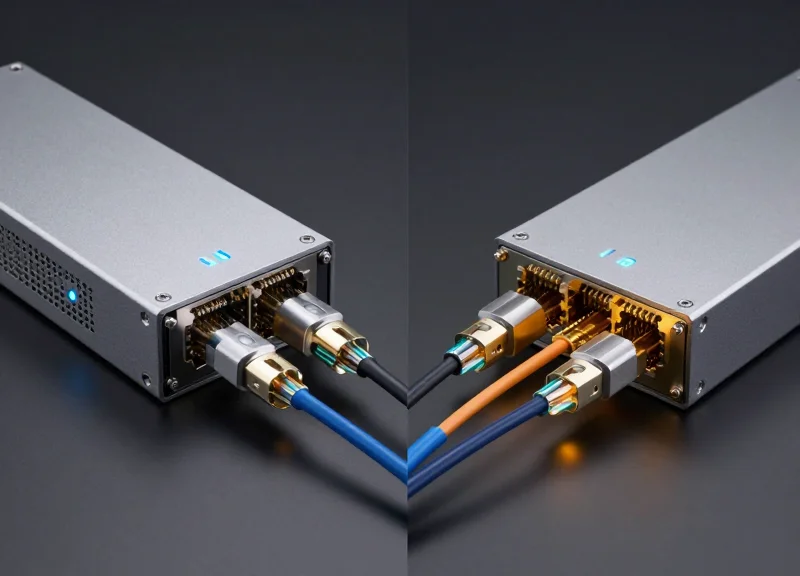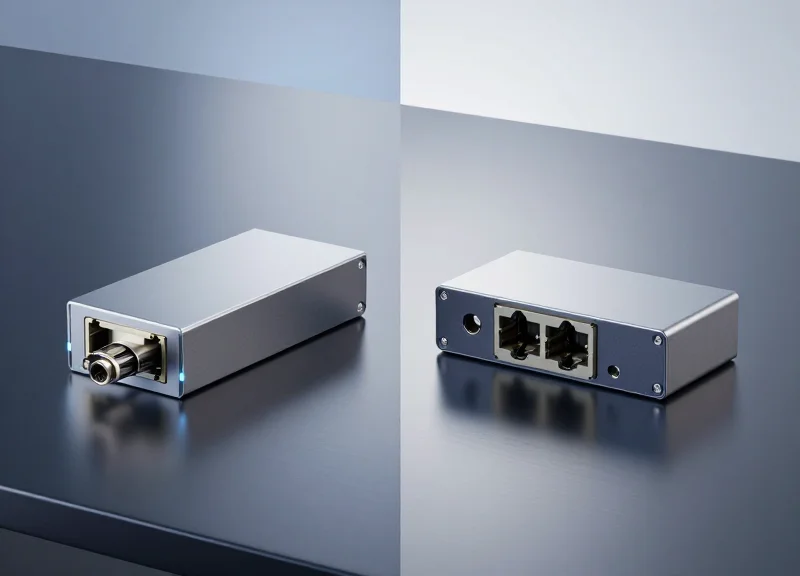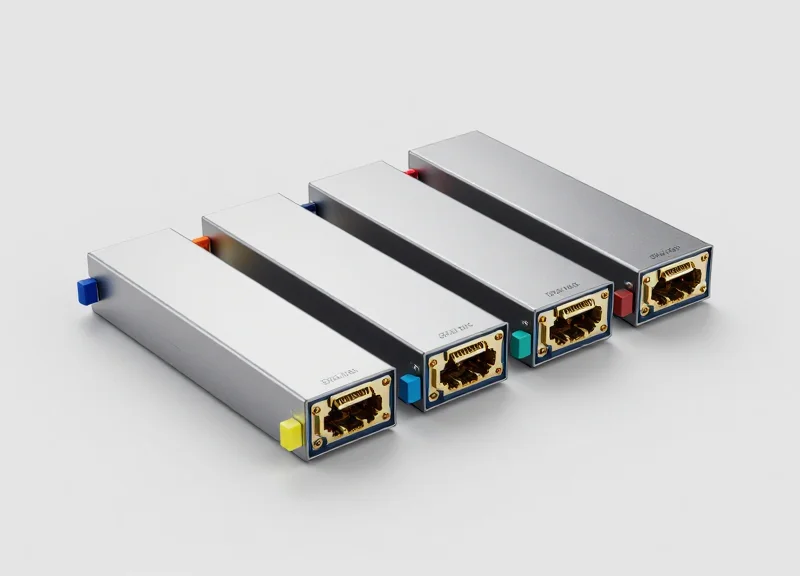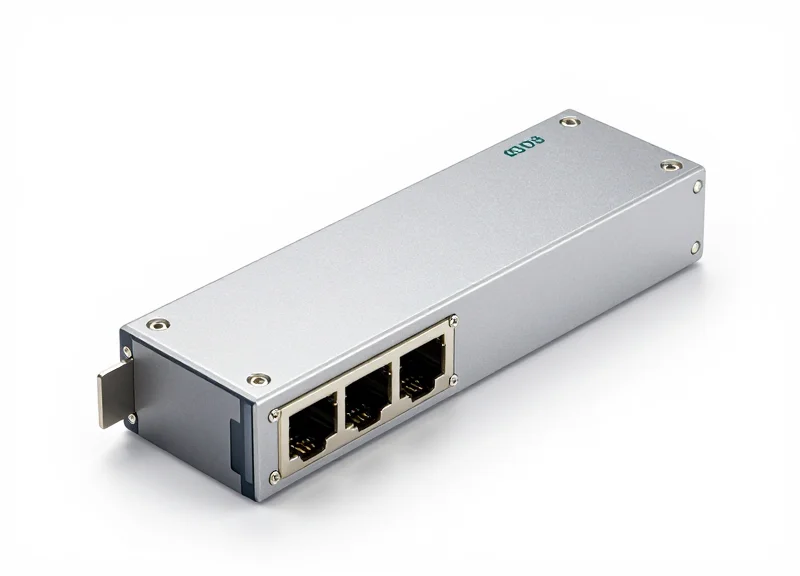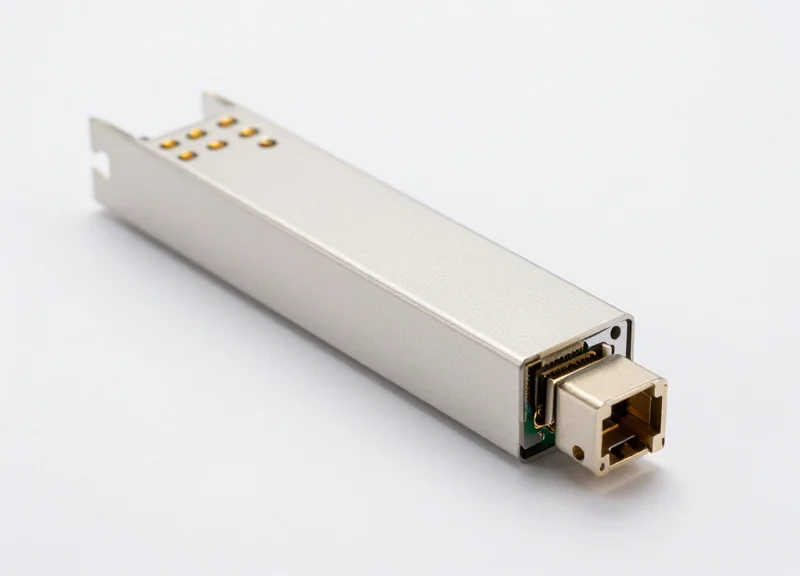
In an era of exploding data demands, network operators need more than just bandwidth; they need rock-solid reliability. Ubytelink’s Fixed-Wavelength DWDM SFP+ modules address the core challenges of long-haul transmission and high-density data center interconnects by providing stable, high-performance connectivity that adheres to strict international standards.
Understanding Fixed-Wavelength DWDM Technology

Understanding Fixed-Wavelength DWDM Technology
Fixed-wavelength DWDM SFP+ solutions represent the backbone of high-capacity telecommunications, utilizing the ITU-T C-band spectrum to multiplex numerous data channels onto a single fiber pair. By assigning each data stream to a specific, immutable light frequency, these modules allow network operators to maximize existing fiber infrastructure with high precision and lower power consumption compared to more complex tunable alternatives.
The Mechanics of Spectral Efficiency
Dense Wavelength Division Multiplexing works by tightening the spacing between wavelengths. While Coarse WDM (CWDM) uses wide 20nm spacing, DWDM typically utilizes 100GHz (0.8nm) or 50GHz (0.4nm) grids. This density enables the transmission of up to 96 channels on a single fiber, effectively turning a single 10Gbps link into a multi-terabit highway. Fixed-wavelength transceivers are pre-configured to one of these specific channels, ensuring stability and reducing the risk of wavelength drift in static network environments.
| Feature | CWDM Technology | DWDM Technology |
|---|---|---|
| Channel Spacing | 20nm | 0.8nm to 0.4nm |
| Transmission Distance | Up to 80km | Up to 1000km+ (with amplification) |
| Channel Capacity | Max 18 Channels | Up to 96 Channels (C-Band) |
| Spectral Efficiency | Low | Extremely High |
Key Advantages for Network Operators
- Why use fixed-wavelength over tunable modules?
Fixed-wavelength modules offer a significantly lower price point per port, making them ideal for high-density deployments where the network topology is unlikely to change frequently. - How does it affect power consumption?
Because they lack the internal micro-mechanical tuning elements of tunable optics, fixed modules generally consume less power and generate less heat, which is critical for data center thermal management. - What is the compatibility range?
Fixed-wavelength DWDM SFP+ modules are highly standardized, ensuring seamless integration with passive MUX/DEMUX units and optical amplifiers.
Ultimately, the choice of fixed-wavelength technology is a balance of performance and economics. For global networks requiring robust, 10Gbps connectivity over long distances, Ubytelink's fixed-wavelength solutions provide the reliability of established ITU standards with the cost-efficiency required for large-scale infrastructure expansion.
The Engineering Excellence of Ubytelink SFP+ Modules
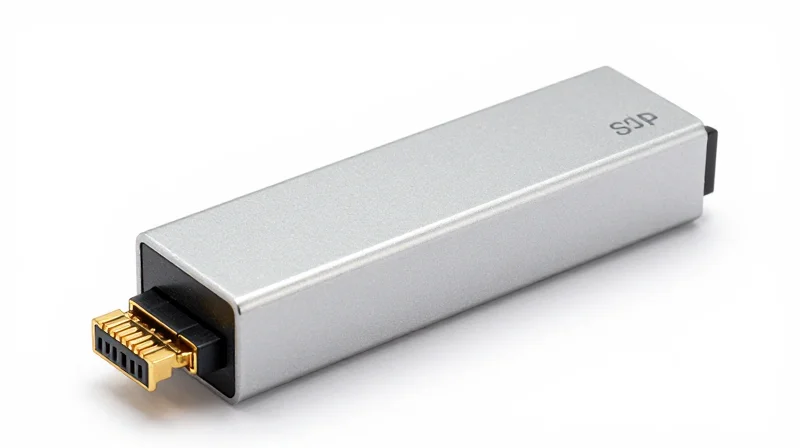
The Engineering Excellence of Ubytelink SFP+ Modules
The superior performance of Ubytelink Fixed-Wavelength DWDM SFP+ solutions is rooted in a hardware-first philosophy that prioritizes signal purity and thermal resilience over cost-cutting. By integrating high-stability Electro-absorption Modulated Lasers (EML) and advanced signal processing chips, these modules achieve an industry-leading balance between power efficiency and long-distance transmission capability, ensuring that network operators can maintain 10Gbps throughput across spans exceeding 80 kilometers without degradation.
High-Grade Component Selection
At the core of every Ubytelink module is a meticulously selected Transmit Optical Sub-Assembly (TOSA) and Receive Optical Sub-Assembly (ROSA). Unlike entry-level transceivers that may utilize standard Distributed Feedback (DFB) lasers—which are prone to 'chirp' or frequency instability at higher speeds—Ubytelink utilizes premium EML technology. This ensures a narrow spectral width and high extinction ratios, which are essential for maintaining the tight 100GHz or 50GHz channel spacing required in Dense Wavelength Division Multiplexing.
| Feature | Generic DWDM SFP+ | Ubytelink Premium SFP+ |
|---|---|---|
| Laser Type | Standard DFB or Low-bin EML | High-Stability EML (Industrial Grade) |
| Receiver Sensitivity | Average APD (-23dBm) | High-Performance APD (-24dBm to -26dBm) |
| Signal Processing | Basic Driver IC | Advanced CDR (Clock and Data Recovery) |
| Thermal Management | Passive PCB Dissipation | Enhanced Thermal Interface Materials (TIM) |
| Validation | Batch Sampling | 100% Individual Unit Burn-in Testing |
Thermal Stability and EMI Shielding
Data centers and telecommunications hubs often operate under demanding thermal conditions. Ubytelink engineers have addressed this by utilizing specialized zinc-alloy housing and optimized internal layouts that facilitate efficient heat dissipation. This architectural choice prevents wavelength drifting—a common failure point in DWDM systems where temperature fluctuations cause the laser to shift out of its assigned ITU grid channel. Additionally, robust electromagnetic interference (EMI) shielding protects the high-speed differential signals from crosstalk in high-density port environments.
Engineering FAQs
- Why is EML technology critical for Ubytelink DWDM modules?
EML lasers offer lower chromatic dispersion and higher stability at 10G speeds compared to DFB lasers, making them the gold standard for long-reach DWDM applications where signal integrity is paramount. - How does Ubytelink handle wavelength accuracy?
Each fixed-wavelength module is locked to the specific ITU-T C-Band grid channel using high-precision internal controllers that monitor and adjust the laser temperature in real-time. - What role does DDM play in these modules?
Digital Diagnostics Monitoring (DDM) provides real-time access to operating parameters such as optical output power, receiver sensitivity, and temperature, allowing for proactive network maintenance. - Are these modules compatible with third-party hardware?
Yes, Ubytelink modules are engineered to be fully MSA (Multi-Source Agreement) compliant and are rigorously tested for compatibility with major vendors like Cisco, Juniper, and Arista.
Key Specifications: ITU-T Grid Compliance and Distance Capabilities
The Standard of Precision: ITU-T G.694.1 Grid Compliance
Ubytelink Fixed-Wavelength DWDM SFP+ solutions are defined by their uncompromising adherence to the ITU-T C-band grid, providing the spectral precision necessary for dense multiplexing while leveraging advanced APD receivers to maintain signal integrity over distances of 80km and beyond. This adherence ensures that each transceiver operates within a specific, narrow frequency slot, preventing inter-channel interference and maximizing the total bandwidth capacity of a single fiber pair.
Spectral Efficiency: 100GHz vs. 50GHz Spacing
In modern DWDM architectures, the choice between channel spacings determines the scalability of the infrastructure. Ubytelink provides modules optimized for both standard and high-density configurations, allowing network architects to balance cost and capacity. While 100GHz spacing is the industry standard for 10G services, 50GHz spacing effectively doubles the available channels within the same C-band spectrum.
| Feature | 100GHz Grid Compliance | 50GHz Grid Compliance |
|---|---|---|
| Channel Spacing | ~0.8 nm | ~0.4 nm |
| Typical Channel Count | Up to 40-48 Channels | Up to 80-96 Channels |
| Primary Use Case | Standard Metro/Enterprise Links | High-Density Data Center Interconnects |
| Filter Requirements | Standard Mux/Demux | High-Precision Narrowband Mux/Demux |
Distance Capabilities and Signal Integrity
Ubytelink’s DWDM SFP+ modules are engineered to overcome the physical limitations of fiber attenuation and chromatic dispersion. Utilizing high-performance cooled EML (Electro-absorption Modulated Lasers), these transceivers maintain a stable wavelength even under varying thermal conditions. This stability is critical for achieving the 'ZR' rating, which signifies a reach of up to 80km over standard G.652 single-mode fiber without the need for optical amplification.
For spans exceeding 80km, Ubytelink modules are fully compatible with Erbium-Doped Fiber Amplifiers (EDFA) and Dispersion Compensation Modules (DCM). By maintaining a high Optical Signal-to-Noise Ratio (OSNR), Ubytelink optics ensure that data packets remain coherent over long-haul regional networks, providing a cost-effective alternative to more complex coherent transceivers for 10Gbps applications.
Technical Specifications Overview
- Wavelength Range
Full C-band coverage (Channels 17 to 61) as per ITU-T standards. - Receiver Sensitivity
Equipped with high-sensitivity APD (Avalanche Photodiode) to handle low-power signals at maximum distances. - Power Consumption
Optimized thermal design ensuring power consumption remains below 1.5W per module. - Monitoring
Digital Diagnostic Monitoring (DDM) support for real-time tracking of temperature, voltage, and optical power.
Performance FAQ
- Does Ubytelink support multi-vendor interoperability?
Yes. By strictly following the ITU-T grid and MSA standards, Ubytelink modules are compatible with major switching and routing platforms including Cisco, Juniper, and Arista. - Can these modules operate in extreme environments?
Ubytelink offers both Commercial Temperature (0 to 70°C) and Industrial Temperature (-40 to 85°C) variants to suit different deployment scenarios. - Is a DCM required for every 80km link?
While the modules are rated for 80km, the need for Dispersion Compensation depends on the quality of the fiber and the specific OSNR requirements of the network design.
Stability Over Flexibility: Why Fixed-Wavelength Beats Tunable in Specific Scenarios
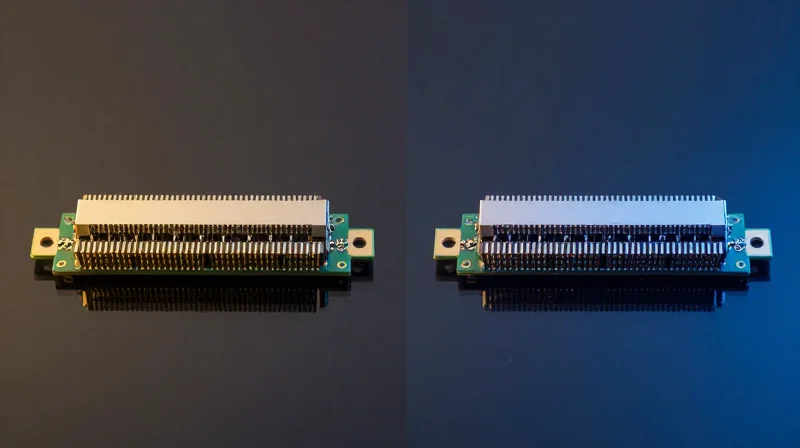
While tunable optics offer significant flexibility for dynamic wavelength allocation, fixed-wavelength DWDM SFP+ modules provide a level of structural stability and cost-efficiency that tunable versions cannot match in static or semi-permanent link architectures. For network operators managing high-density spans where wavelength assignments remain constant for years, the simplicity of fixed-wavelength optics reduces both the initial capital expenditure and the long-term operational complexity associated with complex firmware and laser-tuning mechanisms.
Comparative Analysis: Fixed-Wavelength vs. Tunable DWDM SFP+
The choice between fixed and tunable modules often hinges on the balance between inventory management and physical layer reliability. Ubytelink's fixed-wavelength solutions are engineered to minimize points of failure by eliminating the mechanical and thermal stresses inherent in tunable laser assemblies.
| Feature | Ubytelink Fixed-Wavelength | Standard Tunable SFP+ |
|---|---|---|
| Power Consumption | Typically < 1.5W | Often 2.0W - 2.5W |
| Component Complexity | Standard TOSA/ROSA architecture | Integrated Micro-Heaters/Wavelength Lockers |
| Unit Cost | Significantly lower (CAPEX optimized) | Higher due to complex laser technology |
| Heat Dissipation | Lower thermal footprint | Higher heat generation during tuning |
| Failure Points | Minimal (Solid-state laser) | Higher (Calibration and tuning errors) |
The Engineering Case for Fixed-Wavelength Reliability
Fixed-wavelength modules utilize a simpler Transmitter Optical Sub-Assembly (TOSA). Because these modules are locked to a specific ITU-T grid frequency at the factory level, they do not require the sophisticated integrated wavelength lockers or micro-thermal controllers found in tunable optics. This simplicity directly translates to a higher Mean Time Between Failures (MTBF). In high-density DWDM mux/demux environments, the lower power consumption and heat dissipation of Ubytelink fixed-wavelength modules also contribute to a longer lifespan for the entire chassis by reducing thermal stress on adjacent components.
Strategic Implementation Scenarios
- Why choose fixed over tunable for large-scale deployments?
In large-scale infrastructure where hundreds of channels are active, the cost savings of fixed-wavelength modules can represent 40-60% of the total transceiver budget, allowing for faster ROI without sacrificing signal integrity. - Is fixed-wavelength technology more stable during power cycles?
Yes. Fixed modules achieve their target wavelength faster upon initialization because they do not need to perform a 'search and lock' routine required by tunable lasers, ensuring quicker link recovery after power interruptions. - How does Ubytelink ensure the accuracy of fixed wavelengths?
Each Ubytelink DWDM SFP+ module undergoes rigorous spectral testing to ensure +/- 0.1nm wavelength accuracy, preventing inter-channel interference in tight 100GHz or 50GHz spacing environments.
Seamless Integration with Existing Passive Mux/Demux Infrastructure
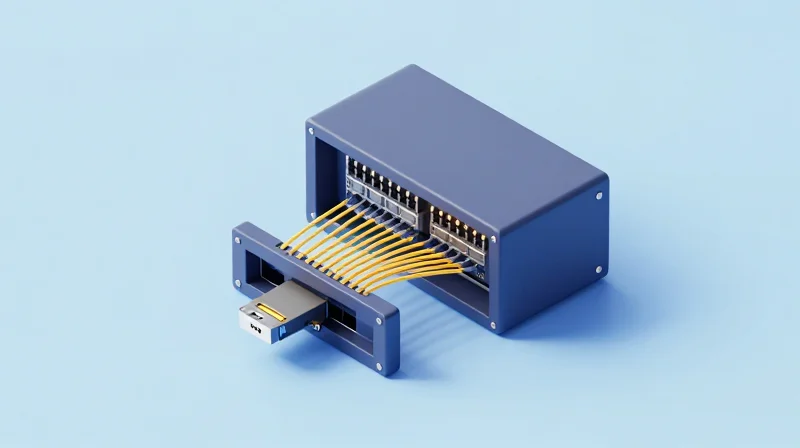
Integrating Ubytelink Fixed-Wavelength DWDM SFP+ modules into existing passive infrastructure eliminates the configuration overhead typically associated with complex optical networks. By adhering strictly to the ITU-T C-Band grid, these modules ensure precise spectral alignment with standard 100GHz or 50GHz spacing filters, providing a zero-touch installation experience. This seamless compatibility allows network engineers to expand capacity instantly without upgrading their existing filter hardware or managing additional software layers.
Precision Alignment with Passive Filter Architectures
Passive DWDM infrastructure, including Mux/Demux units and OADMs, relies on fixed frequency windows to route optical signals. Ubytelink’s fixed-wavelength modules utilize high-stability EML lasers that are factory-calibrated to stay within the exact center frequency of these windows. Unlike tunable alternatives that may require wavelength locking protocols, Ubytelink modules are hard-coded to specific ITU channels, ensuring that every photon is directed through the passband with minimal attenuation.
Comparison: Integration Efficiency
| Integration Factor | Ubytelink Fixed-Wavelength | Generic Tunable Modules |
|---|---|---|
| Channel Assignment | Hard-coded / Laser-etched label | Software-defined / Firmware dependent |
| Initialization Time | Instantaneous link-up | Sequential tuning and locking phase |
| Error Probability | Zero (Physical channel locking) | Moderate (Mismatched tuning) |
| Hardware Complexity | Low (Standard SFP+ port) | High (Requires I2C wavelength control) |
Simplifying Deployment Workflows
For global networks, simplicity equates to reliability. By utilizing fixed-wavelength optics, engineers can physically label patch panels and ports to correspond with the transceiver wavelength, creating a foolproof mapping system. This eliminates the risk of logical configuration errors during high-pressure maintenance windows or emergency capacity expansions.
Frequently Asked Questions
- Are Ubytelink modules compatible with AAWG filters?
Yes. Our modules are fully compliant with Athermal Arrayed Waveguide Grating (AAWG) filters, ensuring stable performance across the entire C-Band spectrum without signal degradation. - Do these modules support legacy 100GHz Mux/Demux?
Absolutely. Ubytelink fixed-wavelength solutions are designed to meet the spectral mask requirements of both legacy 100GHz and modern 50GHz grid systems. - What is the impact on the link power budget?
Due to their precise wavelength centering, these modules minimize 'filter edge' loss, ensuring that the maximum possible power reaches the receiver after passing through multiple passive stages.
Real-World Applications: From ISP Backbones to Enterprise DCI

Ubytelink Fixed-Wavelength DWDM SFP+ modules address the core challenge of modern networking: maximizing existing fiber assets without the prohibitive cost of laying new cables. By delivering stable, high-performance optical signals across the C-band spectrum, these modules enable Internet Service Providers (ISPs) and large-scale enterprises to scale their bandwidth exponentially while maintaining the rigorous uptime required for mission-critical services.
ISP Backbone Expansion and Metro-Ethernet Scaling
For Tier 2 and Tier 3 ISPs, regional backbone expansion often faces budget constraints and fiber scarcity. Ubytelink fixed-wavelength modules provide a predictable, low-maintenance solution for long-haul transmission. Unlike tunable optics, which require complex software management for wavelength assignment, fixed-wavelength SFP+ modules are 'set and forget.' When paired with passive Mux/Demux hardware, they allow ISPs to aggregate up to 40 or 80 channels on a single fiber pair, facilitating the rollout of 10G residential and business services across vast distances without active amplification in many metro scenarios.
Enterprise Data Center Interconnect (DCI) for Finance
In the financial sector, where high-frequency trading and synchronous data replication are paramount, latency and jitter must be minimized. Ubytelink's premium DWDM SFP+ modules offer deterministic performance that is essential for Data Center Interconnect (DCI). By utilizing fixed-wavelength optics, financial institutions avoid the slight tuning delays and potential failure points inherent in more complex tunable systems. This ensures that disaster recovery sites remain perfectly synchronized with primary hubs, maintaining data integrity during critical failover events.
Sector-Specific Deployment Comparison
| Industry Sector | Core Application | Primary Challenge | Ubytelink Advantage |
|---|---|---|---|
| Telecommunications | Metro/Backbone Expansion | Fiber Exhaustion | High channel density (Up to 80ch) with passive filters. |
| Financial Services | Synchronous Replication | Latency & Reliability | Fixed performance with zero wavelength-drift risk. |
| Cloud Providers | Inter-DC Connectivity | Operational Complexity | Seamless integration into standard L2/L3 switches. |
| Education/Research | Campus Networking | Strict Budget Caps | Significantly lower TCO compared to tunable alternatives. |
Common Application Questions
- Can Ubytelink DWDM SFP+ modules be used for distances over 80km?
Yes, while the native reach is often 80km (ZR), these modules can reach hundreds of kilometers when integrated with EDFA optical amplifiers and dispersion compensation modules (DCM) within the DWDM link. - Are these modules compatible with third-party passive Mux/Demux?
Absolutely. Ubytelink modules adhere strictly to the ITU-T 100GHz or 50GHz grid standards, ensuring 100% compatibility with any standard-compliant passive multiplexer. - Why choose fixed-wavelength for DCI instead of tunable?
Fixed-wavelength modules offer a lower price point and higher MTBF (Mean Time Between Failures) due to simpler internal components, making them ideal for stable, long-term point-to-point connections.
EEAT in Fiber Optics: Rigorous Testing and Quality Assurance
EEAT in Fiber Optics: Rigorous Testing and Quality Assurance
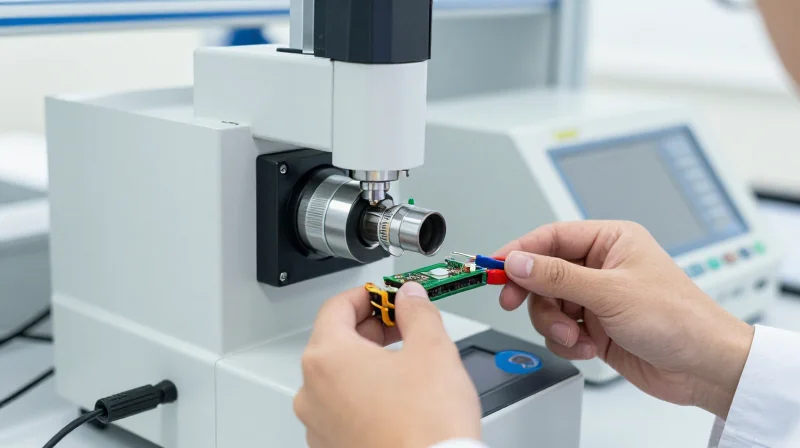
Quality assurance in fiber optics is an integrated engineering discipline that guarantees Ubytelink Fixed-Wavelength DWDM SFP+ solutions perform consistently under the most grueling environmental conditions. By adhering to the principles of Experience, Expertise, Authoritativeness, and Trustworthiness (EEAT), Ubytelink validates every module through a comprehensive battery of tests designed to simulate decades of network operation, ensuring that high-capacity data links remain stable and error-free for mission-critical deployments.
The Multi-Step Verification Pipeline
Every DWDM SFP+ module produced by Ubytelink is subjected to a sequence of environmental and electrical stress tests. The most critical of these is the Bit Error Rate (BER) test, which measures the integrity of data transmission at the physical layer. For DWDM networks, maintaining a BER of less than 10^-12 is essential for avoiding packet loss and ensuring seamless throughput across long-haul distances. This testing is conducted alongside rigorous spectral analysis to ensure that the fixed-wavelength output remains centered on the ITU-T grid, preventing inter-channel interference in dense multiplexing environments.
| Test Parameter | Ubytelink Standard | Significance |
|---|---|---|
| Thermal Cycling | Industrial: -40°C to +85°C | Ensures stability in outdoor and unconditioned environments. |
| Bit Error Rate (BER) | Less than 10^-12 | Guarantees data integrity for mission-critical traffic. |
| Optical Power Stability | ±0.5 dBm | Prevents crosstalk and ensures compatibility with passive filters. |
| SFF-8472 Compliance | Full Support | Enables real-time Digital Diagnostic Monitoring (DDM). |
Thermal Stress and Longevity Validation
Heat is the primary catalyst for component failure in optical transceivers. Ubytelink employs accelerated aging tests and thermal shock protocols to identify potential weaknesses before a product reaches the field. Unlike tunable lasers, which require complex internal heating elements and mechanical parts that can fail over time, our fixed-wavelength modules feature a simplified internal architecture. This physical simplicity inherently reduces the risk of wavelength drift and thermal degradation, providing a higher Mean Time Between Failures (MTBF) compared to complex alternatives.
- How does Ubytelink ensure compatibility across different vendor platforms?
We maintain an extensive lab of host equipment from major vendors to perform physical interoperability testing, verifying that our EEPROM coding matches the specific requirements of the target switch or router for 'plug-and-play' functionality. - What role does DDM play in quality assurance?
Digital Diagnostic Monitoring (DDM) allows network administrators to monitor real-time metrics such as temperature, laser bias current, and optical power. Ubytelink calibrates these sensors to industry-leading accuracy to provide an early warning system for preventive maintenance. - Why is spectral width testing important for Fixed-Wavelength modules?
It ensures that the laser light is concentrated on a very narrow frequency, which is vital for high-density DWDM systems to prevent 'bleeding' into adjacent channels.
Strategic ROI: Scaling Global Networks with Ubytelink
The strategic value of Ubytelink Fixed-Wavelength DWDM SFP+ solutions lies in their ability to significantly lower the Total Cost of Ownership (TCO) while providing the high-density capacity required for modern data demands. By prioritizing component longevity and power efficiency, these modules allow network architects to scale fiber capacity without the prohibitive costs of laying new dark fiber or frequent hardware replacements. For global enterprises and ISPs, this translates to a predictable cost model and a more resilient, future-proof network backbone.
Quantifying the TCO Advantage
While commodity transceivers may appear cost-effective initially, they often result in higher long-term expenditures due to elevated failure rates and thermal management issues. Ubytelink’s premium fixed-wavelength modules are engineered to reduce these 'hidden costs' through rigorous quality control and optimized power consumption.
| Cost Factor | Generic DWDM Solutions | Ubytelink Fixed-Wavelength DWDM |
|---|---|---|
| Failure Rate (Annualized) | High (0.5% - 2.0%) | Ultra-Low (<0.1%) |
| Power Consumption | Varies (Often >1.5W) | Optimized Low-Power Design |
| Compatibility Life-cycle | Limited to specific firmware | Multi-vendor EEPROM flexibility |
| Operational Downtime | Frequent replacements needed | Mission-critical stability |
Operational Benefits for Global Scaling
Scaling a global network requires more than just hardware; it requires a standardized ecosystem that reduces technical debt. Fixed-wavelength solutions simplify the management of DWDM mux/demux ports by providing consistent, predictable performance across specific ITU grid channels. This predictability allows engineering teams to automate provisioning and troubleshooting more effectively than with variable-performance alternatives.
- Energy Efficiency
Lower thermal output reduces the cooling requirements in dense colocation environments, leading to lower utility bills and increased hardware density. - Inventory Simplification
Standardizing on high-quality fixed-wavelength modules reduces the need for excessive 'safety stock' typically held to compensate for high failure rates of cheaper components. - Extended Reach
Superior signal-to-noise ratios (OSNR) mean fewer mid-span regenerators are needed on long-haul routes, directly cutting infrastructure CAPEX.
Strategic Growth FAQ
- How does fixed-wavelength impact future upgrades?
Fixed-wavelength modules provide a stable foundation. Because they adhere strictly to ITU grids, they can coexist with next-generation 25G or 100G DWDM channels on the same fiber pair, protecting your current investment. - Why is power consumption critical for ROI?
In a chassis with 48 or more SFP+ ports, a saving of even 0.5W per module scales to significant energy and heat reduction, extending the life of the switch or router itself. - Can Ubytelink modules be used in multi-vendor environments?
Yes, they are programmed for seamless compatibility with major manufacturers like Cisco, Juniper, and Arista, ensuring you are not locked into a single hardware vendor’s ecosystem.
Optimizing your fiber infrastructure requires precision-engineered components that you can trust. Ubytelink’s Fixed-Wavelength DWDM SFP+ modules offer the perfect balance of cost, performance, and long-term stability for any mission-critical environment. Contact our technical sales team today to scale your network with confidence and industry-leading expertise.