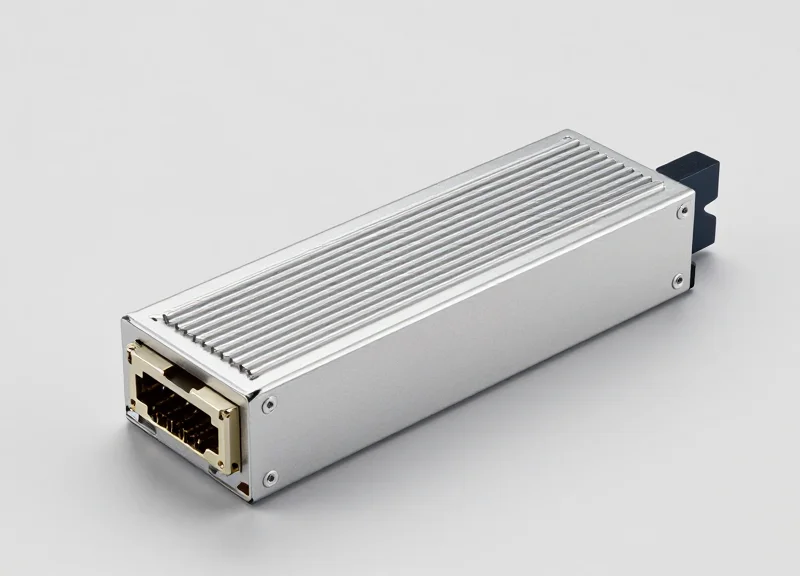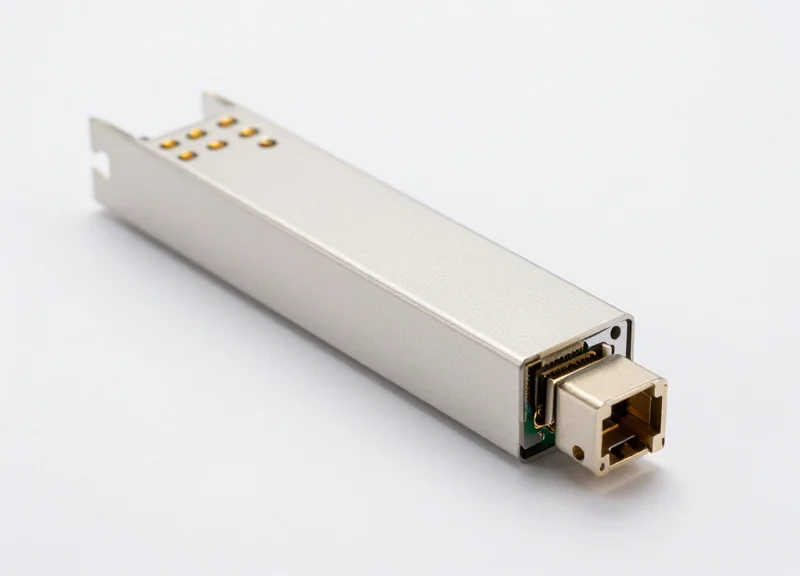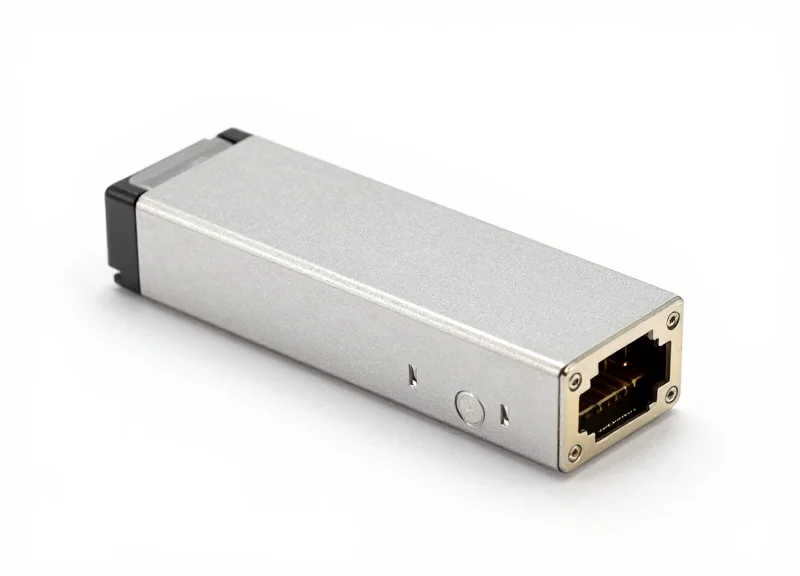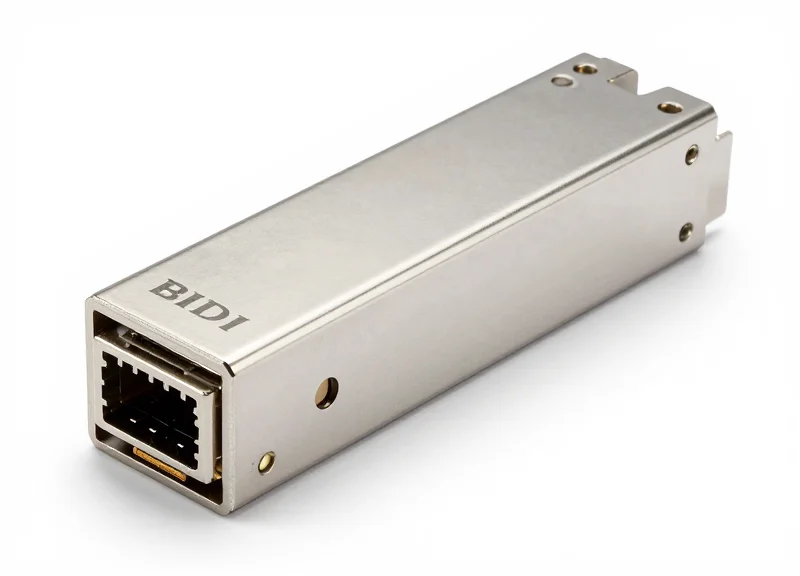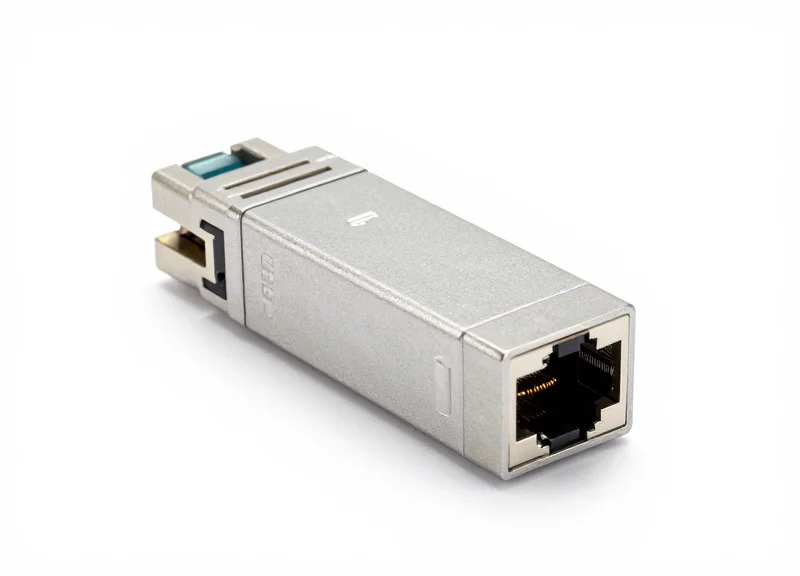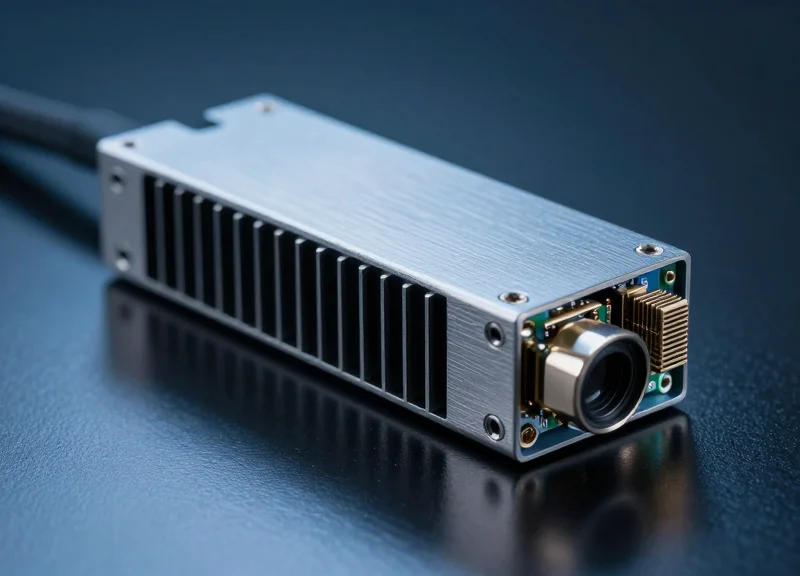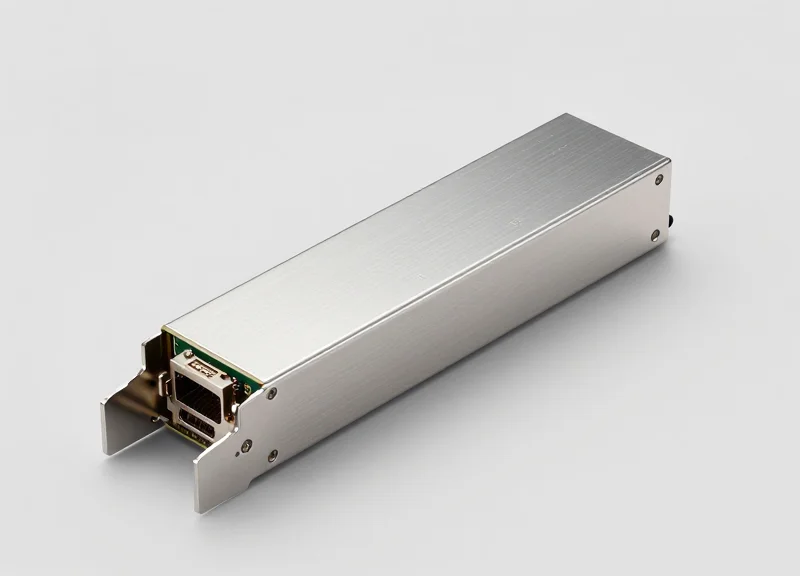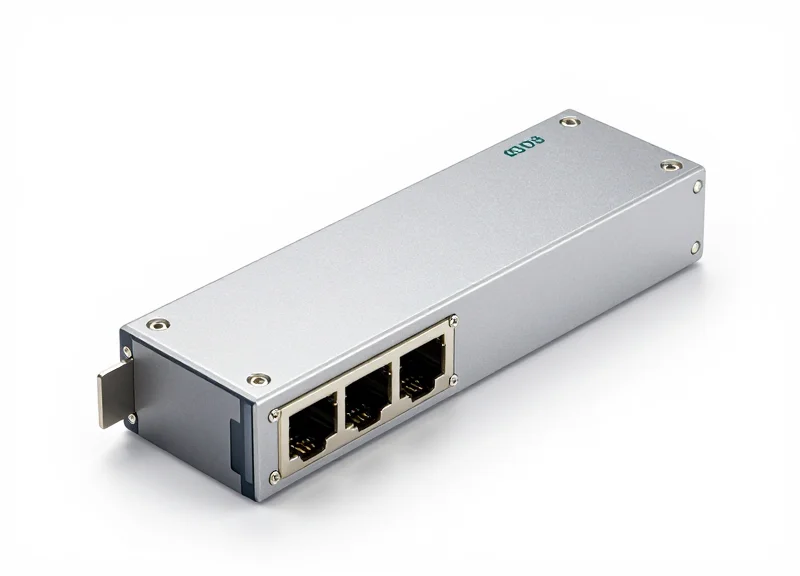
In an era where data consumption is growing exponentially, cloud service providers cannot afford bottlenecks or hardware failures. Ubytelink's 400G SR8 modules are designed to bridge the gap between massive bandwidth needs and the absolute necessity for operational stability in global network environments.
The Evolution of Cloud Networking: Why 400G is Essential

The evolution to 400G networking is a direct response to the 'bandwidth crunch' caused by the hyper-scaling of data centers and the emergence of compute-heavy technologies. As cloud ecosystems evolve, traditional 100G architectures are becoming bottlenecks that limit the throughput of high-performance computing (HPC) clusters. Ubytelink 400G SR8 solutions provide the necessary headroom for global networks to achieve lower latency and higher density, ensuring that data-driven services remain responsive and scalable in an increasingly interconnected world.
Technological Catalysts for 400G Adoption
Three primary factors are driving the industry-wide shift toward 400G: the proliferation of Artificial Intelligence (AI), the rollout of 5G telecommunications, and the rise of Big Data analytics. AI and Machine Learning (ML) training models require massive datasets to be moved between GPU clusters at lightning speeds. Simultaneously, 5G has decentralized the network, pushing more processing to the edge, which increases the volume of traffic entering the core cloud infrastructure. Without 400G capabilities, these technologies would face severe performance degradation due to network congestion.
| Feature | Legacy 100G (QSFP28) | Advanced 400G (QSFP-DD/OSFP) |
|---|---|---|
| Max Throughput | 100 Gbps | 400 Gbps |
| Modulation | NRZ | PAM4 |
| Energy Efficiency | Higher Watts per Gigabit | Lower Watts per Gigabit (Optimized) |
| Port Density | Standard | High Density (4x throughput in same footprint) |
Critical Challenges in the 100G to 400G Transition
- Why is PAM4 modulation significant for 400G?
Unlike the binary NRZ modulation used in 100G, PAM4 (Pulse Amplitude Modulation 4-level) doubles the bit rate by carrying two bits per symbol, allowing for 400G speeds without requiring excessive physical lanes. - Does 400G improve energy efficiency in data centers?
Yes. By consolidating traffic into fewer, higher-capacity links, 400G optics reduce the total power consumption per bit transferred, which is vital for meeting green data center initiatives. - How does Ubytelink 400G SR8 assist in global scaling?
Ubytelink 400G SR8 modules use short-reach multi-mode fiber to provide cost-effective, high-bandwidth interconnects for leaf-spine architectures, making it easier for global providers to expand capacity rapidly.
Ultimately, the shift to 400G is about future-proofing. As global data traffic continues its exponential climb, organizations that adopt high-density solutions like Ubytelink's 400G SR8 will gain a competitive advantage through superior network reliability and reduced operational complexity.
Unpacking the 400G SR8 Architecture: Efficiency in QSFP-DD
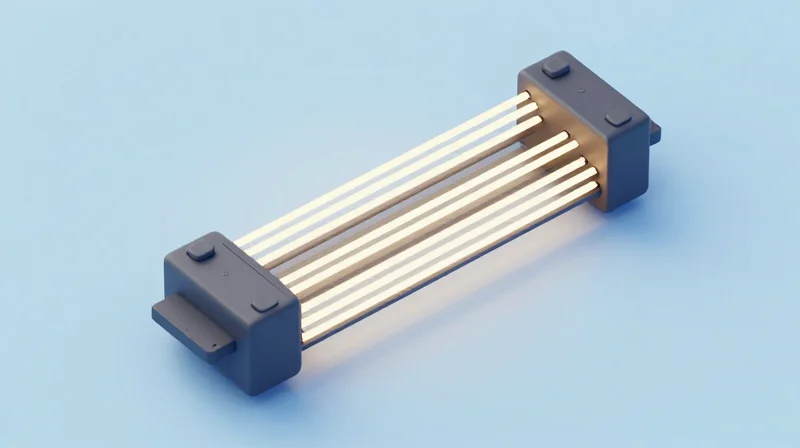
The 400G SR8 (Short Range 8-lane) transceiver represents a pivotal shift in data center interconnects, utilizing the QSFP-DD form factor to support eight lanes of 53.125Gbps PAM4 signaling. By employing a parallel transmission model over sixteen multimode fibers, the SR8 architecture optimizes thermal dissipation and lowers the technical barrier for 400G adoption, making it the preferred choice for high-bandwidth leaf-to-spine connectivity in hyperscale environments.
The Power of 8 Lanes: PAM4 Signaling and Parallelism
The move from 100G to 400G required a fundamental change in signaling technology. While older standards relied on Non-Return-to-Zero (NRZ), Ubytelink’s 400G SR8 modules utilize 4-level Pulse Amplitude Modulation (PAM4). This allows for doubling the data rate within the same bandwidth. By distributing this traffic across 8 lanes, the architecture reduces the complexity of individual components compared to 4-lane 100G-per-lane solutions, resulting in improved yields and higher reliability for global network deployments.
Comparing 400G Architectures: SR8 vs. The Field
| Feature | 400G SR8 | 400G DR4 | 400G FR4 |
|---|---|---|---|
| Fiber Type | Multimode (MMF) | Singlemode (SMF) | Singlemode (SMF) |
| Lane Configuration | 8 x 50G PAM4 | 4 x 100G PAM4 | 4 x 100G PAM4 |
| Max Reach | 100m (OM4) | 500m | 2km |
| Connector Type | MPO-16 / MPO-24 | MPO-12 | Duplex LC |
| Primary Use Case | Intra-rack / Leaf-Spine | Data Center Fabric | Campus / DCI |
Efficiency in the QSFP-DD Form Factor
The Quad Small Form-factor Pluggable Double Density (QSFP-DD) is the engine behind Ubytelink’s 400G efficiency. It features an 8-lane electrical interface that doubles the density of the traditional QSFP. This design ensures backward compatibility with existing QSFP28 and QSFP+ ports, allowing cloud providers to scale their infrastructure incrementally without a complete hardware overhaul. Furthermore, the increased surface area of the QSFP-DD housing improves heat dissipation, a critical factor when managing the high power density of AI and ML workloads.
Technical Specifications & FAQ
- Why does SR8 use 16 fibers instead of 8?
The SR8 architecture uses 8 transmit and 8 receive fibers (16 total) to facilitate parallel data transmission. This allows each lane to operate at a stable 50G PAM4 rate, ensuring high signal integrity over short distances. - What is the maximum reach for Ubytelink 400G SR8?
It supports a reach of up to 70m over OM3 multimode fiber and 100m over OM4/OM5 fiber, making it ideal for high-speed connections within a single data hall. - Is the MPO-16 connector standard for all 400G?
No, it is specific to the SR8 and parallel fiber designs. Other standards like FR4 use duplex LC connectors, while DR4 typically uses MPO-12. The MPO-16 is essential for the 8-lane parallelism of SR8.
Ubytelink's Manufacturing Standards: Where Precision Meets Performance

Ubytelink's Manufacturing Standards: Where Precision Meets Performance
Ubytelink 400G SR8 modules are engineered through a rigorous manufacturing framework that prioritizes signal integrity and long-term durability over high-volume cost cutting. Unlike generic alternatives that often utilize 'Grade B' components or manual assembly lines, Ubytelink employs a fully automated, state-of-the-art production process. This commitment to precision ensures that every module meets the ultra-low bit-error rate (BER) required for the most demanding hyperscale data centers and global cloud architectures.
Tier-1 Component Sourcing and Material Excellence
The foundation of a premium 400G SR8 module lies in its internal components. Ubytelink partners exclusively with industry-leading suppliers for critical sub-assemblies. This includes high-performance 850nm VCSEL (Vertical-Cavity Surface-Emitting Laser) arrays and advanced PAM4 DSPs (Digital Signal Processors) from top-tier silicon providers. By utilizing high-grade Japanese and US-sourced ICs, Ubytelink minimizes thermal output and power consumption—two factors that are critical when scaling 400G infrastructure.
| Feature | Ubytelink Standard | Generic Alternatives |
|---|---|---|
| Laser Source | Premium Grade-A VCSEL Arrays | Standard or Mixed Grade VCSEL |
| DSP Technology | Latest Low-Power PAM4 DSPs | Legacy or Unbranded DSPs |
| PCB Material | High-Frequency Rogers/Isola Laminates | Standard FR-4 Multilayer |
| Testing Rigor | 100% Interoperability & Thermal Stress | Sample-Based Quality Checks |
| MTBF Rating | Exceeds 500,000 Hours | Often Undisclosed or <200,000 |
Automated Testing and Quality Assurance
To guarantee 'Plug-and-Play' reliability across global networks, Ubytelink implements a multi-stage testing protocol. Every 400G SR8 module undergoes Automated Optical Inspection (AOI) to detect microscopic physical defects and 100% traffic testing in authentic OEM switch environments (including Cisco, Arista, and Mellanox platforms). This ensures that the module does not just 'work,' but performs at peak efficiency under full-load conditions.
- How does Ubytelink ensure compatibility across different brands?
We utilize a massive library of original vendor firmware and real-world switch hardware for validation, ensuring that our 400G SR8 modules are recognized and optimized by all major networking brands. - Why is thermal management so emphasized in Ubytelink manufacturing?
400G modules generate significant heat; our design uses high-conductivity thermal pads and optimized heat-sink casing to prevent thermal throttling, which is common in cheaper, generic modules. - What is the impact of using high-grade PCB materials?
High-frequency laminates reduce signal loss (insertion loss) at 400G speeds, allowing for longer reach and more stable connections within the data center.
Critical Reliability: Rigorous Testing for Zero-Downtime Environments

In mission-critical cloud environments, hardware failure translates directly to systemic risk and financial loss. Ubytelink mitigates these risks through a 'Zero-Downtime' validation framework, ensuring that every 400G SR8 module not only meets but exceeds industry MTBF standards through rigorous environmental, electrical, and optical stress protocols.
Environmental Stress Screening (ESS) and Thermal Resilience
Hyperscale data centers generate immense heat, requiring transceivers to operate reliably across fluctuating thermal gradients. Ubytelink utilizes Environmental Stress Screening (ESS) to identify latent defects. Modules are subjected to rapid temperature cycling and high-humidity soak tests to ensure the integrity of the internal optical sub-assemblies (TOSA/ROSA) and the epoxy bonds used in the QSFP-DD housing.
| Test Category | Protocol Detail | Performance Objective |
|---|---|---|
| Thermal Cycling | -40°C to +85°C (Non-operating) | Structural integrity and expansion coefficient validation |
| Damp Heat | 85% Humidity / 85°C for 1000 hours | Corrosion resistance and hermetic seal verification |
| Vibration & Shock | MIL-STD-810G Mechanical Stress | Durability during shipping and high-airflow chassis vibration |
| BER Sensitivity | Pre-FEC and Post-FEC analysis | Ensuring error-free transmission below 1E-12 |
Signal Integrity and Bit Error Rate (BER) Verification
The 400G SR8 architecture relies on PAM4 modulation, which is significantly more sensitive to noise than traditional NRZ. Ubytelink employs high-speed oscilloscopes and Bit Error Rate Testers (BERT) to analyze the 'Eye Diagram' of each lane. By maintaining a wide eye opening and low jitter, our modules provide a substantial margin over the IEEE 802.3bs standards, ensuring that even as components age, the signal remains robust.
Ensuring Seamless Interoperability
- How is multi-vendor compatibility verified?
Each Ubytelink 400G SR8 module is tested in a 'Live Network Lab' containing the latest switches and routers from Cisco, Arista, Juniper, and Mellanox to ensure 100% EEPROM recognition and DOM functionality. - What role does real-world traffic simulation play?
Beyond synthetic tests, we simulate bursty cloud traffic patterns to verify that the internal DSP (Digital Signal Processor) manages clock recovery and equalization without dropping packets during high-load transitions. - Is the Forward Error Correction (FEC) compatible?
Our modules are optimized for KP4 FEC, as required by the 400GBASE-SR8 specification, ensuring seamless integration with standard host-side error correction algorithms.
By adhering to these stringent testing cycles, Ubytelink provides global network operators with the confidence that their 400G infrastructure will remain stable under the most demanding workloads, effectively eliminating the high costs associated with premature transceiver replacement and link outages.
Optimizing Power Efficiency in Hyperscale Data Centers

In the context of hyperscale architecture, power efficiency is a critical driver of operational sustainability and scalability. The Ubytelink 400G SR8 optical transceiver addresses this by delivering a substantial reduction in power consumption per gigabit compared to legacy 100G and 200G optics. By utilizing optimized vertical-cavity surface-emitting laser (VCSEL) arrays and a high-efficiency digital signal processor (DSP) design, these modules minimize electricity usage at the port level. This efficiency translates into massive cumulative savings when deployed across the high-density leaf-spine fabrics characteristic of modern cloud environments.
Thermal Management and Heat Dissipation
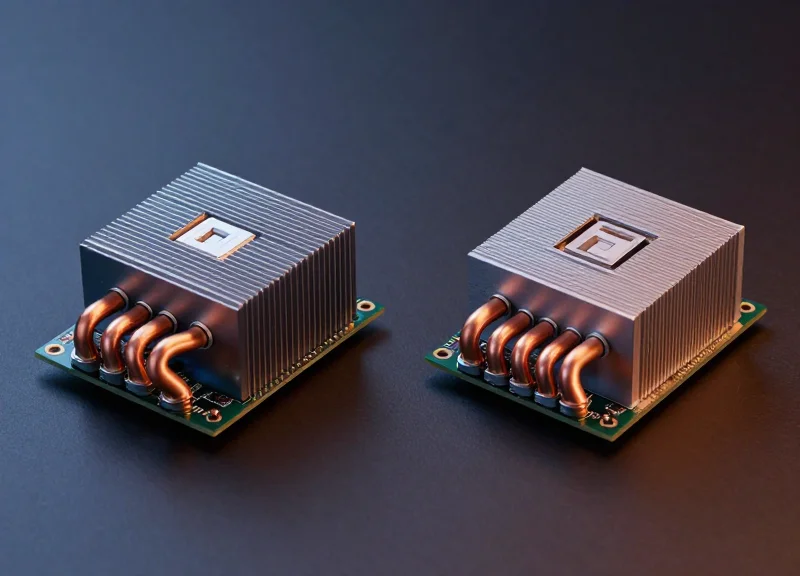
High power consumption inevitably leads to increased thermal dissipation, which is one of the primary constraints in high-density rack configurations. Ubytelink 400G SR8 modules are engineered with low-impedance electrical interfaces and premium heat-conductive housing materials that facilitate rapid cooling. By maintaining a lower operating temperature, these modules reduce the demand on data center cooling systems (HVAC) and fans, preventing thermal throttling and ensuring that switch hardware operates within its optimal performance window.
| Performance Metric | Ubytelink 400G SR8 | Generic 400G SR8 | Legacy 4x100G Setup |
|---|---|---|---|
| Typical Power Draw | < 8.5W | 10W - 12W | ~14W - 16W |
| Energy per Gigabit | 0.021 Watts | 0.027 Watts | 0.038 Watts |
| Thermal Impact | Low / Optimized | Moderate / High | Very High |
| Cooling Requirement | Standard Airflow | High-Velocity Airflow | Maximum Airflow |
Driving Lower TCO through Energy Innovation
The financial impact of energy efficiency is felt throughout the entire lifecycle of the data center infrastructure. Beyond the immediate reduction in the electricity bill, lower power draw reduces the capital expenditure (CAPEX) required for Power Distribution Units (PDUs) and backup battery systems. Ubytelink’s commitment to premium components ensures that while the modules consume less power, they do not sacrifice signal integrity or reach. This balance allows cloud providers to scale their bandwidth capacity without a linear increase in their carbon footprint or operational overhead.
Frequently Asked Questions: Power and Efficiency
- How does the SR8 form factor compare to DR4 in terms of power consumption?
The 400G SR8 typically consumes less power than the 400G DR4 because the VCSEL lasers used for short-range transmission require significantly less driving current than the silicon photonics or EML lasers used in 500m-2km DR4 modules. - Does lower power consumption affect the module's reliability?
On the contrary, lower power consumption results in less heat stress on internal components, which generally extends the Mean Time Between Failures (MTBF) and enhances overall network reliability. - What is the primary factor behind Ubytelink's superior efficiency?
The efficiency is driven by the integration of state-of-the-art 7nm DSP chips and high-sensitivity optical sub-assemblies that maintain signal performance at lower voltage swings.
Seamless Compatibility: Multi-Vendor Interoperability for Global Networks
The Ubytelink 400G SR8 for Cloud Solutions provides a robust answer to the complexities of heterogeneous network environments by offering verified compatibility with a broad spectrum of tier-one networking hardware. In modern hyperscale deployments, the ability to mix and match hardware without sacrificing signal integrity or diagnostic visibility is essential for maintaining a flexible, cost-effective infrastructure. Ubytelink achieves this through precision engineering of the EEPROM and firmware, ensuring that each module is recognized natively by host systems as a premium-grade optical component.
Engineered for Universal Recognition
Every Ubytelink 400G SR8 module undergoes a sophisticated serialization process where the internal EEPROM is coded to match the specific requirements of the target platform. This eliminates the 'unsupported transceiver' errors that often plague generic alternatives, allowing for seamless integration into existing management software and telemetry suites. By maintaining strict compliance with IEEE 802.3bs and the QSFP-DD Multi-Source Agreement (MSA), these modules guarantee physical and electrical interface consistency across diverse global sites.
| Vendor Ecosystem | Supported Series/Platforms | Interoperability Status |
|---|---|---|
| Cisco | Nexus 9000, Catalyst 9500, NCS 5500 | Verified Full Compatibility |
| Arista | 7060X, 7280R, 7800R3 Series | Native EOS Support |
| Juniper | QFX5200, PTX10000, MX Series | Verified Junos Integration |
| NVIDIA (Mellanox) | Spectrum-2/3/4 Switches, BlueField DPU | High-Performance Optimized |
| White Box/ODM | Edgecore, Quanta, Celestica (SONiC) | Open Network Standards Compliant |
Overcoming the Challenges of Vendor Lock-In
Vendor lock-in often leads to inflated procurement costs and supply chain bottlenecks that can stall global expansion. Ubytelink’s interoperability strategy allows network architects to bypass these constraints. By providing a single, reliable source for 400G optics that function across Cisco, Arista, and Juniper stacks simultaneously, Ubytelink simplifies spare parts management and streamlines the technical training required for deployment teams.
- Does using Ubytelink modules void my original equipment manufacturer (OEM) warranty?
No. Under standard international trade and competition laws, such as the Magnuson-Moss Warranty Act in the U.S., manufacturers cannot void a warranty simply for using third-party peripherals unless they can prove the peripheral caused direct damage. - How does Ubytelink handle firmware updates for different vendors?
Ubytelink modules feature field-programmable capabilities, allowing the firmware to be adjusted or updated to maintain compatibility with new NOS (Network Operating System) releases or specific vendor-side software changes. - Are Digital Optical Monitoring (DOM) features supported across all vendors?
Yes, Ubytelink 400G SR8 modules fully support DOM (or DDM) protocols, providing real-time data on temperature, supply voltage, laser bias current, and optical power to the host system's management interface.
Ultimately, the Ubytelink 400G SR8 serves as a unifying component in global networks. It ensures that the transition to 400G is not hindered by hardware silos, but rather facilitated by a standard of quality that meets or exceeds OEM specifications while offering the flexibility required for the next generation of cloud and AI-driven data centers.
Future-Proofing Infrastructure with Scalable Optical Solutions

Future-Proofing Infrastructure with Scalable Optical Solutions
Future-proofing a global network is not merely about increasing raw bandwidth; it is about selecting an architectural path that minimizes technical debt and maximizes the lifespan of physical layer investments. The Ubytelink 400G SR8 for Cloud Solutions provides this strategic advantage by utilizing an 8-lane parallel optic design that aligns directly with the roadmap for next-generation 800G and 1.6T standards, ensuring that today's hardware remains relevant in tomorrow's ecosystem.
The Architectural Bridge to 800G
The primary advantage of the SR8 (Short Range 8-lane) configuration lies in its use of 50G PAM4 modulation across eight distinct channels. This matches the lane-speed logic utilized in early-stage 800G deployments, which often aggregate 8 lanes of 100G. By deploying MPO-16 or MPO-24 cabling infrastructure now to support 400G SR8, enterprises establish the requisite high-density fiber plants needed for 800G without requiring a costly 'rip-and-replace' of the structured cabling.
| Feature | 400G SR8 Infrastructure | Next-Gen 800G Transition |
|---|---|---|
| Optical Interface | 8-Lane Parallel (PAM4) | 8-Lane Parallel (Advanced PAM4) |
| Cabling Requirement | MPO-16 / MPO-24 Connector | MPO-16 (Backward Compatible) |
| Density Scaling | High-Density QSFP-DD | Ultra-High-Density OSFP/QSFP-DD800 |
| Infrastructure ROI | Active ROI over 5+ years | Low incremental migration cost |
Scalability and Economic Sustainability
Ubytelink's 400G SR8 modules are engineered with a focus on 'Elastic Capacity.' This means the modules support breakout configurations (e.g., 400G to 8x50G or 2x200G), allowing network operators to scale their leaf-and-spine fabrics incrementally. This flexibility reduces initial capital expenditure (CAPEX) while providing a clear path to saturate the network core as data demands increase from AI workloads and edge computing.
- How does 400G SR8 protect my cabling investment?
By utilizing the MPO-16 connector standard, SR8 ensures that your fiber plant is ready for 800G SR8 modules, which use the same cabling footprint, effectively doubling your bandwidth without new fiber pulls. - Is SR8 more scalable than DR4 or FR4 for cloud solutions?
While DR4/FR4 are excellent for reach, SR8 is optimized for high-density, short-reach applications within the data center, offering better breakout flexibility and cost-per-bit advantages in large-scale leaf-spine architectures. - What role does Ubytelink play in long-term reliability?
Ubytelink's premium quality control and rigorous stress testing ensure that modules exceed standard lifecycle expectations, maintaining signal integrity even as the surrounding network environment becomes more complex.
In conclusion, the Ubytelink 400G SR8 is a strategic asset for global networks. It offers the premium performance required for today's cloud-heavy traffic while serving as a modular stepping stone toward the 800G era, ensuring that your network infrastructure remains agile, efficient, and ahead of the curve.
The Ubytelink Edge: Expertise and Technical Support
Choosing Ubytelink 400G SR8 for Cloud Solutions: Premium Quality for Global Networks means more than just acquiring high-performance hardware; it signifies a partnership with optical specialists who understand the nuances of high-density data center interconnects. In an environment where even minor latency or compatibility issues can disrupt global services, Ubytelink offers a layer of engineering depth that commodity vendors cannot match, focusing on the total lifecycle of the optical link.
Integrated Engineering and Custom Firmware Support
The technical edge provided by Ubytelink centers on the ability to tailor 400G SR8 modules to specific infrastructure requirements. Our engineering team conducts rigorous interoperability testing and provides custom firmware coding to ensure modules interact flawlessly with a variety of Network Operating Systems (NOS). This proactive approach eliminates common issues such as port-flapping, I2C communication errors, and DOM reporting inaccuracies that often plague generic hardware in hyperscale environments.
Comparison: Ubytelink Support vs. Standard Vendors
| Support Feature | Ubytelink Advantage | Standard Commodity Vendors |
|---|---|---|
| Validation Testing | 100% Application-Specific Traffic Testing | Random Batch/Sample Testing |
| Technical Access | Direct Escalation to Optical Engineers | Tiered Support / General Helpdesk |
| Logistics | Global Regional Stocking for JIT Delivery | Centralized Shipping with Long Lead Times |
| Customization | Firmware Tuning for Multi-Vendor Stacks | Fixed Standardized Firmware Only |
Supply Chain Resilience and Global Logistics
Ubytelink mitigates the risks of global supply chain volatility through strategic regional warehousing and a robust logistics network. For cloud providers operating across continents, this ensures that 400G SR8 modules are available for rapid deployment or emergency replacement. By maintaining a buffer of critical inventory, Ubytelink enables network operators to scale their bandwidth capacity on-demand without the constraints of typical 12-to-16 week manufacturing lead times.
Technical Implementation FAQ
- How does Ubytelink ensure 400G SR8 compatibility with specific switch vendors?
We maintain an extensive in-house laboratory equipped with the latest hardware from Arista, Cisco, NVIDIA, and Juniper to simulate real-world traffic conditions and verify EEPROM coding and diagnostic accuracy. - What level of technical assistance is available during deployment?
Ubytelink offers direct access to senior technical engineers who can assist with link budget calculations, troubleshooting optical performance issues, and providing onsite or remote configuration guidance. - Can Ubytelink provide specialized testing reports for compliance?
Yes, we provide comprehensive test reports for every batch, including BER (Bit Error Rate) testing, optical eye diagram analysis, and power consumption verification to meet strict cloud compliance standards.
As you scale your global network, the reliability of your optical layer is non-negotiable. Ubytelink's 400G SR8 modules offer the perfect balance of premium quality and high-speed performance for mission-critical cloud solutions. Contact our engineering team today for a consultation or to request a sample for your next infrastructure upgrade.