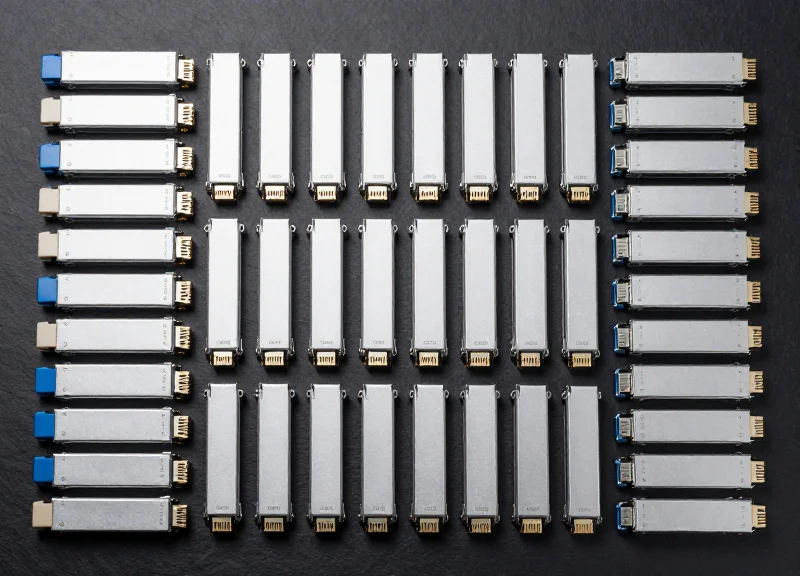
In the rapidly evolving landscape of data center management and enterprise networking, 10G SFP+ modules remain the workhorse of high-speed connectivity. However, as networks scale, the cost of individual components can become a significant barrier. This guide addresses the critical need for high-quality, cost-effective 10G SFP+ SR and LR solutions through strategic wholesale procurement and custom OEM/ODM manufacturing.
Understanding the Fundamentals: 10G SFP+ SR vs. LR
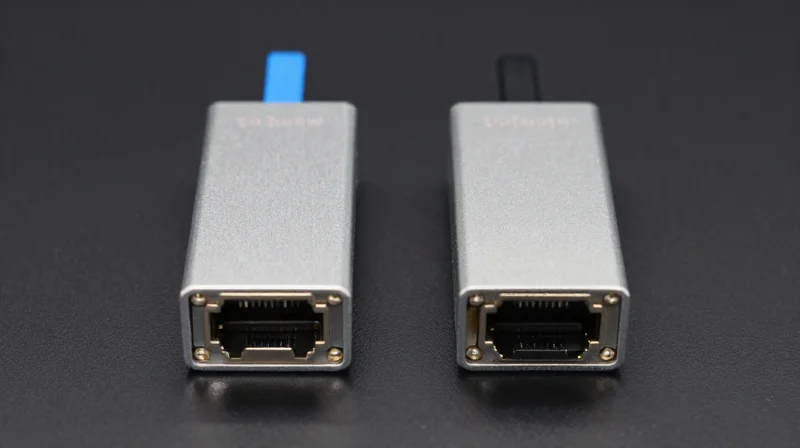
The primary distinction between 10G SFP+ SR and LR modules lies in their transmission distance and the type of optical fiber they utilize; SR (Short Range) is designed for short-reach applications over multimode fiber, while LR (Long Range) is engineered for long-distance data transmission over single-mode fiber. Selecting the wrong module can lead to immediate signal failure or long-term hardware degradation due to power mismatch and dispersion issues.
Technical Specifications: SR vs. LR Comparison
| Feature | 10G SFP+ SR (Short Range) | 10G SFP+ LR (Long Range) |
|---|---|---|
| Fiber Type | Multimode (OM3/OM4) | Single-mode (OS2) |
| Wavelength | 850 nm | 1310 nm |
| Max Distance | 300m (OM3) / 400m (OM4) | 10 km (6.2 miles) |
| Laser Type | VCSEL | DFB Laser |
| Typical Application | Data Centers / Intra-rack | Campus Backbones / WAN |
| Relative Cost | Lower | Higher |
Choosing the Right Module for Your Network
When procuring inventory for a large-scale deployment, infrastructure compatibility is the most significant factor. SFP+ SR modules utilize Vertical-Cavity Surface-Emitting Lasers (VCSEL), which are cost-effective but limited by the modal dispersion inherent in multimode fiber. These are the industry standard for high-density Top-of-Rack (ToR) switching. In contrast, SFP+ LR modules use Distributed Feedback (DFB) lasers that provide the high optical power and spectral purity required to traverse kilometers of single-mode fiber without significant signal loss. Wholesale buyers must also account for the 'hidden' costs: while SR transceivers are cheaper, the multimode fiber they require is often more expensive per meter than single-mode fiber.
Frequently Asked Questions
- Can I connect an SFP+ SR to an SFP+ LR module?
No. They operate at different wavelengths (850nm vs 1310nm) and use different fiber types. The light pulses from one will not be correctly interpreted by the receiver of the other. - Do I need an attenuator for 10G SFP+ LR?
For short distances (under 2km), some high-output LR modules may saturate the receiver. It is important to check the receiver power thresholds, though most modern 10km modules can handle shorter links without an attenuator. - Which module is better for future-proofing?
Single-mode fiber (used with LR) has significantly higher bandwidth potential over distance, making LR and single-mode infrastructure a better long-term investment for scaling to 40G or 100G.
The Strategic Benefits of Wholesale SFP+ Procurement
The Strategic Benefits of Wholesale SFP+ Procurement
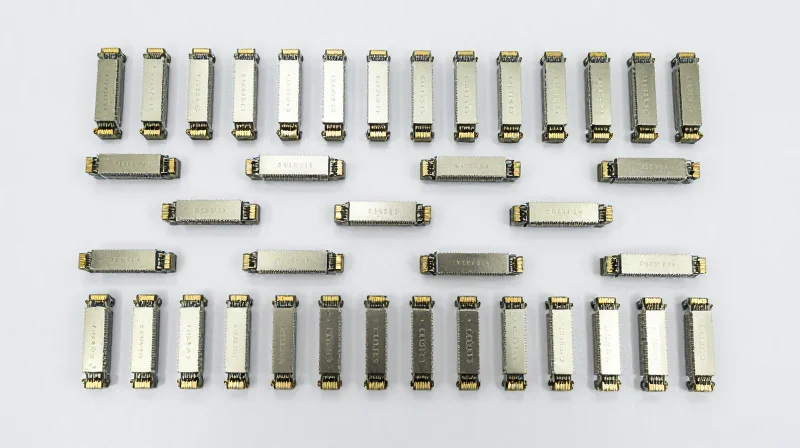
Strategic procurement of 10G SFP+ SR and LR transceivers allows organizations to lock in lower price points and ensure hardware uniformity across data center expansions. In the 2026 networking landscape, wholesale volume is the primary lever for reducing CAPEX while maintaining the rigorous standards required for high-speed fiber links. By transitioning from ad-hoc purchasing to a bulk-buy model, network architects can mitigate the risks of price volatility and technical incompatibility that often plague fragmented hardware deployments.
Financial Optimization and Economies of Scale
The most immediate advantage of bulk procurement is the significant reduction in the total cost of ownership (TCO). High-density deployments requiring hundreds of 10G SFP+ modules benefit from staggered price tiers where the cost per gigabit drops as the unit count increases. This financial headroom allows for more robust contingency planning and the reallocation of budget to other critical infrastructure components.
| Order Volume | Pricing Category | Estimated Savings | Strategic Advantage |
|---|---|---|---|
| 1 - 49 Units | Standard Retail | Base Price | Immediate Project Needs |
| 50 - 249 Units | Tier 1 Wholesale | 15% - 25% | Reduced Per-Port Cost |
| 250 - 999 Units | Enterprise Bulk | 25% - 40% | Supply Chain Priority |
| 1000+ Units | Custom OEM Quote | Negotiated Max | Long-term Price Locking |
Mitigating Supply Chain Volatility in 2026
The 2026 market continues to see fluctuations in semiconductor availability and raw material costs. Establishing a wholesale relationship through custom quotes provides a buffer against these uncertainties. Bulk orders often come with 'Price Protection' and 'Inventory Allocation' guarantees, ensuring that your organization is not subject to sudden market spikes or unexpected lead time delays that could derail project timelines.
- How do custom quotes improve procurement efficiency?
Custom quotes allow for the consolidation of SR and LR requirements into a single master agreement, simplifying accounting and streamlining the logistics of multi-site rollouts. - Can wholesale orders include mixed compatibility requirements?
Yes, custom wholesale procurement allows for multi-vendor coding (e.g., Cisco, Juniper, Arista) within the same bulk order, ensuring seamless integration across diverse hardware environments. - What is the impact of wholesale on logistics and lead times?
Wholesale buyers typically receive priority in the manufacturing queue and benefit from consolidated shipping, which reduces both the carbon footprint and the per-unit shipping cost.
Customization through OEM and ODM Services

Customization through OEM and ODM Services
Leveraging Original Equipment Manufacturer (OEM) and Original Design Manufacturer (ODM) services allows wholesale buyers to move beyond the constraints of generic hardware by integrating site-specific coding, branding, and hardware modifications directly at the point of production. This level of customization ensures that 10G SFP+ SR and LR transceivers are not only compatible with diverse network ecosystems but also serve as a professional extension of a service provider's brand identity.
Tailored Firmware and Multi-Vendor Compatibility
One of the primary advantages of OEM services is the ability to write custom firmware that guarantees seamless interoperability across multiple hardware platforms. In a modern data center, equipment from Cisco, Arista, Juniper, and HPE often coexist. Ubytelink can pre-code 10G SFP+ modules with specific EEPROM signatures, ensuring they are recognized as 'genuine' by host devices, thereby avoiding error messages or port-locking issues that frequently plague generic third-party optics.
Branding and Physical Personalization
For Value-Added Resellers (VARs) and System Integrators, ODM services offer the opportunity to build brand equity through private labeling. This includes custom-designed labels with proprietary part numbers, logos, and serial tracking systems. Furthermore, physical modifications such as color-coded pull-tabs for SR (multimode) and LR (singlemode) identification can be implemented to streamline cable management for end-users.
| Feature | OEM Service Scope | ODM Service Scope |
|---|---|---|
| Branding | Custom labeling and logos on existing designs | Full custom housing and packaging design |
| Firmware | Standard multi-vendor compatibility coding | Proprietary protocol or performance tuning |
| Hardware | Standardized internal components | Customized PCBA or specialized laser types |
| Ideal For | Wholesale buyers and resellers | Proprietary hardware developers |
Key Considerations for Custom Wholesale Orders
- What is the typical Minimum Order Quantity (MOQ) for custom labeling?
While standard wholesale orders have low thresholds, custom silk-screening or proprietary label printing typically requires an MOQ of 100 to 500 units depending on the complexity. - Can firmware be updated after the modules are deployed?
Yes, many of our 10G SFP+ modules support field-reprogramming via specialized coding boxes, though pre-coding at the factory is recommended for bulk consistency. - Does customization affect the lead time for bulk shipments?
Standard OEM coding adds minimal time (1-3 days), whereas ODM hardware modifications may extend lead times by several weeks to allow for engineering validation and testing.
Ensuring Reliability: Quality Control and Compatibility Testing
Ensuring Reliability: Quality Control and Compatibility Testing
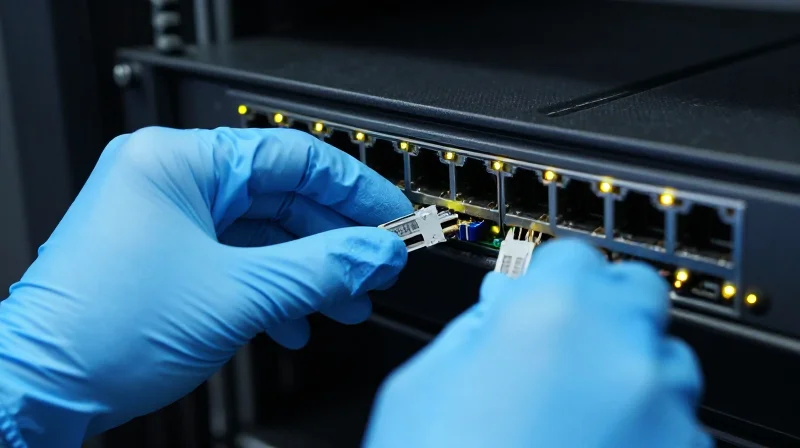
For organizations scaling their network infrastructure, the reliability of 10G SFP+ transceivers is determined by the intersection of rigorous hardware quality control and precise software compatibility. Achieving 100% interoperability requires more than just meeting MSA (Multi-Source Agreement) standards; it necessitates a comprehensive validation cycle that mimics the target production environment to ensure that every module performs exactly like a 'first-party' original.
The Multi-Vendor Interoperability Framework
The primary barrier to 'plug-and-play' functionality in 10G networks is the proprietary vendor lock-in mechanisms used by major OEMs. To bypass these, wholesale transceivers must undergo a sophisticated EEPROM coding process. This involves writing specific identification data into the module's memory so it is recognized as a genuine component by host systems from Cisco, Juniper, Arista, and HPE. Without this precise coding, switches may disable the port or trigger persistent warning logs that compromise network monitoring.
| Testing Category | Verification Process | Performance Benefit |
|---|---|---|
| Optical Performance | Spectral width and extinction ratio measurement | Ensures signal integrity over maximum rated distances (300m for SR, 10km for LR). |
| Environmental Stress | High-low temperature cycling and humidity tests | Prevents hardware failure in high-density, heat-intensive data center racks. |
| Compatibility Coding | EEPROM signature verification for Tier-1 vendors | Eliminates 'unsupported transceiver' errors and ensures DOM/DDM functionality. |
| Bit Error Rate (BER) | PRBS31 pattern testing at 10.3125 Gbps | Guarantees error-free data transmission under full bandwidth load. |
Quality Assurance Standards and Reliability Metrics
- How is 100% compatibility with Cisco or Arista achieved?
Compatibility is verified by testing each batch of modules in a dedicated 'Compatibility Lab' containing the actual host switches (e.g., Nexus 9k or Arista 7000 series) rather than simulators. This ensures the Digital Optical Monitoring (DOM) interface reports accurate data to the operating system. - What is the industry-standard MTBF for 10G SFP+ modules?
Premium wholesale 10G SFP+ modules should maintain a Mean Time Between Failures (MTBF) exceeding 1,000,000 hours. This is achieved through the use of high-quality TOSA/ROSA components and gold-plated PCB connectors to prevent oxidation. - Why is signal integrity testing critical for 10G LR modules?
Since 10G LR modules operate over 10km via single-mode fiber, any deviation in laser wavelength or power can lead to significant packet loss. Testing ensures the DFB laser meets strict IEEE 802.3ae standards for long-haul reliability.
Ultimately, the goal of a robust quality control process is to reduce the total cost of ownership (TCO) for wholesale buyers. By eliminating DOA (Dead on Arrival) units and minimizing long-term failure rates, enterprises can deploy 10G SFP+ SR and LR modules with the confidence that they will provide stable, high-speed connectivity for the duration of the hardware lifecycle.
Solving the Compatibility Challenge in Multi-Vendor Networks
Solving the Compatibility Challenge in Multi-Vendor Networks
Navigating a heterogeneous network environment requires more than just standard hardware; it demands 10G SFP+ SR/LR modules capable of seamless interoperability across diverse vendor platforms like Cisco, Arista, and HPE. Wholesale third-party optics have evolved beyond simple alternatives to become strategic assets, offering the programmable flexibility required to bypass proprietary lock-in mechanisms while maintaining carrier-grade performance and real-time diagnostic accuracy.
Breaking the Vendor Lock-In Cycle
Legacy network equipment manufacturers often utilize proprietary EEPROM coding to restrict the use of third-party modules, but modern wholesale solutions leverage sophisticated coding stations to mirror these signatures perfectly. This ensures that the host switch recognizes the module as a native component, eliminating 'unsupported transceiver' errors and ensuring full access to Digital Optical Monitoring (DOM) features, which are critical for monitoring signal power and temperature.
| Feature | Brand-Name Optics | Premium Wholesale Optics (2026) |
|---|---|---|
| Cost per Unit | High (up to 10x markup) | Low (bulk pricing advantage) |
| Hardware Compatibility | Locked to single vendor | Multi-vendor programmable |
| Firmware Updates | Restricted by vendor cycle | Field-upgradable flexibility |
| Supply Chain Lead Time | Often weeks or months | Immediate bulk availability |
Ensuring Longevity in Hybrid Environments
The longevity of a network deployment depends on the ability of its components to adapt to software updates. High-quality wholesale modules are built with industrial-grade silicon and flash memory, allowing for firmware re-flashing if a switch vendor introduces new validation checks in a future OS update. This level of adaptability prevents premature hardware obsolescence and provides a sustainable path for scaling 10G infrastructure without the need for frequent, costly hardware refreshes.
- Does using third-party optics void my switch warranty?
No. In most jurisdictions, including the US under the Magnuson-Moss Warranty Act, manufacturers cannot void warranties simply for using third-party components unless the component itself caused the damage. - How are wholesale 10G SFP+ modules tested for multi-vendor use?
Top-tier wholesalers employ 'Matrix Testing' protocols, where modules are tested against physical hardware from Cisco, Arista, Juniper, and others to ensure 100% bit-error-rate performance and protocol compliance. - Can a single wholesale module support multiple brands simultaneously?
Yes, premium wholesale providers can provide 'multi-coded' modules that contain firmware stacks compatible with several different vendor platforms, streamlining inventory for complex, multi-vendor data centers.
Logistics and Global Distribution for Large Scale Projects

Streamlining Global Distribution for High-Volume Optics
Managing the delivery of thousands of 10G SFP+ modules across multiple international data centers requires more than just a shipping label; it demands a robust logistical framework that accounts for customs volatility, regional compliance, and "last-mile" precision. For large-scale infrastructure projects, the procurement of SR and LR transceivers must be synchronized with hardware rollouts to prevent expensive idle time for field engineers and contractors. A failure in the supply chain at this scale doesn't just delay a shipment; it halts the expansion of critical network capacity.
Managing Lead Times and Manufacturing Cycles
Lead times for 10G SFP+ wholesale orders can vary significantly based on raw material availability and global manufacturing capacity. To mitigate risks, enterprise buyers should engage in rolling forecasts with their suppliers. This allows manufacturers to reserve production slots for high-demand SR (Short Range) and LR (Long Range) modules months in advance. Implementing a 'Buffer Stock' agreement—where the vendor holds a predetermined percentage of the annual volume in a regional warehouse—can reduce lead times from weeks to 24–48 hours for emergency expansion needs or hardware replacements.
Strategic Shipping and Compliance Factors
| Logistic Factor | Impact on Project | Recommended Strategy |
|---|---|---|
| Incoterms | Determines risk, insurance, and cost ownership during transit. | Opt for DDP (Delivered Duty Paid) to simplify accounting and bypass customs delays. |
| Customs Compliance | Potential for long delays, fines, or shipment seizures. | Ensure all transceivers carry proper HS codes (8517.62) and certifications like CE/FCC/RoHS. |
| Transit Insurance | Protects against loss or damage of high-value bulk shipments. | Verify that the wholesale quote includes comprehensive door-to-door insurance coverage. |
Warehousing and Regional Distribution Hubs
For global deployments, centralized shipping from a single point of origin often leads to prohibitive duties and unpredictable transit times. The most successful 2026 deployment strategies utilize regional distribution hubs in key markets such as North America, the EU, and Southeast Asia. This localized approach ensures that 10G SFP+ modules are available for immediate dispatch, bypassing the complexities of international customs for every individual site delivery and allowing for 'Just-in-Time' (JIT) inventory management at the data center level.
Logistics FAQ for Bulk Transceiver Orders
- How do you prevent damage to delicate SFP+ optics during bulk transit?
We utilize anti-static, individual blister packaging and reinforced master cartons to protect the optical sub-assemblies (OSA) from electrostatic discharge and physical impact during sea or air freight. - Can large wholesale orders be split-shipped to multiple global locations?
Yes, sophisticated logistics plans allow for staggered, multi-destination deliveries, ensuring each data center receives modules precisely when their rack-and-stack phase begins. - What documentation is required for importing 10G SFP+ modules?
Standard requirements include a Commercial Invoice, Packing List, Certificate of Origin, and specialized documentation such as Laser Safety Certifications (FDA/CDRH) for specific jurisdictions.
Cost Analysis: ROI of Bulk Purchasing vs. Retail

The Financial Impact: Retail vs. Wholesale Procurement Strategies
Transitioning from retail-based purchasing to wholesale bulk acquisition for 10G SFP+ SR/LR modules typically yields a reduction in initial capital expenditure (CAPEX) of 40% to 70%, while simultaneously lowering the long-term total cost of ownership (TCO) by mitigating supply chain volatility and reducing per-unit administrative overhead. While retail purchases offer immediate convenience for single-unit failures, they fail to account for the hidden costs of logistics, inconsistent firmware revisions, and the lack of standardized testing protocols across disparate batches.
Comparative Cost Analysis: 10G SFP+ Optics
| Cost Metric | Retail Procurement | Wholesale/Bulk (100+ Units) |
|---|---|---|
| Average Unit Price (SFP+ SR) | $45 - $95 | $12 - $22 |
| Administrative & Shipping Cost | High (Per Transaction) | Low (Consolidated) |
| Mean Time to Repair (MTTR) | Dependent on Shipping Speed | Near-Zero (On-site Spares) |
| Testing and Validation | Random Sample | 100% Batch Verified |
| Typical 5-Year TCO Savings | Baseline | 55% - 75% Reduction |
The ROI of wholesale purchasing extends beyond the sticker price. By maintaining a local 'sparing strategy'—where a percentage of the bulk order is held in reserve—enterprises eliminate the operational risk associated with lead times. In a high-density data center environment, the cost of a single hour of downtime often exceeds the entire cost of a bulk SFP+ order. Wholesale procurement ensures that compatible, pre-tested hardware is always on hand, effectively turning networking hardware into a predictable commodity rather than a reactive expense.
Reliability and Maintenance Considerations
Data-driven analysis shows that wholesale modules sourced from reputable manufacturers often exhibit lower field failure rates than retail optics. This is due to the 'Golden Batch' phenomenon, where large-scale orders are produced and tested under a single manufacturing run with consistent laser diode quality and firmware versions. Retail channels often mix inventory from various production cycles, leading to subtle compatibility issues and higher maintenance overhead during large-scale network refreshes.
- How does bulk purchasing affect the module failure rate?
Wholesale suppliers typically perform batch-level coding verification and thermal testing before shipping. This process ensures that 100% of the modules are compatible with your specific switch environment, reducing the 'dead on arrival' (DOA) rates commonly seen in fragmented retail inventories. - Is there a minimum volume to achieve significant ROI?
While tiered pricing starts as low as 20 units, the most significant ROI 'inflection point' occurs at the 100-unit mark. At this level, the cost per module drops sharply as logistics and customs clearance costs are amortized across a larger volume. - What is the impact on warranty and support?
Wholesale contracts for 2026 often include lifetime replacement warranties and direct access to engineering support for custom coding. Unlike retail returns, wholesale RMAs are handled with the understanding of project timelines, ensuring faster replacement cycles.
Future-Proofing with 10G Infrastructure in the Era of 100G+
Strategic Future-Proofing: Why 10G SFP+ Dominates the Enterprise Access Layer
Despite the industry push toward 100G and 400G, 10G SFP+ remains the global standard for enterprise access layers and edge deployments in 2026. The primary reason is the 'Efficiency Frontier'—the point where bandwidth meets power, heat, and cost-per-port requirements for mass deployment. For the majority of server endpoints, WiFi 6/7 access points, and surveillance nodes, 10G provides more than enough overhead without the excessive power draw or thermal management requirements of 25G or 100G architectures. By choosing to Buy 10G SFP+ SR/LR Wholesale, organizations can capitalize on a mature technology that offers the highest ROI for high-density environments.
Comparing Interconnect Standards for Modern Workloads
| Metric | 10G SFP+ (Wholesale) | 25G SFP28 | 100G QSFP28 |
|---|---|---|---|
| Typical Power Usage | < 1.0W | ~1.5W | 3.5W to 5.0W |
| Thermal Profile | Cool Running | Moderate | High Heat Output |
| Infrastructure Cost | Extremely Low | Moderate to High | High |
| Optimal Use Case | Enterprise Access/Edge | Server-to-Top-of-Rack | Network Core/Backbone |
Edge Computing and IoT: The New Frontier for 10G
The shift toward edge computing—processing data closer to the source to reduce latency—has revitalized the demand for 10G SFP+ infrastructure. Edge nodes often operate in compact, uncooled environments where the thermal efficiency of SFP+ SR/LR modules is critical. Furthermore, the interoperability of 10G modules with existing LC fiber cabling allows for rapid scaling without the need for expensive fiber plant overhauls. Procuring these modules via custom wholesale quotes in 2026 allows infrastructure managers to lock in favorable pricing for multi-year rollout phases across distributed regional sites.
Investment Protection via Hybrid Architectures
Future-proofing does not require every port to be 100G. A modern, efficient network design uses 100G for the backbone and 10G for the access layer. Because most high-end switches feature multi-rate ports or backward-compatible SFP28 slots, 10G SFP+ modules can be utilized today and integrated into next-generation systems tomorrow. This hybrid approach prevents over-provisioning and ensures that capital expenditure is directed where bandwidth is actually needed.
- Is 10G SFP+ still relevant in 2026?
Absolutely. It is the dominant choice for 10Gbase-T replacements and high-density enterprise switching due to its maturity and low cost. - How does bulk pricing impact the ROI of 10G?
Wholesale procurement typically reduces per-unit costs by 15-30% compared to retail, significantly shortening the payback period for large infrastructure refreshes. - Will 10G SFP+ modules work in 25G ports?
Yes, most SFP28 ports are backward compatible with SFP+ modules, providing a clear migration path for future core upgrades while utilizing existing optics.
How to Request an Effective Custom Quote for Wholesale Orders
Securing the most effective wholesale quote for 10G SFP+ SR and LR modules requires a comprehensive technical profile that allows vendors to optimize their supply chain and apply tiered discounts tailored to your specific project requirements. A vague request often results in conservative pricing or, worse, hardware that fails to interface correctly with your existing switch fabric.
Essential Technical Specifications for Your RFQ
To receive a quote that is both technically sound and commercially aggressive, your Request for Quote (RFQ) must include specific hardware and environmental parameters. Failure to specify these can lead to project delays during the integration phase.
- Host Compatibility
Explicitly list the brands and models of the switches or routers (e.g., Cisco Nexus, Juniper QFX, or Arista 7050) to ensure the vendor provides correctly coded EEPROM firmware. - Media and Distance Requirements
Confirm whether you require SR (Short Range) for multimode fiber (OM3/OM4) or LR (Long Range) for single-mode fiber (G.652) deployments. - Temperature Grades
Specify Commercial Temperature (0°C to 70°C) for data centers or Industrial Temperature (-40°C to 85°C) for outdoor or ruggedized deployments. - Compliance Standards
Indicate if your project requires TAA compliance (for US government contracts), RoHS certification, or specific MSA (Multi-Source Agreement) adherence.
Commercial and Logistics Data Points
Beyond technical specs, vendors look at the volume and delivery structure to determine the final unit price. Use the following table to prepare your procurement data.
| Data Point | Significance for Wholesale Pricing |
|---|---|
| Total Project Volume | Determines the tier of the bulk discount applied. |
| Delivery Schedule | Staggered shipments can lower immediate costs but may affect bulk shipping discounts. |
| Target Price (Optional) | Gives the vendor a benchmark to see if they can use alternative components to meet your budget. |
| Shipping Incoterms | Clearly stating EXW, FOB, or DDP ensures there are no hidden logistics fees in the final quote. |
Procurement FAQ for Custom 10G SFP+ Quotes
- Should I request a sample before a wholesale purchase?
Yes. For orders exceeding 100 units, always request a 'Golden Sample' for lab validation to confirm compatibility with your specific network OS version. - How does DDM/DOM impact my quote?
Digital Diagnostics Monitoring is standard on most 10G SFP+ modules, but confirming its requirement ensures you get real-time monitoring capabilities for laser power and temperature. - Can I mix SR and LR modules in a single wholesale quote?
Absolutely. Bundling different module types into a single RFQ often yields better overall pricing than separate small-batch orders.
Scaling your network capacity requires a partner who understands the balance between performance and price. Ubytelink provides industry-leading 10G SFP+ SR/LR modules with rigorous quality assurance and flexible OEM/ODM options. Don't let high hardware costs stall your growth. Contact Ubytelink today for a custom wholesale quote and expert consultation on your next large-scale networking project.