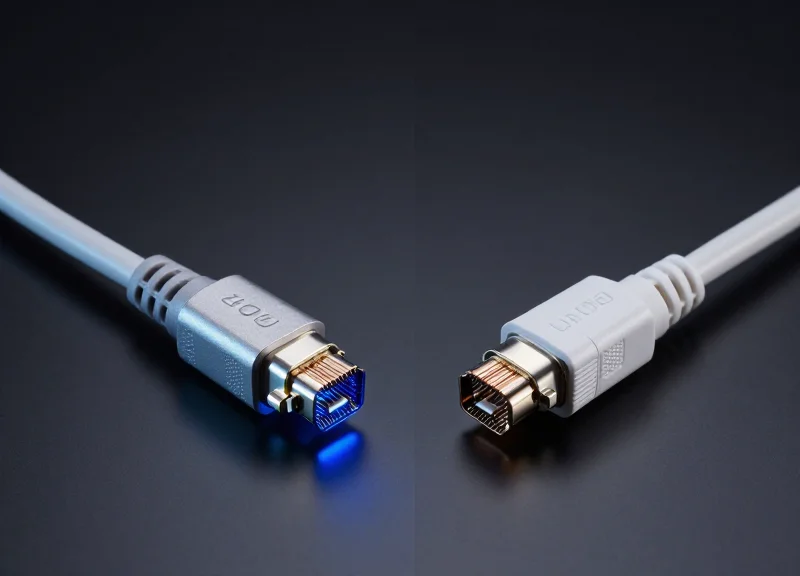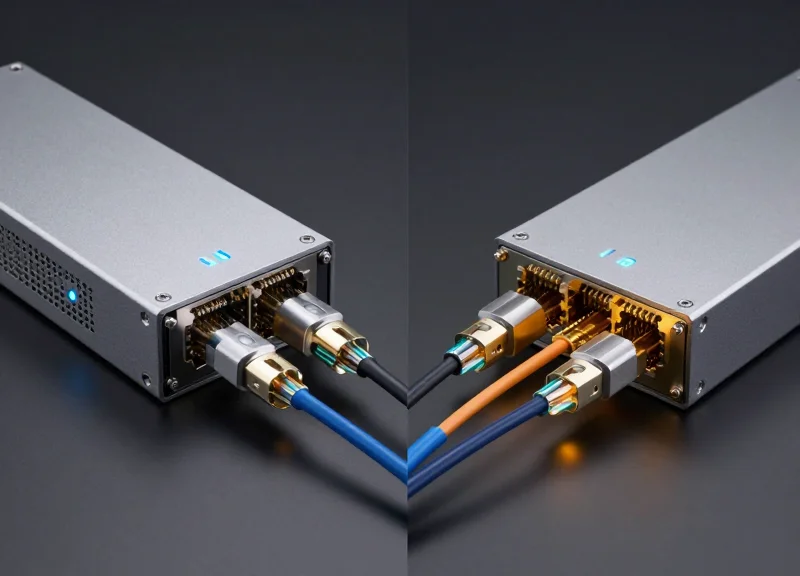
The explosion of Generative AI has transformed the data center landscape, making the choice between InfiniBand and Ethernet more critical than ever. Whether you are building a massive GPU cluster or a specialized AI inference engine, understanding the performance-to-cost ratio is the key to scaling efficiently. Ubytelink provides the industry's most competitive wholesale options to help you lead the AI race.
The Architecture of AI: Why Networking is the New Bottleneck

The Architecture of AI: Why Networking is the New Bottleneck
In the era of Large Language Models (LLMs), the network is no longer just a utility; it is the system backplane. Unlike traditional enterprise applications where compute tasks are often independent, AI workloads are massively parallel and interdependent. During the training phase, thousands of GPUs must synchronize their state through 'All-Reduce' operations. If the network fabric cannot handle this bursty, high-bandwidth traffic with near-zero latency, the GPUs enter a 'wait state.' This means that even the most expensive H100 or B200 clusters can see their effective utilization drop by 30% to 50% if the networking architecture—whether InfiniBand or high-performance Ethernet—cannot keep pace with the raw compute power.
The Shift from North-South to East-West Traffic
Traditional data center architectures were designed for North-South traffic, moving data between the user and the server. AI clusters, however, operate almost exclusively on East-West traffic, where nodes communicate directly with one another at massive scale. This shift requires a non-blocking fabric that can handle collective communication patterns without the overhead of standard TCP/IP stacks.
| Feature | Traditional Data Center | AI Supercomputing Cluster |
|---|---|---|
| Traffic Pattern | North-South (User to Server) | East-West (GPU to GPU) |
| Latency Sensitivity | Moderate (Milliseconds) | Extreme (Microseconds) |
| Congestion Control | Standard TCP (Lossy allowed) | RDMA / Lossless Fabric |
| Bandwidth Needs | 10G - 100G per node | 400G - 800G+ per node |
The Role of RDMA and Tail Latency
Remote Direct Memory Access (RDMA) is the cornerstone of modern AI networking. By allowing a GPU to access the memory of another GPU across the network without involving the CPU, RDMA significantly reduces overhead. However, the real bottleneck is often 'tail latency'—the delay of the slowest packet. In a synchronous training environment, the entire cluster moves only as fast as its slowest link. This is why choosing between InfiniBand's credit-based flow control and Ethernet's evolving RoCE v2 (RDMA over Converged Ethernet) is the most critical decision for wholesale infrastructure buyers in 2026.
- Why is networking the bottleneck in 2026?
GPU compute power has outpaced networking throughput; while H100s offer massive FLOPs, the ability to feed them data and synchronize gradients is limited by the interconnect fabric. - How does network speed affect TCO?
A faster network increases GPU utilization. If a 10% faster network increases GPU efficiency by 15%, the total cost of ownership (TCO) drops because you need fewer expensive GPUs to achieve the same training time. - What is the 'GPU Tax' of poor networking?
It refers to the lost ROI when high-end GPUs sit idle due to network congestion, packet loss, or high tail latency.
InfiniBand: The Gold Standard for Ultra-Low Latency
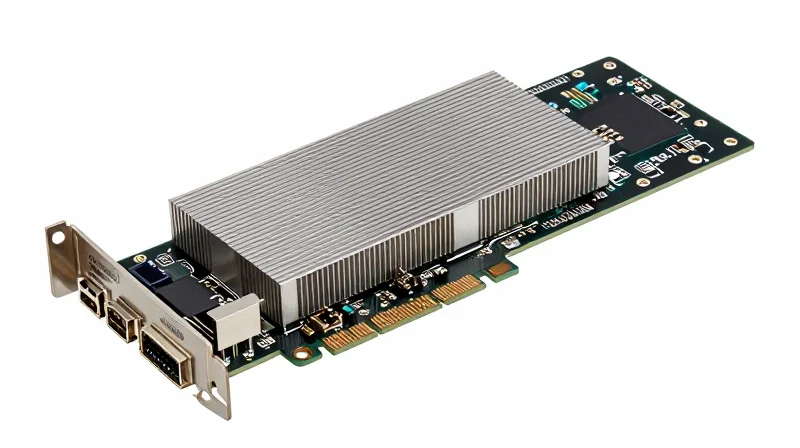
For massive AI training clusters, InfiniBand is the industry's gold standard because it provides a deterministic, lossless communication fabric that eliminates the packet-drop penalties common in traditional Ethernet. While Ethernet was designed for flexibility and wide-area reliability, InfiniBand was engineered specifically for the high-performance computing (HPC) environment, delivering the sub-microsecond latency and massive bandwidth required to keep thousands of GPUs synchronized during complex collective communication tasks.
The Architectural Advantage: RDMA and Zero-Copy
At the heart of InfiniBand’s dominance is its native implementation of Remote Direct Memory Access (RDMA). RDMA allows data to move directly from the memory of one GPU server to another without involving the CPU or the operating system kernel. This 'zero-copy' transfer reduces CPU overhead and drastically cuts down on jitter. In a wholesale AI deployment utilizing NVIDIA’s Magnum IO GPUDirect technology, InfiniBand ensures that the network never becomes the bottleneck for the H100’s Tensor Cores.
Credit-Based Flow Control: Eliminating Congestion
Unlike Ethernet, which typically relies on dropping packets to manage congestion, InfiniBand uses a hardware-level, credit-based flow control mechanism. A sender will only transmit data if the receiver has confirmed it has the buffer space available to accept it. This prevents the 'buffer bloat' and retransmission cycles that plague Ethernet fabrics, making InfiniBand the only choice for synchronous AI workloads where even a single delayed packet can stall an entire training run across 512+ GPUs.
| Generation | Data Rate per Port | Typical Use Case | Availability |
|---|---|---|---|
| HDR | 200 Gb/s | Legacy A100 Clusters / Small-Scale AI | End-of-Life / Refurbished |
| NDR | 400 Gb/s | NVIDIA H100 (Hopper) Infrastructure | Current Standard / High Demand |
| XDR | 800 Gb/s | NVIDIA B200 (Blackwell) Scaling | Early Adoption / 2026 Quotes |
Dominance in H100 and B200 Scaling
The release of the NVIDIA Blackwell (B200) architecture has pushed the networking requirement even higher. With XDR InfiniBand offering 800Gb/s per port, organizations can maintain the high-speed data feeding required for trillion-parameter models. For wholesale buyers, securing InfiniBand switching—such as the Quantum-2 or the newer Quantum-X800 series—is essential for maintaining the high GPU utilization rates (MFU) that justify the multi-million dollar investment in silicon.
- Why is InfiniBand preferred over RoCE for large clusters?
While RoCE (RDMA over Converged Ethernet) offers high speeds, InfiniBand provides lower latency at the physical layer and more robust congestion management that scales more predictably beyond 1,000 nodes. - Can I mix InfiniBand and Ethernet in the same rack?
Yes, typically InfiniBand is used for the 'backend' compute fabric (GPU-to-GPU), while Ethernet handles 'frontend' management and storage access. - Is InfiniBand hardware proprietary?
InfiniBand is an open standard, but NVIDIA (Mellanox) is the dominant provider, ensuring tight integration with their AI software stack (NCCL).
Ethernet: The Evolution of Scalability and Compatibility
Ethernet’s transition from a general-purpose local area network to a serious contender for AI back-ends is driven by its unmatched ecosystem, lower total cost of ownership (TCO), and the standardization of RDMA over Converged Ethernet (RoCE v2). While InfiniBand was built for the niche world of High-Performance Computing (HPC), Ethernet has evolved to meet the demands of hyperscale AI clusters through open standards and rapid silicon innovation.
RoCE v2: Enabling Low-Latency RDMA on Standard Fabric
The primary hurdle for Ethernet in AI was its 'best effort' delivery model, which often resulted in packet loss and high tail latency. RoCE v2 (RDMA over Converged Ethernet) solves this by allowing GPUs to transfer data directly from memory to memory across the network without involving the CPU. To maintain the 'lossless' environment AI training requires, modern Ethernet switches utilize Priority Flow Control (PFC) and Explicit Congestion Notification (ECN), effectively mimicking the flow control mechanisms that once made InfiniBand unique.
| Feature | Standard Ethernet | AI-Optimized Ethernet (RoCE v2) |
|---|---|---|
| Transport Protocol | TCP/IP (High Overhead) | UDP-based RDMA (Low Overhead) |
| Flow Control | Reactive (Packet Drop) | Proactive (PFC/ECN) |
| Vendor Lock-in | None | Minimal (Interoperable) |
| Latencies | 10-50 Microseconds | Sub-5 Microseconds |
The Ultra Ethernet Consortium (UEC): The Future of Scale
The Ultra Ethernet Consortium (UEC) represents a unified industry effort by leaders like AMD, Arista, Broadcom, and Meta to overhaul the Ethernet stack specifically for the AI era. Unlike legacy Ethernet, the UEC specification focuses on 'incast' management and flexible packet ordering. This allows for massive multi-pathing—sending data across every available link in the fabric simultaneously—to ensure that no single link becomes a bottleneck during heavy GPU all-reduce operations.
Wholesale Economics and Supply Chain Advantages
From a procurement perspective, Ethernet’s greatest advantage is its competitive market. Wholesale buyers are not tied to a single silicon provider, allowing for aggressive custom quotes and bulk pricing strategies. Furthermore, the familiarity of Ethernet management tools means that existing data center staff can scale AI infrastructure without specialized InfiniBand certifications, reducing long-term operational expenditure (OPEX).
- Can Ethernet handle 400G and 800G AI workloads?
Yes. Ethernet silicon, such as Broadcom’s Tomahawk 5, is already powering 800G fabrics that rival InfiniBand’s throughput, with 1.6T roadmaps already in development. - Is Ethernet truly lossless like InfiniBand?
While not inherently lossless, the combination of RoCE v2 and Data Center Bridging (DCB) creates a 'lossless-enough' environment for the vast majority of AI training and inference tasks. - What is the primary cost benefit of Ethernet for bulk AI buys?
Ethernet generally offers a 20-30% lower TCO compared to InfiniBand due to higher production volumes, multiple competing vendors, and lower-cost transceivers.
Performance Benchmarks: RDMA vs. RoCE v2 in Large-Scale AI
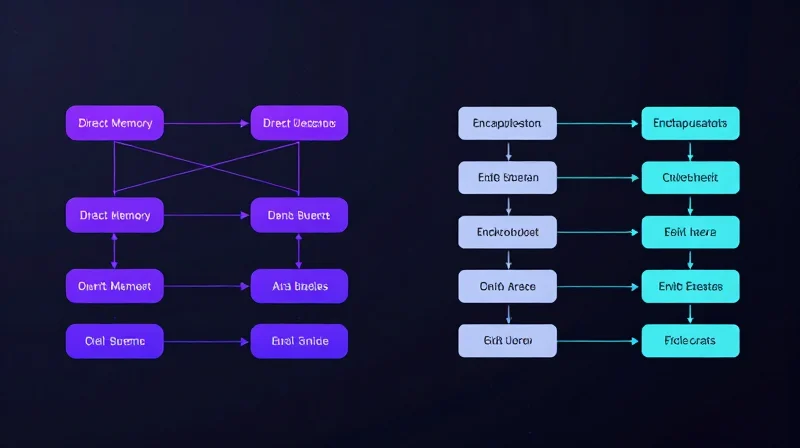
Performance Benchmarks: RDMA vs. RoCE v2 in Large-Scale AI
In large-scale AI environments, the choice between InfiniBand (IB) and RoCE v2 (RDMA over Converged Ethernet) determines the overall efficiency of the GPU fabric, with InfiniBand consistently delivering lower tail latency and higher effective throughput in distributed training tasks. While RoCE v2 has closed the gap in raw bandwidth, InfiniBand's hardware-offloaded management ensures that communication does not become a bottleneck as cluster sizes scale beyond 1,000 GPUs.
Key Performance Metrics Comparison
| Metric | InfiniBand (NDR/400G) | RoCE v2 (400G Ethernet) |
|---|---|---|
| End-to-End Latency | < 1.0 microsecond | 1.5 - 3.0 microseconds |
| Network Overhead | Minimal (Hardware-based) | Moderate (PFC/Software-tuned) |
| Flow Control | Credit-based (Native Lossless) | PFC/ECN (Reactive Lossless) |
| Effective Bandwidth | 95% - 98% | 85% - 92% (Tuning Dependent) |
Tail Latency and Jitter: The Silent Killers of AI Performance
When training Large Language Models (LLMs), the synchronization step (All-Reduce) requires all GPUs to wait for the slowest packet to arrive. InfiniBand's deterministic, credit-based flow control eliminates packet drops and minimizes jitter, ensuring that the 'tail latency' (P99) remains extremely close to the average latency. Conversely, RoCE v2 relies on Priority Flow Control (PFC) on traditional Ethernet switches, which can lead to head-of-line blocking and congestion spreading. In high-load AI workloads, this often results in a 10-20% drop in overall compute efficiency as GPUs sit idle waiting for delayed network traffic.
CPU Overhead and Congestion Management
Both technologies utilize Remote Direct Memory Access (RDMA) to bypass the CPU and move data directly between GPU memories. However, the implementation differs significantly. InfiniBand handles congestion management and adaptive routing entirely in hardware, requiring zero CPU intervention once the transfer is initiated. RoCE v2 requires more complex software-defined congestion control algorithms, such as DCQCN, which can consume host resources and increase the complexity of network orchestration in wholesale-scale deployments.
- Does RoCE v2 perform as well as InfiniBand at 400G?
In small-scale clusters of 8 to 32 nodes, the performance difference is negligible. However, as the cluster grows to hundreds of nodes, InfiniBand's hardware-managed flow control provides significantly better stability and lower tail latency. - How does congestion impact LLM training times?
Congestion in Ethernet fabrics can cause 'incast' problems where many nodes send data to one simultaneously, leading to packet loss. In InfiniBand, credit-based flow control prevents the buffer overflow from occurring in the first place, keeping GPU utilization consistently high. - Is Ethernet becoming more competitive for AI?
Yes, with advancements like the Ultra Ethernet Consortium (UEC), Ethernet is incorporating features like packet spraying to improve efficiency, though InfiniBand remains the turnkey gold standard for performance-critical LLM training in 2026.
Total Cost of Ownership (TCO): Analyzing Bulk Procurement
Total Cost of Ownership (TCO): Analyzing Bulk Procurement
When evaluating the Total Cost of Ownership for AI networking, wholesale buyers must look beyond the initial invoice to account for power density, specialized labor, and the performance-per-watt efficiency of the fabric. While InfiniBand typically commands a 25% to 40% premium in capital expenditure (CapEx) over standard high-performance Ethernet, its superior throughput and lower latency often result in a lower 'cost per completed training job' for billion-parameter models. Conversely, Ethernet leverages a massive economy of scale and a broader talent pool, significantly reducing operational expenditure (OpEx) for organizations already maintaining large-scale data center footprints.
Capex Breakdown: Hardware and Optics
Bulk procurement pricing is heavily influenced by the proprietary nature of InfiniBand. Currently dominated by NVIDIA’s Mellanox line, InfiniBand requires specific Host Channel Adapters (HCAs) and switches. Ethernet, being an open standard, allows for competitive bidding between vendors like Arista, Cisco, and Broadcom. In wholesale scenarios, the cost of optical transceivers and active optical cables (AOCs) often equals or exceeds the cost of the switches themselves, making the choice of cable architecture a critical TCO factor.
| Cost Component | InfiniBand (NDR/400G) | Ethernet (RoCE v2/400G) |
|---|---|---|
| Switch Port Cost | High (Proprietary premiums) | Moderate (Competitive market) |
| NIC/HCA Cost | Premium ($1,200+ per unit) | Standard ($600 - $900 per unit) |
| Optical Interconnects | Proprietary/Validated (Higher) | Standardized/Third-party (Lower) |
| Vendor Lock-in | High (Single-vendor ecosystem) | Low (Multi-vendor interoperability) |
Operational Expenditure: Power and Maintenance
OpEx is where the TCO gap often narrows. InfiniBand's credit-based flow control is managed at the hardware level, which can lead to lower CPU overhead and, consequently, lower power consumption during peak AI training loads. However, the scarcity of certified InfiniBand engineers increases labor costs. Ethernet networks, while potentially consuming more power due to complex packet-retransmission handling in lossy environments, benefit from universal management tools and a vast global workforce capable of troubleshooting 800G fabrics.
- How does bulk pricing affect the choice between IB and Ethernet?
Wholesale buyers often receive deeper discounts on Ethernet due to market competition, whereas InfiniBand discounts are generally tied to larger NVIDIA HGX/DGX system bundles. - What is the typical lifecycle for these networking investments?
Both technologies follow a 3-to-5-year cycle, but Ethernet's backwards compatibility often allows for a more gradual, cost-effective migration path compared to InfiniBand's generation-locked architecture. - Does InfiniBand offer better power efficiency in the long run?
Yes, in pure GPU-to-GPU communication, InfiniBand's efficiency reduces the total time the cluster stays at peak power, potentially saving thousands in electricity costs over a single training lifecycle.
OEM/ODM Customization: Tailoring AI Modules to Your Needs
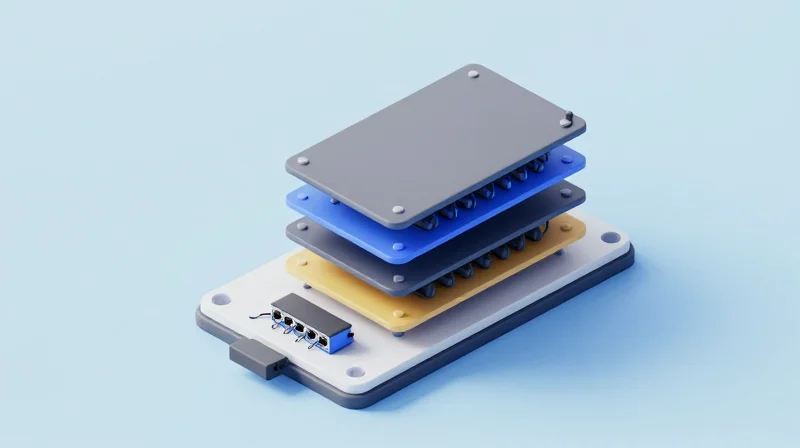
For enterprise-scale AI clusters, off-the-shelf networking components often fail to meet the rigorous thermal and spatial constraints of high-density data centers. Ubytelink's OEM/ODM customization services bridge this gap by offering bespoke design and engineering for InfiniBand and Ethernet modules, ensuring that every transceiver, Network Interface Card (NIC), and cable assembly is tuned to the specific workload profiles and physical architecture of your AI infrastructure.
Maximizing Efficiency via Hardware Tailoring
Customization in AI networking is no longer a luxury but a necessity for TCO (Total Cost of Ownership) optimization. By modifying hardware at the component level, wholesale purchasers can eliminate unnecessary features that drive up power consumption or add specialized thermal management solutions to support liquid-cooled environments. This level of granularity ensures that whether you are deploying NDR InfiniBand or 800G Ethernet, the hardware integrates seamlessly with your proprietary switch fabric and cooling systems.
| Customization Category | InfiniBand Options | Ethernet Options (RoCE v2/UEC) |
|---|---|---|
| Transceiver Form Factors | OSFP, QSFP112 with custom heat sinks | QSFP-DD, OSFP800 with low-power optics |
| Cabling Solutions | Bespoke length DACs for fat-tree topologies | AOCs optimized for long-reach leaf-spine |
| Firmware & Logic | Specific subnet manager optimizations | Custom congestion control algorithms (PFC/ECN) |
| Thermal Engineering | High-airflow fin designs for NDR modules | Extended temperature range industrial grade |
The Ubytelink OEM/ODM Workflow
- Requirement Analysis
Our engineers work with your team to define power budgets, port densities, and the specific AI framework (e.g., PyTorch, TensorFlow) being used. - Prototyping & Simulation
We develop initial hardware samples and perform thermal simulations to ensure the modules can withstand 24/7 high-load AI training cycles. - Validation & Interoperability
Custom modules undergo rigorous testing with major switch vendors (NVIDIA, Arista, Cisco) to ensure zero-packet-loss performance. - Mass Production & Labeling
Once validated, we move to volume manufacturing with custom branding, serialization, and specialized packaging for rapid deployment.
Frequently Asked Questions: Wholesale Customization
- What is the Minimum Order Quantity (MOQ) for custom AI modules?
MOQs vary based on the level of customization. Minor firmware or labeling changes typically have low thresholds, while custom PCB designs for NICs or optics require larger wholesale commitments. - Can Ubytelink optimize modules for specific cooling methods?
Yes, we offer specialized heat sinks for air-cooled racks and liquid-immersion compatible materials for ultra-high-density AI pods. - How does customization affect lead times in 2026?
While custom orders generally take longer than stock items, Ubytelink leverages a vertical supply chain to minimize delays, typically delivering prototypes within 4-6 weeks.
Supply Chain Insights: Navigating 2026 Lead Times
Navigating the 2026 supply chain for AI infrastructure requires a strategic shift from transactional purchasing to long-term wholesale partnerships, as current lead times for InfiniBand NDR components often span 24 to 52 weeks, while high-speed Ethernet alternatives generally offer more predictable 12 to 20-week windows.
Market Dynamics: Why Lead Times Vary in 2026
The unprecedented demand for Large Language Model (LLM) training has placed immense pressure on the production of specialized ASICs and advanced optical transceivers. InfiniBand, being a more specialized technology, is currently subject to the production schedules of a limited number of silicon providers, which creates bottlenecks during peak demand. Ethernet, conversely, benefits from a massive, multi-vendor ecosystem and a more diverse manufacturing base, allowing for better absorption of sudden demand spikes. However, both technologies are susceptible to shortages in high-density cabling and power management components, making early forecasting essential for large-scale deployments.
| Component Category | InfiniBand Lead Time (2026) | Ethernet Lead Time (2026) | Stock Availability |
|---|---|---|---|
| High-Radix Switches (400G/800G) | 24 - 48 Weeks | 12 - 24 Weeks | Low / Pre-order Only |
| Optical Transceivers (AOC/SR8) | 8 - 16 Weeks | 4 - 12 Weeks | Moderate |
| Network Interface Cards (NICs) | 20 - 36 Weeks | 8 - 16 Weeks | Limited |
| DAC/ACC Cables | 4 - 10 Weeks | 2 - 8 Weeks | High |
The Advantage of Custom Wholesale Quotes
For enterprises and data center operators, securing a custom wholesale quote for 2026 is more than a pricing exercise; it is a mechanism for capacity reservation. Wholesale providers like Ubytelink leverage direct relationships with OEM and ODM manufacturers to lock in production slots months in advance. By consolidating demand, wholesale buyers can bypass the traditional distribution queues that often add months of delay to smaller, fragmented orders. This approach also allows for better price protection against the fluctuating costs of raw materials and logistics.
Supply Chain FAQ: Securing Your AI Network
- Why are InfiniBand lead times significantly longer than Ethernet?
InfiniBand lead times are extended due to the high concentration of proprietary technology and a smaller pool of specialized manufacturers compared to the broader, commoditized Ethernet market. - Can custom configurations affect delivery speed?
Yes. While custom modules may require initial engineering lead time, they often use standardized sub-components that are easier to source in bulk, potentially stabilizing the overall delivery timeline. - How does bulk pricing interact with supply chain volatility?
Bulk pricing agreements often include clauses for tiered delivery and fixed pricing, which shields buyers from the 'spot price' hikes common during component shortages. - Is it possible to expedite orders through wholesale partnerships?
Wholesale partners often have access to 'buffer stock' or priority allocation from ODMs, which can reduce standard lead times by 15-25% for established clients.
Strategic Decision Matrix: Which Interconnect Fits Your Data Center?

Navigating the Interconnect Choice: Performance vs. Flexibility
The decision to deploy InfiniBand or Ethernet for AI wholesale projects hinges on whether your priority is absolute synchronization speed or operational versatility. InfiniBand remains the gold standard for large-scale Large Language Model (LLM) training where Every microsecond of latency saved translates directly into reduced training time and lower GPU idle costs. Conversely, Ethernet, specifically enhanced with RoCEv2 (RDMA over Converged Ethernet), offers a more cost-effective path for inference-heavy workloads and data centers looking to leverage existing networking skillsets and multi-vendor hardware compatibility.
2026 Strategic Decision Matrix
| Feature | InfiniBand (NDR/XDR) | Ethernet (800G RoCEv2) |
|---|---|---|
| Primary Use Case | Massive LLM Training / HPC | AI Inference / Enterprise Clouds |
| Latency Profile | Ultra-low (<0.7 microseconds) | Low (1.5 - 5 microseconds) |
| Congestion Control | Hardware-based / Lossless | Software/Protocol-based (PFC/ECN) |
| Network Management | Centralized Subnet Manager | Standard SNMP / OpenConfig |
| 2026 Wholesale Value | High Performance Premium | High Efficiency / Lower CAPEX |
The InfiniBand Advantage for High-Density GPU Clusters
For clusters exceeding 1,000 GPUs, InfiniBand's architectural advantages become undeniable. Its hardware-offloading capabilities mean that the CPU and GPU are not burdened by network protocol processing, maximizing the compute power available for the AI model itself. In a wholesale procurement scenario, InfiniBand provides a more predictable performance ceiling, which is critical when guaranteeing Service Level Agreements (SLAs) for AI-as-a-Service (AIaaS) providers.
The Ethernet Rationale for Scalable AI Infrastructure
Ethernet's strength lies in its ubiquity and the massive ecosystem of 800G optics and switches currently hitting the market. For wholesale buyers, Ethernet often presents a lower Total Cost of Ownership (TCO) because it integrates seamlessly into existing leaf-spine architectures. It is the ideal choice for organizations that need to scale out their AI inference capabilities or those who prioritize the ability to source components from a wider variety of ODM/OEM partners to avoid vendor lock-in.
Strategic Procurement FAQ
- Which interconnect is more future-proof for 2025 and beyond?
Both are evolving rapidly. InfiniBand is moving toward XDR (1600G) for extreme compute, while Ethernet is standardizing 1.6T and 3.2T through the Ultra Ethernet Consortium (UEC). Choose based on your 18-month deployment roadmap rather than speculative long-term standards. - How does bulk pricing differ between the two?
InfiniBand hardware typically carries a 15-25% price premium over equivalent speed Ethernet hardware due to the specialized nature of the silicon. However, for massive clusters, the efficiency gains in training speed can offset the initial hardware cost. - Can we run a hybrid network using both?
Yes. Many modern data centers use InfiniBand for the 'backend' GPU-to-GPU fabric (computing) and high-speed Ethernet for the 'frontend' storage and user-facing connectivity. - What is the primary lead time difference in 2026?
Ethernet components generally have shorter lead times due to a broader manufacturing base, whereas InfiniBand availability is more closely tied to specific tier-1 silicon providers.
Choosing between InfiniBand and Ethernet depends on your specific AI workload, latency tolerance, and budget. Ubytelink offers the technical expertise and wholesale pricing to ensure your network doesn't become a bottleneck for your GPUs. Contact our sales team today for a custom quote and explore our OEM/ODM solutions to power your 2026 AI expansion.