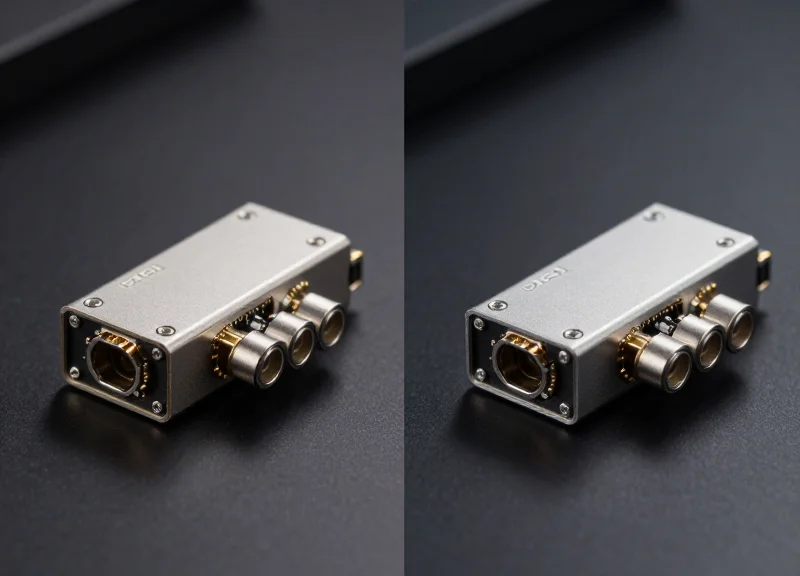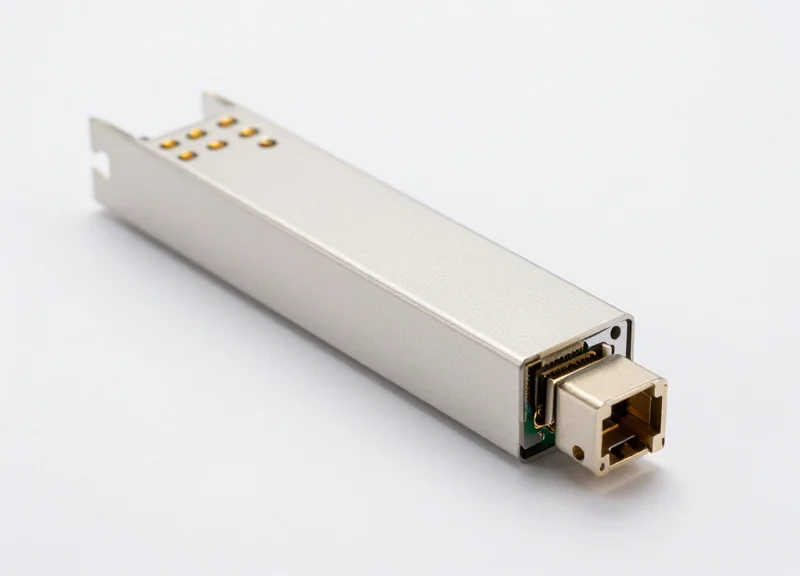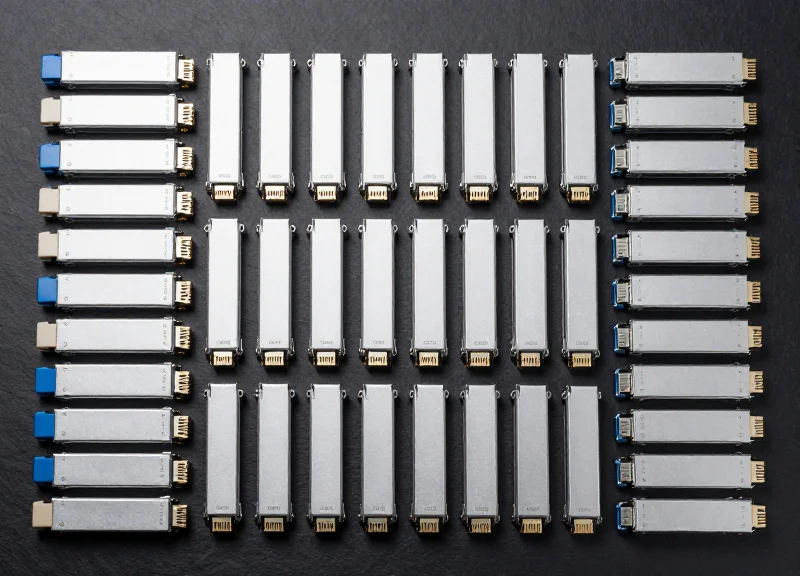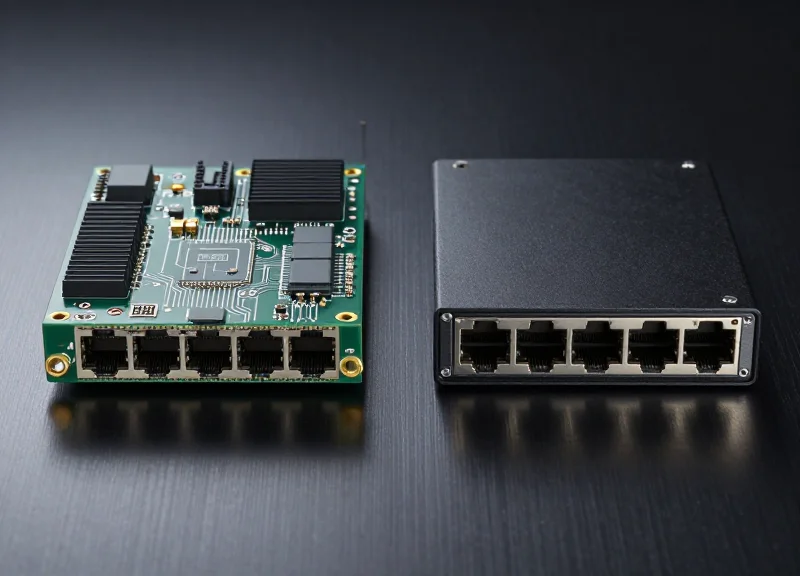
In the high-stakes world of modern telecommunications, hardware interoperability is the backbone of scalability. Without Multi-Source Agreements (MSA), the fiber optic industry would be a fragmented landscape of proprietary connectors and incompatible signals. This guide dives deep into what MSA compliance actually means and why it is the critical factor for any network engineer building a future-proof infrastructure.
Defining MSA: The Foundation of Open Networking
Defining MSA: The Foundation of Open Networking
A Multi-Source Agreement (MSA) is an industry-wide contract between manufacturers to standardize the design, form factor, and functionality of networking components, most notably optical transceivers. Unlike official standards bodies like the IEEE or ITU-T, which focus primarily on communication protocols and signaling, MSAs are practical, market-driven agreements that define the physical and electrical specifications required for hardware compatibility. By adhering to these collective guidelines, manufacturers ensure that their products—such as SFP, QSFP, and OSFP modules—can be used interchangeably across different vendors' switches and routers without the constraints of proprietary hardware silos.
The Shift from Proprietary to Interoperable Ecosystems
The emergence of MSAs was a response to the restrictive 'vendor lock-in' practices of early networking history. In a proprietary model, a network operator was forced to purchase transceivers exclusively from their switch manufacturer. MSAs broke this monopoly by creating a level playing field. This shift has driven down costs through competition and fostered rapid innovation, as manufacturers compete on performance and reliability while adhering to the same mechanical footprint.
| Feature | Proprietary Hardware | MSA-Compliant Hardware |
|---|---|---|
| Interoperability | Locked to specific vendor equipment | Cross-vendor compatibility |
| Cost Structure | Premium pricing due to limited competition | Competitive pricing driven by multiple suppliers |
| Supply Chain | High risk; dependent on one supplier | Low risk; multiple sourcing options available |
| Standardization | Vendor-defined specifications | Industry-defined collaborative specs |
Critical Elements of an MSA Specification
For a component to be considered MSA-compliant, it must strictly follow the technical guidelines set forth in the agreement. These specifications usually cover three primary domains: Mechanical, Electrical, and Management.
- Mechanical Interface
Specifies the physical dimensions, including height, width, and length of the module, as well as the connector type and latching mechanism. - Electrical Interface
Defines the pin-out assignments, voltage levels, and power consumption limits to ensure the module does not damage the host system. - Management Interface
Outlines the EEPROM memory map and I2C communication protocols used for Digital Optical Monitoring (DOM), allowing the host to read temperature, laser bias, and power levels.
Common Questions Regarding MSA Compliance
- Are MSAs identical to IEEE standards?
No. While they work together, the IEEE defines 'how data travels' (the protocol), while the MSA defines 'the shape and fit' of the device carrying that data (the hardware implementation). - Who participates in these agreements?
MSAs are typically formed by a consortium of industry leaders, including component manufacturers like Finisar or Broadcom, and system OEMs like Cisco, Arista, and Juniper. - Can a switch reject an MSA-compliant module?
Technically, yes. While the module is physically compatible, some vendors use 'vendor-coding' software locks to prevent third-party modules from functioning unless they are properly programmed with the correct identifier strings.
MSA vs. IEEE Standards: Understanding the Difference
MSA vs. IEEE Standards: Understanding the Difference
While both IEEE standards and MSAs aim to ensure consistency in networking hardware, they operate at different layers of the design and regulatory process. IEEE focuses on the 'how' of data transmission—defining the logical protocols, error correction, and electrical signaling requirements—whereas MSAs focus on the 'what' of the hardware—defining the physical form factors, mechanical dimensions, and electrical pinouts required for physical compatibility. Together, they create a complete framework that allows diverse hardware to work seamlessly across a global infrastructure.
IEEE Standards: The Logical Blueprint
The Institute of Electrical and Electronics Engineers (IEEE) provides the foundational standards, such as the 802.3 Ethernet series, which dictate how data packets move across a network. These standards ensure that a switch from one vendor can communicate with a router from another at a logical level. However, IEEE standards typically do not specify the physical shape or mechanical dimensions of the optical modules used to facilitate these connections. They provide the 'language' of the network but not the 'chassis' of the hardware.
MSA Agreements: The Physical Implementation
Multi-Source Agreements (MSAs) fill the mechanical gap left by formal standards bodies. They are industry-led collaborations between manufacturers that define the physical characteristics of a module, such as the SFP, SFP+, or QSFP form factors. By standardizing the physical dimensions, cooling requirements, and electrical interfaces (pinouts), MSAs ensure that a transceiver from any manufacturer will physically fit into a specific port and operate correctly. This prevents vendor lock-in and allows network operators to source components from a wide variety of suppliers.
| Feature | IEEE Standards | MSA Compliance |
|---|---|---|
| Focus Area | Logical Protocols & Signal Integrity | Physical Form Factor & Pinouts |
| Governing Body | Formal Standards Organization (IEEE) | Industry Consortium / Manufacturers |
| Development Cycle | Lengthy, Consensus-Driven | Fast-Paced, Market-Driven |
| Examples | 802.3ba (40G/100G Ethernet) | SFP-8472, QSFP28, OSFP |
| Primary Goal | Protocol Interoperability | Hardware Interchangeability |
Compatibility FAQ
- Do MSA modules violate IEEE standards?
No. MSA-compliant modules are specifically designed to carry signals that comply with IEEE standards while adhering to the physical hardware specifications defined by the MSA consortium. - Why are MSAs necessary if we have IEEE?
IEEE defines how data is packaged and sent, but without MSAs, every manufacturer would create different sized transceiver slots, making it impossible to swap hardware between different vendors. - Is MSA compliance a legal requirement?
It is not a government-mandated law, but it is a de facto industry requirement. Without MSA compliance, a manufacturer's products would be incompatible with the vast majority of networking equipment on the market.
The Anatomy of an MSA Specification
An MSA specification serves as the comprehensive architectural blueprint for a hardware module, defining the exact physical dimensions, electrical signaling protocols, and software register maps required for seamless cross-vendor compatibility. By standardizing these three dimensions, MSAs eliminate the risk of proprietary lock-in and ensure that a transceiver from 'Manufacturer A' will function flawlessly in a switch produced by 'Manufacturer B'.
1. The Mechanical Interface: Physical Form and Fit
The mechanical dimension of an MSA is perhaps the most visible. It dictates the physical size of the module (the form factor), the design of the pluggable connector, and the thermal management requirements. Without these rigid specifications, modules would not physically fit into the cages of networking equipment. Key mechanical aspects include the length, width, and height of the module, the latching and de-latching mechanisms, and the alignment of optical or copper interfaces such as LC, MPO, or RJ45.
2. The Electrical Interface: Pinouts and Signaling
Beyond the physical shell, the electrical interface defines how the module communicates with the host PCB. This includes the precise layout of the gold-finger connector (the pinout map), voltage requirements, and power consumption limits. The MSA specifies the high-speed differential signals used for data transmission and the lower-speed control signals used for status monitoring (such as 'Module Present' or 'Transmit Fault' indicators).
3. The Management Interface: The EEPROM Memory Map
The management interface is the 'intelligence' of the MSA. It defines a standardized memory map, usually accessed via a two-wire I2C serial interface. This EEPROM contains vital information including the vendor name, part number, serial number, and supported wavelengths. More importantly, it facilitates Digital Diagnostics Monitoring (DDM) or Digital Optical Monitoring (DOM), allowing the host system to read real-time data such as temperature, laser bias current, and optical power levels.
| Dimension | Primary Focus | Key Components |
|---|---|---|
| Mechanical | Physical Compatibility | Form factor (SFP/QSFP), Connector type, Heat sink design |
| Electrical | Power & Data Flow | Pin assignments, Voltage levels, High-speed signal integrity |
| Management | Logic & Diagnostics | I2C interface, EEPROM register map, DDM/DOM data |
Specification Deep Dive FAQ
- Why is the EEPROM map so important for compatibility?
The host device reads the EEPROM to identify the module. If the memory map doesn't follow the MSA standard, the host may reject the module or fail to report critical diagnostic data. - Can a module be mechanically compliant but electrically incompatible?
Yes. While rare in standardized production, a module could fit the physical dimensions (Mechanical) but fail to meet the signal timing or power requirements (Electrical) of the MSA, leading to link errors. - Do all MSAs include thermal management specs?
Most modern high-speed MSAs (like QSFP-DD) include strict thermal guidelines because excessive heat can degrade performance and damage the host equipment.
Common MSA Form Factors: From SFP to QSFP-DD
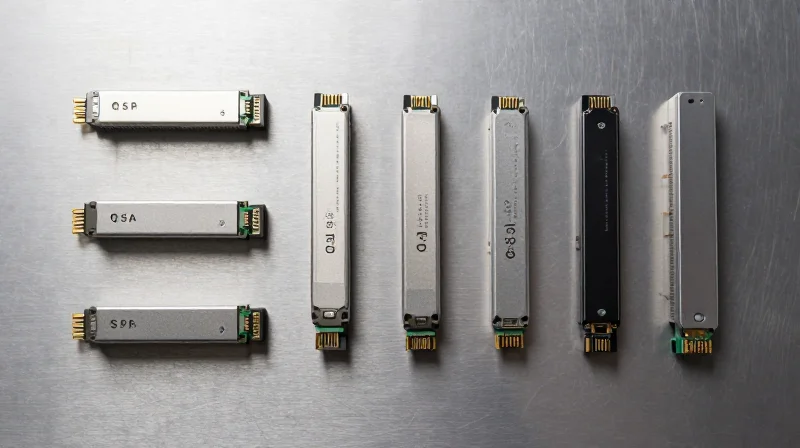
MSA form factors define the physical architecture and electrical interfaces of optical transceivers, establishing a standardized footprint that allows network equipment to support a modular 'pay-as-you-grow' model. By adhering to these specific mechanical dimensions and pin-out configurations, manufacturers ensure that any compliant module will physically fit and electrically communicate with a host system's port, regardless of the vendor.
The Evolution of the Small Form-Factor Pluggable (SFP) Family
The SFP lineage began with the original SFP MSA (INF-8074i), supporting speeds up to 1Gbps. As bandwidth requirements increased, the MSA evolved into SFP+ (SFF-8431) for 10Gbps and SFP28 (SFF-8402) for 25Gbps. These form factors are characterized by a single-lane electrical interface. Their primary advantage is port density; because they are small, switch manufacturers can fit up to 48 or 52 ports in a single 1RU chassis. The SFP56 variant further pushes this limit to 50Gbps using PAM4 modulation while maintaining the same physical footprint.
QSFP: Quad Lanes for Higher Aggregate Bandwidth
To achieve 40Gbps and 100Gbps, the Quad Small Form-Factor Pluggable (QSFP) MSA introduced a four-lane electrical interface. QSFP+ (SFF-8436) combines four 10Gbps lanes, while QSFP28 (SFF-8665) utilizes four 25Gbps lanes. This 'quad' approach allows for high-speed trunking and breakout configurations, where a single 100G port can be split into four 25G SFP28 connections using a breakout cable, a common practice in spine-leaf data center architectures.
Next-Generation 400G and 800G Form Factors
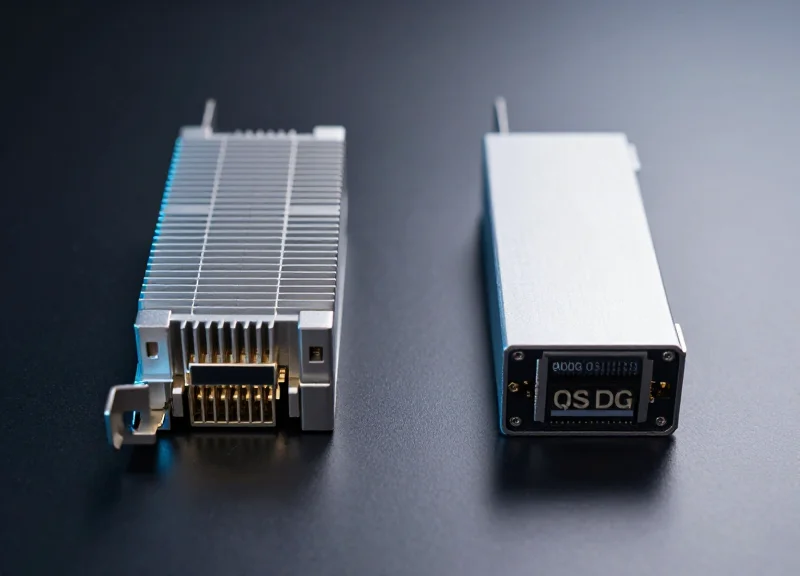
Modern hyperscale environments now demand 400G and 800G speeds, leading to the development of QSFP-DD (Double Density) and OSFP (Octal Small Form Factor Pluggable). These MSAs utilize eight electrical lanes. QSFP-DD achieves this by adding a second row of electrical contacts, maintaining backward compatibility with standard QSFP modules. Conversely, OSFP is physically larger and designed with integrated heat sinks to handle the significant thermal load of 800G optics, though it requires an adapter for QSFP compatibility.
| Form Factor | Max Data Rate | Electrical Lanes | Primary MSA Spec |
|---|---|---|---|
| SFP+ | 10 Gbps | 1 Lane | SFF-8431 |
| SFP28 | 25 Gbps | 1 Lane | SFF-8402 |
| QSFP28 | 100 Gbps | 4 Lanes | SFF-8665 |
| QSFP-DD | 400/800 Gbps | 8 Lanes (Double Density) | QSFP-DD Hardware Spec |
| OSFP | 800 Gbps | 8 Lanes | OSFP Design Guide |
Form Factor Compatibility FAQs
- Can an SFP module work in an SFP+ port?
Yes, in most cases. SFP+ ports are generally backward compatible with 1G SFP modules, though the port speed must be manually configured in the switch OS. - What is the main benefit of QSFP-DD over OSFP?
QSFP-DD's primary benefit is backward compatibility with existing QSFP28 and QSFP+ modules, allowing for easier network upgrades without replacing all existing cabling. - Why is OSFP larger than QSFP-DD?
The OSFP design prioritizes thermal performance. Its larger surface area and integrated cooling fins allow it to dissipate the 15W+ of heat generated by 800G and future 1.6T coherent optics.
The Strategic Benefits of MSA Compliance

The Strategic Benefits of MSA Compliance
Multi-Source Agreements (MSAs) serve as the economic and technical foundation of modern data centers by ensuring that optical transceivers and cabling from diverse manufacturers are physically, electrically, and logically interchangeable. By adhering to these standards, network operators can decouple their hardware procurement from single-vendor constraints, driving down the Total Cost of Ownership (TCO) while fostering a more resilient, high-performance infrastructure.
Economic Efficiency and Breaking Vendor Lock-In
The primary strategic advantage of MSA compliance is the elimination of proprietary vendor lock-in. Historically, Network Equipment Manufacturers (NEMs) utilized closed ecosystems to force customers into purchasing high-margin, branded optics. MSA standards commoditize the physical layer, allowing third-party vendors to offer identical performance at a fraction of the cost. This competition forces market-wide price corrections, often resulting in 40% to 70% savings on optical interconnects, which represent a significant portion of data center CAPEX.
| Feature | Proprietary Ecosystem | MSA-Compliant Ecosystem |
|---|---|---|
| Vendor Choice | Single-source lock-in | Multi-vendor interoperability |
| Procurement Cost | Monopolistic / High Premium | Market-driven / Competitive |
| Supply Chain Risk | High (Single point of failure) | Low (Diversified sources) |
| Innovation Cycle | Locked to OEM roadmap | Fast-paced industry collaboration |
Supply Chain Resilience and Global Interoperability
Global supply chain volatility has highlighted the necessity of MSA compliance. When a single manufacturer faces production delays or logistical hurdles, an MSA-standardized environment allows operators to pivot to an alternative supplier instantly without re-engineering their rack architecture. This interchangeability ensures that project timelines remain intact and that network expansions are not held hostage by a single vendor's lead times. Furthermore, because MSAs define the EEPROM maps and management interfaces (like I2C), monitoring tools can provide consistent telemetry across a heterogeneous hardware fleet.
MSA Compliance FAQ
- Does using MSA-compliant third-party optics void my switch warranty?
No. In many jurisdictions, such as the US under the Magnuson-Moss Warranty Act, OEMs cannot legally void a warranty simply for using third-party components unless they can prove the component caused the specific damage. - How does MSA compliance impact network reliability?
MSA compliance ensures that components meet strict electrical and mechanical tolerances. Because multiple vendors build to the same spec, the standards are often more rigorously vetted than closed-loop proprietary designs. - Is MSA compliance enough for 400G and 800G networks?
Yes. Organizations like the QSFP-DD MSA and OSFP MSA are specifically designed to address the thermal and signaling challenges of 400G+ speeds, ensuring that even at the bleeding edge, the multi-vendor model remains viable.
Digital Diagnostics Monitoring (DDM) and MSA

Bridging Telemetry and Interoperability through DDM
Digital Diagnostics Monitoring (DDM), also known as Digital Optical Monitoring (DOM), is the mechanism through which an optical transceiver reports its internal telemetry to the host system. Defined primarily by the SFF-8472 Management Interface standard, DDM allows network administrators to monitor critical physical layer parameters such as laser bias current and received optical power without interrupting data traffic. This standardization ensures that diverse hardware ecosystems can consistently interpret the health of the fiber link, transforming the transceiver from a 'black box' into an intelligent sensor.
Core Parameters Monitored via DDM
| Parameter | Functional Description | Maintenance Value |
|---|---|---|
| Temperature | Internal module temperature sensing. | Identifies cooling failures or rack hot spots. |
| Supply Voltage | Real-time monitoring of internal voltage. | Detects power supply fluctuations or surges. |
| TX Bias Current | Current applied to the laser diode. | Predicts laser end-of-life as current increases. |
| TX Output Power | The strength of the outgoing optical signal. | Confirms the transmitter is functioning within spec. |
| RX Received Power | The strength of the incoming optical signal. | Diagnoses fiber breaks, dirt, or attenuation issues. |
The Digital Memory Map Architecture
MSA standards define a precise memory layout accessed via a 2-wire serial interface, typically I2C. In SFP modules, for instance, the address 0xA0 contains static ID data (manufacturer, serial number, part number), while 0xA2 is dedicated to DDM telemetry. This memory map is segmented into specific bytes for real-time measurements, calibration constants, and interrupt flags known as Alarms and Warnings. These flags allow the host system to instantly react when a parameter—like temperature—exceeds a critical threshold, potentially shutting down the laser to prevent hardware damage.
Diagnostic Insights and FAQ
- What is the difference between DDM and DOM?
They are functionally identical; DDM stands for Digital Diagnostics Monitoring, while DOM stands for Digital Optical Monitoring. Both refer to the real-time telemetry feature defined by SFF-8472. - Is DDM mandatory for all MSA transceivers?
While DDM is a core component of modern SFP+, QSFP, and OSFP specifications, it was an optional feature in earlier SFP standards. Most enterprise-grade modules today include it as a standard feature. - How does DDM facilitate predictive maintenance?
By tracking the 'TX Bias Current' over time, operators can see when a laser is drawing more power to maintain its output, signaling that the module is nearing the end of its life and should be replaced before failure.
Standardizing Calibration: SFF-8472
A crucial role of the MSA is ensuring that the digital values reported by the transceiver are converted into meaningful units. SFF-8472 specifies the mathematical formulas required to translate raw 16-bit values into units such as Microwatts (optical power) or Celsius (temperature). Without this standardization, a Cisco switch might interpret a value from a generic transceiver incorrectly, leading to false alarms or missed failures. MSA compliance ensures that the 'language' of diagnostics is universal across the networking industry.
Debunking the 'Vendor Lock-in' Myth
Debunking the 'Vendor Lock-in' Myth
While MSA standards guarantee that a module will physically fit and electrically connect to a switch port, they do not mandate that the host device's software must accept the module. Many Tier-1 networking vendors leverage proprietary software coding to perform 'handshakes' with the transceiver, effectively creating a logic-based lock-in that bypasses the open-market spirit of MSA compliance. This distinction between hardware compatibility and software recognition is the primary hurdle for organizations seeking to optimize their infrastructure costs.
The Mechanics of Software-Based Restriction
The restriction typically resides in the transceiver's EEPROM. When a module is inserted, the switch's operating system reads specific memory addresses—often within the A0h or A2h pages—to verify the Vendor Name, OUI, and Serial Number. If these data points do not match the vendor's 'allowlist' or if the proprietary checksum fails, the switch may trigger a 'Port Error' or 'Unrecognized Transceiver' status, disabling the link even if the module is electrically flawless.
| Feature | MSA Standard Compliance | Vendor Proprietary Software |
|---|---|---|
| Physical Form Factor | Standardized (e.g., SFP28, QSFP28) | Identical to MSA |
| Electrical Pinout | Standardized | Identical to MSA |
| Software ID (EEPROM) | Standardized Data Layout | Proprietary Keys/Checksums |
| Interoperability | Cross-vendor Hardware Support | Restricted to Specific 'Brand' IDs |
| Cost Impact | Market-driven, competitive pricing | Artificial price premium |
Navigating the Compatibility Landscape
To overcome these software barriers without paying the 'vendor tax,' network engineers utilize third-party compatible modules that have been specifically coded to mimic the original vendor's signature. This involves deep-packet analysis of the I2C communication between the module and the host OS (such as Cisco IOS-XE or Juniper Junos). By matching the expected firmware responses, these modules achieve full 'plug-and-play' status while maintaining MSA-defined performance metrics.
- Does using third-party MSA modules void my switch warranty?
No. In the US, the Magnuson-Moss Warranty Act prevents manufacturers from voiding warranties simply because a third-party component was used, unless they can prove the component caused the damage. - What is 'service unsupported-transceiver'?
This is a CLI command used in some legacy systems to bypass vendor checks. However, it often disables critical DDM/DOM telemetry, making properly coded modules a superior choice for production environments. - Can a software update break third-party compatibility?
Yes. Vendors occasionally update their verification algorithms in new firmware releases. Reliable third-party suppliers combat this by providing field-reprogrammable modules to update the coding signatures.
Testing and Validation for MSA Compliance
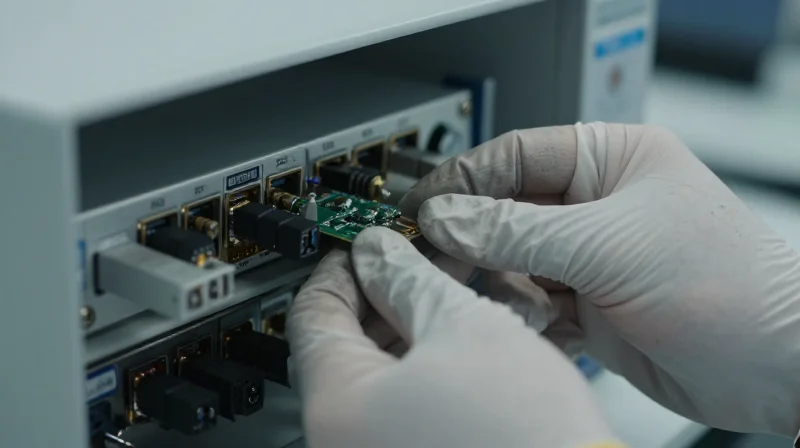
Testing and Validation for MSA Compliance
MSA compliance validation is the comprehensive process of verifying that a transceiver module adheres to the precise physical dimensions, electrical signaling characteristics, and optical performance metrics defined by the multi-source agreement. Because MSA standards are designed to foster a multi-vendor ecosystem, testing ensures that any compliant module will operate reliably within any compliant host system, regardless of the brand on the label. This validation goes far beyond simple 'plug-and-play' checks, involving high-precision laboratory equipment to measure tolerances at the nanosecond and micrometer levels.
Core Validation Categories
| Testing Domain | Key Parameter | MSA Requirement Goal |
|---|---|---|
| Electrical | Differential Impedance | Minimize signal reflection and ensure 100-ohm matching. |
| Optical | Center Wavelength | Ensure light output stays within the specified nanometer range. |
| Mechanical | Form Factor Dimensions | Guarantee a perfect fit in SFP, QSFP, or OSFP cages. |
| Signal Integrity | Eye Diagram Analysis | Verify signal clarity and low jitter for high-speed data. |
Electrical Signal Integrity and Eye Diagram Testing
One of the most critical aspects of MSA validation is Eye Diagram analysis. By overlaying thousands of digital signal samples, engineers create a visual 'eye' shape that represents the health of the data stream. MSA standards define the 'mask' or the boundaries that the signal must not cross. If the eye is 'closed' or noisy, it indicates high jitter or poor rise/fall times, which would lead to a high Bit Error Rate (BER). Compliant modules must maintain a clear 'open eye' to ensure data integrity over the specified cable reach, whether it is 10 meters or 40 kilometers.
Mechanical and Environmental Stress Testing
Mechanical compliance ensures that the module's physical shell, latching mechanism, and PCB contact pins meet the exact specifications of the MSA. Validation involves 'mate and un-mate' cycle testing to ensure the connectors do not degrade after repeated insertions. Furthermore, environmental stress testing (often following Telcordia standards) subjects the modules to extreme temperature cycles and humidity. Since MSA standards define the operating temperature ranges (Commercial, Extended, or Industrial), the module must demonstrate stable optical power and wavelength stability even at its thermal limits.
Compliance Testing FAQs
- What is Bit Error Rate (BER) testing?
BER testing measures the percentage of bits that have errors relative to the total number of bits transmitted. MSA standards typically require a BER of 10^-12 or better. - Why is mechanical tolerance so strict?
Even a sub-millimeter deviation in the module size can cause it to get stuck in a switch cage or fail to make proper electrical contact with the backplane. - Is software validation part of MSA testing?
Yes, the MSA defines the EEPROM memory map (like SFF-8472), and testing ensures that the Digital Diagnostics Monitoring (DDM) data is reported accurately to the host.
Future Trends: How MSAs are Adapting to 800G and Beyond
The transition to 800G and the upcoming 1.6T era represents a critical juncture for MSA compliance, shifting the focus from simple mechanical dimensions to complex signal integrity and thermal sustainability. As data rates climb, MSAs are no longer just about 'fitting in the slot'; they are now the primary blueprint for managing power densities that exceed 20 Watts per module and maintaining signal clarity over copper and fiber using advanced Pulse Amplitude Modulation (PAM4).
Thermal Management: The Frontline of 800G Design
One of the most significant adaptations in recent MSAs is the integration of sophisticated cooling mechanisms. For instance, the OSFP (Octal Small Form-factor Pluggable) MSA was designed with an integrated heat sink to handle the high thermal load of 800G optics. In contrast, the QSFP-DD MSA has had to iterate significantly—moving through various 'Power Classes'—to ensure that the smaller form factor can still dissipate heat without damaging the switch silicon or the module itself.
| Feature | 400G (Typical) | 800G (Evolution) | 1.6T (Projected) |
|---|---|---|---|
| Max Power Per Module | 10W - 14W | 18W - 25W | 30W+ |
| Modulation Scheme | 56G PAM4 | 112G PAM4 | 224G PAM4 / Coherent |
| Preferred Form Factor | QSFP-DD / OSFP | OSFP / QSFP-DD800 | OSFP-XD / SFP-DD |
| Thermal Strategy | Riding Heat Sink | Integrated Heat Sink | Liquid Cooling / Airflow Optimization |
Signal Integrity and the Shift to 112G Lanes
The leap to 800G has forced MSAs to redefine electrical interface standards. While 400G often relied on eight lanes of 50G (PAM4), 800G requires eight lanes of 112G. This doubling of the clock rate introduces massive challenges in trace routing and EMI (Electromagnetic Interference). MSAs like the OSFP-XD (Extra Density) are emerging to address this by doubling the connector pin count, allowing for 16 lanes of 100G in a single module, effectively paving the road to 1.6T throughput.
The Rise of Linear Drive (LPO) and Coherent MSAs
A notable trend in future-proofing MSAs is the Linear Pluggable Optics (LPO) movement. By removing the power-hungry DSP (Digital Signal Processor) from the module and relying on the host ASIC for signal compensation, LPO MSAs aim to reduce power consumption by up to 50%. Simultaneously, MSAs are adapting to 'Coherent-Lite' technologies, bringing long-haul transmission capabilities into the standard pluggable form factors used in data center interconnects (DCI).
Future Trends FAQ
- Will QSFP-DD support 1.6T speeds?
While QSFP-DD800 is robust, the industry is leaning toward OSFP and OSFP-XD for 1.6T due to their superior thermal volume and ability to house more complex optical engines. - How does 224G SerDes impact MSA compliance?
224G SerDes requires tighter mechanical tolerances and improved connector materials to minimize signal loss, leading to more stringent 'Version 2.0' updates to existing MSA specs. - Is liquid cooling part of MSA standards?
Newer MSA working groups are exploring 'immersion-cooled' variants of modules to handle the extreme heat of AI-driven high-performance computing (HPC) environments.
MSA Standard Compliance is more than just a technical checkbox; it is the fundamental framework that allows the modern internet to function across diverse hardware ecosystems. By prioritizing MSA-compliant transceivers, organizations ensure maximum flexibility and ROI. Are you ready to optimize your network with high-performance, vendor-neutral optics? Contact our technical team today for a compatibility consultation.