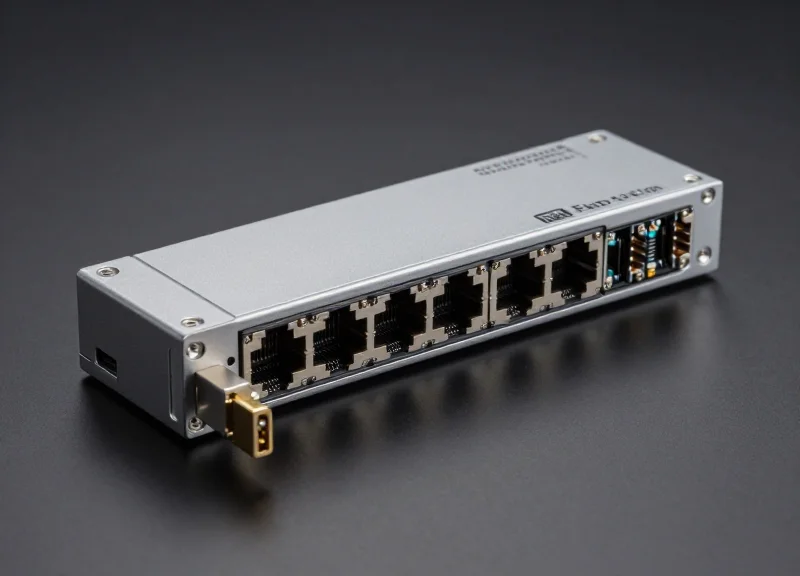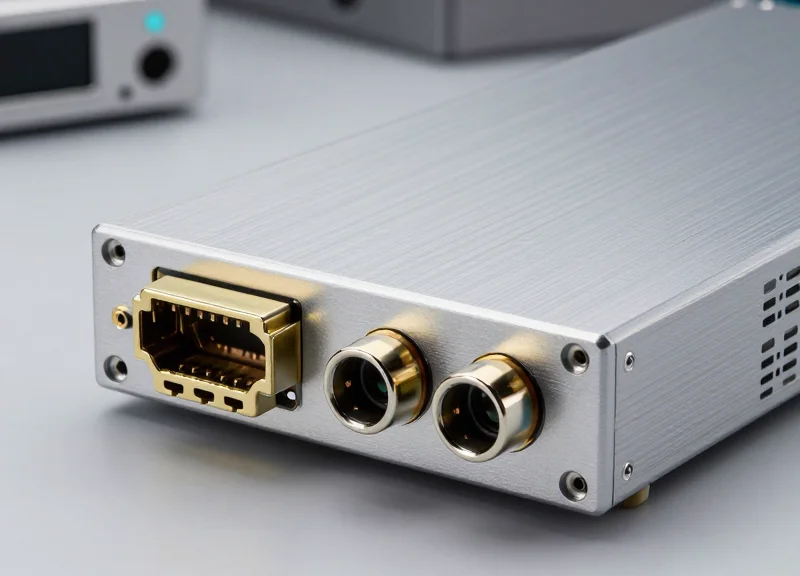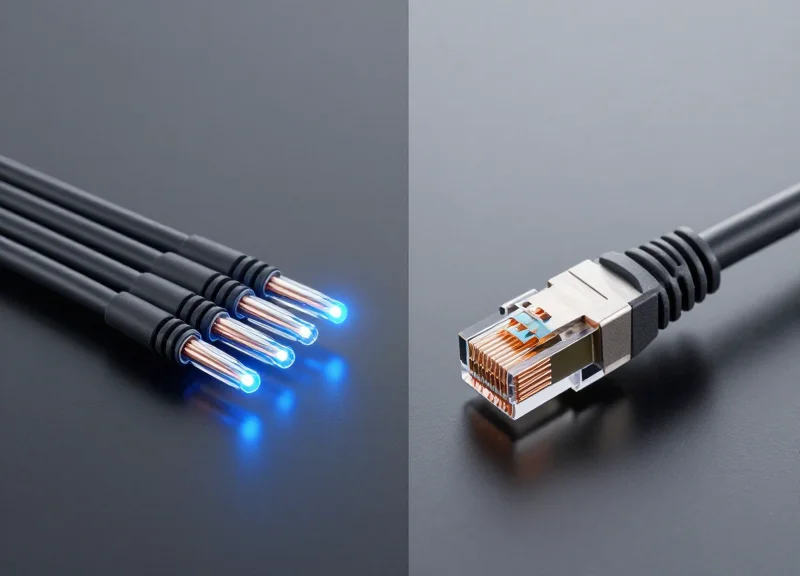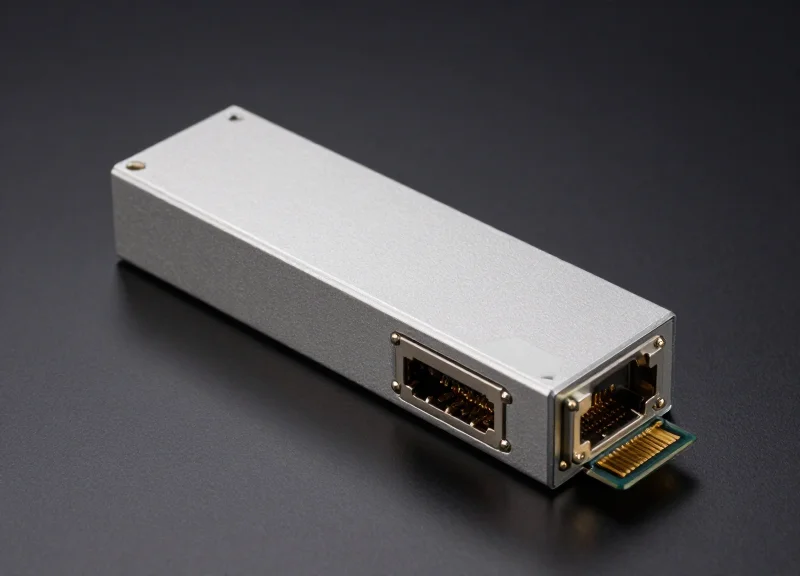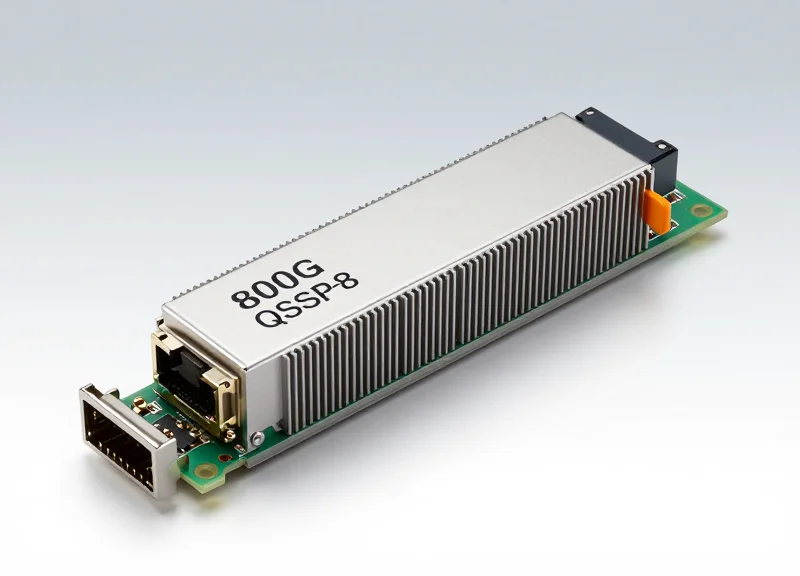
As AI and high-performance computing drive unprecedented data demands, the shift to 800G connectivity has become the new benchmark for modern data centers. Navigating the wholesale market for 800G QSFP-DD SR8 modules requires a deep understanding of both technical specifications and procurement strategies. In this guide, we break down how to secure the best bulk pricing and leverage OEM/ODM services to future-proof your network infrastructure.
The Rise of 800G: Why QSFP-DD SR8 is Essential for 2026

The Shift from 400G to 800G: Meeting the Demands of 2026
The shift to 800G QSFP-DD SR8 is driven by the explosive growth of AI workloads and high-performance computing, offering double the bandwidth density of previous generations within the same physical footprint. As data centers grapple with unprecedented traffic spikes from generative AI and machine learning clusters, the transition from 400G to 800G has evolved from a luxury to a technical requirement for maintaining low latency and high throughput.
Efficiency and Density in High-Traffic Environments
In 2026, hyperscale operators are prioritizing the 800G QSFP-DD SR8 (Short Range) module because it leverages 100G-per-lane technology (8x100G PAM4). This architecture provides a massive leap in port density, allowing network engineers to maximize the utilization of each rack unit. By adopting 800G, facilities can reduce the number of physical cables and transceivers required to achieve a specific aggregate bandwidth, which significantly lowers the Total Cost of Ownership (TCO) when purchasing in wholesale volumes.
| Feature | 400G QSFP-DD SR8 | 800G QSFP-DD SR8 |
|---|---|---|
| Data Rate | 400 Gbps | 800 Gbps |
| Electrical Interface | 8x50G PAM4 | 8x100G PAM4 |
| Optical Connector | MPO-16 or MPO-12 | MPO-16 |
| Reach | Up to 100m (OM4) | Up to 100m (OM4) |
| Primary Use Case | General Cloud/Enterprise | AI/ML, Hyperscale Spine-Leaf |
The QSFP-DD Form Factor Advantage
One of the primary reasons for the dominance of the QSFP-DD form factor is its backward compatibility. Unlike competing standards, QSFP-DD ports can often support legacy QSFP modules, providing a seamless migration path for enterprises not yet ready for a total infrastructure overhaul. For wholesale buyers, this means investing in 800G hardware today ensures compatibility with existing 400G and 100G components, protecting the long-term value of the investment.
- Why is SR8 specifically important for 2026?
SR8 modules are the most cost-effective solution for short-reach applications (under 100m) which make up the majority of intra-rack and inter-rack connections in modern leaf-spine architectures. - How does 800G impact power efficiency?
800G modules typically consume less power per gigabit than two 400G modules, helping data centers meet increasingly strict ESG and energy efficiency targets. - Is the 800G market stable for wholesale purchasing?
Yes, the 800G ecosystem has matured significantly in 2026, with multiple manufacturers ensuring a stable supply chain and competitive bulk pricing for QSFP-DD SR8 optics.
Technical Deep Dive: 800G QSFP-DD SR8 Specifications
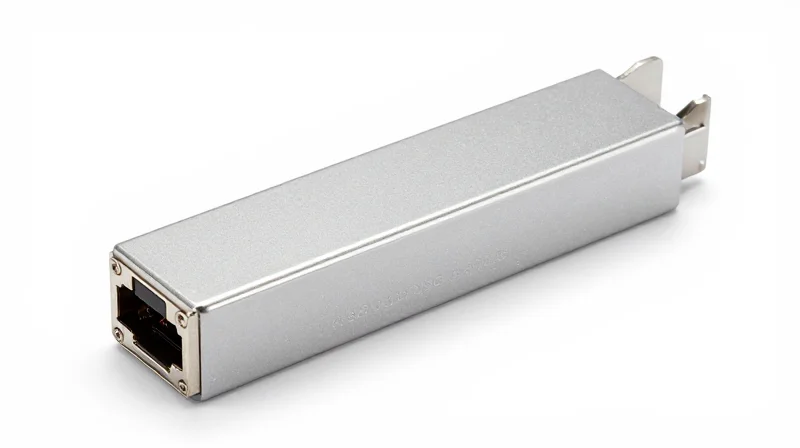
Defining the 800G QSFP-DD SR8 Architecture
The 800G QSFP-DD SR8 (Short Reach 8-channel) is the industry's primary solution for ultra-high-density interconnects, leveraging eight parallel lanes of 100Gbps PAM4 modulation to deliver a total aggregate bandwidth of 800Gbps. Built on the Double Density (QSFP-DD) form factor, it utilizes 850nm VCSEL (Vertical-Cavity Surface-Emitting Laser) technology to drive signals over multi-mode fiber (MMF). This module is specifically engineered for short-distance applications, such as leaf-spine switch connections in hyperscale data centers, where power efficiency and port density are the primary constraints for 2026 deployments.
Key Performance Specifications
| Parameter | Technical Specification |
|---|---|
| Data Rate | 800Gbps (8x112.5Gbps) |
| Modulation | 8x100G PAM4 |
| Wavelength | 850nm |
| Optical Connector | MPO-16 / MTP-16 |
| Fiber Type | Multi-mode Fiber (OM3/OM4/OM5) |
| Max Transmission Distance | 60m (OM3), 100m (OM4/OM5) |
| Power Consumption | Typically < 16W |
Modulation and Electrical Interface
At the core of the 800G SR8 is the 800GAUI-8 electrical interface. By employing 100G-per-lane PAM4 (4-level Pulse Amplitude Modulation) signaling, the module effectively doubles the efficiency of previous 50G-per-lane 400G modules. This transition requires sophisticated Digital Signal Processing (DSP) chips within the transceiver to manage Clock and Data Recovery (CDR) and compensate for signal degradation across the electrical-to-optical conversion process.
Optical Interface and MPO-16 Requirements
Unlike 400G SR8 which could utilize MPO-12 connectors in some configurations, the 800G SR8 standard utilizes an MPO-16 (or MTP-16) interface. This connector houses 16 fibers—8 for transmitting and 8 for receiving—ensuring that each 100G lane has a dedicated physical path. For wholesale buyers, ensuring fiber plant compatibility with MPO-16 cabling is a critical prerequisite for 800G upgrades.
- Is the 800G SR8 backward compatible?
Yes, the QSFP-DD form factor is designed to be backward compatible with existing QSFP-DD and QSFP ports, although the speed will be throttled to the host port's maximum capability (e.g., 400G or 200G). - What is the importance of the DSP in these modules?
The DSP is vital for 800G because it handles the complex 100G PAM4 signaling, ensuring low Bit Error Rates (BER) even at the high frequencies required for 800Gbps throughput. - Why choose SR8 over DR8 for wholesale orders?
SR8 uses multi-mode fiber and VCSEL lasers, which are significantly cheaper to produce and deploy in bulk for distances under 100 meters compared to the single-mode silicon photonics used in DR8.
Wholesale Pricing Factors for 800G Optical Transceivers

Wholesale pricing for 800G QSFP-DD SR8 modules is not a static figure; rather, it is a dynamic valuation influenced by raw material availability, manufacturing yields of advanced silicon, and the specific volume commitments made by data center operators. In the 2026 market, the transition from 400G to 800G has introduced new variables, particularly regarding the yield rates of 100G PAM4 lanes and the integration of power-efficient DSPs.
The Impact of DSP and VCSEL Supply Chains
The most significant cost components of an 800G transceiver are the Digital Signal Processor (DSP) and the 100G-per-lane Vertical-Cavity Surface-Emitting Lasers (VCSELs). The 7nm and 5nm CMOS processes required for these DSPs remain high-cost items due to limited foundry capacity. Any fluctuation in the semiconductor market directly affects the Bill of Materials (BoM), often accounting for over 50% of the total wholesale cost. Furthermore, the shift to 8-channel SR8 configurations requires high-consistency VCSEL arrays where a single failing diode renders the entire module unusable, making manufacturing yields a critical factor in bulk pricing.
Order Volume Tiers and Economies of Scale
| Order Volume (Units) | Pricing Category | Typical Discount Range |
|---|---|---|
| 1-20 Units | Standard Wholesale | Baseline Pricing |
| 21-100 Units | Tier 1 Volume | 12% - 18% Off Baseline |
| 101-500 Units | Tier 2 Volume | 20% - 30% Off Baseline |
| 500+ Units | Strategic/Enterprise | Contractual / Custom Quote |
Market Demand and Lead Time Considerations
The surge in AI-driven cluster deployments has created a 'high-demand' environment that can lead to supply constraints. While bulk buyers typically benefit from lower per-unit costs, extreme market demand can temporarily stabilize prices or even lead to surcharges for expedited delivery. Conversely, as manufacturing processes for 800G mature throughout 2026, the industry expects a standard 'learning curve' price erosion of approximately 10-15% annually, rewarding buyers who plan their procurement cycles effectively.
- How does vendor compatibility affect the quote?
Modules programmed and tested for 100% compatibility with specific OEMs like Cisco, Arista, or NVIDIA often carry a slight premium over generic 'white-box' units due to the additional validation and firmware engineering involved. - Are wholesale prices fixed for the year?
No, most wholesale quotes for 800G optics are valid for 30 to 60 days. This volatility is driven by the underlying costs of precious metals and semiconductor wafer pricing. - Can custom cable lengths for SR8 affect pricing?
While the transceiver itself has a standard cost, bulk orders often include bundled MPO-16 breakout cables. Customizing these cable lengths or polarity can influence the total package price.
Custom OEM/ODM Solutions for Specialized Network Needs
Custom OEM/ODM Solutions for Specialized Network Needs
For organizations scaling to 800G architectures, off-the-shelf transceivers often fall short of meeting the rigorous demands of proprietary network operating systems (NOS). Custom OEM/ODM solutions bridge this gap by offering hardware and software modifications that ensure 800G QSFP-DD SR8 modules operate with the same reliability as original equipment manufacturer parts, but at a fraction of the wholesale cost. This specialized approach addresses unique power consumption profiles, specific thermal thresholds, and the complex EEPROM coding required to bypass vendor-specific lock-in mechanisms found in high-end data center switches.
Firmware Customization and Vendor Compatibility
The primary barrier to deploying wholesale 800G modules is software compatibility. OEM services allow for precise firmware tuning of the QSFP-DD SR8's Management Interface Specification (CMIS). By modifying the internal EEPROM data, manufacturers can emulate the vendor signatures required by platforms like Arista, Cisco, and NVIDIA/Mellanox. This ensures that the host system correctly identifies the 8x100G PAM4 lanes, monitors Digital Optical Monitoring (DOM) metrics accurately, and avoids 'unsupported transceiver' port-shutdown errors.
- Can custom firmware improve link stability?
Yes, custom ODM firmware can optimize the Digital Signal Processor (DSP) settings for specific cable lengths or patch panel configurations, reducing bit error rates (BER) in high-density environments. - Is private labeling available for wholesale orders?
Most ODM providers offer full private labeling, including custom pull-tab colors, laser-etched serial numbers, and branded packaging for large-scale deployments or resale. - What is the typical MOQ for custom 800G solutions?
While standard modules have low MOQs, customized firmware or hardware modifications typically require a minimum order of 20 to 50 units to offset engineering and validation costs.
Comparative Overview: Standard vs. Custom ODM 800G SR8
| Feature | Standard Wholesale Module | Custom ODM Solution |
|---|---|---|
| Firmware | Generic CMIS | Vendor-Specific (Cisco, Arista, etc.) |
| Labeling | Manufacturer Standard | Private Brand / Custom SN |
| Pull-Tab Design | Standard Color/Length | Ergonomic / Color-Coded |
| DSP Tuning | Default Profile | Optimized for Target Hardware |
| Validation | General QA | Application-Specific Testing |
Beyond software, ODM partnerships allow for physical hardware adjustments, such as low-power components to stay within strict 14W or 16W thermal envelopes required by some compact 1U 800G switches. By integrating these custom specifications into the wholesale procurement process, network architects can de-risk their 2026 infrastructure upgrades while maintaining full control over their supply chain and branding.
Ensuring Reliability: Quality Control and Compatibility Testing

Ensuring Reliability: Quality Control and Compatibility Testing
Reliability in 800G QSFP-DD SR8 wholesale procurement is guaranteed through a rigorous combination of automated factory testing and real-world environmental simulation. For high-capacity data centers, a single failing module can disrupt massive traffic flows, making it imperative that bulk orders undergo 100% unit testing rather than batch sampling. Our quality control framework focuses on signal integrity under PAM4 modulation, thermal stability, and strict adherence to the IEEE 802.3ck standards to ensure every module meets the low Bit Error Rate (BER) thresholds required for error-free transmission.
The Gold Standard of Testing: BER and Signal Integrity
At 800G speeds, the margin for error is nearly non-existent. Bit Error Rate (BER) testing is the primary metric for evaluating the health of an optical link. Because SR8 modules utilize eight lanes of 100G PAM4, the complexity of signal processing increases significantly. We ensure that every module achieves a Pre-FEC (Forward Error Correction) BER of better than 2.4E-4, providing sufficient margin for the host's FEC algorithm to deliver a Post-FEC BER of less than 1E-12.
| Test Protocol | Standard Requirement | Wholesale Quality Benchmark |
|---|---|---|
| Pre-FEC BER | < 2.4E-4 | < 1.0E-5 (Higher Margin) |
| TX Optical Power | -6.5 to +4.0 dBm | Narrowed Tolerance for Consistency |
| Thermal Stress | 0°C to 70°C | 48-Hour Burn-in at 75°C |
| Jitter Analysis | Per IEEE 802.3ck | Eye-mask Margin > 20% |
Multi-Vendor Interoperability and Switch Compatibility
Compatibility is often the biggest hurdle when integrating third-party 800G optics into established ecosystems. To mitigate this, our modules undergo extensive interoperability testing across a diverse matrix of high-end switches. This involves verifying that the EEPROM and firmware are correctly recognized by host systems, and that the I2C communication interface remains stable under heavy load. We specifically test against the latest platforms from Cisco (Nexus), Arista (7800R3), and NVIDIA/Mellanox (Spectrum-4) to ensure seamless 'plug-and-play' functionality.
- How do you ensure modules work with proprietary switch OS?
We use custom firmware coding and DOM (Digital Optical Monitoring) mapping to emulate original vendor signatures, ensuring the switch OS does not flag the module as unsupported. - What happens if a module fails after deployment?
Our wholesale agreements include a robust RMA process and a limited lifetime warranty, backed by serialized tracking to identify and resolve potential batch-specific issues. - Are these modules compliant with TAA and other regulations?
Yes, we provide full documentation for MSA compliance, RoHS, and TAA-compliant manufacturing options for government and sensitive enterprise contracts.
Optimizing Your Supply Chain: Lead Times and Logistics
Optimizing the supply chain for 800G QSFP-DD SR8 transceivers involves a multi-layered approach that balances production windows, quality assurance protocols, and global transit times to prevent deployment bottlenecks. Because 800G components involve advanced VCSEL technology and high-performance DSPs, lead times can fluctuate significantly based on raw material availability and seasonal demand spikes. By securing wholesale contracts with tiered delivery schedules, organizations can lock in pricing while maintaining a continuous flow of hardware for multi-phase data center upgrades.
Strategic Lead Time Mitigation for 800G Hardware
The typical lead time for wholesale 800G SR8 modules can range from 2 to 8 weeks depending on the level of customization required, such as specific EEPROM coding for Arista, Cisco, or NVIDIA compatibility. Advanced planning is critical; industry leaders often utilize rolling forecasts shared with vendors to ensure prioritized production slots. This collaborative approach reduces the risk of stock-out scenarios during critical infrastructure expansion windows.
Logistics Comparison: Balancing Speed and Cost
| Logistics Method | Typical Transit Time | Cost Efficiency | Best For |
|---|---|---|---|
| Air Express (DHL/FedEx) | 3-5 Days | Low (High Cost) | Urgent small-batch replacements or testing samples. |
| Air Freight (Standard) | 7-12 Days | Medium | Standard bulk wholesale orders for scheduled upgrades. |
| Sea Freight | 30-45 Days | High | Massive inventory stockpiling where lead time is not critical. |
Managing Risk and Landed Cost
When evaluating custom quotes for 800G SR8 transceivers, it is vital to calculate the total landed cost. This includes not only the unit price but also duties, insurance, and local logistics. Procuring from vendors with established global distribution hubs can significantly reduce import complexities and provide a more predictable timeline for high-frequency trading or hyperscale data center environments.
Procurement & Logistics FAQ
- How can I avoid delays in custom-coded 800G transceivers?
Provide detailed vendor-specific compatibility requirements at the initial quoting stage and request pre-production samples for early lab validation to avoid batch-wide coding errors. - What is the impact of Incoterms on 800G wholesale pricing?
Incoterms like EXW vs. DDP significantly affect the final cost and risk profile. DDP (Delivered Duty Paid) is often preferred for large-scale deployments to simplify customs and tax liabilities for the buyer. - Do you offer safety stock programs for long-term contracts?
Many wholesale providers offer 'Stock-as-a-Service' or buffer stock agreements, where a specific volume of 800G SR8 modules is reserved in a local warehouse for immediate dispatch upon request.
Total Cost of Ownership (TCO) in the 800G Era

Total Cost of Ownership (TCO) in the 800G Era
Adopting 800G QSFP-DD SR8 technology through wholesale acquisition provides a decisive shift in network economics by drastically lowering the power consumption per bit and maximizing rack density in hyper-scale environments. While the initial capital expenditure (CapEx) for 800G hardware is higher than previous generations, the dramatic reduction in operational expenses (OpEx) through power savings and simplified cabling creates a compelling case for rapid return on investment (ROI).
Comparative Efficiency: 800G vs. Legacy Infrastructure
| Metric | 100G QSFP28 | 400G QSFP-DD | 800G QSFP-DD SR8 |
|---|---|---|---|
| Power Consumption per Gbps | ~35-45 mW | ~25-30 mW | <18-22 mW |
| Cable Density | Low (8 cables for 800G) | Medium (2 cables for 800G) | High (1 cable for 800G) |
| Cooling Requirements | Very High | High | Optimized |
| Relative Cost per Gbps | Baseline | 15% Lower | 35% Lower (Wholesale) |
The transition to 800G allows operators to achieve a 2x increase in throughput without doubling power or space requirements. In large-scale data centers, the consolidation of ports means fewer switches to manage and a significantly reduced carbon footprint. By leveraging wholesale custom quotes for 800G SR8 modules, enterprises can lock in lower price-per-port rates, which effectively offsets the cost of necessary fiber plant upgrades or hardware modifications.
Strategic Financial Benefits of Bulk Procurement
Procuring 800G QSFP-DD SR8 modules in bulk mitigates the 'early adopter tax' typically associated with cutting-edge networking gear. High-volume orders often include extended warranties and prioritized technical support, which further stabilizes the TCO by reducing the risk of downtime and streamlining the replacement lifecycle. Additionally, the move to 800G future-proofs the network infrastructure for at least 5-7 years, delaying the next cycle of expensive hardware refreshes.
FAQ: Maximizing ROI with 800G Wholesale Investments
- How does 800G SR8 improve power-to-performance ratios?
800G SR8 modules utilize advanced 112G SerDes and integrated 7nm or 5nm DSPs that process more data with less electrical leakage, resulting in up to 40% lower power consumption per gigabit compared to stacking multiple 100G modules. - Is the TCO actually lower for mid-sized enterprises?
Yes, because 800G reduces the number of required switch ports and optical transceivers needed to meet aggregate bandwidth targets, which simplifies management and reduces the total number of failure points across the fabric. - What role does custom wholesale pricing play in the TCO calculation?
Custom wholesale quotes allow for better capital allocation by providing tiered pricing models that lower the average unit cost, making the 'break-even' point for upgrading from 400G to 800G occur much earlier in the hardware lifecycle. - Does 800G deployment require expensive cooling upgrades?
While 800G modules generate more heat per individual unit, the overall thermal load per gigabit is lower. Standard data center cooling is usually sufficient if the rack airflow is optimized for high-density QSFP-DD configurations.
Why Ubytelink is Your Trusted Partner for 800G Sourcing
Partnering with Ubytelink for 800G QSFP-DD SR8 procurement ensures that enterprises and service providers bypass the typical markups of retail distributors while gaining direct access to professional-grade engineering support. As high-speed networking moves into the 800G era, Ubytelink provides the necessary stability in the supply chain by offering tiered bulk pricing, rigorous interoperability testing, and flexible OEM/ODM manufacturing capabilities designed to meet the specific firmware and coding requirements of major switch ecosystems like Arista, NVIDIA/Mellanox, and Cisco.
The Ubytelink Value Proposition: Beyond the Price Tag
While competitive pricing is the cornerstone of our wholesale model, our value extends into the technical lifecycle of the hardware. We operate advanced testing labs where every batch of 800G SR8 modules undergoes Bit Error Rate (BER) testing and real-world traffic simulation. This ensures that when you receive a bulk shipment, every unit is ready for immediate deployment in mission-critical AI clusters or high-frequency trading environments.
| Sourcing Factor | Ubytelink Wholesale | Standard Retail/Distribution |
|---|---|---|
| Cost Structure | Tiered volume discounts and factory-direct pricing. | High fixed margins with limited room for negotiation. |
| Technical Support | Direct access to optical engineers for custom coding. | Generalist sales support with limited technical depth. |
| Lead Times | Priority manufacturing and strategic buffer stock. | Dependent on third-party supply chains and backorders. |
| Warranty & RMA | Comprehensive 5-year warranty with expedited replacement. | Standard 1-year warranty with slow return processes. |
Customization and OEM/ODM Services
Ubytelink understands that large-scale infrastructures often require bespoke solutions. We offer full OEM/ODM services, allowing clients to customize everything from the module's EEPROM coding for specific vendor compatibility to custom labeling and packaging for white-label resale. This flexibility allows our partners to maintain a unified brand identity while leveraging our high-performance hardware.
Frequently Asked Questions About 800G Sourcing
- How do I obtain a custom quote for bulk 800G orders?
Clients can submit a quote request via our sales portal. Our account managers typically provide a detailed breakdown of tiered pricing and lead times within 24 hours based on your specific volume. - Does Ubytelink provide samples for interoperability testing?
Yes, we encourage technical qualification. Sample units of the 800G QSFP-DD SR8 can be provided to verified enterprise clients for lab testing prior to finalizing wholesale contracts. - What are the shipping options for global data centers?
We utilize global logistics partners (DHL, FedEx, UPS) and offer DDP/DAP terms to ensure hardware reaches your facility anywhere in the world with minimal customs friction. - Can Ubytelink code modules for multiple switch brands in one order?
Absolutely. We can provide multi-coded shipments, ensuring a percentage of your order is compatible with Cisco, while others are optimized for Arista or Juniper, all within the same bulk purchase.
Navigating the 800G landscape requires a partner who understands both the technical nuances of QSFP-DD SR8 modules and the economic realities of large-scale deployment. By choosing Ubytelink, you gain access to tier-one manufacturing, competitive wholesale rates, and bespoke OEM solutions tailored to your specific architecture. Ready to scale? Contact Ubytelink today for a personalized quote and technical consultation.