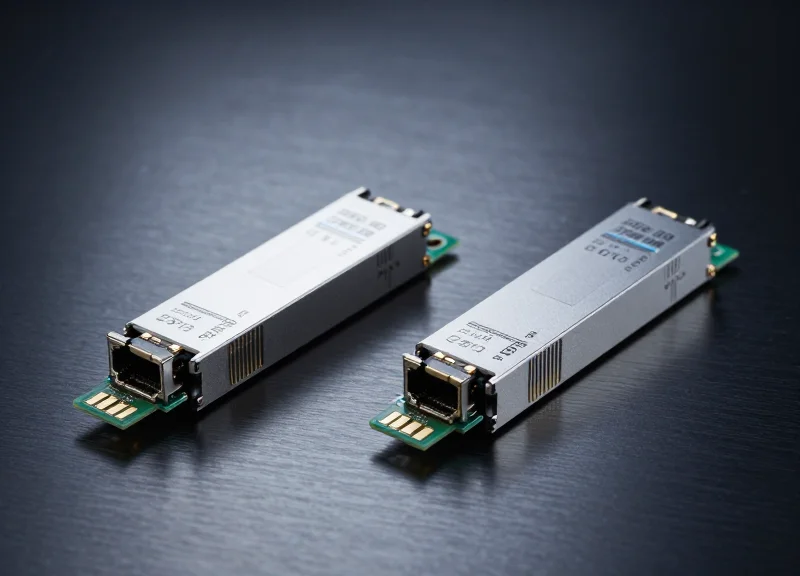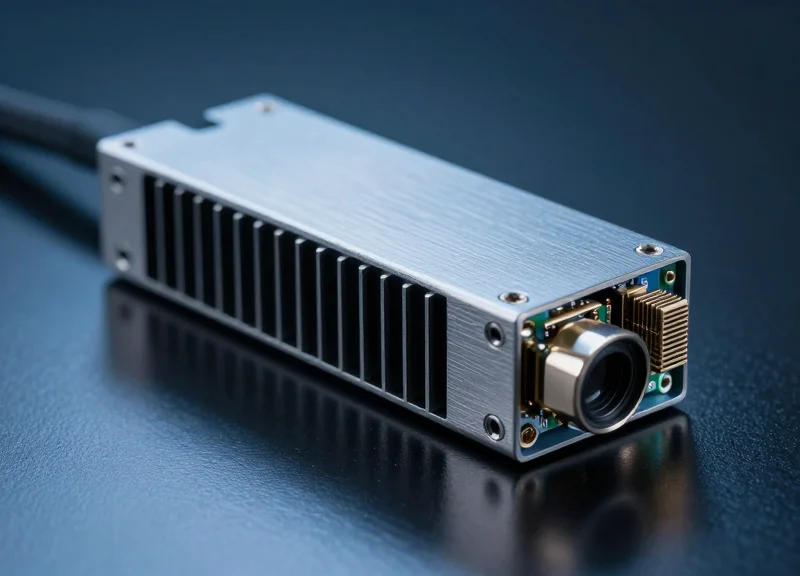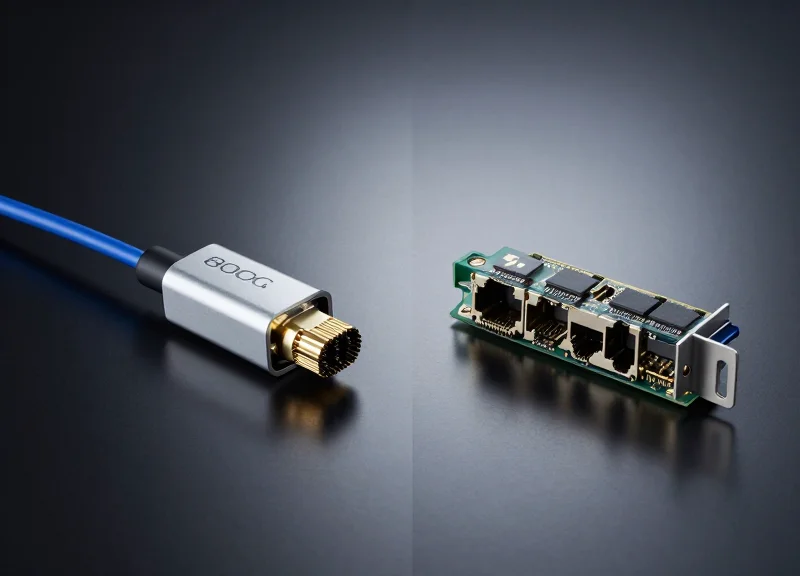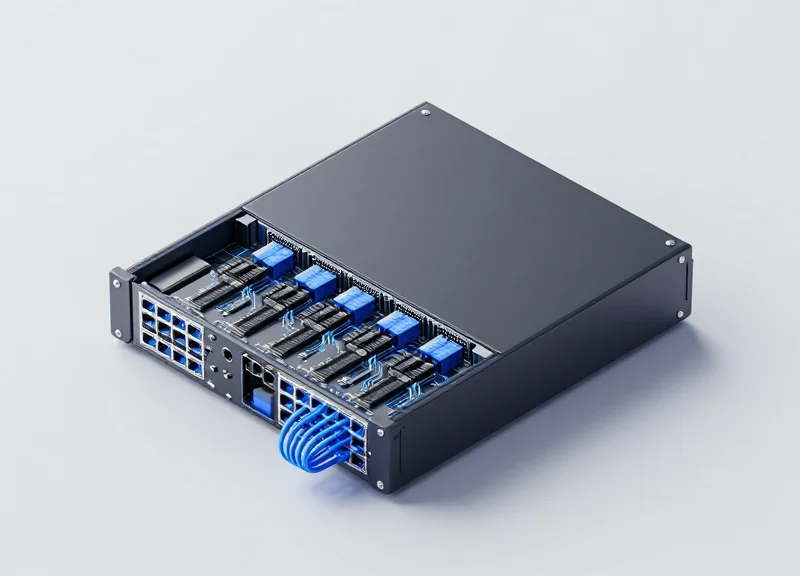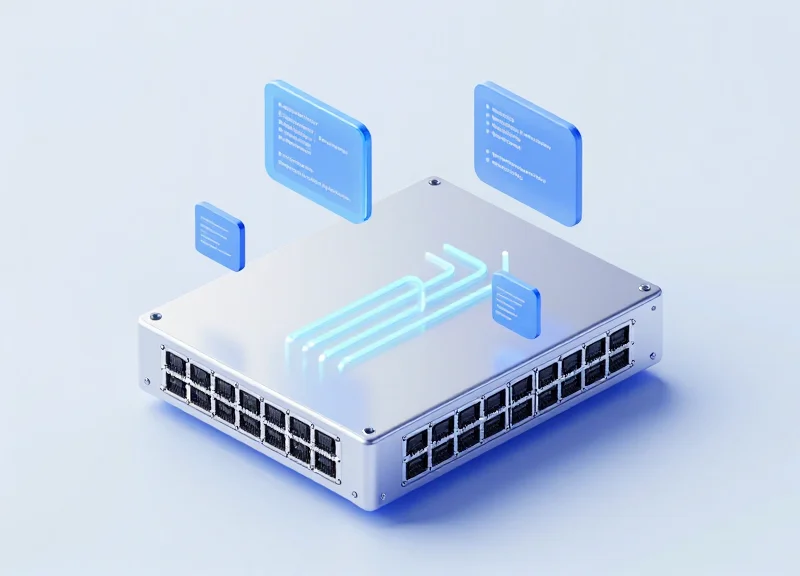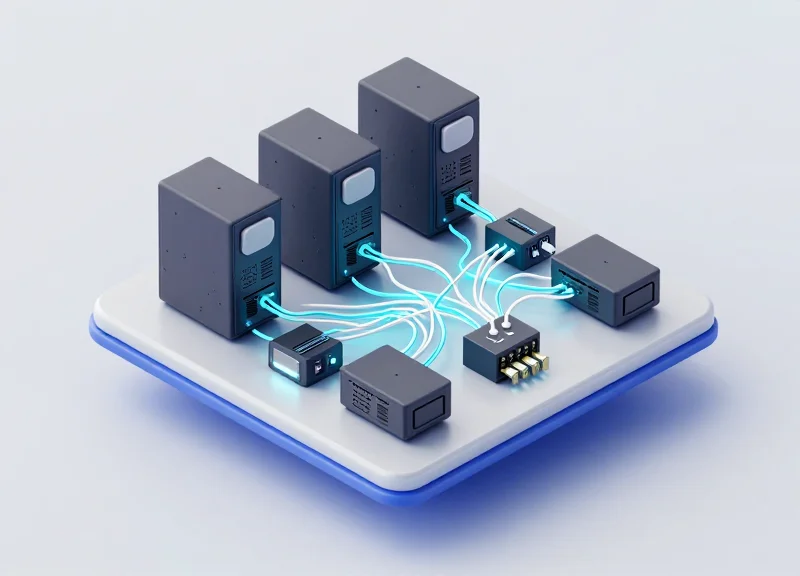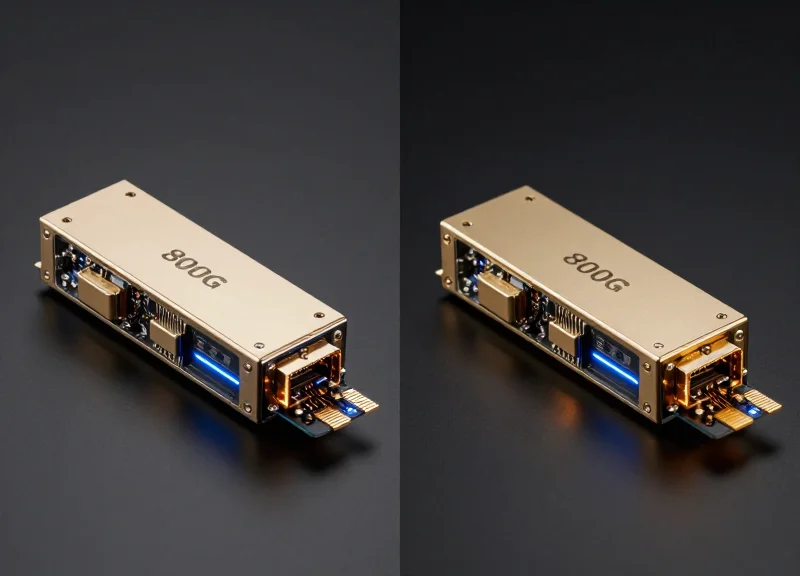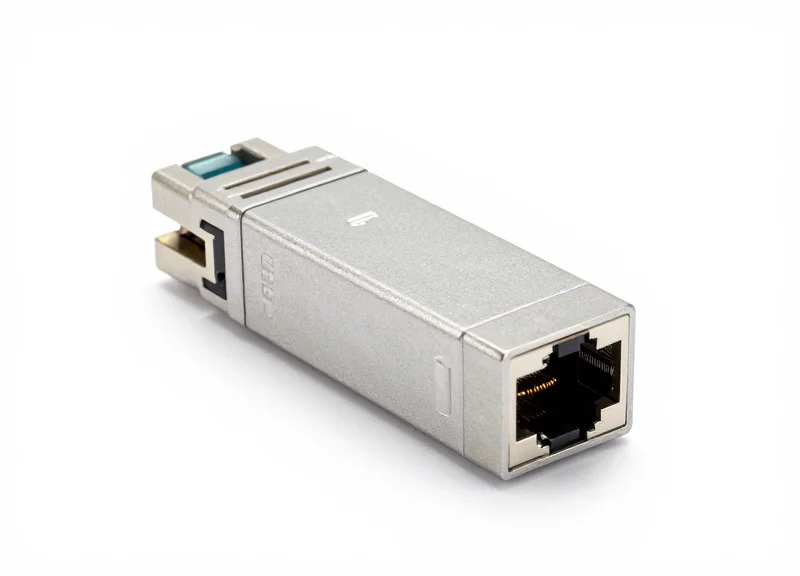
In the rapidly evolving landscape of high-performance computing (HPC) and artificial intelligence (AI), the network is only as strong as its weakest link. Ubytelink addresses the critical need for high-density, low-latency connectivity by offering premium NVIDIA/Mellanox compatible link solutions. We provide a bridge between the necessity for OEM-level reliability and the business requirement for cost-effective, scalable infrastructure.
The Evolution of High-Speed Networking: Why NVIDIA/Mellanox Standards Matter
The Evolution of High-Speed Networking: Why NVIDIA/Mellanox Standards Matter
NVIDIA/Mellanox has fundamentally reshaped the global networking landscape by pioneering low-latency, high-bandwidth interconnects that serve as the backbone for modern AI and cloud infrastructures. As data volumes explode, the industry has shifted away from general-purpose connectivity toward specialized protocols like InfiniBand and high-speed Ethernet. Adhering to these specific standards is no longer optional; it is a critical requirement for maintaining network integrity, reducing latency, and ensuring that expensive computing resources are not left idling due to communication bottlenecks.
The Shift from Standard Connectivity to High-Performance Interconnects
The evolution began with the need for Remote Direct Memory Access (RDMA), a technology that allows data to move directly between the memory of two computers without involving the operating system or CPU. This breakthrough, perfected by Mellanox and later integrated into the NVIDIA ecosystem, reduced latency from milliseconds to microseconds. Today, NVIDIA/Mellanox standards define the performance ceiling for NDR (400G) and upcoming XDR (800G) speeds, where signal integrity and precise timing are paramount.
| Feature | Standard Networking | NVIDIA/Mellanox Solutions |
|---|---|---|
| Primary Focus | General connectivity and compatibility | Ultra-low latency and maximum throughput |
| Data Transfer | CPU-intensive TCP/IP stack | Offloaded RDMA (RoCE) and InfiniBand |
| Throughput Speeds | Typically 1GbE to 100GbE | Scalable 200Gb/s to 800Gb/s+ |
| Reliability | Best-effort delivery | Lossless fabric with deterministic performance |
Why Compliance with NVIDIA/Mellanox Specifications is Vital
In a high-speed environment, the physical layer—the cables and transceivers—becomes a precision instrument. Ubytelink NVIDIA/Mellanox Link Solutions ensure that every component meets the exact electrical and optical specifications required by the host channel adapters (HCAs) and switches. Non-compliant solutions often result in higher Bit Error Rates (BER), which trigger retransmissions and effectively negate the benefits of a high-speed fabric.
- Why is link integrity crucial at 400G and 800G?
At these extreme speeds, signal attenuation and electromagnetic interference can cause massive packet loss. NVIDIA/Mellanox standards ensure the shielding and signal modulation (like PAM4) are perfectly tuned. - Can third-party cables impact hardware warranty?
While third-party solutions are common, only those engineered to match NVIDIA's EEPROM coding and power consumption profiles, like those from Ubytelink, prevent system errors and potential hardware rejection by the firmware. - What role does firmware play in these standards?
NVIDIA/Mellanox devices use sophisticated Link Training algorithms. Cables and transceivers must be fully compatible with these algorithms to establish a stable link at maximum rated speeds.
Ubytelink's Commitment to Quality: Beyond Standard Compatibility
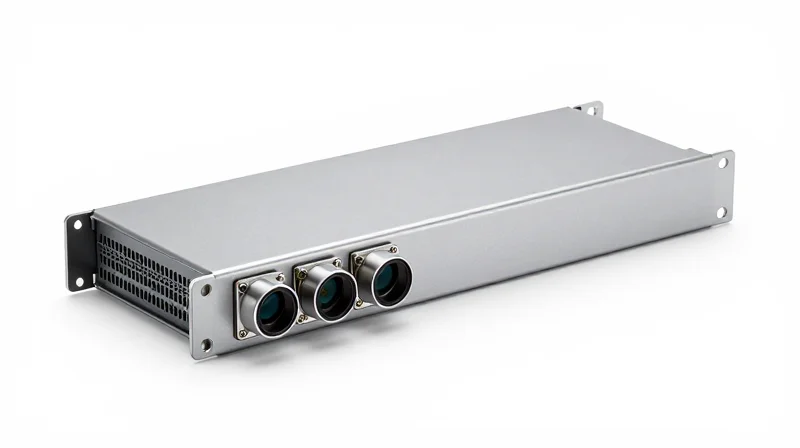
Ubytelink redefines the concept of compatibility by delivering hardware that is performance-matched to the exacting specifications of NVIDIA/Mellanox ecosystems, prioritizing signal integrity and long-term reliability over mere connectivity. While generic alternatives focus on low-cost entry, Ubytelink targets the elimination of bit errors and latency spikes that can cripple high-performance computing (HPC) and AI workloads.
The Engineering Philosophy: Performance-Matched vs. Basic Compatibility
In the world of 400G and 800G networking, the margin for error is non-existent. Ubytelink treats every link as a critical component of the data fabric. Our engineering team utilizes advanced signal integrity analysis to ensure that every transceiver and cable provides the same timing, power consumption, and thermal characteristics as the original NVIDIA/Mellanox hardware. This 'performance-matched' approach ensures that the host switch or HCA (Host Channel Adapter) recognizes the module seamlessly and operates at peak efficiency without the need for manual overrides or troubleshooting.
Ubytelink Premium vs. Generic Compatibility Standards
| Feature | Generic Compatible | Ubytelink Premium Solutions |
|---|---|---|
| Bit Error Rate (BER) | < 10^-12 (Standard) | < 10^-15 (High Integrity) |
| Thermal Management | Basic Heat Dissipation | Advanced Materials for 24/7 Stability |
| Firmware Logic | Generic MSA Profiles | Optimized NVIDIA/Mellanox Firmware |
| Testing Protocol | Statistical Batch Testing | 100% Device Validation at Full Load |
| Packet Loss Risk | Variable/Intermittent | Zero-Loss Guaranteed |
Strict Validation for Zero Packet Loss
Packet loss is often the silent killer of productivity in InfiniBand and Ethernet fabrics. To prevent this, Ubytelink employs a rigorous validation cycle that includes eye-diagram testing, jitter analysis, and long-term soak testing in actual NVIDIA Quantum-2 and Spectrum-4 environments. By verifying the physical layer performance under extreme environmental stress, we guarantee that our solutions will not contribute to the network congestion or data retransmissions that typically result from sub-standard optical components.
Frequently Asked Questions on Quality Standards
- Why is 'Performance-Matched' better than 'Compatible'?
A compatible device merely connects; a performance-matched device replicates the electrical and optical behavior of the OEM module, ensuring identical latency and power profiles. - How does Ubytelink achieve zero packet loss?
By maintaining a Bit Error Rate (BER) significantly lower than industry standards through high-grade lasers and rigorous signal-to-noise ratio validation. - Will Ubytelink solutions work with NVIDIA/Mellanox software tools?
Yes, our customized EEPROM coding ensures that Ubytelink modules are fully recognized by management tools like Mellanox NEO and NVIDIA Air.
Technical Deep Dive: DAC, AOC, and Optical Transceiver Solutions
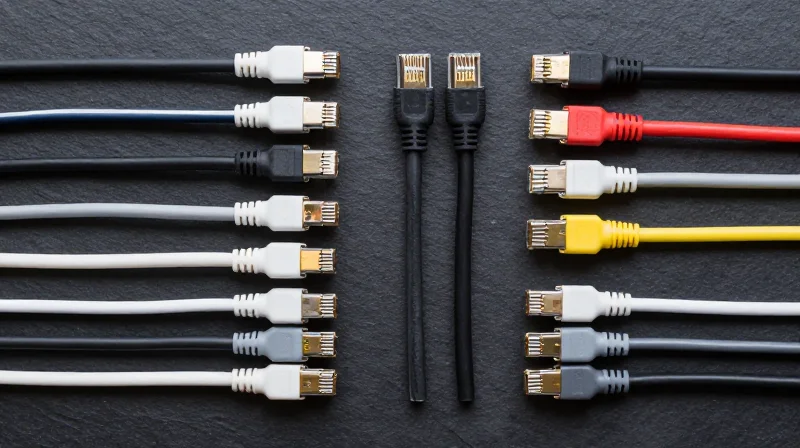
Technical Deep Dive: DAC, AOC, and Optical Transceiver Solutions
Selecting the appropriate interconnect for a high-performance network is a function of balancing reach, power consumption, and latency against the specific port requirements of NVIDIA/Mellanox hardware. Ubytelink provides a tiered portfolio of Direct Attach Copper (DAC), Active Optical Cables (AOC), and discrete transceivers designed to sustain the rigorous signaling integrity demanded by InfiniBand HDR/NDR and high-speed Ethernet fabrics, ensuring that physical layer transitions do not introduce bottlenecks or packet loss.
Direct Attach Copper (DAC): The Low-Latency Standard
For intra-rack connectivity, typically spanning distances of 0.5 to 5 meters, Direct Attach Copper (DAC) remains the preferred solution. Ubytelink DACs are passive, meaning they do not require internal conversion components that consume power or add signal processing delay. This results in the lowest possible latency profile, which is critical for High-Frequency Trading (HFT) and complex AI training clusters. Our DAC solutions utilize high-gauge copper and superior shielding to exceed NVIDIA's bit error rate (BER) requirements at 400G and 800G speeds.
Active Optical Cables (AOC): Performance for Extended Reach
When connection distances exceed the physical limitations of copper—usually beyond 5 meters—Active Optical Cables (AOC) provide a lightweight and flexible alternative. By integrating optical engines directly into the transceiver heads, AOCs convert electrical signals to light for transmission over multi-mode fiber. Ubytelink AOCs are optimized for inter-rack and row-to-row connections up to 100 meters. Their smaller bend radius and immunity to electromagnetic interference (EMI) make them ideal for high-density cable management environments where airflow and cable weight are primary concerns.
Optical Transceivers: Modular Flexibility for Data Centers
For long-haul infrastructure and campus-wide networking, discrete optical transceivers paired with structured cabling offer maximum modularity. Ubytelink manufactures a full suite of transceivers, including SR4, LR4, and FR4 modules, specifically programmed to ensure full compatibility with Mellanox LinkX logic. These modules support Digital Diagnostic Monitoring (DDM), allowing network administrators to monitor temperature, voltage, and laser bias in real-time through the NVIDIA management interface, ensuring proactive maintenance of the link's health.
| Feature | Direct Attach Copper (DAC) | Active Optical Cable (AOC) | Optical Transceiver |
|---|---|---|---|
| Typical Reach | 0.5m to 5m | Up to 100m | Up to 10km+ |
| Power Consumption | < 0.1W per end | 1W to 2W per end | Up to 5W+ (Long Reach) |
| Latency | Negligible | Low (O/E Conversion) | Low (O/E Conversion) |
| Best Use Case | Intra-rack connectivity | Inter-rack/Short-range | Long-haul/Structured Cabling |
Interconnect Technology FAQ
- Why should I choose DAC over AOC for top-of-rack connections?
DACs offer significantly lower power consumption and zero signal processing latency compared to AOCs, making them more cost-effective and efficient for short distances. - Are Ubytelink transceivers hot-swappable in NVIDIA Quantum switches?
Yes, all Ubytelink transceivers and cables are designed for hot-swap functionality, allowing for network upgrades and maintenance without powering down the switch. - Can I use Ubytelink AOCs in a mixed-vendor environment?
While optimized for NVIDIA/Mellanox, our cables are engineered to industry standards, ensuring broad interoperability across various Tier-1 networking hardware manufacturers.
Seamless Interoperability with ConnectX Adapters and Quantum Switches

Seamless Interoperability with ConnectX Adapters and Quantum Switches
Ubytelink's link solutions are meticulously designed to provide a 1:1 functional match with NVIDIA Mellanox hardware, ensuring that ConnectX-6, ConnectX-7, and Quantum-2 platforms recognize our modules as native components. By adhering to the precise EEPROM coding and signaling protocols required by NVIDIA’s InfiniBand and Ethernet stacks, Ubytelink eliminates the common handshake issues and throughput bottlenecks often found in generic third-party cables. This technical synergy allows network architects to deploy high-density fabrics with the confidence that every link will operate at full rated speed—whether it is 200G HDR or 400G NDR—without the need for manual configuration or firmware overrides.
Optimized for InfiniBand and High-Speed Ethernet Fabrics
The Quantum-2 switch series and ConnectX-7 adapters represent the current apex of low-latency networking, demanding rigorous adherence to signal integrity standards. These devices are exceptionally sensitive; even minor deviations in optical power or impedance can lead to increased bit error rates (BER) that degrade the entire fabric's efficiency. Ubytelink solutions are tested specifically within these ecosystem constraints, ensuring they meet or exceed the performance metrics of original LinkX products. This ensures zero-loss data transmission across large-scale AI and HPC clusters.
| Product Category | ConnectX-6 (HDR/200G) | ConnectX-7 / Quantum-2 (NDR/400G) | Key Form Factors |
|---|---|---|---|
| Direct Attach Copper (DAC) | Full Compatibility (Passive) | Full Compatibility (Passive/Active) | QSFP56 / OSFP |
| Active Optical Cables (AOC) | Seamless Plug-and-Play | High-Efficiency 400G Support | QSFP56 / OSFP |
| Optical Transceivers | SR4/FR4 Options | NDR/NDR200 Options | QSFP56 / OSFP / QSFP112 |
Plug-and-Play Verification FAQ
- Will Ubytelink modules cause 'unsupported transceiver' warnings in NVIDIA switches?
No. Our firmware is programmed to match the vendor-specific IDs expected by Mellanox OpenFabrics (OFED) drivers and Switch-IB/Quantum firmware, ensuring immediate recognition. - Do these solutions support NDR and NDR200 speeds?
Yes, Ubytelink offers OSFP and QSFP112 solutions specifically validated for the Quantum-2 platform and ConnectX-7 adapters to maintain 400G and 200G NDR throughput. - Is manual tuning required for signal integrity?
No, Ubytelink cables utilize internal signal conditioning that aligns automatically with NVIDIA’s auto-negotiation protocols, providing a true plug-and-play experience. - Does using Ubytelink affect the hardware warranty?
No, Ubytelink products are fully compliant with MSA standards, which ensures that using these high-quality alternatives does not void your NVIDIA or Mellanox hardware warranties.
Thermal Management and Power Efficiency in High-Density Racks

Thermal Management and Power Efficiency in High-Density Racks
Ubytelink link solutions minimize heat generation by utilizing state-of-the-art low-power semiconductors and high-thermal-conductivity materials, directly reducing the cooling load and Total Cost of Ownership (TCO) for global networks. In high-density environments like those featuring NVIDIA Spectrum-4 or Quantum-2 switches, every milliwatt saved at the interconnect level scales to significant operational savings. By maintaining lower operating temperatures, these solutions prevent thermal throttling, ensuring that high-performance compute clusters maintain peak throughput without the risk of hardware degradation.
Power Consumption Benchmarks by Interconnect Type
| Interconnect Type | Typical Power (Watts) | Heat Dissipation Level |
|---|---|---|
| DAC (Direct Attach Copper) | < 0.1W | Negligible |
| AOC (Active Optical Cable) | 1.5W - 2.5W | Low |
| Transceiver (SR4/DR4/FR4) | 2.0W - 4.5W | Moderate |
Driving Down TCO with Advanced Thermal Design
Thermal management is not merely about preventing hardware failure; it is a strategy for long-term fiscal efficiency. Ubytelink modules are designed with heat-sinking shells and optimized firmware that adjusts power states dynamically. This ensures that even under maximum throughput with ConnectX-7 adapters, the thermal envelope remains within strict tolerances. By reducing the 'silent' power consumption of thousands of interconnects, data center operators can reallocate energy budgets toward compute-heavy AI and HPC tasks, effectively lowering the overall carbon footprint and utility expenses.
- How does Ubytelink achieve lower power consumption compared to generic alternatives?
Ubytelink integrates Tier-1 chipsets and high-efficiency laser drivers that exceed standard power-to-performance ratios, specifically tuned for NVIDIA Mellanox hardware specifications. - Does lower heat dissipation extend the life of the hardware?
Yes, lower operating temperatures reduce the rate of component degradation and significantly increase the Mean Time Between Failures (MTBF) for both the transceiver and the switch port. - Can Ubytelink solutions improve a data center's Power Usage Effectiveness (PUE)?
Absolutely; by minimizing heat at the source, the energy required for facility-wide cooling systems is reduced, which is a primary factor in optimizing PUE ratings.
Rigorous Testing Protocols: Ensuring Mission-Critical Reliability
Reliability in high-performance computing (HPC) and AI environments is not a byproduct of design alone; it is the result of exhaustive, multi-layered testing protocols that simulate the most demanding data center conditions. Ubytelink's commitment to quality is centered on a 'Zero-Failure' philosophy, where every transceiver, Active Optical Cable (AOC), and Direct Attach Cable (DAC) undergoes rigorous validation in native NVIDIA/Mellanox ecosystems to guarantee 100% interoperability and long-term stability.
The Four Pillars of Ubytelink Quality Assurance
Our validation process goes beyond basic connectivity. We focus on the physical, electrical, and logical layers of the link to ensure that Ubytelink solutions outperform generic alternatives in mission-critical applications.
- Signal Integrity & Eye Diagram Analysis
Utilizing high-precision Bit Error Rate Testers (BERT) and oscilloscopes, we verify that signal 'eyes' are wide and clear, indicating minimal jitter and noise even at 400G and 800G speeds. - Real-World Switch Environment Testing
Every batch is tested directly in NVIDIA Quantum InfiniBand switches and Spectrum Ethernet switches to confirm firmware compatibility and link-up speed. - Thermal Stress & Burn-In
Modules are subjected to extended periods of high-temperature operation to identify and eliminate potential early-life failures before they ever reach a production rack. - Mechanical and Durability Validation
Connectors and pull-tabs are tested for repeated insertion cycles and tensile strength to withstand the rigors of frequent maintenance and high-density cabling.
Performance Comparison: Ubytelink vs. Standard Requirements
| Testing Parameter | Industry Standard (IEEE/MSA) | Ubytelink Internal Protocol |
|---|---|---|
| Bit Error Rate (BER) | 1E-12 | Better than 1E-15 (Post-FEC) |
| Switch Compatibility | Software Simulation | Live NVIDIA/Mellanox Hardware Validation |
| Temperature Range | 0°C to 70°C (Standard) | Extended Thermal Margin Testing |
| Jitter Margin | Standard Compliance | 20% More Stringent than MSA Specifications |
Reliability FAQ
- Why is testing in actual switches better than generic tester units?
Generic testers cannot replicate the specific firmware handshaking and proprietary diagnostic protocols used by NVIDIA Mellanox LinkX logic. Real-world testing ensures that the switch OS (MLNX-OS/Onyx) recognizes the module immediately without errors. - How does Ubytelink manage signal integrity over long distances?
We use premium lasers (VCSEL or Silicon Photonics) and low-loss PCB materials, coupled with rigorous BERT testing, to ensure that packet loss remains near zero even at the maximum rated distance of the link. - Are these protocols applied to every shipment?
Yes. Unlike some manufacturers who perform batch sampling, Ubytelink conducts individual performance verification on high-speed modules to ensure every single unit meets the 'Premium Quality' promise.
Empowering AI and Machine Learning: The Importance of Throughput

The Vital Link Between Data Throughput and AI Scalability
In the realm of AI and Machine Learning, throughput is the definitive measure of how quickly a cluster can synchronize parameters across distributed nodes. When training models with billions of parameters, such as modern LLMs, the network becomes the backplane of the entire supercomputer. Ubytelink NVIDIA/Mellanox compatible solutions provide the ultra-high bandwidth required to sustain these workloads, preventing 'GPU starvation'—a state where expensive processing units sit idle waiting for data packets. By providing a stable, high-capacity data path, Ubytelink ensures that the compute-to-compute communication scales linearly with the number of nodes.
Technical Advantages for AI Infrastructure
| Metric | Standard Networking Links | Ubytelink Optimized Solutions |
|---|---|---|
| Peak Bandwidth Support | Up to 100G/200G | Up to 400G (NDR) / 800G (XDR) |
| RDMA Compatibility | Basic support | Full NVIDIA GPUDirect RDMA optimization |
| Signal Integrity | Variable with distance | Premium grade for high-density AI clusters |
| Error Correction | Standard FEC | Low-latency FEC optimized for InfiniBand |
Eliminating Communication Overheads
Training an LLM involves massive 'All-Reduce' and 'All-to-All' operations where every GPU must communicate its gradient updates to every other GPU in the cluster. Ubytelink's solutions facilitate these collective communications by providing low-latency, high-bandwidth interconnects that support InfiniBand's in-network computing capabilities. This synergy allows the network to handle part of the data reduction, further freeing up GPU resources for actual model computation.
AI Connectivity FAQ
- How does throughput directly impact the cost of AI training?
Higher throughput reduces the total time required for training epochs. Since AI training is often billed by compute-hour or requires massive power consumption, shortening the duration through faster data movement significantly lowers the total cost of ownership (TCO). - Are Ubytelink solutions compatible with NVIDIA's Quantum-2 platform?
Yes, Ubytelink links are fully validated to work with Quantum-2 InfiniBand switches and ConnectX-7 adapters, ensuring they meet the 400Gb/s per port throughput requirements. - What is the role of GPUDirect in these link solutions?
Ubytelink's hardware is designed to support GPUDirect RDMA, which allows for direct data transfer between GPU memories across different servers without involving the CPU, maximizing the effective throughput and minimizing latency.
Future-Proofing Your Infrastructure with 400G and 800G Readiness
Future-Proofing Your Infrastructure with 400G and 800G Readiness
As global data centers transition from 100G to 400G and eventually 800G, Ubytelink provides the necessary hardware foundation to ensure that your infrastructure remains scalable, reliable, and capable of handling the exponential growth in data traffic. By leveraging advanced PAM4 modulation and high-density form factors like QSFP-DD and OSFP, Ubytelink solutions are designed to support the massive bandwidth requirements of next-generation AI clusters and hyperscale cloud environments while maintaining full compatibility with the NVIDIA/Mellanox ecosystem.
The Shift to Hyperscale Bandwidth
The leap to 400G and 800G is not merely a speed increase; it represents a fundamental shift in how signals are processed. While legacy 100G often utilized NRZ (Non-Return to Zero) encoding, 400G and 800G rely on PAM4 (Pulse Amplitude Modulation 4-level) to pack more data into the same spectrum. Ubytelink's optical and copper solutions are engineered with high-precision DSPs (Digital Signal Processors) to mitigate signal degradation across these higher frequencies, ensuring that long-reach optics and short-reach DACs alike perform with near-zero bit error rates.
| Specification | 100G Ethernet | 400G Ethernet | 800G Ethernet |
|---|---|---|---|
| Modulation | NRZ / PAM4 | PAM4 | PAM4 |
| Form Factors | QSFP28 / SFP-DD | QSFP-DD / OSFP | QSFP-DD800 / OSFP |
| Typical Application | Standard Enterprise / Cloud | AI Training / Spine-Leaf | Hyperscale / LLM Clusters |
| Bandwidth per Lane | 25G / 50G | 50G / 100G | 100G |
Strategic Advantages of Ubytelink 800G Readiness
Preparing for 800G involves more than just selecting high-speed transceivers; it requires a strategic approach to power management and thermal efficiency. Ubytelink’s 800G-ready components are optimized for lower power consumption per gigabit, reducing the total cost of ownership (TCO) and cooling requirements for dense server racks. This efficiency is critical for organizations deploying NVIDIA HGX or DGX platforms, where thermal headroom is often at a premium.
- Is 800G backward compatible with 400G hardware?
Yes, Ubytelink's 800G QSFP-DD and OSFP modules are designed to be backward compatible with 400G systems via breakout cables or adaptive ports, allowing for a phased infrastructure upgrade. - What are the primary use cases for Ubytelink 800G solutions?
800G is primarily deployed in high-performance computing (HPC) environments, Large Language Model (LLM) training, and data center interconnects (DCI) where maximum throughput is required to prevent processing bottlenecks. - How does Ubytelink ensure signal integrity at 800G?
Ubytelink utilizes high-grade silicon photonics and advanced internal shielding to minimize electromagnetic interference and crosstalk, which are significantly more prevalent at 800G frequencies.
The Ubytelink Advantage: Global Support and Supply Chain Agility
In a digital landscape where data center downtime or project delays can cost millions, Ubytelink distinguishes itself by offering an agile supply chain and specialized support that OEMs often struggle to provide. While traditional manufacturers may face lead times of weeks or months, Ubytelink leverages a distributed global inventory and a focused technical team to ensure that high-performance NVIDIA/Mellanox-compatible solutions are available when and where they are needed most, bypassing the bureaucracy of standard procurement cycles.
Agility in Global Logistics and Supply Chain
Ubytelink’s logistics framework is designed for the modern enterprise. By maintaining significant stock levels across multiple regional hubs, we reduce the geographic and bureaucratic hurdles typical of international hardware procurement. This 'stock-first' mentality allows us to support urgent scaling requirements for AI clusters and high-frequency trading platforms without the typical backorder frustrations associated with global chip and component shortages.
| Feature | Ubytelink Advantage | Standard OEM Model |
|---|---|---|
| Lead Times | Immediate shipping on stocked items (1-3 days) | Often 8-16 weeks or more depending on queue |
| Technical Support | Dedicated specialists for link solutions | Generalist support queues with long wait times |
| Agility | Flexible custom configurations and rapid prototyping | Rigid product SKU cycles and limited customization |
| Global Reach | Strategic regional warehousing and direct logistics | Centralized, often bottlenecked distribution hubs |
Expert Technical Assistance Across Time Zones
Support at Ubytelink goes beyond mere troubleshooting; it is a consultative partnership. Our engineers possess deep expertise in InfiniBand and Ethernet interconnectivity, providing proactive guidance on compatibility, signal integrity, and architecture design. This specialized focus ensures that our clients are not just buying hardware, but are gaining a partner capable of optimizing their specific network environment for peak performance.
Frequently Asked Questions Regarding Global Support
- How does Ubytelink ensure faster delivery than OEMs?
We maintain pre-staged inventory of critical NVIDIA/Mellanox compatible components in regional centers, allowing for same-day or next-day shipping while OEMs wait for manufacturing cycles and backlogged logistics. - Is technical support included with procurement?
Yes, every Ubytelink solution comes with access to our technical experts who specialize in high-speed network integration, ensuring your installation is seamless from day one. - Can Ubytelink support global multi-site deployments?
Our supply chain is built for international reach, utilizing a network of logistics partners to clear customs efficiently and reach data centers worldwide simultaneously.
Navigating the complexities of high-speed networking requires a partner who understands the nuances of hardware compatibility and signal integrity. Ubytelink's NVIDIA/Mellanox link solutions offer the performance your mission-critical infrastructure demands without the OEM price tag. Ready to optimize your global network? Contact our engineering team today for a customized consultation and see how Ubytelink can power your next-generation data center.