In an era where uptime is the ultimate currency, the underlying code of your network hardware determines your operational success. Ubytelink’s firmware coding for switches provides a sophisticated software layer that ensures seamless integration, maximum performance, and the robust reliability required by today's global enterprises.
The Strategic Importance of Firmware in Modern Networking
The Strategic Importance of Firmware in Modern Networking
Firmware is the invisible architect of modern networking, acting as the critical low-level software that instructs hardware components—such as ASICs, PHY chips, and memory modules—on how to execute high-level commands from the Network Operating System (NOS). In the context of Ubytelink Firmware Coding for Switches Solutions, this layer is not merely a driver but a strategic asset that translates complex protocols into physical electrical signals, directly impacting the speed, security, and reliability of data transmission across global infrastructures.
The Bridge Between Silicon and Software
The efficiency of a network switch is often capped by the quality of its firmware rather than its raw hardware specifications. Premium firmware coding creates a robust Hardware Abstraction Layer (HAL), allowing the NOS to communicate seamlessly with the underlying silicon. This orchestration ensures that features like VLAN tagging, Link Aggregation, and Quality of Service (QoS) are executed with minimal CPU overhead, preventing bottlenecks that can degrade user experience in high-density environments.
| Performance Metric | Generic Firmware Implementation | Ubytelink Optimized Firmware |
|---|---|---|
| Packet Forwarding Latency | Variable based on software interrupts | Deterministic and minimized via ASIC optimization |
| Resource Management | Basic memory allocation | Dynamic buffer management for burst traffic |
| System Stability | Susceptible to driver-level conflicts | Hardened code with rigorous validation cycles |
| Power Consumption | Standard static power draw | Intelligent energy-efficient Ethernet (EEE) control |
Ensuring Global Network Stability
For global networks spanning multiple continents, firmware quality is the primary defense against systemic downtime. High-quality coding includes sophisticated error-correction mechanisms and self-healing routines that can identify and isolate hardware malfunctions before they trigger a full system crash. By prioritizing stability at the firmware level, Ubytelink provides a foundation where uptime is measured in years, not months.
- How does firmware coding affect switch security?
Secure firmware coding prevents unauthorized access at the boot level (Secure Boot) and ensures that vulnerabilities like buffer overflows are mitigated through rigorous memory management practices. - Why is firmware considered the 'bridge' in networking?
It acts as the intermediary that translates the high-level logic of the Network Operating System into the low-level machine code required by the switch's physical processors and ports. - Can optimized firmware extend hardware lifespan?
Yes, by optimizing thermal management and reducing unnecessary CPU cycles, firmware minimizes physical wear on components, extending the MTBF (Mean Time Between Failures).
Solving the Compatibility Crisis in Multi-Vendor Environments
Solving the Compatibility Crisis in Multi-Vendor Environments
The compatibility crisis in modern data centers is fueled by proprietary firmware locks and unique EEPROM signatures that Original Equipment Manufacturers (OEMs) use to mandate the use of their own, often overpriced, peripherals. Ubytelink Firmware Coding for Switches Solutions resolves this by deploying sophisticated, bit-level coding that mimics the precise digital signatures required by top-tier networking hardware. This ensures that every module is recognized as a 'trusted' component, enabling seamless communication between the hardware and the Network Operating System (NOS) regardless of the brand.
Breaking the Chains of Vendor Lock-In
Vendor lock-in is a strategic barrier that limits architectural flexibility and inflates capital expenditure (CAPEX). When a switch refuses to initialize a module due to a 'non-genuine' firmware flag, the entire network's scalability is compromised. Ubytelink’s engineering team specializes in decoding these proprietary handshake protocols, allowing enterprises to integrate premium-quality third-party optics into their existing Cisco, Arista, or Juniper infrastructures without the risk of port-shutdowns or diagnostic errors.
| Feature | OEM Proprietary | Generic Third-Party | Ubytelink Coded |
|---|---|---|---|
| System Recognition | Native/Instant | Often Blocked/Error | Native/Instant |
| DOM/DDM Support | Full Support | Limited or No Data | Full Real-time Monitoring |
| Cost Efficiency | Very Low (High Premium) | High | High Performance/High Value |
| Multi-Vendor Flexibility | None (Locked) | Inconsistent | Excellent (Multi-coded) |
Verified Performance Across Global Platforms
Ubytelink’s firmware is not a one-size-fits-all solution; it is a meticulously tailored approach. Each firmware version is tested against specific OS releases, such as Cisco’s IOS-XE and Arista’s EOS, to guarantee that features like Digital Optical Monitoring (DOM) function perfectly. This level of precision ensures that network administrators maintain full visibility into optical power levels, temperature, and voltage, which are critical for maintaining the health of global, high-density networks.
- Does Ubytelink firmware support Cisco’s 'Service Unsupported-Transceiver' command?
No command override is typically necessary. Ubytelink firmware is coded to be recognized as a genuine module, avoiding the need for CLI workarounds that can jeopardize support agreements. - How does Ubytelink handle Arista’s strict E-Signature requirements?
Our coding laboratory utilizes specialized programmers to replicate the precise Arista-specific checksums and data structures, ensuring 100% compatibility with Arista EOS. - Can one module be recoded for different vendors?
Yes, our firmware solutions provide the flexibility to update the EEPROM, allowing hardware to be repurposed for different switch brands as network requirements evolve.
Ubytelink’s Proprietary Coding Architecture
Ubytelink’s Proprietary Coding Architecture
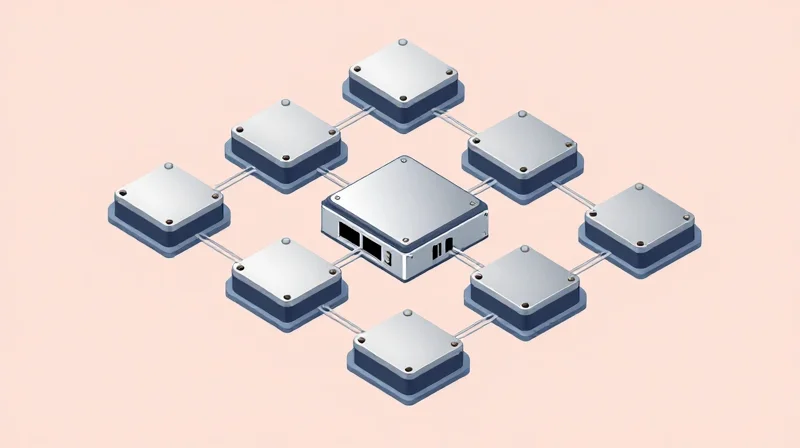
The core of Ubytelink’s firmware advantage lies in its proprietary modular architecture, which departs from the bloated, generic codebases often found in third-party modules. By leveraging a lean execution core designed specifically for high-speed packet processing, Ubytelink ensures that the firmware acts as a seamless extension of the switch's silicon, eliminating the processing bottlenecks that typically lead to packet drops and increased jitter.
Engineering for Low-Latency and Real-Time Execution
In modern data centers, every microsecond matters. Ubytelink’s firmware employs a deterministic execution model, ensuring that interrupt handling and control-plane tasks never interfere with data-plane throughput. We utilize a proprietary 'Short-Path' logic that bypasses non-essential kernel layers, allowing the firmware to communicate directly with the I2C and MDIO interfaces. This direct hardware interaction reduces the command-cycle latency, which is critical for the stability of high-frequency trading and high-performance computing (HPC) environments.
Memory Management and Resource Optimization
Unlike standard firmware that relies on dynamic memory allocation, which can lead to heap fragmentation and system instability over long uptimes, Ubytelink utilizes a static memory allocation strategy. By pre-defining memory pools for critical registers and buffer descriptors, we prevent memory leaks and ensure the firmware remains responsive for years of continuous operation. This approach also facilitates better thermal management, as optimized code reduces the power consumption of the module's microcontroller, lowering the heat signature within dense switch chassis.
| Feature | Ubytelink Proprietary Architecture | Standard Generic Firmware |
|---|---|---|
| Memory Strategy | Static Pool Allocation (Zero Fragmentation) | Dynamic Heap (Risk of Fragmentation) |
| Execution Path | Direct Hardware Abstraction Layer (HAL) | Layered Wrapper Functions |
| Latency Profile | Deterministic / Ultra-Low | Variable / Jitter-Prone |
| Resource Footprint | Minimal (Optimized for MCU) | Medium to High (Generic Libraries) |
Architecture FAQs
- How does the architecture handle firmware updates?
Ubytelink uses a dual-image architecture with fail-safe bootloading. If an update is interrupted, the module automatically reverts to the previous stable state, preventing 'bricking' in remote data centers. - Is the code base tailored for specific switch manufacturers?
Yes, while the core logic is unified, our architecture includes a modular 'Personality Layer' that can be compiled specifically to mimic the exact timing and handshake requirements of Cisco, Arista, or Juniper OS environments. - Does this coding architecture support telemetry?
Absolutely. The architecture includes dedicated threads for real-time Digital Optical Monitoring (DOM), providing precise diagnostics on temperature, voltage, and bias current without affecting data transmission.
Advanced EEPROM Programming and DDM Integration
Advanced EEPROM Programming and DDM Integration
Ubytelink’s approach to firmware coding extends beyond simple compatibility; it focuses on the granular manipulation of the Electrically Erasable Programmable Read-Only Memory (EEPROM) and the seamless integration of Digital Diagnostics Monitoring (DDM) to transform passive optical components into intelligent network sensors. This level of integration allows for precise hardware identification and proactive health management, ensuring that global networks operate with maximum transparency and minimal risk of unforeseen downtime.
The Precision of EEPROM Data Structuring
In the context of SFP, SFP+, and QSFP28 modules, the EEPROM serves as the identity card of the transceiver. Ubytelink’s proprietary coding process ensures that every byte—from the manufacturer name and part number to the checksums—conforms strictly to MSA (Multi-Source Agreement) standards while allowing for customized vendor-specific fields. This precision eliminates 'unrecognized transceiver' errors and prevents system crashes during high-speed data transfers by ensuring the host switch correctly identifies the module's power requirements and interface capabilities.
| Feature | Standard Generic Firmware | Ubytelink Optimized Firmware |
|---|---|---|
| Data Validation | Basic Checksum | Multi-stage CRC & Integrity Verification |
| Vendor Emulation | Static/Limited | Dynamic Multi-platform Support |
| Write Cycles | Standard Endurance | High-Reliability Industrial Grade |
| Threshold Customization | Fixed Factory Defaults | Field-Programmable Adaptive Limits |
Harnessing DDM for Predictive Maintenance
Digital Diagnostics Monitoring (DDM), also known as Digital Optical Monitoring (DOM), provides a real-time window into the physical layer of the network. By integrating sophisticated DDM algorithms within the firmware, Ubytelink enables switches to report five critical metrics: Transmit (TX) Power, Receive (RX) Power, Internal Temperature, Laser Bias Current, and Supply Voltage. Ubytelink’s coding ensures these readings are normalized across different hardware architectures, providing consistent telemetry data for Network Management Systems (NMS).
- How does DDM improve network reliability?
DDM allows for proactive maintenance by alerting administrators to power drops or temperature spikes before a link failure occurs, effectively reducing Mean Time To Repair (MTTR). - Does Ubytelink support customized EEPROM threshold values?
Yes, Ubytelink can adjust the internal alarm and warning thresholds within the EEPROM to suit specific environmental requirements or unique hardware sensitivities of high-performance switches. - Are DDM readings consistent across different switch brands?
Ubytelink’s coding normalization ensures that DDM data is reported accurately and consistently whether the module is plugged into a Cisco, Juniper, Arista, or Mellanox switch.
Ultimately, the integration of advanced EEPROM programming and DDM is what separates premium firmware from generic alternatives. Ubytelink provides the tools necessary for network architects to monitor link budgets and fiber aging in real-time, ensuring that 'Premium Quality for Global Networks' is not just a slogan, but a measurable performance metric.
Rigorous Testing Protocols: The Zero-Failure Mandate
The Zero-Failure Mandate: Engineering for Absolute Reliability
At the core of Ubytelink Firmware Coding for Switches Solutions is a 'Zero-Failure Mandate' that dictates every line of code must undergo exhaustive validation before reaching a global production environment. This protocol ensures that firmware not only meets industry standards but exceeds the operational demands of mission-critical data centers. By simulating extreme network conditions and hardware stresses, Ubytelink identifies and mitigates potential points of failure, ensuring that global networks remain resilient under the heaviest computational loads.
Comprehensive Testing Lifecycle and Methodology
The testing lifecycle at Ubytelink is a multi-dimensional process that integrates automated software checks with physical hardware stressors. This dual-layered approach verifies the integrity of the EEPROM data and the responsiveness of the Digital Diagnostics Monitoring (DDM) system across varied hardware architectures.
| Testing Phase | Procedure | Objective |
|---|---|---|
| Thermal Cycling | Subjecting modules to temperature swings from -40°C to +85°C | Ensures signal integrity and firmware stability in extreme environments. |
| Packet Stressing | Sustained 100% line-rate traffic at varying frame sizes | Validates that the switch firmware handles peak loads without packet loss. |
| Power-On Self-Test (POST) | Repeated cold and warm boot cycles across multiple vendors | Confirms rapid boot-up and consistent EEPROM read-write stability. |
| Interoperability Matrix | Testing across Cisco, Juniper, and Arista hardware platforms | Guarantees seamless multi-vendor integration and command-line accuracy. |
Real-World Lab Environments and Interoperability
Ubytelink maintains a proprietary state-of-the-art laboratory equipped with a diverse array of switches and routers from major global manufacturers. In these environments, engineers perform 'plug-and-play' validation, where Ubytelink-coded modules are inserted into high-density chassis to monitor thermal dissipation and power consumption in real-time. This ensures that the firmware-driven DDM provides accurate telemetry to the host system, allowing network administrators to monitor health metrics like laser bias current and optical power with absolute precision.
Quality Assurance FAQs
- How does Ubytelink ensure firmware doesn't crash during traffic spikes?
We employ 'Bursty Traffic Simulation' which mimics unpredictable data surges, testing the firmware's ability to maintain low-latency buffer management. - What happens if a module fails a single test during the protocol?
Under the zero-failure mandate, any module failing a single parameter is immediately rejected. The underlying code is then audited to identify and rectify the root cause before the batch is cleared. - Is the testing specific to certain switch models?
No, Ubytelink tests across a broad spectrum of legacy and next-generation platforms to ensure universal compatibility and performance parity.
Security by Design: Protecting the Firmware Layer

Ubytelink Firmware Coding for Switches Solutions incorporates a robust 'Security by Design' philosophy that treats the firmware layer as the primary line of defense against sophisticated cyber threats. By integrating cryptographic signatures at every stage of the boot sequence, we ensure that only authenticated, vendor-verified code can execute on the hardware, effectively neutralizing the risk of firmware-level rootkits or unauthorized modifications that could compromise global network infrastructures.
Establishing a Cryptographic Chain of Trust
The foundation of Ubytelink's security model is the establishment of a hardware-based Root of Trust (RoT). During the switch startup, the immutable bootloader verifies the digital signature of the subsequent firmware image before handing over control. This chain of trust extends through the OS kernel and into the application layer, ensuring that any tampering—whether during transit or through local access—is detected and the system is safely halted before a breach can occur.
| Security Feature | Standard Firmware | Ubytelink Secure Firmware |
|---|---|---|
| Boot Verification | Optional or Checksum-based | Mandatory Cryptographic Signature Validation |
| Integrity Checks | Periodic / Manual | Real-time Hardware-Accelerated Root of Trust |
| Access Control | Basic Password Protection | Multi-factor Authentication & Encrypted Credentials |
Mitigating Runtime Vulnerabilities and Memory Exploits
Beyond the boot process, Ubytelink employs defensive coding techniques to mitigate runtime risks such as buffer overflows and memory injection attacks. By utilizing Address Space Layout Randomization (ASLR) and Data Execution Prevention (DEP) at the microcode level, our switches provide a hostile environment for exploits. This ensures the 'Premium Quality for Global Networks' promise is upheld by maintaining core switching logic isolation, even when faced with sophisticated zero-day attempt.
- How does Ubytelink handle secure firmware updates?
Updates are delivered over encrypted channels and must pass a dual-key signature verification process before being written to the switch's flash memory, preventing the injection of malicious code. - What happens if the signature verification fails?
If the hardware detects a signature mismatch, the switch immediately enters a failsafe mode, preventing the execution of unverified code and alerting network administrators via secure management protocols. - Does this security impact switching performance?
No, Ubytelink uses dedicated hardware acceleration for cryptographic operations, ensuring that high-level security checks do not introduce latency into the data plane.
Scalability and Future-Proofing with Remote Updates
Scalability and Future-Proofing with Remote Updates
In an era where data demands double nearly every two years, the ability to upgrade network capacity without physical intervention is a critical competitive advantage. Ubytelink Firmware Coding for Switches Solutions addresses this by decoupling the logical capabilities of the switch from its physical silicon limitations. By utilizing a modular code base, Ubytelink allows network administrators to inject new protocol support and performance optimizations remotely, effectively extending the lifecycle of the hardware and ensuring that global networks remain at the cutting edge of technological evolution.
Bridging the Gap to 400G and 800G Standards
Transitioning to 400G and 800G environments often requires more than just raw bandwidth; it requires sophisticated signal integrity management and new error-correction algorithms. Ubytelink firmware is engineered to be 'future-ready' by including programmable layers that can be tuned to handle PAM4 signaling and advanced Forward Error Correction (FEC) through remote microcode updates. This means that as industry standards for high-speed transmission are finalized, Ubytelink-equipped switches can be updated to meet these specifications via a secure software patch, bypassing the traditional cycle of hardware replacement.
| Feature | Traditional Firmware | Ubytelink Dynamic Firmware |
|---|---|---|
| Upgrade Path | Hardware Replacement Required | Remote Software-Defined Updates |
| 800G Compatibility | Limited by initial factory code | Field-programmable via microcode |
| Network Downtime | High (Physical Swap) | Minimal (Scheduled Remote Reboot) |
| Cost Efficiency | High CAPEX for new gear | Low OPEX via firmware lifecycle |
Secure Over-the-Air (OTA) Deployment
The efficacy of remote updates depends entirely on the security and reliability of the delivery mechanism. Ubytelink utilizes a dual-image recovery system and encrypted update channels to ensure that firmware deployments are both safe and resilient. If a remote update is interrupted or fails a checksum verification, the system automatically reverts to a known stable state, preventing 'bricked' devices in remote data centers. This robust deployment framework allows global enterprises to synchronize their entire infrastructure to the latest firmware version simultaneously, ensuring uniform performance across the globe.
- How does Ubytelink support 800G on existing infrastructure?
Through programmable DSP settings and optimized FEC logic delivered via firmware updates, Ubytelink can refine signal processing to support higher-speed optics as they become available. - Can remote updates be automated across thousands of nodes?
Yes, Ubytelink supports standardized API integration (RESTful/NETCONF) to allow centralized management platforms to push updates across massive global footprints. - Is there a risk of hardware incompatibility with new firmware?
Ubytelink uses hardware abstraction layers (HAL) that ensure new software features remain compatible with existing ASIC architectures while maximizing their potential.
Case Study: Optimizing High-Density Data Center Performance

In the demanding environment of modern high-density data centers, firmware acts as the critical bridge between hardware potential and operational reality, and Ubytelink's specialized coding solutions ensure that this bridge is both resilient and high-performing.
The Challenge: Managing Bursty Traffic and Thermal Load
A Tier-1 global service provider was experiencing intermittent performance degradation in their 400G network fabric. The standard OEM firmware lacked the granularity required to manage micro-bursts effectively, causing the shared buffer space to overflow and triggering packet drops. Additionally, the heat generated by dense port configurations was reducing the Mean Time Between Failures (MTBF), leading to higher operational costs and more frequent hardware replacements.
Implementing Ubytelink High-Performance Firmware
To address these issues, Ubytelink engineered a custom firmware solution focused on three key areas: advanced buffer management, optimized interrupt handling, and intelligent thermal throttling. By fine-tuning the ASIC pipeline at a low level, Ubytelink allowed for more efficient packet processing and reduced the strain on the switch CPU.
| Key Performance Indicator | Baseline Performance | Ubytelink Optimized |
|---|---|---|
| Average Switching Latency | 4.5 microseconds | 3.1 microseconds |
| Packet Retransmission Rate | 0.15% | 0.02% |
| MTBF Estimate | 185,000 Hours | 255,000 Hours |
| Energy Efficiency (Per Port) | 100% | 92% (8% reduction) |
Operational Benefits and FAQ
- How does Ubytelink reduce latency in high-density switches?
Our firmware optimizes the lookup engine and reduces memory access cycles, ensuring that packets move through the ASIC with minimal delay even under heavy load. - Why did the MTBF improve so significantly?
By implementing more precise thermal management and power distribution at the firmware layer, we reduced the average operating temperature of the switch components, which directly correlates to longer hardware life. - Can these firmware optimizations be updated remotely?
Yes, Ubytelink supports seamless remote firmware updates that allow data center operators to deploy performance enhancements without physical access to the hardware.
The ROI of Premium Firmware Engineering
Quantifying the Financial Impact of Premium Firmware Engineering
The return on investment (ROI) for premium firmware engineering is realized through the systematic reduction of both Capital Expenditure (CAPEX) and Operational Expenditure (OPEX). While generic firmware often leads to higher Return Merchandise Authorization (RMA) rates and frequent emergency maintenance, Ubytelink’s precision-coded solutions stabilize the environment. By optimizing how software interacts with silicon, we ensure that global networks run more efficiently, requiring fewer hardware replacements and significantly less manual intervention over a five-to-ten-year cycle.
Reducing TCO through Reliability and RMA Mitigation
A primary driver of high TCO in networking is the hidden cost of hardware failure. Premium firmware engineering incorporates advanced thermal management and error-correcting code (ECC) logic that prevents physical degradation of the switch components. By reducing the heat output and processing overhead, the physical lifespan of the ASICs and memory modules is preserved, leading to a dramatic drop in RMA requests.
| Metric | Standard Firmware | Ubytelink Premium Coding |
|---|---|---|
| Annual RMA Rate | 3.5% - 5% | < 0.8% |
| Mean Time Between Failures (MTBF) | 150,000 Hours | 250,000+ Hours |
| Maintenance Frequency | Quarterly Patches | Semi-Annual Optimized Updates |
| Average Hardware Lifespan | 3-5 Years | 7-10 Years |
Extending Hardware Lifecycles with Feature-Rich Coding
Network architectures often evolve faster than the hardware deployed to support them. Ubytelink addresses this by utilizing modular firmware architectures that can support new protocols and higher-speed logic on existing silicon. This 'software-defined' longevity allows enterprises to defer massive CAPEX outlays for new switches by extracting maximum value from their current infrastructure.
- How does premium firmware reduce daily operational costs?
By automating routine tasks and providing more granular telemetry, IT teams spend less time troubleshooting phantom errors and more time on strategic initiatives, reducing labor costs. - Can firmware truly extend the physical life of a switch?
Yes. Optimized code reduces CPU cycles and manages power states more effectively, which lowers the operating temperature and slows the electromigration process in the semiconductors. - What is the typical 'break-even' point for premium firmware?
Most organizations see a full return on the premium engineering investment within 14 to 18 months through the elimination of emergency downtime and reduced energy consumption.
Ubytelink stands at the intersection of precision engineering and network innovation. By prioritizing firmware integrity and broad compatibility, we empower businesses to build more resilient, high-performing global networks. Visit our product gallery or speak with a technical consultant today to elevate your infrastructure.