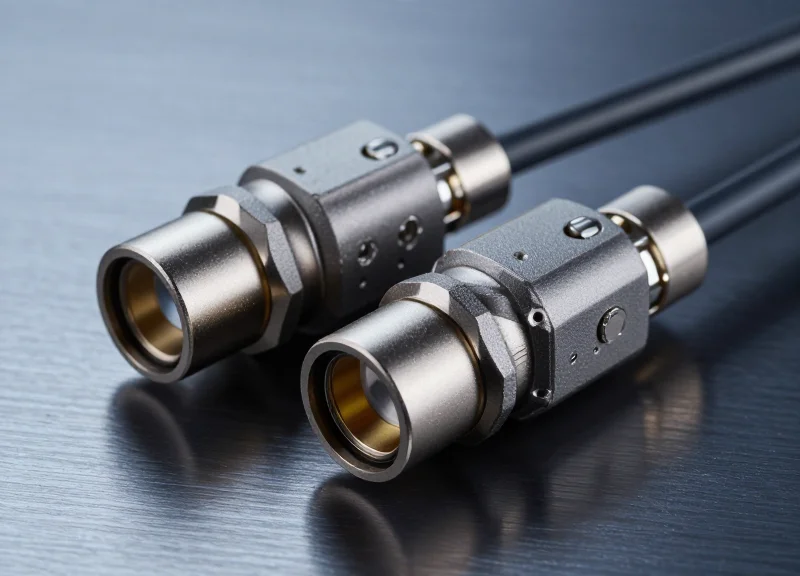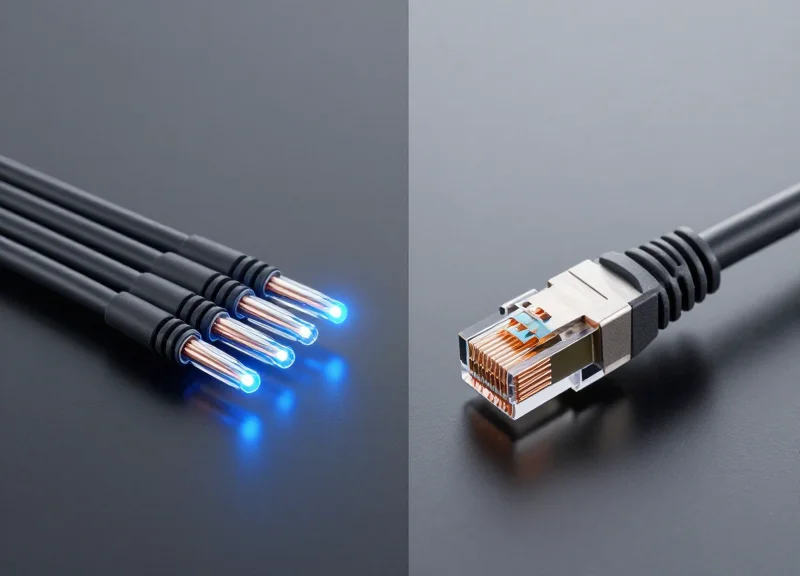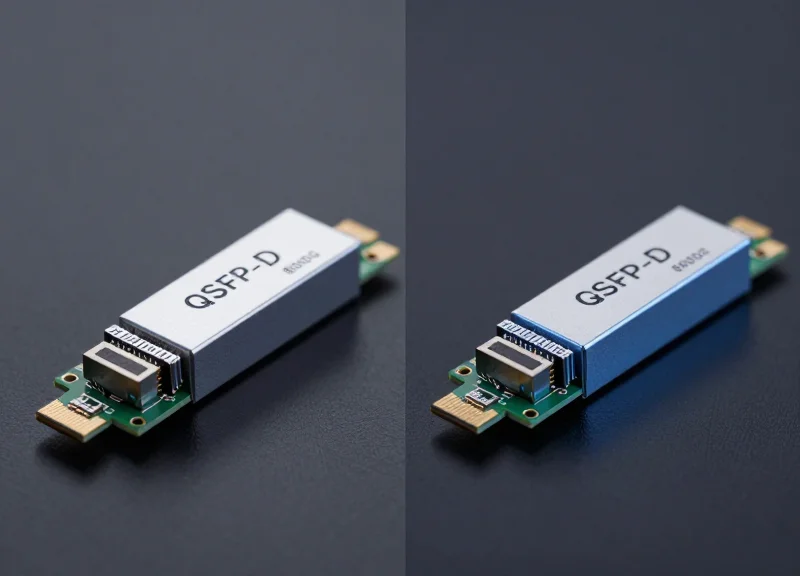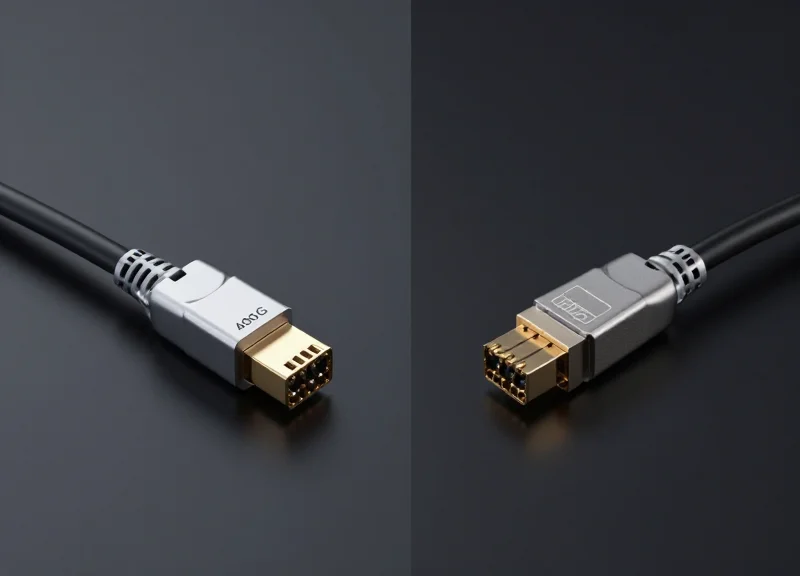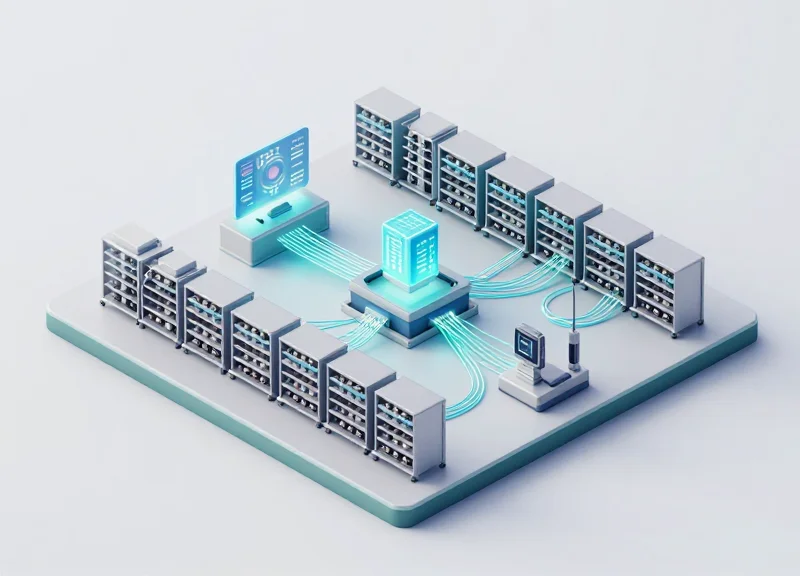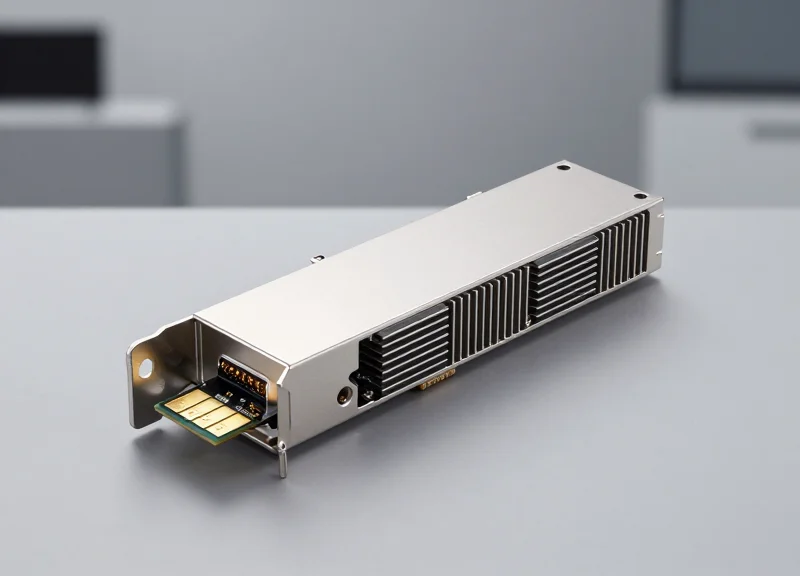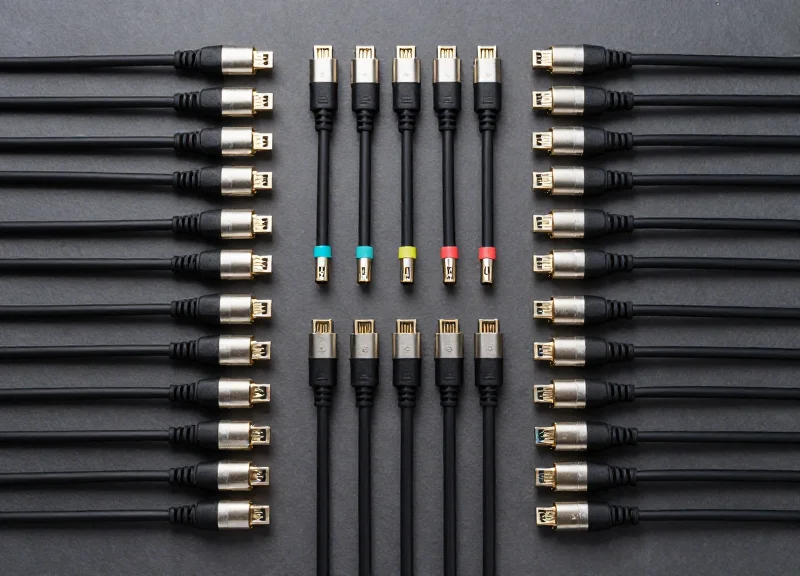
As data centers transition to 800G Ethernet to meet the surging demands of AI and hyperscale cloud environments, the choice of interconnect technology becomes a critical factor in both performance and budget. Direct Attach Copper (DAC) cables remain the gold standard for short-reach, high-density applications, offering unparalleled latency and power efficiency. This guide outlines how to leverage wholesale procurement and custom engineering to optimize your 800G network rollout.
The Rise of 800G Connectivity in Modern Data Centers

The transition to 800G connectivity marks a pivotal shift in data center networking, moving beyond the limitations of 400G to accommodate the massive throughput required by generative AI clusters and distributed machine learning workloads. By doubling the capacity of current high-speed ports, 800G solutions like Direct Attach Copper (DAC) cables allow operators to scale density efficiently while maintaining a manageable power-per-bit profile. This evolution is not merely about speed; it is about providing the architectural foundation for a data-first economy where latency and congestion are the primary bottlenecks to innovation.
Primary Drivers for 800G Adoption in 2026
Several critical factors are accelerating the migration to 800G. The most prominent is the rise of Large Language Models (LLMs), which necessitate ultra-low latency and massive interconnectivity between GPU clusters. Furthermore, as hyperscale providers seek to optimize Total Cost of Ownership (TCO), 800G offers a more favorable cost-per-bit than previous generations. By utilizing 112G PAM4 SerDes technology, 800G enables higher radix switches, reducing the number of tiers in the network fabric and simplifying the overall cabling infrastructure.
Form Factor Comparison: QSFP-DD vs. OSFP
| Feature | QSFP-DD 800 | OSFP |
|---|---|---|
| Backward Compatibility | High (Compatible with QSFP56/QSFP28) | Limited (Requires mechanical adapters) |
| Thermal Management | Standard (Suitable for standard airflow) | Superior (Integrated heat sink for 15W+) |
| Max Power Consumption | Up to 25W | Up to 30W+ |
| Port Density | 36 ports per 1U | 32-36 ports per 1U |
Selecting the Right Interface for Bulk Deployment
Choosing between QSFP-DD and OSFP often depends on existing legacy hardware. QSFP-DD is the preferred choice for those upgrading established environments due to its backward compatibility. In contrast, OSFP is gaining massive traction in greenfield AI data centers because its superior thermal dissipation allows for more aggressive overclocking and higher-power optical engines without the risk of thermal throttling.
Frequently Asked Questions About 800G Connectivity
- Why is DAC the preferred choice for 800G wholesale buyers?
800G DAC cables are passive and consume zero power, making them the most cost-effective and energy-efficient solution for short-reach (0.5m to 3m) Top-of-Rack connections. - Is 800G hardware compatible with 400G cables?
Yes, most 800G ports are designed to be backward compatible with 400G and 200G form factors, typically using breakout cables or adapters to maintain existing network links. - What is the impact of 112G PAM4 on 800G DACs?
The move to 112G PAM4 signaling reduces the reach of traditional copper cables, making high-quality manufacturing and shielding critical to avoid signal degradation over 2 meters.
Why 800G DACs are the Economic Choice for Short-Reach Links
Why 800G DACs are the Economic Choice for Short-Reach Links
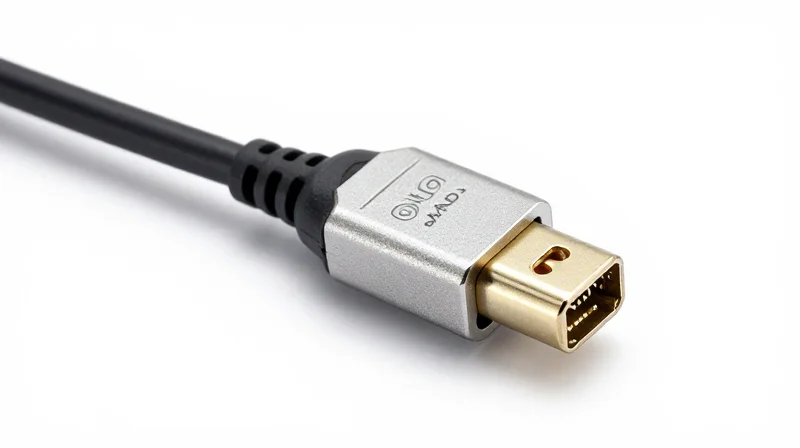
In the transition to 800G Ethernet, 800G Direct Attach Copper (DAC) cables emerge as the most cost-efficient interconnect for distances under 3 meters. Unlike Active Optical Cables (AOCs) or discrete transceivers that rely on expensive semiconductor lasers and electrical-to-optical conversion components, DACs utilize a passive twinaxial copper design. This architectural simplicity translates directly into lower manufacturing costs, which is why wholesale procurement of DACs often represents a 60-80% savings compared to optical alternatives for Top-of-Rack (ToR) and server-to-switch deployments.
Comparing Total Cost of Ownership (TCO)
Evaluating the value of 800G connectivity requires looking beyond the initial purchase price. The Total Cost of Ownership (TCO) includes power consumption, cooling requirements, and reliability. Passive 800G DACs consume zero power and generate no heat, which significantly reduces the operational overhead of high-density data center racks.
| Feature | 800G Passive DAC | 800G AOC | 800G Transceiver + Fiber |
|---|---|---|---|
| Power Consumption | 0 Watts | ~14-16 Watts | ~16-20 Watts |
| Relative Cost | Lowest ($) | Moderate ($$) | High ($$$) |
| Maximum Reach | Up to 2-3m | Up to 30m | 100m - 10km+ |
| Latency | Ultra-Low | Low | Moderate |
Operational Benefits for Bulk Buyers
For enterprise and hyperscale clients looking to buy 800G DAC cables wholesale, the reliability factor is a major economic driver. With no active electronics or lasers to fail, DACs possess a much higher Mean Time Between Failure (MTBF) than optical modules. This reduces the labor costs associated with troubleshooting and replacing failed links in massive clusters of hundreds or thousands of ports.
- How does 800G DAC pricing compare to 400G?
While 800G DACs carry a premium over 400G due to tighter signal integrity requirements (PAM4 112G), the cost-per-gigabit is lower, making them more efficient for scaling high-bandwidth environments. - What is the primary distance limitation?
Due to signal attenuation in copper at 112G speeds, passive 800G DACs are typically limited to 2 meters for reliable performance, though some 3-meter variants are available with specific host-side tuning. - Why are DACs preferred for AI clusters?
AI and ML workloads require extremely low latency. Passive DACs provide the fastest physical layer path without the processing delays inherent in optical conversion.
Technical Deep Dive: Signal Integrity and PAM4 Modulation

The Engineering Behind 800G Copper Interconnects
Achieving 800Gbps throughput over passive copper requires a sophisticated balance of material science and digital signal processing, primarily driven by the transition to 112G per-lane electrical signaling. As data rates climb, the physics of copper reach their natural limits; signal attenuation increases exponentially with frequency, making the design of the cable's internal twinaxial structure critical for maintaining a viable link budget. For wholesale buyers, understanding these technical hurdles is essential to evaluating the quality of different manufacturing batches and ensuring that bulk deployments do not suffer from high Bit Error Rates (BER).
Mastering 112G PAM4 Signaling
The core of 800G connectivity lies in PAM4 (Pulse Amplitude Modulation 4-level) technology. Unlike the traditional NRZ (Non-Return-to-Zero) signaling used in older 10G and 25G systems, PAM4 utilizes four distinct voltage levels to represent two bits of data per symbol period. This effectively doubles the data density without requiring a massive increase in the physical bandwidth of the cable. However, this higher density reduces the signal-to-noise ratio (SNR) because the voltage gaps between levels are significantly smaller, requiring advanced Forward Error Correction (FEC) on the host equipment to interpret the data correctly.
Comparison of DAC Signaling and Performance Standards
| Standard | Total Bandwidth | Per-Lane Rate | Modulation | Max Passive Reach |
|---|---|---|---|---|
| QSFP28 | 100G | 25G | NRZ | 5 Meters |
| QSFP56 | 200G | 50G | PAM4 | 3 Meters |
| 800G (OSFP/QSFP-DD) | 800G | 112G | PAM4 | 2 Meters |
Signal Integrity Challenges: Insertion Loss and Crosstalk
At 112Gbps per lane, the copper medium faces two primary enemies: Insertion Loss and Crosstalk. Insertion loss refers to the weakening of the signal as it travels down the length of the wire, while crosstalk occurs when electromagnetic interference from adjacent lanes leaks into the signal path. To combat these, 800G DACs utilize thicker American Wire Gauge (AWG) conductors—typically ranging from 26AWG to 30AWG—and precision-engineered shielding. When requesting custom quotes for wholesale 800G DACs, it is vital to specify the AWG requirement to ensure the cables can handle the necessary reach without excessive signal degradation.
FAQ: Technical Specifications for Wholesale Procurement
- Why is the reach of 800G DACs limited to 2 meters?
The high frequency required for 112G PAM4 signaling results in rapid signal attenuation in copper. Beyond 2 meters, the signal integrity typically drops below the threshold that host-side FEC can reliably repair, making Active Optical Cables (AOCs) the preferred choice for longer runs. - Does the form factor (OSFP vs. QSFP-DD) affect signal integrity?
Both OSFP and QSFP-DD are designed to support 800G, but OSFP generally offers slightly better thermal performance, which can indirectly aid signal stability by keeping the internal components within optimal temperature ranges. - What is the importance of 'Pre-emphasis' and 'Equalization'?
These are techniques used by the network switch or server to compensate for expected signal loss. High-quality 800G DACs are tested to ensure their impedance is tightly controlled, allowing these electronic compensations to work effectively across bulk deployments.
Maximizing ROI with Wholesale 800G DAC Procurement
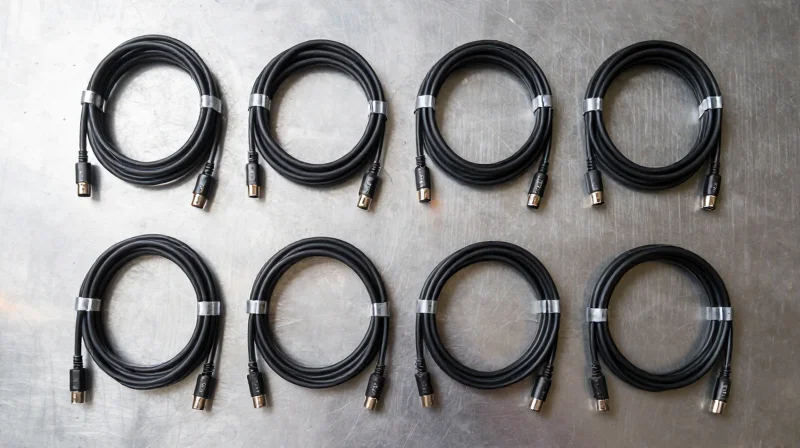
Strategic ROI via Bulk 800G DAC Procurement
Wholesale procurement of 800G Direct Attach Cables (DACs) offers more than just a reduction in unit price; it serves as a strategic hedge against market volatility and a critical component in optimizing Total Cost of Ownership (TCO). By transitioning from transactional purchasing to bulk acquisition, data center operators can achieve Capex savings of 20% to 35% while ensuring that critical interconnect components are available to meet the aggressive deployment schedules required for AI clusters and high-performance computing (HPC) environments.
Understanding Tiered Pricing Models
Manufacturers and primary distributors typically utilize tiered pricing structures for 800G interconnects. These tiers are designed to reward high-volume deployments, where the economies of scale in manufacturing and logistics are passed down to the buyer. For 2026, custom quotes for 800G DACs (QSFP-DD and OSFP) are often partitioned into volume brackets that significantly lower the per-port cost as the order size grows.
| Order Volume (Units) | Estimated Discount Range | Primary Benefit |
|---|---|---|
| 1 - 49 | Baseline MSRP | Immediate availability for small labs |
| 50 - 199 | 10% - 15% | Reduced shipping costs per unit |
| 200 - 999 | 18% - 25% | Dedicated account management and prioritized lead times |
| 1,000 + | Custom Negotiated | Maximum ROI and localized buffer stock options |
Supply Chain Stability and Long-term Predictability
Beyond the immediate financial discount, wholesale procurement mitigates the risks of component shortages and price fluctuations. Securing a bulk contract in 2026 allows enterprises to lock in pricing for the duration of a multi-phase rollout. This predictability is vital for large-scale data center projects where lead times for 800G optics can often stretch into months, whereas passive DACs, if procured strategically in bulk, can be stockpiled to ensure zero downtime during server rack integration.
Wholesale 800G Procurement FAQ
- What is the typical Minimum Order Quantity (MOQ) for custom 800G DAC quotes?
While standard units can be bought individually, most wholesale pricing tiers begin at 50 units. Custom configurations, such as specific cable lengths or specialized labeling, may require an MOQ of 100 or more to justify production line adjustments. - Can wholesale orders include mixed form factors like OSFP to QSFP-DD?
Yes. Most enterprise-grade vendors allow for mixed bulk orders under a single master agreement. This is particularly useful for environments transitioning between legacy hardware and next-generation 800G switches. - Are warranty and technical support terms different for bulk purchases?
Wholesale contracts often include enhanced Service Level Agreements (SLAs), including batch testing reports for signal integrity and expedited replacement programs that may not be available for retail-level purchases. - How do shipping costs impact the ROI of bulk 800G DAC orders?
Copper DACs are heavier than optical cables. Wholesale procurement allows for consolidated palletized shipping, which drastically reduces the per-unit freight cost compared to multiple smaller air-freight shipments.
Custom OEM/ODM Services for Tailored Network Solutions
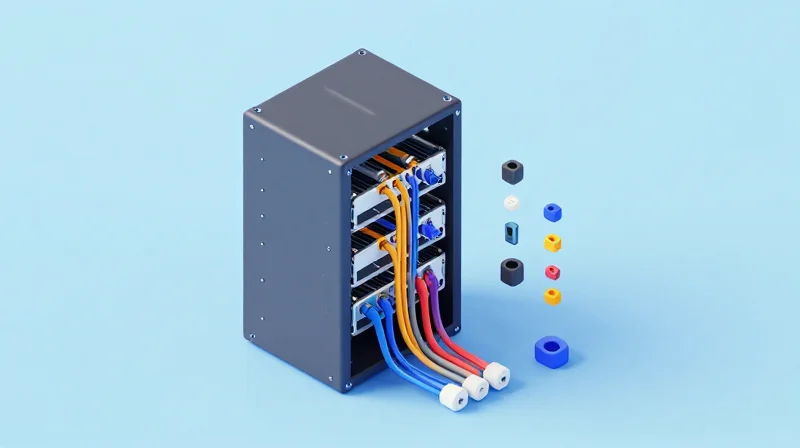
Custom OEM/ODM Services for Tailored Network Solutions
Ubytelink offers comprehensive OEM/ODM services that bridge the gap between standardized 800G hardware and the specific physical realities of high-density data center layouts. By providing deep customization at the manufacturing level, we ensure that every 800G DAC cable is optimized for its specific deployment environment, reducing cable clutter, improving airflow, and ensuring seamless logical integration with heterogeneous switch environments.
Core Customization Parameters for 800G Interconnects
- Precision Length Adjustment
Tailoring lengths in increments as small as 0.1m to eliminate slack and minimize signal attenuation in high-speed 112G PAM4 environments. - Advanced EEPROM Coding
Providing multi-vendor compatibility through custom-flashed firmware that allows 800G DACs to work across diverse platforms from Cisco, Arista, Mellanox, and Juniper. - Identification and Branding
Implementing specialized labeling, unique serialized barcodes, and color-coded jackets to streamline cable management and asset tracking.
| Service Category | Standard Offering | Custom OEM/ODM Capability |
|---|---|---|
| Reach/Length | Fixed (1m, 1.5m, 2m) | Bespoke (e.g., 0.75m, 1.25m, 2.5m) |
| Compatibility | Generic MSA | Specific Vendor Firmware (Multi-Coding) |
| Labeling | Basic Serial | Customer Logo & Thermal Transfer Tags |
| Packaging | Standard Plastic | Bulk Anti-Static or Eco-Friendly |
Optimizing Signal Integrity via Bespoke Engineering
In 800G networking, the signal margin is razor-thin due to the physical limitations of copper at 112G per lane. Custom lengths are not just about aesthetics; they are a functional necessity to maintain the tightest possible signal-to-noise ratio. Our ODM process includes rigorous testing of custom prototypes to ensure that every variation meets or exceeds IEEE 802.3ck and InfiniBand NDR standards.
OEM/ODM Service FAQ
- What is the typical MOQ for custom 800G DAC lengths?
Minimum Order Quantities vary by specification but typically start at 50-100 units for custom lengths to ensure manufacturing efficiency. - Can you code 800G DACs for different vendors on each end?
Yes, we provide 'Dual-Vendor' coding where each QSFP-DD or OSFP end is flashed with different vendor-specific EEPROM data for mixed-environment interconnectivity. - Do custom services extend to the gauge of the wire?
Absolutely, we offer choices between 26AWG, 28AWG, and 30AWG depending on the required length and bend radius constraints of your racks.
Compatibility Assurance and Interoperability Testing
Compatibility assurance is the cornerstone of a successful 800G network deployment, as even the highest-quality copper interconnect is useless if it is rejected by a switch's firmware or fails to maintain signal integrity across a multi-vendor fabric. Interoperability testing ensures that 800G DACs adhere to both IEEE 802.3ck standards and vendor-specific EEPROM requirements, eliminating the risk of 'unsupported transceiver' errors and link instability.
Multi-Vendor Ecosystem Support
Modern data centers often utilize a 'best-of-breed' approach, mixing hardware from various manufacturers. Ubytelink’s 800G DAC cables undergo comprehensive validation to ensure they are recognized as native modules by major networking platforms. This involves precision coding of the EEPROM to match specific vendor protocols, such as Cisco's Algorithm-based security or NVIDIA/Mellanox’s strict link training parameters.
| Hardware Vendor | Compatibility Status | Key Validation Feature |
|---|---|---|
| Cisco Nexus/Catalyst | Fully Validated | Bypasses 'Service Unsupported' lockdowns with custom ID coding. |
| Arista 7000 Series | Fully Validated | Strict adherence to EOS diagnostic reporting and DOM monitoring. |
| NVIDIA / Mellanox | Fully Validated | Optimized for 112G PAM4 signaling and InfiniBand NDR requirements. |
| Juniper Networks | Fully Validated | Verified for Junos OS hardware recognition and BER thresholds. |
Rigorous Quality Control and Testing Protocols
To guarantee performance at 800Gbps, every wholesale batch undergoes a battery of physical and digital tests. These protocols are designed to simulate real-world data center conditions, including thermal stress and high-frequency signal attenuation.
- Bit Error Rate (BER) Testing
Ensuring the pre-FEC (Forward Error Correction) BER remains well within industry limits to prevent data retransmissions. - Eye Diagram Analysis
Visual validation of signal clarity, ensuring 112G PAM4 signals have sufficient 'eye opening' to be decoded by the receiver PHY. - TDR (Time Domain Reflectometry)
Checking for impedance consistency along the entire length of the copper twinax to minimize signal reflections. - Interoperability Labs
Physical testing on actual target hardware (switches/NICs) rather than just simulation software.
Compatibility FAQ
- Will using third-party 800G DACs void my switch warranty?
No. In the United States, the Magnuson-Moss Warranty Act protects consumers, and globally, networking vendors cannot legally void hardware warranties for using compatible third-party interconnects. - How do you handle firmware updates from vendors like Arista or Cisco?
We maintain an updated database of vendor firmware versions. Our DACs are coded with the latest compatible revisions to ensure they remain functional even after a system-wide OS update. - Can I request custom coding for niche hardware providers?
Yes. Our wholesale services include custom EEPROM programming for specialized or legacy hardware that may require unique identification strings.
Thermal Management and Power Efficiency Benefits
Thermal Management and Power Efficiency Benefits
The primary advantage of 800G Direct Attach Copper (DAC) cables in high-density environments is their completely passive nature. Unlike Active Optical Cables (AOC) or optical transceivers, passive DACs do not contain laser diodes, photodetectors, or Power Management Integrated Circuits (PMICs). This absence of active electronic components means that the cable itself consumes zero watts of power. In a modern 800G network architecture, where power density per rack is reaching critical limits, the shift to DAC for short-reach interconnects provides an immediate and substantial reduction in the overall thermal envelope of the data center.
Eliminating the Heat Load of Optical Components
In traditional optical links, a significant portion of energy is converted into waste heat during the electrical-to-optical (E-O) and optical-to-electrical (O-E) conversion processes. For 800G applications, an optical transceiver can consume anywhere from 14W to 18W per port. By utilizing 800G DAC cables for intra-rack or adjacent-rack connections (up to 2-3 meters), network architects eliminate this heat source entirely at the port level. This results in a cooler switch environment, extending the lifespan of the networking hardware and reducing the failure rate of sensitive silicon components.
| Interconnect Type | Power Consumption (Per Port) | Heat Dissipation | Cooling Requirement |
|---|---|---|---|
| 800G Passive DAC | ~0.1W (EEPROM only) | Negligible | Ambient/Minimal |
| 800G AOC | 12W - 16W | Moderate to High | Active Airflow/Liquid |
| 800G Transceiver (DR8/SR8) | 14W - 18W | High | Dedicated Thermal Mgmt |
Improving Data Center PUE through Passive Connectivity
Power Usage Effectiveness (PUE) is a critical metric for hyperscale facilities. Because 800G DAC cables do not generate heat, the energy required for Computer Room Air Conditioning (CRAC) units is significantly lowered. For every watt of power saved at the cable level, there is a secondary saving in the cooling infrastructure. Bulk deployment of 800G DAC cables allows for higher rack densities, as engineers can pack more switches into a single cabinet without exceeding the thermal limits of the facility's air handling system.
- How do 800G DACs contribute to ESG and sustainability goals?
By eliminating the electricity needed for signal conversion and cooling, DACs lower the carbon footprint of the data center, directly supporting corporate green energy initiatives. - Does the lack of power affect signal integrity at 800G?
No, within their rated distance (up to 2m or 3m), passive DACs maintain excellent signal integrity by using high-quality copper and precision shielding, relying on the host port's DSP for equalization. - Why is thermal management more critical at 800G than 400G?
800G chips and optics run significantly hotter; utilizing passive DACs where possible prevents 'thermal throttling' of the switch ASIC, ensuring consistent network performance.
Quality Control Standards in High-Speed Cable Manufacturing

Quality Control Standards in High-Speed Cable Manufacturing
Maintaining signal integrity at 800G speeds—specifically utilizing 112G PAM4 signaling per lane—demands manufacturing precision that far exceeds previous 100G or 400G generations. At these frequencies, even microscopic defects in the copper core, dielectric consistency, or shielding can lead to catastrophic packet loss. Stringent Quality Control (QC) is the primary differentiator between a stable high-performance network and one plagued by persistent intermittent errors.
Compliance with IEEE 802.3ck Specifications
The IEEE 802.3ck standard is the benchmark for 100 Gb/s, 200 Gb/s, 400 Gb/s, and 800 Gb/s electrical interfaces. For wholesale 800G DACs, compliance ensures that the cables meet the specific 'Channel Operating Margin' (COM) requirements. This mathematical model accounts for noise and interference, ensuring that the passive copper link can successfully transmit data over its rated length without exceeding the maximum allowable power budget of the host port.
| Testing Parameter | 800G Requirement (IEEE 802.3ck) | Impact on Performance |
|---|---|---|
| Bit Error Rate (BER) | < 10^-5 (Pre-FEC) | Ensures data reliability before error correction. |
| Insertion Loss | Max 19.75 dB @ 26.56 GHz | Determines signal reach and attenuation levels. |
| Differential Return Loss | Strict Limit Masks | Reduces signal reflections that cause jitter. |
| Crosstalk (NEXT/FEXT) | Minimized via Shielding | Prevents interference between adjacent signal pairs. |
Automated Testing Protocols and BER Validation
Each 800G DAC unit undergoes Bit Error Rate (BER) testing using high-performance BERT (Bit Error Rate Tester) equipment. Because 800G Ethernet relies heavily on Forward Error Correction (FEC), the cables must demonstrate a raw BER that stays well within the limits that the KP4 FEC can correct. Furthermore, Time Domain Reflectometry (TDR) is used to inspect the cable's physical impedance consistency, ensuring there are no discontinuities at the solder points between the twinax cable and the PCB inside the QSFP-DD or OSFP connector.
- Why is Pre-FEC BER critical for 800G DACs?
While FEC can correct many errors, a poor Pre-FEC BER indicates underlying signal integrity issues that can lead to uncorrectable errors, causing packet drops and link instability. - What role does cable shielding play in QC?
High-quality 800G DACs use silver-plated copper and double-shielded twinax to minimize Electromagnetic Interference (EMI) and meet strict FCC/CE emission standards. - Are these cables tested for mechanical durability?
Yes, standard QC includes bend radius testing and connector insertion/extraction cycles to ensure the cable maintains performance even after being routed through tight rack spaces.
Future-Proofing Your Infrastructure for 1.6T and Beyond
Future-proofing data center infrastructure for 1.6T and beyond begins with adopting the IEEE 802.3ck standards utilized in current 800G deployments. By integrating 800G DAC cables into wholesale procurement cycles now, organizations are not merely upgrading bandwidth; they are validating the physical layer environments—including rack density, cooling capacity, and signal integrity protocols—that will support the eventual shift to 224G SerDes lanes required for 1.6T speeds.
The Bridge to 1.6T: From 112G to 224G SerDes
The current generation of 800G DACs relies on 112G PAM4 SerDes technology. As the industry moves toward 1.6T, the transition to 224G SerDes will be the primary driver of hardware evolution. Infrastructure designed for 800G must account for the increasingly stringent reach limitations of copper; while 800G DACs effectively cover 2-meter distances, 1.6T copper solutions may require even more advanced shielding or shorter physical runs to maintain signal integrity without excessive latency.
| Feature | 800G DAC Standard | 1.6T Emerging Standard |
|---|---|---|
| SerDes Lane Speed | 112G PAM4 | 224G PAM4 |
| Connector Form Factor | OSFP / QSFP-DD800 | OSFP1600 / QSFP-DD1600 |
| Max Passive Reach | Up to 2.0 Meters | Estimated 1.0 - 1.5 Meters |
| Aggregate Bandwidth | 800 Gbps | 1.6 Tbps |
Operational Continuity and Scalability
Procuring 800G DACs in bulk allows operators to standardize their top-of-rack (ToR) architectures. This standardization is critical for 1.6T readiness because it forces the optimization of airflow and power distribution. Passive DACs are particularly advantageous here, as they provide a zero-power baseline for thermal modeling, ensuring that when higher-heat 1.6T components are eventually introduced, the infrastructure has the thermal headroom to accommodate them.
- Will 800G DACs work in 1.6T ports?
Most 1.6T switches are expected to be backward compatible with 800G modules and cables, allowing for a phased migration where existing 800G nodes can connect to next-gen fabric. - How does 224G SerDes affect cable choice?
As SerDes speeds double to 224G, the signal loss in copper increases. Future-proofing involves planning for shorter rack heights or the use of Active Copper Cables (ACC) to extend reach beyond 1 meter. - Why buy 800G wholesale now if 1.6T is coming?
Bulk 800G procurement locks in lower price-per-gigabit rates and allows for immediate ROI on AI and HPC workloads, while the 1.6T ecosystem is still reaching manufacturing maturity.
Navigating the complexities of 800G network scaling requires a partner who understands both the technical and economic landscapes. By choosing high-quality DAC cables and leveraging wholesale advantages, you can achieve superior performance without unnecessary overhead. Ready to optimize your infrastructure? Contact Ubytelink today for a custom wholesale quote and explore our professional OEM/ODM options to jumpstart your 800G transformation.