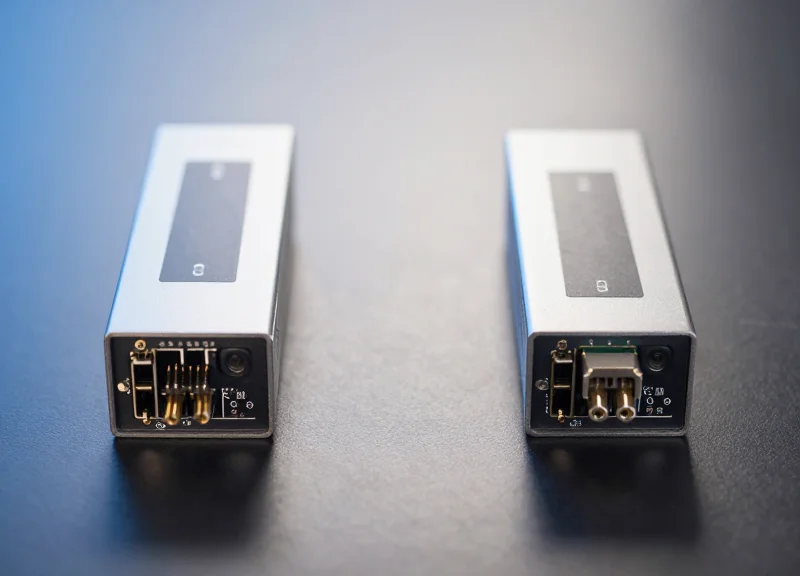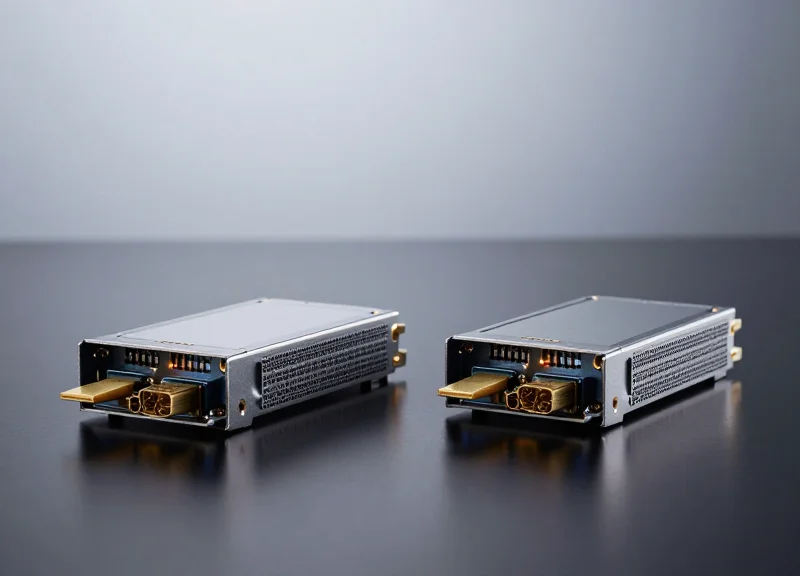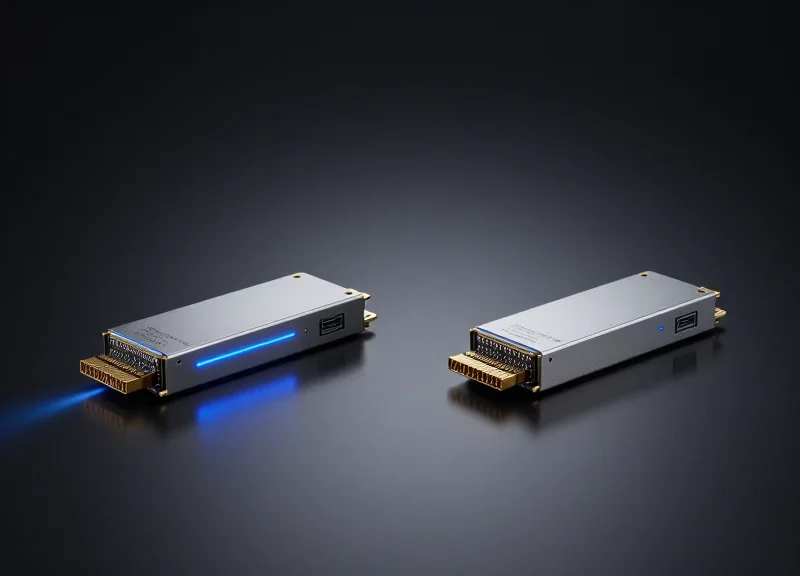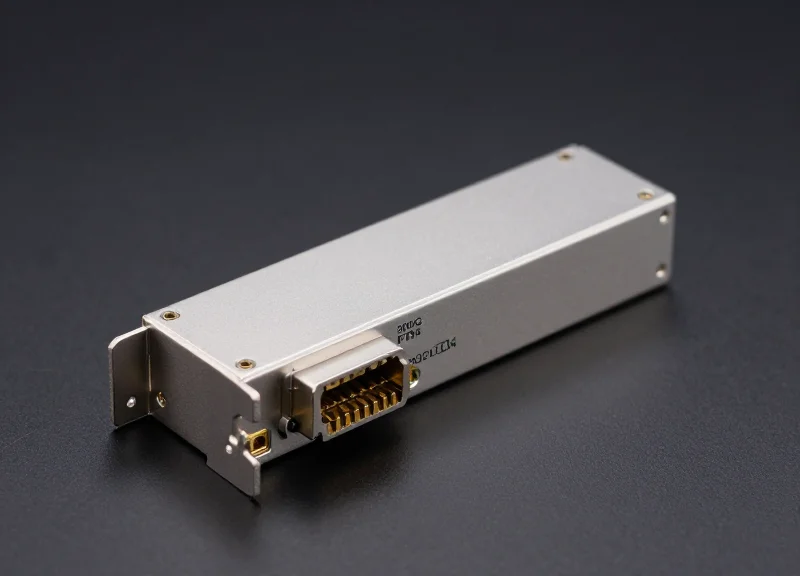
As data-intensive applications like AI, cloud computing, and 5G continue to explode, network architects face the dual challenge of increasing bandwidth while managing costs. The 100G LR4 10km module is the industry workhorse for mid-range connectivity, but navigating the wholesale market requires a balance of technical precision and procurement strategy. This article explores how Ubytelink’s wholesale and OEM/ODM solutions provide the high-density performance your network needs at a fraction of the cost of Tier-1 vendors.
Understanding 100G LR4 Technology for 10km Reach
The Architecture of 100G LR4 Transceivers
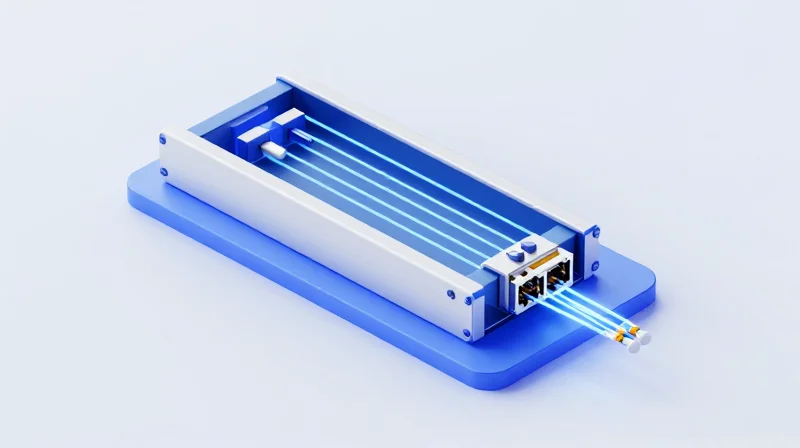
100G LR4 (Long Reach 4-channel) is the industry-standard solution for high-density networking requiring distances up to 10km. It operates by multiplexing four 25Gbps optical signals onto a single pair of single-mode fiber (SMF) using LAN-WDM technology. By utilizing the 1310nm window, where fiber attenuation and dispersion are naturally minimized, LR4 modules achieve high-integrity data transmission over significant distances without the complexity of external amplifiers or dispersion compensation modules.
How LAN-WDM Enables 10km Transmission
Unlike Coarse Wavelength Division Multiplexing (CWDM), LAN-WDM (Local Area Network Wavelength Division Multiplexing) uses a much tighter channel spacing of approximately 800GHz. The four wavelengths are strategically positioned near the zero-dispersion point of G.652 fiber. This precision allows the signals to remain distinct and sharp over a 10km span, ensuring that the 100Gbps throughput remains consistent even in high-traffic enterprise environments.
| Parameter | 100GBASE-LR4 Specification |
|---|---|
| Standard | IEEE 802.3ba |
| Wavelengths | 1295.56, 1300.05, 1304.58, 1309.14 nm |
| Fiber Type | Single-Mode Fiber (SMF/G.652) |
| Max Distance | 10km (6.2 miles) |
| Optical Connector | LC Duplex |
| Typical Power Consumption | 3.5W - 4.5W |
Critical Advantages for Data Center Interconnects
The primary advantage of the 100G LR4 technology is its ability to bridge the gap between short-range multi-mode solutions and long-haul coherent optics. For wholesale buyers, LR4 represents the most cost-effective 'sweet spot' for campus backbones and Metropolitan Area Networks (MAN). Because it uses a standard LC Duplex interface, it integrates seamlessly into existing patch panels, reducing the total cost of ownership (TCO) compared to parallel fiber solutions like PSM4 which require expensive MPO cabling.
Frequently Asked Questions
- Can 100G LR4 be used over multi-mode fiber?
No, 100G LR4 is designed specifically for single-mode fiber (SMF). Attempting to use it over multi-mode fiber (OM3/OM4) will result in extreme signal loss and link failure within a few meters. - Is Forward Error Correction (FEC) required for 10km?
While the IEEE 802.3ba standard for LR4 does not strictly require FEC to achieve 10km, many modern network OS environments enable it by default to improve the Bit Error Rate (BER) and overall link stability. - What is the difference between LR4 and CWDM4?
LR4 is rated for 10km and uses LAN-WDM wavelengths, whereas CWDM4 is typically rated for only 2km and uses CWDM wavelengths with wider spacing, making LR4 the superior choice for longer reach.
The Strategic Importance of the QSFP28 Form Factor
The Dominance of QSFP28 in 100G Infrastructure
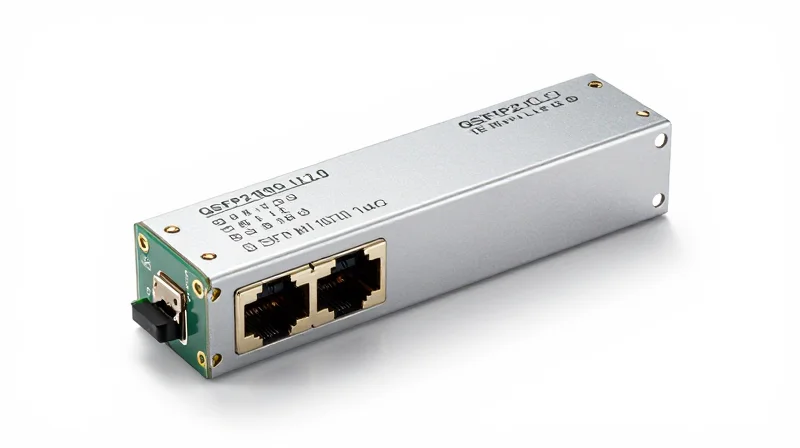
The QSFP28 (Quad Small Form-factor Pluggable 28) form factor has effectively superseded legacy standards like CFP, CFP2, and CFP4 to become the industry's preferred choice for 100G LR4 optics. Its strategic importance lies in its ability to deliver 100Gbps throughput using a footprint nearly identical to the 40G QSFP+ module. This allows network operators to maximize front-panel density on switches and routers, significantly lowering the cost-per-bit while facilitating seamless transitions from 40G to 100G environments without requiring massive hardware overhauls.
Comparative Efficiency: QSFP28 vs. Legacy Form Factors
When evaluating wholesale procurement, understanding the spatial and electrical efficiency of QSFP28 is critical. Compared to the original CFP modules, QSFP28 reduces power consumption by nearly 80% and increases port density by up to 400%. This evolution is particularly vital for 10km LR4 links, where thermal management within a high-density rack can directly impact optical performance and component longevity.
| Form Factor | Typical Power Consumption | Size (approx.) | Max Port Density (1U) |
|---|---|---|---|
| CFP | 20W - 30W | 82 x 145 mm | 4 Ports |
| CFP2 | 8W - 12W | 41 x 107 mm | 8 - 10 Ports |
| QSFP28 | < 3.5W | 18 x 72 mm | 32 - 36 Ports |
Operational Benefits of the QSFP28 Standard
Beyond physical dimensions, the QSFP28 standard simplifies the electrical interface by eliminating the need for a gearbox inside the module. By mapping four 25Gbps lanes directly from the host, the module minimizes latency and heat generation. For enterprises looking to buy 100G LR4 wholesale, this translates to lower Cooling OPEX and a more stable lifecycle for the 10km fiber plant.
- Can QSFP28 LR4 modules be used in QSFP56 or QSFP-DD ports?
Yes, QSFP28 modules are generally backward compatible with higher-speed ports like QSFP56 and QSFP-DD, allowing for flexible hardware upgrades and investment protection. - Why is the 3.5W power envelope significant for 10km LR4?
Maintaining low power consumption prevents localized overheating in densely packed switches, ensuring the LAN-WDM lasers stay within their calibrated frequency for reliable 10km transmission. - Does the QSFP28 form factor support digital diagnostic monitoring (DDM)?
Absolutely. Modern QSFP28 LR4 optics include DDM/DOM support, enabling real-time tracking of temperature, laser bias current, and optical power levels.
Key Technical Specifications to Demand from Your Supplier
Key Technical Specifications to Demand from Your Supplier
Securing a wholesale agreement for 100G LR4 transceivers requires moving beyond price points to rigorous technical validation. Because these modules rely on the LAN-WDM (Local Area Network Wavelength Division Multiplexing) grid to transport data over 10km of single-mode fiber (SMF), even minor deviations in optical precision can lead to bit error rate (BER) spikes or link flapping. An enterprise-grade supplier must provide a datasheet that aligns strictly with IEEE 802.3ba standards while offering enhanced diagnostics for long-term reliability.
Optical Wavelengths and LAN-WDM Precision
The 100G LR4 architecture splits the 100Gbps signal into four 25Gbps lanes. Unlike CWDM4 which uses wider spacing, LR4 utilizes narrower LAN-WDM spacing located near the zero-dispersion point of G.652 fiber. This precision is what enables the 10km reach without signal degradation. Ensure your supplier guarantees the following center wavelengths: 1295.56nm, 1300.05nm, 1304.58nm, and 1309.14nm.
| Parameter | IEEE 802.3ba Standard | High-Performance Grade |
|---|---|---|
| Total Launch Power | Max 10.5 dBm | Max 10.0 dBm (for safety) |
| Receiver Sensitivity (OMA) | -8.6 dBm | -10.5 dBm or better |
| Link Power Budget | 6.3 dB | 8.0 dB (Extended margin) |
| Side Mode Suppression | 30 dB | 35 dB |
Power Budget and Receiver Sensitivity
The power budget is the difference between the minimum transmitter output power and the maximum receiver sensitivity. For a 10km run, a budget of 6.3 dB is the baseline. However, in wholesale procurement, it is advisable to demand modules with a higher receiver sensitivity (e.g., -10 dBm) to account for aging fiber, multiple patch panel connections, and splices that introduce incremental loss along the 10km span.
Reliability and Diagnostic Features
- Does the module support real-time DDM/DOM?
Digital Diagnostics Monitoring is non-negotiable for 10km links. It allows network admins to monitor temperature, voltage, and laser bias current, and most importantly, receive/transmit optical power in real-time. - What is the typical power consumption per module?
While the QSFP28 standard allows up to 3.5W, high-efficiency LR4 modules should ideally operate between 2.5W and 3.0W to reduce thermal load in high-density switches. - Are the lasers EML or DML?
For 10km LR4 applications, Electro-absorption Modulated Lasers (EML) are preferred over Directly Modulated Lasers (DML) due to lower chromatic dispersion over longer distances. - Is the housing industrial or commercial grade?
Standard commercial modules operate from 0°C to 70°C. If your deployment involves uncooled outdoor cabinets, specify 'Industrial Temp' (-40°C to 85°C) during the quoting process.
The Economics of Wholesale Procurement: Beyond the Unit Price

Wholesale procurement of 100G LR4 optics transforms a simple hardware purchase into a strategic financial asset by leveraging economies of scale to mitigate the high operational costs associated with incremental data center upgrades. While the headline unit price is a primary driver, the true economic value lies in the reduction of 'soft costs'—administrative overhead, repeated quality verification, and fragmented logistics. By securing a custom quote for 2026, enterprises can lock in pricing that hedges against market volatility while ensuring that every module in a 10km link rollout comes from the same manufacturing batch, significantly minimizing interoperability variances and failure rates during deployment.
Deconstructing Total Cost of Ownership (TCO) in Optical Networking
| Cost Component | Retail Procurement | Wholesale Procurement |
|---|---|---|
| Unit Pricing | Standard Market Rate | Volume-Negotiated Discounts |
| Logistics | Multiple shipping fees and delay risks | Consolidated freight and lower overhead |
| Technical Support | General support queue | Dedicated engineer and RMA priority |
| Operational Risk | Heterogeneous batches with variable performance | Homogeneous manufacturing runs for consistency |
The Hidden Value of Supply Chain Stability
Procuring 100G LR4 (10km) modules in bulk provides a level of supply chain stability that retail purchases cannot match. Bulk agreements often include prioritized allocation from the manufacturer, meaning that even during global semiconductor shortages, wholesale buyers are protected from sudden lead-time spikes. Furthermore, consolidated shipping reduces the risk of transit damage and simplifies the customs clearance process for international deployments, directly contributing to a faster Time-to-Market (TTM) for new network services.
- How does volume impact the unit cost of 100G LR4 modules?
Wholesale pricing typically operates on a tiered structure. For 100G LR4 optics, reaching the first significant volume tier—often 50 to 100 units—can reduce the price by 15% to 20% compared to retail, as vendors can optimize production runs and reduce individual packaging overhead. - Why is batch consistency important for 10km spans?
Uniformity in laser output and receiver sensitivity across a single batch ensures predictable performance over long-distance spans. This reduces the time engineers spend on link tuning and troubleshooting, which is a major hidden cost in large-scale deployments. - What should be included in a 2026 custom quote?
A professional custom quote for 2026 should include specific unit price tiers, guaranteed lead times, comprehensive warranty terms, batch testing reports, and logistics options such as vendor-managed inventory or consolidated air freight.
OEM/ODM Customization: Branding and Performance Tuning
OEM/ODM Customization: Branding and Performance Tuning
OEM/ODM customization for 100G LR4 modules is the strategic bridge between generic hardware and specialized network ecosystems, allowing enterprises to eliminate compatibility errors while building brand equity. By leveraging custom firmware and private labeling, wholesale buyers can secure high-performance optical solutions that are technically optimized for specific switch environments and commercially aligned with their corporate identity.
Firmware Optimization and Multi-Vendor Interoperability
The primary technical hurdle in 100G deployments is vendor lock-in. Many tier-one network equipment manufacturers program their switches to reject third-party transceivers. Ubytelink’s ODM services involve precision EEPROM coding to match the specific software signatures required by brands like Cisco, Arista, Juniper, and Mellanox. This performance tuning ensures that Digital Optical Monitoring (DOM) data—such as temperature, voltage, and laser bias—is reported accurately to the host system, preventing false alarms and link failures.
| Feature | Standard Wholesale LR4 | OEM/ODM Customized LR4 |
|---|---|---|
| Compatibility | Generic / MSA Standard | Vendor-Specific (Cisco, Arista, etc.) |
| EEPROM Data | Default Factory Settings | Custom Serial Numbers & IDs |
| Branding | Generic Labeling | Private Label / Custom Packaging |
| DOM Performance | Standard Accuracy | Tuned for Host-Specific Thresholds |
Private Labeling and Global Branding Solutions
For distributors and large-scale integrators, private labeling is essential for maintaining customer loyalty and price protection. Our OEM services allow for the customization of the physical pull-tab color, laser-etched serial numbers, and custom-designed labels that include your company logo and specific part numbers. This ensures that the 100G LR4 10km modules integrated into your solutions are uniquely yours, simplifying warranty tracking and professionalizing your product portfolio.
- What is the typical Minimum Order Quantity (MOQ) for custom branding?
While standard orders have no MOQ, custom private-labeling and specialized packaging typically require a minimum of 50 to 100 units depending on the complexity of the design. - Can the firmware be updated after delivery?
Yes, we provide compatibility solutions where firmware can be field-updated using specialized coding boxes to accommodate new switch software releases. - Does customization affect the 10km performance or power budget?
No, customization is focused on the control plane (EEPROM/Software) and external branding; the optical engine and physical laser specifications remain at the highest industrial standards.
Ensuring Reliability: EEAT-Compliant Quality Control Standards

Ensuring Reliability: EEAT-Compliant Quality Control Standards
For enterprise and service provider networks, reliability is the primary metric of value; therefore, premium 100G LR4 10km modules must undergo a battery of EEAT-compliant (Experience, Expertise, Authoritativeness, and Trustworthiness) tests to ensure they survive the rigors of high-density data center environments and long-haul outdoor fiber runs. Quality control at the wholesale level is not merely about functionality, but about guaranteeing consistent performance across thousands of units over a 5-to-10-year lifecycle.
Core Validation Protocols for Premium Wholesale Modules
The distinction between generic and premium wholesale modules lies in the depth of their validation. At Ubytelink, every 100G LR4 module is subjected to stress tests that simulate real-world failure points before they reach the shipping crate. These protocols include:
- Bit Error Rate (BER) Testing
We test every module to ensure a BER of less than 1E-12, providing a virtually error-free transmission environment even at the maximum 10km reach. - Four-Corner Testing
Modules are tested at the extremes of voltage and temperature (high/low voltage and high/low temperature) to ensure operational stability under power fluctuations. - Optical Eye Diagram Analysis
This visualizes the signal quality of the four 25G lanes, ensuring clear openings that prevent jitter and signal degradation over LAN WDM wavelengths. - Thermal Cycling and Burn-In
Accelerated aging through 24-48 hour burn-in periods at 70°C helps identify 'infant mortality' failures, ensuring only robust hardware enters the supply chain.
Quality Comparison: Premium vs. Standard Wholesale
| Testing Feature | Generic Wholesale | Premium EEAT-Compliant (Ubytelink) |
|---|---|---|
| Burn-In Duration | Batch Sampling (4-8 hrs) | 100% Unit Testing (24-48 hrs) |
| Switch Compatibility | Generic Coding | Vendor-Specific Algorithm Matching |
| Spectral Analysis | Basic Output Check | Full LAN WDM Grid Validation |
| Compliance | Self-Certified | IEEE 802.3ba & RoHS Certified |
Reliability FAQ for Bulk Buyers
- Why is 'Burn-In' testing vital for 100G LR4 modules?
Burn-in testing stresses the laser components under high thermal loads. This process forces weak components to fail in the lab rather than in your production rack, significantly lowering your RMA rates. - Do these modules comply with international environmental standards?
Yes, all premium 100G LR4 modules are fully RoHS compliant and meet CE and FCC regulatory standards, ensuring they are safe for global deployment and meet ESG requirements. - How is interoperability verified for different switch vendors?
We maintain a vast compatibility lab featuring the latest hardware from Cisco, Arista, Juniper, and Mellanox. Each wholesale batch is verified against the specific firmware versions requested in the custom quote.
Comparing 100G LR4 vs. CWDM4 and PSM4 for Data Centers
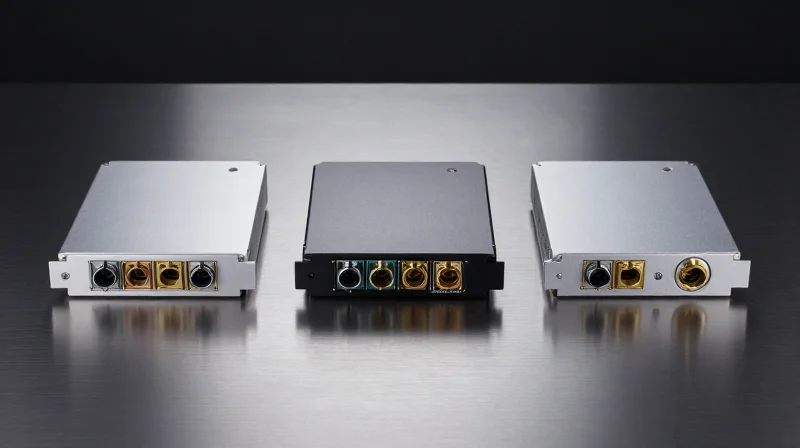
Comparing 100G LR4 vs. CWDM4 and PSM4 for Data Centers
While 100G LR4 is the industry standard for 10km spans, choosing the right transceiver for data center interconnects (DCI) requires a nuanced understanding of cabling costs versus module costs. 100G LR4 utilizes LAN-WDM wavelength division multiplexing to achieve long-distance transmission over a single pair of single-mode fibers (SMF), making it indispensable for campus-scale links where CWDM4 (2km) and PSM4 (500m) fail to meet distance requirements.
Technical Specifications at a Glance
| Feature | 100G LR4 | 100G CWDM4 | 100G PSM4 |
|---|---|---|---|
| Max Distance | 10km | 2km | 500m |
| Fiber Type | Single-mode (SMF) | Single-mode (SMF) | Single-mode (SMF) |
| Connector | Duplex LC | Duplex LC | MPO-12 |
| Wavelengths | LAN-WDM (1295-1309nm) | CWDM (1271-1331nm) | 1310nm (Parallel) |
| Fiber Count | 2 Fibers | 2 Fibers | 8 Fibers |
Selecting the Right Transceiver for Your Architecture
The primary differentiator between these three standards is the trade-off between the complexity of the transceiver and the complexity of the fiber plant. 100G LR4 uses high-precision TOSA/ROSA components to fit four wavelengths into a tight 800GHz grid, which drives higher module costs but keeps cabling costs at a minimum by requiring only two fibers. In contrast, PSM4 uses simpler, cheaper modules but requires an expensive 8-fiber MPO infrastructure. For wholesale purchasers, 100G LR4 is often the most future-proof investment for external or cross-building links where laying new fiber is cost-prohibitive.
Deployment Considerations and FAQs
- Can I use 100G LR4 for short-reach distances?
Yes, LR4 is backward compatible for shorter distances, though it is more expensive than CWDM4. In scenarios where a mix of 2km and 10km spans are required, some engineers choose to standardize on LR4 to simplify inventory and bulk pricing negotiations. - Why is 100G PSM4 used if LR4 has better reach?
PSM4 is ideal for intra-rack or leaf-spine architectures within 500m where the data center is already using MPO/MTP cabling. It is often cheaper per port for very high-density internal connections. - Does 100G LR4 require FEC (Forward Error Correction)?
Most 100G LR4 modules do not strictly require FEC for 10km, whereas many 100G CWDM4 implementations rely on FEC to maintain link stability at their maximum 2km range.
Global Supply Chain and Logistics for Bulk Optical Orders
Mastering International Logistics for High-Density Optical Orders
Managing the delivery of bulk 100G LR4 transceivers involves more than mere shipping; it requires an integrated logistics framework that addresses the unique challenges of high-value semiconductor components. In the 2026 market, where lead times can fluctuate due to raw material availability, enterprise buyers must prioritize vendors who offer transparent tracking, robust customs documentation, and multi-modal transport options to mitigate regional disruptions.
Comparison of Logistics Models for Bulk Optical Procurement
| Logistics Factor | Air Freight (Express) | Standard Air Cargo | Sea Freight (Bulk) | ||||
|---|---|---|---|---|---|---|---|
| Typical Lead Time | 3-5 Business Days | 7-14 Business Days | 30-45 Days | ||||
| Cost Efficiency | Low (Best for urgent replacement) | Moderate (Best for monthly restock) | High (Best for massive infrastructure) | Unit Risk Handling | Highest (Door-to-door tracking) | High (Airport-to-airport) | Moderate (Requires extra palletizing) |
| Customs Priority | High-Speed Clearance | Standard Processing | Extended Inspection Risk |
Strategic Risk Mitigation in the Supply Chain
To avoid the pitfalls of a volatile semiconductor market, wholesale buyers are increasingly adopting 'Buffer Stock' and 'Vendor Managed Inventory' (VMI) models. By maintaining a 15-20% safety stock of 100G LR4 10km modules, organizations can bypass sudden spikes in demand or shipping bottlenecks. Furthermore, utilizing Incoterms like DDP (Delivered Duty Paid) simplifies the process for the buyer by shifting the responsibility of import duties and taxes to the supplier, ensuring predictable landed costs.
Ensuring Physical Integrity: ESD and Thermal Protection
Optical transceivers are highly sensitive to environmental factors. Global logistics for bulk orders must utilize ESD-safe packaging (Anti-Static Trays) and climate-controlled shipping environments to prevent degradation of the TOSA/ROSA components during long-haul transit across different climate zones.
- What are the most common Incoterms for wholesale 100G LR4 orders?
Most buyers prefer DDP (Delivered Duty Paid) to minimize administrative overhead, while larger enterprises with their own customs brokers often use FCA (Free Carrier) to gain more control over the freight process. - How do HTS codes affect the cost of 100G LR4 transceivers?
The Harmonized Tariff Schedule code for optical transceivers (often 8517.62) determines the duty rate; staying updated on trade policy changes is essential for accurate bulk pricing forecasts. - What is the recommended buffer stock for 10km modules?
Given the critical nature of 10km links in mid-haul architecture, a rolling 3-month forecast with a 20% buffer is recommended to offset any potential semiconductor shortages.
Upgrading to 100G doesn't have to be a financial burden. By leveraging wholesale pricing and professional OEM/ODM services, you can deploy robust, 10km-capable networks with total confidence in your hardware's reliability and compatibility. Ready to optimize your infrastructure? Contact Ubytelink today for a personalized quote on 100G LR4 modules and discover how our expertise can power your next network expansion.