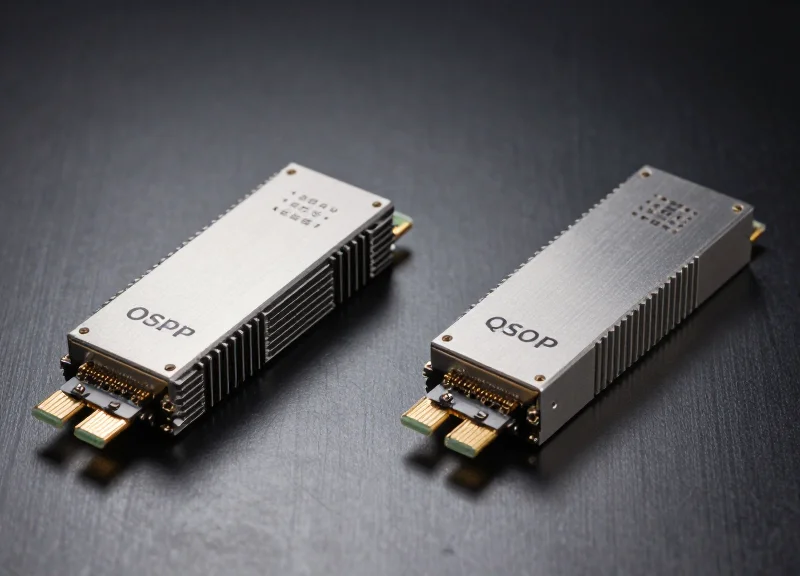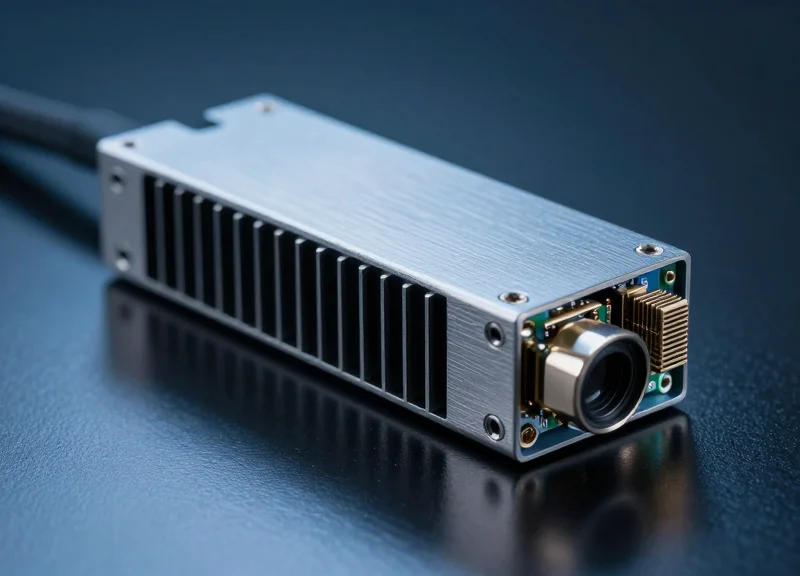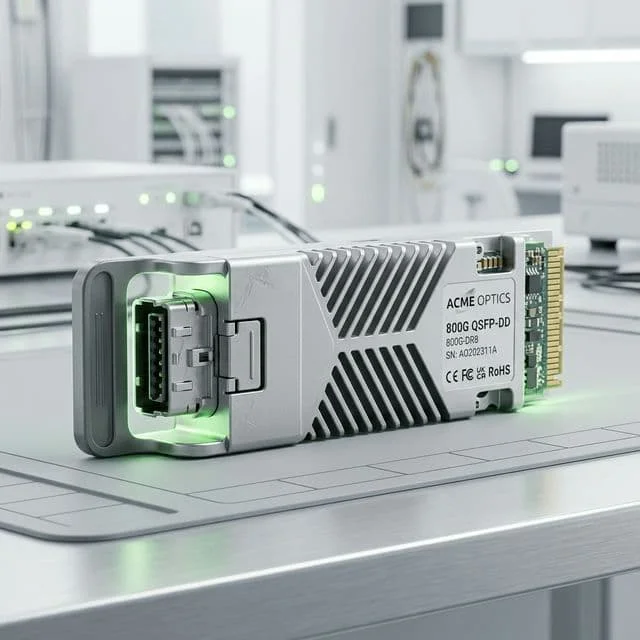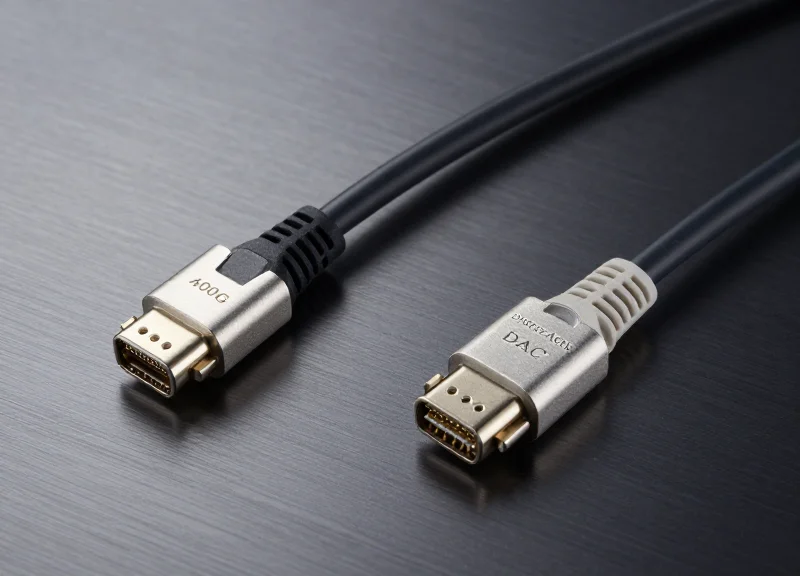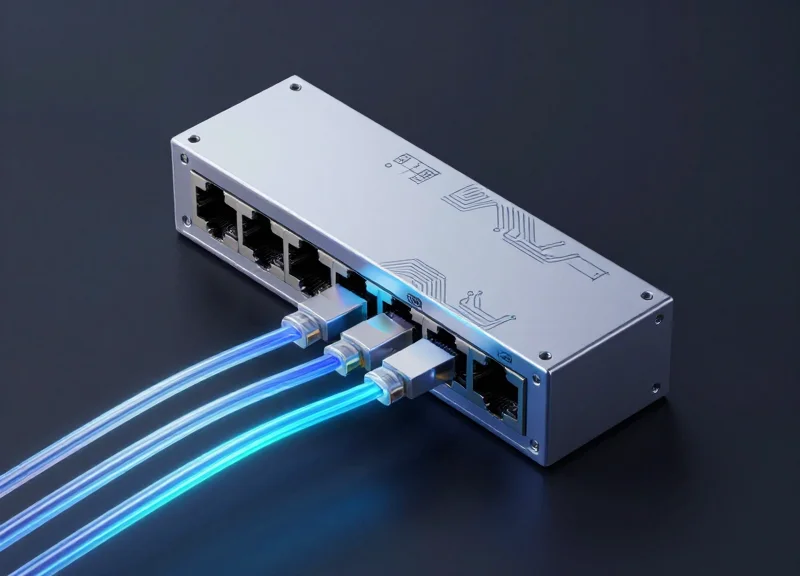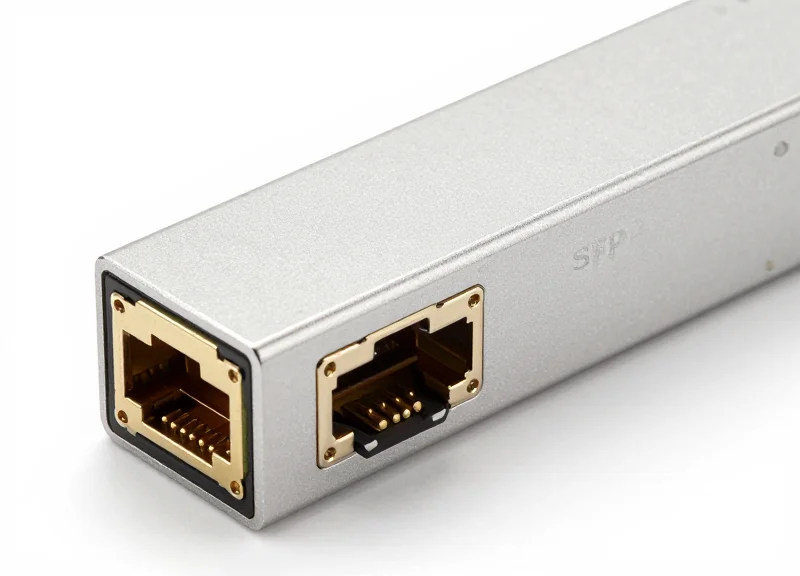
In an era of exponential data growth, network reliability isn't just a feature—it's a business necessity. Ubytelink's 100G Single-Lambda SFP-DD modules offer a cutting-edge solution for global enterprises seeking to scale their infrastructure without compromising on power efficiency or signal integrity.
Understanding the Shift: Why 100G Single-Lambda Matters
Understanding the Shift: Why 100G Single-Lambda Matters
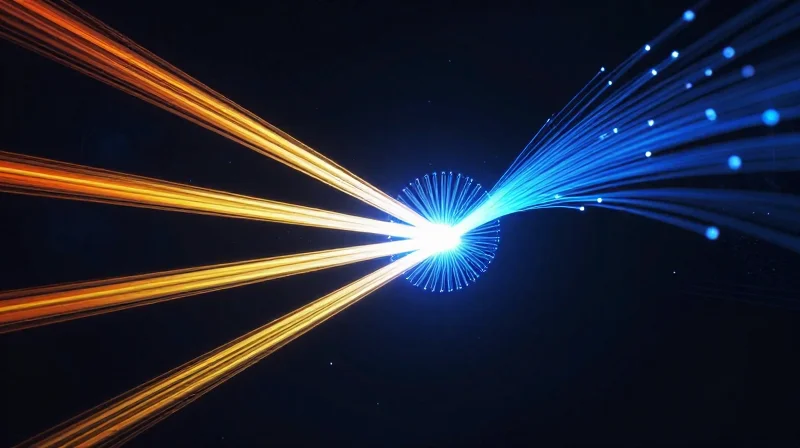
The transition to 100G single-lambda technology represents a fundamental architectural evolution in optical networking. By moving away from the traditional multi-lane 4x25G approach and adopting a single 100G optical lane using PAM4 modulation, network operators can achieve significantly higher density, lower power consumption, and a streamlined path toward 400G and 800G scalability. This shift eliminates the complexity of optical mux/demux components within the transceiver, directly addressing the industry's need for cost-effective, high-bandwidth interconnects.
Comparing 4x25G NRZ vs. 100G Single-Lambda PAM4
Legacy 100G solutions typically relied on four separate 25G channels (NRZ modulation). While effective, this required four lasers, four receivers, and complex internal optical alignment. The 100G single-lambda approach utilizes Pulse Amplitude Modulation 4-level (PAM4) to transmit 100G over a single wavelength, drastically reducing the component count and improving reliability.
| Feature | Legacy 4x25G (NRZ) | 100G Single-Lambda (PAM4) |
|---|---|---|
| Laser Count | 4 Lasers | 1 Laser |
| Optical Complexity | High (Mux/Demux required) | Low (Simplified Optical Path) |
| Power Consumption | Higher per Gigabit | Lower per Gigabit |
| Scalability | Limited to 100G | Foundational for 400G/800G |
Key Drivers for Adoption
- Reduced Bill of Materials (BOM)
By utilizing a single laser and receiver, the manufacturing complexity is reduced, leading to lower hardware costs for high-density deployments. - Enhanced Energy Efficiency
Single-lambda solutions consume less power per bit, reducing the overall thermal load in the data center and lowering operational cooling costs. - Seamless 400G Integration
Because 400G transceivers (like QSFP-DD) use 4x100G lanes, having 100G single-lambda SFP-DD solutions allows for direct breakout and interoperability without gearboxes.
Frequently Asked Questions
- What is the primary benefit of PAM4 in single-lambda 100G?
PAM4 doubles the bit rate compared to NRZ by transmitting two bits per symbol, allowing 100Gbps throughput on a single optical wavelength. - Is 100G single-lambda backward compatible with 4x25G?
No, they use different modulation techniques and lane counts. Interoperability requires a gearbox or a bridge device to convert between the architectures. - How does SFP-DD improve density in these solutions?
SFP-DD (Small Form-factor Pluggable Double Density) provides a second row of electrical contacts, doubling the bandwidth of a standard SFP port while remaining physically compact.
The SFP-DD Advantage: Doubling Density in Modern Racks
The SFP-DD Advantage: Doubling Density in Modern Racks
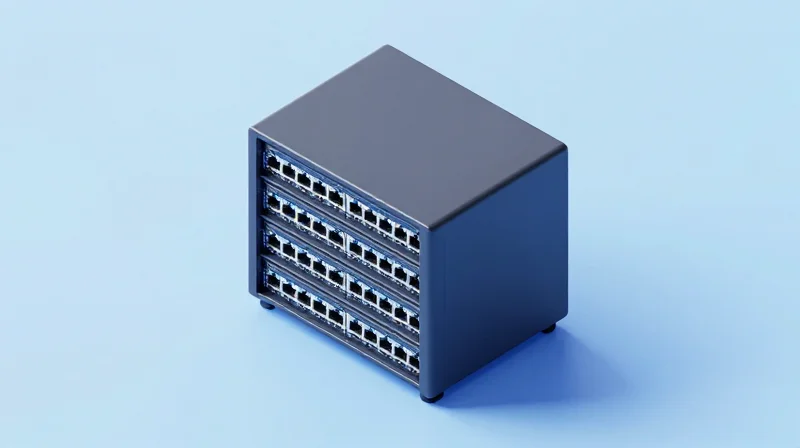
The Small Form-factor Pluggable Double Density (SFP-DD) interface represents a paradigm shift in network architecture by providing a two-lane electrical interface that doubles the bandwidth of a traditional SFP port while maintaining the same physical width. By integrating a second row of electrical pins, SFP-DD allows network operators to effectively double their port density within a standard 1U rack space, making it the ideal solution for high-density 100G deployments where physical real estate is at a premium.
Mechanical Innovation and Backward Compatibility
The primary technical achievement of SFP-DD is its ability to remain backward compatible with legacy SFP modules. The interface features a recessed second row of contacts, allowing standard SFP+, SFP28, and SFP56 modules to be plugged into an SFP-DD port without modification. This design choice ensures that Ubytelink 100G SFP-DD solutions can be phased into existing infrastructure, protecting current investments while providing a clear path toward 100G single-lambda density.
| Feature | Standard SFP28/SFP56 | SFP-DD (Double Density) |
|---|---|---|
| Electrical Lanes | 1 Lane | 2 Lanes |
| Max Throughput (Single Lambda) | 50Gbps | 100Gbps |
| Typical Port Count (1U) | 48 Ports | Up to 96 Ports (Via High-Density Systems) |
| Backward Compatibility | N/A | Supports SFP+/SFP28/SFP56 |
Optimizing Rack Space and Thermal Performance
As data centers transition to 100G single-lambda technology, the physical constraints of cooling and power become more acute. Ubytelink’s SFP-DD modules are engineered to handle the thermal load of two high-speed lanes within the tight confines of the SFP footprint. By doubling the throughput per port, operators can reduce the total number of switches and cables required, leading to significantly improved airflow and lower cooling costs across the data center floor.
- How does SFP-DD achieve double the density of standard SFP?
It uses a two-row electrical connector that supports two high-speed lanes (up to 50G or 100G PAM4) instead of the single lane found in traditional SFP modules, all while maintaining the original module width. - Can I use my existing SFP28 cables in an SFP-DD port?
Yes. SFP-DD ports are designed to be backward compatible with SFP+, SFP28, and SFP56 modules and cables, allowing for a mix of legacy and next-generation hardware in the same chassis. - What is the primary benefit for 100G single-lambda deployments?
It allows 100G connectivity to be deployed using the SFP form factor rather than the larger QSFP28, which means switches can support more 100G ports in the same 1U front panel space.
Technical Specifications: Breaking Down the 100G Architecture
Technical Specifications: Breaking Down the 100G Architecture
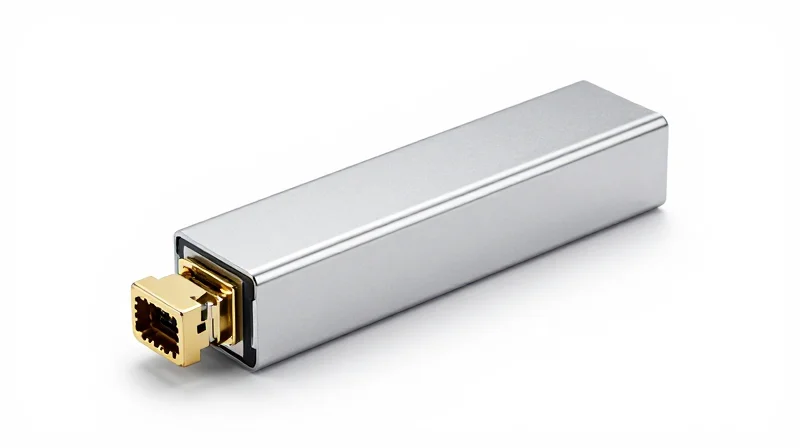
The Ubytelink 100G Single-Lambda SFP-DD solution achieves its performance by consolidating four 25Gbps electrical lanes into a single 100Gbps optical stream through sophisticated PAM4 modulation and Digital Signal Processing (DSP). This transition reduces the optical component count—such as lasers and detectors—by 75% compared to legacy 4-lane 100G QSFP28 solutions, which significantly lowers power consumption and increases Mean Time Between Failures (MTBF) in high-density network environments.
The Power of PAM4 Modulation
At the heart of this architecture is 4-level Pulse Amplitude Modulation (PAM4). Unlike traditional NRZ signaling that transmits one bit per symbol, PAM4 utilizes four distinct voltage levels to transmit two bits per symbol cycle. This allows the optical carrier to operate at a 53.125 GBaud rate, achieving a raw throughput of 106.25 Gbps. This spectral efficiency is critical for maintaining signal integrity over single-mode fiber (SMF) without requiring the complex multiplexing of multiple wavelengths.
| Parameter | 100G-DR1 | 100G-FR1 | 100G-LR1 |
|---|---|---|---|
| Wavelength | 1311nm | 1311nm | 1311nm |
| Max Distance | 500m | 2km | 10km |
| Modulation | PAM4 | PAM4 | PAM4 |
| Laser Type | DML / SiPh | EML | EML |
| Typical Power | <3.0W | <3.5W | <4.0W |
Digital Signal Processing and FEC
To combat the signal degradation inherent in high-baud-rate transmissions, Ubytelink integrates high-performance DSP chips within the SFP-DD module. These chips handle adaptive equalization and support KP4 Forward Error Correction (FEC). The DSP compensates for chromatic dispersion and other optical impairments in real-time, ensuring a pre-FEC bit error rate (BER) that allows for flawless data recovery, meeting the rigorous requirements of IEEE 802.3cu standards.
- Why use SFP-DD instead of standard SFP for 100G?
SFP-DD (Double Density) features a second row of electrical contacts, allowing it to support a 2-lane electrical interface that matches the density of modern switch silicons while remaining backwards compatible with standard SFP legacy ports. - What is the benefit of a Single-Lambda design?
By using one wavelength instead of four, the transceiver eliminates the need for expensive optical mux/demux components, reducing the bill of materials and improving thermal efficiency. - Is the DSP power-hungry?
While DSPs do require power, Ubytelink utilizes latest-generation 7nm or 5nm DSP technology to keep the total module power consumption below 3.5W to 4.0W, which is lower than many multi-lane alternatives.
Power Efficiency and Thermal Management

Power Efficiency and Thermal Management
Ubytelink 100G Single-Lambda SFP-DD solutions are engineered to address the critical challenge of escalating power demands in modern data centers by leveraging a simplified 100G PAM4 architecture that significantly reduces the power-per-bit ratio. Unlike legacy multi-lane modules, these units utilize a single-wavelength design that minimizes the complexity of the Digital Signal Processor (DSP) and optical sub-assemblies, resulting in lower total power consumption and reduced heat generation. This efficiency is paramount in high-density environments where thermal overhead can limit port density and drive up cooling costs.
Lowering OPEX via Single-Lambda Architecture
The shift from 4x25G NRZ or PAM4 architectures to a single 100G lambda is the primary driver for Ubytelink's energy savings. By consolidating four optical channels into one, the module requires fewer lasers, fewer drivers, and a more streamlined receiver chain. This reduction in component count does not merely improve reliability; it translates directly into a 25-30% reduction in typical power draw compared to traditional QSFP28 modules. For large-scale deployments, this power reduction accumulates into substantial savings in both direct electricity costs and the indirect costs associated with cooling infrastructure.
| Parameter | Legacy 100G QSFP28 (4x25G) | Ubytelink 100G SFP-DD (Single-Lambda) |
|---|---|---|
| Typical Power Consumption | 4.5W - 5.0W | < 3.5W |
| Optical Lane Count | 4 Lanes | 1 Lane |
| DSP Complexity | High (Gearbox required) | Optimized (Single-lane) |
| Thermal Output | Higher BTU/hr | Lower BTU/hr |
Thermal Stability in High-Density Racks
As port densities double with the SFP-DD form factor, thermal management becomes a critical engineering hurdle. Ubytelink addresses this through advanced housing materials and precision-engineered thermal pads that facilitate efficient heat transfer from the DSP to the module's outer shell. The SFP-DD design itself incorporates a dual-row contact system that improves electrical performance while maintaining a compact footprint that allows for better airflow between modules. This ensures that even under full load in a 48-port switch, the modules maintain a stable operating temperature, preventing thermal throttling and extending the lifespan of the optical components.
- How does single-lambda technology impact the total cost of ownership (TCO)?
By reducing power consumption per module by over 1W, Ubytelink solutions lower the energy bill and the cooling requirements for the entire rack, significantly reducing the TCO over the product's 5-7 year lifecycle. - Does the SFP-DD form factor create 'heat pockets' in the switch?
No. While the density is higher, the lower individual power draw of single-lambda modules means the aggregate heat density is often comparable to or lower than traditional lower-density QSFP28 configurations. - What happens to performance if the ambient temperature rises?
Ubytelink modules include integrated digital diagnostic monitoring (DDM) and internal thermal protection that adjusts performance parameters to maintain data integrity until environmental cooling can be restored.
Ensuring Mission-Critical Reliability: Ubytelink's QA Process
The Foundation of Zero-Downtime: Ubytelink's QA Philosophy
Ubytelink 100G Single-Lambda SFP-DD solutions are engineered to meet the stringent demands of mission-critical global networks where even seconds of latency or downtime can result in significant operational losses. Our reliability is rooted in a 'Zero-Failure' manufacturing philosophy, which transitions from passive compliance to active performance validation. By employing automated high-precision testing at every stage of the production cycle, Ubytelink ensures that each SFP-DD module maintains consistent signal integrity under maximum load, regardless of the network environment.
Advanced Signal Integrity and PAM4 Validation
Because 100G single-lambda technology relies on PAM4 (4-Level Pulse Amplitude Modulation), the margin for error is significantly tighter than traditional NRZ signaling. Ubytelink utilizes state-of-the-art Digital Sampling Oscilloscopes and Bit Error Rate Testers (BERT) to validate Transmitter and Dispersion Eye Closure Quaternary (TDECQ) metrics. This ensures that the vertical eye opening and horizontal jitter remain within strict IEEE 802.3ck standards, providing the signal headroom necessary for long-distance transmissions and complex switching fabrics.
| Testing Category | Key Parameter | Ubytelink Target Standard |
|---|---|---|
| Optical Performance | TDECQ (dB) | ≤ 3.4 dB (Industry leading margin) |
| Signal Integrity | Pre-FEC Bit Error Rate (BER) | < 1E-5 (Minimum threshold) |
| Thermal Reliability | Operating Case Temp | 0°C to 70°C (Stable Power Output) |
| Mechanical Endurance | Insertion/Extraction | > 200 Cycles without degradation |
Environmental Stress Screening (ESS) and Burn-in
Before leaving the facility, every Ubytelink module undergoes a rigorous Environmental Stress Screening (ESS) process. This includes high-temperature soak tests and rapid thermal cycling to identify potential latent defects in the laser assembly or the DSP chipset. By simulating the extreme heat profiles found in high-density 100G SFP-DD switch environments, we guarantee that our modules will perform reliably over their entire 10-year design life, reducing the Total Cost of Ownership (TCO) for our clients.
Reliability FAQ: Critical Performance Queries
- How does Ubytelink ensure interoperability with various switch vendors?
Each SFP-DD module is tested in our extensive interoperability lab, featuring the latest hardware from Cisco, Arista, Juniper, and NVIDIA (Mellanox). We verify EEPROM coding and protocol handshaking to ensure seamless 'plug-and-play' performance. - What role does the Single-Lambda architecture play in reliability?
By reducing the number of optical components (using one laser instead of four), the Mean Time Between Failures (MTBF) is statistically improved. There are fewer points of failure compared to legacy 100G LR4 solutions. - Is real-time monitoring available on these modules?
Yes, all Ubytelink 100G SFP-DD solutions support Digital Diagnostics Monitoring (DDM/DOM) via the I2C interface, allowing network admins to monitor temperature, voltage, and optical power in real-time.
Comparing Form Factors: SFP-DD vs. Traditional QSFP28
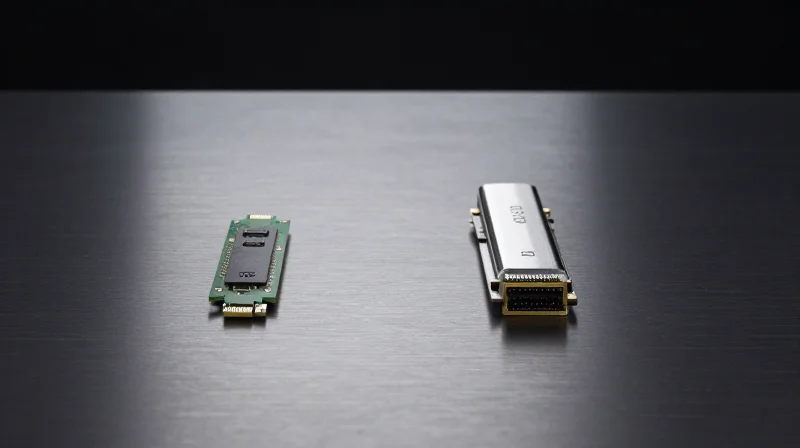
SFP-DD (Small Form-factor Pluggable Double Density) represents a strategic architectural shift over traditional QSFP28, offering double the port density within the same faceplate area while maintaining critical backward compatibility with the established SFP ecosystem. While QSFP28 served as the primary vehicle for 100G adoption using four 25G NRZ lanes, Ubytelink's SFP-DD utilizes advanced 100G Single-Lambda technology over two 50G PAM4 electrical lanes, providing a more streamlined and scalable path for high-density edge and data center deployments.
Technical Comparison: SFP-DD vs. QSFP28
| Feature | Ubytelink 100G SFP-DD | Traditional 100G QSFP28 |
|---|---|---|
| Electrical Interface | 2-lane (50G PAM4 per lane) | 4-lane (25G NRZ per lane) |
| Port Density | Ultra-high (Up to 72 ports per 1U) | High (Up to 36 ports per 1U) |
| Backward Compatibility | SFP, SFP28, SFP56 | QSFP+, QSFP28 |
| Physical Size | Compact (SFP-based footprint) | Standard (Larger QSFP footprint) |
| Application Context | Next-gen High-Density Breakout & Edge | Legacy Core & Data Center Interconnect |
The Single-Lambda Efficiency Advantage
The transition from QSFP28 to SFP-DD is not merely about physical size; it is about the transition to more efficient signaling. Traditional QSFP28 modules often rely on four separate optical channels (4x25G), which increases the complexity of internal optical components. Ubytelink 100G SFP-DD modules leverage Single-Lambda technology, which consolidates the 100G payload onto a single optical wavelength. This reduction in optical components directly translates to improved reliability, lower manufacturing variance, and significantly reduced power consumption per gigabit of data transmitted.
Implementation Considerations
- Can SFP-DD ports support legacy SFP28 modules?
Yes. One of the primary advantages of SFP-DD is that the mechanical cage and electrical interface are designed to be backward compatible with standard SFP, SFP28, and SFP56 modules, protecting existing hardware investments. - Why is SFP-DD preferred for 400G-to-100G breakouts?
SFP-DD aligns perfectly with 400G QSFP-DD ports which also use 50G PAM4 lanes. This allows for simple, direct breakout cabling without the need for complex gearbox technology required to interface with 25G NRZ-based QSFP28 modules. - Is the thermal management of SFP-DD superior to QSFP28?
While SFP-DD is smaller, Ubytelink's design optimizes thermal dissipation through the SFP-DD's dual-row contact design, ensuring that even in high-density 72-port configurations, heat is managed effectively to prevent signal degradation.
Deployment Use Cases: From Enterprise Cores to Edge Cloud

Deployment Use Cases: From Enterprise Cores to Edge Cloud
Ubytelink 100G Single-Lambda SFP-DD solutions represent a versatile evolution in optical networking, offering the backward compatibility of the SFP form factor with the double-density capacity required for modern 100G architectures. By utilizing a single 100G PAM4 lane, these modules reduce complexity and power consumption, making them ideal for high-density environments where thermal management and port efficiency are paramount. From the core of enterprise data centers to the specialized requirements of high-frequency trading and edge computing, SFP-DD provides a scalable path for 100G adoption.
High-Performance Computing (HPC) and AI Clusters
In the realm of High-Performance Computing and Artificial Intelligence, bandwidth bottlenecks can lead to significant processing delays. Ubytelink SFP-DD modules enable higher port density on top-of-rack switches, allowing for more GPU-to-GPU and node-to-node connections within the same physical footprint. The single-lambda design ensures that data moves with minimal latency, supporting the massive data throughput required for training large language models (LLMs) and performing complex scientific simulations.
Financial Services and High-Frequency Trading (HFT)
For financial institutions, every microsecond counts. The streamlined architecture of the Ubytelink 100G Single-Lambda SFP-DD reduces the internal serialization/deserialization (SerDes) complexity compared to multi-lane alternatives. This leads to more predictable performance and lower latency in high-frequency trading environments. Furthermore, the small form factor allows for dense aggregation of market data feeds and execution links, ensuring that trading desks can scale their infrastructure without exceeding rack space limits.
| Use Case | Key Requirement | Ubytelink SFP-DD Benefit |
|---|---|---|
| Enterprise Core | High Density | Doubles port density over standard SFP28/SFP56 |
| AI/ML Clusters | High Bandwidth | 100G throughput per port with lower power per bit |
| Edge Cloud | Thermal Efficiency | Low power consumption ideal for uncooled environments |
| Financial Services | Low Latency | Single-lane 100G PAM4 reduces processing overhead |
Cloud Service Providers (CSPs) and Edge Computing
Cloud Service Providers are increasingly moving compute resources closer to the end-user via edge data centers. These environments often face strict space and power constraints. Ubytelink SFP-DD modules address these challenges by providing 100G speeds in a form factor that manages heat effectively, preventing thermal throttling in compact edge enclosures. This makes them a critical component for 5G backhaul, content delivery networks (CDNs), and IoT data aggregation points where reliability is non-negotiable.
- Is SFP-DD backward compatible with existing SFP slots?
Yes, SFP-DD ports are designed to be backward compatible with standard SFP+, SFP28, and SFP56 modules, allowing for a seamless migration path from 10G/25G to 100G. - How does single-lambda technology benefit long-distance edge deployments?
By using a single 100G lambda, the complexity of mux/demux is eliminated, which reduces the points of failure and power consumption, crucial for remote edge locations. - Can these modules be used in leaf-spine architectures?
Absolutely. They are specifically optimized for high-density leaf-to-spine connections where maximizing the number of 100G links per switch is required.
Future-Proofing Your Infrastructure with Ubytelink
Future-proofing with Ubytelink’s 100G Single-Lambda SFP-DD modules involves leveraging a high-density, backward-compatible form factor that utilizes PAM4 modulation—the same underlying technology required for 400G and 800G networking—thereby minimizing hardware churn and maximizing long-term return on investment (ROI).
The Evolutionary Path to Terabit Networking
The primary advantage of the SFP-DD (Small Form-factor Pluggable Double Density) form factor lies in its architectural alignment with future standards. While traditional QSFP28 modules are limited in lane density, SFP-DD doubles the electrical interface capacity. This allows network operators to maintain backward compatibility with SFP legacy ports while preparing for a migration path that shares the same signal integrity requirements as 400G FR4 or 800G DR8 solutions. By adopting 100G per lambda today, organizations bypass the complexity of legacy four-lane architectures.
| Metric | 100G SFP-DD | 400G QSFP-DD | 800G QSFP-DD |
|---|---|---|---|
| Modulation | PAM4 (Single-Lambda) | PAM4 (4x100G) | PAM4 (8x100G) |
| Lane Rate | 100 Gbps per Lane | 100 Gbps per Lane | 100 Gbps per Lane |
| Form Factor Density | Dual Electrical Lane | Eight Electrical Lanes | Eight Electrical Lanes |
| Backward Compatibility | SFP+/SFP28 | QSFP28/QSFP56 | QSFP-DD/QSFP56 |
Maximizing Port Density and Power Efficiency
Ubytelink modules are engineered to reduce the complexity of the optical engine. By moving from four 25G lanes to a single 100G lambda, power consumption is reduced by approximately 25% per bit. This efficiency is critical for future-proofing as cooling demands and energy costs increase at 800G and 1.6T scales. Furthermore, the SFP-DD's compact size allows for double the port density on faceplates, extending the lifespan of existing rack space and switch chassis.
- How does 100G Single-Lambda simplify the move to 400G?
It uses the same 100G-per-lane signaling required by 400G (4x100G), allowing for easy breakout configurations and uniform testing procedures across the network fabric. - Is SFP-DD compatible with my current SFP28 equipment?
Yes, SFP-DD ports are designed to be backward compatible with SFP28 and SFP+ modules, ensuring current investments are protected while enabling higher density for future upgrades. - What role does PAM4 play in future-proofing?
PAM4 is the industry-standard modulation for all high-speed Ethernet beyond 100G; starting with Ubytelink 100G Single-Lambda ensures your infrastructure is optimized for the signal integrity challenges of higher tiers.
Ubytelink's 100G Single-Lambda SFP-DD modules provide the perfect balance of performance and reliability for the world's most demanding networks. Contact our technical sales team today to optimize your infrastructure and ensure your network is ready for tomorrow's challenges.