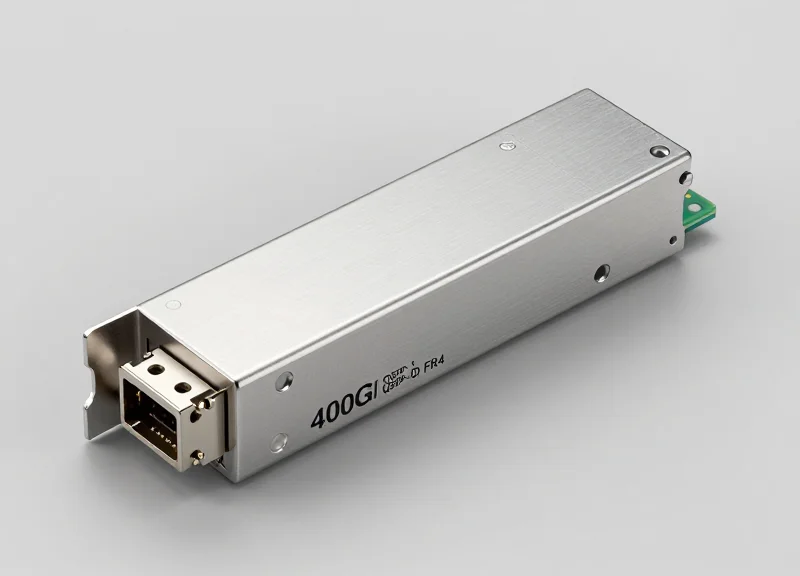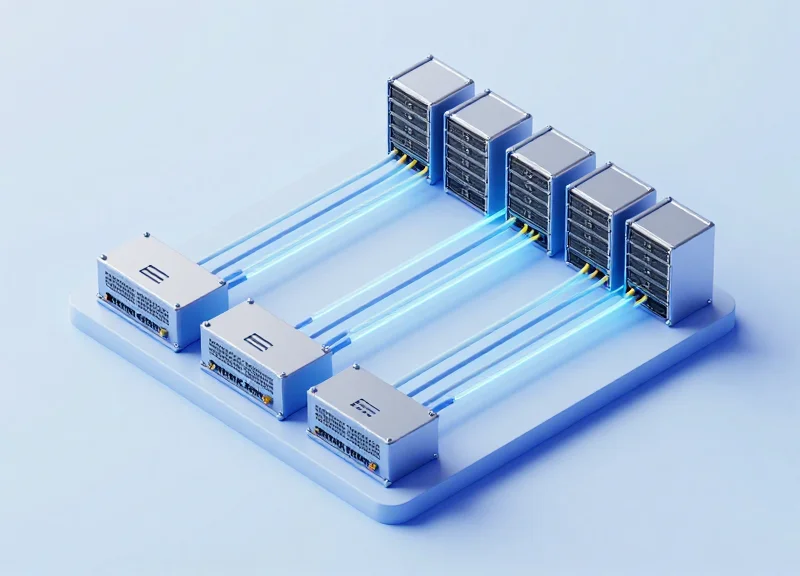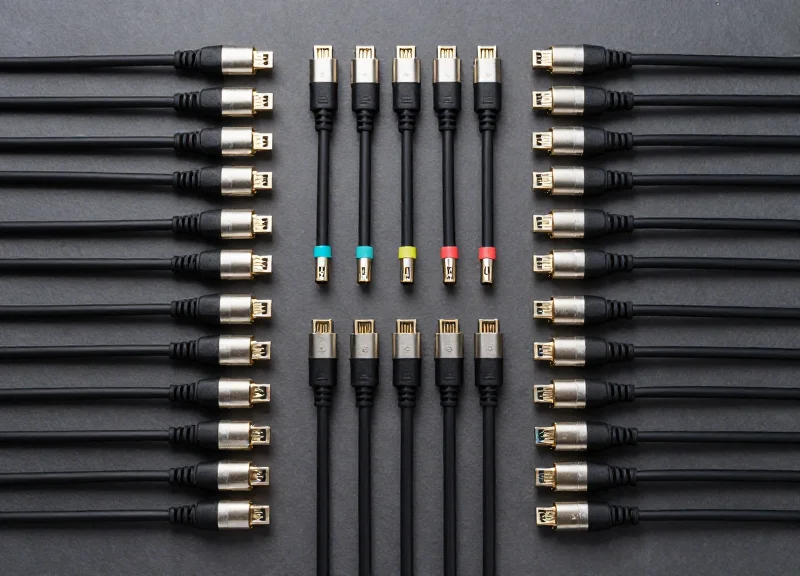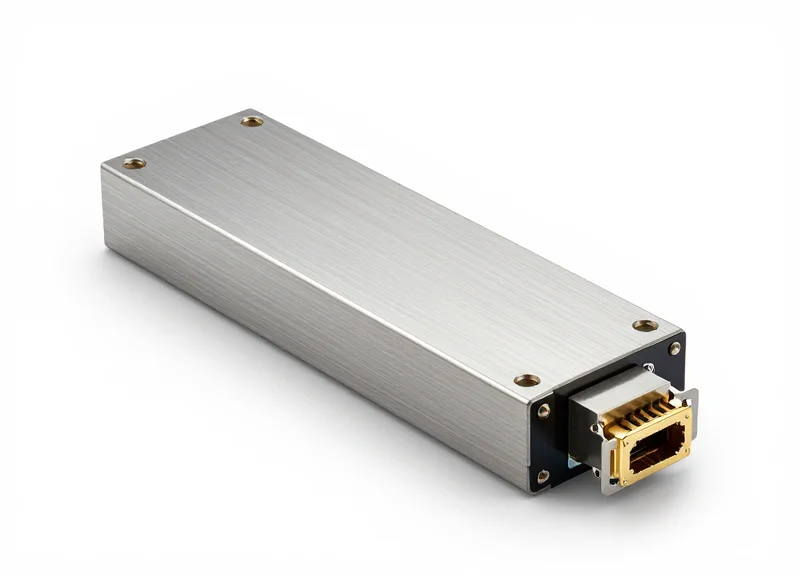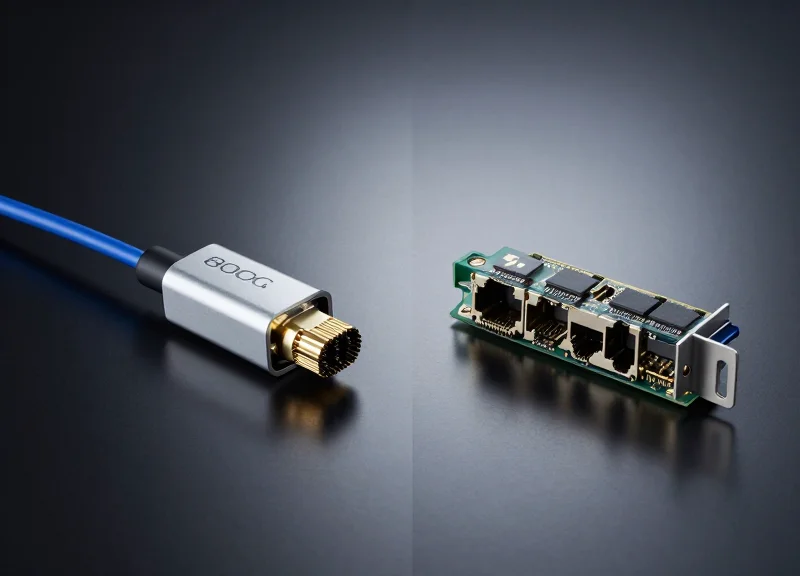
As data centers transition to 800G to support AI and ML workloads, selecting the right interconnect strategy is critical. This guide explores why 800G AOC is becoming the standard for high-density racks and how it stacks up against traditional alternatives.
The Evolution of 800G Connectivity in High-Density Environments
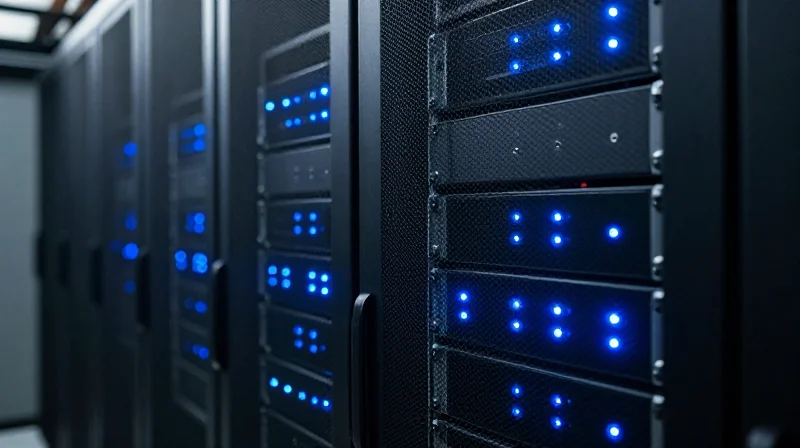
The Shift to 800G: Meeting the Demands of Hyperscale Infrastructure
The evolution of 800G connectivity represents a critical response to the explosive growth of AI/ML workloads and high-performance computing (HPC) which require near-instantaneous data exchange between nodes. By doubling the bandwidth of previous 400G standards, 800G interfaces allow hyperscalers to pack more throughput into a single rack unit, significantly reducing the complexity of the network fabric while maintaining the low-latency requirements essential for distributed processing.
As data centers migrate toward 800G, the primary driver is the optimization of 'bandwidth-per-rack.' With the advent of 51.2 Tbps switching silicon, network engineers can now deploy 64-port 800G switches. However, this density creates a massive bottleneck at the physical layer, where the choice of interconnect—whether Active Optical Cable (AOC), Direct Attach Copper (DAC), or discrete transceivers—directly impacts the rack's operational efficiency.
Physical Constraints: Navigating Space and Airflow Challenges
In a high-density environment, the physical footprint of the cabling is as important as the data rate. Traditional copper solutions, while cost-effective, suffer from increased thickness and weight at the 800G level due to the shielding required for signal integrity. This 'cable bulk' can physically obstruct the exhaust paths of server fans, leading to thermal hotspots and increased cooling costs.
| Metric | 400G Environment | 800G Environment | Impact on Density |
|---|---|---|---|
| Typical Port Count | 32 Ports per 1U | 64-128 Ports per 1U/2U | Double the connection points in same space. |
| Cable Diameter (DAC) | ~6-8mm | ~9-11mm (requires thicker gauge) | Significantly impedes airflow in tight racks. |
| Max Power Per Port | ~12W | ~16W - 20W | Requires superior thermal dissipation. |
Key Considerations for 800G Evolution
- Why is 800G becoming the standard for high-density racks?
It provides the necessary throughput to support 51.2T and future 102.4T switching silicon, enabling flatter network architectures with fewer tiers. - How does 800G impact airflow management?
Higher port density means more heat generation. Interconnects with smaller diameters, such as AOCs, are increasingly favored to keep air channels clear. - What is the role of form factors like OSFP and QSFP-DD800?
These form factors allow for backwards compatibility while integrating enhanced thermal fins and heat dissipation techniques necessary for 800G optics.
Ultimately, the shift to 800G is not just a speed upgrade; it is a fundamental architectural change. Engineers must now account for the 'thermal tax' of higher-speed optics and the physical limitations of the rack environment. This necessitates a strategic comparison between 800G AOCs and their alternatives to ensure that performance gains are not negated by cooling failures or cable management disasters.
Technical Deep Dive: 800G AOC vs. DAC vs. AEC
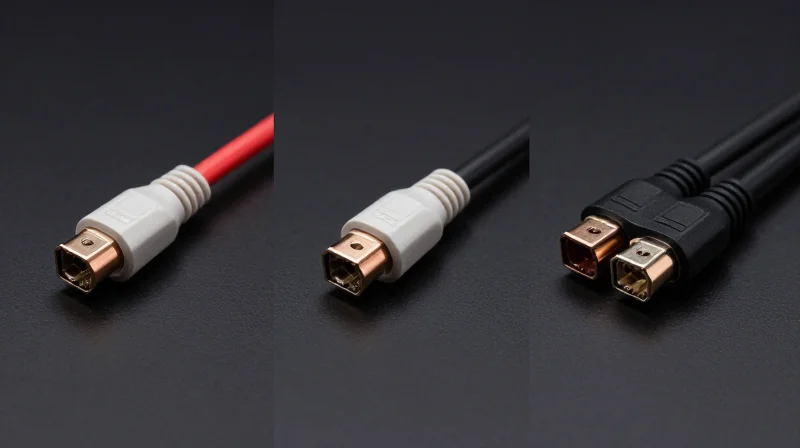
Architectural Foundations of 800G Interconnects
Achieving 800G throughput requires a fundamental shift in how signals are managed across the physical layer, moving from simple passive copper transmission to sophisticated active retiming and optical conversion. While Direct Attach Copper (DAC) remains the cost-effective baseline, the physics of 112G PAM4 signaling necessitate the use of Active Electrical Cables (AEC) and Active Optical Cables (AOC) to overcome the severe reach and signal integrity limitations inherent in high-frequency copper transmission.
800G Direct Attach Copper (DAC)
800G DACs are passive assemblies that provide a direct electrical path between two ports. However, at 800G speeds, the insertion loss becomes so significant that the maximum reach is typically limited to 1.5 or 2 meters. To maintain signal integrity, these cables are often thick and rigid (using lower AWG ratings), which can severely obstruct airflow and complicate cable management in high-density racks.
800G Active Electrical Cables (AEC)
AECs are the modern middle ground for 800G connectivity. They utilize built-in retimers or Digital Signal Processors (DSPs) within the connectors to clean up and amplify the electrical signal. This 'active' component allows AECs to use much thinner gauge copper than DACs, supporting reaches up to 7 meters while significantly improving flexibility and airflow within the rack.
800G Active Optical Cables (AOC)
800G AOCs convert electrical signals into light for transmission over multi-mode fiber. By bypassing the physical limitations of copper entirely, AOCs support distances up to 100 meters. They offer the thinnest form factor and are immune to electromagnetic interference (EMI), making them essential for high-density clusters where cable bulk and signal noise are primary concerns.
| Feature | 800G DAC | 800G AEC | 800G AOC |
|---|---|---|---|
| Max Reach | Up to 2m | Up to 7m | Up to 100m |
| Power Consumption | ~0.1W | ~5W per end | ~14W per end |
| Cable Diameter | Thick/Heavy | Thin/Flexible | Lightweight/Thinnest |
| Signal Integrity | Passive (High Loss) | Active (Retimed) | Optical (Low Loss) |
| EMI Immunity | Low | Medium | High |
Technical FAQ: 800G Interconnect Comparison
- Why is DAC reach so restricted at 800G?
The shift to 112G PAM4 signaling per lane results in extreme signal attenuation over copper. Beyond 2 meters, the signal-to-noise ratio typically falls below what standard switch ASICs can recover without excessive errors. - Does AEC add significant latency compared to DAC?
AEC introduces a negligible amount of latency (typically in the nanoseconds) due to the retiming process, which is generally outweighed by the benefits of thinner cabling and longer reach in a data center environment. - Can 800G AOCs be used for Top-of-Rack (ToR) switching?
Yes, while AOCs are capable of long reaches, they are frequently used for ToR applications where the airflow benefits of thin fiber and the high EMI resistance outweigh the higher power consumption compared to copper alternatives.
Latency Benchmarks: Speed at the Edge of Physics

Latency Benchmarks: Speed at the Edge of Physics
In the realm of 800G networking, latency is no longer measured in milliseconds but in nanoseconds, where the architectural difference between an Active Optical Cable (AOC) and an Active Electrical Cable (AEC) can determine the efficiency of an entire AI training cluster. While Direct Attach Copper (DAC) remains the gold standard for zero-latency, its reach is physically limited at 800G; AOCs bridge this gap by offering near-light-speed propagation over distances up to 100 meters without the significant processing overhead introduced by the Digital Signal Processing (DSP) re-timers required in AECs. For high-density racks, minimizing this 'hop latency' is the primary driver for selecting optical over active copper solutions.
Comparative Latency Performance Metrics
| Medium Type | Latency Profile | Typical Delay (Propagation) | Signal Processing Delay |
|---|---|---|---|
| 800G DAC | Ultra-Low (Passive) | ~4.5 ns / meter | None |
| 800G AOC | Low (Optical) | ~5.0 ns / meter | < 5 ns (E/O Conversion) |
| 800G AEC | Moderate (Active) | ~5.0 ns / meter | 100 - 150 ns (DSP Re-timing) |
| 800G Transceiver + MPO | Low (Modular) | ~5.0 ns / meter | ~10 ns (Module Logic) |
The Impact of DSP on AI Synchronization
The primary latency bottleneck at 800G speeds is not the medium itself, but the signal integrity processing. Active Electrical Cables (AECs) use power-hungry DSPs to clean up electrical signals over copper, adding up to 150ns of delay per cable. In contrast, 800G AOCs utilize high-speed optical engines that convert electrical signals to light with minimal logic intervention. In Massive Parallel Processing (MPP) environments, such as Large Language Model (LLM) training, thousands of GPUs must synchronize during 'All-Reduce' operations. An extra 100ns of latency per hop can lead to significant 'tail latency,' where the entire compute cluster sits idle waiting for the slowest packet to arrive, directly degrading the Total Cost of Ownership (TCO).
Latency Performance FAQ
- Does 800G AOC latency increase significantly with cable length?
The increase is marginal, calculated at approximately 5ns per meter. For the cable lengths typical in high-density racks (5m to 30m), the propagation delay remains negligible compared to the switching fabric latency. - Why is AEC latency consistently higher than AOC latency?
AECs require aggressive Digital Signal Processing (DSP) to overcome the extreme high-frequency attenuation of copper at 112G PAM4 signaling. AOCs avoid this by using fiber, which has orders of magnitude more bandwidth and requires less signal 'repair.' - How does lower latency improve AI cluster ROI?
Lower latency reduces the synchronization overhead between GPUs. Even a sub-microsecond reduction in network latency can improve overall training efficiency by 3-5%, which translates to millions of dollars in saved compute time for large-scale clusters.
Power Consumption and Thermal Efficiency
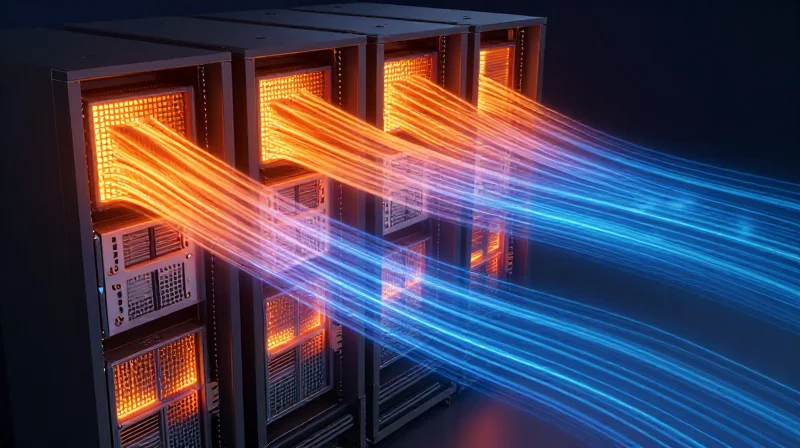
In the transition to 800G networking, power consumption has evolved from a secondary operational expense into a primary architectural constraint. Active Optical Cables (AOCs) offer a strategic advantage in high-density racks by delivering a lower 'Watts-per-Gigabit' ratio than discrete transceiver-and-fiber combinations while avoiding the physical airflow obstructions caused by the heavy-gauge copper required for 800G DACs.
The Watts-per-Gigabit Metric at 800G
As data centers scale to 800G, the power envelope of the interconnect becomes critical. While Passive Direct Attach Copper (DAC) remains the most energy-efficient for very short reaches (under 2 meters), it quickly becomes unviable for high-density configurations due to its weight and lack of signal integrity over distance. 800G AOCs, utilizing integrated Digital Signal Processors (DSPs) or newer Linear Drive (LPO) architectures, typically consume 15-20% less power than discrete optical transceivers. This efficiency stems from the factory-tuned nature of the AOC, which allows the optics to be optimized for a specific, fixed length rather than the worst-case scenarios a pluggable transceiver must support.
| Interconnect Type | Typical Power Draw (per end) | Reach Efficiency | Thermal Management Need |
|---|---|---|---|
| 800G DAC (Passive) | < 0.1W | Excellent (<2m only) | Low |
| 800G AEC (Active Copper) | 5W - 10W | Good (up to 7m) | Moderate |
| 800G AOC (Active Optical) | 12W - 16W | Very Good (up to 100m) | Moderate / Optimized |
| 800G Discrete Transceiver | 14W - 18W+ | High (up to 2km/10km) | High |
Thermal Efficiency and Airflow Optimization
Thermal management in high-density racks is not solely about the heat generated by the components but also how the physical cabling affects airflow. 800G DAC cables require thick 26AWG to 30AWG copper wiring, which creates significant bulk at the switch faceplate and can impede front-to-back airflow. AOCs utilize thin, lightweight optical fibers that reduce cable volume by up to 70%. This reduction in 'cable congestion' allows for more efficient cooling of the switch ASICs and power supplies, indirectly lowering the facility's total cooling energy requirements (PUE).
- How does 800G AOC power impact OpEx?
Lower power consumption per port directly reduces electricity costs and minimizes the heat load on data center HVAC systems, which can account for up to 40% of total facility OpEx. - Why is 'Watts-per-Gigabit' higher at 800G than 400G?
The move to 112G SerDes lanes requires more sophisticated DSPs to manage signal integrity, which inherently increases power draw compared to previous generations. - Does the cable weight affect thermal performance?
Yes. Heavier copper cables place mechanical stress on the ports and block exhaust paths. The lighter weight of AOCs ensures better airflow and lower stress on the thermal interface of the switch modules.
Reach and Signal Integrity: Solving the 7-Meter Gap
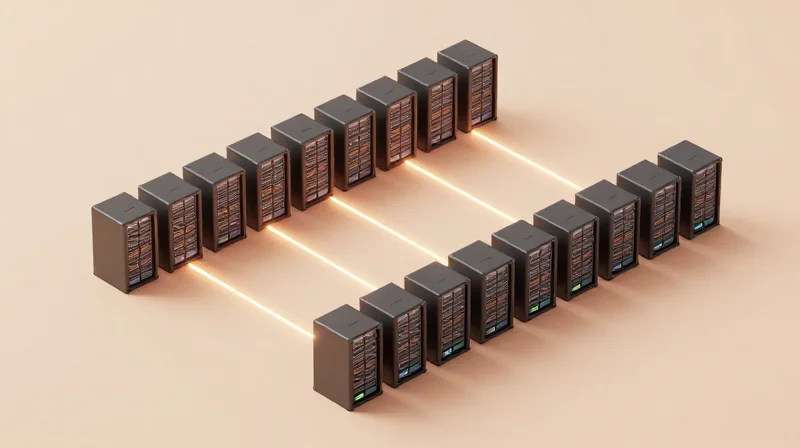
At 800G speeds using 112G PAM4 signaling, traditional copper cabling faces a 'brick wall' of signal attenuation, limiting reliable reach to under 2 meters; AOCs solve this 7-meter gap by converting electrical signals to light, enabling low-latency, error-free transmission up to 100 meters across complex rack architectures.
The Physics of the 800G Copper Barrier
As data rates climb to 800G, the insertion loss in copper conductors becomes a critical bottleneck. At these frequencies, skin effect and dielectric loss degrade the signal so rapidly that a standard Passive Direct Attach Copper (DAC) cable can rarely exceed 2 meters without suffering from unrecoverable Bit Error Rates (BER). This creates a significant constraint for modern data centers that require flexible cabling beyond the immediate rack.
| Cable Type | Typical Reach (800G) | Signal Integrity Mechanism | Ideal Deployment |
|---|---|---|---|
| DAC (Passive) | 0.5m - 2.0m | Direct Electrical (Passive) | Intra-rack (ToR) |
| AEC (Active Copper) | 3.0m - 5.0m | Retiming & DSP Equalization | Adjacent Rack (ToR/MoR) |
| AOC (Optical) | 2.0m - 100m | E-to-O Conversion (Optical) | MoR / EoR / Spine-Leaf |
Bridging the 7-Meter Gap for MoR and EoR
The '7-meter gap' refers to the distance typically required to connect servers to Middle-of-Row (MoR) or End-of-Row (EoR) switches. While Active Copper Cables (AEC) can stretch to 5 meters using sophisticated digital signal processing (DSP), they often hit a thermal and latency ceiling at 800G. AOCs leverage multimode fiber, which is immune to the electromagnetic interference (EMI) that plagues high-speed copper, ensuring that even at distances of 30 or 70 meters, the signal remains crisp and the latency remains predictable.
Signal Reliability in High-Density Environments
In high-density 800G racks, cables are packed tightly together. Copper cables are susceptible to crosstalk, where signals from adjacent wires interfere with one another. Because AOCs transmit data via photons through glass fiber, they are inherently dielectric. This eliminates crosstalk and EMI concerns, allowing for thinner, more flexible cable management without compromising the signal integrity of the 112G per-lane architecture.
- Why can't DAC reach 7 meters at 800G?
At 800G (112G PAM4), the electrical signal loses its integrity due to high-frequency attenuation. The energy required to push a signal 7 meters through copper would result in heat levels and signal noise that exceed industry standards. - Does AOC reach affect latency?
No. The speed of light in fiber is slightly slower than electricity in copper, but the elimination of heavy DSP processing required by long copper cables means AOCs often provide a lower total latency for links over 5 meters. - Are AOCs the only solution for End-of-Row 800G?
While discrete transceivers with structured cabling are an option, AOCs are the most cost-effective 'plug-and-play' solution for distances between 7 and 30 meters where reliability is paramount.
TCO Analysis: Beyond the Initial Purchase Price
TCO Analysis: Beyond the Initial Purchase Price
A comprehensive Total Cost of Ownership (TCO) evaluation reveals that 800G AOCs provide a more economical solution for high-density racks by reducing both the initial hardware acquisition costs and the ongoing operational expenses related to power and thermal management. While the unit price of an AOC is often lower than the combined cost of two transceivers and a fiber patch cord, the real financial advantage is realized through a 10-15% reduction in power-related OPEX and significantly lower labor costs during deployment.
CAPEX Advantage: Component Consolidation
From a Capital Expenditure (CAPEX) perspective, 800G AOCs eliminate the "hidden costs" of fiber networking. In traditional setups, one must account for the cost of the transceivers, the specific fiber cables (OM4 or Single-mode), and the specialized cleaning kits required for installation. By integrating these into a single, factory-sealed unit, AOCs streamline the supply chain and reduce the inventory overhead of managing multiple SKUs.
| Metric | 800G AOC | 800G Transceiver + Fiber | 800G DAC |
|---|---|---|---|
| Initial Acquisition | Medium | High | Low |
| Power Consumption (per port) | 14W - 16W | 17W - 20W | <0.1W |
| Installation Labor | Low (Plug-and-play) | High (Cleaning/Testing) | Low |
| Cable Density/Weight | Low (Thinner) | Medium | High (Bulkier) |
| Reach Capacity | Up to 100m | Up to 10km+ (SMF) | Up to 3m |
The OPEX Impact: Power and Maintenance
Operational expenses are the largest component of long-term data center costs. 800G AOCs contribute to a lower OPEX through two primary channels: power efficiency and reliability. Because AOC electronics are optimized for fixed cable lengths, they often operate at lower power envelopes than modular transceivers that must be designed for maximum reach. In a large-scale AI cluster, saving just 2 Watts per link can result in hundreds of thousands of dollars in annual electricity and cooling savings. Furthermore, because the optical interfaces are never exposed to the environment, the labor-intensive cycle of cleaning and troubleshooting contaminated fiber connectors is entirely removed.
- How does 800G AOC simplify maintenance compared to transceivers?
AOCs are factory-sealed, meaning the optical path is protected from dust and debris. This eliminates the need for field cleaning and specialized fiber inspection tools, reducing the mean time to repair (MTTR). - Is there a hidden cost to the lack of modularity in AOCs?
While you cannot replace just the cable if the electronics fail, the integrated failure rate is typically lower than the aggregate failure rate of discrete components. For Top-of-Rack spans where lengths are predictable, the reliability gain outweighs the lack of modularity. - What is the ROI timeframe for switching to 800G AOC from copper DAC?
While DACs have the lowest TCO for reaches under 2 meters, AOCs become the ROI leader for distances between 3 and 10 meters where copper becomes too bulky or power-hungry to maintain signal integrity.
Reliability and Maintenance in Mission-Critical Infrastructure
Reliability and Maintenance in Mission-Critical Infrastructure
800G Active Optical Cables (AOCs) offer a distinct reliability advantage by eliminating the most common point of failure in high-speed networks: the physical interface between the transceiver and the fiber patch cable. In mission-critical infrastructure, where every millisecond of downtime translates to significant revenue loss, the integrated, factory-sealed design of an AOC ensures superior signal integrity and drastically lower Bit Error Rates (BER) compared to traditional modular optical setups. By removing the risk of dust contamination and improper connector seating, AOCs provide a 'plug-and-play' stability that is essential for the 24/7 uptime requirements of AI and high-performance computing (HPC) clusters.
Factory-Terminated Integrity and Bit Error Rate (BER) Performance
At 800G speeds, signal margins are razor-thin, and the sensitivity to physical disturbances is heightened. In a modular environment, every connection point between a transceiver and a fiber jumper introduces potential insertion loss and back-reflection. AOCs bypass these issues through factory termination. Because the optical components are permanently attached to the fiber in a cleanroom environment, the internal alignment is optimized for the highest possible signal-to-noise ratio. This results in a consistently low Pre-FEC (Forward Error Correction) BER, ensuring that the host switch's DSP does not have to overcompensate for avoidable physical layer errors.
| Reliability Metric | 800G AOC | 800G DAC | 800G Transceiver + Fiber |
|---|---|---|---|
| Connection Failure Risk | Minimal (Sealed) | Lowest (Passive) | High (Dust/Contamination) |
| BER Stability | High/Consistent | Distance Dependent | Variable/Unpredictable |
| Maintenance Complexity | Low (Single SKU) | Low | High (Multi-part testing) |
| Field Cleaning Required | No | No | Yes (Extensive) |
Operational Simplicity and Reduced Mean Time to Repair (MTTR)
Managing high-density 800G racks requires a maintenance strategy that minimizes human error. AOCs simplify the supply chain and on-site troubleshooting by functioning as a single, validated unit. If a link shows signs of degradation, technicians can replace the entire cable assembly without needing to isolate whether the fault lies in the transceiver, the patch cord, or the fiber end-face. This reduction in the 'Mean Time to Repair' (MTTR) is a critical KPI for data center operators. Furthermore, the lack of exposed optical interfaces means that technicians do not need specialized fiber inspection scopes or cleaning kits for every move, add, or change (MAC) procedure.
- How does the failure rate of AOCs compare to DACs at 800G?
While AOCs include active optical components that DACs lack, their failure rates are significantly lower than modular optical solutions because they eliminate the external fiber-to-transceiver interface, which is the leading cause of link failure in data centers. - Do 800G AOCs require periodic testing?
Unlike modular setups that require periodic cleaning and inspection of fiber end-faces, 800G AOCs are maintenance-free. Monitoring is primarily handled via digital diagnostics (DOM) provided by the integrated firmware. - What is the impact of a single AOC failure?
Because the AOC is a single unit, a failure requires replacing the entire assembly. However, the probability of a mid-cable failure is extremely low, and most issues are detected during initial power-on validation.
Future-Proofing: Preparing for the 1.6T Transition

Future-Proofing: Preparing for the 1.6T Transition
Preparing for the 1.6T transition requires a shift in perspective from immediate bandwidth needs to long-term architectural elasticity. While 800G remains the current gold standard for high-density AI and cloud clusters, the move toward 1.6T involves a fundamental change in signaling—moving from 112G to 224G SerDes. Choosing 800G AOCs for today’s high-density racks provides a stable, low-latency environment that allows operators to refine their thermal management and rack layouts before the power-intensive 1.6T era arrives.
Key Technological Shifts from 800G to 1.6T
The primary challenge in the 1.6T transition is signal integrity. At 212Gbps per lane (PAM4), the physical limitations of copper become even more pronounced, further shortening the viable reach of DAC cables. This makes the operational experience gained with 800G AOCs invaluable, as they utilize the same optical pathways that will dominate the 1.6T landscape.
| Feature | 800G Ecosystem | 1.6T Ecosystem (Projected) | Strategic Impact |
|---|---|---|---|
| SerDes Speed | 112G PAM4 | 224G PAM4 | Requires tighter BER tolerances |
| Max DAC Reach | Up to 2.0m | Less than 1.0m | Necessitates AOC/LPO adoption |
| Power/Port | 16W - 20W | 25W - 32W | High-density cooling is critical |
| Connector Type | OSFP / QSFP-DD | OSFP1600 | Form factor stability is key |
The AOC Advantage in Migration Planning
High-density racks benefit from 800G AOCs because they simplify the cable management overhead that would otherwise complicate a forklift upgrade to 1.6T. By utilizing thin, flexible optical cabling now, data center architects ensure that their cable trays and airflow paths are optimized for the increased heat dissipation requirements of next-generation 1.6T modules. Furthermore, the factory-tuned nature of AOCs eliminates the need for field-testing of fiber links during the critical 1.6T deployment phase.
Frequently Asked Questions: Scalability and 1.6T
- Will 800G AOCs be compatible with 1.6T switches?
Most 1.6T switches will offer backward compatibility for 800G modules. While the 800G AOC won't reach 1.6T speeds, it can be used to connect existing 800G resources into a 1.6T core during a phased migration. - Is fiber reuse possible when moving from 800G to 1.6T?
For pluggable transceivers using MPO or LC connectors, the fiber can often be reused if it meets the higher-grade specifications required for 224G signaling. However, AOCs are fixed assemblies and must be replaced entirely to achieve 1.6T throughput. - How does 1.6T impact the 'Copper vs. Optical' debate?
The 1.6T transition marks a near-total shift to optical for anything beyond the most basic intra-rack connections. The reach of 1.6T DACs is so limited that AOCs and Linear Drive Optics (LPO) will become the default for high-density Top-of-Rack deployments.
Selecting the right 800G interconnect is a balance of performance, power, and price. While DACs remain cost-effective for short hops, 800G AOCs offer the best thermal and latency profile for high-density racks. Contact our engineering team today to optimize your 800G network roadmap.