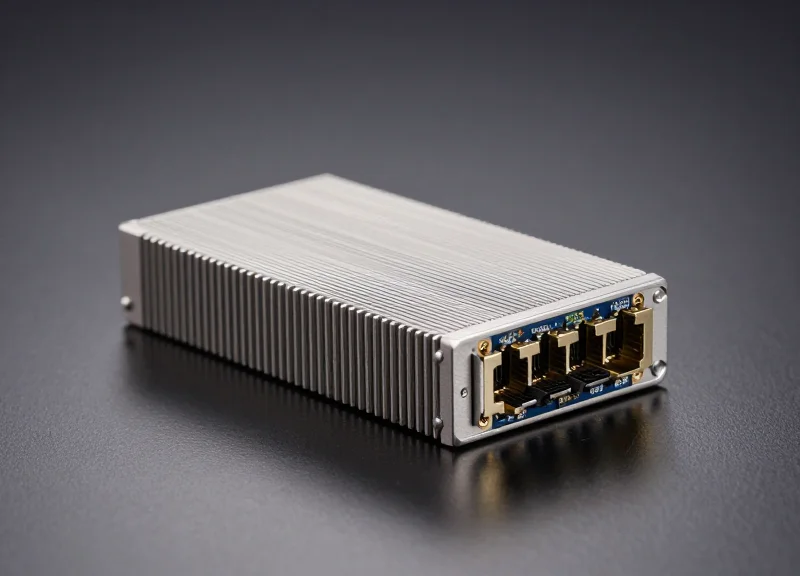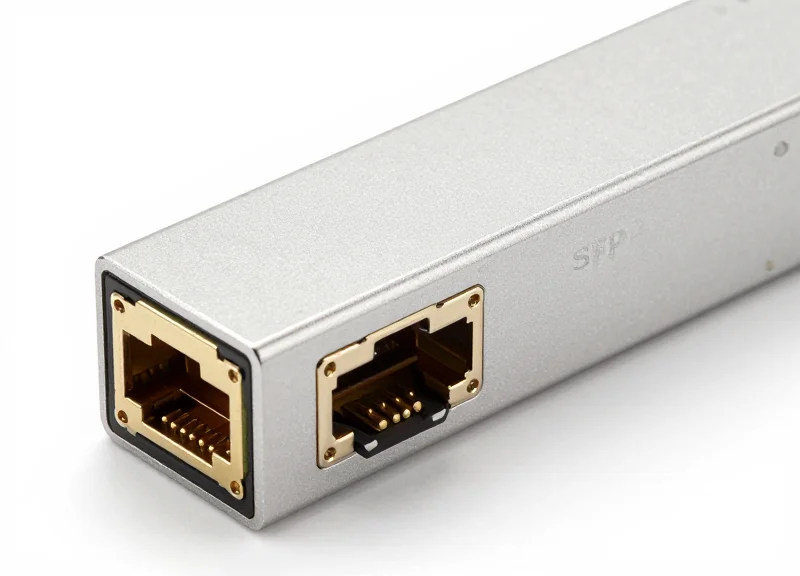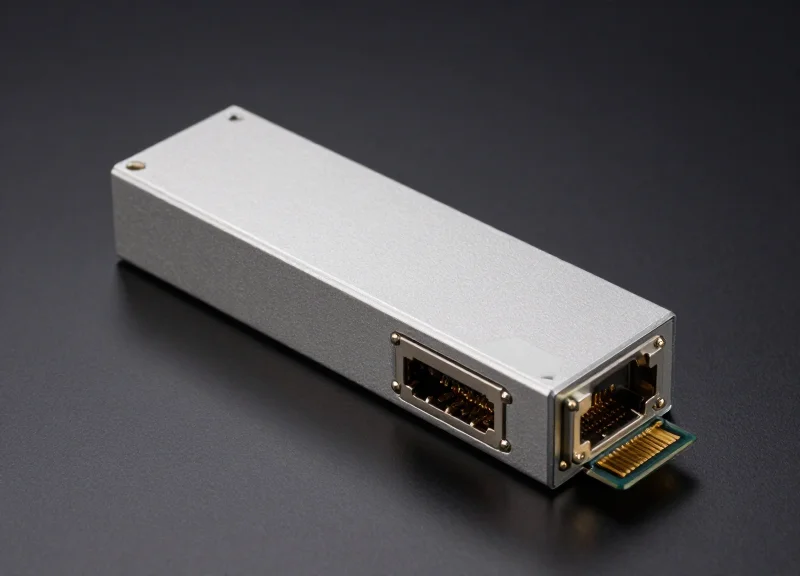
As data centers scale, choosing between 10G SFP+ SR/LR and alternatives like DAC or 10GBASE-T isn't just about speed—it's about balancing nanosecond latency, milliwatt power savings, and total cost of ownership. This guide breaks down the engineering trade-offs to help you build a future-proof network.
The 10G SFP+ Standard: Understanding SR and LR Optics
The 10G SFP+ Standard: Understanding SR and LR Optics
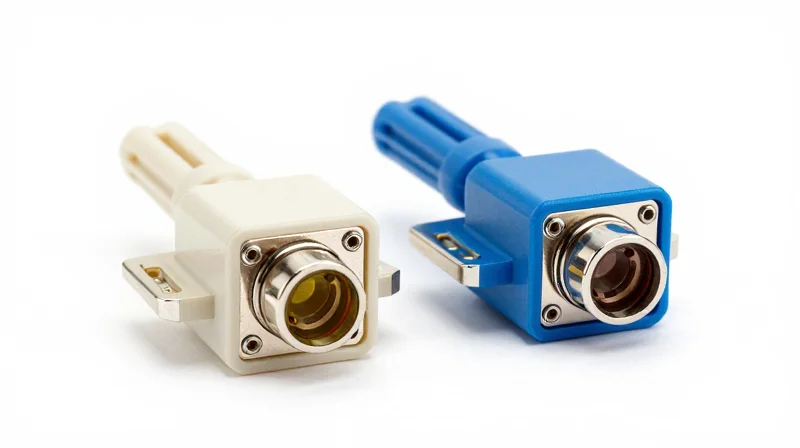
The 10G SFP+ standard serves as the backbone of high-speed enterprise networking, where SR (Short Range) and LR (Long Range) optics provide the specialized physical layers required for diverse distance requirements. While both modules utilize the same Small Form-factor Pluggable Plus footprint, they differ fundamentally in their laser technology and optical media compatibility, with SR designed for cost-effective multi-mode fiber runs and LR engineered for high-performance single-mode fiber infrastructure.
Technical Specifications and Medium Compatibility
10GBASE-SR modules operate at a nominal wavelength of 850nm, utilizing Vertical-Cavity Surface-Emitting Lasers (VCSEL) to transmit data over multi-mode fiber (MMF). These optics are the standard choice for data center top-of-rack deployments, reaching up to 300 meters on OM3 or 400 meters on OM4 cabling. Conversely, 10GBASE-LR modules employ a 1310nm Distributed Feedback (DFB) laser, which offers higher precision for single-mode fiber (SMF) applications. This allows LR optics to maintain signal integrity over distances up to 10 kilometers, making them indispensable for campus backbones and metropolitan area networks.
| Specification | 10GBASE-SR (Short Range) | 10GBASE-LR (Long Range) |
|---|---|---|
| Wavelength | 850 nm | 1310 nm |
| Fiber Media | Multi-mode (MMF) | Single-mode (SMF) |
| Max Distance | 300m (OM3) / 400m (OM4) | 10 km (6.2 miles) |
| Laser Type | VCSEL | DFB |
| Standard Connector | LC Duplex | LC Duplex |
Common Deployment Questions
- Can I connect an SR transceiver to an LR transceiver?
No. SR and LR optics operate on different wavelengths (850nm vs 1310nm) and different fiber types. Attempting to link them directly will result in a total link failure as the receivers cannot detect the mismatched light frequencies. - Which is more cost-effective for a standard server rack?
SFP+ SR is significantly more cost-effective for short distances within a rack or between adjacent racks. This is due to the lower manufacturing cost of VCSEL lasers and the historical cost benefits of multi-mode fiber in high-density environments. - Does 10GBASE-LR require an attenuator for shorter distances?
Generally, 10GBASE-LR optics do not require an attenuator for distances above a few meters because their transmit power is typically within the receiver's dynamic range. However, always check the specific vendor's 'Receiver Overload' threshold to prevent hardware damage during back-to-back testing.
Exploring the Alternatives: DAC, AOC, and 10GBASE-T
Exploring the Alternatives: DAC, AOC, and 10GBASE-T
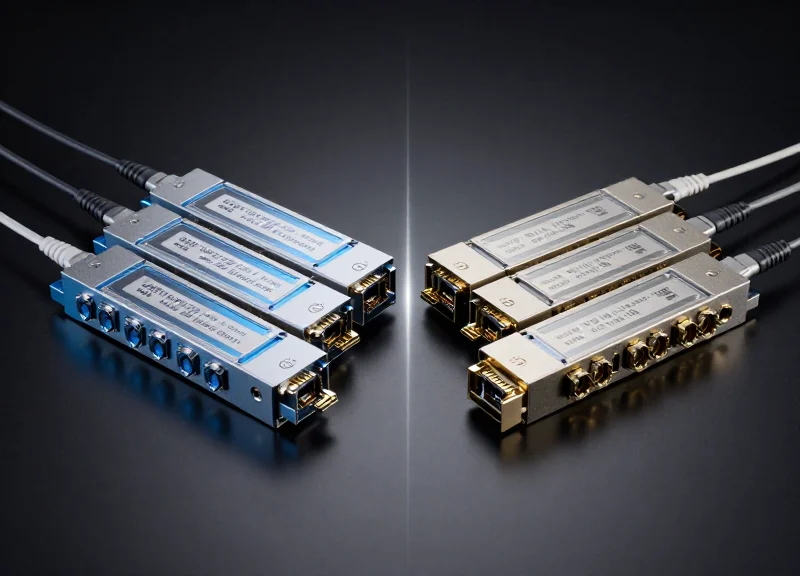
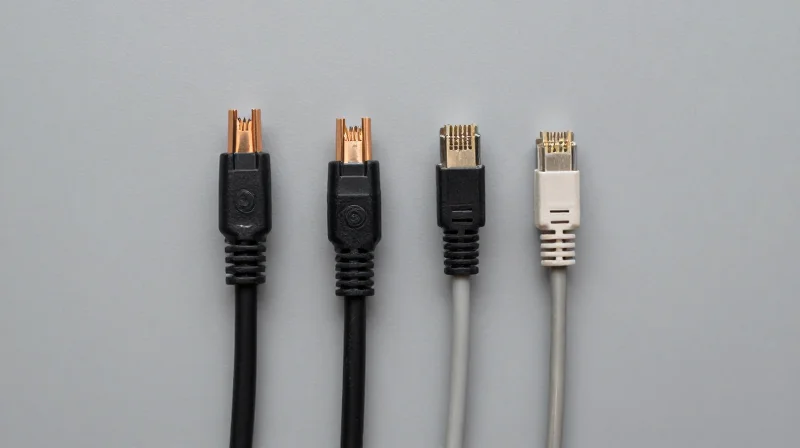
While SFP+ SR and LR optics provide the backbone for high-performance fiber networking, they are not always the most efficient choice for short-range interconnections or legacy infrastructure. Direct Attach Copper (DAC), Active Optical Cables (AOC), and 10GBASE-T RJ45 modules offer specialized physical layer solutions that prioritize lower cost, reduced power consumption, or compatibility with existing twisted-pair copper cabling. Understanding these alternatives is essential for optimizing Top-of-Rack (ToR) switching and data center density.
DAC and AOC: Fixed Assembly Solutions
Direct Attach Copper (DAC) cables are twinax copper assemblies that terminate directly into SFP+ housings. Because they do not require lasers, they offer the lowest possible latency and power consumption (often less than 0.1W). However, their reach is limited to approximately 7 meters, making them ideal for intra-rack connections. Active Optical Cables (AOC) replace the copper with fiber but maintain the fixed-assembly design. AOCs are lighter, more flexible, and support reaches up to 100 meters, filling the gap between DACs and discrete SR optics without the need for separate patch cables and cleaning tools.
10GBASE-T: Leveraging Existing Copper
The 10GBASE-T SFP+ transceiver allows 10GbE speeds over standard Cat6a or Cat7 RJ45 cabling. This is the go-to solution for organizations with established copper-based infrastructures. While highly convenient, 10GBASE-T modules are the most power-intensive SFP+ variants, typically consuming 2.5W to 3W per port. This higher power draw translates to significant heat generation, which can limit the number of modules that can be safely populated in a high-density switch.
| Feature | DAC (Passive) | AOC | 10GBASE-T (RJ45) |
|---|---|---|---|
| Max Distance | 7 Meters | Up to 100 Meters | 30 - 80 Meters |
| Power Consumption | < 0.15W | 0.6W - 1.0W | 2.0W - 3.0W |
| Latency | Ultra-low (nanoseconds) | Low (microseconds) | Higher (processing overhead) |
| Primary Use Case | Intra-rack (ToR) | Inter-rack/End-of-Row | Legacy Copper/Patching |
Common Implementation Questions
- Can I use DAC and SFP+ SR optics in the same switch?
Yes. SFP+ ports are designed to be media-flexible; as long as the switch firmware supports the specific module or cable, you can mix copper and fiber interconnections on the same line card. - Why would I choose AOC over standard SR optics?
AOCs are generally cheaper than purchasing two SR transceivers and a fiber patch cable. They also eliminate the risk of dust contamination in the optical ports, as the connectors are factory-sealed. - Is 10GBASE-T compatible with Cat5e?
While it may link at very short distances, Cat5e is not rated for 10Gbps. Cat6a is the recommended minimum for reliable 10GBASE-T performance up to the full rated distance.
Latency Benchmarks: The Nanosecond Race

In the world of high-speed networking, latency is often measured in the nanosecond (ns) range, where the choice of physical medium—fiber, copper, or twisted pair—directly impacts application performance. SFP+ SR/LR transceivers and Direct Attach Copper (DAC) cables provide the lowest possible latency by minimizing signal processing requirements, whereas 10GBASE-T technology introduces a delay nearly 2.5 to 3 microseconds higher due to the complex digital signal processing (DSP) needed to overcome electromagnetic interference.
The Anatomy of Propagation Delay
Latency at the physical layer is composed of two primary factors: the speed of light through the medium and the serialization/deserialization (SerDes) process. While light travels through fiber at approximately 67% the speed of light in a vacuum, the real bottleneck occurs at the transceiver level. 10GBASE-T requires sophisticated Forward Error Correction (FEC) and Line Coding, which consume significantly more time than the simpler modulation used in SFP+ optics.
| Technology | Typical Latency (per link) | Processing Overhead | Best Use Case |
|---|---|---|---|
| SFP+ DAC | < 0.1 microseconds | Minimal | ToR Switching/HFT |
| SFP+ SR/LR | ~ 0.1 microseconds | Low | Data Center Backbone |
| SFP+ AOC | ~ 0.1 microseconds | Low | High-density Racks |
| 10GBASE-T | 2.0 - 4.0 microseconds | High (DSP/FEC) | General Enterprise |
Why 10GBASE-T Struggles in the Nanosecond Race
The primary reason 10GBASE-T is avoided in High-Frequency Trading (HFT) and High-Performance Computing (HPC) is its reliance on complex Digital Signal Processing. Because Category 6a/7 cables are prone to crosstalk and attenuation at 10Gbps speeds, the silicon inside a 10GBASE-T port must perform intensive error correction to maintain signal integrity. This 'computational tax' results in a latency floor that is mathematically impossible to reduce to the levels of SFP+ optics, which treat the signal more transparently.
The Impact of Cumulative Latency
While a difference of 2 microseconds might seem negligible in standard office environments, it is catastrophic in multi-hop topologies. In a leaf-spine architecture with three or four hops, 10GBASE-T can add nearly 10-15 microseconds of total round-trip delay. In contrast, an all-optical or DAC-based path maintains a nearly flat latency profile, ensuring that time-sensitive data packets reach their destination with deterministic timing.
- Does the length of the fiber cable significantly increase latency?
For every meter of fiber, latency increases by approximately 5 nanoseconds. For standard data center distances under 100 meters, this is negligible compared to the transceiver processing time. - Is SFP+ SR faster than LR in terms of latency?
No, the latency between SR and LR is virtually identical at the transceiver level; the primary difference is the wavelength and the fiber type used for distance. - Can 10GBASE-T latency be improved with better cabling?
While Cat8 can improve signal-to-noise ratios, the inherent DSP requirements of the 10GBASE-T standard still impose a higher latency floor than SFP+ alternatives.
Power Efficiency: Managing the Thermal Footprint
Selecting the right 10G interface is as much a thermal management decision as it is a connectivity one, with power consumption per port ranging from a negligible 0.1W to a significant 2.5W. While SFP+ SR/LR optics and DAC cables maintain a lean energy profile, 10GBASE-T copper transceivers consume significantly more power to push signals over twisted-pair wiring, resulting in higher heat dissipation that taxes cooling infrastructure and increases operational expenditure (OPEX).
Power Consumption Metrics by Interface
| Interface Type | Typical Power (W) | Max Power (W) | Thermal Output |
|---|---|---|---|
| Direct Attach Copper (DAC) | 0.1W | 0.15W | Negligible |
| SFP+ SR/LR Optics | 0.6W | 1.0W | Low |
| Active Optical Cable (AOC) | 0.6W | 0.8W | Low |
| 10GBASE-T (RJ45) | 2.0W | 2.5W | High |
The Multiplier Effect: Electricity and Cooling OPEX
The true cost of a power-hungry module is effectively doubled when accounting for the electricity required to remove the heat it generates. In high-density rack environments, deploying 10GBASE-T can lead to localized 'hot spots,' necessitating increased fan speeds and higher output from Computer Room Air Conditioning (CRAC) units. By choosing SFP+ SR/LR or DACs, data center operators can achieve up to 90% power savings per port compared to 10GBASE-T, which directly improves Power Usage Effectiveness (PUE) scores and reduces the total cost of ownership (TCO) over the hardware lifecycle.
Thermal Management and Hardware Longevity
Beyond electricity costs, heat is the primary enemy of networking hardware. SFP+ modules operate at much lower temperatures, which reduces the thermal stress on the switch's internal components. Excessive heat from high-wattage modules like 10GBASE-T transceivers can lead to premature component failure or frequency throttling, potentially compromising network stability during peak loads.
- Why does 10GBASE-T consume so much more power?
The PHY (Physical Layer) chip in 10GBASE-T modules requires intensive Digital Signal Processing (DSP) to manage complex modulation and cancel crosstalk/EMI over copper wires, whereas optical transceivers use simpler laser drivers. - Does the thermal footprint affect port density?
Yes. Many switches have thermal limits that prevent using 10GBASE-T transceivers in every port simultaneously, while SFP+ SR/LR modules can typically be used in every available slot without overheating. - Are there environmental benefits to SFP+?
Lower power consumption directly reduces the carbon footprint of the facility, making SFP+ fiber or DAC solutions the preferred choice for green data center initiatives.
Distance and Media Constraints: Copper vs. Fiber
Physical Reach and Media Constraints: Copper vs. Fiber
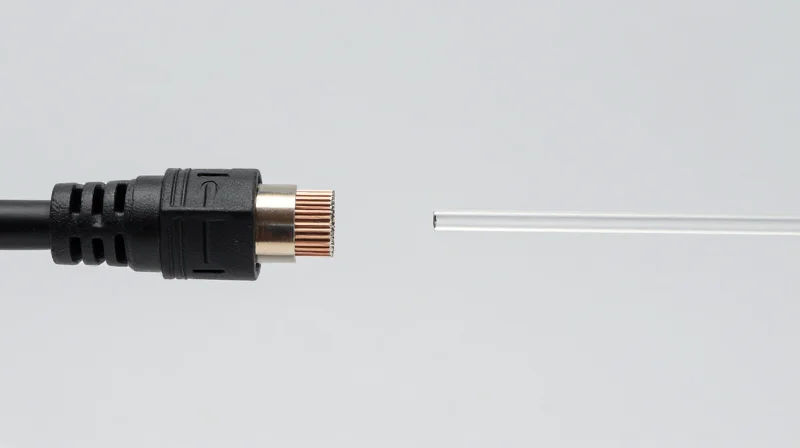
Distance is the primary arbiter of interconnect selection, forcing a strategic balance between the low-cost simplicity of copper and the expansive scalability of optical fiber. While copper-based solutions like Direct Attach Copper (DAC) cables are restricted to short-range, intra-rack connections due to rapid signal attenuation, optical transceivers leverage single-mode and multi-mode fiber to span distances that are physically impossible for electronic signals to traverse over twinaxial or twisted-pair cabling.
| Media Type | Maximum Distance | Cable Type | Primary Application |
|---|---|---|---|
| Passive DAC | 7 Meters | Twinaxial Copper | Intra-rack (ToR) Switch-to-Server |
| Active Optical Cable (AOC) | 30 - 100 Meters | Integrated Multi-mode Fiber | Inter-rack, End-of-Row (EoR) |
| 10GBASE-T (RJ45) | 30 - 100 Meters | Cat6a / Cat7 Copper | Structured Cabling / Legacy Migration |
| 10G SFP+ SR | 300 Meters | Multi-mode Fiber (OM3/OM4) | Intra-facility, Data Center Pods |
| 10G SFP+ LR | 10 Kilometers | Single-mode Fiber (OS2) | Campus Backbones, MANs |
The 7-Meter Threshold: Copper Constraints
The 7-meter limit for passive DACs is not an arbitrary number but a physical consequence of electrical signal degradation at high frequencies. At 10Gbps, copper twinax experiences significant insertion loss and electromagnetic interference (EMI) as length increases. This constraint effectively mandates a Top-of-Rack (ToR) architecture, where the switch is positioned within the same cabinet as the servers. Attempting to bridge multiple racks with passive copper often leads to high Bit Error Rates (BER) and link instability, necessitating a move to Active Optical Cables (AOCs) or 10GBASE-T for distances between 7 and 30 meters.
Scaling with Optics: SR and LR Reach
10G SFP+ SR (Short Reach) and LR (Long Reach) transceivers remove the geographical limitations of copper. Using Multi-mode Fiber (MMF), SR modules comfortably handle distances up to 300 meters, which is ideal for End-of-Row (EoR) or Middle-of-Row (MoR) configurations where switches are centralized. For larger campus environments or metropolitan area networks, LR optics utilize Single-mode Fiber (SMF) to reach 10km or more. This capability allows network architects to place switches based on cooling efficiency and power availability rather than physical proximity to the compute nodes.
Frequently Asked Questions
- Can I use 10G SFP+ SR for short 2-meter runs?
Yes, SR optics work perfectly for short runs, but they are significantly more expensive than DACs. While DACs cost roughly $15-20 per link, an SR setup (2 transceivers + fiber patch) can cost $40-60. - Why does 10GBASE-T reach further than DAC?
10GBASE-T uses complex digital signal processing (DSP) and sophisticated line coding to overcome the attenuation issues of copper, though this comes at the cost of significantly higher power consumption and latency. - What happens if I exceed the 7-meter limit on a passive DAC?
Exceeding the limit usually results in a failure to link up or intermittent 'flapping.' If the link does establish, you will likely experience a massive increase in packet drops due to signal noise.
Total Cost of Ownership (TCO) Analysis

Total Cost of Ownership (TCO) Analysis
Determining the true value of 10G connectivity requires looking beyond the initial purchase price of a transceiver or cable to account for operational expenses (OpEx) and the lifecycle of the underlying infrastructure. While 10GBASE-T (copper) often presents the lowest initial capital expenditure (CapEx) due to the ubiquity of RJ45 ports and cheap Cat6a cabling, SFP+ optical solutions consistently deliver a lower TCO in high-density environments through significant savings in power consumption, reduced thermal load, and a longer usable lifespan for fiber cabling.
Comparative 5-Year Cost Estimates
| Cost Factor (Per Port) | 10G SFP+ SR (Fiber) | 10G SFP+ DAC (Twinax) | 10GBASE-T (RJ45) |
|---|---|---|---|
| Average Hardware Cost | $20 - $40 (Transceiver) | $15 - $30 (Cable included) | $0 (Integrated on switch) |
| Cabling Cost | Moderate (OM3/OM4) | Low (Integrated) | Very Low (Cat6a) |
| Power Consumption (Annual) | ~0.7W (~$1.00) | ~0.1W (~$0.15) | ~2.5W (~$3.50) |
| Cooling Overhead | Low | Negligible | High |
| Estimated 5-Year TCO | Moderate | Lowest (Short range) | Highest (High density) |
The Impact of Power and Cooling
The most significant driver of OpEx in the data center is the 'power-to-cooling' ratio. A 10GBASE-T port consumes nearly three to five times the wattage of an SFP+ SR optical port. In a 48-port switch configuration, switching from copper to SFP+ can save over 100W per switch. When aggregated across multiple racks, these savings translate into thousands of dollars in reduced electricity bills and a smaller requirement for expensive precision cooling systems, which often carry their own maintenance costs.
Infrastructure Longevity and Future-Proofing
Fiber optic cabling (OM4 or OS2) represents a one-time investment that can typically support multiple generations of hardware upgrades, from 10G to 40G, 100G, and beyond. In contrast, copper cabling like Cat6a is often hit its performance ceiling at 10G over longer distances, requiring a complete 'rip-and-replace' when the network transitions to higher speeds. Therefore, while the optics themselves may be replaced, the fiber plant remains a long-term asset that lowers the TCO of future migrations.
TCO Frequently Asked Questions
- Is DAC always the cheapest option?
Yes, for short-range links (under 7 meters), Direct Attach Copper (DAC) provides the lowest TCO because it combines the cable and transceivers into one low-power unit with no additional hardware needed. - When does 10GBASE-T become more cost-effective?
It is most cost-effective in small-scale environments where the existing infrastructure is already copper-based and the total number of ports is low enough that the power and cooling costs do not outweigh the convenience of RJ45. - Does SFP+ LR have a higher TCO than SR?
Yes. SFP+ LR transceivers and Single-Mode Fiber (SMF) are more expensive than Multimode (SR) components, but they are the only viable TCO choice for spans exceeding 400 meters where copper and SR fail entirely.
Deployment Strategies: Top-of-Rack vs. End-of-Row
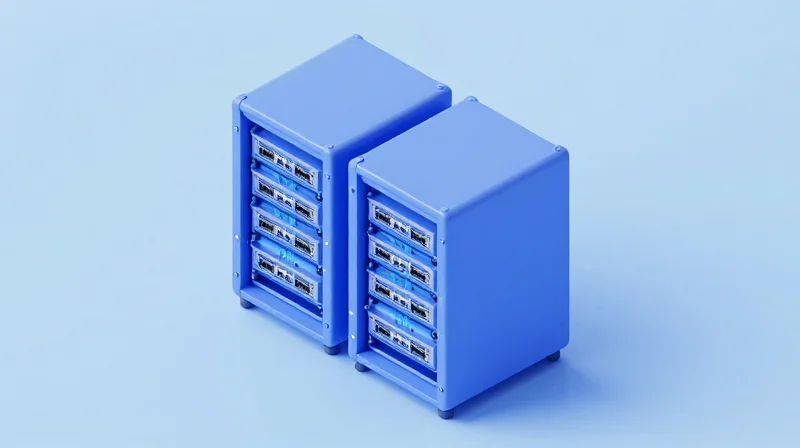
The optimal 10G deployment strategy depends on the physical distance between servers and switches, where Top-of-Rack (ToR) architectures favor the low latency and cost-effectiveness of SFP+ Direct Attach Copper (DAC) and Short Reach (SR) optics, while End-of-Row (EoR) designs rely on the extended reach of SR and Long Reach (LR) fiber to consolidate switching infrastructure. SFP+ solutions offer a significant density advantage over 10GBASE-T copper in both scenarios, allowing for more streamlined cable management and lower power consumption per port.
Top-of-Rack (ToR): Maximizing SFP+ Density
In a ToR configuration, each server rack contains its own dedicated switch. This approach is tailor-made for SFP+ DAC cables, which are limited to lengths of 7 to 10 meters but offer the lowest possible power consumption and latency. Because the cabling remains within the rack, the high density of SFP+ ports allows for 48 or more 10G connections in a single rack unit (RU). This minimizes the 'cable spaghetti' often associated with traditional RJ45 deployments and simplifies the upgrade path to 25G or 100G in the future.
End-of-Row (EoR): Leveraging SFP+ SR and LR Reach
EoR architecture centralizes switching at the end of a row of server racks, requiring longer cable runs that often exceed the 10-meter limit of passive DACs. Here, 10G SFP+ SR (up to 300m) and LR (up to 10km) modules become the primary interconnects. While this setup requires more fiber optic cabling, it reduces the total number of switches to manage. Using SFP+ LR in EoR setups is particularly advantageous when connecting across different zones in a large data center facility where electromagnetic interference (EMI) might degrade copper-based signals.
| Feature | Top-of-Rack (ToR) | End-of-Row (EoR) | ||
|---|---|---|---|---|
| Primary Media | SFP+ DAC / AOC | SFP+ SR / LR Fiber | ||
| Typical Reach | 1m - 7m | 30m - 300m+ | Lower (per cabinet) | Higher (centralized) |
| Cable Bulk | Minimal (Intra-rack) | Significant (Inter-rack) | ||
| Latency | Ultra-Low | Low (Standard Fiber) |
Strategic Deployment FAQ
- When should I choose ToR with SFP+ over 10GBASE-T?
Choose ToR with SFP+ when you need to minimize power consumption (0.1W per DAC vs 2.5W per RJ45) and maximize port density, as SFP+ switches generate significantly less heat. - Is SFP+ LR overkill for an EoR deployment?
Not necessarily. While SR is sufficient for most rows (up to 300m), LR is essential if your EoR switch connects to a core layer located in a different room or floor, or if you are utilizing single-mode fiber infrastructure already in place. - Can I mix DAC and SR in the same rack?
Yes. Many administrators use DACs for server-to-ToR switch connections and SFP+ SR optics for the ToR switch's uplink to the aggregation or core layer.
Reliability and Interoperability (EEAT Compliance)
Reliability and Interoperability: The Foundations of EEAT Compliance
The long-term performance of a 10G network is less about the theoretical speed of the SFP+ modules and more about their ability to maintain stable links within a heterogeneous hardware environment. Achieving high reliability requires strict adherence to Multi-Source Agreements (MSA), which standardize mechanical and electrical interfaces. Without these standards, the risk of intermittent signal loss, packet drops, or complete hardware incompatibility increases, particularly when mixing transceivers like 10G SR or LR with switches from different OEMs. Trustworthiness in networking—a core pillar of EEAT—is built on the predictability of these interconnects under varying thermal and load conditions.
MSA Compliance vs. Vendor Locking
Many Tier-1 hardware vendors implement 'vendor lock-in' by programming their switches to reject any transceiver that does not contain a specific vendor-signed EEPROM code. However, MSA-compliant third-party modules have reached a level of maturity where they provide identical performance metrics to OEM originals. By utilizing modules that are programmed and tested for specific host environments, administrators can avoid the 'unsupported transceiver' errors that often plague multi-vendor data centers.
| Metric | MSA-Compliant Third-Party | OEM Original (Cisco, Juniper, etc.) |
|---|---|---|
| Interoperability | High (Multi-vendor compatible) | Restricted (Vendor-specific) |
| Failure Rate (MTBF) | Typically >1,000,000 hours | Typically >1,000,000 hours |
| Cost Efficiency | Excellent (70-90% lower cost) | Low (High brand premium) |
| Warranty Impact | None (Protected by Law) | Standard |
Diagnostic Monitoring and Proactive Maintenance
A critical component of reliability is Digital Optical Monitoring (DOM) or Digital Diagnostics Monitoring (DDM). High-quality 10G SFP+ SR and LR modules provide real-time data on temperature, supply voltage, laser bias current, and optical power. This telemetry allows network engineers to predict failures before they occur. For instance, a gradual decline in the 'Receive Power' on a 10G LR link often indicates a degrading fiber patch or a dirty connector, rather than an inherent failure of the transceiver itself.
- Does using non-OEM modules void my switch warranty?
No. In the United States, the Magnuson-Moss Warranty Act prohibits manufacturers from voiding warranties simply because a third-party component was used, unless that component specifically caused the damage. - How do SR and LR modules handle thermal stress compared to DACs?
Optical transceivers (SR/LR) generate more heat than passive DACs because they require active lasers. Reliability is ensured through heat sinks and internal thermal throttling, whereas DACs are inherently more robust in high-heat environments due to their passive nature. - What is the most common cause of interoperability failure?
Incorrect EEPROM coding is the primary cause. Even if the hardware specs match, if the module's internal code doesn't match the expected vendor ID of the switch, the port may remain in a 'disabled' or 'err-disabled' state.
Selecting the right 10G interconnect requires a holistic view of your network's physical and financial constraints. Whether you prioritize the ultra-low latency of SR/LR optics or the cost-effectiveness of DACs for short runs, understanding these variables is key to a robust infrastructure. Contact our technical team today for a customized network audit and hardware recommendation.