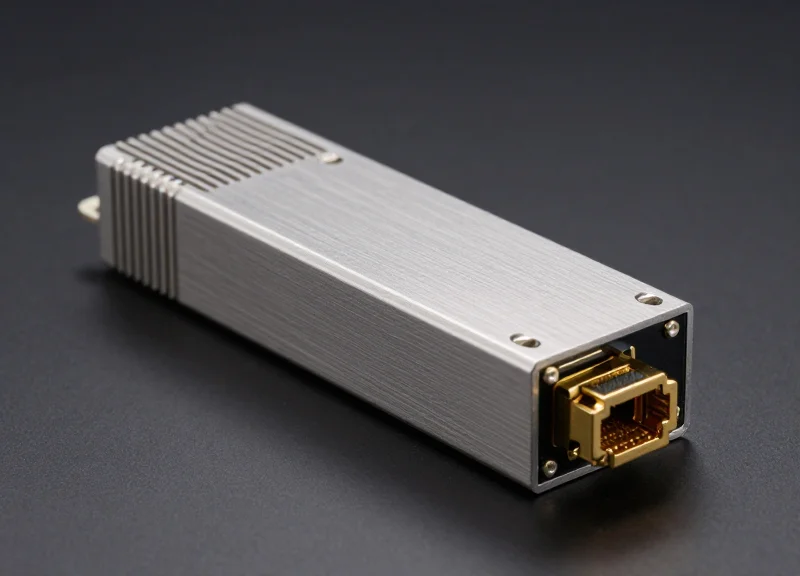
In the rapidly evolving landscape of data center networking, the choice between MSA-compliant components and proprietary alternatives defines more than just compatibility—it dictates your operational efficiency and bottom line. This guide explores the technical and economic trade-offs of MSA compliance.
Defining MSA: The Foundation of Open Networking
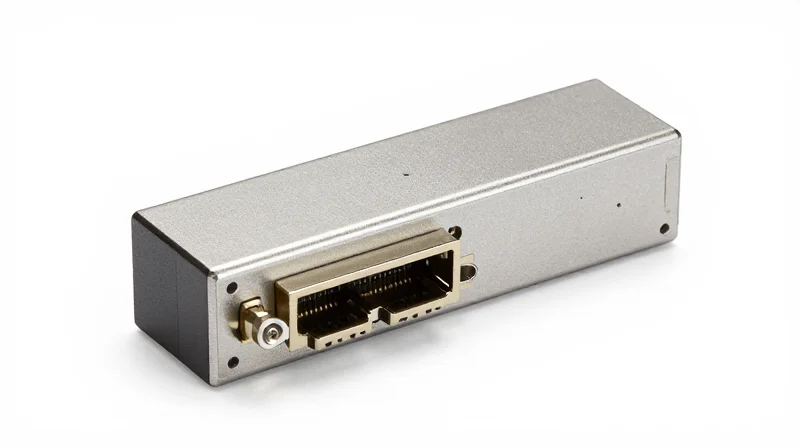
Multi-Source Agreements (MSAs) are the collaborative industry frameworks that define the mechanical, electrical, and thermal specifications for optical transceivers and cabling. These agreements act as the blueprint for open networking, ensuring that components from different manufacturers are physically and electronically compatible with host equipment from any vendor. By establishing these universal benchmarks, MSAs prevent proprietary lock-in, foster a competitive marketplace, and provide network architects with the flexibility to source high-performance hardware from a diverse ecosystem of suppliers.
The Strategic Importance of MSA Standards
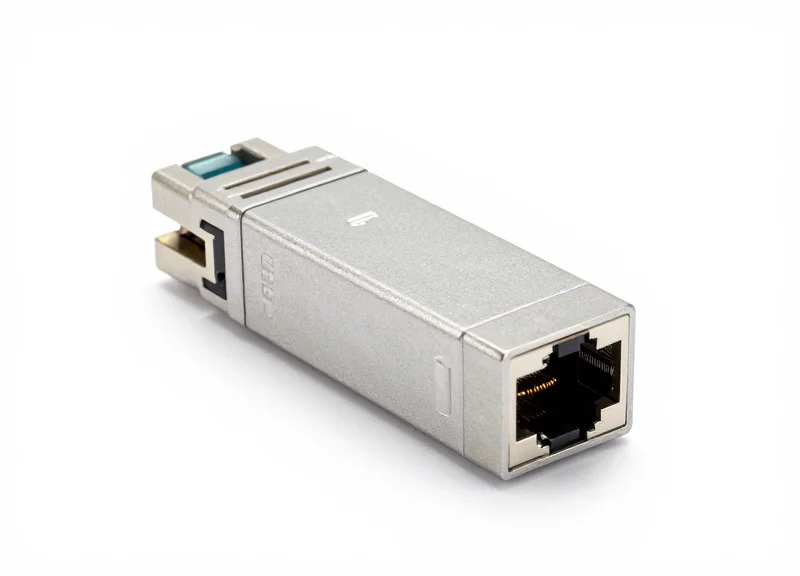
While organizations like the IEEE focus on the logic and protocol layers of networking (such as Ethernet or InfiniBand), MSAs focus on the physical implementation of the hardware. Without these agreements, every network equipment manufacturer would require a unique pluggable module, leading to fragmented supply chains and significantly higher capital expenditures. MSA compliance ensures that an SFP+ or QSFP28 module will fit into the cage of any compliant switch, regardless of the brand on the faceplate.
| Feature | MSA-Compliant Hardware | Proprietary Alternatives |
|---|---|---|
| Interoperability | Universal; works across different host brands | Restricted to specific vendor ecosystems |
| Procurement | Multi-vendor sourcing; highly resilient supply chain | Single-source dependency; higher risk of delays |
| Cost Efficiency | Driven by market competition | Determined by OEM-specific pricing models |
| Innovation Cycle | Rapid, collaborative development | Limited by individual vendor R&D pace |
Commonly Referenced MSA Specifications
- What is the SFP/SFP+ MSA?
The standard defining the 1G and 10G Small Form-factor Pluggable modules, covering dimensions, connector types, and electrical pinouts. - How does the QSFP MSA affect high-speed links?
It defines the 'Quad' form factor used for 40G, 100G, and 400G applications, allowing for higher density and increased bandwidth in data center environments. - What is SFF-8472?
An agreement that specifies the management interface for optical transceivers, enabling Digital Diagnostic Monitoring (DDM) for real-time performance tracking.
The Role of Host-Specific Firmware
A common point of confusion is the distinction between MSA physical compliance and software compatibility. While an MSA ensures a module will physically fit and electrically communicate with a switch, many Original Equipment Manufacturers (OEMs) use software 'locks' to verify vendor-specific signatures. Understanding MSA compliance is the first step in navigating the performance and cost trade-offs between using branded optics versus third-party alternatives that utilize the same MSA-standardized hardware.
The Competitive Landscape: MSA vs. Proprietary Alternatives
The Strategic Choice: Standardized vs. Closed Ecosystems
The networking hardware market is defined by a fundamental tension between the collaborative MSA framework and the closed, proprietary models of major Original Equipment Manufacturers (OEMs). Choosing between them is a strategic trade-off: proprietary solutions offer the comfort of a single-vendor support umbrella at a significant premium, while MSA-compliant alternatives provide the economic agility and supply chain diversity necessary for scaling modern data centers.
Decoding the Proprietary Lock-in Strategy
OEMs often maintain market share through 'vendor locking,' a practice achieved via proprietary firmware coding. When a transceiver is inserted into a switch, the system software checks for a specific vendor ID or cryptographic signature. If the hardware is not recognized as 'official,' the port may be administratively disabled or trigger a 'non-supported' warning. This strategy is less about technical superiority and more about protecting high-margin hardware sales by creating artificial barriers to entry for third-party competitors.
| Feature | MSA Standard Compliance | Proprietary OEM Alternatives |
|---|---|---|
| Interoperability | High: Works across all MSA-compliant brands. | Low: Restricted to specific vendor ecosystems. |
| Price Point | Market-driven: 50% to 90% lower than OEM cost. | Premium: Includes 'brand tax' and R&D overhead. |
| Supply Chain | Diverse: Multiple sources for the same specification. | Restrictive: Single source via the OEM distributor. |
| Software Support | Requires compatible coding for vendor recognition. | Native: Guaranteed 'plug-and-play' by the vendor. |
Performance Parity vs. Hardware Reality
A common industry myth is that proprietary hardware offers superior technical performance. In reality, because MSA standards dictate the physical, electrical, and thermal interfaces (such as for QSFP28 or SFP+), the fundamental performance metrics—latency, power consumption, and error rates—are nearly identical. In many cases, the proprietary transceiver and the MSA-compliant third-party unit are produced in the same Tier-1 fabrication facilities using the same optical engines from suppliers like Broadcom or Lumentum.
Frequently Asked Questions
- Does using MSA-compliant hardware void my switch warranty?
No. In the United States, the Magnuson-Moss Warranty Act (and similar laws globally) prohibits manufacturers from voiding warranties due to the use of third-party components, unless the manufacturer can prove the component caused the specific failure. - Is proprietary hardware more reliable than MSA alternatives?
Not inherently. Reliability is determined by the quality of the internal components and the manufacturing process. Many high-quality MSA-compliant vendors offer Mean Time Between Failures (MTBF) ratings that match or exceed those of OEM-branded gear. - Why is the price difference between MSA and OEM so extreme?
OEMs use hardware margins to subsidize software development and corporate overhead. MSA-compliant vendors operate on a more efficient commodity model, focusing on volume and passing those savings to the end user.
Latency Benchmarks: Impact on High-Frequency Performance

Latency benchmarks reveal that while MSA-compliant transceivers offer predictable and reliable performance for 95% of enterprise applications, proprietary alternatives often outperform them in ultra-low-latency niches by optimizing or bypassing specific signal processing layers like Forward Error Correction (FEC). The primary differentiator lies in the electronic processing delay within the module's Digital Signal Processor (DSP) or microcontroller, where proprietary silicon can shave off critical nanoseconds compared to standard-compliant multi-vendor chips.
Deconstructing Latency: Propagation vs. Processing
To understand the impact of MSA compliance, it is essential to distinguish between physical propagation delay—which is constant based on the speed of light in fiber—and electronic latency. MSA standards focus on interoperability, ensuring that a module from Vendor A works in a switch from Vendor B. This requirement often necessitates the use of standard clock recovery and error correction algorithms. In contrast, proprietary 'ultra-low-latency' modules may use custom ASICs that prioritize speed over the broad compatibility or error-resilience defined by MSA guidelines.
| Feature/Metric | MSA Standard Transceiver | Proprietary Low-Latency Alternative |
|---|---|---|
| Average Latency (SFP28) | ~500 ns to 1.5 μs | < 100 ns |
| Signal Processing | Standard DSP / FEC Enabled | Optimized ASIC / FEC Bypass |
| Error Correction | Standardized (e.g., RS-FEC) | Proprietary or Disabled |
| Interoperability | Universal across MSA hosts | Often limited to specific OEM hardware |
The Forward Error Correction (FEC) Trade-off
A significant portion of latency in modern high-speed networks (25G and above) is introduced by Forward Error Correction (FEC). MSA standards for 100G and 400G often mandate RS-FEC to ensure link stability over varied distances. However, in High-Frequency Trading (HFT) environments where every nanosecond counts, proprietary alternatives allow for 'FEC-free' operation over short distances. This can reduce latency by over 100ns per hop, a marginal gain for standard IT but a competitive necessity for financial execution.
Benchmarking in High-Frequency Trading (HFT)
In HFT, the benchmark for success is the 'tick-to-trade' latency. While MSA compliance ensures that hardware is interchangeable—lowering procurement costs—it often introduces 'jitter' due to standard buffer management. Proprietary solutions often employ cut-through switching at the transceiver level and specialized firmware to minimize this variance, providing a more deterministic performance profile than their MSA-compliant counterparts.
- Does MSA compliance inherently increase latency?
No, but the requirements for universal compatibility and standard error correction usually prevent the extreme optimizations found in specialized proprietary hardware. - Can you use proprietary transceivers in MSA-compliant switches?
Often, yes, but you may lose certain management features or diagnostic monitoring (DOM) if the switch software does not recognize the proprietary vendor code. - Is the latency difference noticeable in standard enterprise apps?
For standard cloud computing, web hosting, or storage, the nanosecond difference between MSA and proprietary alternatives is negligible and rarely justifies the higher cost of proprietary hardware.
Power Consumption: Optimizing Energy Efficiency at Scale

Optimizing energy efficiency at scale requires a standardized approach to power envelopes, where MSA compliance ensures that optical modules operate within predictable thermal parameters to prevent chassis overheating and reduce overall cooling expenditures. By adhering to established power classes, MSA-compliant hardware provides a reliable benchmark for calculating the total cost of ownership (TCO) across heterogeneous network environments.
Power Classes and Electrical Constraints
The Multi-Source Agreement defines specific power classes for every form factor, ranging from legacy SFP+ to the latest 800G QSFP-DD and OSFP modules. These classes set maximum power consumption limits that a module must not exceed. For instance, a QSFP-DD module might be categorized under Power Class 1 through 8, with the highest class reaching up to 14W or more. Proprietary alternatives often push these boundaries to achieve longer reach or higher signal processing speeds, but doing so risks violating the thermal design power (TDP) of the host switch ports.
| Metric | MSA-Compliant Modules | Proprietary Alternatives |
|---|---|---|
| Power Budgeting | Strict adherence to defined classes | Variable; often exceeds standards |
| Interoperability | Universal port compatibility | Limited to vendor-specific hosts |
| Thermal Profile | Predictable and uniform | High variance; potential hot spots |
| Cooling Costs | Lower, predictable OpEx | Higher, requires specialized airflow |
Thermal Management and Operational Expenditure
In a high-density data center, thermal management is directly tied to the bottom line. Every watt of power consumed by an optical transceiver generates equivalent heat that must be removed by the facility's CRAC (Computer Room Air Conditioning) units. MSA standards ensure that the airflow impedance and thermal dissipation of the module are optimized for standard chassis designs. When proprietary modules ignore these constraints, they can create 'heat islands' within a switch, forcing fans to run at higher RPMs, which increases noise, vibration, and energy consumption across the entire rack.
- How does power consumption affect long-term reliability?
Excessive power draw leads to higher internal junction temperatures. This heat accelerates the aging of laser diodes and integrated circuits, significantly reducing the Mean Time Between Failures (MTBF). - Are proprietary modules more energy-efficient?
Rarely. While some proprietary solutions use custom silicon to reduce draw for specific tasks, they often require more power to maintain signal integrity over non-standard distances or through lower-quality cabling. - Why is power consistency important for rack density?
Predictable power draw allows engineers to maximize port density. If modules vary significantly in consumption, engineers must 'de-rate' the rack, leaving ports empty to avoid overtaxing the Power Distribution Units (PDUs).
Energy Efficiency Metrics for Modern Transceivers
When comparing MSA and proprietary options, the most critical metric is 'picojoules per bit' (pJ/bit). This measurement reveals the true efficiency of the signal processing and optical conversion. MSA-compliant vendors compete fiercely to lower this number while staying within the standardized power classes, driving innovation in low-power Digital Signal Processors (DSPs) and silicon photonics that benefit the entire industry.
Interoperability and the Myth of Vendor Lock-in

Interoperability and the Myth of Vendor Lock-in
Multi-Source Agreements (MSAs) serve as the essential 'common tongue' of the networking industry, establishing the physical, electrical, and logical specifications that allow transceivers from diverse manufacturers to function seamlessly across different host platforms. By adhering to these open standards, organizations can effectively dismantle the 'vendor lock-in' model—a strategy where OEMs use proprietary software handshakes or artificial hardware restrictions to force customers into a closed, high-cost ecosystem. True interoperability ensures that a network operator can integrate MSA-compliant modules into any standards-compliant switch or router without compromising on signal integrity or diagnostic visibility.
Deconstructing the Proprietary Performance Argument
The argument for proprietary optics often centers on 'guaranteed compatibility' and 'optimized performance.' However, for the vast majority of standard networking applications, MSA specifications like SFP28, QSFP-DD, and OSFP meet or exceed the performance metrics of OEM-branded equivalents. The perceived risk of using non-OEM modules is frequently a result of artificial software warnings—often referred to as 'vendor-checks'—rather than any physical or electrical deficiency in the MSA-compliant hardware itself. Modern third-party transceivers are often manufactured in the same facilities as OEM units, utilizing identical laser and chipset components while offering superior flexibility.
| Feature | MSA-Compliant Modules | Proprietary OEM Modules |
|---|---|---|
| Interchangeability | High (Mix-and-match across vendors) | Very Low (Locked to specific host) |
| Price Structure | Market-driven and competitive | High-margin premium pricing |
| Supply Chain Resilience | Multiple source availability | Single-vendor dependency |
| Standardization | Defined by industry-wide MSAs | Defined by internal vendor specs |
| Diagnostic Capability | Standardized DOM/DDM support | Vendor-specific telemetry extensions |
The Strategic Advantage of Multi-Vendor Environments
Adopting an MSA-compliant strategy provides significant leverage during procurement and long-term maintenance. In a multi-vendor environment, network architects are no longer beholden to a single supplier's lead times or price fluctuations. If a primary vendor experiences a supply chain disruption, an MSA-compliant infrastructure allows for the immediate substitution of equivalent modules from an alternative certified supplier. This flexibility is a critical pillar of infrastructure resilience, ensuring that capacity expansion and emergency repairs are never delayed by a single point of failure in the supply chain.
- Will using MSA-compliant modules void my switch warranty?
No. Under laws like the Magnuson-Moss Warranty Act in the US, manufacturers cannot legally void a hardware warranty simply for using third-party components, unless they can prove the component specifically caused the damage. - Do MSA-compliant modules support Digital Optical Monitoring (DOM)?
Yes. MSA standards include rigorous specifications for DDM/DOM, ensuring that real-time diagnostics like temperature, laser bias current, and optical power are available to the host system regardless of the module's brand. - Can I mix different transceiver brands on the same line card?
Absolutely. As long as the modules adhere to the same MSA standard (e.g., 100GBASE-LR4), they are designed to be electrically and optically compatible, allowing for a diverse mix of brands within a single chassis.
Total Cost of Ownership (TCO) Breakdown
Total Cost of Ownership (TCO) Breakdown
Determining the true value of network hardware requires looking beyond the sticker price to the Total Cost of Ownership (TCO), where MSA-compliant modules consistently outperform proprietary alternatives by reducing long-term OPEX and eliminating the 'vendor tax' associated with closed ecosystems. While proprietary solutions may offer specialized features, the long-term financial burden of restricted procurement and vendor lock-in often outweighs any niche performance gains.
CAPEX: Procurement and Scaling Economics
Capital Expenditure (CAPEX) for MSA-compliant optics is inherently lower due to a competitive, multi-vendor marketplace. By adhering to a universal standard, manufacturers compete on price, delivery speed, and build quality, which drives down the initial procurement cost for data center operators. In contrast, proprietary alternatives often command a premium of 50% to 300% because the hardware is tied to a single manufacturer's ecosystem.
| Financial Metric | MSA-Compliant Strategy | Proprietary Strategy |
|---|---|---|
| Initial Unit Cost | Low (Commoditized Pricing) | High (Premium Monopoly Pricing) |
| Sourcing Flexibility | High (Global Supply Chain) | Low (Single-Vendor Dependency) |
| Negotiation Leverage | Substantial (Price Wars) | Minimal (Locked-in Discounts) |
| Standardization ROI | High (Interchangeable Spares) | Low (Unique Spare Inventory) |
OPEX: Energy, Management, and Maintenance
Operational Expenditure (OPEX) is heavily influenced by power consumption and cooling requirements. MSA standards enforce strict thermal and electrical envelopes, ensuring that modules operate within a predictable range. Proprietary alternatives that push performance boundaries often do so at the cost of higher power draw, which compounds into significant utility and cooling expenses over a 5-year hardware lifecycle. Furthermore, MSA compliance simplifies network management by using standard I2C registers and EEPROM data maps, reducing the time required for software integration and troubleshooting.
Lifecycle Replacement and Obsolescence Costs
The hidden cost of proprietary systems often surfaces during the replacement cycle. If a proprietary vendor changes their form factor or software logic, the entire installed base may require a 'forklift upgrade.' In contrast, MSA compliance guarantees that new modules remain backward compatible with existing cages, extending the ROI of the initial infrastructure and allowing for incremental, modular upgrades rather than total system overhauls.
Cost Efficiency FAQ
- Does using MSA-compliant third-party optics void the switch warranty?
No. Under laws like the Magnuson-Moss Warranty Act, manufacturers cannot legally void a warranty simply for using third-party components, allowing for massive TCO savings on maintenance. - Are there hidden testing costs for MSA modules?
While some interoperability testing is required, the 60-80% savings on hardware procurement usually pays for the entire testing process within the first deployment phase. - How does MSA compliance affect spare parts inventory costs?
It significantly lowers costs because a single pool of MSA-compliant spares can be used across switches from multiple vendors, reducing the total volume of inventory required.
Reliability and EEAT: Quality Control in MSA Manufacturing

The Quality Benchmarks of MSA Compliance
MSA compliance is not merely a label but a commitment to standardized manufacturing excellence that matches or exceeds the reliability metrics of original equipment manufacturer (OEM) modules. By adhering to uniform design specifications, MSA-compliant vendors ensure that every transceiver undergoes specific electrical and optical testing, providing a predictable performance baseline that mitigates the risk of network outages in mission-critical environments.
Standardized Testing vs. Generic Alternatives
| Test Category | MSA Compliance Requirement | Non-Compliant Alternative Risk |
|---|---|---|
| Bit Error Rate (BER) | Strict adherence to < 10^-12 sensitivity | Intermittent packet loss and signal degradation |
| Thermal Stress | Extended cycling from -40°C to +85°C | Premature component failure under high loads |
| EMI/EMC Compliance | Class B FCC/CISPR standards | Cross-talk and interference with adjacent hardware |
| Serialization | Full traceability of optical components | Lack of accountability and component history |
EEAT: Establishing Trust Through Traceability
A critical aspect of Experience, Expertise, Authoritativeness, and Trustworthiness (EEAT) in optical networking is the ability to audit the supply chain. MSA-compliant manufacturers provide detailed documentation and testing logs for every unit produced. This transparency allows network engineers to verify the origin of lasers and Digital Signal Processors (DSPs), contrasting sharply with 'white-box' alternatives that may use recycled components or lack documented quality assurance (QA) histories, which can compromise the long-term integrity of the network fabric.
Reliability and Manufacturing FAQ
- Are MSA-compliant modules as reliable as OEM modules?
Yes. Most MSA-compliant modules use the same tier-one laser and chipset components as OEMs and undergo identical GR-468-CORE reliability testing for telecommunications equipment. - How does MSA compliance affect MTBF?
Standardized manufacturing processes lead to a higher Mean Time Between Failures (MTBF). MSA-compliant modules typically offer an MTBF exceeding 1,000,000 hours, significantly higher than budget alternatives. - Does using MSA modules void the warranty of my network switches?
No. Laws such as the Magnuson-Moss Warranty Act protect users from having their hardware warranties voided simply for using standards-compliant third-party peripherals.
Future-Proofing Infrastructure: Scalability and Support
MSA compliance is the primary safeguard for infrastructure longevity, offering a predictable upgrade path that allows network architects to transition across speed generations—such as moving from 400G to 800G and 1.6T—using standardized interfaces that support multi-vendor interoperability. This adherence ensures that hardware investments made today remain relevant as data demands evolve, providing a level of support and scalability that proprietary alternatives cannot match.
Standardized Upgrade Paths: From 400G to 800G and Beyond
The transition from 400G to 800G is facilitated by MSA-defined form factors like OSFP and QSFP-DD. Because these standards define not just the physical dimensions but also the electrical and thermal characteristics, operators can mix generations of hardware. For instance, many 800G ports are designed to be backward compatible with 400G modules, allowing for staggered upgrades that align with budget and performance requirements rather than being forced by proprietary hardware constraints.
| Feature | MSA-Compliant Strategy | Proprietary/Alternative Strategy |
|---|---|---|
| Interoperability | Seamless across multiple vendors | Limited to specific hardware ecosystems |
| Upgrade Complexity | Low; backward compatibility is standardized | High; may require total transceiver replacement |
| Supply Chain Resilience | High; multiple sourcing options available | Low; dependent on single-vendor production |
| Management Interface | Standardized (e.g., CMIS) | Vendor-specific; complex integration |
Ecosystem Longevity and Support Reliability
Proprietary alternatives often promise short-term performance gains or cost savings but frequently result in technical debt. When a vendor pivots or discontinues a proprietary line, the customer is left with orphaned hardware that lacks support or a clear upgrade path. MSA-compliant hardware, conversely, is supported by a global ecosystem of manufacturers and testing labs, ensuring that third-party support and component availability remain robust for the entire lifecycle of the data center equipment.
Scalability and Future-Proofing FAQ
- How do MSA standards simplify firmware management during upgrades?
MSA standards like CMIS (Common Management Interface Specification) provide a unified language for module diagnostics and control, ensuring that monitoring software works across different transceiver generations regardless of vendor. - Can I use MSA-compliant modules in an 800G switch from a different vendor?
Yes, that is the core purpose of MSA compliance; it guarantees that any compliant module will function in a compliant host port, assuming the host does not have restrictive vendor-lock firmware policies. - Why is thermal management critical for future-proofing?
As speeds increase to 800G and 1.6T, heat dissipation becomes vital. MSA standards define rigorous thermal envelopes to ensure that new, higher-speed modules do not overheat existing chassis designs during incremental upgrades.
Deciding between MSA-compliant components and proprietary alternatives is a strategic choice that impacts your network's agility and profitability. By prioritizing interoperability and TCO, organizations can build more resilient infrastructures. Contact our engineering team today for a custom performance audit and hardware optimization plan.