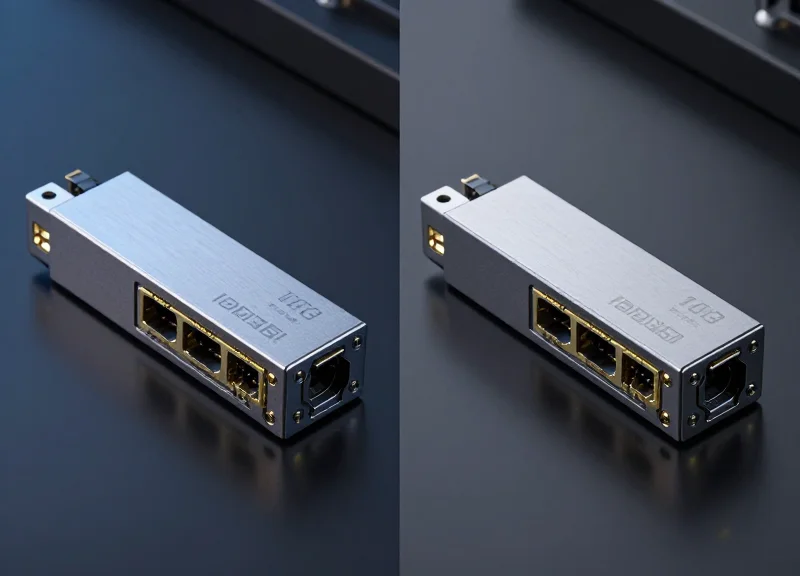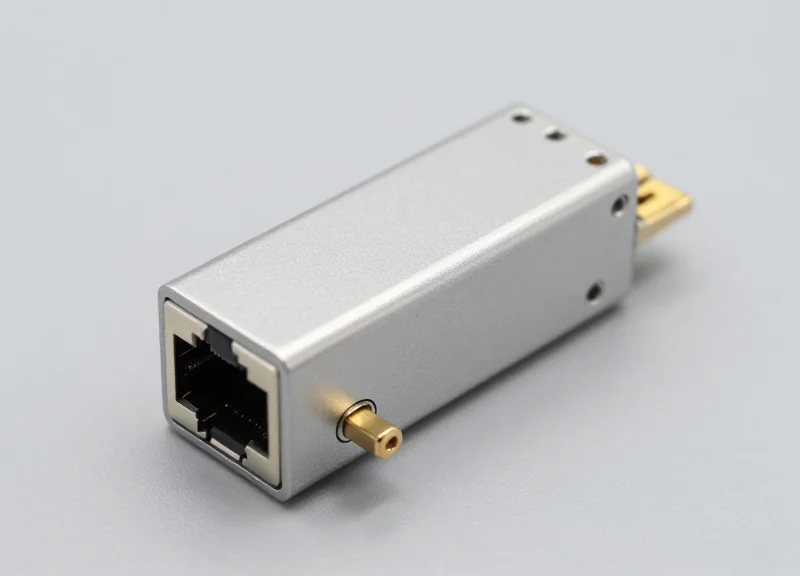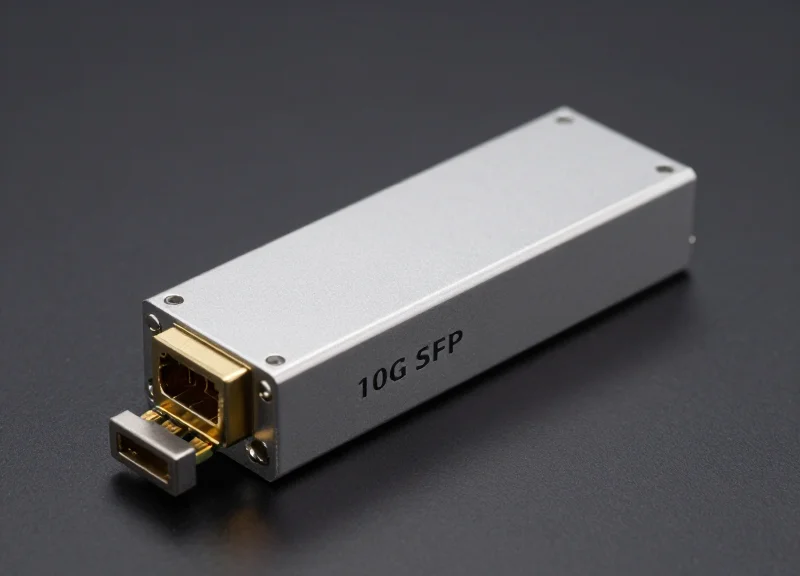
In the rapidly evolving landscape of telecommunications, maximizing fiber utilization is no longer a luxury—it is a necessity. The 10G SFP+ BIDI 20km transceiver stands at the forefront of this efficiency revolution, allowing network engineers to double their capacity without laying a single extra inch of glass. This guide dives deep into the hardware, physics, and economics of BiDi technology, providing an authoritative resource for data center architects and network professionals.
Understanding the Fundamentals of BiDi Technology
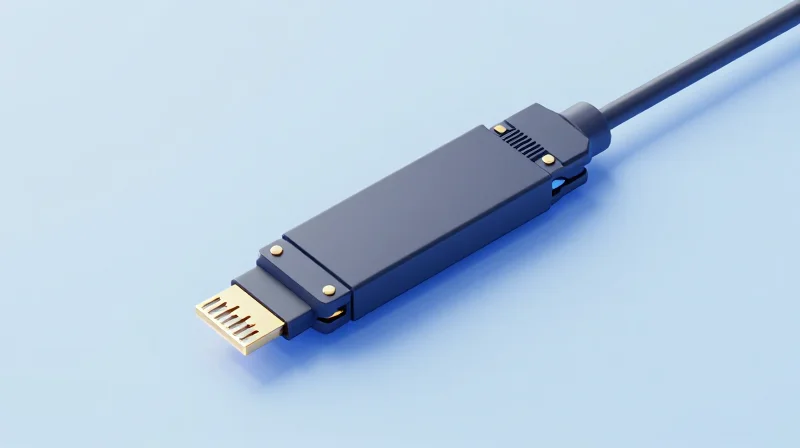
Bidirectional (BiDi) technology represents a paradigm shift in optical networking by allowing data to be transmitted and received simultaneously over a single strand of optical fiber. While traditional 10G SFP+ modules require two dedicated strands—one for transmitting (TX) and one for receiving (RX)—BiDi modules utilize integrated Wavelength Division Multiplexing (WDM) couplers. This component combines and separates data based on the light's wavelength, effectively doubling the capacity of existing fiber infrastructure and simplifying cable management in high-density environments.
The Mechanism of Single-Fiber Communication
The core of BiDi technology lies in the use of two different wavelengths to prevent signal interference. In a 10G SFP+ BiDi 20km setup, the transceivers are designed to operate in 'complementary pairs.' For example, if the upstream device (Site A) transmits at 1270nm and receives at 1330nm, the downstream device (Site B) must transmit at 1330nm and receive at 1270nm. This asymmetrical wavelength allocation ensures that the outgoing and incoming light signals do not collide while traveling through the same physical medium.
Comparison: Standard SFP+ vs. BiDi SFP+
| Feature | Standard 10G SFP+ | BiDi 10G SFP+ |
|---|---|---|
| Fiber Count | 2 Strands (Duplex) | 1 Strand (Simplex) |
| Wavelengths | Usually 1310nm or 850nm | Dual Wavelengths (e.g., 1270/1330nm) |
| Patch Cord Type | LC-LC Duplex | LC Simplex |
| Fiber Capacity | 1x Capacity | 2x Capacity (per strand) |
| Connectivity | Identical modules on both ends | Matched pairs (U-type and D-type) |
Strategic Advantages of BiDi Architecture
- Fiber Resource Optimization
BiDi technology allows network operators to reclaim 50% of their existing fiber plant. This is critical in urban environments or leased-fiber scenarios where the cost of laying or renting new fiber is prohibitive. - Reduced Infrastructure Costs
Fewer fiber strands translate directly to fewer patch panels, smaller cable trays, and reduced connector counts, lowering the overall Bill of Materials (BOM) for data center build-outs. - Simplified Deployment
With only one fiber strand to manage per 10G link, technical teams spend less time on cable routing and identifying TX/RX polarity errors during installation.
BiDi Technology FAQs
- Can I use two identical BiDi transceivers for a link?
No. BiDi transceivers must be used in matched pairs. If one side transmits at 1270nm, the other side must be configured to receive 1270nm and transmit at the complementary wavelength (1330nm). - Is BiDi compatible with standard 10G switches?
Yes. 10G SFP+ BiDi modules are designed to be MSA compliant, meaning they fit into any standard SFP+ port on common enterprise switches and routers.
The Science of Single-Fiber WDM

The Science of Single-Fiber WDM
At the core of the 10G SFP+ BiDi 20km transceiver is Wavelength Division Multiplexing (WDM), a technology that enables the simultaneous transmission and reception of optical signals over a single strand of fiber by utilizing different light frequencies. Unlike traditional dual-fiber optics that require separate physical paths for transmit (Tx) and receive (Rx) traffic, BiDi modules integrate a specialized WDM coupler to split or combine light based on specific wavelengths—typically 1270nm and 1330nm. This ensures that data streams do not collide despite sharing the same physical medium.
The 1270nm and 1330nm Wavelength Pair
For a 20km link distance at 10Gbps, the industry standard utilizes the 1270nm and 1330nm channels. These wavelengths are selected for their performance characteristics in single-mode fiber (SMF), offering a balance between signal attenuation and chromatic dispersion. In a typical deployment, the transceivers must be used in matched pairs: the 'Upstream' module transmits at 1270nm and receives at 1330nm, while its 'Downstream' counterpart transmits at 1330nm and receives at 1270nm. This complementary wavelength pairing is essential for establishing a functional bidirectional link.
| Feature | Standard 10G SFP+ (20km) | 10G SFP+ BiDi (20km) |
|---|---|---|
| Fiber Requirement | Dual Strand (Duplex) | Single Strand (Simplex) |
| Tx/Rx Wavelengths | Identical (e.g., 1310nm) | Asymmetric (1270nm vs 1330nm) |
| Key Component | Separate TOSA/ROSA | Integrated WDM Diplexer |
| Cost Efficiency | Higher cabling overhead | 50% reduction in fiber usage |
Mitigating Interference with Optical Diplexers
The primary engineering challenge of single-fiber communication is preventing the high-power outgoing laser signal from overwhelming the highly sensitive incoming receiver. 10G SFP+ BiDi 20km modules solve this through an internal optical diplexer. This component acts as a high-precision filter, reflecting the local transmitter's wavelength while allowing only the specific remote wavelength to pass through to the receiver diode. This spectral isolation is critical for maintaining a high signal-to-noise ratio (SNR) over long distances, effectively preventing 'crosstalk' that would otherwise lead to bit errors or total link failure.
- Why are 1270nm and 1330nm used specifically?
These wavelengths provide a 60nm separation, which is wide enough for cost-effective WDM filters to isolate signals without requiring complex cooling, while remaining within the optimal performance window of G.652 fiber. - Can I use two 1270nm/1330nm BiDi modules of the same model together?
No. You must use a complementary pair. If both modules transmit at 1270nm, they will interfere with each other and neither receiver will see its target 1330nm signal. - Does the 20km distance affect wavelength choice?
Yes. As distance increases, the power budget becomes tighter. The 1270/1330nm pair is optimized for lower attenuation in the O-band and E-band regions of the fiber spectrum compared to older BiDi standards.
Detailed Technical Specifications of 10G SFP+ BIDI 20km
The 10G SFP+ BIDI 20km transceiver is a precision-engineered optical module designed to bridge the gap between short-reach campus links and long-haul metro connections. It achieves its 20km rating through a rigorous optical power budget, utilizing high-performance Distributed Feedback (DFB) lasers and PIN-type photodetectors to ensure signal clarity over single-mode fiber (SMF) without the need for signal amplification.
Optical Components: DFB Lasers and PIN Receivers
At the heart of the 10G BIDI 20km module is the Distributed Feedback (DFB) laser. Unlike Fabry-Perot (FP) lasers used in shorter distances, DFB lasers incorporate a grating structure within the active region that forces the laser to operate at a single longitudinal mode. This is critical for 20km spans because it minimizes chromatic dispersion, which can otherwise smear high-speed 10Gbps pulses over distance. On the receiving end, a PIN (Positive-Intrinsic-Negative) photodiode is employed. While not as sensitive as an APD (Avalanche Photodiode), the PIN receiver provides a robust dynamic range and sufficient sensitivity to meet the -14.4 dBm requirements typical of 20km 10G links.
Link Power Budget and Performance Parameters
| Parameter | Typical Specification | Unit |
|---|---|---|
| Data Rate | 10.3125 | Gbps |
| Output Optical Power | -2 to +3 | dBm |
| Receiver Sensitivity | < -14.4 | dBm |
| Optical Power Budget | 12.4 | dB |
| Max Transmission Distance | 20 | km |
| Extinction Ratio | > 3.5 | dB |
MSA Compliance and Digital Monitoring
Universal interoperability is governed by the SFF-8431 Multi-Source Agreement (MSA), which defines the electrical interface and mechanical dimensions of the SFP+ form factor. Furthermore, these modules support Digital Diagnostic Monitoring (DDM) according to the SFF-8472 standard. DDM allows network administrators to monitor real-time metrics including transceiver temperature, laser bias current, transmitted optical power, received optical power, and supply voltage. This telemetry is essential for predictive maintenance and troubleshooting link degradation before a total failure occurs.
Technical FAQ for 20km BIDI Modules
- Does a 20km BIDI module require an attenuator for short distances?
Generally, no. With a maximum output power of +3 dBm and a receiver saturation point often around 0.5 to 1 dBm, most 10G 20km modules can be used in shorter links without damaging the receiver, though checking specific vendor saturation levels is recommended. - Why is the 1270/1330nm wavelength pair used?
These wavelengths are chosen because they offer a wide enough separation (60nm) to be easily isolated by simple BOSA (Bidirectional Optical Sub-Assembly) filters, ensuring low crosstalk and high signal-to-noise ratios. - Can these modules be used on OM3/OM4 multi-mode fiber?
No, BIDI 20km modules are designed specifically for OS2 Single-Mode Fiber. Using them on multi-mode fiber would result in extreme modal dispersion and negligible transmission distances.
Comparison: BiDi vs. Traditional Duplex SFP+
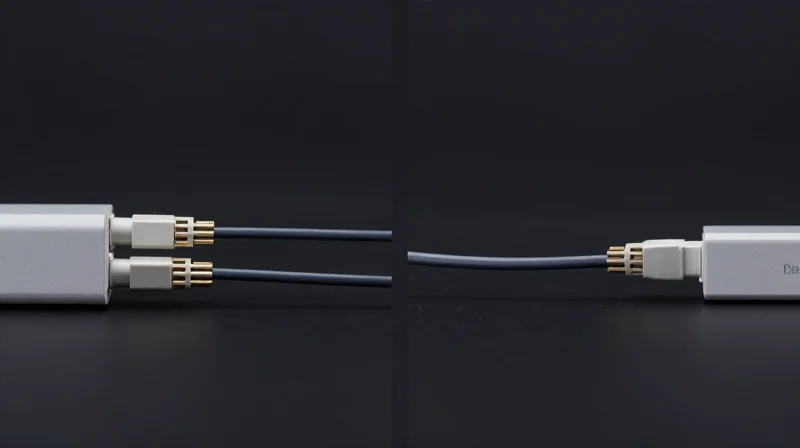
While traditional duplex SFP+ transceivers require two distinct fiber strands for bidirectional communication—one for transmission and one for reception—10G SFP+ BiDi 20km modules utilize Wavelength Division Multiplexing (WDM) to handle both streams over a single strand. This fundamental shift effectively doubles the capacity of existing fiber infrastructure without the need for additional cabling, making it the superior choice for environments where fiber availability is limited or costly to install.
Infrastructure Efficiency and Density
In a traditional duplex setup, every 10G link consumes two ports on a patch panel and two strands in the fiber trunk. For a data center or campus backbone, this creates a physical bottleneck as the number of links grows. BiDi SFP+ modules mitigate this by using a single LC port. This reduction in physical cabling leads to significantly lower congestion in cable trays, simplified cable management, and a 50% increase in the density of existing patch panels.
Comparative Analysis: BiDi vs. Dual-Fiber
| Feature | Traditional Duplex SFP+ (20km) | BiDi SFP+ (20km) |
|---|---|---|
| Fiber Count per Link | 2 Strands | 1 Strand |
| Relative Module Cost | Lower (Standard) | Higher (Includes WDM Filter) |
| Cabling Infrastructure Cost | High (Dual Cabling) | Low (Single Cabling) |
| Patch Panel Density | Standard | Double |
| Deployment Logic | Symmetrical (Identical P/N) | Asymmetrical (Matched Pairs) |
Financial Implications: CAPEX and OPEX
From a Capital Expenditure (CAPEX) perspective, a single BiDi module is typically more expensive than a standard duplex module because it requires specialized internal BOSA (Bidirectional Optical Sub-Assembly) components and WDM filters. However, when calculating the Total Cost of Ownership (TCO), BiDi often wins. By halving the number of fiber strands required, organizations save massively on fiber leasing costs, new fiber runs, and the labor associated with complex cable audits.
Operational Complexity and Scalability
Scalability is where BiDi optics provide the most long-term value. For service providers running fiber-to-the-curb (FTTC) or business-to-business links, using 10G BiDi 20km modules allows them to provide 10G services to twice as many customers using the same underground fiber assets. The only added complexity is inventory management: technicians must ensure they have matched pairs (e.g., a 1270nm-TX/1330nm-RX unit on one end and a 1330nm-TX/1270nm-RX unit on the other) to establish a link.
BiDi vs. Duplex Deployment FAQs
- Does BiDi require special fiber types?
No, it operates on standard G.652 single-mode fiber (SMF), the same medium used by traditional duplex 20km transceivers. - Is the 20km distance reached differently?
The distance rating remains consistent. However, the link budget must account for the specific insertion loss of the internal WDM filters, which is why BiDi modules often use high-quality DFB lasers. - Can I mix BiDi and Duplex modules on the same link?
No. BiDi modules must be used in matched pairs and cannot communicate with traditional dual-fiber transceivers because their internal optics are fundamentally different.
The Critical Role of Complementary Pairing

The Necessity of Asymmetric Transceiver Pairing
Unlike standard duplex optical systems, the 10G SFP+ BiDi 20km transceiver relies on Bi-Directional technology to send and receive data over a single fiber strand. This is only possible through a complementary pairing strategy where the transmission wavelength of one module matches the reception wavelength of the other. Because a single fiber is used for both directions of traffic, using two identical transceivers would lead to a collision of light frequencies or a failure to detect incoming data. Consequently, network engineers must deploy these in 'Upstream' (TX 1270nm / RX 1330nm) and 'Downstream' (TX 1330nm / RX 1270nm) pairs to complete the circuit.
Technical Specifications of the BiDi Pair
| Component | Side A (Upstream) | Side B (Downstream) |
|---|---|---|
| TX Wavelength | 1270nm | 1330nm |
| RX Wavelength | 1330nm | 1270nm |
| Fiber Type | Single-mode (OS2) | Single-mode (OS2) |
Identifying and Matching Your Modules
Properly identifying modules before installation is critical for 20km links, where troubleshooting physical layer issues can be time-consuming. Most 10G BiDi modules are labeled with their specific TX/RX wavelengths or designated with 'U' (Upstream) and 'D' (Downstream) suffixes. For example, a Cisco-compatible SFP-10G-BXD-I must always be paired with an SFP-10G-BXU-I. Additionally, color-coded bale latches—commonly blue for 1270nm and green for 1330nm—serve as a quick visual reference for technicians in the field.
Common Pairing Questions
- Can I use a 10km BiDi with a 20km BiDi?
It is not recommended. While they might use the same wavelengths, the power budgets and receiver sensitivities differ, which may lead to link instability or receiver saturation. - What happens if I reverse the pair?
If you install the Upstream module where the Downstream should be at both ends, the link will still work as long as they are complementary. The labels are functional designations relative to each other, not fixed geographic requirements. - Does the single-fiber patch cord need special orientation?
No. Since BiDi uses a single strand (Simplex LC), there is no 'polarity' to reverse in the fiber itself; the 'polarity' is managed by the wavelength selection of the SFP+ modules.
Cost-Benefit Analysis: Maximizing ROI in Fiber Infrastructure
Deploying 10G SFP+ BIDI 20km modules provides a superior Return on Investment (ROI) by halving the amount of physical fiber required to sustain high-speed data links over metropolitan distances. While the transceivers themselves utilize sophisticated Wavelength Division Multiplexing (WDM) to handle bidirectional traffic, the primary economic driver is the massive reduction in infrastructure overhead, including fiber leasing fees, cable management hardware, and the labor associated with complex fiber runs.
Direct Cost Comparison: BiDi vs. Standard Duplex
| Cost Factor | Traditional Duplex SFP+ (20km) | 10G SFP+ BiDi (20km) | Savings Potential |
|---|---|---|---|
| Fiber Strands Required | 2 Strands | 1 Strand | 50% Reduction |
| Patch Panel Utilization | 2 Ports per Link | 1 Port per Link | 100% Density Increase |
| Fiber Leasing (Monthly) | High (Per Strand Pricing) | Low (Single Strand) | Up to 50% Lower OpEx |
| Installation Complexity | High (Matching Pairs) | Moderate (Up/Down Pairs) | Simplified Cable Management |
Infrastructure Efficiency and Scalability
In urban environments where 'dark fiber' is a scarce and expensive commodity, the ability to operate a 10G link over a single strand is transformative. By utilizing BiDi technology, network operators can effectively double their existing fiber capacity without the disruptive and costly process of trenching new fiber optic cables. This is particularly critical for 20km spans where civil engineering costs often exceed the price of the active networking hardware by several orders of magnitude.
- Optimized Rack Space
Because BiDi modules require only one LC connector, high-density patch panels can support twice the number of connections in the same rack unit, deferring the need for additional data center footprint. - Reduced Cleaning and Testing
Maintenance teams spend 50% less time on connector cleaning and fiber characterization tests, as there is only one optical path to validate per link. - Inventory Management
While BiDi requires specific Tx/Rx pairs (e.g., 1270nm/1330nm), standardized pairing simplifies the procurement cycle compared to managing multiple types of coarse wavelength division multiplexing (CWDM) filters.
Investment Insights and ROI FAQ
- Is the higher unit price of BiDi modules justified?
Yes. Although a BiDi module may cost more than a standard duplex SFP+, the savings in fiber leasing and installation typically yield a break-even point within the first three months of service. - How does 20km BiDi affect long-term OpEx?
Long-term OpEx is reduced through lower power consumption per link-mile and significantly decreased recurring costs for fiber strand rentals in third-party environments. - Can BiDi help with disaster recovery?
Absolutely. By freeing up existing fiber strands, organizations can implement redundant paths or out-of-band management links using the same physical cable infrastructure.
Network Architecture: Best Use Cases for 20km Reach

Network Architecture: Best Use Cases for 20km Reach
The 10G SFP+ BIDI 20km transceiver is a cornerstone of modern metropolitan and campus networking, specifically engineered to solve the fiber exhaustion crisis. By utilizing Wavelength Division Multiplexing (WDM) to transmit and receive data over a single strand of single-mode fiber (SMF), these modules are ideally suited for environments where leasing additional fiber is prohibitively expensive or physical duct space is at a premium. Its 20km reach provides the necessary link budget to handle mid-range metropolitan distances without the cost overhead of long-haul optics.
5G Wireless Fronthaul and C-RAN Deployment
In 5G Cloud Radio Access Networks (C-RAN), the connection between the Distributed Unit (DU) and the Remote Unit (RU)—often referred to as the fronthaul—demands high bandwidth and extremely low latency. The 20km reach is the industry benchmark for urban and suburban cell site spacing. Using 10G BiDi modules allows mobile operators to support multiple sectors or frequency bands over a single fiber pair that would otherwise only support one, effectively halving the fiber lease costs for every cell tower in the network while maintaining the high-speed eCPRI/CPRI requirements.
Campus Backbones and Enterprise Interconnects
For large-scale institutional environments, such as universities or hospital complexes, the 20km BiDi module provides a robust solution for inter-building connectivity. While standard 10G LR modules (10km) might fall short in sprawling suburban campuses or when routing through complex municipal conduits, the 20km variant provides a higher power budget. This extra margin is critical for overcoming signal loss caused by multiple patch panels, old splices, and tight bends in existing fiber runs. It enables a simplified star topology where a central data center can reach peripheral buildings using a minimal fiber footprint.
| Application Scenario | Primary Challenge | BiDi 20km Advantage |
|---|---|---|
| 5G Fronthaul | Fiber scarcity at the tower | Doubles capacity per strand for CPRI traffic |
| FTTH Aggregation | High cost of metropolitan fiber leasing | Reduces monthly recurring costs (MRC) for backhaul |
| Campus Networking | Complex cable management between sites | Simplifies infrastructure by requiring only one fiber per 10G link |
| ISP Edge Points | Limited port density in distribution hubs | Increases effective port capacity without adding hardware |
FTTH Aggregation and Metro-Ethernet Access
In Fiber-to-the-Home (FTTH) architectures, 10G SFP+ BIDI 20km modules serve as the critical link between the Optical Line Terminal (OLT) and the metro aggregation switch. As residential bandwidth demands push toward 10G services (XGS-PON), service providers use these transceivers to backhaul traffic from regional distribution points to the core network. The 20km reach covers the vast majority of last-mile aggregation distances in urban settings while maintaining a lower power profile and price point than long-haul 40km ER or 80km ZR options.
- Why is 20km considered the sweet spot for metropolitan access?
The 20km reach covers approximately 90% of metropolitan distribution links while avoiding the need for expensive dispersion compensation or high-power lasers required for long-haul distances. - Can 10G BiDi 20km modules be used for shorter 2km links?
Yes, but it is important to check the receiver's saturation power. In very short links, an optical attenuator may be required to prevent the 20km laser from overwhelming the sensitive receiver on the opposite end.
Ensuring Compatibility and Vendor Interoperability
Ensuring compatibility for 10G SFP+ BIDI 20km modules is a multidimensional challenge that involves aligning mechanical specifications, electrical signaling, and proprietary firmware signatures. While the Multi-Source Agreement (MSA) standards like SFF-8431 provide a baseline for physical interoperability, the actual 'handshake' between the module and the host switch occurs via the EEPROM (Electrically Erasable Programmable Read-Only Memory). This internal chip contains the module’s identity, including its vendor OUI, serial number, and diagnostic parameters. If this data does not match the host's whitelist, the link may fail to initialize, regardless of the physical fiber connection.
The Role of EEPROM Coding and MSA Compliance
The SFF-8472 standard defines the memory map for 10G SFP+ modules, which includes Digital Optical Monitoring (DOM) capabilities. For a 20km BiDi module, DOM is critical because it allows the administrator to monitor laser temperature and optical power levels at both ends of the single-strand link. However, manufacturers like Cisco, HP, and Juniper often implement proprietary 'vendor locks.' These locks require the transceiver to present specific hex-coded identifiers in the EEPROM. To ensure interoperability, third-party 10G SFP+ BIDI modules must be meticulously programmed with these vendor-specific signatures to prevent 'unsupported transceiver' errors.
| Vendor | OS Verification Logic | Compatibility Complexity | Typical CLI Requirement |
|---|---|---|---|
| Cisco | Checks for Cisco-specific OUI and Part Number signatures. | High | service unsupported-transceiver |
| Arista | Broadly accepts MSA-compliant modules; emphasizes DOM accuracy. | Low | None (Plug-and-Play) |
| Juniper | Checks for standard MSA compliance but requires specific coding for EX/QFX series. | Medium | None (Auto-detect) |
| HPE/Aruba | Strict signature matching; requires precise 'J-number' emulation. | Very High | allow-unsupported-transceiver |
Practical Steps for Multi-Vendor Interoperability
When deploying 10G SFP+ BIDI 20km modules in a heterogeneous environment—such as connecting a Cisco core switch to an Arista edge switch—network engineers must verify that each module is coded for its respective host. Since BiDi modules must be used in pairs (e.g., 1270nm TX/1330nm RX and vice versa), it is common to have a 'Cisco-coded' module at one end and an 'Arista-coded' module at the other. This does not affect the optical link, provided the wavelengths and power budgets are matched. The interoperability depends entirely on the local host-to-module digital interface.
Common Compatibility Questions
- Can I use a generic MSA 10G BiDi module in a brand-name switch?
It depends on the vendor. While Arista and Ubiquiti are generally permissive, Cisco and HP usually require the 'unsupported transceiver' command to be enabled in the CLI, or they may disable the port entirely if the EEPROM coding is not recognized. - Does a 20km BiDi module require different coding than a 10km module?
The coding logic remains the same, but the EEPROM must accurately reflect the 20km distance capability and the specific TX/RX wavelengths to ensure the switch correctly calculates link thresholds and alarms. - Will using a third-party BiDi module void my switch warranty?
No. Under the Magnuson-Moss Warranty Act (and similar laws globally), manufacturers cannot void a hardware warranty for using third-party components. However, they may decline technical support for the specific link if a non-original transceiver is used.
Maintenance and Diagnostic Monitoring (DOM)

Digital Optical Monitoring (DOM), or Digital Diagnostic Monitoring (DDM), is an essential feature for 10G SFP+ BIDI 20km transceivers, providing network administrators with real-time insight into the module's physical operating parameters. By accessing the transceiver's internal memory via the I2C serial interface, DOM allows for the monitoring of laser health, power levels, and environmental conditions without interrupting data traffic, which is vital for maintaining the integrity of 20km long-reach spans.
Key Diagnostic Parameters and Their Significance
| Parameter | Description | Operational Impact |
|---|---|---|
| Transceiver Temperature | Internal operating temperature of the module. | High heat indicates cooling failure or high ambient temperature, leading to laser degradation. |
| Supply Voltage (Vcc) | The voltage being supplied to the transceiver. | Fluctuations can cause unstable data transmission or premature hardware failure. |
| TX Bias Current | The current applied to the laser diode for light emission. | An increase over time usually indicates laser aging and imminent failure. |
| TX Output Power | The actual optical power being transmitted. | Significant drops may suggest a failing transmitter or internal optical misalignment. |
| RX Received Power | The optical power level received from the remote end. | Low values indicate fiber breaks, excessive connector loss, or a failing remote transmitter. |
Proactive Maintenance and Threshold Management
Modern 10G SFP+ BIDI modules adhere to the SFF-8472 standard, which defines internal calibration and the setting of alarm and warning thresholds. These thresholds allow switches and routers to generate SNMP traps or log messages when a parameter drifts outside of safe operating ranges. For a 20km link, monitoring RX Power is particularly important, as slight increases in fiber attenuation due to aging or macro-bends can quickly push the link budget toward the receiver's sensitivity limit, causing bit errors.
Predicting Failures with TX Bias Current
One of the most powerful diagnostic tools is the tracking of TX Bias Current. As a laser diode nears the end of its life, it requires more current to maintain the same optical output power. By trending this data over months, engineers can perform 'predictive maintenance,' replacing a transceiver during a scheduled window rather than reacting to a sudden network outage. This is especially critical in 10G BIDI deployments where the single-fiber nature means a transceiver failure takes down both transmit and receive paths simultaneously.
Common Diagnostic Questions
- Is DOM/DDM standard on all 10G SFP+ BIDI 20km modules?
While most modern enterprise-grade modules include DOM as a standard feature, some low-cost or legacy modules may lack it. Always verify the 'DOM' or 'DDM' support in the manufacturer datasheet. - Can I access DOM data across different switch vendors?
Yes, DOM data is standardized under SFF-8472. However, the command-line interface to view this data varies (e.g., 'show inventory' vs 'show transceiver properties'). - What should I do if the RX Power is too high?
If the RX Power exceeds the saturation point, you may need an optical attenuator. However, for 20km BIDI modules, saturation is rarely an issue unless testing with a very short patch cable (under 2km).
The 10G SFP+ BIDI 20km transceiver is a cornerstone for efficient, high-speed network expansion, offering a perfect balance of reach, cost, and simplicity. By leveraging single-fiber technology, organizations can effectively future-proof their infrastructure while maintaining rigorous performance standards. Are you ready to optimize your fiber plant and reduce overhead? Contact our expert engineering team today for a technical consultation or a custom solution quote.