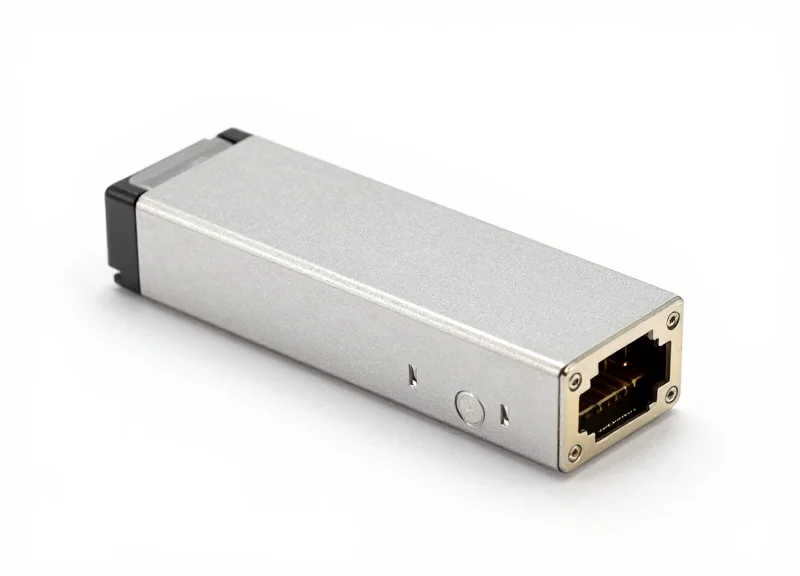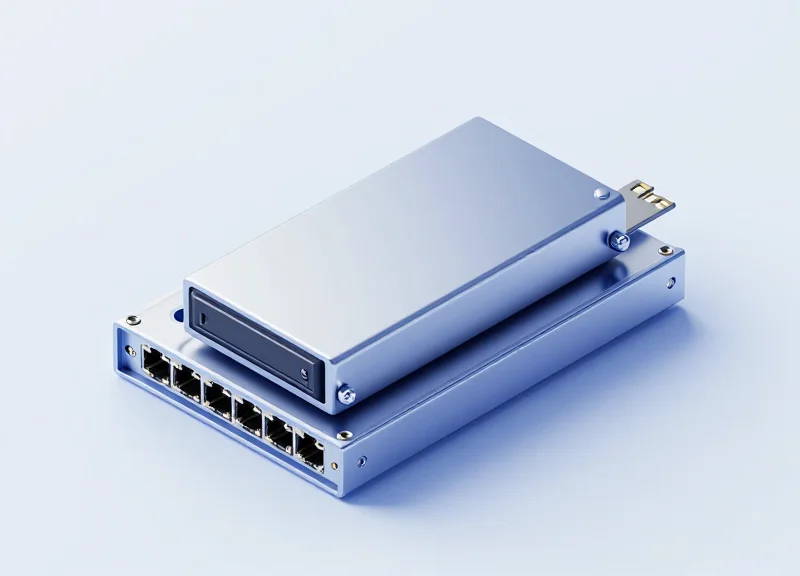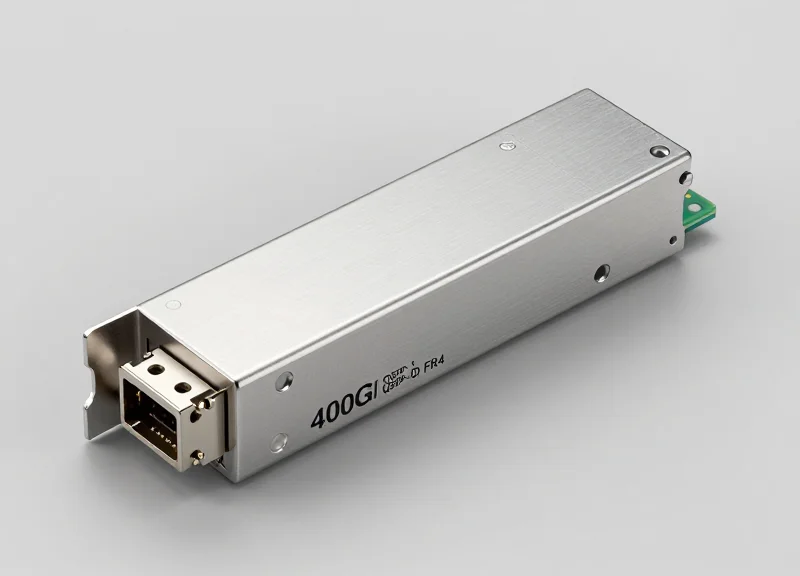
As global data demands skyrocket, traditional network architectures are hitting their limits. Modern data centers require the speed of 400G combined with the efficiency of Leaf-Spine topology. Ubytelink delivers the mission-critical modules necessary to bridge this gap, ensuring zero-packet loss and industry-leading performance for the most demanding enterprise environments.
The Evolution of Data Center Architectures: Transitioning to Leaf-Spine
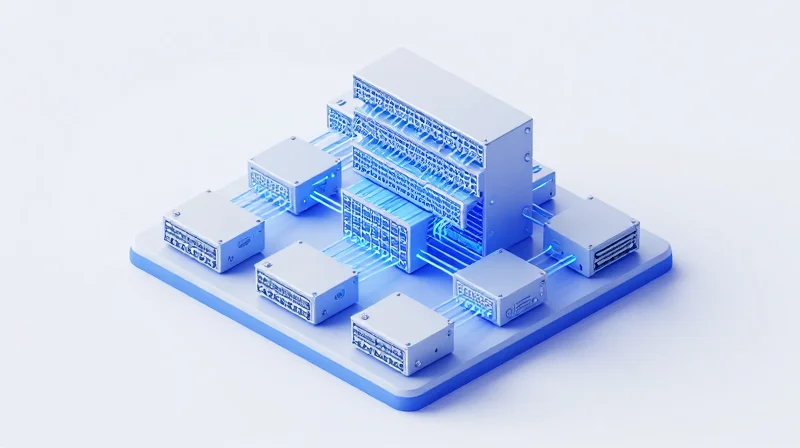
The transition to Leaf-Spine architecture represents a fundamental pivot in network design, moving away from the rigid, tree-like structures of the past toward a flatter, more agile fabric. As global data centers migrate to 400G standards, the traditional three-tier model—consisting of access, aggregation, and core layers—is no longer sufficient to handle the massive volume of server-to-server communication required by modern cloud computing, AI workloads, and big data analytics. Leaf-Spine provides a non-blocking, low-latency foundation that ensures predictable performance across the entire network fabric.
The Limitations of Legacy Three-Tier Architecture
Historically, data center traffic was primarily 'North-South,' meaning it moved between external clients and internal servers. Three-tier architectures were optimized for this flow. However, the rise of virtualization, containerization, and microservices has flipped this dynamic. Today, the vast majority of traffic is 'East-West,' moving laterally between servers within the data center. In a three-tier setup, this traffic must travel up through the aggregation layer to the core and back down, creating significant latency and severe congestion points. Furthermore, the Spanning Tree Protocol (STP), used to prevent loops in these environments, often disables redundant links, effectively wasting half of the available bandwidth—an inefficiency that is unsustainable at 400G speeds.
| Feature | Three-Tier Architecture | Leaf-Spine Topology |
|---|---|---|
| Primary Traffic Direction | North-South (Client-to-Server) | East-West (Server-to-Server) |
| Link Utilization | Low (STP blocks redundant paths) | High (ECMP utilizes all paths) |
| Latency | Variable and High (Multiple Hops) | Low and Deterministic (Fixed Hops) |
| Scalability | Vertical (Limit at Core) | Horizontal (Linear Expansion) |
| Performance | Blocking during peak loads | Non-blocking wire speed |
The Leaf-Spine Advantage for 400G Networks
Leaf-Spine (or Clos) topology addresses the inefficiencies of the three-tier model by reducing the hierarchy to two distinct layers. Every 'Leaf' switch connects to every 'Spine' switch, creating a mesh-like fabric. This ensures that any server can communicate with any other server with a fixed, two-hop distance. This predictability is the cornerstone of Ubytelink Leaf-Spine 400G Topology Solutions, providing the high-density throughput required for premium global networks. By utilizing Equal-Cost Multi-Pathing (ECMP) routing, all links remain active, maximizing the 400G investment and preventing the bottlenecks common in older designs.
- Why is East-West traffic a concern?
In modern data centers, applications are distributed across many servers. A single user request can trigger hundreds of internal queries between servers, making lateral bandwidth and low latency more critical than external connectivity. - How does Leaf-Spine improve redundancy?
Unlike three-tier models where a core switch failure can be catastrophic, Leaf-Spine distributes the load across multiple spine switches. If one fails, the network remains operational with only a slight reduction in total available bandwidth. - Is Leaf-Spine required for 400G?
While not strictly mandatory, 400G speeds are typically deployed in environments where performance and scale are paramount. Without a Leaf-Spine topology, the potential of 400G optics and switches is often throttled by structural network bottlenecks.
Understanding the 400G Standard: The New Benchmark for Speed

The 400G standard represents a transformative leap in networking throughput, moving beyond incremental updates to provide a fourfold increase in capacity over 100G architectures. By leveraging Pulse Amplitude Modulation 4-level (PAM4) and high-density form factors like QSFP-DD, 400G offers the massive data pipes necessary to eliminate bottlenecks in the modern leaf-spine topology, ensuring that compute resources are never starved for data.
The Technical Core: PAM4 and Form Factor Evolution
The shift to 400G was made possible primarily through the adoption of PAM4 modulation. Unlike traditional Non-Return to Zero (NRZ) signaling, which transmits one bit per symbol, PAM4 transmits two bits, effectively doubling the data rate without requiring a proportional increase in bandwidth. This efficiency is paired with new physical interfaces that maintain backwards compatibility while increasing port density.
| Feature | 100G Ethernet (Legacy) | 400G Ethernet (Standard) |
|---|---|---|
| Modulation | NRZ (Non-Return to Zero) | PAM4 (Pulse Amplitude Modulation) |
| Lane Configuration | 4 x 25Gbps | 8 x 50Gbps or 4 x 100Gbps |
| Primary Form Factor | QSFP28 | QSFP-DD / OSFP |
| Encoding Efficiency | 1 bit per symbol | 2 bits per symbol |
| Typical Latency | Moderate | Ultra-Low (with FEC optimization) |
Critical Use Cases: AI, ML, and HFT
Modern workloads have evolved from simple request-response cycles to massive parallel processing. In Artificial Intelligence (AI) and Machine Learning (ML), thousands of GPUs must synchronize state across the fabric; 400G provides the throughput to minimize 'all-reduce' times during model training. Similarly, in High-Frequency Trading (HFT), where microseconds equate to millions of dollars, the increased bandwidth of 400G reduces serialization delay, allowing packets to move through the leaf-spine fabric at unprecedented speeds.
Common Implementation Questions
- Why is 400G essential for AI training clusters?
AI models require constant data exchange between nodes. 400G prevents network congestion from becoming a bottleneck during the gradient synchronization phase of distributed training. - How does 400G impact power efficiency?
While a 400G port consumes more power than a 100G port, its power-per-bit ratio is significantly lower, making it more energy-efficient for large-scale data center operations. - Can 400G coexist with existing 100G infrastructure?
Yes, through the use of breakout cables and backwards-compatible QSFP-DD ports, 400G switches can interface seamlessly with 100G leaf nodes during a phased migration.
The Ubytelink Edge: Engineering for Mission-Critical Reliability
The Ubytelink Edge: Engineering for Mission-Critical Reliability
In a 400G leaf-spine topology, the cost of a single link failure extends far beyond a simple replacement; it ripples through the network as increased latency and potential data loss for thousands of concurrent sessions. Ubytelink differentiates itself by moving beyond baseline industry standards, implementing a zero-tolerance engineering philosophy that prioritizes thermal stability and signal precision. By utilizing premium optical components and high-grade silicon, Ubytelink ensures that every module delivers the consistent performance required for mission-critical AI workloads and high-frequency financial transactions.
Comparative Analysis: Ubytelink Premium vs. Generic 400G Solutions
| Feature | Ubytelink Premium Grade | Generic/Third-Party Alternatives |
|---|---|---|
| Laser Source | Tier-1 EML/Silicon Photonics | Variable/Unbranded Laser Chips |
| Testing Protocol | 100% Traffic & Stress Tested | Batch/Sample Testing Only |
| Thermal Range | Industrial/Extended (-40 to 85C) | Standard Commercial (0 to 70C) |
| MTBF (Mean Time Between Failures) | Over 1,000,000 Hours | Unverified or Low (200k-500k) |
| Firmware Stability | Multi-Vendor Optimized | Generic Reference Code |
Rigorous Validation: The Path to Zero-Downtime Networks
Our engineering process includes comprehensive Design Verification Testing (DVT) and Production Reliability Testing (PRT). We subject our 400G transceivers to extreme environmental cycles, including rapid temperature fluctuations and high-humidity stress, to identify potential failure points before they ever reach a production environment. This ensures that in high-density leaf-spine deployments, where heat dissipation is a primary concern, Ubytelink modules maintain a stable BER (Bit Error Rate) and low power consumption, significantly reducing the Total Cost of Ownership (TCO) over the network's lifecycle.
- How does Ubytelink ensure compatibility across different switch brands?
We maintain an extensive compatibility lab featuring the latest hardware from Cisco, Arista, Juniper, and Mellanox. Every module is coded and tested specifically for the target environment to ensure seamless 'plug-and-play' operation and accurate DOM (Digital Optical Monitoring) reporting. - Why is power consumption critical for 400G reliability?
Higher power draw leads to excessive heat, which is the primary cause of optical component degradation. Ubytelink optimizes circuit design to achieve the industry's lowest power-per-gigabit ratios, preserving the lifespan of both the transceiver and the switch port. - What testing is performed on individual units?
Unlike vendors who perform spot checks, Ubytelink subjects 100% of units to full-load traffic testing and optical eye-diagram analysis to guarantee that every link in your leaf-spine fabric meets our strict performance benchmarks.
QSFP-DD and OSFP Form Factors: Choosing the Right 400G Interface
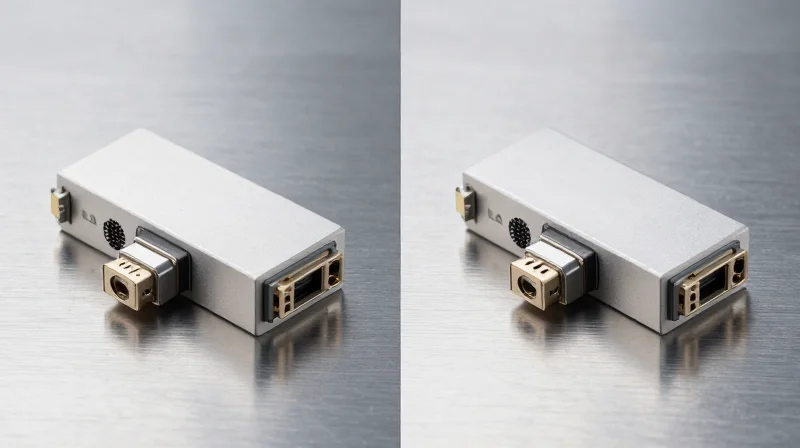
The Architecture of 400G: QSFP-DD vs. OSFP
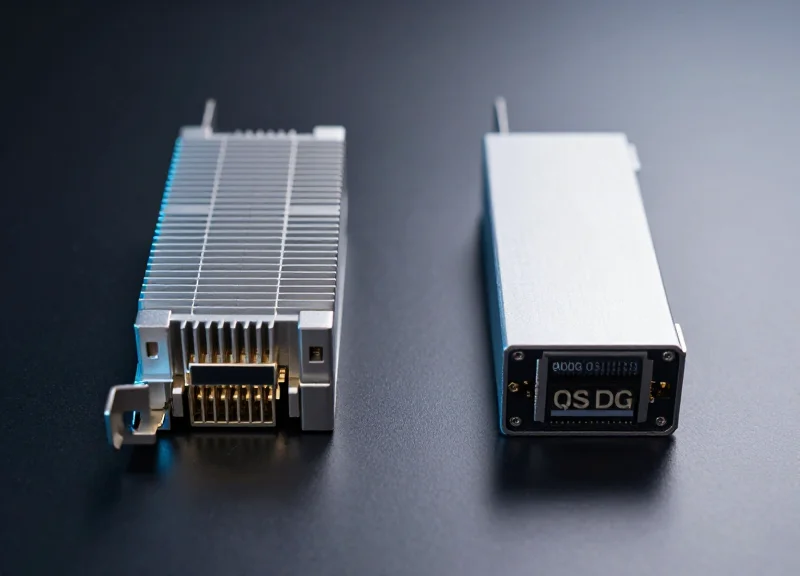
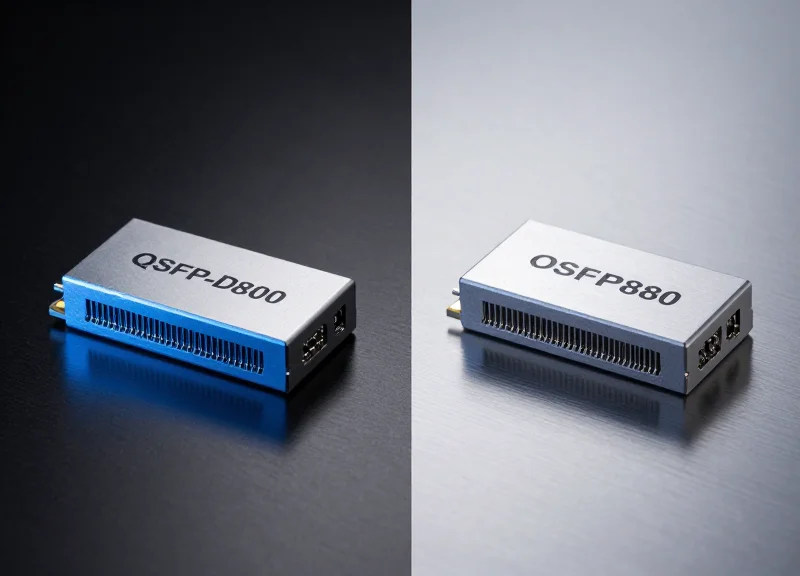
The choice between Quad Small Form Factor Pluggable Double Density (QSFP-DD) and Octal Small Form Factor Pluggable (OSFP) is the most critical hardware decision in a 400G Leaf-Spine deployment. While both interfaces support the 400Gbps threshold by utilizing eight lanes of 50G PAM4, they cater to different operational priorities: QSFP-DD is optimized for seamless legacy integration and maximum port density, whereas OSFP is engineered for superior thermal efficiency and a clear path toward 800G and 1.6T speeds.
QSFP-DD: The Industry Standard for Density and Compatibility
QSFP-DD is currently the most widely adopted 400G form factor due to its backward compatibility. A 400G QSFP-DD port can typically accept 40G QSFP+, 100G QSFP28, and 200G QSFP56 modules, allowing network architects to upgrade their Leaf-Spine topology incrementally without replacing existing fiber infrastructure. Ubytelink’s QSFP-DD modules are specifically designed with high-grade internal signaling components to mitigate the crosstalk issues often found in 'Double Density' layouts, ensuring that the doubled lane count does not compromise signal integrity.
OSFP: Future-Proofing Thermal Performance
As power consumption per module climbs toward 15W and beyond in AI-heavy environments, thermal management becomes the bottleneck. OSFP addresses this by being physically larger and incorporating an integrated heat sink directly into the module casing. This design allows OSFP to dissipate heat more effectively than QSFP-DD. Ubytelink leverages this form factor for ultra-high-performance spines where continuous 400G throughput generates significant thermal loads, ensuring the transceivers operate well within their optimal temperature range to prevent packet loss or premature aging.
Technical Comparison: QSFP-DD vs. OSFP
| Feature | QSFP-DD | OSFP |
|---|---|---|
| Backward Compatibility | Excellent (Supports QSFP+/28/56) | Requires Mechanical Adapter |
| Max Power Dissipation | ~12-14 Watts | 15 Watts and Higher |
| Thermal Management | Depends on System Cooling/Cage | Integrated Module Heat Sink |
| Port Density | 36 Ports per 1U | 32-36 Ports per 1U |
| 800G Evolution | Supported (QSFP-DD800) | Native Design Advantage |
Ubytelink Optimizations for 400G Interfaces
Regardless of the form factor, Ubytelink enhances the standard specification to meet the rigorous demands of global enterprise networks. Our modules utilize premium Laser Drivers and TOSA/ROSA assemblies that offer lower power consumption than generic alternatives. By reducing the 'base' heat generated by the module, Ubytelink allows QSFP-DD deployments to remain cool even in high-density configurations, and OSFP deployments to achieve unmatched reliability in poorly ventilated or high-ambient-temperature edge locations.
Form Factor FAQ
- Can I connect a QSFP-DD leaf to an OSFP spine?
Yes. As long as the underlying optical protocol is the same (e.g., 400G-DR4 or 400G-FR4), the form factor at either end of the fiber link does not matter for interoperability. - Which is better for AI and Machine Learning clusters?
OSFP is often preferred for high-density AI clusters due to its superior thermal headroom, which is vital when GPUs are driving constant, maximum-throughput traffic. - Does Ubytelink provide specialized testing for these modules?
Every Ubytelink 400G module undergoes a 72-hour full-load stress test in our custom Leaf-Spine lab to ensure zero bit-errors under peak thermal conditions.
Optimizing Network Latency in High-Density Topologies

Optimizing network latency in 400G leaf-spine topologies requires a holistic approach that targets the physical layer's signal integrity. Ubytelink achieves sub-microsecond performance by integrating ultra-low-latency Digital Signal Processors (DSPs) and high-fidelity lasers that significantly reduce the time required for signal modulation, error correction, and transmission across high-density interconnects.
Advanced DSP Engineering for Deterministic Latency
In a 400G environment, the Digital Signal Processor (DSP) is the primary source of processing delay. Ubytelink modules utilize next-generation 7nm and 5nm DSP architectures designed for deterministic performance. These chips streamline Forward Error Correction (FEC) algorithms, minimizing the computational cycles needed to maintain a low Bit Error Rate (BER). By reducing the 'decision time' at each hop in the leaf-spine fabric, Ubytelink ensures that high-frequency trading (HFT) and AI training clusters operate without the bottlenecks typical of generic 400G hardware.
Component-Level Performance Comparison
| Latency Metric | Generic 400G Modules | Ubytelink Premium Solutions |
|---|---|---|
| DSP Processing Delay | ~100ns - 150ns | <80ns |
| Jitter Margin | Standard Compliance | 30% Improvement over IEEE |
| Signal-to-Noise Ratio | Moderate (higher FEC overhead) | High (optimized for KP4 FEC) |
| Thermal Impact on Latency | Variable performance at heat | Stable via advanced heat sinks |
Minimizing Jitter in High-Density Fabric
High-density topologies often suffer from electromagnetic interference (EMI) and crosstalk, which manifest as jitter and increased latency. Ubytelink’s 400G QSFP-DD and OSFP modules feature superior shielding and high-extinction ratio lasers. These premium components produce a 'cleaner' optical eye diagram, allowing the receiving end to interpret data streams faster and with fewer retransmissions. This stability is critical in leaf-spine architectures where a single degraded link can cause tail latency across the entire fabric.
Frequently Asked Questions
- How does Ubytelink minimize FEC-induced latency?
Our modules optimize the implementation of KP4 FEC within the DSP, reducing the buffering time required for error detection and correction, which is vital for real-time AI synchronization. - Can high-quality optics really reduce physical layer latency?
Yes. Higher signal integrity reduces the need for complex digital compensation, allowing for leaner processing paths and faster optical-to-electrical conversions. - What is the impact of Ubytelink components on tail latency?
By ensuring uniform performance across all modules in a spine, Ubytelink prevents 'slow nodes' from creating the outliers that drive high tail latency in distributed computing.
Interoperability and Multi-Vendor Integration

Interoperability and Multi-Vendor Integration
In modern hyperscale and enterprise data centers, vendor lock-in represents a significant operational risk and a barrier to cost-effective scaling. Ubytelink Leaf-Spine 400G Topology Solutions are specifically engineered to bridge the gap between disparate networking hardware, ensuring that high-speed optical transceivers function with the same reliability and performance as native components across a heterogeneous infrastructure. By focusing on deep-level firmware compatibility and physical layer precision, Ubytelink enables network architects to build best-of-breed networks without being tethered to a single hardware provider.
The Role of MSA Compliance in 400G Ecosystems
Adherence to Multi-Source Agreements (MSA) is the bedrock of Ubytelink’s interoperability strategy. These industry standards define the electrical, mechanical, and thermal parameters for QSFP-DD and OSFP form factors. Ubytelink's commitment to these standards ensures that our 400G modules are physically and logically compatible with any host platform that follows these specifications, providing a universal connectivity layer for the global network.
| Vendor Ecosystem | Compatibility Level | Key Validated Features |
|---|---|---|
| Cisco Nexus / ASR | Fully Compatible | Real-time DOM/DDM and Link Training Support |
| Arista 7000 Series | Fully Compatible | Zero-Packet Loss at Maximum 400G Throughput |
| Juniper PTX / QFX | Fully Compatible | Advanced FEC Signal Integrity and Error Correction |
| NVIDIA / Mellanox | Fully Compatible | Low-Latency RDMA and InfiniBand Compatibility |
Seamless Firmware Integration and Diagnostics
Interoperability extends beyond physical fit; it requires seamless software communication. Ubytelink modules are programmed with customized EEPROM signatures that allow them to be recognized instantly by Tier-1 switch operating systems. This ensures that Digital Optical Monitoring (DOM) data is accurately reported to the network management system, allowing for proactive maintenance and performance tuning across the leaf and spine layers regardless of the underlying hardware brand.
Multi-Vendor Integration FAQ
- Does using Ubytelink optics void my switch warranty?
No. Under the Magnuson-Moss Warranty Act and similar global regulations, hardware manufacturers cannot void a warranty simply for using third-party MSA-compliant components. - How does Ubytelink ensure compatibility with proprietary OS updates?
Ubytelink maintains a continuous testing lab where modules are validated against the latest firmware releases from major vendors like Cisco, Arista, and Juniper. - Can Ubytelink modules support different vendors on each side of a link?
Yes. Because our modules adhere to universal optical standards, a Ubytelink module in a Cisco switch can seamlessly communicate with a Ubytelink module in an Arista switch across the spine layer.
Energy Efficiency: Reducing the Carbon Footprint of 400G Networks
Energy Efficiency: Reducing the Carbon Footprint of 400G Networks
Ubytelink Leaf-Spine 400G Topology Solutions address the dual challenge of escalating bandwidth demands and environmental responsibility by delivering industry-leading energy efficiency metrics. While raw power consumption per port inherently increases when moving from 100G to 400G, the energy efficiency—measured in Watts per Gigabit (W/Gbps)—is substantially superior in modern 400G infrastructures. This allows global data centers to scale their total capacity by 400% while only experiencing a fractional increase in total power draw, effectively decoupling growth from carbon emissions.
The Efficiency Evolution: W/Gbps Optimization
A critical advantage of Ubytelink’s 400G modules lies in the integration of next-generation 7nm and 5nm Digital Signal Processors (DSPs). These chips drastically reduce thermal output compared to legacy architectures. By optimizing the signal path and utilizing high-sensitivity optical components, these modules require less power to maintain signal integrity over reach, ensuring that the leaf-spine layers operate within strict thermal envelopes.
| Metric | 100G QSFP28 (Standard) | 400G QSFP-DD (Ubytelink) | Improvement |
|---|---|---|---|
| Typical Power Consumption | 3.5W - 4.5W | 10W - 12W | N/A |
| Power per Gigabit (W/Gbps) | 0.035W / Gbps | 0.025W / Gbps | ~30% Reduction |
| Aggregate Heat for 3.2Tbps | 112W - 144W | 80W - 96W | Significant Cooling Savings |
Sustainability Through Silicon Photonics
Ubytelink utilizes advanced silicon photonics technology to integrate multiple optical functions into a single silicon chip. This approach reduces the number of discrete components, shortens the electrical-to-optical conversion path, and inherently lowers the heat dissipation requirements. This structural optimization not only extends the operational lifespan of the optical modules but also reduces the cooling load on the overall data center HVAC systems, leading to a lower Power Usage Effectiveness (PUE) rating for the facility.
Green Data Center FAQ
- How does Ubytelink's 400G solution impact Power Usage Effectiveness (PUE)?
By lowering the heat-per-bit ratio, our modules reduce the energy required by CRAC and HVAC systems for cooling, which directly improves the PUE of the facility. - Are Ubytelink modules compliant with environmental standards?
Yes, all Ubytelink modules are fully compliant with RoHS and REACH standards and are designed to help operators align with corporate Net Zero sustainability targets. - Does lower power consumption affect the performance or reach of the optics?
No. The use of advanced low-power DSPs and high-quality lasers ensures that signal-to-noise ratios remain high, maintaining performance integrity while reducing energy draw. - How does 400G topology reduce overall hardware footprint?
Higher density means fewer switches and fewer cables are needed to achieve the same bandwidth, leading to a reduction in manufacturing waste and physical space requirements.
Calculating TCO: Why Premium Quality Leads to Long-Term Savings
Calculating TCO: Why Premium Quality Leads to Long-Term Savings
The true cost of a 400G leaf-spine topology is not found in the initial purchase price, but in the long-term operational efficiency and reliability of the hardware. Ubytelink Leaf-Spine 400G Topology Solutions are engineered to provide a lower Total Cost of Ownership (TCO) by drastically reducing the frequency of hardware failures and the associated labor costs of troubleshooting and replacement. In high-bandwidth environments, the financial impact of a single port failure extends far beyond the cost of a transceiver; it includes lost productivity, potential SLA penalties, and the resource-heavy process of manual intervention in the data center.
Direct Comparison: Generic vs. Premium 400G Infrastructure
| Metric | Generic White-Box Solutions | Ubytelink Premium Solutions |
|---|---|---|
| Annualized Failure Rate (AFR) | 1.5% - 3.0% | < 0.1% |
| Maintenance Labor | Frequent (Reactive) | Minimal (Proactive) |
| Energy Efficiency | High Power Draw / Heat | Low Power Design / Cool |
| Device Lifespan | 2-3 Years | 5+ Years |
| Total TCO (5-Year) | High (Replacement + OPEX) | Low (Stability + Efficiency) |
Reducing OPEX through Engineering Excellence
By investing in premium components, enterprises can shift their budget from reactive maintenance to strategic expansion. Ubytelink modules utilize superior silicon and heat-dissipation materials that ensure stable performance even under maximum load. This thermal stability prevents the 'flapping' links and packet loss common in cheaper alternatives, which often require expensive network-wide audits to diagnose. Furthermore, the lower power profile of Ubytelink hardware directly translates to reduced utility bills and lower cooling requirements, scaling the savings across thousands of leaf-spine connections.
- How does reliability impact long-term budget planning?
Higher reliability allows for predictable budget forecasting. When failure rates are below 0.1%, organizations can minimize 'emergency' funds for hardware replacement and focus capital on scaling bandwidth. - Is the higher CAPEX of premium 400G hardware justified?
Yes. While the initial investment may be higher, the avoidance of even a single hour of network-wide downtime typically covers the price difference of several hundred premium transceivers. - Does Ubytelink support multi-vendor TCO strategies?
Absolutely. Ubytelink's MSA-compliant hardware integrates seamlessly with Tier-1 switches, preventing vendor lock-in and allowing businesses to optimize their supply chain costs without sacrificing quality.
In an era where network downtime can result in massive financial loss, Ubytelink’s 400G Leaf-Spine solutions provide the peace of mind that comes with premium engineering. Our modules are designed to scale with your needs while maintaining the highest levels of data integrity. Contact our technical sales team today to learn how we can optimize your global network infrastructure.