As modern data centers reach the limits of 100G, the transition to 400G Ethernet is no longer optional—it is a strategic necessity. However, the high cost of OEM-branded optics often hinders rapid deployment. This guide explores the technical depth of Arista Compatible 400G solutions, demonstrating how MSA-compliant third-party transceivers provide the same performance, reliability, and interoperability as original equipment at a fraction of the cost.
The Evolution of 400G in Arista Ecosystems

Arista Compatible 400G represents the convergence of Arista's industry-leading Extensible Operating System (EOS) with high-performance optical transceivers designed to meet or exceed OEM specifications. Since the introduction of the 7060X4 series, Arista has driven the market shift from 100G NRZ signaling to 400G PAM4 modulation, prioritizing thermal efficiency and port density to support the massive bandwidth requirements of AI/ML clusters and hyperscale cloud architectures. This evolution allows network architects to deploy multi-vendor optical strategies that maintain full telemetry and diagnostic parity with original Arista components.
The Architecture of Arista's 400G Transition
The evolution of 400G in Arista environments was not merely a speed upgrade but a fundamental shift in physical layer signaling. By adopting PAM4 (Pulse Amplitude Modulation 4-level), Arista doubled the data rate within the same spectral bandwidth compared to traditional NRZ. This transition was anchored by the development of the 7280R3 and 7800R3 Series, which served as the cornerstone for the '400G-ready' data center, offering deep buffers and large routing tables required for modern spine-and-leaf topologies.
| Metric | Legacy 100G Arista Ecosystem | Modern 400G Arista Ecosystem |
|---|---|---|
| Modulation | NRZ (Non-Return-to-Zero) | PAM4 (Pulse Amplitude Modulation) |
| Common Form Factors | QSFP28 | QSFP-DD / OSFP |
| Typical Latency | Standard Micro-second | Ultra-low Nanosecond (optimized) |
| Max Throughput/RU | 3.2 Tbps | 12.8 Tbps to 25.6 Tbps |
Form Factor Diversity: OSFP vs. QSFP-DD
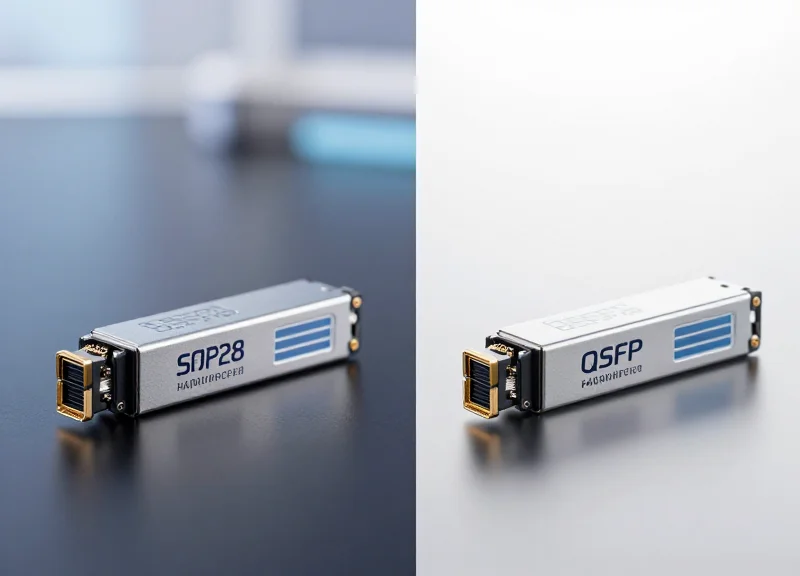
Arista's ecosystem is unique for its early and strong advocacy of the OSFP (Octal Small Form-factor Pluggable) standard. While much of the industry leaned toward QSFP-DD for backward compatibility, Arista recognized the thermal advantages of OSFP, which features integrated heat sinks. This design choice allowed for higher power envelopes required for 800G-ready systems. Today, Arista compatible 400G solutions must support both footprints to provide flexibility across the Arista 7060X and 7300X series platforms.
Frequently Asked Questions about Arista 400G Evolution
- What triggered the shift to 400G in Arista networks?
The primary drivers were the growth of East-West traffic in data centers and the specific requirements of AI training models, which demanded higher throughput and lower latency than 100G could provide. - Is Arista EOS compatible with third-party 400G optics?
Yes, provided the optics are correctly coded to interface with the EOS I2C driver. Compatible optics must provide Digital Optical Monitoring (DOM) data that the switch can interpret for health monitoring. - Why did Arista champion OSFP over QSFP-DD?
Arista prioritized the thermal efficiency of OSFP. The integrated heat sink allows OSFP modules to handle up to 15W or more, which is critical for maintaining performance in high-density environments.
Hardware Form Factors: OSFP vs. QSFP-DD
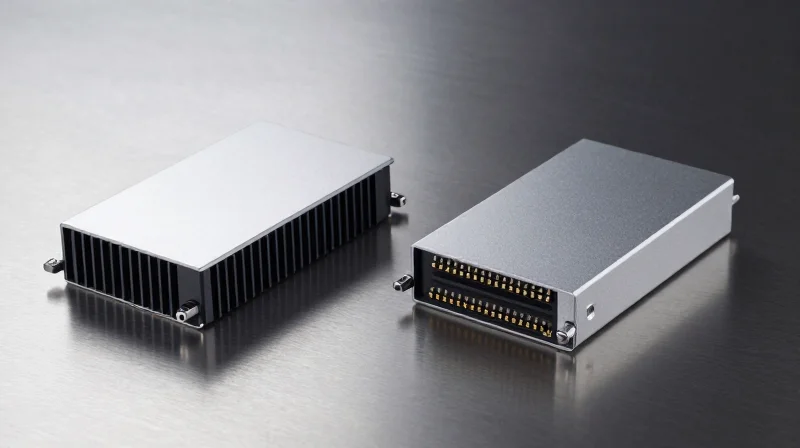
Arista Networks utilizes two distinct hardware form factors for its 400G portfolio: OSFP (Octal Small Form-factor Pluggable) and QSFP-DD (Quad Small Form-factor Pluggable Double Density). The selection between these standards is not arbitrary; it is driven by specific requirements for thermal dissipation, port density, and the necessity for backward compatibility with legacy 100G and 200G infrastructure. While both utilize eight lanes of 50G PAM4 to reach 400Gbps, their mechanical designs offer different advantages for data center architects.
OSFP: Thermal Excellence for High-Power Optics
The OSFP form factor was engineered with a 'thermal-first' mindset. It is slightly wider and deeper than the QSFP standard and features an integrated heat sink directly on the module housing. This design allows Arista compatible OSFP optics to dissipate significantly more heat—up to 15W or more—making them the preferred choice for high-power applications like 400G ZR and ZR+ coherent optics. In Arista’s 7060X4 series, OSFP ports provide the thermal headroom necessary to maintain performance without requiring aggressive, high-velocity cooling that increases fan power consumption.
QSFP-DD: Density and Backward Compatibility
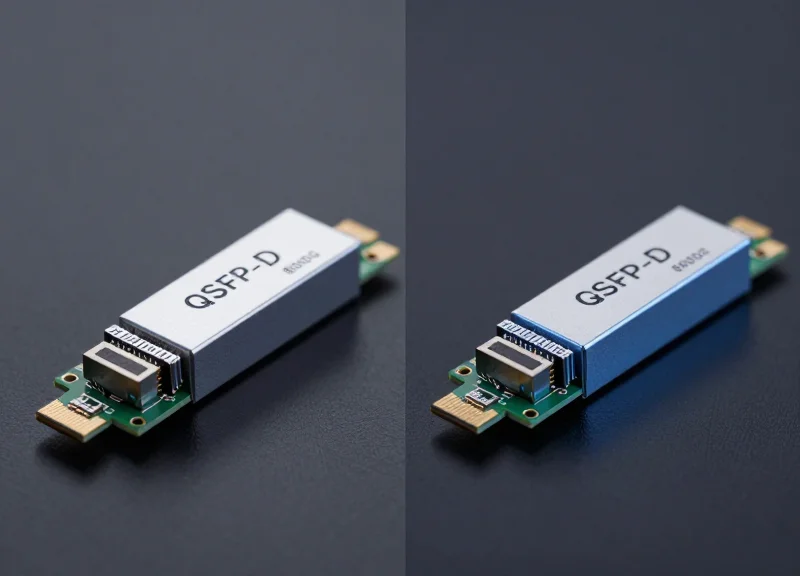
QSFP-DD achieves its 400G throughput by adding a second row of electrical contacts, effectively doubling the density of the traditional QSFP28 interface. Its primary advantage in the Arista ecosystem is its physical backward compatibility. A QSFP-DD port on an Arista 7280R3 or 7050X4 switch can natively accept standard 40G QSFP+ or 100G QSFP28 modules. This allows for a staggered migration path where legacy hardware can be repurposed in new 400G-capable slots without the need for external adapters.
Comparison Matrix: OSFP vs. QSFP-DD
| Feature | OSFP | QSFP-DD |
|---|---|---|
| Heat Management | Integrated heat sink; Superior | Relies on equipment cage; Moderate |
| Max Power Per Port | 15W - 17W | 10W - 12W (Standard) |
| Native Backward Compatibility | No (Requires mechanical adapter) | Yes (Compatible with QSFP+/QSFP28) |
| Arista Series Example | 7060X4, 7368X4 | 7050X4, 7280R3, 7800R3 |
| Form Factor Width | 22.58 mm | 18.35 mm |
Operational Considerations and FAQ
- Can I mix OSFP and QSFP-DD modules in the same network?
Yes, they can interoperate at the optical level as long as the protocol and fiber type match (e.g., both are 400G-DR4). However, they cannot be physically swapped into each other's slots without specific adapters. - Which form factor is better for Arista-based DCI?
OSFP is generally preferred for Data Center Interconnect (DCI) using 400G ZR/ZR+ because these high-power modules benefit from the OSFP's superior heat dissipation capabilities. - Does QSFP-DD support 800G in the future?
Both standards have evolved to support 800G. However, OSFP's larger thermal envelope makes it slightly more robust for the initial waves of 800G and 1.6T deployments in Arista's high-end core routers.
Decoding Compatibility: EEPROM and Arista EOS Integration
Decoding Compatibility: EEPROM and Arista EOS Integration
Arista compatible 400G modules achieve seamless integration by emulating the exact Electrically Erasable Programmable Read-Only Memory (EEPROM) signatures that the Arista Extensible Operating System (EOS) expects during its hardware polling process. Compatibility is not merely about physical fit; it is a digital handshake where the transceiver's internal firmware provides the correct vendor-specific identifiers, checksums, and serialized data to the switch's management plane.
The Anatomy of the 400G Memory Map (CMIS)
Unlike lower-speed legacy modules, 400G OSFP and QSFP-DD optics utilize the Common Management Interface Specification (CMIS). This complex memory map dictates how the host switch interacts with the module's internal microcontrollers. Arista EOS is particularly stringent regarding the formatting of these memory pages. If the data in Page 00h (identifying the module type) or the vendor-specific pages do not align with Arista's internal validation database, the system may flag the module as 'unsupported' or 'invalid,' potentially disabling the port.
| EEPROM Field | MSA Standard Usage | Arista EOS Specific Requirement |
|---|---|---|
| Vendor Name | Generic ASCII characters | Must match Arista-recognized or whitelisted naming conventions. |
| Checksum (CRC) | Error checking for data integrity | Strict validation of specific byte offsets; failure results in port-fault. |
| DOM/DDM Data | Real-time diagnostic reporting | Requires specific calibration constants for accurate power and temperature readings. |
| Connector Type | Identifies LC, MPO, etc. | Must align with the expected hardware profile of the physical switch port. |
EOS Recognition and 'Service Unsupported-Transceiver'
When an Arista switch detects a non-native module, its behavior is governed by the EOS binary. While Arista famously provides the 'service unsupported-transceiver' command to allow the use of third-party optics, this is often a suboptimal solution for 400G deployments. True 'compatible' optics are coded so that the switch recognizes them as native, ensuring that Digital Optical Monitoring (DOM) provides accurate real-time data for light levels, voltage, and temperature without requiring CLI workarounds.
- Does using compatible 400G optics void my Arista warranty?
No. Under the Magnuson-Moss Warranty Act in the US and similar laws globally, a manufacturer cannot void a hardware warranty simply for using third-party peripherals, though they may not provide support for the specific optical link if it is determined to be the cause of a failure. - Why is 400G coding more difficult than 10G or 100G?
400G modules use CMIS, which involves significantly more memory pages and sophisticated state machines for power-up sequences. This requires more advanced firmware development to match Arista's polling intervals and power-class requirements. - What happens if the checksum is incorrect?
EOS will typically report a 'checksum error' in the logs and the interface will stay in a 'down/down' state, as the OS cannot verify the module's operating parameters.
Signaling and Modulation: The Role of PAM4

The Transition from NRZ to PAM4 Signaling
Arista compatible 400G optics utilize Pulse Amplitude Modulation 4-level (PAM4) to overcome the physical throughput limitations of traditional Non-Return to Zero (NRZ) signaling. While NRZ uses two signal levels to represent a 0 or 1, PAM4 employs four distinct voltage levels, allowing it to transmit two bits per symbol. This doubling of efficiency is what makes the 400Gbps threshold achievable without requiring exponentially higher optical component speeds or excessive physical space within the switch chassis.
Comparing NRZ and PAM4 Performance
| Feature | NRZ (2-Level) | PAM4 (4-Level) |
|---|---|---|
| Bits per Symbol | 1 Bit | 2 Bits |
| Voltage Levels | 2 (High/Low) | 4 (00, 01, 10, 11) |
| Bandwidth Efficiency | 1x | 2x |
| Signal-to-Noise Ratio | Higher | Lower (requires FEC) |
| Standard Application | 1G to 100G | 400G and 800G |
Signal Integrity and Forward Error Correction (FEC)
The primary challenge with PAM4 is its reduced eye height—the vertical opening in the signal diagram—which makes it more sensitive to noise compared to NRZ. To mitigate this, Arista 400G implementations rely heavily on Forward Error Correction (FEC). FEC adds redundant parity bits to the data stream, allowing the receiving end, such as an Arista 7060X4 or 7280R3 series switch, to identify and correct bit errors without requiring retransmission. This is essential for maintaining a reliable Bit Error Rate (BER) in high-density data center environments where signal degradation can be more pronounced.
PAM4 Implementation FAQ
- Why can't 400G just use more NRZ lanes?
Using NRZ for 400G would require 16 lanes of 25G or 8 lanes of 50G. Managing 16 lanes increases power consumption, heat, and physical footprint significantly, making PAM4's 8x50G or 4x100G configurations much more efficient. - Does Arista EOS provide diagnostics for PAM4?
Yes, Arista’s Extensible Operating System (EOS) provides detailed telemetry for PAM4 signals, including Pre-FEC and Post-FEC BER monitoring, which is critical for identifying degrading optical fibers before they cause link failures. - Is PAM4 backwards compatible with NRZ?
Native PAM4 signals are not compatible with NRZ hardware. However, Arista switches often use gearboxes (PHY chips) to translate between different modulation formats when connecting 400G ports to legacy 100G (NRZ) equipment.
Key Specifications: Wavelengths, Reach, and Connectors
Arista-compatible 400G transceivers are defined by a rigorous set of optical specifications that determine their role within a network architecture, primarily categorized by wavelength, transmission distance, and the physical fiber interface. Most 400G modules utilize either 850nm for short-reach multi-mode applications or the 1310nm window for single-mode fiber (SMF) spanning from 500 meters up to 10 kilometers. Selecting the correct module requires an understanding of how these specifications align with the underlying fiber infrastructure and the required bandwidth density of the switch fabric.
Primary 400G Standards and Performance Metrics
The evolution of 400G Ethernet has introduced several key standards—SR8, DR4, FR4, and LR4—each designed for specific link lengths and cabling types. While the SR8 standard focuses on cost-effective, high-density short-range connections using parallel multi-mode fiber, the single-mode standards (DR4, FR4, and LR4) leverage advanced modulation and multiplexing to achieve longer reaches suitable for leaf-to-spine and data center interconnect (DCI) layers.
| Standard | Media Type | Connector | Reach | Wavelength |
|---|---|---|---|---|
| 400G-SR8 | Multi-mode (OM4) | MPO-16 | 100m | 850nm |
| 400G-DR4 | Single-mode (SMF) | MPO-12 | 500m | 1310nm |
| 400G-FR4 | Single-mode (SMF) | LC Duplex | 2km | CWDM4 (1271-1331nm) |
| 400G-LR4 | Single-mode (SMF) | LC Duplex | 10km | LWDM4 (1295-1309nm) |
Connector Interfaces and Cabling Strategies
The physical connector on an Arista-compatible 400G module is a critical consideration for physical layer planning. Modules like the 400G-SR8 and 400G-DR4 use parallel optics via MPO/MTP connectors, which require multiple fiber strands (8 or 12) to transmit and receive data simultaneously. In contrast, 400G-FR4 and LR4 utilize Coarse Wavelength Division Multiplexing (CWDM) or LAN-WDM to multiplex four wavelengths over a single pair of LC Duplex fibers. This allows for a more efficient use of existing fiber plants but requires the transceiver to handle more complex optical processing internally.
Technical FAQ: Wavelengths and Reach
- Why choose 400G-DR4 over 400G-SR8?
DR4 uses single-mode fiber which supports reaches up to 500m and provides a more scalable path for future 800G and 1.6T upgrades, whereas SR8 is limited to 100m on OM4 multi-mode fiber. - Can I use LC Duplex patch cords for all 400G links?
No. LC Duplex is only compatible with WDM-based modules like FR4 and LR4. Parallel optics like SR8 and DR4 require MPO-style connectors to support multiple lanes of data. - How does wavelength affect Arista EOS compatibility?
While the wavelength is a physical property, the Arista EOS must correctly identify the transceiver type via the EEPROM to ensure the laser power and Digital Optical Monitoring (DOM) parameters are within the expected operating range for that specific wavelength.
Application Scenarios: Leaf-Spine and DCI Deployments

Implementing 400G in Arista-Centric Architectures
Arista-compatible 400G optics serve as the primary catalyst for scaling modern data centers, specifically optimized for high-radix leaf-spine architectures and high-capacity Data Center Interconnect (DCI) links. By utilizing 400G PAM4 modulation, these transceivers allow network architects to maximize the throughput of Arista 7060X and 7280R series switches, facilitating the massive east-west traffic demands of AI/ML workloads and cloud-native applications while significantly reducing the physical cabling footprint.
Leaf-Spine Evolution: Scaling East-West Traffic
In a typical Arista leaf-spine deployment, the transition from 100G to 400G enables a fourfold increase in capacity per rack unit. Compatible 400G optics allow for more efficient oversubscription ratios and flatter network topologies. For short-reach intra-rack or rack-to-rack connections, SR8 modules are used with multi-mode fiber, while DR4 and FR4 modules are deployed for longer spans within the data center, often utilizing breakout configurations to interface with legacy 100G equipment.
| Transceiver Standard | Media Type | Max Reach | Typical Arista Use Case |
|---|---|---|---|
| 400GBASE-SR8 | MMF (OM4) | 100m | Leaf-to-Spine intra-row connectivity |
| 400GBASE-DR4 | SMF | 500m | High-density spine links & 4x100G breakouts |
| 400GBASE-FR4 | SMF | 2km | Large-scale campus leaf-spine fabrics |
| 400GBASE-ZR/ZR+ | SMF (DWDM) | 80km+ | Metropolitan Data Center Interconnect (DCI) |
Data Center Interconnect (DCI): Bridging Geographic Gaps
For DCI scenarios where low latency and high throughput are required across metropolitan distances, Arista-compatible 400G LR4 and 400G ZR/ZR+ modules are indispensable. These optics enable 400G speeds over distances ranging from 10km to over 80km without the need for complex external transponder systems. By plugging directly into Arista routing platforms, they extend the L2/L3 domain across separate physical facilities, simplifying the optical layer and reducing total cost of ownership.
Deployment FAQ: Maximizing 400G Efficiency
- Can I use 400G breakout cables with Arista compatible optics?
Yes, standards like 400GBASE-DR4 are designed for breakouts into 4x100G links using MPO-12 connectors, allowing high-density connectivity to legacy 100G leaf switches or high-performance NICs. - Do these optics require special CLI commands in Arista EOS?
No. High-quality Arista-compatible optics are coded with specific EEPROM signatures so that Arista EOS recognizes them as native modules, enabling standard monitoring and Digital Optical Monitoring (DOM) without extra configuration. - What is the power advantage of moving to 400G optics?
400G transceivers provide superior bits-per-watt efficiency. A single 400G link typically consumes significantly less power than four separate 100G QSFP28 links, reducing thermal loads in the data center.
Reliability and EEAT: Testing Benchmarks for Compatible Optics
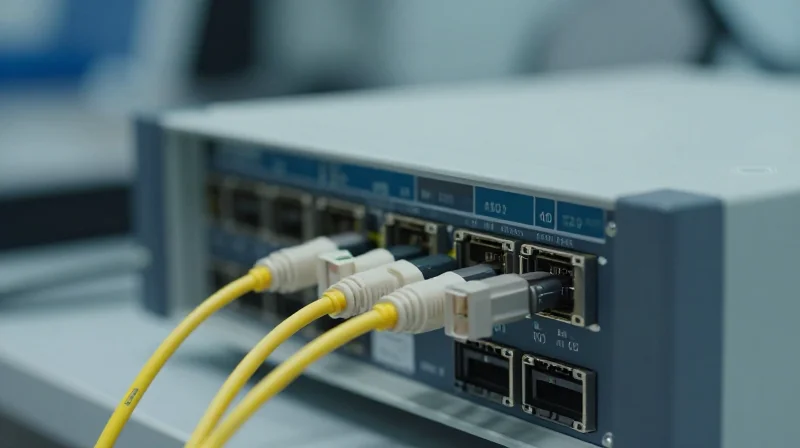
To ensure that Arista-compatible 400G optics perform reliably in mission-critical environments, they must undergo a validation process that mirrors or exceeds OEM protocols, focusing specifically on signal integrity, PAM4 modulation stability, and thermal resilience under high-density workloads.
Signal Integrity: Bit Error Rate (BER) and FEC Validation
At 400G throughput, the use of PAM4 (4-level Pulse Amplitude Modulation) significantly narrows the margin for error compared to legacy NRZ signaling. High-quality Arista-compatible transceivers are tested to ensure their pre-Forward Error Correction (pre-FEC) Bit Error Rate is well below the IEEE 802.3bs standard threshold (typically 2.4E-4). This ensures that once FEC is applied at the host level, the post-FEC BER is effectively zero, preventing the packet drops and link flapping that can plague inferior third-party optics.
Environmental Stress and Thermal Cycling
Heat dissipation is a primary concern for 400G optics, which can consume up to 12W per module. Reliability testing involves 'Four Corner' testing—evaluating performance at the extremes of both voltage and temperature. Compatible modules are cycled from 0°C to 70°C while under full traffic load to ensure that laser wavelength stability and receiver sensitivity remain within specification even as the Arista 7060X4 or 7800R3 chassis reaches peak thermal capacity.
| Benchmark Test | Technical Metric | Reliability Requirement |
|---|---|---|
| Pre-FEC BER | Error Frequency | < 2.4E-4 (IEEE 802.3bs) |
| Thermal Stress | Operating Range | 0°C to 70°C (Case Temp) |
| Jitter Analysis | TDECQ | < 3.4 dB for SMF interfaces |
| DOM Accuracy | I2C Reporting | +/- 3dB monitoring precision |
Reliability and EEAT FAQ
- Does using compatible 400G optics void my Arista warranty?
No. Under the Magnuson-Moss Warranty Act and similar global regulations, Arista cannot void your hardware warranty for using third-party transceivers. Support is only limited if the specific third-party part is proven to be the cause of a failure. - How is 400G interoperability verified?
Interoperability is verified through EEPROM coding that matches Arista's signature requirements, ensuring the optics are recognized by EOS (Extensible Operating System) and provide full Digital Optical Monitoring (DOM) data. - What is the typical MTBF for these modules?
High-grade compatible 400G optics are designed for a Mean Time Between Failures (MTBF) exceeding 100,000 hours, achieved through the use of Tier-1 lasers (EML or SiPh) and rigorous burn-in testing.
Strategic Procurement: Maximizing ROI in Network Upgrades
Strategic Procurement: Maximizing ROI in Network Upgrades
Maximizing Return on Investment (ROI) in a 400G migration requires a shift from brand-centric purchasing to a performance-centric procurement strategy. Arista-compatible 400G optics provide the identical physical layer performance of OEM modules at a fraction of the cost, allowing enterprises to reallocate saved capital toward high-performance compute or AI-driven networking software. By integrating third-party optics into the procurement cycle, organizations can bypass the 'OEM premium'—which often exceeds 70%—without compromising the integrity of the Arista EOS ecosystem.
The Economics of 400G: OEM vs. Compatible
The financial impact of choosing compatible optics is most visible during large-scale leaf-spine expansions. While OEM optics are often bundled with initial hardware purchases, subsequent scaling becomes cost-prohibitive. The following table illustrates the typical procurement advantages of compatible solutions.
| Metric | Arista OEM Optics | Compatible 400G Optics |
|---|---|---|
| Average Unit Cost | High ($$$$) | Low ($) |
| Lead Time | 8-16 Weeks (Typical) | 1-2 Weeks (In-Stock) |
| Budget Flexibility | Fixed / Limited | High (70% Savings) |
| Warranty Support | Bundled with Support | Independent / Lifetime |
Supply Chain Resilience and Availability
Modern data center management prioritizes uptime and agility. One of the primary risks in 400G upgrades is the volatile lead time associated with OEM supply chains. Compatible vendors often maintain larger localized inventories of 400G DR4, FR4, and SR8 modules, enabling rapid response to traffic spikes or infrastructure failures. This availability acts as a strategic buffer, preventing costly project delays that can occur when waiting for proprietary components.
Navigating Support and Warranty
A common procurement concern is whether using compatible optics voids the switch warranty. Under the Magnuson-Moss Warranty Act in the US and similar consumer protection laws globally, OEMs cannot legally void a hardware warranty simply for using third-party peripherals. Strategic procurement involves selecting vendors who provide 24/7 technical support and offer advanced replacement programs, effectively mimicking the 'peace of mind' traditionally associated with OEM-only environments.
Strategic Procurement FAQ
- Does Arista block third-party optics in EOS?
No, Arista EOS typically allows third-party optics. In some cases, a specific CLI command like 'service unsupported-transceiver' may be required to enable them, though many premium compatible optics are pre-coded to be recognized as 'Arista Native'. - How do compatible optics impact the Total Cost of Ownership (TCO)?
Beyond initial CAPEX savings, compatible optics reduce TCO by lowering the cost of replacement spares and reducing the duration of network downtime caused by long lead times. - Can I mix OEM and compatible optics in the same switch?
Yes, compatible 400G optics are designed to interoperate seamlessly with OEM optics at the other end of the link, provided they share the same protocol (e.g., 400G-DR4).
Scaling your network to 400G is a complex technical undertaking, but your choice of optics shouldn't be a bottleneck. Arista-compatible 400G solutions offer a proven, high-performance alternative that maintains network integrity while significantly reducing CapEx. Don't let OEM price premiums slow your growth—contact our technical team today for a custom compatibility audit and start your high-speed transition with confidence.