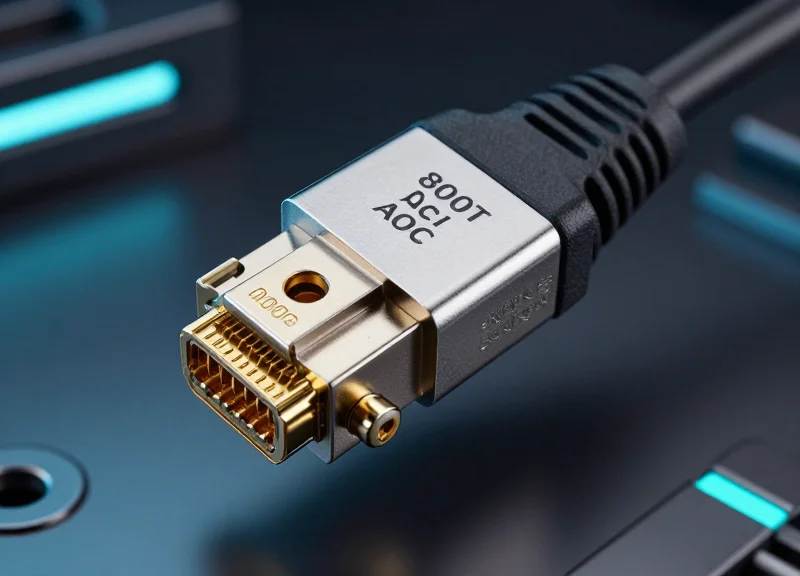
As hyperscale data centers and AI clusters push the boundaries of bandwidth, the physical layer is undergoing a radical transformation. Moving from 400G to 800G requires more than just speed; it demands superior thermal management and cable density. This guide provides a deep dive into 800G Active Optical Cables (AOC), explaining why they are becoming the gold standard for interconnecting high-density racks where traditional copper reaches its physical limits.
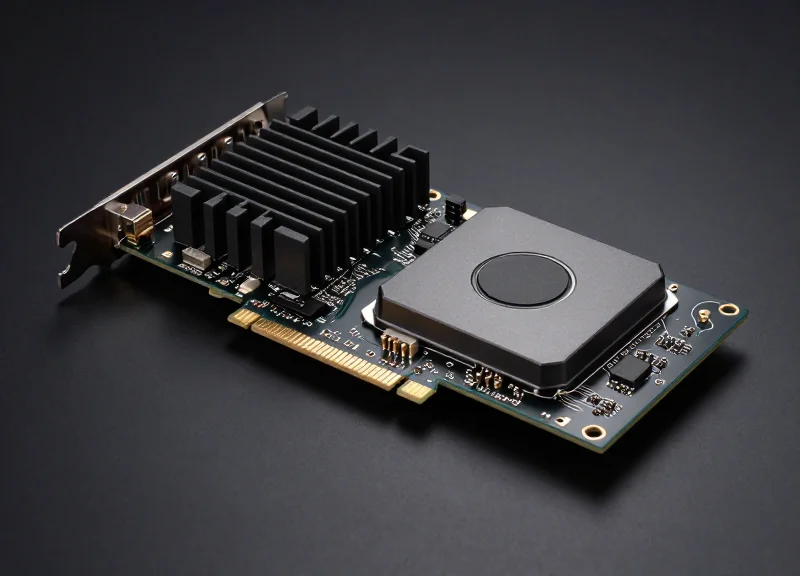
The Anatomy of an 800G AOC
The Anatomy of an 800G AOC
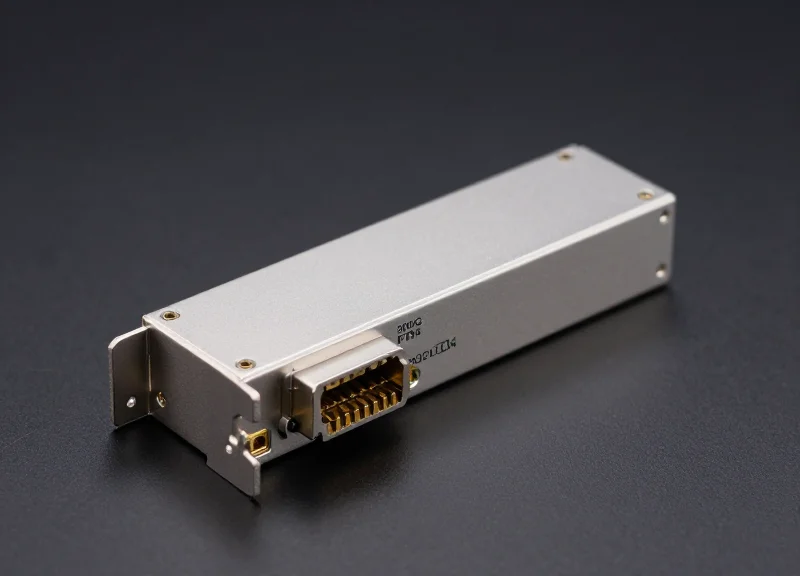
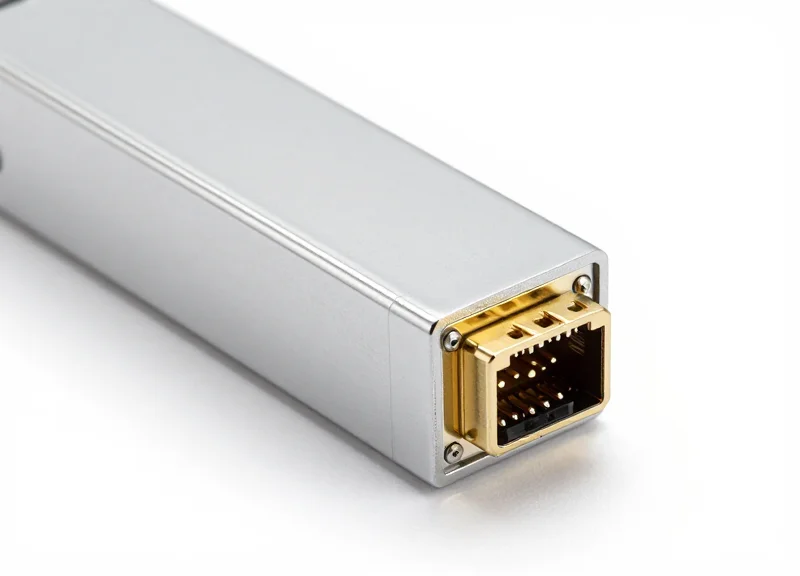
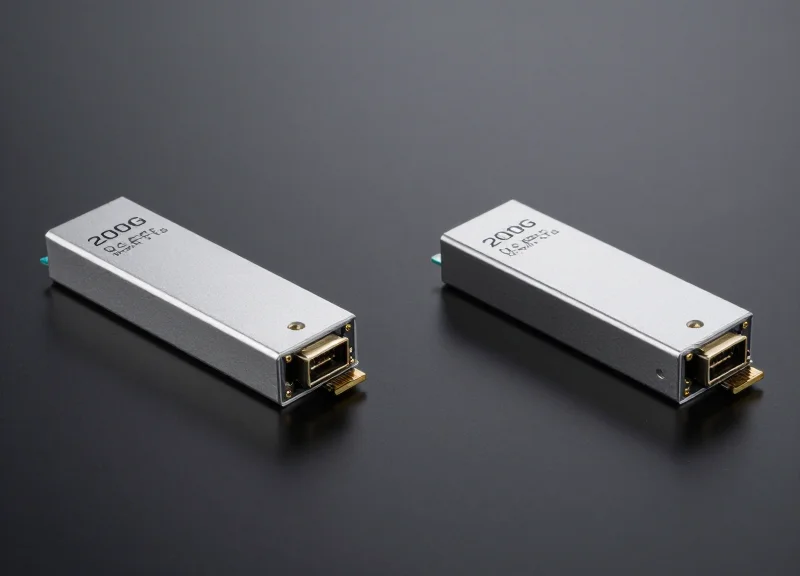
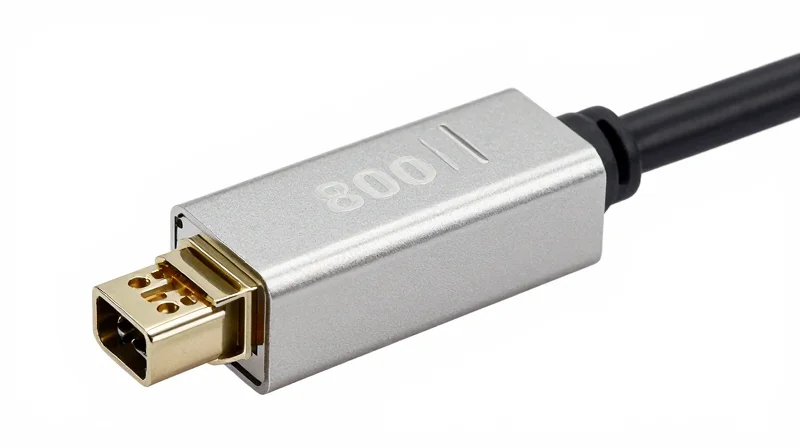
An 800G Active Optical Cable (AOC) is a specialized, factory-terminated assembly that integrates high-speed transceiver modules directly onto a length of multimode fiber optic cable. Designed for short-range, high-bandwidth applications, the 800G AOC functions by converting electrical signals from a switch or server into light pulses using an internal optical engine, transmitting that data over fiber, and reconverting it back to electrical signals at the receiving end. This 'active' design provides a plug-and-play solution that eliminates the complexities of fiber cleaning and connector alignment while maintaining the signal integrity required for 800 Gbps throughput.
Core Component Breakdown
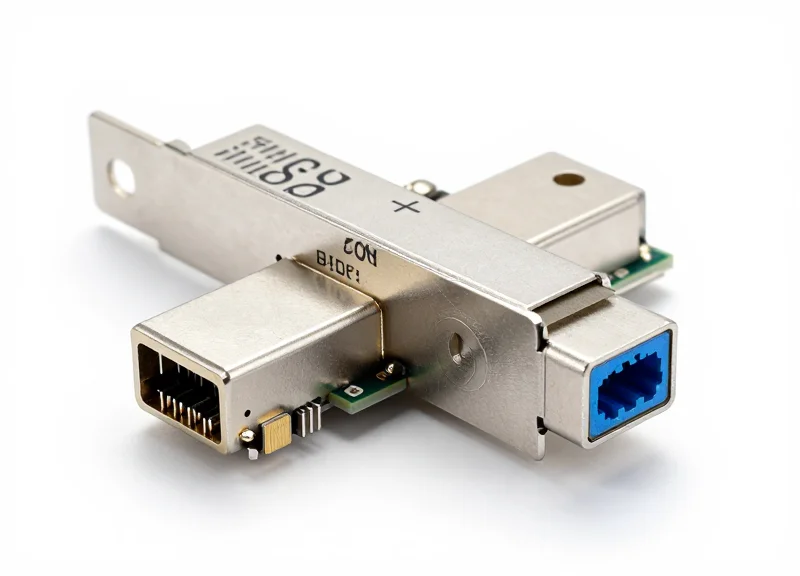
The internal composition of an 800G AOC is significantly more complex than standard passive cables. Each end of the cable houses a sophisticated PCB that manages power, signal processing, and thermal dissipation.
| Component | Technical Role | Key Specification |
|---|---|---|
| Optical Engine | Converts electrical signals to optical (E-O) and vice versa. | 8-channel VCSEL and Photodetector array. |
| DSP (Digital Signal Processor) | Handles PAM4 modulation, equalization, and error correction. | High-performance 7nm or 5nm CMOS process. |
| Multimode Fiber (MMF) | The physical medium for light pulse transmission. | Typically OM3, OM4, or OM5 graded-index fiber. |
| Internal Connector | Mechanical interface between fiber and optical engine. | Permanent factory-bond for zero insertion loss variation. |
Optical Engines and Signal Modulation
The efficiency of an 800G AOC relies on its ability to handle 8 lanes of 100G PAM4 signals. The optical engines at each end typically utilize Vertical-Cavity Surface-Emitting Lasers (VCSELs). Because AOCs are used for short-reach distances—usually up to 100 meters—VCSELs are the preferred choice over single-mode lasers due to their lower cost and reduced power consumption. These engines work in tandem with a Digital Signal Processor (DSP) that compensates for chromatic dispersion and ensures the bit error rate (BER) remains within the strict thresholds defined by the IEEE 802.3ck standard.
AOC Internal Architecture FAQ
- Why are 800G AOCs preferred over DACs for high-density racks?
AOCs are significantly lighter and thinner than Direct Attach Copper (DAC) cables, which improves airflow in high-density racks. Additionally, they are immune to electromagnetic interference (EMI). - Can the fiber in an 800G AOC be replaced?
No, the fiber is permanently bonded to the transceiver housing at the factory. This ensures optimal optical alignment and prevents dust or contaminants from entering the optical path. - What is the role of the EEPROM in an 800G AOC?
The EEPROM stores module identification, vendor info, and Digital Diagnostic Monitoring (DDM) data, allowing switches to monitor temperature, voltage, and laser bias current.
Technical Specifications: PAM4 Modulation and Bandwidth
Technical Specifications: PAM4 Modulation and Bandwidth
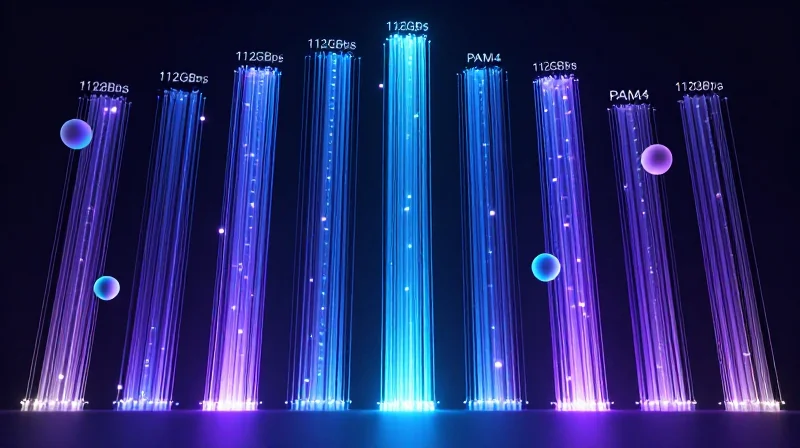
The 800G Active Optical Cable (AOC) achieves its massive aggregate throughput by utilizing an 8-lane configuration where each lane operates at a 112Gbps data rate through 4-level Pulse Amplitude Modulation (PAM4). This architectural shift from previous 50G-per-lane standards allows for a doubling of bandwidth density without requiring a proportional increase in physical cabling, making it the primary solution for the next generation of high-density data center interconnects.
The Mechanics of 112G PAM4 Signaling
PAM4 modulation is the cornerstone of 800G technology. Unlike traditional Non-Return-to-Zero (NRZ) signaling, which transmits a single bit per clock cycle using two voltage levels, PAM4 uses four distinct voltage levels to transmit two bits per symbol. This effectively doubles the bit rate at the same baud rate. For an 800G AOC, the 8x112G electrical interface follows the IEEE 802.3ck standard, ensuring interoperability with high-radix switches and advanced ASICs that are becoming standard in AI and hyperscale cloud infrastructures.
| Feature | NRZ Signaling | PAM4 Signaling (800G) |
|---|---|---|
| Bits per Symbol | 1 bit | 2 bits |
| Voltage Levels | 2 (High/Low) | 4 (00, 01, 10, 11) |
| Signal-to-Noise Ratio | Higher | Lower (approx. 9.5 dB penalty) |
| Bandwidth Efficiency | Standard | Double |
Digital Signal Processing (DSP) and Signal Integrity
Because PAM4 reduces the eye height of the signal, it is more susceptible to noise and jitter. To maintain a reliable link over the multi-mode fiber in an 800G AOC, integrated Digital Signal Processors (DSPs) are utilized. These DSPs perform critical functions including clock and data recovery (CDR), adaptive equalization, and managing Forward Error Correction (FEC). The use of KP4 FEC is standard in these cables to ensure the Bit Error Rate (BER) remains within acceptable limits for 800G Ethernet applications, compensating for the inherent SNR challenges of 112G-per-lane signaling.
Technical FAQ: 800G Signaling and Bandwidth
- Why is 8-lane configuration preferred for 800G AOC?
The 8x112G configuration matches the architecture of the latest generation of switch ASICs (like Tomahawk 5), providing a direct 1:1 mapping that eliminates the need for complex and power-hungry gearboxing. - Does 800G PAM4 require more power than 400G?
While the per-lane power consumption is higher due to the DSP requirements of 112G PAM4, the power-per-bit efficiency is generally improved over 400G systems when measured at the aggregate level. - How does 112G PAM4 impact latency?
The requirement for heavy Forward Error Correction (FEC) and DSP processing introduces slightly more latency than simpler NRZ optics, but this is mitigated by the massive reduction in serialization delay at 800Gbps speeds.
Form Factors for High-Density: OSFP vs. QSFP-DD800
Form Factors for High-Density: OSFP vs. QSFP-DD800
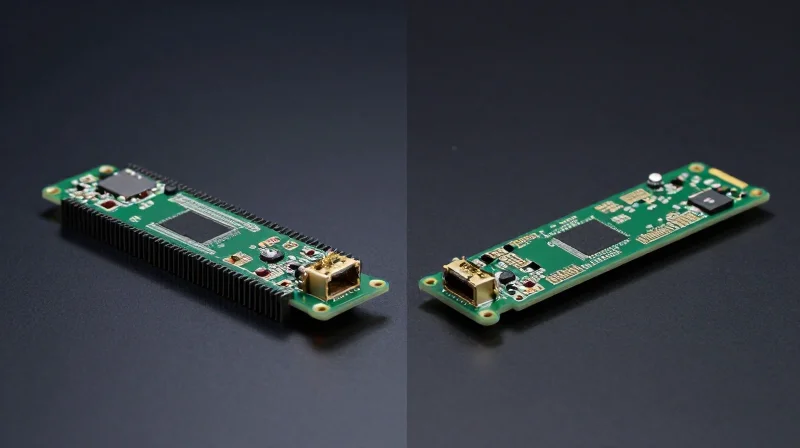
The choice between OSFP and QSFP-DD800 form factors for 800G Active Optical Cables (AOCs) is primarily driven by a trade-off between superior thermal dissipation and seamless backward compatibility. While both form factors support 8 lanes of 112Gbps PAM4 signaling to achieve 800G aggregate throughput, the OSFP (Octal Small Form-factor Pluggable) is often favored in new AI-driven data centers for its higher power ceiling, whereas the QSFP-DD800 (Quad Small Form-factor Pluggable Double Density) is the preferred choice for operators looking to maintain high density within existing QSFP-based ecosystems.
OSFP: Optimized for Thermal Excellence
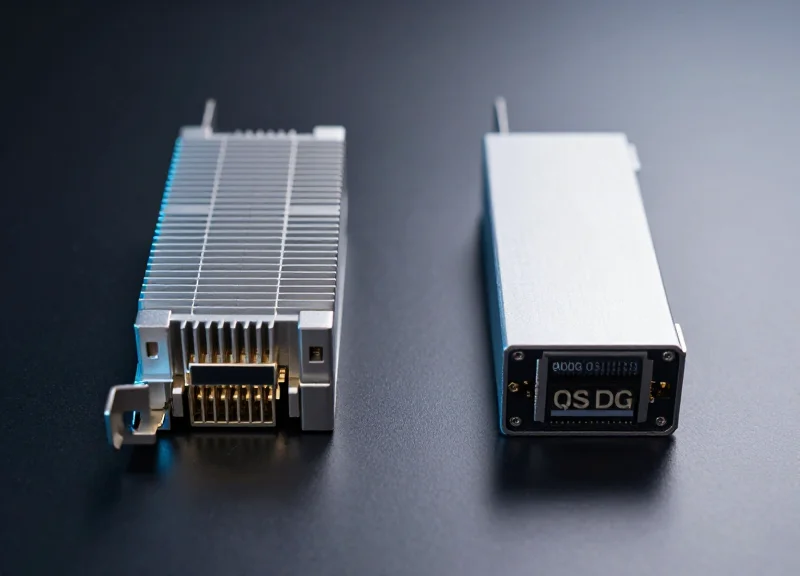
The OSFP form factor was designed from the ground up to handle the significant heat generated by 800G optical engines. It is slightly wider and deeper than the QSFP-DD, allowing for integrated heat sinks directly on the module. This design facilitates efficient airflow and can support power envelopes up to 30W, making it the more robust choice for high-performance computing (HPC) environments where cooling 800G components is a critical operational challenge.
QSFP-DD800: Maximum Density and Interoperability
The QSFP-DD800's primary advantage lies in its backward compatibility. It maintains the same physical footprint as the original QSFP modules, meaning a QSFP-DD800 port can typically accept 40G, 100G, or 400G QSFP cables via legacy support. However, because it lacks the integrated heatsink of the OSFP, it relies more heavily on the chassis's internal cooling system. This makes it ideal for enterprise environments where space optimization and migration paths from 400G infrastructure are top priorities.
| Feature | OSFP | QSFP-DD800 |
|---|---|---|
| Max Power Consumption | Up to 30W | Up to 25W |
| Thermal Management | Integrated Heat Sink | Rely on System Airflow/Heatsink |
| Backward Compatibility | Requires Adapter | Direct (QSFP/QSFP28/QSFP56) |
| Width | 22.58 mm | 18.35 mm |
| Best Use Case | AI/ML Clusters, New Topologies | Legacy Upgrades, High Port Density |
- Can I use an OSFP AOC in a QSFP-DD800 port?
No, they are physically incompatible. However, adapters exist to allow OSFP modules to fit into certain systems, but the physical cage design is different. - Why does thermal management matter for 800G AOCs?
800G components, particularly the DSPs, generate significant heat. Inadequate cooling leads to thermal throttling, increased bit error rates (BER), and a shorter lifespan for the optical engines. - Which form factor is more 'dense'?
QSFP-DD800 is technically denser because the modules are narrower, allowing for 36 ports in a 1U switch, whereas OSFP typically supports up to 32 ports in the same space.
AOC vs. DAC vs. Discrete Transceivers
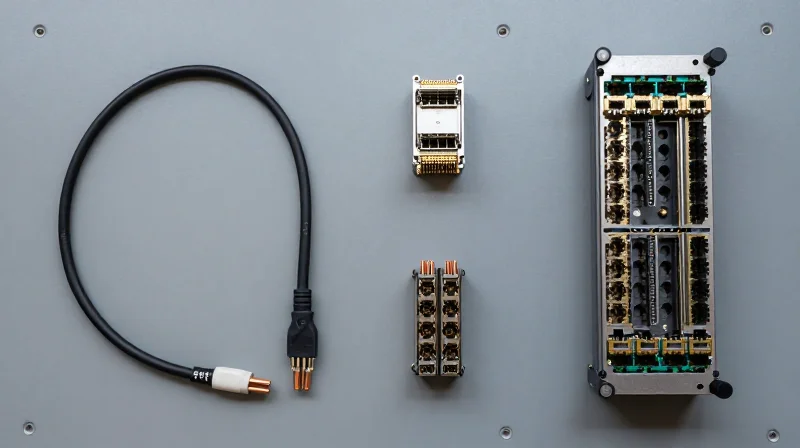
800G Interconnect Comparison: AOC, DAC, and Discrete Transceivers
Selecting the appropriate 800G interconnect involves a multi-dimensional trade-off between transmission distance, power consumption, thermal load, and total cost of ownership (TCO). While Direct Attach Cables (DACs) remain the standard for very short runs, and discrete transceivers provide maximum modularity, 800G Active Optical Cables (AOCs) serve as a critical bridge that resolves the physical and thermal limitations of copper while maintaining a lower price point than modular optics.
| Feature | 800G DAC (Copper) | 800G AOC (Optical) | Discrete 800G Transceivers |
|---|---|---|---|
| Typical Reach | 0.5m - 2.0m | 2.0m - 100m | 100m - 10km+ |
| Power Usage | Near-zero (<0.1W) | Moderate (12W-16W avg.) | High (14W-20W+ per unit) |
| Cable Diameter | Thick/Rigid (AWG 26-30) | Thin/Flexible (3.0mm) | Dependent on Fiber (SMF/MMF) |
| Thermal Impact | Minimal | Managed via integrated design | High heat density per port |
| Relative Cost | Low ($) | Medium ($$) | High ($$$) |
The Limitations of 800G DACs
At 800G speeds, the physics of copper reach an inflection point. Due to signal attenuation at 112Gbps per lane, passive DAC reach is effectively limited to roughly 2 meters. Furthermore, 800G DACs are significantly thicker and heavier than their predecessors, which can obstruct airflow in high-density racks and put physical strain on switch ports. This makes them suitable for intra-rack top-of-rack (ToR) connections but unsuitable for row-to-row or end-of-row deployments.
Why AOC is the Middle Ground Solution
800G AOCs eliminate the reach and weight penalties of copper by utilizing multimode fiber (MMF) driven by integrated VCSEL or Silicon Photonics engines. Unlike discrete transceivers, AOCs are factory-sealed, meaning there are no optical connectors to clean or align, reducing the risk of contamination in high-traffic data centers. This 'plug-and-play' nature, combined with a lower price point than purchasing two separate transceivers and a patch cord, makes AOCs the preferred choice for interconnects ranging from 3 to 100 meters.
Frequently Asked Questions
- Can I mix DACs and AOCs in the same 800G switch?
Yes, most enterprise-grade 800G switches support mixed media types across ports, provided the form factor (e.g., OSFP or QSFP-DD) is compatible with the cage. - Why are discrete transceivers still used if AOCs are cheaper?
Discrete transceivers are necessary for long-haul distances (over 100m) and offer modularity, allowing network admins to change fiber lengths or types without replacing the expensive optical engine. - Does an 800G AOC consume more power than a discrete transceiver?
Generally, no. Because the AOC is an integrated system, manufacturers can often optimize the DSP settings for a specific cable length, resulting in slightly lower power consumption compared to the 'worst-case' tuning required for discrete modules.
Addressing Heat and Power Consumption in High-Density Racks
Addressing Heat and Power Consumption in High-Density Racks
800G AOCs mitigate the thermal challenges of high-density racks by delivering a lower power-per-gigabit ratio compared to discrete optical transceivers, reducing the overall heat load on switch chassis and server interfaces. In environments where 128-port switches are becoming standard, the cumulative heat generated by interconnects can trigger thermal throttling—a state where the network ASIC reduces its clock speed to prevent hardware damage, resulting in significant latency spikes and throughput drops. By integrating the laser and signal processing components into a fixed-length assembly, 800G AOCs eliminate the need for high-power drive circuits required to overcome the losses of variable fiber connections, resulting in a cooler-running interconnect solution.
Comparing the Thermal Envelope: AOC vs. Discrete Solutions
The power envelope of an 800G interconnect is measured in Watts per end. While a discrete 800G transceiver might consume between 16W and 20W depending on its reach and complexity, an 800G AOC typically operates within a more efficient 12W to 15W range. This delta, while seemingly small, becomes massive when multiplied by 32 or 64 ports in a single rack unit (RU). Lower power consumption directly translates to lower TCO (Total Cost of Ownership) through reduced cooling requirements and more predictable airflow management.
| Interconnect Type | Typical Power Consumption (Per End) | Heat Dissipation Profile | Risk of Thermal Throttling |
|---|---|---|---|
| 800G DAC | 0.1W - 1.5W | Negligible | Ultra-Low |
| 800G AOC | 12W - 15W | Moderate / Controlled | Low |
| 800G Discrete Optics | 16W - 20W+ | High / Concentrated | High in Dense Configs |
The Role of Form Factors in Heat Management
The physical design of 800G AOCs—specifically those using the OSFP (Octal Small Form-factor Pluggable) form factor—incorporates integrated heatsinks that facilitate better thermal exchange with the rack's ambient airflow. Unlike traditional transceivers that rely on the switch's internal cage for cooling, OSFP AOCs often feature a finned top surface. This design ensures that the heat generated by the 800G DSP (Digital Signal Processor) and the VCSEL (Vertical-Cavity Surface-Emitting Laser) array is efficiently moved away from the switch mid-plane, allowing the system to maintain a stable operating temperature even under full load.
- How does 800G AOC power consumption affect GPU clusters?
Lower power consumption in AOCs frees up the total power budget of the rack for GPUs and CPUs, while reducing the heat-induced risk of hardware failure in tightly packed AI clusters. - What is the primary cause of heat in an 800G AOC?
The DSP (Digital Signal Processor) is the primary heat source, as it performs the complex PAM4 modulation and error correction required for 800G speeds. - Can AOCs prevent 'hot spots' in a data center?
Yes, by utilizing more efficient integrated components and consistent power draws, AOCs help create a more uniform thermal profile across the switch faceplate.
Signal Integrity and the Shift Toward LPO (Linear Drive)

Signal Integrity and the Shift Toward LPO (Linear Drive)
As 800G networking migrates into high-density AI and cloud data centers, the industry is pivoting from Digital Signal Processor (DSP) heavy architectures toward Linear-drive Pluggable Optics (LPO) to overcome power and latency bottlenecks. Traditional 800G AOCs rely on DSPs to perform 'retiming'—recovering and cleaning up high-speed electrical signals before they are converted to light. In contrast, LPO architecture removes these power-hungry components, relying on the host ASIC’s SerDes to drive the linear interface directly, which fundamentally changes the thermal and performance profile of the rack.
The DSP-Based Standard vs. The Linear Drive Innovation
For years, DSPs have served as the "safety net" of high-speed interconnects, compensating for signal degradation over complex circuit paths. However, at 800G speeds, a single DSP can consume significant power, contributing to the heat-density challenges of 12.8T or 25.6T switches. By eliminating the DSP/retimer inside the AOC module, LPO maintains a linear relationship between the electrical input and the optical output. This reduction in component count not only lowers the bill of materials but also significantly decreases the thermal footprint of each port, allowing for more aggressive rack packing without hitting thermal limits.
| Feature | DSP-Based 800G AOC | Linear Drive (LPO) 800G AOC |
|---|---|---|
| Power Consumption | High (Approx. 14-16W per end) | Low (Approx. 8-10W per end) |
| Latency | Standard (Nanoseconds due to DSP processing) | Ultra-Low (Picoseconds; near-zero processing delay) |
| Signal Processing | Active Retiming & CDR | Purely Analog Linear Path |
| Host Requirement | Standard IEEE-compliant SerDes | High-performance, LPO-optimized ASIC SerDes |
| Heat Generation | Significant; requires robust cooling | Minimal; ideal for dense AI clusters |
Why AOCs are the Ideal Use Case for Linear Drive
While LPO presents interoperability challenges for discrete transceivers (where different brands of modules and cables might be mixed), Active Optical Cables are uniquely suited for linear drive. Because an AOC is a factory-integrated, fixed-length assembly, the electrical-to-optical characteristics are known and constant. Engineers can tune the linear channel perfectly for that specific length of fiber, ensuring that signal integrity is maintained from end-to-end without the need for a retimer to "clean" the signal at the module interface.
- Does LPO work with all 800G switches?
No. LPO requires the host switch ASIC to have a high-quality SerDes capable of handling the linear compensation and equalization. It is a system-level design choice rather than a universal drop-in replacement. - How much latency does LPO actually save?
By removing the DSP, LPO reduces latency from approximately 100ns (typical for a retimed DSP) to less than 1ns. This is critical for latency-sensitive applications like high-frequency trading and large-scale AI training. - Is signal integrity compromised without the DSP?
Not if implemented correctly. Signal integrity is maintained through the host's advanced equalization (FFE/CTLE) rather than the module's DSP, shifting the complexity from the cable to the switch silicon.
Deployment Strategies for AI and Hyperscale Workloads

Deploying 800G Active Optical Cables (AOCs) in AI-driven data centers requires a strategic balance between high-bandwidth throughput and the physical limitations of high-density rack environments. In GPU clusters and hyperscale spine-leaf fabrics, AOCs serve as the primary interconnect for distances between 3 and 100 meters, providing the signal integrity of fiber optics with the plug-and-play simplicity of copper cables, but without the weight or power penalties associated with traditional discrete transceiver-and-patch-cord setups.
Optimizing Spine-Leaf Architectures with 800G AOCs
In modern hyperscale topologies, 800G AOCs are ideally suited for the connection between leaf switches and the spine layer. Unlike Direct Attach Copper (DAC) cables, which are physically limited to roughly 2-3 meters at 800G speeds due to severe signal attenuation, AOCs enable greater physical distance between equipment rows. This allows network architects to place spine switches in centralized locations while maintaining the low-latency characteristics essential for the massive east-west traffic patterns found in large-scale AI training models.
Physical Advantages in High-Density GPU Clusters
| Deployment Factor | 800G DAC (Copper) | 800G AOC (Optical) |
|---|---|---|
| Typical Cable Diameter | 8.5mm - 11mm | 3.0mm - 4.5mm |
| Weight per Meter | Heavy (>500g/m) | Ultra-Light (<50g/m) |
| Max Reach at 800G | 2.0 - 3.0 Meters | Up to 100 Meters |
| Flexibility | Low (High Stiffness) | High (Flexible) |
Bend Radius and Cable Management Best Practices
GPU clusters generate immense heat, and every millimeter of space saved in the cable management zone improves overall airflow. 800G AOCs, with their significantly thinner diameters, eliminate the 'cable dam' effect at the rear of the rack that often plagues copper-heavy installations. When routing AOCs, operators must adhere to the minimum bend radius—typically 10x the outer diameter of the cable—to prevent macro-bending losses. Because AOCs utilize fiber, they are immune to the electromagnetic interference (EMI) that can degrade signals in the densely packed power environments of AI server racks.
- When should I choose 800G AOC over DAC for AI racks?
Choose AOC when the distance exceeds 3 meters or when rack density prevents the use of thick, heavy copper cables that block exhaust airflow. - Does 800G AOC support standard networking hardware?
Yes, 800G AOCs are designed for standard QSFP-DD and OSFP ports, making them fully compatible with current generation 800G switches and NICs. - How does weight impact hyperscale deployments?
In large-scale deployments, the cumulative weight of thousands of copper cables can exceed floor loading limits. AOCs reduce the total cable weight by up to 90%, simplifying structural requirements.
Testing and Validation for 800G Connectivity
Testing and validation for 800G connectivity represent a paradigm shift from previous generations, primarily due to the transition to 112G SerDes and PAM4 (4-level Pulse Amplitude Modulation) signaling. At these speeds, the electrical and optical margins are significantly narrower, making it impossible to achieve an error-free link without active correction. Consequently, validation is no longer just about measuring simple signal strength; it is about ensuring the Digital Signal Processor (DSP) and Forward Error Correction (FEC) algorithms can maintain a stable post-FEC environment despite the inherent noise of high-density racks.
Critical Performance Metrics for 800G AOCs
To guarantee 800G link reliability, engineers must focus on metrics that reflect the health of the entire data path. Traditional eye diagrams, while still useful, are supplemented by complex statistical measurements that account for the compression of PAM4 levels.
| Metric | Significance | Standard Threshold (Typical) |
|---|---|---|
| Pre-FEC BER | Raw bit error rate before correction | < 2.4e-4 (for KP4 FEC) |
| Post-FEC BER | Final error rate after correction | < 1e-15 (Error-free operation) |
| TDECQ | Transmitter and Dispersion Eye Closure Quaternary | < 3.4 dB |
| FEC Margin | Headroom before FEC failure | > 2 dB |
| Optical Power (Rx) | Received signal intensity | -7 to +2.4 dBm |
Bit Error Rate (BER) and FEC Performance
In 800G ecosystems, the goal is not to eliminate all errors but to manage them. The Pre-FEC BER is a measurement of the raw quality of the optical link. If the Pre-FEC BER exceeds the threshold of the KP4 FEC engine, the system cannot recover the data, leading to packet loss and link flapping. Testing involves monitoring the 'FEC Margin,' which indicates how much additional noise a link can withstand before it becomes unserviceable. For high-density AI clusters, maintaining a consistent FEC margin is critical to prevent intermittent performance degradation during high-traffic bursts.
TDECQ and Signal Integrity
TDECQ (Transmitter and Dispersion Eye Closure Quaternary) has replaced traditional mask testing as the primary indicator of optical transmitter quality in 800G AOCs. It measures the increase in noise required to make an ideal transmitter perform as poorly as the one under test. A high TDECQ value indicates poor signal quality, often caused by jitter, inter-symbol interference (ISI), or laser noise, which will directly impact the reliability of the link in a densely packed rack environment.
800G Connectivity Validation FAQ
- Why is 'Error-Free' operation defined differently at 800G?
At 800G speeds, the signal-to-noise ratio is too low for native error-free transmission. 'Error-free' now refers to the state after the FEC has corrected the raw data stream to a Post-FEC BER of 1e-15 or lower. - How does temperature affect 800G AOC validation?
High-density racks generate significant heat, which can cause laser wavelength drift and increased thermal noise. Validation must include testing at 'case temperature' limits to ensure the DSP can compensate for thermal fluctuations. - What is the impact of cable bend radius on 800G testing?
Excessive bending causes macro-bending loss, which reduces the optical power reaching the receiver. This lowers the signal-to-noise ratio and can cause the Pre-FEC BER to spike beyond the correction limit.
Navigating the complexities of 800G networking requires a strategic approach to physical layer interconnects. By choosing 800G AOCs, data center operators can achieve the ideal balance of performance, reach, and energy efficiency needed for next-generation scaling. Ready to upgrade your high-density rack infrastructure? Contact our engineering team today for a comprehensive interconnect audit and customized 800G solution roadmap.