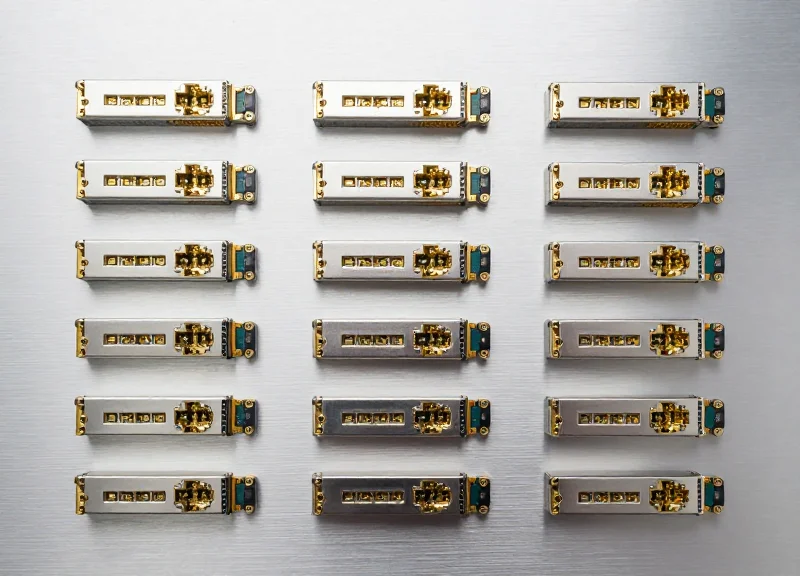
As network architects and procurement managers face increasing pressure to scale bandwidth while managing tight budgets, Fixed-Wavelength DWDM SFP+ modules have become the industry standard for reliable, high-density fiber connectivity. Moving beyond retail procurement to wholesale sourcing allows businesses to unlock significant cost savings and ensure supply chain stability in an evolving market.
Understanding Fixed-Wavelength DWDM SFP+ Technology

Fixed-wavelength Dense Wavelength Division Multiplexing (DWDM) SFP+ modules are high-performance optical transceivers engineered to transmit 10Gbps data streams over a specific, pre-determined wavelength on the ITU-T grid. Unlike standard 10G SFP+ optics that utilize broad 1310nm or 1550nm signals, fixed DWDM modules operate within the C-band (1528.77nm to 1563.86nm) with precise frequency spacing, typically 100GHz or 50GHz. This precision allows network operators to maximize existing fiber infrastructure by aggregating multiple data channels onto a single optical strand through a passive Mux/Demux, significantly lowering the total cost of ownership per gigabit.
Core Mechanics of Fixed-Channel C-Band Transmission
The technical advantage of fixed-wavelength DWDM lies in its narrow spectral width and high stability. Each module is equipped with a cooled EML (Electro-absorption Modulated Laser) that maintains a constant frequency despite temperature fluctuations. This stability is critical for long-haul and metropolitan networks where signal integrity must be preserved over distances of 40km, 80km, or even 100km. By locking into a specific ITU channel, these transceivers ensure zero interference with adjacent channels, enabling massive scalability without the need for additional fiber laying.
| Feature | Fixed-Wavelength DWDM SFP+ | Tunable DWDM SFP+ |
|---|---|---|
| Wavelength Range | Single, hard-coded ITU Channel | Software-adjustable across C-band |
| Unit Cost | Lower (Economical for bulk deployments) | Higher (Complex internal optics) |
| Power Consumption | Typically <1.5W | Typically 2.0W - 2.5W |
| Inventory Strategy | Requires specific spares for each channel | One SKU covers all channels |
Wholesale Considerations and Deployment FAQs
- Why choose fixed-wavelength over tunable modules for wholesale?
Fixed-wavelength modules are significantly more cost-effective for large-scale builds where the network map is static. For wholesale buyers, the price-per-unit advantage allows for a faster ROI when populating high-density Mux/Demux units. - What distances can these transceivers support?
Standard fixed DWDM SFP+ modules are rated for 40km (ER) or 80km (ZR). With the use of EDFA (Erbium-Doped Fiber Amplifiers) and Dispersion Compensation Modules (DCM), these reaches can be extended significantly across regional networks. - Are these modules compatible with all 10G switches?
While the physical form factor is standard, compatibility depends on the host device's EEPROM coding. Wholesale providers usually offer custom-coded versions compatible with Cisco, Juniper, Arista, and other major OEMs.
In the 2026 networking landscape, fixed-wavelength DWDM SFP+ remains the industry standard for high-capacity 10G links. While tunable optics offer flexibility, the thermal efficiency and lower price point of fixed-channel optics make them the preferred choice for bulk infrastructure projects and data center interconnects (DCI).
Fixed vs. Tunable Transceivers: Evaluating the Cost-Benefit Ratio
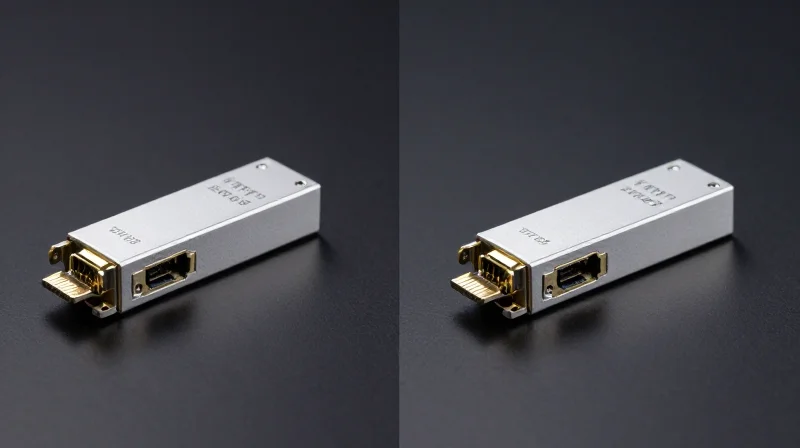
When evaluating a large-scale fiber rollout, the decision between fixed-wavelength and tunable DWDM SFP+ transceivers centers on the Total Cost of Ownership (TCO). While tunable modules simplify sparing and inventory management by covering the entire C-band, they command a substantial price premium—often three to four times higher per unit. For static networks where specific lambda assignments are predetermined and rarely changed, fixed-wavelength transceivers deliver identical 10G performance at a fraction of the cost, making them the most viable option for high-volume wholesale procurement and long-term CAPEX reduction.
Comparative Analysis: Fixed vs. Tunable Modules
| Metric | Fixed-Wavelength SFP+ | Tunable SFP+ |
|---|---|---|
| Unit Cost | Low (High Bulk Discount Potential) | High (Significant Premium) |
| Power Consumption | Lower (Typ. <1.5W) | Higher (Typ. >2.0W due to cooling) |
| Inventory Management | Requires channel-specific spares | One spare fits all channels |
| Complexity | Low; Passive Laser Setup | High; Requires tuning software/controller |
| Best Use Case | Static, point-to-point links | Dynamic or high-churn environments |
Maximizing ROI Through Strategic Wholesale Procurement
The primary advantage of fixed-wavelength technology lies in its manufacturing simplicity. Because these modules utilize standardized Transmitter Optical Sub-Assemblies (TOSA) tuned to a specific ITU Grid frequency, production yields are higher and testing protocols are more streamlined than their tunable counterparts. For operators building out 40-channel or 80-channel systems, the savings realized by purchasing fixed-wavelength modules wholesale can be redirected toward passive mux/demux hardware or fiber plant upgrades. In environments where the network topology is unlikely to change for 5-7 years, the 'convenience' of tunability rarely justifies the 300% markup found in tunable modules.
- Why is fixed-wavelength significantly cheaper?
Fixed modules use a less complex laser design that does not require the micro-thermal controllers and integrated wavelength lockers needed to stabilize a tunable laser across the entire C-band. - Does using fixed-wavelength impact signal quality?
No. Fixed-wavelength SFP+ modules provide the same 10Gbps throughput and reach (up to 80km or 100km) as tunable versions, provided they are matched to the correct ITU channel. - How do I manage the spare parts logistics for fixed modules?
While you must stock specific channels, wholesale pricing allows you to purchase a safety stock of high-demand channels (e.g., Ch 21, 22, 23) while still maintaining a lower overall budget than a smaller fleet of tunable spares.
The Strategic Advantage of Buying Wholesale in 2026
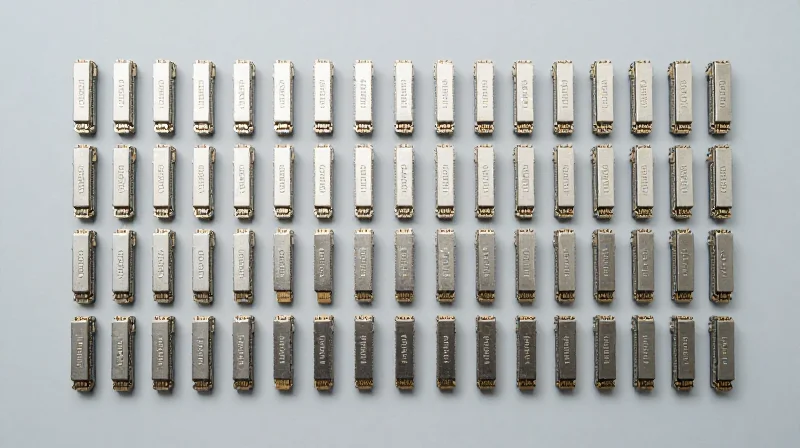
The strategic advantage of buying fixed-wavelength DWDM SFP+ transceivers wholesale lies in the intersection of reduced capital expenditure (CapEx) and improved supply chain resilience. As 10G infrastructure continues to scale, bulk procurement allows operators to achieve a significantly lower total cost of ownership (TCO) compared to ad-hoc, retail-level purchasing, particularly when populating high-density mux/demux systems.
Maximizing ROI through Tiered Volume Pricing
Wholesale agreements typically unlock tiered pricing structures where the cost per unit decreases significantly as volume increases. In the 2026 optical market, these discounts can range from 15% to 40% over retail list prices. For service providers deploying across dozens of ITU channels, these savings directly impact the bottom line, enabling faster ROI on fiber-to-the-x (FTTx) and enterprise backhaul projects.
| Metric | Retail/Small Batch | Wholesale/Bulk |
|---|---|---|
| Price per Unit | Highest (Standard MSRP) | Discounted (Custom Quote) |
| Shipping Overhead | High (Per Shipment) | Low (Consolidated) |
| Inventory Buffer | Minimal/Reactive | Strategic/Proactive |
| Lead Time Risk | Subject to Market Stock | Prioritized Allocation |
Logistical Consolidation and Reduced Overhead
Beyond the unit price, wholesale procurement streamlines logistics. Consolidating high-volume orders into fewer shipments reduces customs fees, handling charges, and administrative overhead. Furthermore, maintaining a local inventory of fixed-wavelength modules ensures that network technicians have immediate access to specific ITU channels without waiting for individual vendor lead times during emergency repairs or sudden capacity spikes.
Hedging Against Price Volatility
Global supply chains remain sensitive to component shortages and raw material price shifts. By securing custom quotes and locking in bulk pricing for the 2026 fiscal year, enterprises can stabilize their budgets against sudden market spikes. This forward-looking procurement strategy ensures that ongoing network expansion projects remain within financial projections regardless of external economic shifts or semiconductor availability.
- What is the typical minimum order quantity (MOQ) for wholesale DWDM SFP+?
MOQs vary by vendor but generally start at 50 to 100 units to qualify for significant bulk discounting and custom shipping terms. - Can I mix different DWDM channels in a single wholesale order?
Yes, most wholesale custom quotes allow for a mix of ITU-T C-band channels (e.g., CH21 through CH60) while still qualifying for the volume price break. - How do custom quotes differ from standard online pricing?
Custom quotes are tailored to specific project timelines and volumes, often including negotiated terms for warranty extensions or specialized compatibility testing for specific switch vendors.
Technical Specifications That Matter for Performance

Core Metrics for High-Performance DWDM Networking
High-performance fixed-wavelength DWDM SFP+ modules are defined by their ability to maintain signal integrity over long distances while navigating the constraints of narrow 100GHz or 50GHz channel spacing. For wholesale buyers, technical specifications aren't just data points; they are the foundation of network uptime and long-term scalability. The three primary pillars of performance for these modules are the optical power budget, chromatic dispersion tolerance, and thermal resilience in high-density environments.
Optical Power Budget and Receiver Sensitivity
The optical power budget is the net difference between the minimum transmitter output power and the receiver sensitivity. In DWDM environments, this budget must account for the insertion loss of Mux/Demux units, which typically ranges from 3dB to 5dB per side. For a standard 80km 'ZR' module, a power budget of approximately 23dB is standard, ensuring the signal can traverse the fiber and passive components without requiring immediate amplification.
| Module Class | Typical Distance | Tx Power Range | Receiver Sensitivity | Power Budget |
|---|---|---|---|---|
| ER (Extended Range) | 40km | -1 to +4 dBm | <-15.8 dBm | ~15 dB |
| ZR (Zero Reach) | 80km | 0 to +4 dBm | <-23 dBm | ~23 dB |
| EZR (Enhanced ZR) | 100km-120km | 0 to +5 dBm | <-28 dBm | ~28 dB |
Managing Chromatic Dispersion (CD)
At 10Gbps transmission speeds, chromatic dispersion—the spreading of light pulses as they travel down the fiber—becomes a significant limiting factor. Fixed-wavelength DWDM SFP+ modules designed for 80km are typically rated to handle up to 1600 ps/nm of dispersion. Wholesale purchasers must ensure that for links exceeding this threshold, the network design incorporates Dispersion Compensation Modules (DCMs) or utilizes modules with higher extinction ratios to maintain a low Bit Error Rate (BER).
Thermal Management and Wavelength Stability
DWDM lasers are highly sensitive to temperature; even slight fluctuations can cause 'wavelength drift,' where the signal bleeds into adjacent channels, causing massive packet loss. Quality wholesale modules utilize internal Temperature Optical Sub-Assembly (TOSA) stabilization. For edge deployments or unconditioned cabinets, choosing Industrial Temperature (I-temp) rated modules (-40°C to 85°C) over Commercial Temperature (C-temp) is vital for long-term hardware survival.
- What is the impact of OSNR on fixed DWDM SFP+ performance?
The Optical Signal-to-Noise Ratio (OSNR) defines the ratio of signal power to noise power. For 10G DWDM, a minimum OSNR of 16-17dB is usually required at the receiver to ensure error-free transmission. - Why is the Extinction Ratio (ER) important for bulk orders?
The ER measures the ratio between the 'on' and 'off' states of the laser. A higher ER (typically >8.2dB) ensures better signal clarity, which is essential when purchasing in bulk for diverse fiber qualities. - How does 'Wavelength Center' accuracy affect performance?
Fixed-wavelength modules must strictly adhere to the ITU-T grid. High-quality modules maintain a center wavelength accuracy of ±0.1nm to prevent inter-channel interference in 100GHz spaced systems.
OEM/ODM Customization: Tailoring Optics to Your Infrastructure
OEM/ODM Customization: Tailoring Optics to Your Infrastructure
When buying fixed-wavelength DWDM SFP+ wholesale, the primary technical barrier is often vendor locking rather than physical connectivity. Ubytelink’s OEM/ODM services bridge this gap by providing custom-coded firmware and EEPROM settings that ensure 100% functional transparency across diverse networking ecosystems. This level of customization allows operators to deploy high-density DWDM solutions that are recognized as native hardware by proprietary operating systems, eliminating the risk of 'unsupported transceiver' errors while maintaining the cost advantages of third-party bulk pricing.
EEPROM Coding for Multi-Vendor Compatibility
Modern switches from vendors like Cisco, Juniper, and Arista utilize sophisticated checksums and vendor-specific IDs within the transceiver's EEPROM. Our customization process involves writing specialized code to the module’s memory, emulating the specific handshake protocols required by the host hardware. This ensures that features like Digital Optical Monitoring (DOM) and real-time diagnostic data are fully accessible to the network administrator.
| Network Vendor | Compatibility Feature | Customization Required |
|---|---|---|
| Cisco Systems | IOS-XE/NX-OS Transparency | S-Class/Non-S-Class ID Emulation |
| Juniper Networks | Junos OS Compatibility | Specific Vendor-ID & Part Number Matching |
| Arista Networks | EOS Native Recognition | High-Precision Checksum Verification |
| Generic/Open-Source | Maximum Versatility | Standard MSA Compliance Coding |
Hardware Branding and Private Labeling
For wholesale buyers and system integrators, brand consistency is often a requirement for large-scale deployments. Ubytelink offers comprehensive ODM services, including custom laser engraving on the transceiver shell and bespoke label printing. This allows providers to supply their end-customers with hardware that matches their internal inventory numbering and aesthetic requirements, all while benefiting from our manufacturing scale.
- Does custom coding affect the hardware warranty?
No. Our custom coding is implemented during the manufacturing phase to ensure the transceiver operates within standard MSA parameters, maintaining full hardware reliability and warranty coverage. - Can you code different channels for a single bulk order?
Yes, wholesale orders can be split into specific ITU grid channels (e.g., C21 to C60) with different compatibility profiles for various switch brands within the same shipment. - What is the lead time for OEM customization?
Customized EEPROM coding typically adds no more than 2-3 business days to the production cycle, depending on the volume and complexity of the vendor requirements.
Ensuring Reliability through Rigorous Quality Control
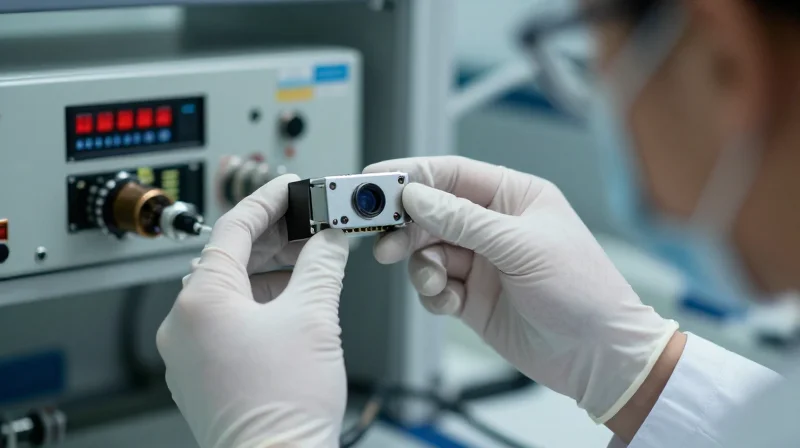
In the context of wholesale procurement for 2026, ensuring the reliability of fixed-wavelength DWDM SFP+ modules is a prerequisite for safeguarding network uptime and reducing total cost of ownership (TCO). Because DWDM systems often operate over spans exceeding 80km, the margin for error regarding spectral stability and signal integrity is incredibly thin. A rigorous quality control (QC) protocol identifies potential failures at the component level before they manifest as costly outages in a production data center or service provider backbone.
The Benchmarks of Optical Signal Integrity
High-performance testing must simulate real-world conditions to ensure that every module in a bulk shipment meets the specific requirements of the ITU-T G.694.1 grid. Our testing facilities utilize advanced oscilloscopes and bit error rate testers to validate that each transceiver maintains its assigned wavelength without drifting into adjacent channels, even under extreme thermal stress.
| Test Protocol | Target Metric | Performance Standard |
|---|---|---|
| Bit Error Rate (BER) | Data Integrity | < 10^-12 (Post-FEC) |
| Center Wavelength | Grid Accuracy | ±0.1 nm Tolerance |
| Optical Signal-to-Noise | OSNR Sensitivity | > 35 dB for 10G signals |
| Thermal Stress Test | Environmental Stability | Stable operation at 70°C |
Switch-Port Compatibility and EEPROM Validation
The primary cause of failure in bulk optical deployments is not physical hardware malfunction, but software-level rejection by the host switch. To mitigate this, every fixed-wavelength DWDM SFP+ module undergoes rigorous EEPROM coding and verification. We utilize a 'Golden Device' testing library comprising the latest chassis from Cisco, Juniper, Arista, and Dell to ensure that Digital Optical Monitoring (DOM) data is reported accurately and that the transceiver is recognized natively without the need for manual overrides.
Quality Control & Deployment FAQs
- How is BER testing conducted for 80km transceivers?
We use fiber spools to simulate the actual distance and attenuation of long-haul spans, measuring the error rate over extended periods to ensure signal stability. - Does wholesale pricing include individual test reports?
Yes, every module is serialized, and batch-specific or individual test data can be provided to verify that the optics meet your infrastructure's specific power budget. - How do you handle wavelength drift over time?
Our modules utilize Temperature Stabilized Lasers (TASA) and go through accelerated aging tests to ensure the fixed wavelength remains locked to the ITU grid for the duration of its service life.
Common Use Cases: Data Centers, Metro Networks, and ISPs

Fixed-wavelength DWDM SFP+ modules are the workhorses of modern optical infrastructure, offering a strategic balance between high-density data transport and capital expenditure efficiency. Unlike standard grey optics, these modules allow network operators to maximize existing dark fiber by multiplexing up to 80 discrete channels onto a single fiber pair. This capability is essential for organizations facing fiber exhaustion or those looking to scale capacity to 400G and beyond using proven 10G technology. By leveraging fixed ITU Grid wavelengths, operators achieve lower power consumption and reduced unit costs compared to tunable alternatives, making them the gold standard for high-volume wholesale deployments.
Data Center Interconnect (DCI) and Campus Backbones
In hyper-scale and enterprise data center environments, fixed-wavelength DWDM SFP+ optics are primarily utilized for Data Center Interconnect (DCI). As data centers expand into multi-building campuses, the need for low-latency, high-bandwidth links between sites becomes paramount. Fixed-wavelength modules are ideal here because the network topology is typically static. Since the wavelengths do not need to change once the link is established, wholesale buyers can save significantly on the 'per-link' cost by opting for fixed optics over more expensive tunable versions. These modules support distances up to 80km without active amplification, ensuring seamless synchronization and disaster recovery capabilities across sites.
Metro Networks and ISP Edge Aggregation
Internet Service Providers (ISPs) and Telecommunications carriers rely on DWDM SFP+ for metro-ring architectures and edge aggregation. As consumer demand for 4K streaming and low-latency gaming grows, ISPs must aggregate massive amounts of traffic from local distribution hubs to the core network. Fixed-wavelength optics allow these providers to stack multiple 10G services on a single metro fiber ring. This 'pay-as-you-grow' model is highly effective; an ISP can start with a few channels and add additional fixed-wavelength modules to the MUX/DEMUX as subscriber density increases, all without interrupting existing traffic.
| Application | Primary Objective | Typical Distance | Recommended Optics |
|---|---|---|---|
| DCI / Campus | High-volume throughput between sites | 10km - 40km | DWDM SFP+ 40km (ER) |
| Metro Ring | Fiber conservation in urban areas | 40km - 80km | DWDM SFP+ 80km (ZR) |
| ISP Backhaul | Aggregating edge traffic to core | Up to 80km | DWDM SFP+ 80km (ZR) |
| Enterprise SAN | Synchronous data replication | 2km - 20km | DWDM SFP+ 20km/40km |
Common Deployment Questions
- Can fixed-wavelength DWDM SFP+ work with passive MUX/DEMUX?
Yes, these modules are designed specifically for use with passive DWDM multiplexers. Each module must match the specific ITU channel port on the MUX (e.g., Channel 21 module to Channel 21 port). - Is an optical amplifier (EDFA) required for all 80km links?
Not necessarily. For point-to-point links under 80km, the high sensitivity of the DWDM SFP+ ZR receiver is often sufficient. However, if using high-loss passive MUX/DEMUX or OADM, an EDFA may be needed to overcome insertion loss. - Why buy fixed-wavelength wholesale instead of tunable?
Fixed-wavelength modules are roughly 30-50% more cost-effective than tunable optics. For large-scale builds where the channel plan is permanent, the cost savings on a bulk order of 100+ units are substantial.
How to Secure the Best Custom Quotes for Bulk Orders
How to Secure the Best Custom Quotes for Bulk Orders
To secure the most competitive pricing for fixed-wavelength DWDM SFP+ modules in 2026, procurement teams must move beyond simple price-per-unit inquiries and provide a comprehensive Request for Quote (RFQ) that addresses technical compatibility, volume scaling, and long-term reliability. Success in wholesale procurement depends on your ability to define specific wavelength requirements and OEM coding needs upfront, allowing vendors like Ubytelink to optimize production schedules and logistics for your deployment scale.
The Procurement Checklist: Essential RFQ Details
- Define Exact Wavelengths and ITU Channels
Specify the exact ITU-T 100GHz or 50GHz grid channels needed. Mentioning a range is less effective than providing a breakdown of specific channel quantities (e.g., 20 units of C21, 20 units of C22). - Identify OEM Compatibility Requirements
List the target hardware (e.g., Cisco ASR, Juniper MX, Arista 7050). Request custom EEPROM coding to ensure the modules pass vendor-specific 'unsupported transceiver' checks. - Request Tiered Pricing Models
Ask for pricing across multiple volume breaks. This allows your team to evaluate the ROI of increasing the order size to reach the next discount threshold. - Confirm Lead Times and Shipping Logistics
Differentiate between 'ready-to-ship' stock and custom-coded batches. Request a firm delivery schedule for staged deployments.
| Order Volume | Typical Discount Range | Lead Time Expectation | Support Level |
|---|---|---|---|
| 1 - 49 Units | Standard Wholesale | 1 - 3 Business Days | Standard Warranty |
| 50 - 199 Units | 10% - 15% off MSRP | 3 - 7 Business Days | Dedicated Account Manager |
| 200+ Units | Custom Project Pricing | Scheduled Batch Delivery | Priority Technical Support & Advance Replacement |
Negotiating Warranty and Compliance Terms
When dealing with high-capacity DWDM networks, the cost of a single link failure far outweighs the initial savings on hardware. Ensure your custom quote includes detailed warranty terms—ideally a 3-year or 5-year replacement guarantee. Furthermore, insist on receiving a test report for each batch that includes Bit Error Rate (BER) testing and Optical Signal-to-Noise Ratio (OSNR) verification. This documentation ensures that the wholesale price does not come at the expense of carrier-grade reliability.
- Can I mix different wavelengths in a single bulk order quote?
Yes. Most wholesale vendors allow you to aggregate different fixed-wavelength modules to reach a higher volume tier, provided they belong to the same product family (e.g., 10G DWDM SFP+ 80km). - Is custom EEPROM coding included in the bulk price?
For reputable OEM-compatible vendors, custom coding for Cisco, Juniper, or Arista is typically included in the wholesale quote, but it must be requested during the RFQ stage. - What are the payment terms for large-scale custom orders?
Standard terms for bulk orders often involve Net 30 for established corporate accounts, while new clients may require a percentage deposit to initiate large-scale production runs.
Navigating the complexities of high-density fiber optics requires a partner that understands both the technical and financial constraints of modern networking. By choosing Ubytelink for your Fixed-Wavelength DWDM SFP+ needs, you gain access to tier-one pricing and expert engineering support. Ready to upgrade your capacity? Contact Ubytelink today for a custom wholesale quote and discover our industry-leading OEM/ODM options.