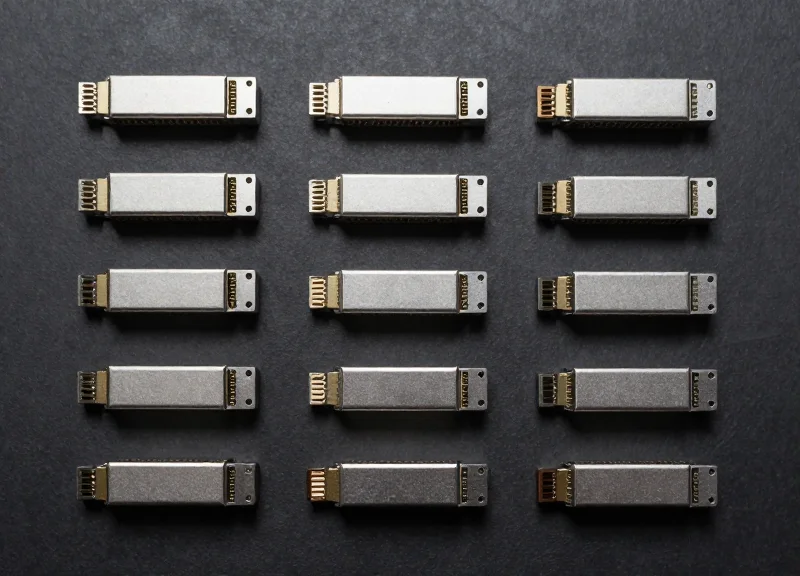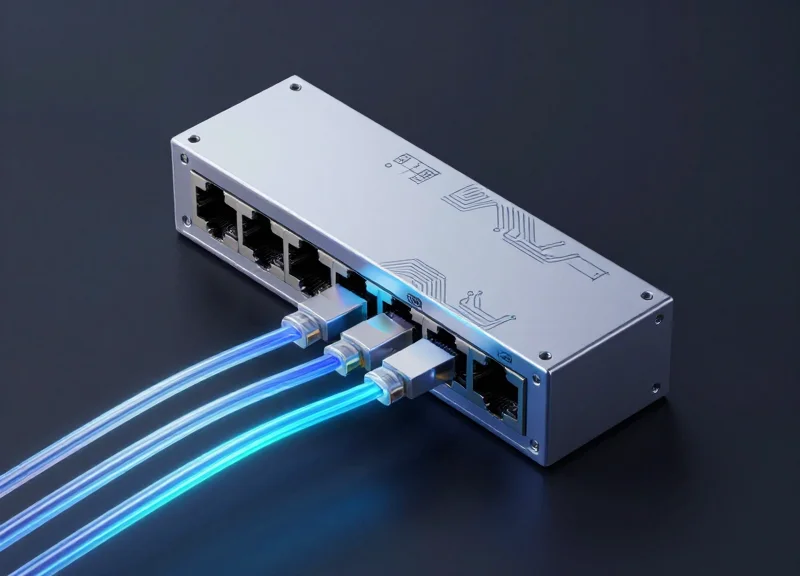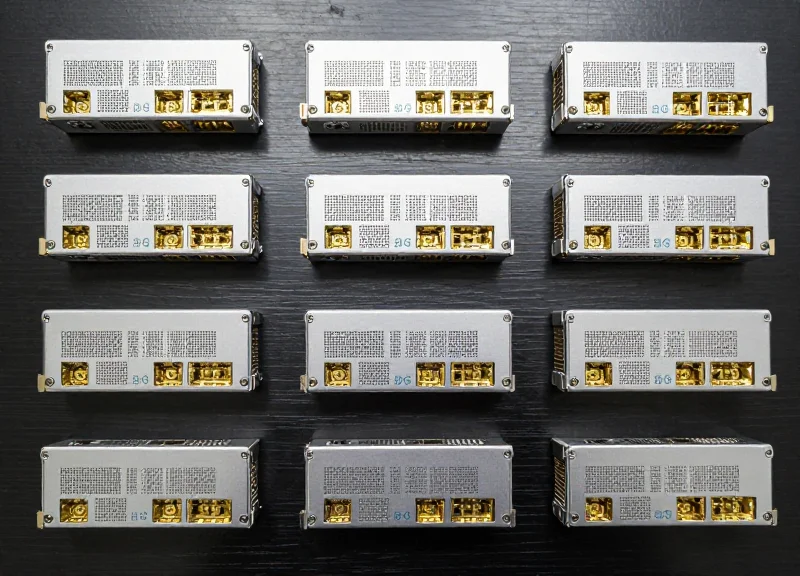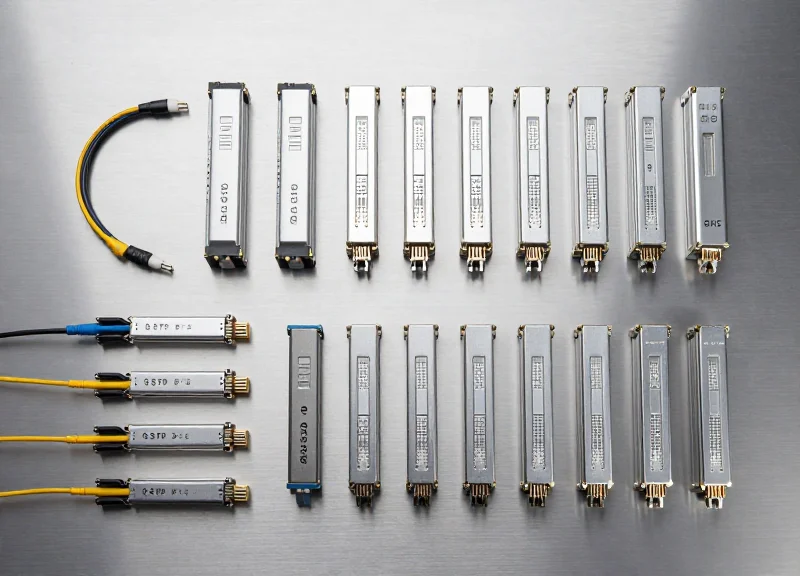
As the global rollout of 5G accelerates, the demand for high-bandwidth, low-latency interconnects has never been higher. The 25G SFP28 transceiver has emerged as the industry standard for 5G Fronthaul applications, bridging the gap between performance and cost-efficiency. However, for telecom providers and data center operators, the challenge lies in sourcing high-quality modules at scale without compromising on technical integrity. This article explores why the 25G SFP28 is essential and how Ubytelink provides the competitive wholesale and customization edge you need.
The Evolution of 5G Fronthaul: Why 25G SFP28 is the Industry Standard

The migration from 10G SFP+ to 25G SFP28 is a fundamental architectural requirement for 5G New Radio (NR) networks. As mobile operators deploy Massive MIMO (Multiple Input Multiple Output) and utilize wider spectrum bands, the fronthaul link between the Distributed Unit (DU) and the Active Antenna Unit (AAU) requires a throughput jump that 10G technology cannot sustain. 25G SFP28 has emerged as the industry standard because it offers 2.5 times the bandwidth of 10G while leveraging the same small form factor, allowing for seamless density upgrades without overhauling physical infrastructure.
The Architectural Shift: From CPRI to eCPRI
In legacy 4G LTE networks, the Common Public Radio Interface (CPRI) protocol was the dominant standard. However, CPRI's inefficiency in handling the massive data rates required by 5G—where 100MHz or wider channels and 64T64R antenna arrays are common—led to the development of eCPRI (enhanced CPRI). eCPRI reduces the bandwidth pressure on the transport network by shifting some processing functions from the baseband to the radio unit. Even with these efficiencies, a single 5G carrier often exceeds 10Gbps, making 25G the baseline for reliable fronthaul transmission.
| Feature | 10G SFP+ | 25G SFP28 |
|---|---|---|
| Max Data Rate | 10.3125 Gbps | 25.78125 Gbps |
| Primary Protocol | CPRI Options 2-8 | eCPRI / CPRI Option 10 |
| 5G Application | Small Cells / Legacy Coexistence | Mainstream 5G Macro Fronthaul |
| Form Factor Standard | SFF-8431 | SFF-8402 |
Critical Drivers for 25G SFP28 Adoption
- Why is 25G preferred over 40G for fronthaul?
25G uses a single-lane electrical interface, which is more cost-effective and power-efficient than the four-lane 40G (QSFP+) architecture. This aligns perfectly with the density requirements of cell site equipment. - What role does eCPRI play in wholesale demand?
eCPRI allows for a 10:1 reduction in bandwidth requirements compared to traditional CPRI. This efficiency makes 25G links capable of supporting high-capacity Massive MIMO configurations that would otherwise require 100G+ links. - How does 25G impact latency in 5G?
By providing a higher clock rate and wider pipe, 25G SFP28 reduces serialization delay, helping operators meet the Ultra-Reliable Low-Latency Communications (URLLC) requirements of 5G.
For wholesalers and network integrators, the 25G SFP28 module is the high-volume 'workhorse' of the 2026-2025 deployment cycle. Its ability to support various transmission distances—from 300m for data center interconnects to 10km or 20km for outdoor fronthaul—ensures its dominance as the primary building block for modern mobile infrastructure.
Technical Specifications: Understanding 25G SFP28 Capabilities
Technical Specifications: Understanding 25G SFP28 Capabilities
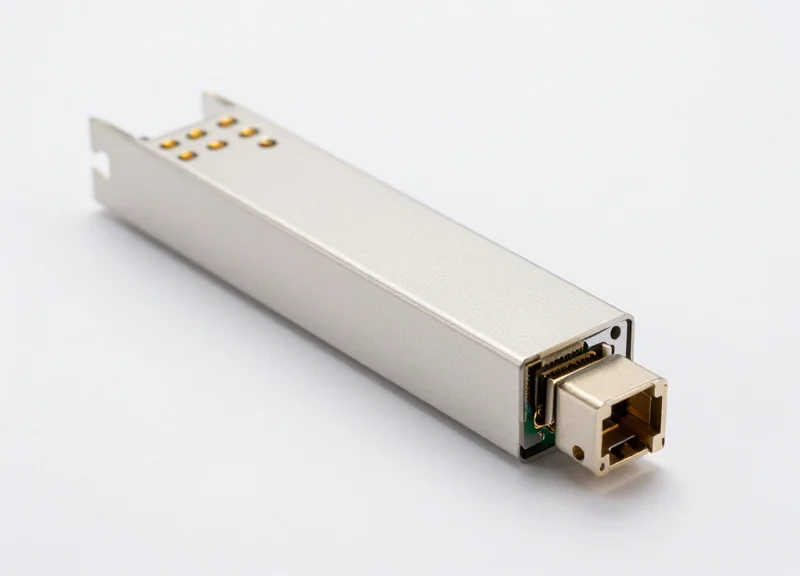
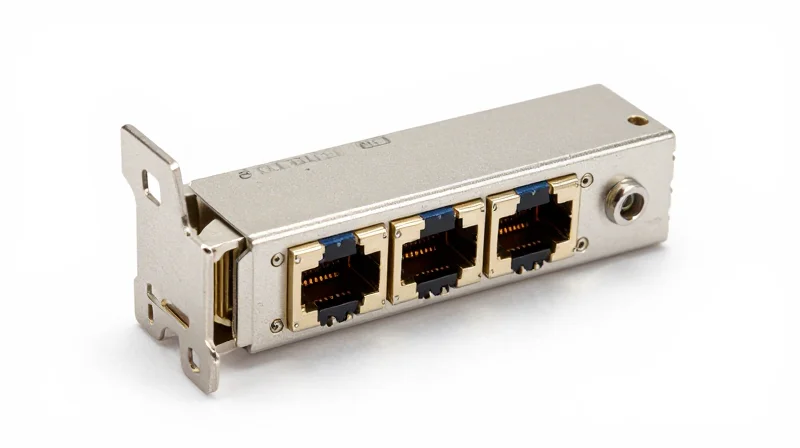
25G SFP28 transceivers are the linchpin of modern 5G NR (New Radio) deployments, offering the precise balance of high-speed throughput and low latency required for eCPRI protocols. These modules are specifically engineered to handle the increased bandwidth of 5G fronthaul while maintaining the same physical form factor as 10G SFP+, allowing for a seamless and cost-effective upgrade path for mobile network operators.
Optical Wavelengths and Transmission Distances
The selection of a 25G SFP28 module depends heavily on the fiber infrastructure and the distance between the Remote Radio Unit (RRU) and the Distributed Unit (DU). Wavelengths range from short-reach multimode solutions to long-haul single-mode optics designed for metro-area distribution.
| Module Type | Wavelength | Fiber Type | Max Distance |
|---|---|---|---|
| 25G SFP28 SR | 850nm | MMF (OM4) | 100m |
| 25G SFP28 LR | 1310nm | SMF | 10km |
| 25G SFP28 ER | 1310nm / 1550nm | SMF | 40km |
| 25G SFP28 BiDi | 1270nm-TX / 1330nm-RX | SMF (Single Strand) | 10km - 20km |
Thermal Resilience: I-Temp vs. C-Temp
Unlike data center environments where temperatures are strictly controlled, 5G fronthaul equipment is often located in unconditioned outdoor cabinets or mounted directly on poles. This environmental reality makes the Industrial Temperature (I-temp) rating a non-negotiable specification for most 5G wholesale purchases. While Commercial Temperature (C-temp) modules operate between 0°C and 70°C, I-temp modules are rated for -40°C to +85°C, ensuring network stability in extreme climates and reducing the frequency of truck rolls for maintenance.
Spectral Efficiency with WDM Technology
To solve the challenge of fiber scarcity in dense urban 5G deployments, 25G SFP28 modules utilize Wavelength Division Multiplexing (WDM). BiDi transceivers allow for bidirectional traffic over a single fiber strand, effectively doubling the capacity of existing fiber plant. For even higher density, 25G DWDM (Dense Wavelength Division Multiplexing) optics enable multiple high-speed channels over a single fiber pair by using specific ITU-grid wavelengths, making them ideal for high-capacity fronthaul aggregation.
Technical FAQ: 25G SFP28 Specifications
- Is 25G SFP28 backward compatible with 10G SFP+?
While the SFP28 form factor is physically identical to SFP+, the electrical interface is designed for 25Gbps. Most SFP28 ports can accept 10G modules, but a 25G SFP28 module typically requires a port capable of 25G signaling unless it is a specialized dual-rate (10/25G) module. - What is the typical power consumption of these modules?
Modern 25G SFP28 transceivers are designed for high efficiency, typically consuming less than 1.5W for LR and BiDi models, and up to 2.0W for extended-reach ER or DWDM models. - Does 5G fronthaul require FEC (Forward Error Correction)?
Yes, for most 25G links exceeding short distances, RS-FEC (Reed-Solomon FEC) is required on the host equipment to maintain the bit error rate (BER) standards necessary for reliable 5G transmission.
The Economic Advantage of Wholesale Sourcing for 5G Infrastructure
Wholesale sourcing is the financial backbone of rapid 5G expansion, providing a multi-layered economic advantage that extends far beyond a lower unit price. By procuring 25G SFP28 transceivers in bulk, network operators and system integrators can achieve up to a 40% reduction in procurement costs compared to ad-hoc purchasing, while simultaneously securing the hardware consistency required for stable eCPRI fronthaul performance. This strategic approach mitigates the volatility of global semiconductor markets and ensures that capital expenditure (CAPEX) is optimized for the massive density of cell sites required in modern RAN architectures.
Reducing Total Cost of Ownership (TCO) Through Scale
Total Cost of Ownership involves more than just the initial invoice. In 5G fronthaul, it includes testing, installation, failure rates, and replacement cycles. Wholesale agreements often include enhanced technical support and rigorous batch testing, which reduces the operational expenditure (OPEX) associated with field failures. Furthermore, unified hardware batches ensure that all modules share identical firmware versions, simplifying network-wide updates and troubleshooting.
| Economic Factor | Retail/Spot Buying | Wholesale/Bulk Procurement |
|---|---|---|
| Unit Pricing | Premium/Standard Market Rate | Tiered Discounts (Volume-Based) |
| Shipping & Logistics | High per-unit shipping costs | Consolidated freight & reduced customs fees |
| Supply Security | Subject to stock availability | Guaranteed inventory & buffer stocks |
| Technical Customization | Standard off-the-shelf specs | Custom firmware & specific testing protocols |
Supply Chain Stability and Risk Mitigation
The telecommunications industry is sensitive to lead times. For 5G rollouts in 2026, delays in receiving 25G SFP28 optics can stall entire construction phases, leading to massive financial penalties and lost revenue from delayed service launches. Bulk contracts allow providers to lock in manufacturing capacity and price points, insulating them from the 'bullwhip effect' often seen in the optical component market.
Custom Quotes: Tailoring Tech to Budget
One of the primary benefits of wholesale sourcing is the ability to request custom quotes that align with specific project phases. Vendors can offer staggered delivery schedules, allowing companies to pay for hardware as it is deployed while still maintaining the bulk discount rate. This improves cash flow management for contractors and service providers during the intensive multi-year build-out of 5G networks.
- How does wholesale sourcing impact the ROI of 5G rollouts?
By lowering the average cost per link in the fronthaul, wholesale sourcing shortens the payback period for infrastructure investment, allowing for a faster transition to profitable service operation. - What is the typical volume required for bulk 25G SFP28 pricing?
While thresholds vary by manufacturer, bulk pricing tiers typically begin at 100+ units, with significant price breaks occurring at the 500 and 1,000-unit marks. - Can custom wholesale quotes include multi-vendor compatibility?
Yes, high-tier wholesale providers offer custom coding services to ensure 25G SFP28 modules are compatible with various OEM equipment (e.g., Nokia, Ericsson, Samsung) within a single bulk order.
Custom OEM/ODM Solutions: Tailoring Optics to Your Hardware
Custom OEM/ODM Solutions: Tailoring Optics to Your Hardware
In the complex landscape of 5G fronthaul deployments, off-the-shelf optical transceivers often fall short of specific architectural requirements or vendor-lock constraints. Custom OEM/ODM solutions bridge this gap by offering precision-engineered 25G SFP28 modules that are specifically programmed and branded to integrate flawlessly with your existing infrastructure, reducing deployment friction and ensuring long-term reliability.
Firmware Customization and Multi-Vendor Interoperability
The most critical aspect of 25G SFP28 customization lies in the firmware. Ubytelink utilizes advanced coding facilities to modify EEPROM/MCU data, allowing modules to be recognized as native by Tier-1 hardware vendors such as Cisco, Juniper, Nokia, and Ericsson. This bypasses 'unsupported transceiver' errors and enables full access to Digital Diagnostics Monitoring (DDM/DOM) features across heterogeneous network environments, which is essential for real-time 5G performance tracking.
| Feature | Standard Off-the-Shelf | Ubytelink Custom OEM |
|---|---|---|
| Vendor Compatibility | Generic / Limited | Full Multi-Vendor Support (Cisco, Nokia, etc.) |
| Branding & Labeling | Generic Factory Label | Private Labeling & Serial Tracking |
| Firmware | Static / Standard | Custom EEPROM/MCU Coding |
| Hardware Modification | None | Custom Pull-tabs & Housing Options |
Bespoke Hardware Branding and Physical Modifications
Beyond internal software, physical tailoring allows for brand consistency and operational efficiency. Wholesale partners can opt for white-labeling, custom laser-etched serial numbers, and specialized pull-tab colors to simplify fiber management in high-density 5G hubs. For unique environmental needs, our ODM services can modify heat sink designs or shell materials to enhance thermal dissipation in non-standard enclosures, ensuring the 25G SFP28 operates within optimal ranges even in harsh outdoor 5G sites.
Customization FAQ
- Can you provide coding for multiple vendors on a single order?
Yes, we can split wholesale batches into different firmware configurations (e.g., 500 units for Nokia, 500 for Cisco) under a single purchase agreement to streamline your inventory. - What is the typical lead time for custom OEM labels?
Private labeling and custom packaging typically add only 3 to 5 business days to the standard production cycle for bulk wholesale orders. - Do custom-coded modules support all diagnostic features?
Absolutely. Our custom firmware ensures that all DDM functions, including temperature, voltage, and optical power monitoring, remain fully operational and accurate.
Compatibility and Interoperability: Ensuring Network Stability
In the complex landscape of 5G fronthaul deployment, compatibility is the primary determinant of network uptime; a 25G SFP28 transceiver must provide more than just raw bandwidth—it must offer seamless integration with Tier-1 hardware. True interoperability is achieved when third-party optics utilize sophisticated firmware coding to emulate the native handshake protocols of proprietary systems, ensuring that switches and routers from different manufacturers communicate without link flaps or error-code triggers. This level of stability is critical for 5G, where low-latency requirements leave no room for the intermittent signal degradation often found in substandard, non-coded optical modules.
Overcoming the Multi-Vendor Integration Challenge
Modern 5G architectures frequently utilize a 'best-of-breed' strategy, combining Baseband Units (BBUs) and Remote Radio Units (RRUs) from diverse vendors like Nokia, Ericsson, and Huawei. This heterogeneity creates a risk of vendor lock-in, where hardware manufacturers use proprietary software checks to reject non-branded optics. Ubytelink mitigates this by employing a comprehensive EEPROM coding process, ensuring every 25G SFP28 module is recognized as 'native' by the host system's operating system, whether it is Cisco IOS, Juniper Junos, or Arista EOS.
| Compatibility Feature | Standard MSA Optics | Ubytelink Tier-1 Compatible |
|---|---|---|
| Firmware Coding | Generic / Basic | Vendor-Specific Optimized |
| DDM/DOM Accuracy | Standard Thresholds | Real-time Host Syncing |
| Hardware Recognition | May show 'Unsupported' | 100% Seamless Identification |
| Protocol Support | CPRI/eCPRI limited | Full 5G Fronthaul Compliance |
Rigorous Testing for Mission-Critical Stability
To ensure 100% interoperability, Ubytelink subjects every batch of 25G SFP28 optics to a multi-stage validation process. This includes 'test-bedding' on actual OEM hardware rather than simulators, measuring bit-error rates (BER) across extended distances, and verifying that Digital Diagnostics Monitoring (DDM) data is accurately reported to the network management system. This eliminates the 'black box' effect, allowing operators to monitor temperature, voltage, and laser bias in real-time across their entire multi-vendor infrastructure.
Compatibility & Interoperability FAQ
- Will Ubytelink 25G SFP28 modules void my original equipment warranty?
No. Under the Magnuson-Moss Warranty Act and similar international competition laws, manufacturers cannot void a hardware warranty simply for using third-party optics. Our modules are designed to meet or exceed OEM specifications. - How does Ubytelink handle firmware updates from Tier-1 vendors?
We continuously monitor OS updates from major vendors (like Cisco or Arista). If an update changes how optics are identified, we update our coding protocols immediately to ensure continued compatibility. - Can one module be coded for two different brands?
While a single module usually carries one primary vendor code, we offer custom dual-coded or multi-coded firmware solutions for specific wholesale requirements where cross-platform flexibility is needed.
Quality Assurance and Reliability Standards in 25G Optics

For 5G fronthaul deployments, reliability is not merely a feature but a non-negotiable requirement to support Ultra-Reliable Low-Latency Communications (URLLC). When purchasing 25G SFP28 modules at wholesale volumes, network operators must ensure that every unit adheres to strict Quality Assurance (QA) protocols. These standards guarantee that the optics can withstand the high-bandwidth demands of 5G while maintaining signal integrity across diverse outdoor environments. High-quality wholesale providers implement comprehensive testing cycles that go beyond standard consumer-grade benchmarks to deliver 'five-nines' (99.999%) availability for critical network infrastructure.
Advanced Testing Protocols for 25G Signal Integrity
The most critical metric for 25G optics in a 5G fronthaul environment is the Bit Error Rate (BER). While many standard modules target a pre-FEC (Forward Error Correction) BER of 5E-5, carrier-grade 25G SFP28 optics are tested to ensure post-FEC performance of 1E-12 or better. This level of precision is achieved through rigorous eye-diagram analysis, which evaluates the optical signal's rise time, fall time, and jitter. By ensuring a wide 'eye' opening during the testing phase, manufacturers can guarantee that the modules will maintain clear communication even in high-interference environments characteristic of dense urban 5G cells.
Environmental Stress Screening (ESS) for Outdoor Reliability
Unlike data center optics housed in climate-controlled rooms, 5G fronthaul optics are often deployed in Remote Radio Heads (RRHs) exposed to extreme weather. Environmental Stress Screening (ESS) is essential to identify latent defects. This involves thermal cycling—rapidly shifting between -40°C and +85°C—and high-humidity soak tests. This process ensures that the internal components, such as the TOSA (Transmitter Optical Sub-Assembly) and ROSA (Receiver Optical Sub-Assembly), do not suffer from expansion-contraction fatigue or moisture ingress over their projected 15-year lifespan.
| Parameter | Standard Commercial Grade | Carrier-Grade / Industrial |
|---|---|---|
| Operating Temperature Range | 0°C to 70°C (C-Temp) | -40°C to 85°C (I-Temp) |
| Bit Error Rate (BER) Target | < 1E-10 | < 1E-12 or better |
| MTBF (Mean Time Between Failure) | > 1,000,000 Hours | > 5,000,000 Hours |
| Supply Chain Traceability | Batch-level Tracking | Individual Serial-level Tracking |
Compliance with International Standards
Reliable 25G wholesale products must comply with Multi-Source Agreements (MSA) and IEEE standards. Specifically, IEEE 802.3by defines the physical layer specifications for 25 Gb/s operation, while SFF-8472 and SFF-8431 govern the mechanical and electrical interfaces for SFP28. Adherence to these standards, alongside RoHS and CE certifications, ensures that the optics are not only interoperable with multi-vendor hardware like Cisco, Nokia, or Ericsson but also safe and environmentally sustainable for global deployment.
Quality Assurance FAQs
- Why is DDM/DOM testing important for wholesale 25G optics?
Digital Diagnostics Monitoring (DDM) allows network engineers to monitor real-time parameters such as laser bias current, temperature, and optical power. Rigorous testing of the DDM interface ensures that predictive maintenance can be performed before a module fails, preventing costly network outages. - What is the impact of 'burn-in' testing on reliability?
Burn-in testing involves operating the module at maximum rated temperature and voltage for 24-72 hours. This process forces 'infant mortality' failures to occur in the factory rather than in the field, ensuring that only the most robust units reach the customer. - How does Ubytelink ensure consistency across bulk orders?
By utilizing automated testing stations and 100% serialized tracking, every module in a wholesale order is individually validated against its performance profile, ensuring that unit #1 and unit #10,000 meet identical performance specifications.
Future-Proofing Your Network: Beyond the 2026 Horizon
Future-Proofing Your Network: Beyond the 2026 Horizon
The transition to 25G SFP28 represents more than a simple bandwidth increase; it is a foundational shift that prepares the physical layer of telecommunications for the next decade of innovation. While 2026 focuses on the massive rollout of mid-band 5G, the SFP28 form factor is designed to be the workhorse of the fronthaul for years to come, providing the necessary thermal efficiency and density to support evolving Open-RAN (O-RAN) standards and the burgeoning demand for Multi-access Edge Computing (MEC).
The Roadmap: Scaling from 25G to 50G and 100G
As network traffic continues its exponential climb, the industry is already charting the course for 50G and 100G in the fronthaul. However, 25G SFP28 remains the strategic 'sweet spot' for wholesale procurement because of its mature ecosystem and lower power profile compared to emerging higher-speed alternatives. For many operators, the path forward involves a 'pay-as-you-grow' model, utilizing 25G today while ensuring that fiber plants are high-quality enough to support WDM (Wavelength Division Multiplexing) overlays in the future.
| Technology | Primary Application | Economic Lifecycle | Power Profile |
|---|---|---|---|
| 25G SFP28 | Mainstream 5G Fronthaul | Peak Maturity (2026-2028) | Low (1.0W - 1.5W) |
| 50G SFP56 | High-Capacity Urban Macro | Early Adoption (2025+) | Moderate (1.5W - 2.0W) |
| 100G DSFP/QSFP28 | Aggregation & Hub Sites | Scaling (Current) | High (3.5W+) |
O-RAN Compatibility and Edge Computing
The shift toward O-RAN mandates that optical modules be decoupled from proprietary hardware. Future-proofing your network means sourcing 25G SFP28 modules that are hardware-agnostic and capable of being reflashed for different vendor environments. This flexibility is critical for Edge Computing, where 25G links connect distributed units (DU) to local data centers, enabling ultra-low latency applications like autonomous driving and industrial IoT.
- How long will 25G SFP28 remain the industry standard?
Current industry roadmaps suggest 25G will remain the dominant interface for 5G fronthaul through at least 2030, as it aligns perfectly with the current radio unit (RU) capabilities and power constraints. - Does wholesale procurement now mitigate future supply chain risks?
Yes, securing bulk pricing and custom quotes in 2026 protects against geopolitical shifts and raw material price volatility, ensuring consistent rollout schedules for the next 24-36 months. - Can 25G SFP28 support the transition to 6G?
While 6G will require higher speeds, the 25G infrastructure currently being deployed will serve as the secondary or 'underlay' network, much like 10G serves 5G today, extending the return on investment.
How to Request a Custom Wholesale Quote from Ubytelink

How to Request a Custom Wholesale Quote from Ubytelink
Obtaining a custom wholesale quote from Ubytelink is a consultative process designed to align high-performance 25G SFP28 hardware with specific 5G fronthaul budget constraints and technical interoperability needs. By leveraging our direct-to-manufacturer supply chain, procurement managers can bypass middle-tier markups while ensuring that every unit meets the stringent BER (Bit Error Rate) and environmental requirements of modern O-RAN architectures.
The Step-by-Step Procurement Workflow
- Requirement Submission
Submit your project scope via the Ubytelink wholesale portal, detailing the quantity, desired distance (e.g., 10km, 40km), and wavelength requirements for your 5G fronthaul deployment. - Technical Compatibility Review
Our engineers review your target host equipment (e.g., Nokia, Ericsson, Cisco) to determine the specific EEPROM coding required for 100% plug-and-play compatibility. - Volume Pricing Analysis
Based on the 2026 pricing tiers, we calculate discounts based on total volume, shipping frequency, and long-term supply agreements. - Formal Quote Issuance
Receive a detailed PDF quotation including unit price, lead times, shipping logistics, and comprehensive warranty terms within 12 to 24 business hours.
Critical Information for Quote Accuracy
| Parameter | Details Needed | Impact on Wholesale Quote |
|---|---|---|
| Link Distance | 300m, 2km, 10km, or 40km | Determines laser type (VCSEL vs. DFB/EML) and cost base. |
| Temperature Grade | Commercial (0-70°C) vs. Industrial (-40-85°C) | Industrial grade optics for outdoor RRHs carry a premium price. |
| Compatibility Coding | List of OEM host equipment | Determines the firmware complexity and testing validation time. |
| Annual Volume | Estimated total units for 2026 | High-volume commitments unlock the most aggressive pricing tiers. |
Exclusive Benefits for Wholesale Partners
Ubytelink's wholesale program is not merely about price reduction; it is about providing a resilient supply chain for mission-critical 5G infrastructure. Partners gain access to prioritized production slots, ensuring that even during global component shortages, your 25G SFP28 modules are delivered on schedule. Additionally, we offer custom labeling and packaging to streamline your internal inventory management and asset tracking.
Frequently Asked Questions: Wholesale Quotes
- What is the Minimum Order Quantity (MOQ) for custom pricing?
Wholesale pricing tiers typically begin at 50 units, though we offer deeper discounts for bulk orders exceeding 500 units. - Can I request sample units for interoperability testing?
Yes, we provide evaluation units to qualified engineering teams to ensure compatibility before finalizing a bulk wholesale purchase. - How long are custom quotes valid?
Due to fluctuations in the semiconductor market, quotes are generally valid for 15 to 30 days, though longer price protections are available for strategic contracts. - Do you support Drop-Shipping for Tier-2 distributors?
Ubytelink offers white-label drop-shipping services for wholesale partners, allowing you to fulfill client orders directly from our regional warehouses.
Scaling your 5G network requires a partner that understands both the technical nuances of SFP28 technology and the logistical demands of wholesale procurement. Ubytelink combines Silicon Valley engineering standards with flexible manufacturing to deliver superior 25G solutions. Don't settle for off-the-shelf limitations; contact Ubytelink today for a custom quote and take the first step toward a more robust, cost-effective 5G infrastructure.