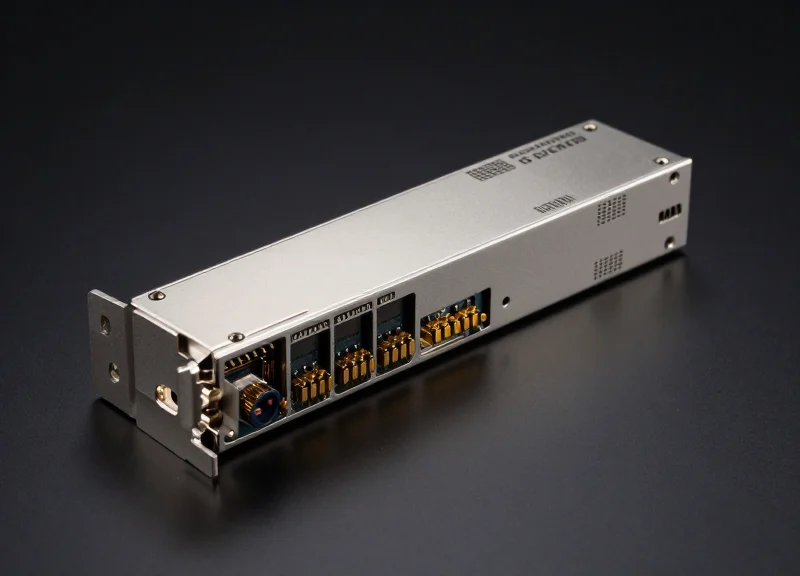
In an era where connectivity is the backbone of global commerce, ISPs face the immense challenge of maintaining 100% uptime while managing surging data traffic. Ubytelink addresses these complexities with specialized optimization modules designed for the most demanding mission-critical environments, ensuring that global networks remain resilient, fast, and secure.
Understanding the Architecture of Ubytelink ISP Modules

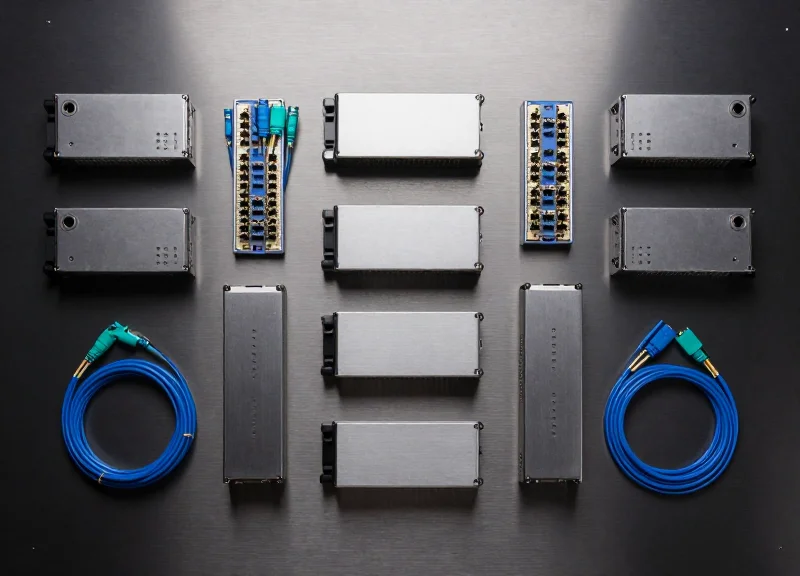
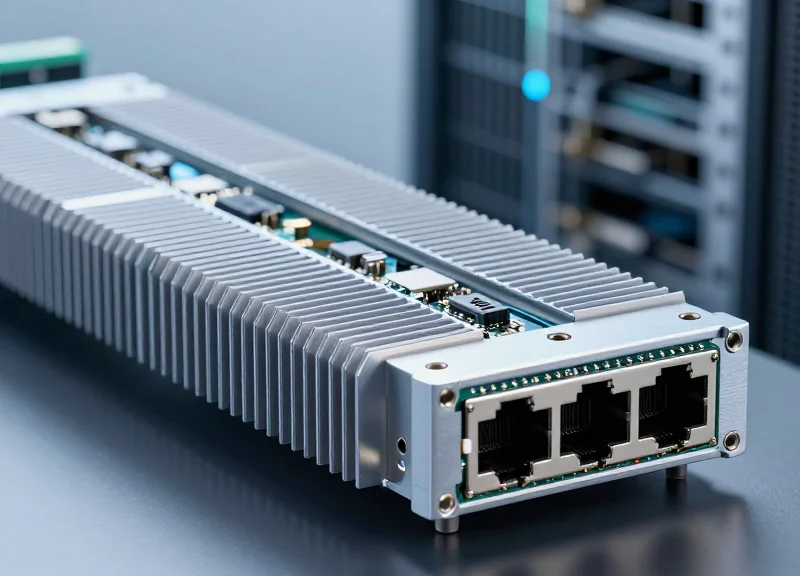
Ubytelink ISP Network Optimization Solutions are built upon a decoupled, modular architecture that allows service providers to deploy specialized nodes tailored to specific network demands without necessitating a complete infrastructure overhaul. This approach leverages high-density processing units and intelligent software layers to ensure that each module—whether focused on edge caching, traffic shaping, or security—operates with maximum efficiency while maintaining transparent interoperability with existing hardware.
Modular Components and Functionality
The architecture is categorized into functional silos that can be independently scaled. This granular control enables ISPs to target bottlenecks specifically at the core, distribution, or access layers. By utilizing standardized communication protocols, Ubytelink modules synchronize in real-time to provide a unified view of the network health and traffic patterns.
| Module Category | Key Objective | Primary Deployment Site |
|---|---|---|
| Aggregation Nodes | High-throughput data consolidation and backhaul optimization | Central Office / Core Data Center |
| Edge Optimization Nodes | Latency reduction and localized content delivery | Point of Presence (PoP) / Network Edge |
| Security & Governance Nodes | Deep Packet Inspection (DPI) and DDoS mitigation | Gateway / Border Router |
| Traffic Management Nodes | QoS enforcement and bandwidth allocation | Distribution Layer |
Seamless Integration via Software-Defined Design
The integration of Ubytelink modules into legacy and modern environments is facilitated by a robust Software-Defined Networking (SDN) controller. This controller manages the lifecycle of each module, providing automated provisioning and policy-based configuration. Support for industry-standard APIs and protocols like VXLAN and Segment Routing ensures that Ubytelink hardware acts as a natural extension of the ISP’s existing ecosystem, reducing the time-to-market for new service offerings.
Frequently Asked Questions
- How does Ubytelink ensure compatibility with third-party vendors?
Ubytelink utilizes open-standard protocols and versatile hardware interfaces (SFP+/QSFP28) to ensure full compatibility with major networking brands such as Cisco, Juniper, and Huawei. - Is it possible to scale modules without downtime?
Yes, the architecture supports hot-swappability and clustering, allowing ISPs to add capacity or upgrade modules without interrupting the primary traffic flow. - What makes Ubytelink architecture 'Premium' for global networks?
The combination of carrier-grade reliability, low-power consumption design, and the ability to maintain ultra-low latency across geo-dispersed nodes defines its premium quality.
Mitigating Latency with Intelligent Traffic Engineering

Mitigating Latency with Intelligent Traffic Engineering
Ubytelink ISP Network Optimization Solutions transform standard IP routing into a performance-driven architecture by decoupling path selection from static BGP metrics. By utilizing real-time telemetry and predictive algorithms, Ubytelink identifies the path of least resistance across the global fabric, effectively neutralizing the performance degradation typically caused by physical distance and intermediate congestion points. This approach ensures that data packets take the most efficient route based on current network health rather than simply following the shortest administrative path.
The Limitations of Traditional BGP vs. Ubytelink ITE
Standard Border Gateway Protocol (BGP) is fundamentally designed for reachability and policy enforcement rather than performance. It often chooses routes based on the fewest Autonomous System (AS) hops, which can lead to traffic being sent through congested peering points or longer physical distances. Ubytelink’s Intelligent Traffic Engineering (ITE) overrides these inefficiencies by analyzing the 'Live State' of the network.
| Feature | Traditional BGP Routing | Ubytelink Intelligent Routing |
|---|---|---|
| Primary Metric | AS-Path Length (Hops) | Real-time Latency, Jitter, and Packet Loss |
| Congestion Handling | Reactive (Manual intervention often required) | Proactive (Automated AI-driven rerouting) |
| Traffic Distribution | Static/Fixed | Dynamic Load Balancing across multiple paths |
| Convergence Speed | Minutes (Slow propagation) | Sub-second (Instantaneous path switching) |
Dynamic Path Selection and Jitter Reduction
The core of Ubytelink's solution lies in its ability to monitor sub-millisecond variations in network performance. When the system detects a spike in jitter or a micro-outage on a primary transit provider, it instantly shifts critical traffic to an optimized alternative path. This is achieved without the packet loss typically associated with routing convergence. By maintaining a continuous map of global latencies, Ubytelink ensures that latency-sensitive applications like VoIP, high-frequency trading, and cloud gaming remain stable regardless of regional network volatility.
Optimizing Cross-Border and Inter-Continental Data Flows
Global networks often face the 'middle mile' problem, where data becomes trapped in suboptimal peering exchanges. Ubytelink addresses this by deploying specialized optimization nodes at strategic geographical locations. These nodes act as intelligent relays that compress headers and manage window sizes to counteract the effects of high RTT (Round Trip Time), making long-distance data transfers feel as responsive as local connections.
Frequently Asked Questions: Latency and Traffic Control
- How does Ubytelink prevent 'route flapping' during dynamic optimization?
Ubytelink utilizes proprietary hysteresis algorithms and dampening techniques to ensure that traffic is only rerouted when the performance gain exceeds a specific stability threshold, preventing oscillating paths. - Can this solution be integrated with existing SD-WAN deployments?
Yes, Ubytelink is designed to be vendor-agnostic, providing a modular enhancement layer that complements existing SD-WAN and MPLS architectures by providing better transit visibility. - Does intelligent routing impact network security or encryption?
Not at all. Ubytelink operates at the transport and network layers, meaning it optimizes the path of the encrypted packets without needing to inspect or modify the payload itself.
Ensuring 99.999% Reliability for Mission-Critical Tasks

Ensuring 99.999% Reliability for Mission-Critical Tasks
Ubytelink ISP Network Optimization Solutions redefine reliability by moving beyond simple backup links to a state of proactive resiliency, where the network anticipates and circumvents failures before they impact end-users. For sectors like global finance and emergency healthcare, even a few seconds of downtime can result in catastrophic losses; thus, our architecture utilizes a 'Five-Nines' framework designed to limit annual downtime to less than five minutes through hardware-level redundancy and software-defined pathing.
Automated Failover and Path Diversity
The core of our reliability model lies in geographically diverse pathing. Unlike traditional networks that may share physical conduits, Ubytelink ensures that primary and secondary routes are logically and physically separated. When a fiber cut or node failure occurs, our Intelligent Traffic Engineering (ITE) triggers a sub-millisecond failover process. This ensures that session persistence is maintained, particularly for high-stakes TCP-based applications that require constant connectivity.
| Feature | Standard ISP Solution | Ubytelink Premium Solution |
|---|---|---|
| Annual Downtime | 8.76 to 43.8 hours (99.0% - 99.5%) | < 5.26 minutes (99.999%) |
| Failover Trigger | Manual or slow BGP convergence | Sub-millisecond automated switching |
| Pathing | Converged physical infrastructure | Physically diverse divergent routing |
| Session Integrity | Likely to drop and reconnect | Seamless hitless transition |
Industry-Specific Resiliency Requirements
- Financial Institutions
Ubytelink provides ultra-low latency coupled with hitless failover for High-Frequency Trading (HFT) platforms, where packet loss translates directly to financial slippage. - Healthcare Systems
Our solutions ensure continuous connectivity for remote surgical robotic systems and real-time patient monitoring, where network stability is a matter of life safety. - Government Infrastructure
We deploy encrypted, redundant backhaul for secure communications and public safety networks that must remain operational during large-scale emergencies or grid failures.
Reliability FAQ
- What is 'Hitless Failover' in the Ubytelink context?
It is a mechanism where the transition from a failing link to a healthy one occurs so rapidly that data packets are not dropped and active software sessions remain intact. - How does Ubytelink handle localized hardware failures?
Our ISP modules are built with redundant power supplies and mirrored control planes, allowing for hot-swappable hardware replacements without interrupting the data flow.
Dynamic Scaling: Meeting Global Bandwidth Demands

The Evolution of Elastic Network Capacity
Ubytelink ISP Network Optimization Solutions eliminate the traditional trade-off between infrastructure costs and network performance by implementing a software-defined elastic scaling layer. This architecture allows ISPs to provision bandwidth dynamically, ensuring that global networks can absorb massive traffic spikes—driven by events like large-scale software updates, live streaming, or cloud migrations—without the need for immediate physical hardware upgrades or manual configuration.
Automated Load Balancing and Resource Allocation
At the core of Ubytelink’s scaling capability is an intelligent orchestration engine that monitors link saturation and latency across the entire backbone. When traffic exceeds predefined thresholds, the system automatically redirects flows to underutilized nodes or activates virtualized network functions (VNFs) to increase processing power. This 'just-in-time' delivery of bandwidth ensures that Quality of Experience (QoE) remains high even during unpredictable demand periods.
| Feature | Legacy Manual Scaling | Ubytelink Dynamic Scaling |
|---|---|---|
| Response Time | Hours to Days (Manual) | Milliseconds (Automated) |
| Resource Efficiency | High Over-provisioning Costs | Pay-as-you-grow Efficiency |
| Human Error Risk | High (Configuration Mistakes) | Low (Algorithmic Precision) |
| Traffic Handling | Static Thresholds | Predictive AI-Driven Elasticity |
Scalability FAQ
- Does dynamic scaling affect network stability?
No. Ubytelink uses hitless scaling protocols, ensuring that as capacity increases or traffic is rerouted, existing sessions remain active without packet loss or jitter. - How does Ubytelink handle global bandwidth spikes?
By utilizing a distributed mesh of optimization nodes, Ubytelink can offload local congestion to regional backbone paths that have available capacity, balancing the load globally. - Is additional hardware required for every capacity increase?
Ubytelink is designed to maximize the headroom of existing hardware. Physical upgrades are only necessary when the aggregate physical limit of the interface is reached, rather than for every traffic fluctuation.
Advanced Security Protocols within the Optimization Layer

Advanced Security Protocols within the Optimization Layer
Ubytelink redefines network safety by embedding security protocols directly within the optimization logic, ensuring that data protection is not an afterthought but a native function of traffic steering. By analyzing packet behavior at the same moment optimization decisions are made, Ubytelink eliminates the latency typically associated with standalone security appliances, providing a seamless shield for global ISP infrastructures.
Real-Time Threat Detection and Automated Mitigation
The optimization layer acts as a first responder. When a spike in traffic is detected, Ubytelink's algorithms distinguish between legitimate surges and malicious DDoS attacks by examining behavioral patterns and origin heuristics. This allows for immediate 'scrubbing' at the edge, where malicious traffic is dropped while mission-critical data continues to flow through optimized paths without interruption. This convergence of security and performance ensures that ISPs can maintain premium quality even during active cyber-warfare scenarios.
| Feature | Traditional Security | Ubytelink Integrated Layer |
|---|---|---|
| Latency | High (sequential processing) | Near-Zero (parallel processing) |
| Detection Method | Signature-based | Behavioral & AI-driven |
| Resource Impact | High CPU overhead | Optimized hardware utilization |
| Global Response | Reactive/Manual | Automated/Proactive |
Securing the Data Pipeline via Multi-Path Integrity
Beyond simple mitigation, Ubytelink implements automated integrity checks across its dynamic routing paths. This ensures that data traversing global nodes is protected against man-in-the-middle attacks and packet manipulation. By combining encryption with path optimization, Ubytelink offers a hardened environment for sensitive sectors such as finance and government.
- Does the security layer slow down the network?
No, because security processing is integrated into the packet-handling pipeline, eliminating the need for additional network hops or external processing nodes. - How does it handle zero-day vulnerabilities?
Ubytelink uses AI-driven anomaly detection to identify and quarantine suspicious traffic patterns that do not match established baseline behaviors, even if a signature doesn't yet exist. - Can it be integrated with existing ISP firewalls?
Yes, Ubytelink acts as a frontline defense, pre-filtering traffic and reducing the total load on internal ISP security infrastructure to improve overall network resilience.
Visibility and Analytics: Data-Driven Network Management

Visibility and Analytics: Data-Driven Network Management
In an era where network complexity scales exponentially, Ubytelink transforms raw data into actionable intelligence by integrating high-fidelity telemetry directly into the optimization layer. This approach moves beyond traditional monitoring, offering a unified dashboard that provides a real-time, 360-degree view of global traffic patterns, latency spikes, and resource utilization. By leveraging these insights, network administrators can move from reactive troubleshooting to proactive optimization, ensuring that premium service levels are maintained across diverse geographical regions.
The Ubytelink Telemetry Stack: Precision at Every Layer
The foundation of Ubytelink's visibility suite is its distributed telemetry engine, which captures performance metrics with millisecond precision. Unlike legacy systems that rely on periodic polling, Ubytelink utilizes push-based streaming telemetry (gRPC, IPFIX) to deliver instantaneous updates to the central management controller. This allows for the detection of micro-bursts and transient congestion events that often escape traditional SNMP-based monitoring tools.
| Metric Category | Traditional Monitoring | Ubytelink Analytics |
|---|---|---|
| Sampling Frequency | 5-15 Minutes | Real-time / Millisecond |
| Data Depth | Surface-level (Up/Down) | Deep Packet & Flow-level |
| Analysis Method | Reactive Alerts | Predictive AI Modeling |
| Visibility Scope | Siloed Device View | End-to-End Topology |
| Resolution | Coarse Aggregates | Granular Per-Session Details |
Predictive Insights and Anomaly Detection
By applying machine learning algorithms to historical traffic data, the Ubytelink platform identifies trends and predicts potential failure points before they impact the end-user. This predictive capability is essential for managing global networks where manual oversight is impossible at scale. The system automatically baselines normal behavior and triggers intelligent alerts only when deviations exceed statistical significance, effectively reducing alert fatigue for NOC teams.
- How does Ubytelink handle data privacy while performing deep analytics?
The platform uses metadata extraction and anonymization techniques, ensuring that performance analytics are gathered without compromising user privacy or violating global data protection regulations like GDPR. - Can the analytics engine integrate with third-party SIEM or OSS/BSS systems?
Yes, Ubytelink provides robust Northbound APIs (RESTful and Kafka-based) to export enriched telemetry data into existing ecosystem tools for unified billing and security operations. - What specific latency metrics are tracked?
Ubytelink monitors RTT, jitter, one-way delay, and protocol-specific latency (such as TCP handshake time and DNS resolution speed) to provide a comprehensive QoE score.
Ultimately, the integration of advanced analytics into the ISP network optimization pipeline ensures that infrastructure investments are aligned with actual traffic demands. Ubytelink provides the clarity needed to optimize routing, justify capacity expansions, and deliver a premium, high-availability experience to a global subscriber base.
Global Deployment Case Studies

Real-World Impact: Global Case Studies in Network Transformation
Ubytelink's global deployments prove that high-performance network optimization is not a one-size-fits-all endeavor, but rather a strategic alignment of intelligent traffic management with local infrastructure realities. From high-density urban environments in Asia to the latency-sensitive markets of Europe, Ubytelink has consistently enabled ISPs to maximize their existing spectral efficiency and hardware capacity without requiring immediate, massive capital expenditures in new physical cabling.
Southeast Asia: Overcoming Congestion in High-Density Hubs
In Jakarta, Indonesia, a Tier-2 ISP struggled with extreme traffic volatility and a packet loss rate of 5% during peak evening hours. The deployment of Ubytelink’s AI-driven traffic shaping protocols allowed the provider to identify and prioritize real-time communication and video streaming packets over bulk background downloads. Within thirty days, the ISP reported a 45% reduction in customer complaints related to buffering, and overall network throughput increased by 30% during peak windows due to more efficient window scaling and congestion window management.
Western Europe: Low-Latency Optimization for Premium Services
A regional fiber provider in Germany utilized Ubytelink to launch a dedicated 'Pro-Gamer' subscription tier. By implementing Ubytelink’s path optimization and localized peering analysis, the ISP was able to shave an average of 12ms off round-trip times (RTT) to major European gaming data centers. This technical advantage resulted in a highly stable connection with near-zero jitter, allowing the ISP to capture a significant share of the high-ARPU (Average Revenue Per User) gaming demographic within their service area.
| Performance Metric | Pre-Optimization | Post-Ubytelink | Total Gain |
|---|---|---|---|
| Average Latency (ms) | 58ms | 34ms | 41% Reduction |
| Peak Hour Throughput | 420 Gbps | 590 Gbps | 40% Increase |
| Packet Loss Rate | 2.8% | 0.4% | 85% Improvement |
| Subscriber Churn | 4.5% | 1.8% | 60% Reduction |
Frequently Asked Questions: Global Deployment
- How does Ubytelink handle diverse hardware environments?
The solution is vendor-agnostic and utilizes software-defined networking (SDN) principles to interface with a wide range of hardware from vendors like Cisco, Juniper, and Nokia. - What is the typical timeframe for seeing measurable results?
Most ISPs observe significant improvements in traffic flow and latency within the first 72 hours of activating the optimization engine. - Can the solution adapt to sudden changes in regional traffic patterns?
Yes, Ubytelink uses real-time telemetry and machine learning to adjust optimization parameters dynamically as traffic types (e.g., a sudden shift to remote work or a major gaming release) evolve.
Optimizing OPEX: The Economic Impact of Ubytelink
Optimizing OPEX: The Economic Impact of Ubytelink
Ubytelink ISP Network Optimization Solutions deliver a transformative economic advantage for internet service providers by replacing reactive, labor-intensive management with proactive, AI-driven automation. This shift directly addresses the primary drivers of OPEX—labor, energy, and hardware maintenance—allowing ISPs to scale their global networks with unprecedented efficiency and reduced financial overhead.
The Automation Dividend: Reducing Labor and Maintenance Costs
Manual network tuning and troubleshooting are among the highest expenses for any Tier 1 or Tier 2 ISP. Ubytelink’s optimization layer automates over 80% of routine configuration tasks, including dynamic load balancing and traffic rerouting. By minimizing the need for constant human intervention, ISPs can redeploy their engineering talent toward high-value innovation rather than routine fire-fighting, effectively decoupling network growth from headcount increases.
| Cost Category | Traditional Manual Management | Ubytelink Automated Optimization |
|---|---|---|
| Labor Allocation | High: Dedicated teams for 24/7 manual monitoring | Low: AI-driven autonomous system management |
| Troubleshooting | Reactive: Manual diagnosis after failure | Proactive: Self-healing and predictive alerts |
| Hardware Lifecycle | Reduced: Heat and stress from inefficient routing | Extended: Balanced load reduces hardware wear |
| Scalability | Linear: Costs rise proportionally with network size | Elastic: Scalable infrastructure with minimal cost increase |
Energy Efficiency and Green Networking
Energy consumption is a critical component of modern OPEX. Ubytelink optimizes the data path to ensure that traffic travels via the most efficient routes, reducing the computational load on transit routers and data center hardware. This improved efficiency leads to lower thermal outputs and reduced power requirements for cooling, resulting in a measurable decrease in monthly utility costs and a smaller carbon footprint for the provider.
Economic Performance FAQs
- How does Ubytelink impact the Return on Investment (ROI) for new deployments?
By reducing initial configuration time and long-term maintenance needs, Ubytelink typically accelerates ROI by 30-40% compared to traditional manual deployment methods. - Can automated optimization lower hardware procurement costs?
Yes, by maximizing the throughput efficiency of existing hardware, Ubytelink allows ISPs to delay expensive hardware refreshes and avoid unnecessary over-provisioning. - Does the system integrate with existing billing and management tools?
Ubytelink is designed with API-first architecture, ensuring seamless integration with existing OSS/BSS systems to streamline financial reporting and operational monitoring.
Ubytelink provides the technological foundation required for modern, high-performance global networks. By prioritizing reliability, low latency, and security, our modules empower ISPs to deliver superior service. Ready to optimize your infrastructure? Contact our engineering team today for a tailored performance audit.