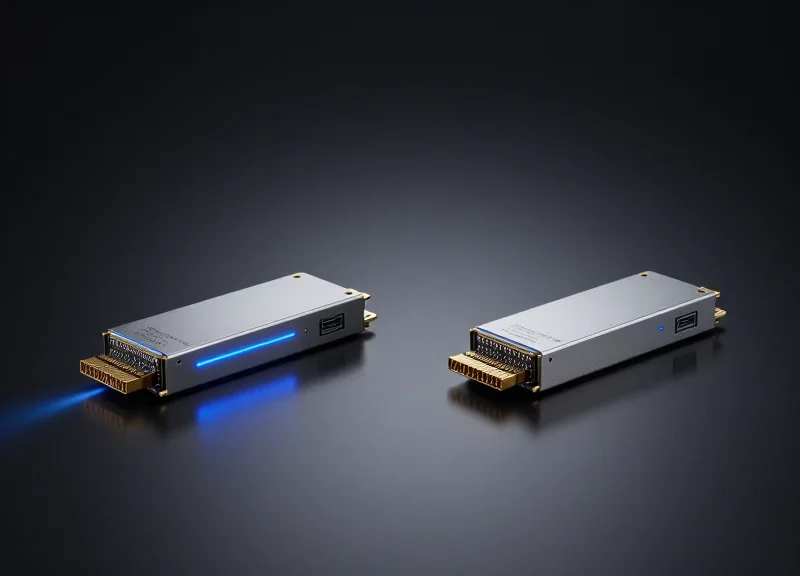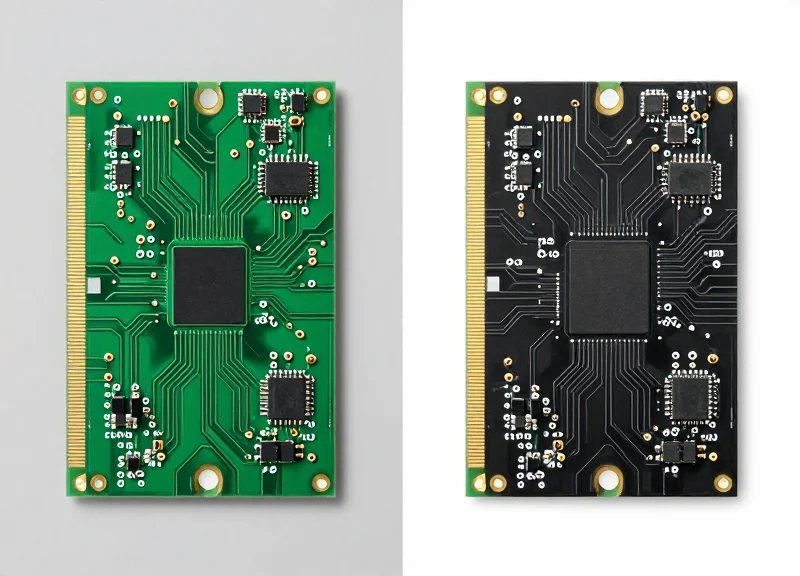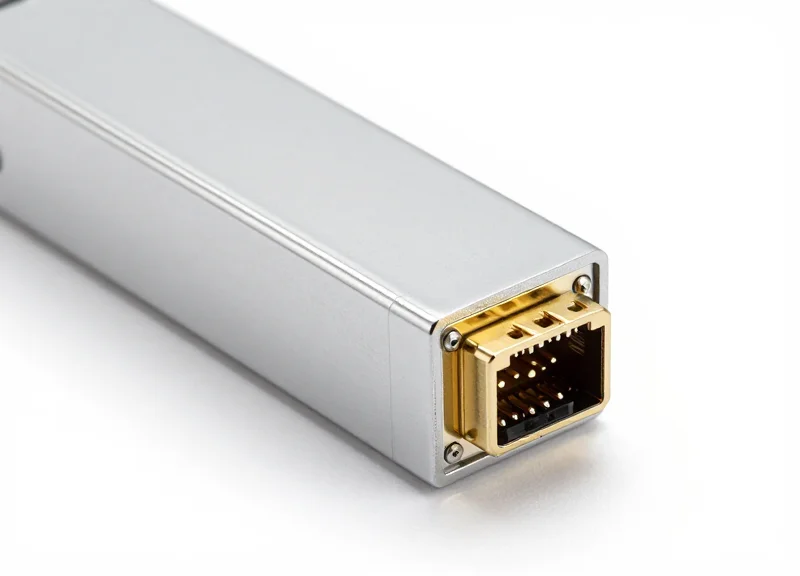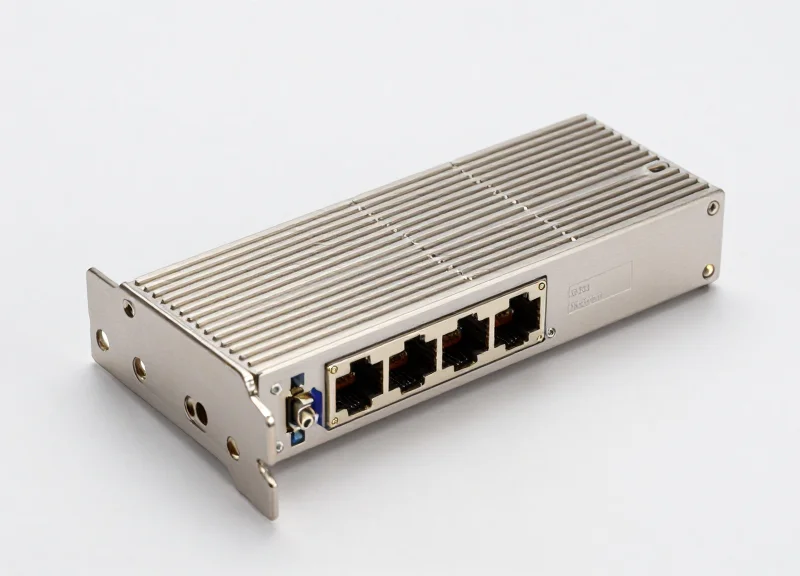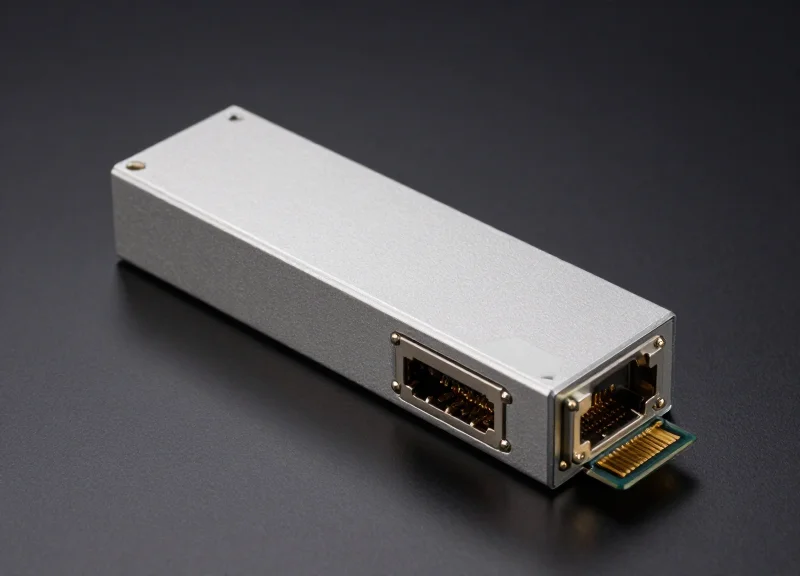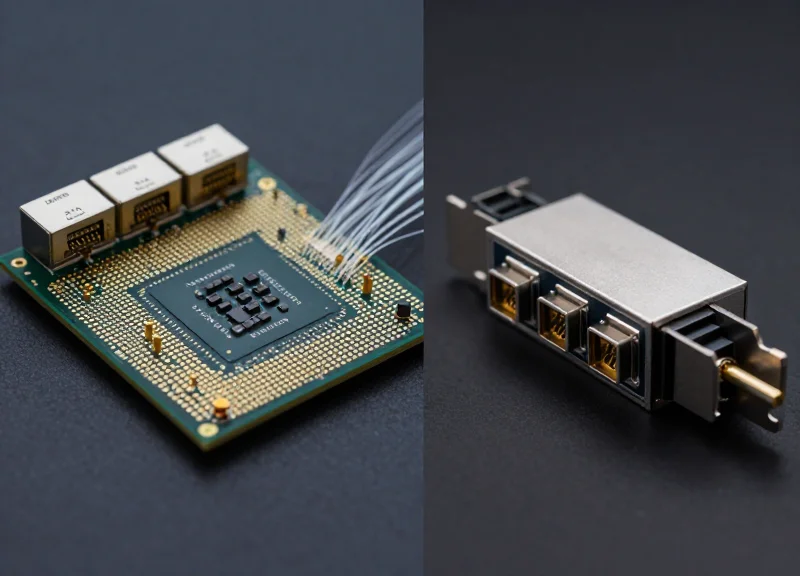
As data centers transition to 51.2T and 102.4T switching capacities, traditional pluggable optics are reaching their thermal and physical limits. Co-Packaged Optics (CPO) emerges as a transformative solution, bringing optical engines closer to the switch ASIC to eliminate the 'power wall.' This article evaluates the performance metrics and financial implications of adopting CPO over current industry alternatives.
The Evolution of Optical Interconnects
The Evolution of Optical Interconnects
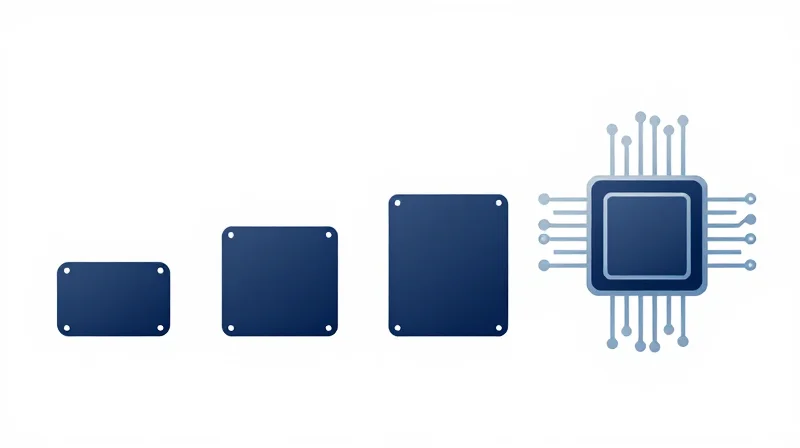
The trajectory of optical interconnect technology has been a relentless pursuit of bandwidth density and power efficiency, evolving from discrete Small Form-factor Pluggable (SFP) modules to the current high-density Quad Small Form-factor Pluggable Double Density (QSFP-DD) and Octal Small Form-factor Pluggable (OSFP) standards. As the industry approaches the 800G and 1.6T eras, the traditional paradigm of front-panel pluggables is facing a physical wall where the electrical trace loss between the switch ASIC and the optical engine becomes a primary bottleneck for data center scalability.
From Pluggables to the Thermal Wall
For over two decades, pluggable optics have dominated the networking landscape due to their flexibility, ease of maintenance, and the pay-as-you-grow model. Starting with SFP for 1G/10G, then moving to QSFP for 40G/100G, and eventually QSFP-DD for 400G, each generation pushed the limits of thermal management and signal integrity. However, as SerDes speeds reach 112G and 224G, the energy required to drive electrical signals across the PCB from the ASIC to the front-panel pluggable is increasing exponentially, leading to unsustainable power consumption and cooling requirements.
| Generation | Common Form Factor | Max Speed | Common SerDes |
|---|---|---|---|
| Legacy | SFP / SFP28 | 10G - 25G | 10G - 25G NRZ |
| Standard Cloud | QSFP28 / QSFP56 | 100G - 200G | 25G - 50G PAM4 |
| High Density | QSFP-DD / OSFP | 400G - 800G | 50G - 112G PAM4 |
| Next-Gen / CPO | Integrated / OSFP-XD | 1.6T - 3.2T | 112G - 224G PAM4 |
The Necessity of Co-Packaging in 1.6T Networking
The shift toward Co-Packaged Optics (CPO) represents a fundamental architectural change. Instead of placing the optical engine at the front panel, CPO brings the optics inside the same package as the switch ASIC. This proximity reduces the electrical trace length from inches to millimeters, drastically cutting the power needed for the host-to-module interface. This evolution is no longer optional for many high-performance computing (HPC) environments where the total switch power budget is increasingly consumed by the I/O interface rather than the switching logic itself.
- Why are pluggable optics struggling at 1.6T?
At 1.6T, the electrical signal loss in PCB traces becomes so severe that advanced retimers are required, which adds significant power consumption, cost, and latency. - What role does 224G SerDes play in this evolution?
The move to 224G SerDes makes traditional copper traces highly inefficient, forcing the industry to choose between expensive PCB materials or moving the optics closer to the silicon via CPO. - Is CPO meant to replace pluggables entirely?
While CPO is the future for high-density switches, pluggables like OSFP-XD will coexist for years in applications where serviceability and modularity are prioritized over absolute power efficiency.
Architecture Deep Dive: CPO vs. Pluggables vs. NPO
Architecture Deep Dive: CPO vs. Pluggables vs. NPO
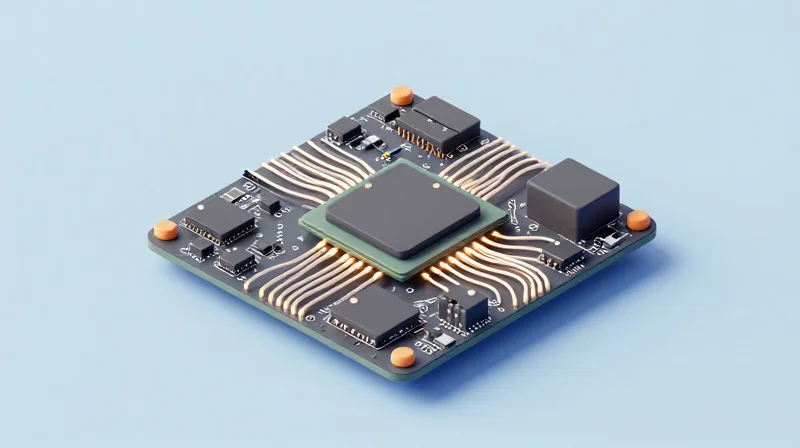
The shift from pluggable modules to Co-Packaged Optics (CPO) is driven by the physics of high-speed signaling; as data rates exceed 112G and 224G per lane, the electrical loss across traditional PCB traces becomes unsustainable. CPO solves this by minimizing the distance between the switch ASIC and the optical engine, effectively removing the high-loss electrical path found in front-panel pluggables.
Traditional Pluggable Optics: The Front-Panel Standard
In a traditional architecture, optical transceivers reside in cages on the switch's front panel. The electrical signal must travel from the switch ASIC, across a large system PCB, and through a mechanical connector. This path can be up to 10-12 inches long, necessitating heavy use of Re-timers and high-power SerDes to maintain signal integrity, which significantly adds to the total power budget.
Near-Packaged Optics (NPO): The Decoupled Intermediate
Near-Packaged Optics serves as an evolutionary bridge. In NPO, the optical engines are moved off the front panel and placed onto a high-performance substrate or interposer located adjacent to the ASIC on the main board. While this shortens the electrical trace compared to pluggables, it keeps the optical and silicon components decoupled. This allows for easier thermal management and the ability to replace components more readily than with full co-packaging.
Co-Packaged Optics (CPO): The Integrated Future
CPO represents the tightest level of integration where the optical engine and the switch ASIC share the same multi-chip module (MCM) substrate. By placing the optics within millimeters of the silicon die, the electrical 'reach' is minimized to the point where heavy signal conditioning is no longer required. This architecture provides the highest bandwidth density and the lowest power consumption per bit, though it introduces significant challenges in manufacturing yield and thermal dissipation.
| Feature | Pluggable Optics | Near-Packaged Optics (NPO) | Co-Packaged Optics (CPO) |
|---|---|---|---|
| Electrical Path Length | Long (Up to 300mm) | Medium (Approx. 50-100mm) | Ultra-Short (<10mm) |
| Signal Conditioning | High (Requires Re-timers) | Moderate | Minimal (Direct Drive possible) |
| Serviceability | Field Replaceable | Component Replaceable | Non-Serviceable (Unified Package) |
| Power Efficiency | Low | Medium | High |
| Density | Low (Limited by faceplate) | High | Ultra-High |
- Which architecture is best for 51.2T switches?
While 800G pluggables are currently being used for 51.2T, NPO and CPO are considered essential for the 102.4T generation to manage power density. - How does CPO impact thermal management?
CPO concentrates heat sources (ASIC and lasers/modulators) in a very small area, requiring advanced cooling solutions like liquid cooling or sophisticated heat sinks. - Is the laser source integrated in CPO?
Usually, no. To improve reliability, most CPO designs use an External Laser Source (ELS) located on the front panel, providing light via fiber to the co-packaged engine.
Latency Benchmarks: Speeding Up the AI Pipeline
Latency Benchmarks: Speeding Up the AI Pipeline
In the race for sub-microsecond AI processing, CPO emerges as the architectural solution to the Interconnect Bottleneck by reducing signal travel distances from centimeters to millimeters. By integrating the optical engine within the same package as the ASIC, CPO eliminates the high-latency Retimer chips and complex SerDes stages required for traditional pluggable modules, resulting in a physical layer latency reduction of up to 30% in high-radix switch environments. This architectural shift is not merely about speed; it is about maintaining signal integrity at 112G and 224G lanes where every millimeter of PCB trace adds exponential jitter and attenuation.
The Physics of Proximity: SerDes and Trace Lengths
Traditional pluggable optics require signals to traverse a long PCB trace, often exceeding 150mm, between the switch ASIC and the front panel cage. This distance necessitates the use of Very Short Reach (VSR) or Medium Reach (MR) SerDes profiles which include heavy equalization and signal re-driving. CPO reduces this trace length to less than 10mm. This shift allows the industry to move toward Extra Short Reach (XSR) or Ultra Short Reach (USR) interfaces, which provide a leaner signal path with significantly lower electrical processing delay.
| Metric | Pluggable (QSFP-DD) | Near-Packaged Optics (NPO) | Co-Packaged Optics (CPO) |
|---|---|---|---|
| Trace Length | 150mm - 300mm | 20mm - 50mm | < 10mm |
| SerDes Interface | VSR / MR | XSR / VSR | XSR / USR |
| Electrical Latency (Estimated) | 25-45 ns | 10-15 ns | < 5 ns |
| Power Efficiency | ~15-20 pJ/bit | ~10-12 pJ/bit | < 5 pJ/bit |
Quantifying the Impact on AI Training Efficiency
For distributed AI training workloads, such as those involving Large Language Models (LLMs), collective communication patterns like All-Reduce and All-to-All are highly sensitive to tail latency. When thousands of GPUs must synchronize, the slowest link dictates the speed of the entire cluster. By minimizing the serialization and deserialization overhead at the physical layer, CPO ensures that the 'time-to-first-bit' is optimized. Furthermore, the improved signal integrity of CPO allows for the use of lighter-weight Forward Error Correction (FEC) algorithms, which can shave an additional 50-100ns off the total round-trip time in high-performance networking fabrics.
- How much total latency does CPO save in a typical data center hop?
CPO can save between 20ns and 40ns per hop by eliminating Retimers and reducing the complexity of the SerDes signal conditioning needed for long PCB traces. - Does the reduction in trace length affect error rates?
Yes, shorter traces result in significantly lower insertion loss and jitter, which improves the Bit Error Rate (BER) and allows for less aggressive, lower-latency FEC settings. - What is the relationship between SerDes power and latency in CPO?
In CPO, the SerDes does not need to drive signals across long distances, allowing for simpler XSR architectures that consume less power and process bits faster than the VSR architectures used in pluggable modules.
The Power Efficiency Breakthrough

The primary power efficiency breakthrough in CPO stems from the drastic reduction in the electrical reach required between the switch ASIC and the optical engine, effectively removing the need for power-hungry DSP-based retimers that traditionally drive signals across the PCB. By placing the optical engine on the same substrate as the ASIC, the system can utilize ultra-short-reach (XSR) or extra-short-reach (USR) interfaces, which consume a fraction of the power required by the medium-reach (MR) or long-reach (LR) SerDes found in conventional pluggable architectures.
Eliminating the Retimer: The Physics of Proximity
In traditional pluggable optics (like QSFP-DD or OSFP), the electrical signal must travel several inches from the switch ASIC, through PCB traces, and across a physical connector to the module. To maintain signal integrity at 112G or 224G speeds, these paths require a Digital Signal Processor (DSP) or retimer both on the host side and inside the optical module. These components are massive power sinks. CPO architecture eliminates the need for these discrete retimers. By reducing the electrical trace length from ~250mm down to less than 50mm, the energy required to move a single bit of data drops precipitously, shifting the focus from signal regeneration to simple data transmission.
| Metric | Pluggable Optics (800G) | Near-Packaged Optics (NPO) | Co-Packaged Optics (CPO) |
|---|---|---|---|
| Electrical Interface | MR/LR SerDes | VSR SerDes | XSR/USR SerDes |
| Typical Power (pJ/bit) | ~25-30 pJ/bit | ~15-20 pJ/bit | ~5-12 pJ/bit |
| Retimer Required | Yes (Host & Module) | Partial (Module Only) | No (Direct Drive) |
| Thermal Density | High (Front Panel) | Medium | High (ASIC Substrate) |
Quantifying the 'Joules-per-Bit' Advantage
When evaluating data center efficiency, the industry standard is picojoules per bit (pJ/bit). Current 800G pluggable modules operate in the range of 25 to 30 pJ/bit. Industry benchmarks indicate that moving to a CPO configuration can reduce this to under 10 pJ/bit for the optical link. In a standard 51.2T switch, this transition can result in a total power saving of nearly 300 to 500 Watts per switch chassis. This is not merely an incremental gain; it is a structural necessity for next-generation AI clusters where the power envelope of the cooling system often limits the maximum achievable compute density.
Common Efficiency Questions
- Does CPO eliminate the DSP entirely?
While CPO significantly reduces the complexity of the DSP by shifting to lower-power XSR/USR SerDes, some level of signal processing may remain for error correction, though it operates at a much lower power profile than traditional retimers. - How does CPO affect overall rack power efficiency?
Beyond the optics themselves, CPO reduces the heat load on the front panel, allowing for more efficient airflow and reducing the power consumed by high-velocity cooling fans. - Is the power saving worth the manufacturing complexity?
For 1.6T and 3.2T systems, the power savings are no longer optional. The thermal wall of pluggables makes CPO the most viable path to maintaining a sustainable power-per-terabit ratio.
Total Cost of Ownership (TCO) Breakdown
Total Cost of Ownership: Balancing Integration and Efficiency
The transition to Co-Packaged Optics (CPO) represents a paradigm shift from a modular 'pay-as-you-grow' model to a highly integrated architectural investment. While CPO demands a higher initial Capital Expenditure (CapEx) due to complex silicon photonics integration and specialized manufacturing, it offers a superior Total Cost of Ownership (TCO) in hyperscale environments by drastically reducing Operational Expenditure (OpEx) through enhanced power density and simplified thermal management.
CapEx vs. OpEx: The Financial Trade-off
In traditional pluggable architectures, CapEx is distributed; operators purchase transceivers as needed. CPO front-loads these costs because the optics are integrated with the switch ASIC at the point of assembly. However, the removal of high-power retimers and the reduction in PCB complexity lead to a lower price-per-bit over the lifecycle of the hardware.
| Cost Factor | Pluggable Modules (800G/1.6T) | Co-Packaged Optics (CPO) |
|---|---|---|
| Initial Component Cost | Moderate (Unit-based) | High (Integrated Assembly) |
| Power Consumption | 100% (Baseline) | ~60-70% of Baseline |
| Cooling Requirements | High Airflow/Active Cooling | Lower (Reduced Thermal Load) |
| Serviceability | High (Hot-swappable) | Lower (Requires Advanced Sparing) |
| Energy ROI | Standard | Accelerated in AI/ML Clusters |
The Cooling and Power Dividend
Electricity accounts for the largest portion of OpEx in modern data centers. By eliminating the electrical traces required to drive signals to the edge of the switch faceplate, CPO reduces total system power consumption by up to 30%. This energy efficiency has a secondary effect: it lowers the heat dissipation requirements, allowing facilities to reduce their Power Usage Effectiveness (PUE) ratings and save on massive HVAC operational costs.
Frequently Asked Questions: CPO Economics
- Does CPO increase the risk of 'stranded capital'?
There is a perceived risk because a single laser failure could theoretically impact the integrated ASIC. However, the use of Remote Laser Sources (RLS) mitigates this by keeping the most failure-prone components field-replaceable. - How long is the payback period for CPO energy savings?
In high-density AI clusters operating at 80% utilization or higher, the OpEx savings typically offset the CapEx premium within 18 to 24 months. - What is the impact on manufacturing yields?
Initial yields for CPO are lower than pluggables, contributing to higher early-stage costs. As silicon photonics manufacturing matures and volumes increase, the cost-per-lane is expected to drop below that of discrete pluggable optics.
Reliability and Serviceability Challenges
Reliability and Serviceability: Solving the All-or-Nothing Dilemma
The shift from pluggable modules to Co-Packaged Optics (CPO) introduces a significant maintenance paradigm shift: while a failed pluggable can be replaced in seconds without disrupting the network, a failure within an integrated CPO module potentially compromises the entire switch assembly. This 'all-or-nothing' risk is the primary obstacle to CPO adoption, forcing the industry to rethink how optical components are physically distributed and serviced.
The Impact of Integrated Laser Failure
In a fully integrated CPO architecture, the laser—the component with the highest failure rate in an optical system—is situated deep within the package alongside the ASIC. If a laser fails, the cost is no longer the price of a single transceiver, but the cost of the entire multi-thousand-dollar switch board. This lack of granularity in serviceability creates a risk profile that many hyperscale data centers find unacceptable for mission-critical infrastructure.
| Feature | Pluggable Optics | Fully Integrated CPO | CPO with External Laser (ELS) |
|---|---|---|---|
| Serviceable Unit | Individual Module | Entire Switch/Line Card | Front-Panel Laser Module |
| Repair Time | Seconds (Hot-swap) | Hours (Board swap) | Seconds (Hot-swap) |
| Failure Impact | One Port | Multiple Ports/Switch | Isolated Laser Group |
| Thermal Stress | Low (Isolated) | Extreme (Near ASIC) | Low (Front Panel) |
The Industry Solution: External Laser Sources (ELS)
To mitigate reliability risks, the industry has pivoted toward Remote or External Laser Sources (ELS). By decoupling the laser from the optical engine and placing it in a separate, front-panel-accessible housing, operators gain the best of both worlds. This configuration keeps the power-hungry and heat-sensitive laser away from the hot ASIC, significantly improving the Mean Time Between Failures (MTBF) while ensuring that a laser failure can be rectified by a simple module swap without powering down the switch.
- Can CPO be serviced while the switch is running?
Only if using an External Laser Source (ELS) architecture. Fully integrated CPO designs usually require the entire board to be powered down for replacement. - Does heat affect CPO reliability more than pluggables?
Yes. Because CPO places optics closer to the high-heat ASIC, the thermal management requirements are far more stringent to prevent premature laser degradation. - What standards address these reliability issues?
The Optical Internetworking Forum (OIF) has developed the External Laser Source Interoperability Agreement (ELSFP) to standardize how remote lasers interface with CPO systems.
Industry Standardization and Ecosystem Readiness

The Path to Interoperability: Standardizing the CPO Landscape
The widespread adoption of Co-Packaged Optics (CPO) hinges on the industry's transition from proprietary, closed-loop designs to an open, multi-vendor ecosystem governed by standardized interfaces. For CPO to compete effectively with mature pluggable solutions, standards bodies must harmonize the electrical, optical, and mechanical specifications that allow a switch silicon from one vendor to interface reliably with an optical engine from another.
OIF Implementation Agreements and NPO Benchmarks
The Optical Internetworking Forum (OIF) is arguably the most influential body in this space, particularly through its work on the 3.2T CPO Implementation Agreement (IA). This framework defines the requirements for a 3.2 Tbps CPO module, targeting 51.2T and 102.4T switch capacities. Crucially, the OIF has also standardized Near-Packaged Optics (NPO), which serves as a vital stepping stone. NPO allows for optics to be placed on a high-performance substrate near the ASIC rather than directly on the organic package, offering a lower-risk entry point for vendors to test thermal and electrical tolerances before committing to full CPO integration.
| Organization | Primary Focus | Key Contribution to CPO Ecosystem |
|---|---|---|
| OIF | Interface Implementation Agreements | Defining the 3.2T CPO module and NPO electrical/optical interfaces. |
| COBO | Mechanical and Thermal Standards | Developing specifications for board-level optical mounting and heat dissipation. |
| IEEE 802.3 | Ethernet Signaling Protocols | Standardizing 800GbE and 1.6TbE data rates that CPO must support. |
| CPO Collaboration | Joint Industry Development | A multi-vendor effort to define a common design guide for CPO switch architectures. |
COBO and the Mechanical Framework
The Consortium for On-Board Optics (COBO) complements the work of the OIF by focusing on the physical layer and board-level integration. COBO’s standards address the mechanical challenges of mounting high-density optical engines, ensuring that they can withstand the rigors of data center environments while maintaining precise alignment. Their work on the 'CPO Networking Working Group' is specifically designed to create an open market for external laser sources (ELS), which helps mitigate the reliability concerns associated with integrating active components deep within the switch assembly.
Standardization FAQ
- Why is multi-vendor interoperability so difficult for CPO?
Unlike pluggable optics, which have standardized cages and form factors (like QSFP-DD), CPO requires deep integration at the silicon and substrate level, making any variation in pinouts or thermal management fatal to system design. - How does the 'External Laser Source' (ELS) impact standardization?
Standardizing ELS allows the industry to use a 'blind-mate' pluggable laser module. This decouples the most failure-prone component from the ASIC, allowing for easier serviceability while maintaining CPO performance. - What is the timeline for full ecosystem readiness?
While 51.2T switches are currently being tested with NPO/CPO, full ecosystem maturity and multi-vendor interoperability for CPO are expected to coincide with the 102.4T switch generation, likely around 2026-2027.
The maturation of these standards signal a shift from 'proof-of-concept' to industrial-scale manufacturing. By providing a clear roadmap for thermal limits, electrical signal integrity, and optical coupling, OIF and COBO are reducing the Capex risk for data center operators and encouraging a competitive supplier landscape.
Strategic Adoption Roadmap for Data Center Operators
Strategic Adoption Roadmap for Data Center Operators
For data center operators, the transition to Co-Packaged Optics (CPO) is not a binary switch but a calculated migration triggered when the power consumption of traditional pluggable interfaces exceeds 30-40% of the total switch power budget. While pluggables remain the pragmatic choice for 400G and most 800G deployments due to their serviceability, the roadmap to 1.6T and 3.2T requires a strategic pivot to CPO to sustain the massive radix and low-latency requirements of next-generation AI training clusters.
Adoption Thresholds: Pluggables vs. CPO
| Feature | Stick with Pluggables | Pivot to CPO |
|---|---|---|
| Switch Capacity | Under 51.2 Tbps | 102.4 Tbps and Higher |
| Workload Type | General Cloud / Virtualization | Large Language Model (LLM) Training |
| Power Constraint | Standard Air-Cooled Racks (<20kW) | High-Density Liquid-Cooled (>50kW) |
| Fiber Density | Standard MPO/LC Connectivity | High-Count Fiber Management Needs |
Phased Implementation Strategy
Operators should adopt a three-tier approach to integrate CPO into their infrastructure without compromising existing reliability standards.
- Phase 1: Optimization of 800G Pluggables
Utilize LPO (Linear Drive Pluggable Optics) to reduce power consumption in existing leaf-spine architectures while maintaining the familiar plug-and-play service model. - Phase 2: CPO Pilot in AI Back-End Fabrics
Deploy CPO specifically for the 'East-West' traffic between GPU clusters where latency and power efficiency provide the highest ROI and where the environment is more controlled. - Phase 3: Standardized ELS Integration
Transition to full CPO production once External Laser Sources (ELS) are standardized, allowing for laser replacement without disturbing the switch silicon or the integrated optical engine.
Critical Implementation FAQs
- How does CPO impact the Mean Time Between Failures (MTBF)?
Initially, CPO raises concerns because the optics are integrated. However, using Remote Laser Sources (RLS) moves the most failure-prone component to the front panel, potentially matching or exceeding pluggable reliability. - Is the cooling infrastructure ready for CPO?
CPO essentially mandates a move toward liquid cooling or advanced cold-plate designs. Operators must upgrade facility-side cooling to handle the concentrated heat load of 102.4T switches. - Can I mix CPO switches with pluggable switches?
Yes, CPO is interoperable at the protocol level (Ethernet/InfiniBand). You can have a CPO-based core switch talking to pluggable-based leaf switches, provided the optical wavelengths and signaling (e.g., PAM4) match.
While pluggable optics will continue to serve traditional enterprise needs, CPO is the inevitable successor for AI-scale infrastructure. Balancing performance gains with serviceability is the next frontier. Contact our technical consultants to discover how to future-proof your network architecture for the 100T era.