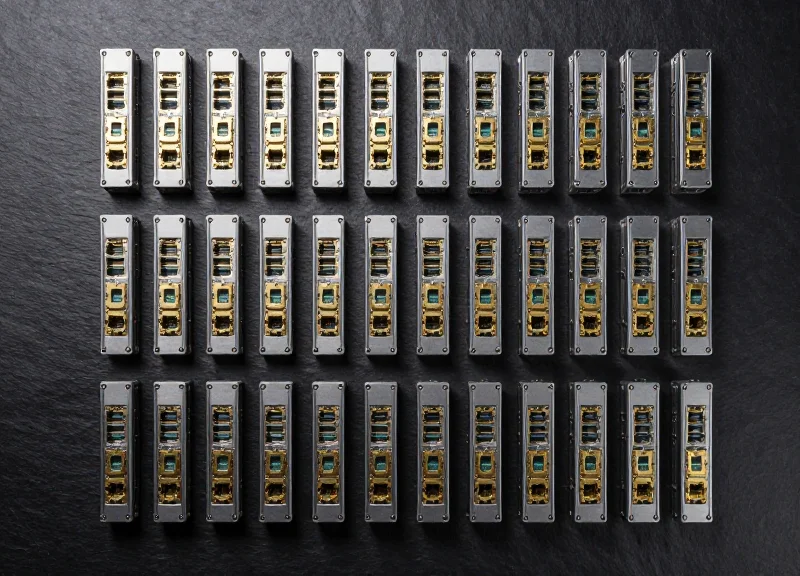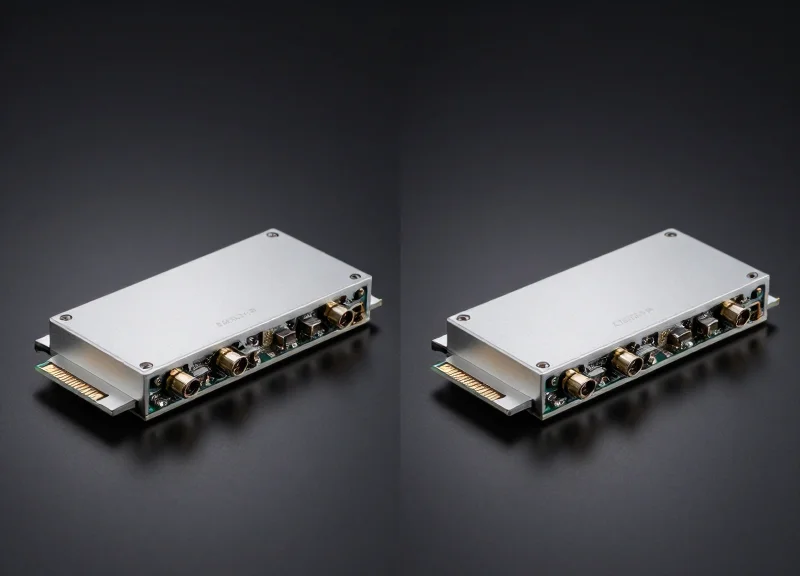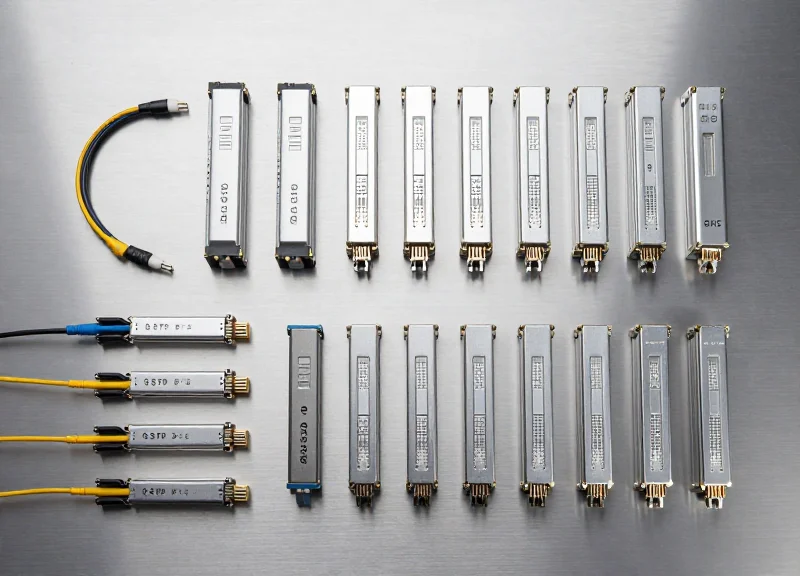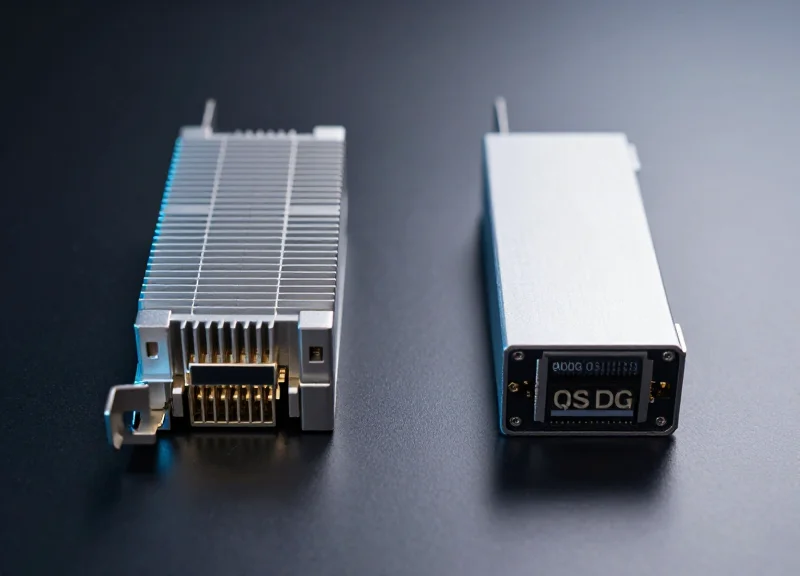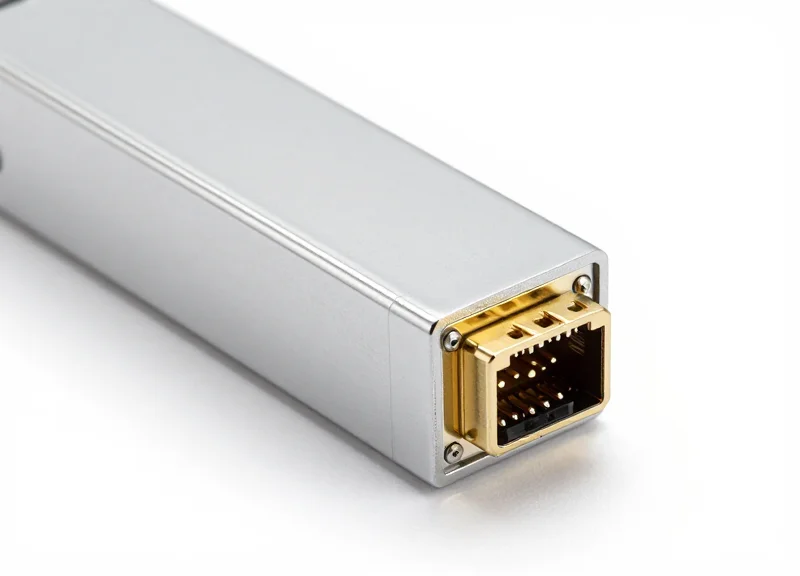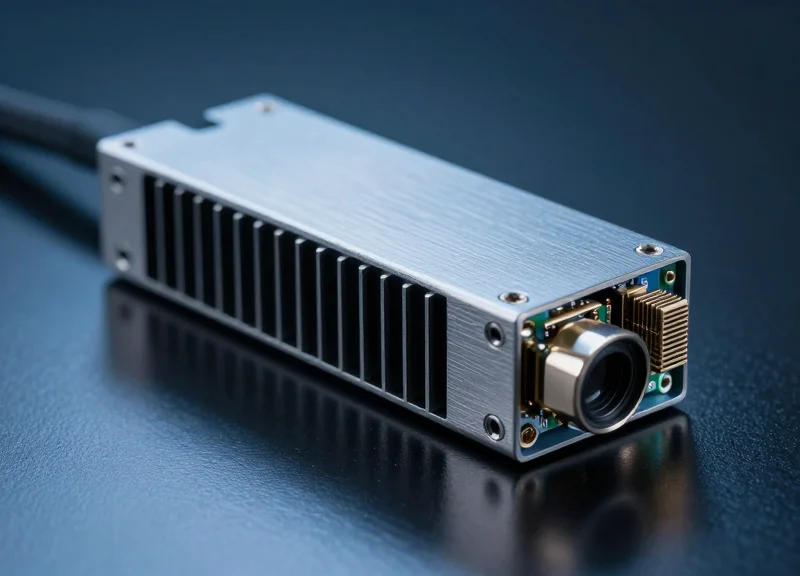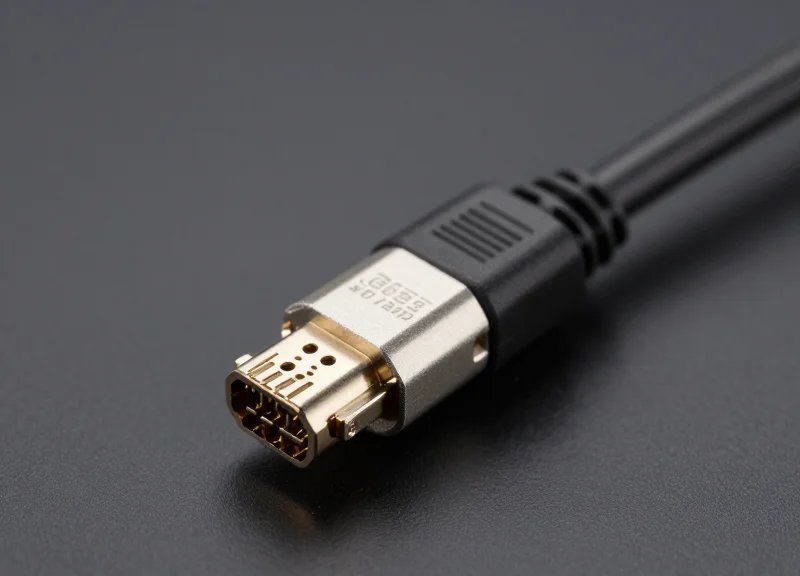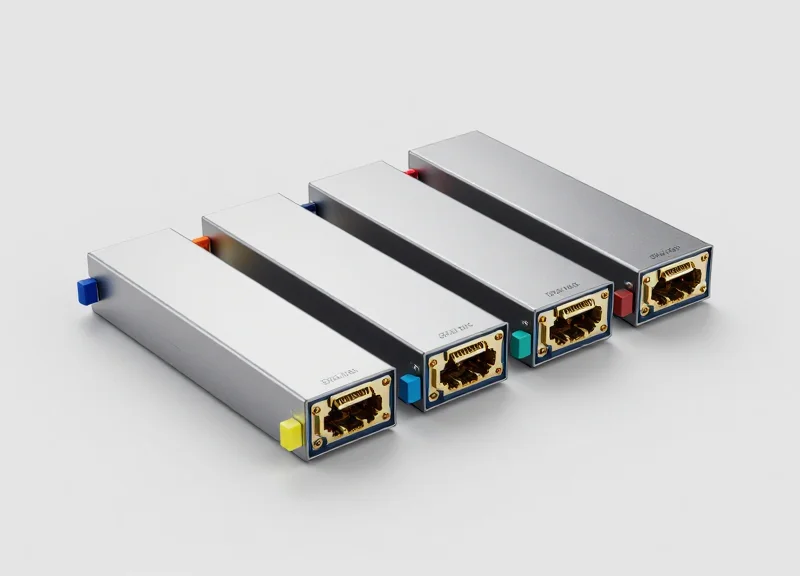
As data centers transition toward 400G and 800G architectures, the demand for efficient, high-density interconnects has never been higher. The 100G Single-Lambda SFP-DD represents a pivotal shift in optical technology, offering a pathway to double port density while significantly reducing costs per bit. However, sourcing these components at scale requires more than just a vendor; it requires a strategic partner capable of providing wholesale reliability and custom engineering.
The Evolution of 100G: Why Single-Lambda Matters

The transition to 100G Single-Lambda represents the most significant architectural shift in optical networking since the introduction of the QSFP28 form factor. Historically, achieving 100G speeds required four discrete optical lanes of 25G each (4x25G NRZ). Single-Lambda technology replaces this multi-lane approach with a single 100G optical channel using PAM4 (Pulse Amplitude Modulation 4-level) signaling. This evolution is not merely a technical upgrade; it is a fundamental optimization that addresses the primary constraints of modern high-density environments: power, heat, and cost-per-bit.
The Architecture of Simplification: 4x25G vs. 1x100G
Legacy 100G modules, such as the standard SR4 or LR4, rely on an array of four lasers and four receivers. This 'quad-lane' design increases the physical complexity of the transceiver, requiring sophisticated multiplexing and de-multiplexing components. In contrast, Single-Lambda optics utilize a single high-performance laser. By moving the complexity from the optical domain into the electronic domain (via the DSP), manufacturers can reduce the component count, which directly translates to higher reliability and lower wholesale pricing for bulk acquisitions.
| Feature | Legacy 100G (4x25G NRZ) | Single-Lambda 100G (1x100G PAM4) |
|---|---|---|
| Optical Components | 4 Lasers / 4 Receivers | 1 Laser / 1 Receiver |
| Modulation Type | NRZ (Non-Return to Zero) | PAM4 (Pulse Amplitude Modulation) |
| Internal Architecture | Complex MUX/DEMUX | Simplified Single-Path |
| Power Consumption | ~3.5W - 4.5W | ~2.5W - 3.5W |
| 400G Interop | Difficult (Requires Gearbox) | Native (4x100G Breakout) |
Economic Impact of Single-Lambda on Bulk Procurement
- Reduced Bill of Materials (BOM)
Fewer optical sub-assemblies (TOSA/ROSA) allow manufacturers to offer more aggressive volume discounts. - Enhanced Thermal Efficiency
Lower power dissipation per module reduces the cooling requirements of the switch chassis, lowering total cost of ownership (TCO). - Seamless 400G Migration
Single-Lambda 100G modules are natively compatible with 400G (4x100G) breakout ports, eliminating the need for expensive conversion hardware.
Common Questions Regarding Single-Lambda SFP-DD
- Is Single-Lambda backward compatible with older 100G ports?
Direct optical interoperability depends on the modulation; legacy NRZ ports cannot talk to PAM4 ports without a DSP-based gearbox module or switch-side conversion. - Why is SFP-DD becoming popular for 100G Single-Lambda?
The Small Form-factor Pluggable Double Density (SFP-DD) interface doubles the lane density of standard SFP modules, allowing for 100G speeds in a footprint much smaller than QSFP28, ideal for high-density edge computing. - What is the typical reach for Single-Lambda 100G?
Currently, Single-Lambda solutions excel in 2km (FR1) and 10km (LR1) reaches, providing a streamlined alternative to traditional LR4 solutions.
Understanding the SFP-DD Form Factor
Understanding the SFP-DD Form Factor
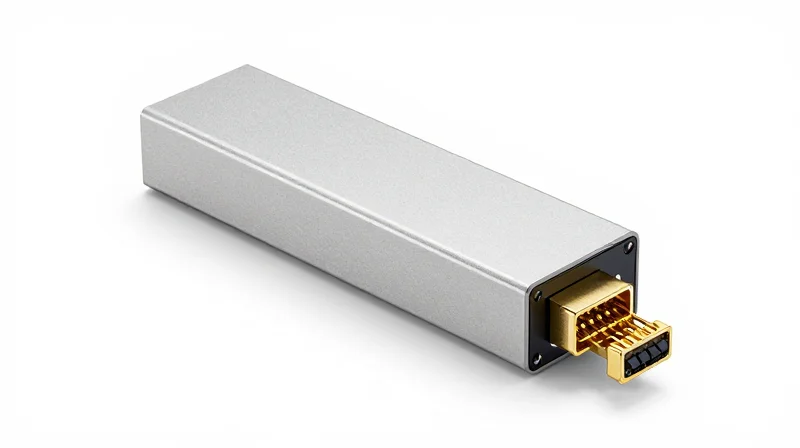
The SFP-DD (Small Form-factor Pluggable Double Density) is a revolutionary step in optical interconnects, designed to meet the growing demand for high-density 100G and 200G networking while preserving the compact footprint of the traditional SFP interface. By doubling the number of electrical lanes from one to two, SFP-DD enables a massive increase in front-panel bandwidth. For wholesale buyers and data center architects in 2026, this form factor represents the most efficient way to scale 100G Single-Lambda solutions, as it allows for a seamless transition from legacy 25G/50G speeds to high-capacity 100G throughput without requiring additional physical space on the switch faceplate.
Electrical Design and Double Density Mechanics
The 'Double Density' nomenclature refers to the addition of a second row of electrical contacts on the module's PCB. While a standard SFP28 or SFP56 module utilizes a single row of pins to support one electrical lane, SFP-DD features two rows of pins. This architecture allows for two high-speed electrical lanes (each operating at 50Gbps PAM4 for 100G applications), effectively doubling the capacity of the port. This density is critical for next-generation leaf-spine architectures where maximizing throughput per rack unit is a primary operational goal.
| Feature | SFP28 | SFP56 | SFP-DD (100G) |
|---|---|---|---|
| Electrical Lanes | 1 | 1 | 2 |
| Max Throughput | 25 Gbps | 50 Gbps | 100 Gbps |
| Modulation | NRZ | PAM4 | PAM4 |
| Backward Compatibility | SFP+ | SFP28 | SFP28 / SFP56 |
| Typical Application | 25G Ethernet | 50G Ethernet | 100G Single-Lambda |
The Advantage of Backward Compatibility
A defining characteristic of the SFP-DD Multi-Source Agreement (MSA) is its mechanical backward compatibility. SFP-DD host ports are designed to accept standard SFP+, SFP28, and SFP56 modules. This provides enterprise and service provider networks with an 'evergreen' infrastructure path. Wholesale purchasers can deploy switches equipped with SFP-DD ports today, utilizing their existing stock of 25G SFP28 transceivers, and upgrade to 100G Single-Lambda SFP-DD modules as bandwidth requirements increase, all without replacing the underlying hardware.
- Can an SFP-DD module fit into a standard SFP28 port?
No. While SFP-DD ports are backward compatible with SFP28 modules, an SFP-DD module has a longer PCB with a second row of pins that cannot interface with the single-row connector of a standard SFP28 or SFP56 port. - How does SFP-DD improve front-panel density compared to QSFP28?
SFP-DD modules are significantly smaller than QSFP28 modules. This allows hardware manufacturers to fit more ports onto a single 1U switch, often doubling the total aggregate bandwidth compared to QSFP-based systems. - Is SFP-DD primarily for copper or optical connections?
The SFP-DD standard supports both. It is widely used for 100G Single-Lambda optical transceivers, Active Optical Cables (AOCs), and Direct Attach Copper (DAC) cables for short-reach interconnects.
Wholesale Economics: Reducing TCO in Data Centers
Wholesale Economics: Reducing TCO in Data Centers
Transitioning to 100G Single-Lambda SFP-DD technology via wholesale channels is a strategic pivot that allows data center operators to scale bandwidth while aggressively lowering the cost-per-bit. By moving from legacy 4x25G architectures to a single-lane 100G PAM4 signal, the internal component count of each transceiver is significantly reduced. When these hardware efficiencies are combined with bulk pricing models in 2026, the result is a massive reduction in Total Cost of Ownership (TCO), particularly for hyperscale and enterprise environments where thousands of links are deployed simultaneously.
| Cost Driver | Legacy 100G (SR4/LR4) | Wholesale 100G Single-Lambda SFP-DD |
|---|---|---|
| Optical Components | 4 Lasers / 4 Detectors | 1 Laser / 1 Detector |
| Power Consumption | ~3.5W - 4.5W per unit | Sub-3.5W (High Efficiency) |
| Cabling Infrastructure | MPO/MTP (Higher Cost) | LC Duplex (Lower Cost) |
| Procurement Model | Retail/Replacement Pricing | Tiered Bulk/Wholesale Quotes |
| Rack Density | Standard SFP28/QSFP | Double Density (SFP-DD) |
CapEx Optimization via Bulk Procurement
Capital Expenditure (CapEx) is the primary hurdle in high-density 100G upgrades. Wholesale 100G Single-Lambda SFP-DD pricing mitigates this by offering economies of scale that are unavailable in smaller transaction volumes. Custom quotes for 2026 deployments often reflect the maturation of the PAM4 ecosystem, where yield improvements at the chip level allow manufacturers to pass savings to bulk buyers. Furthermore, the SFP-DD form factor allows for a smoother migration path; because it is backwards compatible with legacy SFP modules, operators can repurpose existing switch infrastructure while preparing for future high-density breakouts.
Operational Efficiency and Long-Term ROI
The long-term value of the 100G Single-Lambda SFP-DD lies in OpEx reduction. With fewer physical components to fail and a lower power profile, the mean time between failures (MTBF) improves, and cooling requirements decrease. In a facility with 10,000+ transceivers, even a 0.5W saving per module translates to significant annual electricity savings. Wholesale agreements often include enhanced support and sparing programs, ensuring that the ROI is protected by a reliable supply chain and consistent performance standards across the entire network fabric.
- How do wholesale quotes impact the price per unit?
Bulk orders typically trigger tiered pricing structures where the cost per module decreases as volume increases. For 100G Single-Lambda SFP-DD, wholesale buyers can expect a 15-25% discount compared to list prices when purchasing in quantities exceeding 100 units. - What is the impact of SFP-DD on rack density costs?
SFP-DD supports twice the density of standard SFP ports. This allows for up to 48 or even 64 ports of 100G in a single 1U switch, effectively halving the cost of data center floor space and rack infrastructure per Gigabit of throughput. - Why is 2026 the ideal window for bulk migration?
The supply chain for 100G Single-Lambda components has fully stabilized in 2026, leading to the lowest price-per-unit since the technology's inception. Simultaneously, the demand for AI and machine learning workloads is mandating the high-density upgrades that SFP-DD facilitates.
OEM/ODM Customization for Specific Use Cases

For enterprises and service providers scaling their infrastructure in 2026, purchasing 100G Single-Lambda SFP-DD modules wholesale is often more than a procurement exercise; it is an opportunity to fine-tune hardware for specific architectural needs. Through Ubytelink’s OEM/ODM services, organizations can bypass the 'one-size-fits-all' approach, ensuring that every transceiver is optimized for the host equipment's thermal requirements, software compatibility, and branding protocols.
Firmware Engineering and Multi-Vendor Interoperability
One of the primary drivers for ODM customization is the need for seamless multi-vendor interoperability. Standard off-the-shelf modules may trigger 'unsupported transceiver' warnings or fail to initialize correctly in proprietary switch environments. Custom firmware allows for the modification of the EEPROM/A0/A2 memory maps to emulate the specific coding required by major OEMs like Cisco, Arista, or Juniper, while maintaining the performance advantages of the 100G Single-Lambda PAM4 technology.
Hardware and Branding Customization Options
Beyond the software layer, hardware-level customization addresses physical and operational constraints. This includes the selection of specific laser types for varying distances, enhanced thermal dissipation designs for high-density front panels, and customized pull-tab colors for easier cable management. Wholesale buyers can also leverage private labeling to simplify inventory tracking and maintain brand consistency across large-scale deployments.
| Feature | Standard Wholesale Module | OEM/ODM Customized Module |
|---|---|---|
| Compatibility | Generic / Multi-Source Agreement (MSA) | Vendor-specific (Cisco, Arista, etc.) |
| EEPROM Settings | Fixed Factory Default | Fully Programmable / Custom Serial Numbers |
| Labeling | Standard Manufacturer Labels | Custom Branding & Regulatory Logos |
| Thermal Management | Standard Operating Range (0-70°C) | Optional Industrial Grade or Heat-Sink Adjustments |
Common Questions on OEM/ODM Wholesale Procurement
- What is the typical Minimum Order Quantity (MOQ) for custom 100G SFP-DD modules?
While standard orders vary, customization usually requires a higher volume to offset engineering costs; however, Ubytelink offers flexible tiers starting as low as 50-100 units for specific firmware tweaks. - Can custom firmware be updated in the field?
Yes, most OEM/ODM modules are designed to be compatible with standard transceiver programmers, allowing for field updates if host switch software changes. - Does customization affect the warranty of the SFP-DD modules?
No, when sourced through professional ODM services like Ubytelink, the full performance warranty applies, as the customizations are validated through rigorous QA protocols prior to shipping.
Key Technical Specifications and Interoperability

Core Technical Specifications of 100G Single-Lambda SFP-DD
The 100G Single-Lambda SFP-DD module represents a pinnacle of efficiency by utilizing PAM4 (4-level Pulse Amplitude Modulation) to transmit 100Gbps of data over a single optical carrier. Unlike legacy NRZ-based modules that require four channels, this architecture reduces the component count, lowers failure rates, and optimizes the cost-per-bit for high-density 2026 data center deployments. Understanding these specs is vital for wholesale buyers to ensure hardware compatibility across diverse network fabrics.
| Parameter | 100G-DR (SFP-DD) | 100G-FR (SFP-DD) | 100G-LR (SFP-DD) |
|---|---|---|---|
| Reach | Up to 500m | Up to 2km | Up to 10km |
| Wavelength | 1310nm | 1310nm | 1310nm |
| Modulation | PAM4 | PAM4 | PAM4 |
| Fiber Type | Single-mode (SMF) | Single-mode (SMF) | Single-mode (SMF) |
| Connector | LC Duplex | LC Duplex | LC Duplex |
Standardization and Interoperability Protocols
Interoperability is the cornerstone of 100G Single-Lambda SFP-DD technology. These modules are built in strict accordance with the IEEE 802.3cu standards for 100Gb/s operation over single-mode fiber and the SFP-DD Multi-Source Agreement (MSA). This ensures that a wholesale purchase of SFP-DD modules will function seamlessly in any host platform that supports the SFP-DD mechanical and electrical interface, including switches from Arista, Cisco, and Juniper.
Power Efficiency and Thermal Performance
Thermal management is a critical spec for bulk deployments. 100G Single-Lambda SFP-DD modules typically operate with a maximum power consumption of <3.5W. This low power profile is essential for maintaining the integrity of high-density faceplates, where heat dissipation can become a limiting factor for port density. Wholesale buyers should prioritize modules with advanced Digital Optical Monitoring (DOM) to track temperature and bias current in real-time.
- Can 100G Single-Lambda SFP-DD interoperate with 400G DR4 modules?
Yes, through a breakout configuration. A 400G DR4 QSFP-DD port can be broken out into four 100G DR Single-Lambda streams to connect directly to SFP-DD ports, provided the FEC settings are aligned. - Is the SFP-DD interface backwards compatible with SFP28?
Yes, the SFP-DD MSA specifies a two-lane electrical interface that is backwards compatible with legacy SFP+, SFP28, and SFP56 modules, allowing for gradual network upgrades. - What FEC (Forward Error Correction) is required?
These modules typically require Host-side RS(544,514) KP4 FEC to maintain a bit error rate (BER) below 1E-12, as per the IEEE 802.3cu specification.
Supply Chain Resilience and Lead Time Optimization

Supply Chain Resilience and Lead Time Optimization
In the volatile landscape of 2026 global trade, supply chain resilience is the cornerstone of successful large-scale data center deployments; for 100G Single-Lambda SFP-DD modules, this means bridging the gap between high-volume demand and component availability through localized warehousing and diversified manufacturing protocols. Ubytelink mitigates the risks of traditional procurement by maintaining a robust buffer of critical optical components and finished goods, ensuring that wholesale buyers experience minimal disruption and consistent pricing even during periods of market fluctuation.
Strategic Inventory and Buffer Management
For wholesale purchasers, the primary threat to ROI is the 'stock-out' scenario during a network expansion. Ubytelink employs a predictive inventory model that analyzes historical demand for 100G SFP-DD DR1, FR1, and LR1 specifications. By holding raw material reserves for TOSA/ROSA components and utilizing a 'Rolling Forecast' system with our Tier-1 manufacturing partners, we can reduce standard lead times from the industry-average 8-12 weeks down to 2-4 weeks for custom wholesale batches.
| Procurement Phase | Traditional Lead Times | Ubytelink Optimized Timeline |
|---|---|---|
| Component Sourcing | 4 - 6 Weeks | In-Stock Buffer |
| Manufacturing & Burn-in | 2 - 4 Weeks | 1 - 2 Weeks |
| Quality Assurance | 1 Week | 48 - 72 Hours |
| Global Logistics | 7 - 14 Days | 3 - 5 Days (Express) |
Global Logistics and Customs Navigation
Moving thousands of 100G transceivers across borders requires more than just a courier; it requires sophisticated logistical coordination. Ubytelink provides end-to-end transparency, managing Export Control Classification Numbers (ECCN) and ensuring compliance with international trade regulations. By utilizing regional hubs in key markets, we bypass traditional bottleneck ports, offering DDP (Delivered Duty Paid) options that simplify the financial and administrative burden on the buyer's procurement team.
- How does Ubytelink manage sudden surges in wholesale demand?
We maintain a safety stock of 'Golden Samples' and unprogrammed hardware that can be quickly flashed with specific firmware to meet urgent client requirements without waiting for a full manufacturing cycle. - What is the typical lead time for a bulk order of 500+ units?
For standard 100G Single-Lambda SFP-DD configurations, lead times typically range from 10 to 15 business days, depending on the level of customization required for the firmware or labeling. - Does Ubytelink offer real-time tracking for global shipments?
Yes, all wholesale orders are integrated into our logistics portal, providing milestone-based tracking from the moment the modules pass final QA to the point of delivery at your facility.
Quality Assurance: EEAT Standards in Optical Manufacturing
Quality assurance in 100G Single-Lambda SFP-DD manufacturing is the fundamental pillar that protects large-scale network deployments from catastrophic failure. When purchasing wholesale, the Expertise and Authoritativeness of a manufacturer are proven through their adherence to rigorous testing cycles that go beyond basic functional checks. High-quality 100G modules must demonstrate consistent performance across varying power levels and environmental conditions, ensuring that the 100G PAM4 modulation remains stable throughout the product's lifecycle. Trustworthiness in this sector is built upon transparent reporting of testing yield and strict compliance with MSA (Multi-Source Agreement) standards.
Core Testing Protocols for 100G Optical Integrity
To guarantee 24/7 uptime in data center environments, 100G Single-Lambda SFP-DD modules undergo intensive validation phases. Two of the most critical tests include Bit Error Rate (BER) analysis and Thermal Stress Cycling. BER testing ensures the transceiver can process data with a post-FEC (Forward Error Correction) threshold that prevents packet loss, while thermal cycling identifies potential hardware weaknesses by subjecting the units to extreme temperature swings between -40°C and +85°C.
| Testing Category | Standard Procedure | Impact on Reliability |
|---|---|---|
| Bit Error Rate (BER) | Pre-FEC and Post-FEC analysis | Ensures zero packet loss in high-throughput links |
| Thermal Burn-in | 48-72 hours at peak temperature | Reduces 'infant mortality' rates in bulk batches |
| Eye Diagram Mask | PAM4 signal margin validation | Guarantees optical signal clarity and low jitter |
| Interoperability | Multi-vendor switch testing | Prevents port-locking and authentication errors |
Manufacturing EEAT: Certifications and Standards
- What certifications are mandatory for high-quality 100G modules?
Wholesale buyers should prioritize manufacturers with ISO 9001:2015 certification for quality management, alongside CE, FCC, and RoHS compliance to ensure environmental and electromagnetic safety. - How does Single-Lambda technology change QA requirements?
Since 100G Single-Lambda utilizes sophisticated DSPs for PAM4 modulation, QA must include specialized testing for DSP clock recovery and electronic dispersion compensation (EDC) to ensure signal reach. - Why is 'Golden Sample' testing insufficient for wholesale?
Wholesale reliability requires 100% serial testing rather than batch sampling; every unit must pass BER and thermal tests to ensure the consistency of the entire 2026 production run.
By adhering to these stringent Quality Assurance standards, enterprise and service provider customers can secure 100G Single-Lambda SFP-DD optics that offer the same performance profile as Tier-1 OEM brands at a fraction of the cost. Rigorous testing is the bridge between affordable pricing and mission-critical reliability.
Future-Proofing Your Infrastructure for 400G and Beyond

The Strategic Foundation of Single-Lambda 100G
Adopting 100G Single-Lambda SFP-DD technology is the most effective way to future-proof network infrastructure because it aligns the electrical and optical lane rates at 100G per lane. Unlike legacy 100G solutions that rely on four 25G lanes, single-lambda optics utilize PAM4 modulation to carry the full 100G payload on a single wavelength, matching the native port speeds of next-generation 400G (4x100G) and 800G (8x100G) switches.
| Metric | Legacy 100G (4x25G) | Single-Lambda 100G (SFP-DD) | Future 400G/800G Paths |
|---|---|---|---|
| Modulation | NRZ | PAM4 | PAM4 |
| Lane Efficiency | 4 Lanes required | 1 Lane required | 4 or 8 Lanes |
| Breakout Potential | Difficult/Incompatible | Native 4x100G Support | Primary Design Goal |
| Infrastructure Utility | High Fiber Count | Optimized/Single Pair | Extreme Density |
Leveraging SFP-DD for 400G and 800G Breakouts
The SFP-DD form factor is critical for long-term scalability due to its double-density electrical interface. By providing two lanes of 50G or 100G electrical signaling, SFP-DD ports can maintain backward compatibility with standard SFP+ and SFP28 modules while being ready for the high-density requirements of tomorrow. In a wholesale procurement strategy, choosing SFP-DD ensures that as top-of-rack switches are upgraded to 400G, the 100G endpoints can be easily integrated into breakout configurations without replacing the underlying cabling or the entire module ecosystem.
- Does 100G Single-Lambda work with existing 400G switches?
Yes, 100G Single-Lambda optics are designed to be fully compatible with 400G DR4 or FR4 modules via breakout cables, allowing one 400G port to connect to four 100G SFP-DD endpoints. - How does this technology protect my capital investment?
By standardizing on 100G per lambda now, you avoid the 'tech debt' of 25G-based systems, ensuring that your fiber plant and module inventory remain relevant as network speeds move toward 800G. - Is SFP-DD backward compatible with legacy SFP modules?
Absolutely. SFP-DD ports are designed to accept standard SFP+, SFP28, and SFP56 modules, providing a smooth migration path while doubling potential port density.
Ready to optimize your network infrastructure with the industry's most efficient 100G technology? Ubytelink offers the technical expertise and manufacturing scale to support your growth. Don't let supply bottlenecks or high margins slow you down. Contact Ubytelink today for a personalized wholesale quote and explore our OEM/ODM capabilities to get the exact solution your network demands.