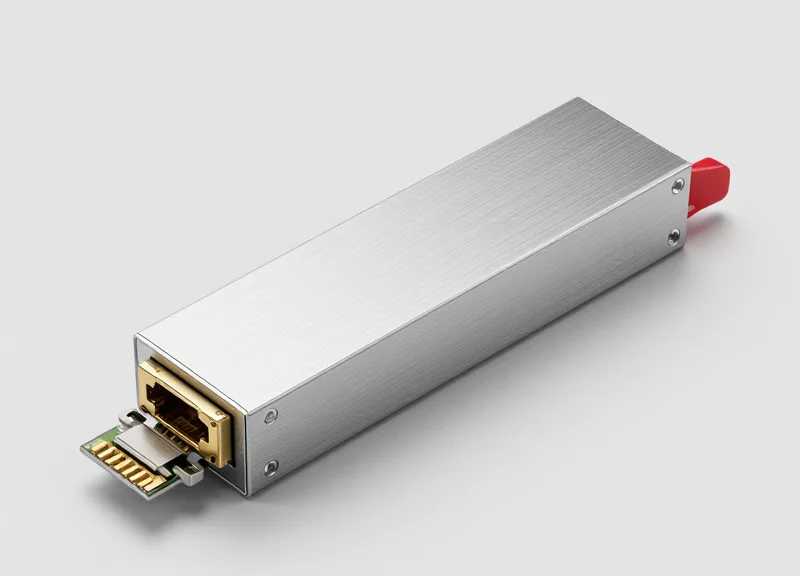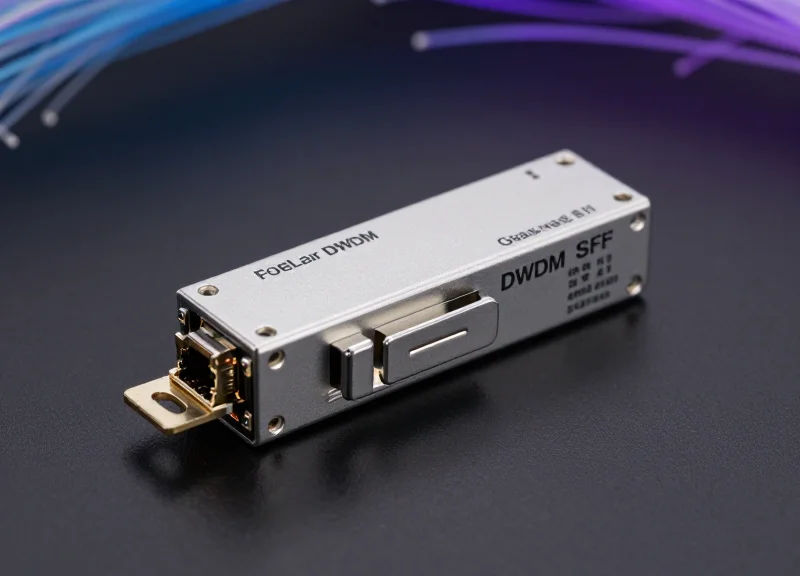
In an era where bandwidth demands are non-negotiable, Dense Wavelength Division Multiplexing (DWDM) has transitioned from a niche carrier technology to a fundamental requirement for enterprise and data center networks. Fixed-Wavelength DWDM SFP+ transceivers serve as the cost-effective workhorse of this evolution, allowing network architects to transmit up to 80 or 96 channels over a single fiber pair. This guide breaks down the engineering behind these modules and how they optimize high-density infrastructure.
Understanding the Fundamentals of Fixed-Wavelength DWDM SFP+
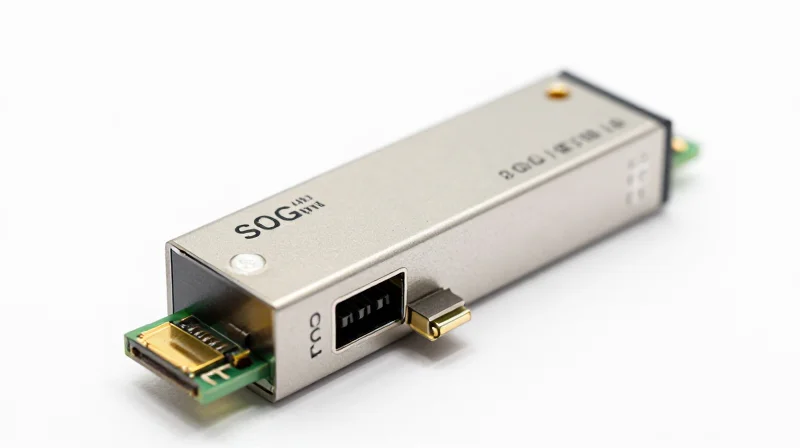
Defining Fixed-Wavelength DWDM SFP+
A Fixed-Wavelength DWDM (Dense Wavelength Division Multiplexing) SFP+ is a 10 Gigabit Small Form-factor Pluggable transceiver designed to operate at a specific, non-tunable wavelength defined by the ITU-T G.694.1 grid. Unlike standard 'grey' optics that use broad spectrums like 1310nm or 850nm, these modules transmit data on narrow spectral channels within the C-Band (1528nm to 1560nm). This precision allows network engineers to aggregate up to 40 or 80 distinct data channels onto a single fiber pair using a multiplexer, effectively increasing fiber capacity by orders of magnitude without laying new glass.
DWDM vs. Standard 'Grey' Optics
The primary distinction between fixed DWDM and standard SFP+ modules lies in spectral efficiency and distance. While standard optics are 'colorless' and occupy a wide frequency range, DWDM optics are 'colored,' using cooled EML (Electro-absorption Modulated Laser) technology to maintain a stable, narrow frequency even under varying temperature conditions.
| Feature | Standard (Grey) SFP+ | Fixed-Wavelength DWDM SFP+ |
|---|---|---|
| Wavelength | Broad (e.g., 1310nm, 1550nm) | Narrow ITU Grid (C-Band) |
| Fiber Capacity | 1 Channel per Fiber | Up to 80+ Channels per Fiber |
| Max Distance | Typically 10km - 40km | Up to 80km - 100km (Unamplified) |
| Laser Type | VCSEL or DFB | Cooled EML |
The Importance of Channel Spacing
Fixed-wavelength modules are typically categorized by their channel spacing, most commonly 100GHz (approx. 0.8nm) or 50GHz (approx. 0.4nm). In a 100GHz grid, the laser must be exceptionally stable to avoid 'crosstalk,' where the signal bleeds into an adjacent channel. Fixed modules are often preferred in stable, long-term deployments due to their lower cost-per-port compared to tunable alternatives, as they do not require the complex internal locking mechanisms needed for wavelength agility.
- Can I use a DWDM SFP+ without a Multiplexer?
Technically yes, it will function as a standard 1550nm-range optic for point-to-point links, but its primary value is only realized when used with a DWDM Mux/Demux to consolidate traffic. - What is the typical power budget for these modules?
Most Fixed DWDM SFP+ modules offer a 23dB to 26dB power budget, supporting distances of 80km (ZR) or more depending on fiber quality and FEC (Forward Error Correction) usage. - Why is cooling necessary for fixed DWDM optics?
Because the wavelength is so narrow, even slight temperature shifts can cause the wavelength to drift. An internal Thermo-Electric Cooler (TEC) keeps the laser at a constant temperature to ensure grid compliance.
The Science of the ITU-T Grid: 50GHz vs. 100GHz Spacing

Fixed-wavelength DWDM SFP+ modules rely on the ITU-T G.694.1 standard, a rigorous framework that defines the specific optical frequencies (and corresponding wavelengths) used in Dense Wavelength Division Multiplexing. By adhering to this grid, manufacturers ensure that a fixed-wavelength transceiver will align perfectly with the passbands of passive Mux/Demux units, preventing signal overlap and ensuring high-performance transmission over long distances.
The Architecture of the ITU-T G.694.1 Grid
The ITU grid is anchored at a reference frequency of 193.1 THz. From this anchor point, the spectrum is divided into channels based on specific frequency increments. In the context of SFP+ optics, these channels are almost exclusively located within the C-Band (1530nm to 1565nm). The 'spacing' refers to the spectral distance between the center frequencies of adjacent channels, which directly impacts the total number of wavelengths a single fiber can carry.
Comparison: 50GHz vs. 100GHz Channel Spacing
| Specification | 100GHz Spacing | 50GHz Spacing |
|---|---|---|
| Spectral Width | ~0.8 nm | ~0.4 nm |
| Max Channel Count (C-Band) | 40 to 48 Channels | 80 to 96 Channels |
| Filter Precision | Standard Tolerance | High Precision / Tight Tolerance |
| Common Transceiver Use Case | Enterprise & Metro Core | High-Density Data Center Interconnect |
| Inter-channel Crosstalk Risk | Low | Moderate (Requires precise cooling) |
Hardware Implications and Filter Requirements
The choice of grid spacing dictates the hardware complexity of both the SFP+ module and the Mux/Demux. For 100GHz spacing, Thin Film Filter (TFF) technology is the industry standard for multiplexing, offering a cost-effective way to isolate channels. However, as spacing narrows to 50GHz, the requirements for laser stability (wavelength drift) become significantly more stringent. 50GHz systems often require Arrayed Waveguide Grating (AWG) multiplexers and highly stabilized TOSA (Transmitter Optical Sub-Assembly) components to ensure the laser remains centered within its narrow 0.4nm window, especially as temperatures fluctuate.
- Can I mix 50GHz and 100GHz components?
While a 100GHz SFP+ might physically fit into a 50GHz Mux port if the center frequency matches exactly, the filter passband of a 50GHz Mux is much narrower. This increases the risk of clipping the signal's sidebands, leading to high bit-error rates (BER). - Which spacing is better for 10G SFP+?
100GHz spacing is the most common choice for 10Gbps fixed-wavelength optics because it provides a reliable balance of 40-48 channels, which is sufficient for most metro and enterprise applications while keeping costs lower than 50GHz-capable hardware. - Does grid spacing affect reach?
Indirectly, yes. 50GHz systems are more sensitive to chromatic dispersion and filter concatenation effects over multiple nodes, which may require more precise dispersion compensation compared to 100GHz systems.
Key Hardware Components: TOSA, ROSA, and EML Lasers
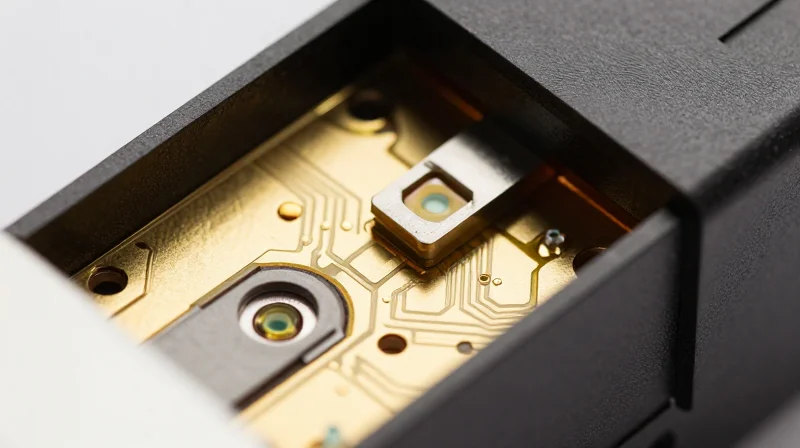
The performance and reliability of fixed-wavelength DWDM SFP+ modules are dictated by their internal sub-assemblies, specifically the Transmitter Optical Sub-Assembly (TOSA) and the Receiver Optical Sub-Assembly (ROSA). Unlike standard grey optics, these components are engineered for extreme spectral precision and high-power output, utilizing Electro-absorption Modulated Lasers (EML) to combat the chromatic dispersion and signal degradation inherent in long-distance dense wavelength division multiplexing.
The Engine: Electro-absorption Modulated Lasers (EML)
In the context of 10G DWDM, the choice of laser is paramount. While shorter-reach modules might use Directly Modulated Lasers (DML), fixed-wavelength DWDM SFP+ modules typically employ EML technology. An EML integrates a laser diode and an electro-absorption modulator on a single chip. Because the laser runs at a constant current and the modulator acts as a high-speed shutter, the resulting signal has significantly lower 'chirp'—the unwanted frequency shifting that occurs during modulation. This low-chirp characteristic is essential for maintaining signal integrity over distances of 80km or more, where chromatic dispersion would otherwise blur the optical pulses beyond recovery.
| Feature | Directly Modulated Laser (DML) | Electro-absorption Modulated Laser (EML) |
|---|---|---|
| Modulation Method | Current-driven (Direct) | External (Electro-absorption) |
| Spectral Width/Chirp | High (Spreads over distance) | Low (Narrow, stable spectrum) |
| Typical Reach | Up to 40km | 80km to 120km |
| Cost and Complexity | Lower | Higher |
TOSA and ROSA: Precision Sub-Assemblies
The TOSA in a fixed DWDM SFP+ is more than just a light source; it often includes a Thermo-Electric Cooler (TEC) to maintain a stable operating temperature. Because DWDM channels are spaced as narrowly as 0.4nm (50GHz), even a slight temperature fluctuation can cause the wavelength to drift, resulting in crosstalk with adjacent channels. On the receiving end, the ROSA often utilizes an Avalanche Photodiode (APD) rather than a PIN diode. APDs provide higher sensitivity by multiplying the incoming signal, which is necessary for detecting the low-power signals common in long-distance links after they have passed through multiple mux/demux filters and fiber spans.
Hardware FAQ
- Why is a TEC (Thermo-Electric Cooler) necessary in DWDM TOSAs?
Optical wavelengths shift with temperature. In the narrow ITU-T grid, a drift of even 0.1nm can cause transmission failure. The TEC ensures the laser remains locked to its specific fixed frequency regardless of the ambient temperature of the switch or router. - Can I use a PIN-based ROSA for 80km DWDM links?
Generally, no. PIN diodes lack the internal gain required to resolve the weak signals typical of 80km spans. APD detectors are the industry standard for fixed-wavelength DWDM optics to ensure sufficient link budget. - How does EML reduce chromatic dispersion issues?
By separating the light generation from the modulation, EML minimizes the frequency 'spread' of the pulse. A cleaner, more stable pulse travels further without overlapping into neighboring time slots, which is critical for 10Gbps data rates.
Optical Power Budgets and Distance Rating (40km to 80km+)
Optical Power Budgets and Distance Rating (40km to 80km+)
In the realm of fixed-wavelength DWDM SFP+ transceivers, the 'distance rating' is a shorthand for the module's optical power budget—the total allowable loss between the transmitter and the receiver. Achieving distances of 40km (ER) or 80km (ZR) requires a high-performance Electro-absorption Modulated Laser (EML) to maintain signal integrity against the dual threats of attenuation and chromatic dispersion. A successful link depends on ensuring the received power falls within the 'sweet spot' above the receiver's sensitivity threshold but below its saturation point.
Key Metrics: Launch Power vs. Receiver Sensitivity
The optical power budget is calculated by subtracting the receiver sensitivity (the minimum power required to maintain a specific Bit Error Rate) from the minimum launch power. For DWDM applications, these values are more stringent than standard gray optics due to the narrow spectral width and the need for higher OSNR (Optical Signal-to-Noise Ratio).
| SFP+ Type | Typical Distance | Min Launch Power (dBm) | Receiver Sensitivity (dBm) | Power Budget (dB) |
|---|---|---|---|---|
| DWDM-SFP-ER | 40km | -1 dBm | -15 dBm | 14 dB |
| DWDM-SFP-ZR | 80km | 0 dBm | -24 dBm | 24 dB |
| DWDM-SFP-EZR | 100km+ | +2 dBm | -28 dBm (with APD) | 30 dB |
The Dispersion Bottleneck
While attenuation (signal loss) can be mitigated by Erbium-Doped Fiber Amplifiers (EDFAs), Chromatic Dispersion (CD) is a non-linear effect that becomes the primary bottleneck for 10G DWDM SFP+ modules at distances exceeding 80km. CD causes the optical pulses to spread as they travel, eventually overlapping and causing Inter-Symbol Interference (ISI). Standard G.652 single-mode fiber has a dispersion coefficient of approximately 17 ps/nm/km; for an 80km link, this results in roughly 1360 ps/nm of dispersion, which is near the maximum tolerance for most fixed-wavelength SFP+ receivers without external compensation.
Design Considerations and FAQ
- Why do I need attenuators for short links?
If an 80km ZR module is used on a short 10km link, the launch power will likely exceed the receiver's overload threshold (usually around -7 dBm), potentially damaging the ROSA or causing high error rates. - What is the role of APD in 80km modules?
Most 80km and 100km DWDM SFP+ modules utilize Avalanche Photodiodes (APD) instead of standard PIN diodes. APDs provide internal gain, significantly increasing sensitivity to detect the faint signals typical of long-span transmissions. - How does Mux/Demux insertion loss affect the budget?
In a DWDM system, every Mux/Demux adds 3dB to 5dB of loss. This must be subtracted from the total power budget, often reducing an 80km-rated module's effective range to 60km unless amplification is used.
Fixed-Wavelength vs. Tunable SFP+: Total Cost of Ownership (TCO)
Fixed-Wavelength vs. Tunable SFP+: Total Cost of Ownership (TCO)
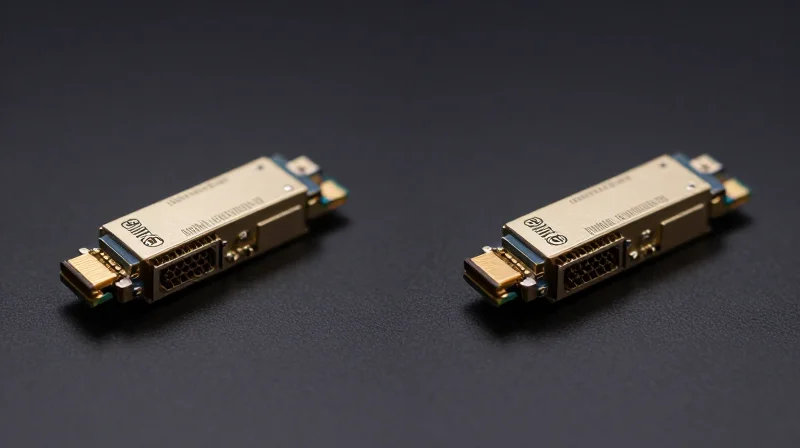
Deciding between fixed-wavelength and tunable DWDM SFP+ modules is a strategic trade-off between immediate capital expenditure (CAPEX) and long-term operational efficiency (OPEX). While fixed-wavelength modules provide the lowest entry cost for specific, static links, tunable modules reduce the complexity of the supply chain by consolidating multiple channel-specific SKUs into a single, software-adjustable part. The choice hinges on whether the lower unit cost of fixed optics outweighs the inventory flexibility and 'sparing' advantages of tunable alternatives.
CAPEX vs. OPEX: The Inventory Paradox
The primary financial driver for fixed-wavelength DWDM SFP+ is the unit price, which is typically 30% to 50% lower than a tunable counterpart. For large-scale greenfield deployments where every channel is utilized simultaneously, the cumulative CAPEX savings can be substantial. However, the 'long tail' of maintenance creates an operational burden: an operator using a 40-channel fixed-wavelength system must theoretically stock 40 different replacement parts to ensure immediate recovery from any single-channel failure.
| Metric | Fixed-Wavelength DWDM | Tunable DWDM |
|---|---|---|
| Unit Acquisition Cost | Low (Optimized for CAPEX) | High (Premium for flexibility) |
| Inventory Complexity | High (Unique SKU per channel) | Low (Single universal SKU) |
| Sparing Strategy | Multiple channel-specific spares | One spare covers all channels |
| Deployment Speed | Slower (Must locate specific SKU) | Faster (Any module works anywhere) |
Strategic Deployment Scenarios
Fixed-wavelength modules are the optimal TCO choice for static, point-to-point architectures and enterprise campus backbones where channel assignments are unlikely to change over a 5-to-10-year lifecycle. In these environments, the administrative cost of managing a few SKUs is negligible compared to the upfront hardware savings. Conversely, in dynamic service provider networks where rapid provisioning and 'pay-as-you-grow' models are essential, the ability to deploy a universal tunable module reduces technician error and simplifies warehouse logistics, often justifying the higher initial price point.
- Is the power consumption different between the two?
Fixed-wavelength modules typically consume slightly less power (approx. 1.0W to 1.5W) because they do not require the thermal tuning circuitry needed to stabilize a tunable laser across the entire C-Band. - When is fixed-wavelength the only viable option?
In legacy hardware or budget-constrained access networks where the host switch software does not support the I2C protocols required to command a tunable module to change its wavelength. - Does fixed-wavelength offer better performance?
In terms of signal integrity, both provide similar BER performance. However, fixed modules are sometimes preferred in high-vibration environments as they lack the complex micro-electromechanical systems (MEMS) or thermal tuning elements found in some tunable designs.
Integration with Passive Mux/Demux Systems
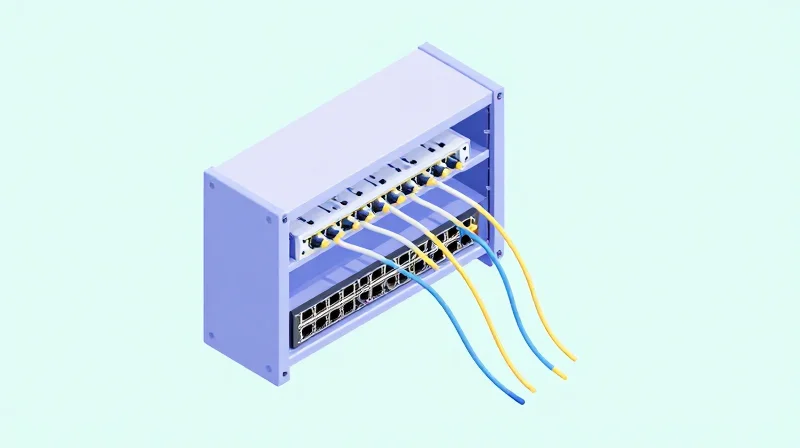
The Symbiotic Relationship Between Fixed SFPs and Passive Muxes
Integration with passive Multiplexers (Mux) and Demultiplexers (Demux) is the cornerstone of any fixed-wavelength DWDM deployment. Unlike tunable modules that can be software-reconfigured, fixed-wavelength SFP+ transceivers are manufactured for a specific ITU grid channel (e.g., C21 or C60). To function, the module's transmit wavelength must perfectly match the center frequency of the assigned filter port on the passive Mux. These passive units utilize Thin Film Filters (TFF) or Arrayed Waveguide Gratings (AWG) that act as optical 'gatekeepers,' only allowing specific frequencies to pass through while reflecting or absorbing others.
Hardware Alignment and Insertion Loss
In a passive architecture, the fixed-wavelength SFP+ determines the spectral efficiency of the entire link. Because the Mux/Demux is unpowered, it cannot compensate for signal degradation. Therefore, the SFP+ must maintain high wavelength stability. If the module's laser drifts from its specified ITU center frequency due to age or thermal stress, it will hit the edges of the Mux filter's passband, leading to high insertion loss or complete signal clipping. This mechanical and optical dependency makes precise labeling and port documentation critical during installation.
| Feature | Fixed-Wavelength SFP+ Integration | Tunable SFP+ Integration |
|---|---|---|
| Port Assignment | Hard-coded 1:1 physical mapping | Flexible software-defined mapping |
| Inventory Logic | Requires channel-specific spares | Unified 'one-size-fits-all' spare |
| Initial Setup | Plug-and-play into correct Mux port | Requires wavelength provisioning |
| Operational Complexity | Low (no logic to fail) | Moderate (requires I2C management) |
Common Integration Challenges
- Can I plug a C21 module into a C22 Mux port?
No. The passive filter for C22 will reject the C21 wavelength. While the module will physically fit and power up, no light will pass through the Mux, resulting in a 'link down' status. - How does temperature affect the SFP+ and Mux connection?
Since passive Muxes are uncooled, the SFP+ must use an internal Thermo-Electric Cooler (TEC) to keep the laser stable. If the SFP+ temperature control fails, the wavelength will drift out of the Mux port's narrow window. - Is there a specific sequence for connecting fixed DWDM SFP+ modules?
It is best practice to clean all fiber connectors first. Because fixed modules are wavelength-specific, verify the channel number on the SFP+ pull-tab matches the Mux port label before insertion to avoid troubleshooting phantom link issues.
Application Scenarios: From DCI to Metro Ethernet

Application Scenarios: From DCI to Metro Ethernet
Fixed-wavelength DWDM SFP+ transceivers are the workhorses of modern high-capacity optical networks, providing a strategic solution for organizations facing fiber exhaustion. By leveraging the ITU-T dense wavelength division multiplexing grid, these modules enable the transmission of multiple independent data streams over a single fiber pair. Their primary utility lies in static network architectures where wavelength assignments remain constant, offering a balance of high performance, low power consumption, and significantly lower acquisition costs compared to tunable alternatives.
Data Center Interconnect (DCI)
In the realm of Data Center Interconnects, fixed-wavelength DWDM SFP+ modules are deployed to bridge the gap between geographically separated data centers. For distances typically ranging from 10km to 80km, these modules allow for the massive scaling of bandwidth required for synchronous data replication, cloud resource sharing, and disaster recovery. Because DCI links are often point-to-point and rarely change once commissioned, the lower price point of fixed-wavelength optics allows operators to populate high-density switches without the premium cost of tunability.
Service Provider Metro Ethernet and Backhaul
Service providers utilize fixed DWDM SFP+ optics to optimize Metro Ethernet rings and aggregate traffic from access nodes. In 5G mobile backhaul, these modules provide the necessary 10Gbps throughput per channel to handle increased data demands. By using fixed wavelengths in conjunction with Optical Add-Drop Multiplexers (OADMs), providers can efficiently 'drop' specific channels at local hubs while bypassing others, maintaining high signal integrity across the metropolitan span.
| Deployment Scenario | Typical Distance | Network Topology | Primary Driver |
|---|---|---|---|
| Data Center Interconnect | 10km - 80km | Point-to-Point | High-capacity replication |
| Metro Ethernet | 40km - 80km | Ring or Mesh | Service aggregation |
| Campus Backbone | Under 10km | Star or Hub-and-Spoke | Fiber conservation |
| 5G Backhaul | 20km - 40km | Point-to-Point | Low latency/High BW |
High-Capacity Campus Backbones
For large corporate or university campuses, laying new fiber-optic cable is often cost-prohibitive due to civil engineering constraints. Fixed-wavelength DWDM SFP+ modules allow IT administrators to expand the capacity of existing fiber runs between buildings. By integrating these modules with passive multiplexers, a single pair of strands can support up to 40 or 80 individual 10G channels, effectively turning a simple link into a multi-terabit backbone with minimal hardware footprint.
Integration with Passive Mux/Demux Systems
The successful deployment of fixed-wavelength modules depends entirely on their synergy with passive Mux/Demux units. Unlike 'plug-and-play' grey optics, a fixed DWDM SFP+ must match the specific channel (e.g., C21, C22) of the multiplexer port it is connected to. This hardware-level matching creates a 'hard-wired' optical path that is immune to software configuration errors, providing a highly stable environment for mission-critical traffic where manual physical patching is the preferred method of circuit provisioning.
- Can fixed DWDM SFP+ be used in greenfield deployments?
Yes, they are ideal for new deployments where the channel plan is pre-defined and the budget favors lower CAPEX over the flexibility of tunable optics. - What happens if I plug a fixed module into the wrong Mux port?
The link will fail to establish. Passive multiplexers only pass specific wavelengths through specific ports; mismatched frequencies will be filtered out. - Are these modules suitable for 100G upgrades?
While these are 10G modules, they can coexist on the same fiber with 100G DWDM waves using the same ITU grid, allowing for a hybrid-speed infrastructure.
Overcoming Technical Challenges: Dispersion and Heat Management
Overcoming Technical Challenges: Dispersion and Heat Management
Deploying fixed-wavelength DWDM SFP+ modules effectively requires addressing two fundamental physical limitations: chromatic dispersion, which causes signal degradation over distance, and thermal density, which impacts wavelength stability and hardware longevity. At 10Gbps speeds, these factors become the primary bottlenecks for network operators aiming for reaches beyond 40km in high-density environments.
Mitigating Chromatic Dispersion in 10G Links
Chromatic dispersion (CD) occurs because different spectral components of the light signal travel at different speeds through the optical fiber. In DWDM systems, especially those using standard G.652 fiber, this pulse broadening can lead to Inter-Symbol Interference (ISI), making the signal unreadable. Fixed-wavelength DWDM SFP+ modules are typically rated for 40km (ER) or 80km (ZR) reaches, but performance beyond these distances requires external intervention.
| Distance Range | Dispersion Challenge | Typical Solution |
|---|---|---|
| 0-40km | Minimal impact | Standard fixed DWDM SFP+ (ER) |
| 40-80km | Moderate pulse broadening | High-power EML lasers and PIN/APD receivers |
| 80km-120km | Significant ISI | Dispersion Compensation Modules (DCM) or EDFA amplification |
| 120km+ | Critical signal loss | Coherent optics or mid-span compensation |
Thermal Management and Wavelength Accuracy
Because fixed-wavelength modules must adhere to strict ITU-T grid spacing (e.g., 100GHz or 50GHz), maintaining a precise center wavelength is mandatory. This is achieved through an internal Thermo-Electric Cooler (TEC). However, the TEC adds to the power budget and heat profile of the transceiver. In a fully populated 48-port switch, the cumulative heat can exceed the cooling capacity of standard chassis, potentially leading to wavelength drift or hardware failure.
- How does heat affect wavelength stability?
In DWDM lasers, wavelength is sensitive to temperature. Without a functioning TEC to stabilize the laser chip, the wavelength can shift (drift) into an adjacent channel, causing cross-talk and link failure. - What is the typical power consumption of a fixed DWDM SFP+?
Most fixed DWDM SFP+ modules consume between 1.5W and 2.5W, which is significantly higher than the <1W consumed by standard 10G SR or LR optics. - Is dispersion compensation always required?
No. For links under 80km using high-quality EML-based SFP+ modules, the inherent dispersion tolerance is often sufficient. DCMs are generally reserved for regional or long-haul spans.
To successfully manage these challenges, engineers must perform a detailed link budget analysis that accounts for both the optical power loss and the dispersion penalty. Furthermore, ensuring adequate airflow and using industrial-temperature (I-Temp) rated modules can mitigate the risks associated with thermal buildup in outdoor or high-density deployments.
Fixed-Wavelength DWDM SFP+ modules remain a cornerstone of scalable optical networking, offering a mature and cost-predictable solution for fiber-constrained environments. By understanding the ITU grid and power requirements, engineers can build resilient, high-capacity architectures. Ready to scale your fiber capacity? Consult with our experts to find the optimal DWDM channel plan for your next deployment.