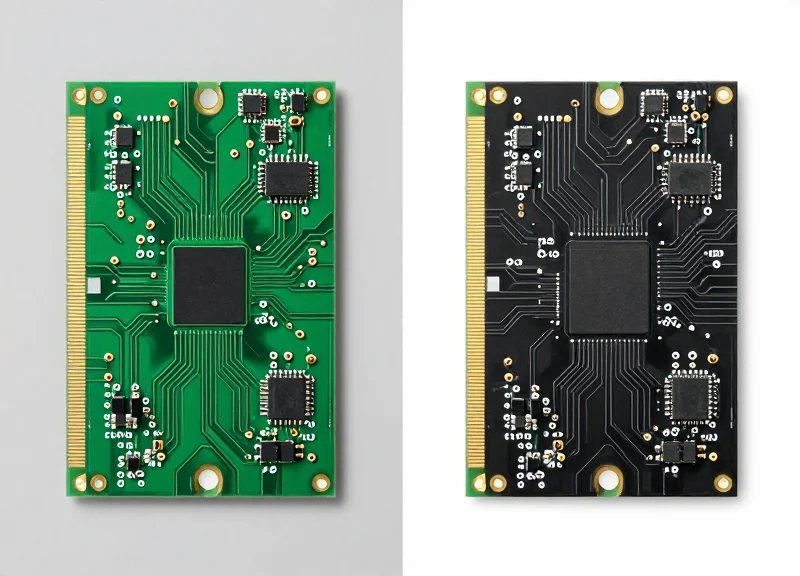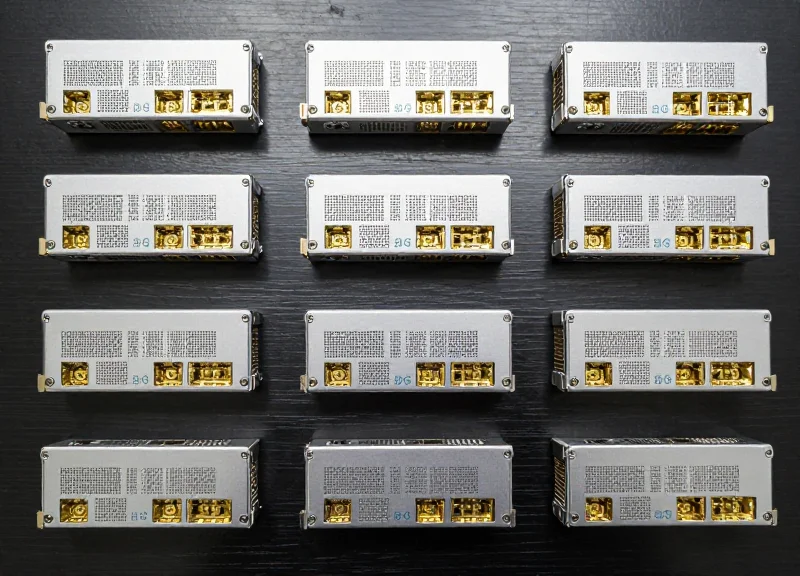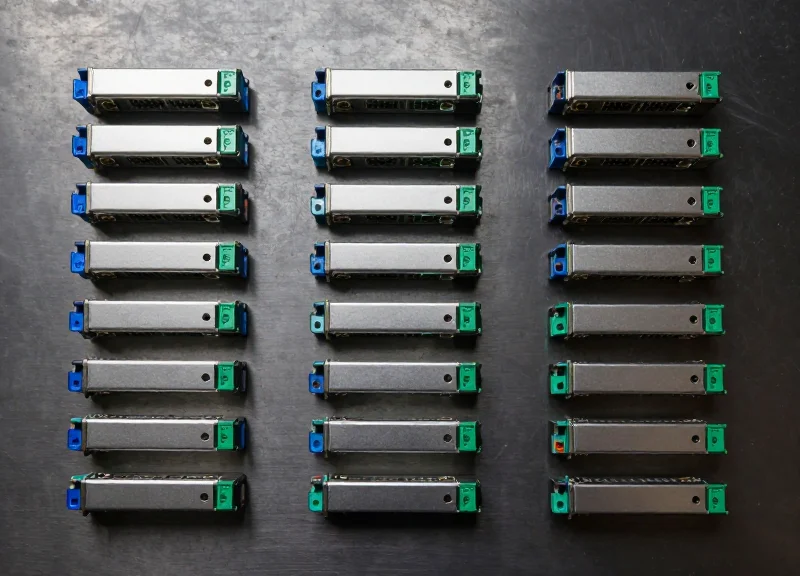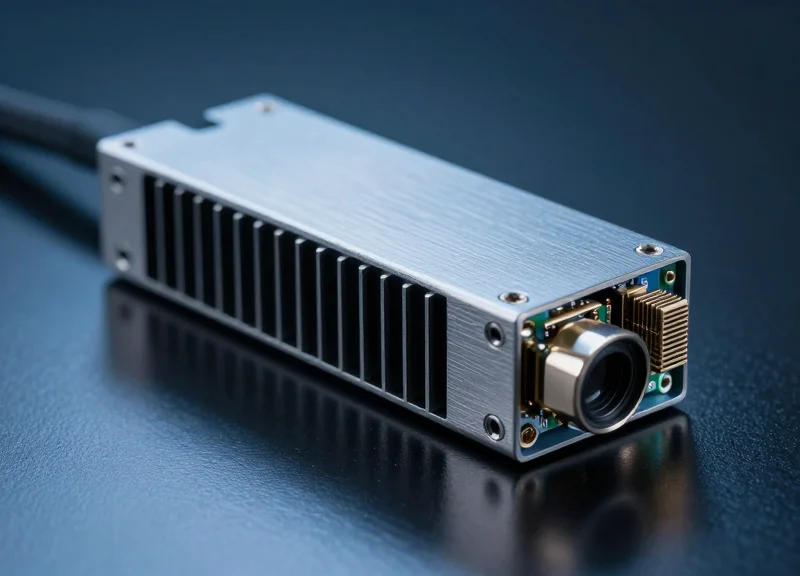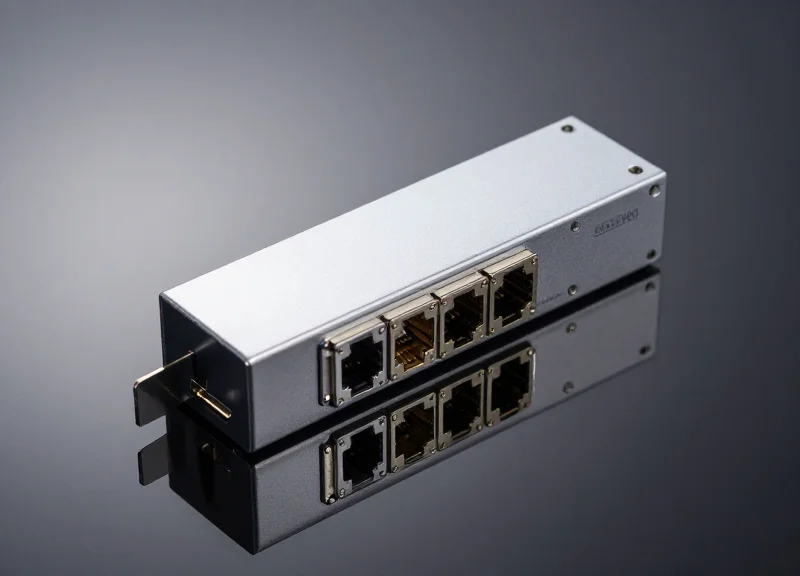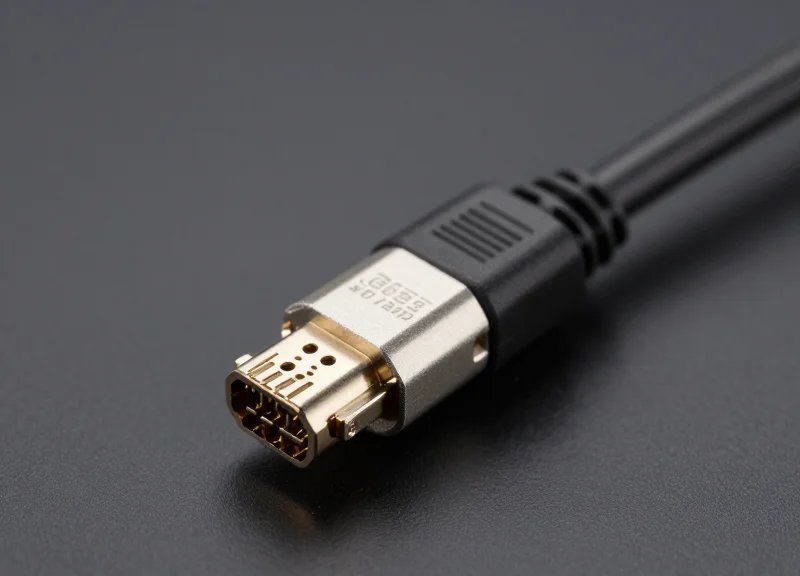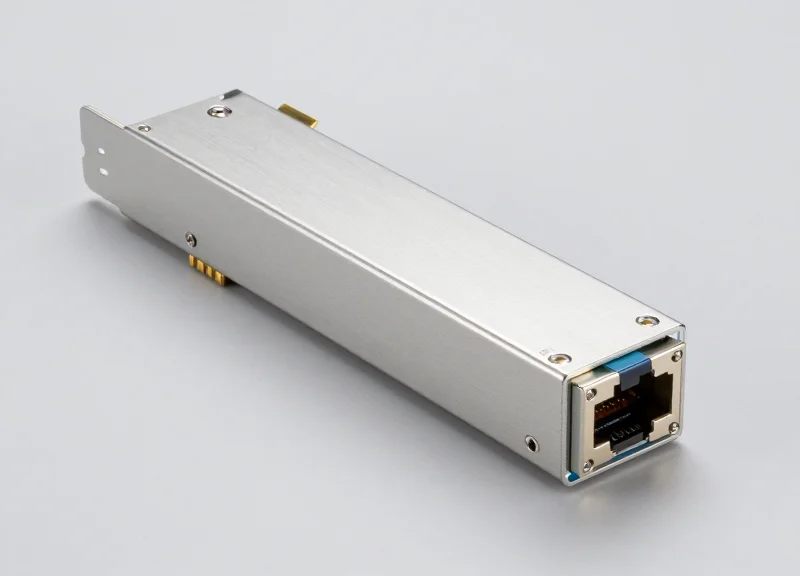
In an era where data throughput requirements are doubling every few years, the stability of your fiber optic backbone is non-negotiable. For enterprises and hyperscalers, the 200G QSFP56 SR4 transceiver represents a critical junction in network performance. Ubytelink addresses the most pressing pain points of modern infrastructure—reliability, heat dissipation, and compatibility—to deliver a solution designed for the world's most demanding global networks.
The Evolution of 200G: Why QSFP56 SR4 is the Industry Standard

The Evolution of 200G: Why QSFP56 SR4 is the Industry Standard
The transition to 200G Ethernet was driven by the urgent need for higher bandwidth without a proportional increase in physical footprint or power consumption. The QSFP56 SR4 (Short Range 4-lane) transceiver emerged as the industry standard by leveraging Pulse Amplitude Modulation 4-level (PAM4) technology, which allows each of its four lanes to carry 50Gbps of data. Unlike previous 100G generations that relied on Non-Return-to-Zero (NRZ) signaling, the SR4 variant provides a seamless upgrade path for short-range links up to 100 meters over OM4 multi-mode fiber, balancing performance and deployment costs more effectively than early 400G alternatives.
Bridging the Gap: From NRZ to PAM4 Signaling
At the heart of the QSFP56 evolution is the shift in modulation techniques. While NRZ was sufficient for 100G systems, doubling the data rate within the same spectral constraints required a more efficient method. PAM4 signaling transmits two bits of information per symbol period, effectively doubling the bitrate per channel. This innovation allowed Ubytelink and the wider industry to maintain the familiar QSFP (Quad Small Form-factor Pluggable) envelope while doubling the aggregate throughput to 200G, ensuring that data center operators could leverage existing rack architectures and thermal management systems.
| Feature | QSFP28 (100G) | QSFP56 (200G) | QSFP-DD (400G) |
|---|---|---|---|
| Modulation | NRZ | PAM4 | PAM4 |
| Data Rate per Lane | 25 Gbps | 50 Gbps | 50 Gbps |
| Total Lanes | 4 | 4 | 8 |
| Max Reach (SR4/SR8) | 100m (OM4) | 100m (OM4) | 100m (OM4) |
Key Drivers for QSFP56 SR4 Adoption
- Optimized Density
The QSFP56 form factor maintains the high-density characteristics of previous generations, allowing for 32 or 36 ports per 1U switch rack, which is critical for leaf-spine architectures. - Backward Compatibility
Most QSFP56 ports are designed to be backward compatible with QSFP28 modules, offering network architects the flexibility to perform phased infrastructure upgrades without a total hardware overhaul. - Thermal and Power Efficiency
Compared to early-generation 400G modules, the 200G QSFP56 SR4 produces significantly less heat, reducing the cooling demands and operational expenditure (OPEX) for large-scale deployments. - Short-Reach Specialization
The SR4 variant is specifically tuned for intra-rack and inter-rack connectivity, which accounts for the vast majority of data center traffic, making it a specialized, cost-effective tool rather than a generic solution.
Ubytelink's 200G QSFP56 SR4 solutions capitalize on this standardized evolution by providing high-reliability components that meet rigorous industry benchmarks. By focusing on the SR4 standard, Ubytelink ensures that global networks can scale to 200G while maintaining the stability and interoperability required for mission-critical environments.
Harnessing PAM4 Modulation for Enhanced Bandwidth

Pulse Amplitude Modulation 4-level (PAM4) is the defining technology that allows 200G QSFP56 SR4 solutions to achieve high-speed data transmission without necessitating an increase in the physical lane count or hardware footprint. By utilizing four distinct signal levels to represent data, PAM4 effectively doubles the bit rate compared to the binary signaling used in previous generations, making it the essential standard for modern high-density data centers.
The Shift from NRZ to PAM4: A Multilevel Leap
In traditional Non-Return-to-Zero (NRZ) signaling, data is transmitted using two voltage levels representing 0 and 1. To reach 200G using NRZ, a transceiver would require significantly higher symbol rates or more physical lanes, leading to increased power consumption and heat. PAM4 solves this by using four levels (00, 01, 10, 11) within the same time interval, allowing for two bits of information per symbol. This evolution ensures that the 200G QSFP56 SR4 can operate over four lanes of multimode fiber at 50Gbps per lane.
| Feature | NRZ Signaling | PAM4 Modulation |
|---|---|---|
| Bits per Symbol | 1 Bit | 2 Bits |
| Signal Levels | 2 Levels (High/Low) | 4 Levels |
| Bandwidth Efficiency | Baseline | 2x Baseline |
| Application | 10G/40G/100G (Legacy) | 200G/400G/800G |
Optimizing Signal Integrity in 200G Environments
While PAM4 provides a massive boost in bandwidth efficiency, it introduces complexity in signal-to-noise ratio (SNR) management. Because the four voltage levels are closer together, the signal is more sensitive to noise. Ubytelink 200G QSFP56 SR4 modules address this through advanced Forward Error Correction (FEC) and high-performance Digital Signal Processing (DSP) chips, ensuring that the enhanced bandwidth does not come at the cost of data reliability.
Common Questions on PAM4 and QSFP56 Compatibility
- Is PAM4 backward compatible with NRZ switches?
Generally, PAM4-based QSFP56 modules require ports designed for PAM4 signaling. However, many modern switches offer 'breakout' modes or auto-negotiation, though physical modulation differences usually require specific hardware support. - Does PAM4 increase power consumption significantly?
While the DSP required for PAM4 consumes more power than simple NRZ drivers, the efficiency gained (power per gigabit) is much higher, resulting in a more sustainable energy profile for the data center overall. - Why is QSFP56 SR4 limited to 100 meters on OM4 fiber?
The tighter margins of PAM4 signaling and the dispersion characteristics of multimode fiber mean that 100 meters is the industry-standard reach to maintain zero-error performance with FEC.
Ubytelink's Engineering Excellence: Built for Reliability
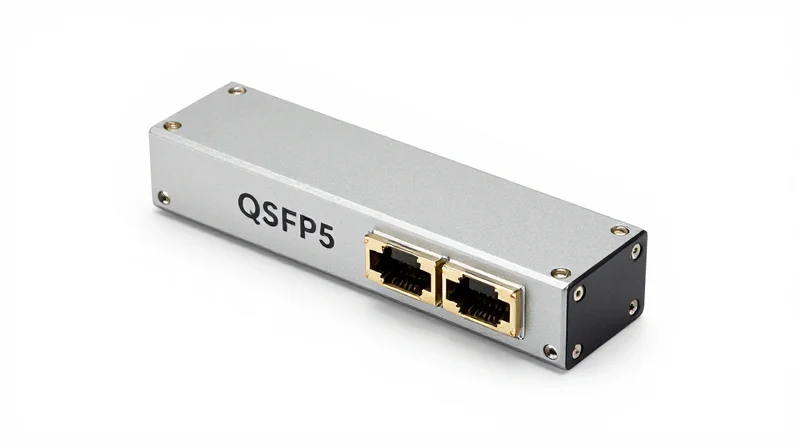
Ubytelink's Engineering Excellence: Built for Reliability
Ubytelink 200G QSFP56 SR4 solutions are defined by a 'reliability-first' design philosophy that integrates high-tier industrial components with advanced thermal management to ensure maximum network uptime. Unlike commodity modules that prioritize cost-cutting, Ubytelink focuses on reducing the total cost of ownership by minimizing hardware failures and maintaining signal fidelity over long-term deployments in high-density data centers.
The Core Components of Signal Integrity
The reliability of a 200G SR4 module hinges on the quality of its VCSEL (Vertical-Cavity Surface-Emitting Laser) array and the efficiency of its Digital Signal Processor (DSP). Ubytelink utilizes premium Grade-A VCSELs characterized by extremely low jitter and high thermal tolerance. These are paired with state-of-the-art 7nm DSPs that consume less than 5W of power, significantly reducing the heat-induced stress on the internal circuitry which is a primary cause of optical degradation.
Hardware Benchmarks: Ubytelink vs. Commodity Alternatives
| Attribute | Ubytelink 200G SR4 | Generic/Commodity 200G |
|---|---|---|
| Optical Source | Grade-A VCSEL (Long-Lifespan) | Standard-Grade VCSEL |
| Power Consumption | < 5.0W (Optimized) | Up to 7.0W (Standard) |
| MTBF Rating | > 2,000,000 Hours | < 1,200,000 Hours |
| Cooling Design | High-Conductivity Zinc Alloy Housing | Standard Aluminum/Plastic Hybrid |
| Testing Protocols | 100% Port-by-Port Validation | Batch-based Sample Testing |
Reliability and Deployment FAQ
- How does Ubytelink manage thermal stability in high-density racks?
Every module is encased in a high-thermal-conductivity zinc alloy housing designed to dissipate heat rapidly, preventing the 'hot-spot' effect common in 200G deployments. - What is the expected lifespan of these modules under 24/7 operation?
With an MTBF of over 2 million hours, Ubytelink modules are designed to last the entire lifecycle of the networking hardware they inhabit, typically exceeding 5 to 7 years of continuous use. - Does Ubytelink optimize firmware for specific switch vendors?
Yes, our engineering team maintains a massive compatibility lab where firmware is tuned for major vendors like Arista, Cisco, and NVIDIA to ensure seamless integration and error-free diagnostics via I2C.
Rigorous Testing Protocols for Mission-Critical Use
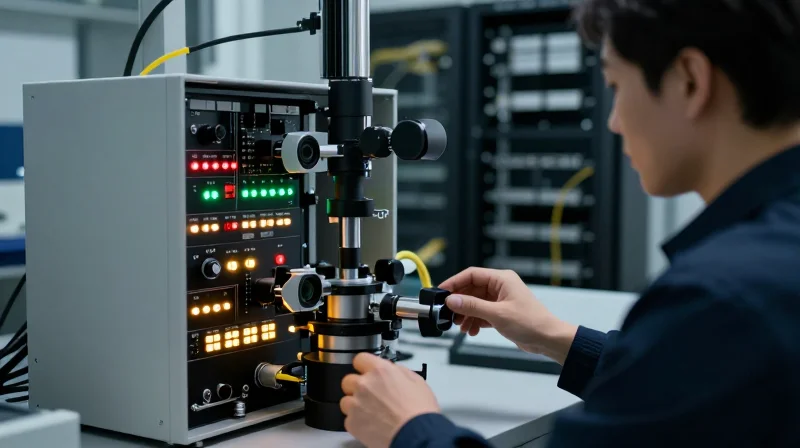
Rigorous Testing Protocols for Mission-Critical Use
Ubytelink establishes a new benchmark for reliability by implementing a Zero-Failure testing environment that subjects every 200G QSFP56 SR4 module to a battery of stressors before it reaches the deployment phase. Unlike generic alternatives that rely on batch sampling, Ubytelink validates every individual unit against stringent signal integrity and thermal stability parameters. This comprehensive approach ensures that mission-critical data center operations remain uninterrupted, even under maximum load and varying environmental conditions across heterogeneous network architectures.
Signal Integrity and BER Analysis
At the heart of our quality assurance is the Bit Error Rate (BER) analysis. For 200G transmission using PAM4 modulation, maintaining a low BER is critical due to the reduced signal-to-noise ratio inherent in multi-level signaling. Ubytelink modules are tested to achieve a Pre-FEC (Forward Error Correction) BER significantly better than IEEE 802.3bs standards. By maintaining a superior margin before error correction is applied, we guarantee that the final data stream is virtually error-free, preventing costly packet retransmissions and latency spikes.
| Metric | Industry Standard (IEEE) | Ubytelink Premium Standard |
|---|---|---|
| Pre-FEC BER | ≤ 2.4 x 10^-4 | ≤ 1.0 x 10^-5 |
| Operating Temperature | 0°C to 70°C (Commercial) | Up to -5°C to 85°C (Extended) |
| Supply Voltage Margin | ±5% | ±10% |
| Interoperability | Basic Compliance | Full Multi-Vendor Compatibility |
Environmental Stress and Platform Compatibility
To guarantee longevity, modules undergo Accelerated Life Testing (ALT) and thermal shock cycles that simulate years of operation in high-density racks. Our laboratory environment replicates the heat and airflow challenges of modern hyperscale facilities. Furthermore, Ubytelink utilizes an extensive library of host platforms—including the latest switches from Cisco, Arista, Juniper, and Mellanox—to verify that EEPROM coding and physical layer handshakes are flawless. This ensures 100% 'plug-and-play' compatibility without the risk of port-recognition errors or link flapping.
- How does Ubytelink ensure compatibility with different switch brands?
Each module is programmed with vendor-specific firmware and tested in the actual target hardware to ensure 100% recognition and performance optimization. - What is the significance of the 72-hour burn-in test?
The burn-in test identifies potential infant mortality failures by running the modules at peak power and elevated temperatures, ensuring only the most robust units reach the customer.
Solving the Thermal Challenge in High-Density Racks
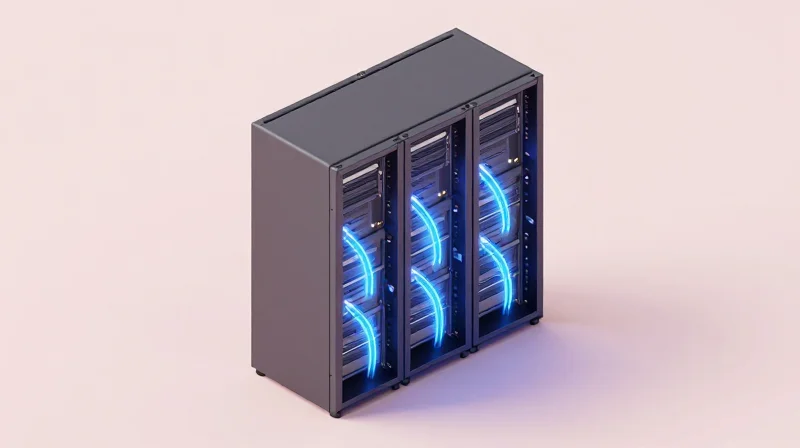
Solving the Thermal Challenge in High-Density Racks
Ubytelink solves the thermal challenges of 200G networking by optimizing internal circuitry to achieve ultra-low power consumption, thereby reducing the heat dissipation required per port and protecting the integrity of high-density switch fabrics.
Efficient Power Profiles for Sustained Performance
As data centers transition to 200G, the cumulative heat generated by dozens of transceivers in a single rack-unit can lead to thermal throttling or hardware degradation. Ubytelink’s 200G QSFP56 SR4 modules utilize advanced 7nm DSPs and optimized VCSEL drivers to keep power consumption well below the standard 5W threshold. This efficiency ensures that even under maximum throughput, the modules operate within a stable temperature range, preventing the cascading failures often seen in generic, high-heat alternatives.
| Metric | Ubytelink 200G SR4 | Generic 200G SR4 |
|---|---|---|
| Typical Power Consumption | <4.5W | 5.5W - 6.0W |
| Thermal Throttling Threshold | 85°C | 70°C |
| Cooling Load per Rack | Optimized | High |
| Operational Lifespan (MTBF) | Extended | Standard |
Impact on Total Cost of Ownership (TCO)
The financial benefits of Ubytelink’s thermal engineering extend beyond hardware longevity. By reducing the heat load at the transceiver level, data centers can lower their Power Usage Effectiveness (PUE) ratios. Every watt saved at the module level results in secondary savings in cooling infrastructure energy, significantly reducing the total cost of ownership over a typical 5-year deployment cycle. Furthermore, the reduced thermal stress on the switch backplane prevents premature aging of expensive networking equipment.
Thermal Performance FAQ
- How does Ubytelink achieve lower power consumption?
Through the integration of highly efficient integrated circuits and a simplified optical path that reduces the electrical load required for signal integrity. - Does lower power consumption affect the signal reach?
No, Ubytelink maintains the full 100-meter reach over OM4 fiber while consuming less energy than standard competitors. - Can these modules operate in high-temperature environments?
Yes, the modules are designed with a wider thermal margin, allowing them to remain stable even during temporary cooling system fluctuations.
Seamless Integration and Multi-Vendor Compatibility
Achieving seamless integration in high-speed networks requires more than just mechanical compatibility; it demands a deep alignment with the host system's software logic and diagnostic requirements. Ubytelink 200G QSFP56 SR4 solutions are engineered with advanced EEPROM coding that allows them to be recognized natively by major network hardware, ensuring that features like Digital Optical Monitoring (DOM) function identically to expensive OEM-branded alternatives.
Universal Standards and MSA Compliance
Ubytelink's commitment to interoperability is rooted in strict adherence to Multi-Source Agreement (MSA) standards. By following the QSFP56 form factor and electrical specifications, these 200G SR4 modules provide a plug-and-play experience across a wide array of network equipment. This standard-based approach ensures that the optical characteristics, power levels, and signaling protocols are consistent, regardless of the chassis into which they are installed.
| Network Vendor | Recognition Status | DOM/DDM Support | Reliability Verification |
|---|---|---|---|
| Cisco Nexus/Catalyst | Native Plug-and-Play | Full Real-time Visibility | Verified |
| Arista 7000 Series | Native Plug-and-Play | Full Real-time Visibility | Verified |
| Mellanox Spectrum/ConnectX | Native Plug-and-Play | Full Real-time Visibility | Verified |
| Juniper QFX/PTX | Native Plug-and-Play | Standard Telemetry | Verified |
Overcoming the Challenges of Vendor Lock-in
Vendor lock-in has long been a hurdle for data center scaling, often leading to inflated costs and restricted supply chains. Ubytelink's compatibility engineering allows network architects to regain control of their procurement strategy. By utilizing a single, high-quality module across a heterogeneous network environment, organizations can simplify their spare parts inventory and significantly reduce the total cost of ownership (TCO) without risking network downtime.
Integration and Compatibility FAQ
- Will using Ubytelink modules void my host switch warranty?
No. Major network hardware manufacturers are prohibited from voiding warranties simply because a third-party transceiver is used, provided the module meets technical standards. Ubytelink modules are fully compliant with these standards. - Do I need special commands to enable these modules on Cisco switches?
Ubytelink modules are coded to be recognized as native, meaning they typically do not require the 'service unsupported-transceiver' command for standard operation. - Are these modules hot-swappable in a live multi-vendor environment?
Yes, all Ubytelink 200G QSFP56 SR4 modules support hot-swapping, allowing for seamless upgrades or replacements without powering down the host equipment. - Can Ubytelink customize coding for niche hardware brands?
Yes, Ubytelink provides custom firmware flashing services to ensure compatibility with a wide range of less common or legacy networking equipment upon request.
Optimizing Fiber Cabling: MPO-12 and Parallel Optics
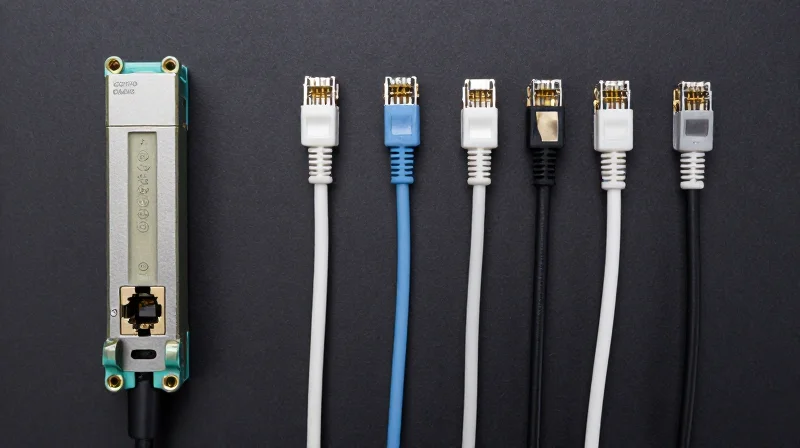
Optimizing fiber infrastructure for 200G QSFP56 SR4 modules hinges on the deployment of high-grade MPO-12 connectors and OM4 or OM5 Multi-Mode Fiber (MMF). Because the SR4 architecture utilizes four parallel lanes of 50G PAM4 signals, any physical layer deficiency—such as high insertion loss or fiber skew—can lead to increased Bit Error Rates (BER) and link instability. By standardizing on MPO-12 parallel optics, operators can maintain the strict optical power budgets required for 100-meter reaches while simplifying the transition from legacy 100G to 200G and 400G environments.
The Mechanics of Parallel Optics in SR4 Modules
The 200G QSFP56 SR4 transceiver operates via eight active fibers within a 12-fiber MPO interface. Specifically, it uses the outermost four fibers for transmission (Tx) and the outermost four for reception (Rx), leaving the central four fibers unused. This parallel transmission requires exact alignment and polarity management to prevent data mismatch. Ubytelink recommends Type-B 'flipped' polarity for most patch-to-patch connections to ensure the Tx of one transceiver lands correctly on the Rx of the partner device.
| Connector Feature | Requirement for 200G SR4 | Impact on Performance |
|---|---|---|
| Fiber Type | OM4 or OM5 MMF | Determines maximum reach (up to 100m) and modal bandwidth. |
| Connector Polarity | Type-B (typically) | Ensures proper Tx/Rx channel mapping across parallel lanes. |
| Insertion Loss | < 0.35 dB per MPO | Maximizes optical power margin for stable PAM4 signal decoding. |
| End-Face Quality | IEC 61300-3-35 Grade | Reduces back-reflections that cause laser instability. |
Maintenance Best Practices for 200G Reliability
At 200G speeds, the sensitivity of the PAM4 modulation format makes the physical layer far more susceptible to contamination than previous NRZ-based 100G systems. A single speck of dust on a multi-fiber array can degrade the signal of an entire 200G link. Establishing a 'Clean-Inspect-Connect' workflow is the most cost-effective way to protect your investment in Ubytelink hardware and ensure 24/7 uptime in mission-critical clusters.
- Why is MPO-12 preferred over MPO-8 for SR4?
While SR4 only uses 8 fibers, MPO-12 is the industry standard for high-density trunking and is fully compatible with SR4 transceivers, providing better future-proofing and availability of patch cables. - How does fiber skew affect 200G transmission?
Fiber skew occurs when signals arrive at different times across the four lanes. In 200G SR4, excessive skew can exceed the transceiver's compensation capabilities, leading to sync errors. - Can I use OM3 fiber with Ubytelink 200G SR4 modules?
OM3 can be used for shorter distances (typically up to 70m), but OM4 is recommended to ensure the lowest BER and the full 100m reach specified for the 200G QSFP56 SR4 standard.
The ROI of Premium Optics in Global Infrastructure
The ROI of Premium Optics in Global Infrastructure
In the context of global digital infrastructure, the true cost of an optical transceiver is measured not by its initial purchase price, but by its performance and reliability over its entire lifecycle. Ubytelink 200G QSFP56 SR4 Solutions: Premium Quality for Global Networks provide a substantial Return on Investment (ROI) by eliminating the high costs associated with network instability. By prioritizing signal integrity and thermal efficiency, these modules ensure that high-bandwidth links remain operational under 100% duty cycles, allowing enterprises to maximize the utilization of their expensive switching fabric and server assets without the threat of intermittent link drops.
Eliminating the Hidden Costs of Generic Optics
Generic or low-quality optics often present a 'false economy' where upfront savings are quickly eroded by operational expenses (OPEX). Every hour of downtime in a Tier-3 or Tier-4 data center can cost tens of thousands of dollars in lost revenue and SLA penalties. Furthermore, poor-quality optics often exhibit higher power consumption and heat generation, which can shorten the lifespan of the host switch and increase data center cooling demands. Ubytelink’s premium manufacturing process mitigates these risks, providing a stable foundation for 400G and 800G migration paths.
| Financial Metric | Generic/Budget Optics | Ubytelink Premium Solutions |
|---|---|---|
| Initial CAPEX | Low | Moderate |
| Annual Failure Rate (AFR) | 1.5% - 5.0% | <0.1% |
| Operational Longevity | Unpredictable | 5+ Years |
| Maintenance Labor Cost | High (Frequent Replacements) | Minimal (Set-and-Forget) |
| Energy Efficiency | Standard/Variable | Optimized (Low Power) |
Business Value and Strategic Investment
- How do Ubytelink optics impact the Total Cost of Ownership (TCO)?
By reducing the frequency of hardware replacements and the energy required for cooling, Ubytelink modules lower the TCO by approximately 20-30% over a five-year period compared to budget alternatives. - Does premium quality affect network scalability?
Yes. High-quality optics ensure cleaner signal transmission, which reduces Error Correction (FEC) overhead and allows for more predictable performance as the network scales to thousands of nodes. - What is the impact of vendor-neutral compatibility on ROI?
Ubytelink’s multi-vendor compatibility prevents 'vendor lock-in,' allowing organizations to source the best hardware for their needs without paying the inflated premiums often charged by major switch OEMs.
Ultimately, the deployment of Ubytelink 200G QSFP56 SR4 modules is a strategic decision that favors long-term stability over short-term savings. For global operators, this reliability is the cornerstone of maintaining competitive advantage and meeting the rigorous demands of modern AI, cloud, and HPC workloads.
As you scale your network to meet the demands of AI, cloud computing, and massive data sets, your choice of optical transceivers will define your success. Ubytelink's 200G QSFP56 SR4 solutions provide the stability and speed required for the next generation of global connectivity. Don't leave your uptime to chance—contact our technical team today for a consultation on how to upgrade your infrastructure with confidence.