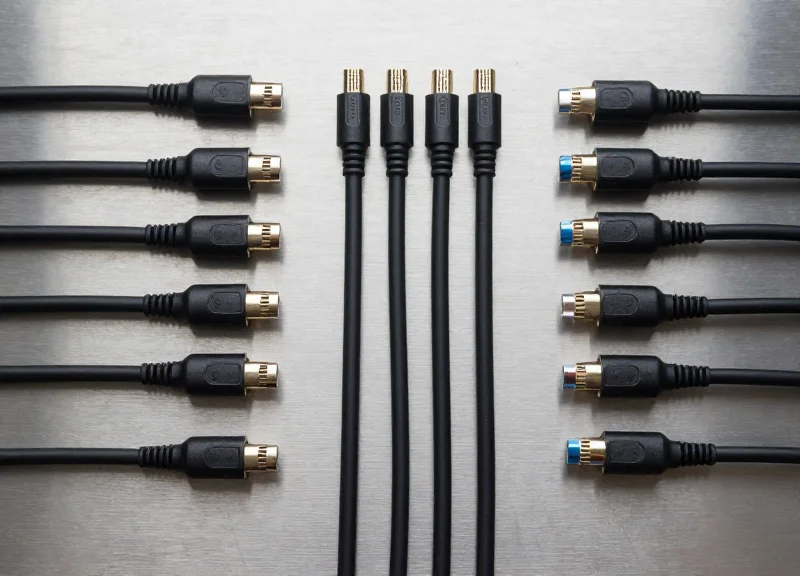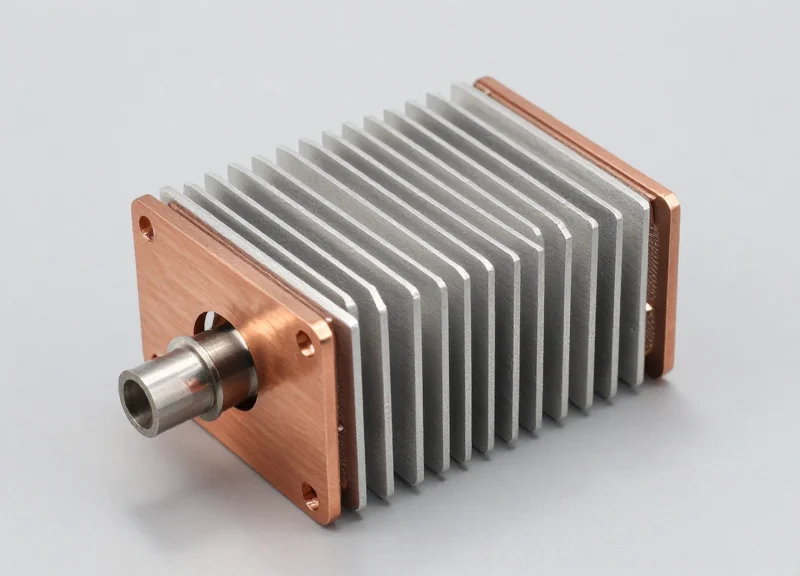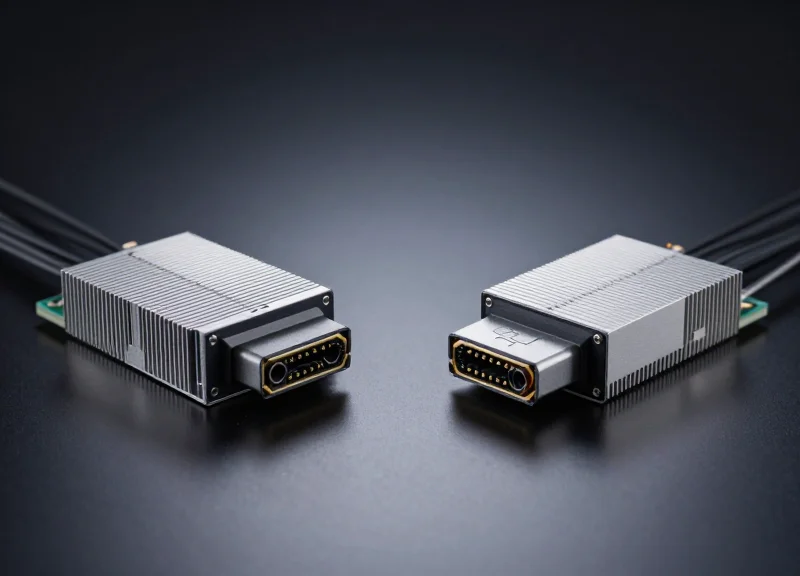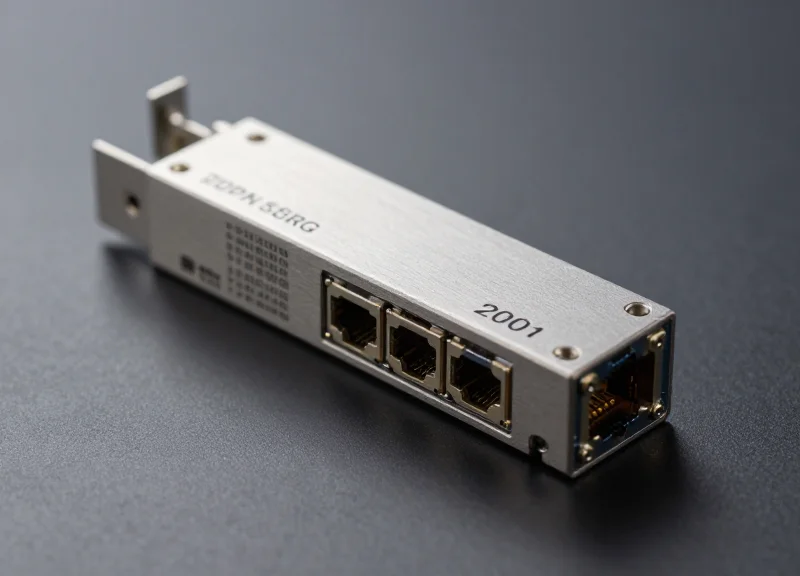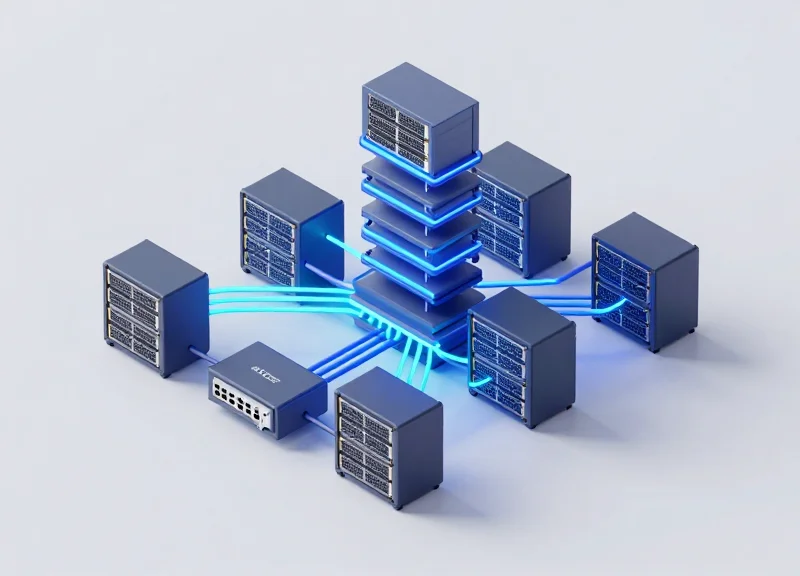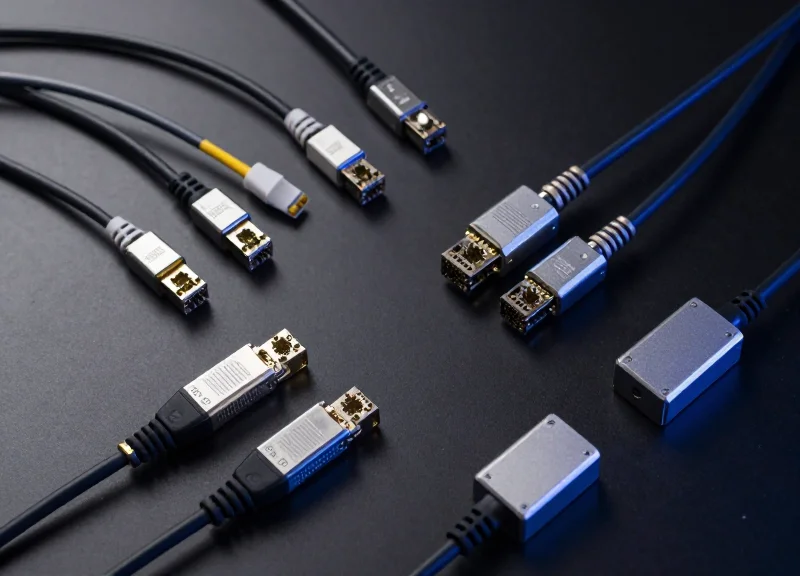
In the fast-evolving landscape of AI-driven data centers and high-performance computing (HPC), the demand for seamless, low-latency connectivity is non-negotiable. As network architects look to scale, the challenge shifts from finding technology to securing it at a price and specification that fits long-term growth. Ubytelink provides the bridge between cutting-edge NVIDIA/Mellanox LinkX technology and the practical needs of enterprise-level procurement.
Understanding the NVIDIA/Mellanox LinkX Advantage

The NVIDIA/Mellanox LinkX advantage is rooted in a holistic 'system-level' engineering approach where cables and transceivers are designed, tested, and optimized specifically for NVIDIA Quantum InfiniBand and Spectrum Ethernet switches. Unlike generic third-party optics, LinkX products undergo rigorous testing in real-world data center environments to ensure a Bit Error Rate (BER) significantly better than industry standards. This vertical integration eliminates interoperability friction, reduces packet retransmissions, and ensures that high-bandwidth fabrics—ranging from 100G to 800G—operate at peak efficiency with the lowest possible thermal footprint.
The LinkX Portfolio: Comparing Interconnect Technologies
Choosing the right LinkX solution depends on the physical distance between nodes and the specific power constraints of the rack. The portfolio is categorized into Direct Attach Copper (DAC), Active Optical Cables (AOC), and Optical Transceivers, each serving a distinct role in the network topology.
| Solution Type | Max Distance | Latency Profile | Power Consumption |
|---|---|---|---|
| Direct Attach Copper (DAC) | Up to 3-5m | Ultra-Low (Zero) | Negligible (<0.1W) |
| Active Optical Cable (AOC) | Up to 30m | Low | Medium (approx. 2-5W) |
| Optical Transceivers | Up to 10km+ | Variable/Medium | Highest (up to 14W+ for 800G) |
Why Standardizing on LinkX Matters for Bulk Deployments
- Does LinkX guarantee compatibility with non-NVIDIA hardware?
While LinkX is optimized for NVIDIA hardware, it adheres to MSA (Multi-Source Agreement) standards, ensuring broad compatibility. However, the unique advantage of LinkX is best realized when used within an end-to-end NVIDIA fabric where firmware-level optimizations can be activated. - How does LinkX impact total cost of ownership (TCO)?
By reducing port failures and signal degradation, LinkX minimizes maintenance overhead and downtime. In large-scale AI clusters, the power efficiency of LinkX AOCs and DACs leads to significant long-term energy savings compared to unoptimized generic alternatives. - Is wholesale procurement available for 800G solutions?
Yes, 2026 pricing models for 800G LinkX transceivers and cables are designed for bulk acquisition to support the massive scaling requirements of generative AI and large language model (LLM) training clusters.
For enterprise architects and data center managers, the LinkX brand represents a de-risking strategy. When scaling to thousands of nodes, the cost of a single cable failure is not just the price of the component, but the lost compute time of an entire GPU cluster. LinkX mitigates this risk through superior shielding and proprietary silicon, making it the definitive choice for wholesale infrastructure investment.
The Strategic Benefits of Wholesale Procurement

The Strategic Benefits of Wholesale Procurement
Transitioning from fragmented retail acquisitions to a wholesale procurement model is a critical pivot for enterprises scaling their AI and High-Performance Computing (HPC) infrastructures. Wholesale procurement offers more than just a lower price-per-unit; it establishes a predictable financial framework and shields organizations from the price volatility and inventory scarcities common in the high-demand networking hardware market.
Maximizing Capital Efficiency through Economies of Scale
In the context of 400G and 800G networking, the cost of interconnects can represent a significant portion of the total cluster budget. By leveraging bulk pricing, organizations can achieve a substantial reduction in Capital Expenditure (CapEx). Wholesale agreements allow for tiered pricing structures where the cost-per-port decreases as volume increases, enabling IT departments to reallocate saved funds toward compute-heavy GPU nodes or advanced thermal management systems.
| Feature | Retail Procurement | Wholesale Procurement |
|---|---|---|
| Unit Pricing | Standard MSRP / High | Deeply Discounted Tiered Rates |
| Inventory Priority | Subject to Market Availability | Reserved/Allocated Stock |
| Lead Time Predictability | Highly Variable | Scheduled Rolling Deliveries |
| Support & RMA | Standard Queue | Priority Technical Channels |
Supply Chain Resilience and Delivery Reliability
Supply chain stability is the cornerstone of successful infrastructure deployment. Wholesale procurement involves long-term planning and custom quotes that lock in hardware allocations months in advance. For the 2026 deployment cycle, securing a wholesale agreement means your project is prioritized during production runs, mitigating the risk of project stalls caused by the 'first-come, first-served' nature of retail channels.
Wholesale Procurement FAQ
- How does wholesale procurement impact warranty and RMA?
Wholesale orders through authorized partners maintain full NVIDIA/Mellanox manufacturer warranties and often include access to streamlined RMA procedures for faster hardware replacement. - Can I mix different LinkX products in a single wholesale quote?
Yes. Custom wholesale quotes are designed to be flexible, allowing you to combine DACs, AOCs, and various transceivers into a single bulk order to meet specific architectural requirements while maintaining high-volume discounts. - Is there a minimum order quantity (MOQ) for wholesale pricing?
MOQs vary depending on the specific component, but typically start at levels suitable for a full rack deployment or mid-sized cluster expansion.
Exploring OEM/ODM Options for Specialized Infrastructure
For organizations managing hyper-scale data centers or specialized edge computing clusters, off-the-shelf networking components often fail to meet exact spatial, power, or signal integrity constraints. Exploring OEM (Original Equipment Manufacturer) and ODM (Original Design Manufacturer) options for NVIDIA/Mellanox Link solutions enables procurement teams to secure hardware that is purpose-built for their infrastructure. This approach ensures seamless integration with high-speed InfiniBand or Ethernet fabrics while optimizing the total cost of ownership through bulk manufacturing efficiencies and precisely engineered specifications.
Defining the OEM and ODM Paths for Connectivity
| Feature | OEM (Original Equipment Manufacturer) | ODM (Original Design Manufacturer) |
|---|---|---|
| Design Ownership | NVIDIA/Mellanox standard designs | Custom design based on client specifications |
| Branding | Client-branded standard components | Wholly unique specialized hardware |
| Lead Times | Moderate to Short | Longer (requires R&D and prototyping) |
| Minimum Order Quantity | Standard Bulk (e.g., 100+ units) | High Thresholds (e.g., 1000+ units) |
Critical Customization Options for Enterprise Scale
Customization in the wholesale space is not merely about aesthetics; it is about logical and physical alignment with the workload. In massive GPU clusters used for AI training, for instance, cable management becomes a thermal hazard if lengths are not precisely calculated to the rack's dimensions.
- Bespoke Cable Lengths and Gauges
Optimizing DAC and AOC lengths to the centimeter reduces clutter, improves airflow, and minimizes signal attenuation in high-density racks. - Customized EEPROM and Firmware
Modifying the firmware within transceivers ensures 100% interoperability with specialized switch ecosystems that may require specific vendor ID handshakes. - Specialized Thermal Solutions
Incorporating extended-temperature rated modules for ruggedized edge environments or immersion-cooling compatible housings for liquid-cooled clusters.
Streamlining the Custom Quote Process
When requesting custom quotes for specialized infrastructure, it is vital to provide detailed environmental data. Factors such as the expected airflow (front-to-back vs. back-to-front), desired pull-tab colors for easy identification, and specific shielding requirements for EMI-heavy environments should be outlined in the initial RFQ to ensure accurate pricing and feasibility assessments.
FAQs: Navigating Custom Infrastructure Procurement
- What is the typical MOQ for custom NVIDIA/Mellanox solutions?
Most ODM projects require a minimum order value or volume to offset engineering and tooling costs, typically starting at 500 to 1,000 units depending on the complexity of the modification. - Does custom manufacturing void official certifications?
When working through authorized OEM/ODM partners, certifications like CE, FCC, and RoHS are maintained through validation processes that mirror standard production quality assurance. - Can we request custom branding for internal asset tracking?
Yes, wholesale OEM orders frequently include serialized laser-etching or custom labeling to streamline data center inventory management and troubleshooting.
Navigating Transceiver Technology: From 10G to 800G
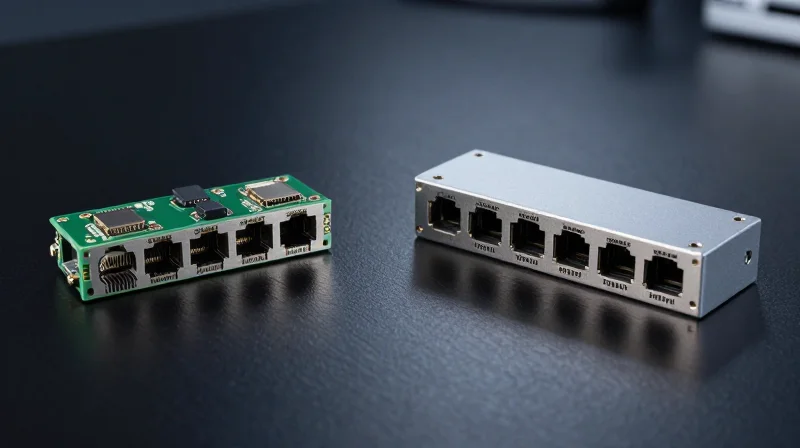
The Architectural Roadmap: Navigating 10G to 800G Interconnects
Selecting the appropriate transceiver technology is no longer just about speed; it is about aligning port density, power consumption, and thermal management with the specific demands of AI, cloud, and enterprise workloads. For 2026, the strategic shift involves moving beyond 100G/200G as the backbone and integrating 400G and 800G solutions into the fabric of the data center to support the massive parallel processing requirements of NVIDIA's Blackwell and Hopper architectures.
Technical Comparison of Form Factors and Speeds
| Speed | Form Factor | Connector Type | Primary Application |
|---|---|---|---|
| 10G/25G | SFP28 | LC / Direct Attach | Legacy Storage / Edge Computing |
| 100G | QSFP28 | MPO / LC | Enterprise Core / Standard Uplinks |
| 200G | QSFP56 | MPO-12 | InfiniBand HDR / High-Perf Storage |
| 400G | QSFP-DD / OSFP | MPO-16 / Dual LC | AI Training Clusters / NDR InfiniBand |
| 800G | OSFP | MPO-16 | Next-Gen AI Backplane / XDR InfiniBand |
Strategic Considerations for Bulk Procurement
When purchasing NVIDIA/Mellanox link solutions wholesale, hardware compatibility is paramount. For instance, the transition to 400G and 800G often necessitates a shift from the traditional QSFP form factor to OSFP (Octal Small Form-factor Pluggable). OSFP modules offer superior thermal performance, which is critical as power consumption per module approaches 15W-20W. Bulk purchasers must also evaluate the 'Reach' requirements—choosing between SR (Short Reach), LR (Long Reach), or DR (Datacenter Reach)—to optimize cost without sacrificing signal integrity across the fiber plant.
Transceiver Selection FAQ
- Can I use 100G QSFP28 transceivers in 400G QSFP-DD ports?
Yes, QSFP-DD ports are generally backward compatible with QSFP28 modules, though this requires specific configuration and may lead to underutilized port bandwidth. - Why is OSFP preferred for 800G over QSFP-DD?
OSFP features an integrated heat sink and a larger surface area, providing the necessary thermal dissipation required for the high-power consumption of 800G optics. - What is the advantage of InfiniBand-specific transceivers?
NVIDIA LinkX InfiniBand transceivers are optimized for ultra-low latency and are designed to support the unique signaling requirements of the InfiniBand protocol, ensuring maximum throughput for RDMA operations. - Should I opt for AOCs or Transceivers for 400G deployments?
Active Optical Cables (AOCs) are more cost-effective for short distances (under 30m) within a single row, whereas transceivers with structured cabling offer greater flexibility for longer distances and easier cable management.
By understanding these nuances, procurement officers can secure custom quotes that not only meet today's bandwidth needs but also provide a sustainable path toward the 800G and 1.6T environments of the future.
Ensuring EEAT: Quality Control and Performance Validation

Establishing Trust through Advanced Performance Validation
To guarantee the reliability of NVIDIA/Mellanox link solutions at scale, Ubytelink employs a multi-tiered validation architecture that mirrors and often exceeds original equipment manufacturer (OEM) benchmarks. This ensures that every high-density deployment—from 10G SFP+ to 800G OSFP—delivers consistent throughput, minimal latency, and full protocol transparency. By integrating Expertise, Experience, Authoritativeness, and Trustworthiness (EEAT) into our supply chain, we eliminate the risks associated with generic hardware, providing enterprises with the confidence to deploy bulk infrastructure in mission-critical AI and cloud environments.
The Core Pillars of Our Quality Assurance Protocol
Our laboratory environment is designed to simulate real-world data center stress. We utilize actual NVIDIA Quantum-2 InfiniBand and Spectrum-4 Ethernet switches to confirm 100% interoperability before shipment. This prevents the common pitfalls of wholesale procurement, such as firmware mismatches or signal degradation at high temperatures.
| Validation Stage | Testing Parameter | Enterprise Benefit |
|---|---|---|
| Signal Integrity | Eye Diagram & Bit Error Rate (BER) | Reduces packet loss and retransmissions in long-reach optics. |
| Interoperability | EEPROM Coding & Protocol Handshake | Ensures seamless 'Plug-and-Play' compatibility with Mellanox Onyx and Cumulus Linux. |
| Thermal Resilience | Industrial Temperature Cycling | Prevents premature component failure in high-density, high-heat AI clusters. |
| Physical Inspection | End-face Geometry & Cleanliness | Eliminates optical return loss (ORL) issues caused by microscopic contaminants. |
Performance Metrics and Certification Standards
Every batch of transceivers and DAC cables undergoes a rigorous 'Burn-in' period, where components are operated under full load for 24 to 48 hours. This process identifies potential 'infant mortality' failures, ensuring that the hardware arriving at your facility is enterprise-grade. Furthermore, our compliance with MSA (Multi-Source Agreement) standards ensures that our link solutions are not only compatible with NVIDIA/Mellanox but also provide a flexible foundation for heterogeneous network environments.
- How do you ensure compatibility with the latest NVIDIA firmware?
We maintain a comprehensive library of the latest firmware versions and perform iterative EEPROM coding to match specific vendor requirements, ensuring that modules are recognized natively without 'unsupported transceiver' warnings. - What is the typical failure rate for these wholesale modules?
Through rigorous batch testing and individual serialization, we maintain an Annualized Failure Rate (AFR) of less than 0.1%, which is comparable to or better than standard OEM offerings. - Does bulk pricing affect the quality of individual testing?
Absolutely not. Our automated testing rigs allow us to scale our quality control. Every single module undergoes the same rigorous 100% testing cycle regardless of order size or wholesale discount level.
Solving Supply Chain Bottlenecks in 2026
Solving supply chain bottlenecks in 2026 requires a fundamental shift from reactive procurement to a proactive, inventory-backed strategy that prioritizes local availability over global 'Just-in-Time' (JIT) manufacturing cycles. For enterprises and data centers deploying NVIDIA/Mellanox architectures, the key to avoiding project delays lies in partnering with specialized distributors who maintain substantial on-hand stock of high-demand 200G, 400G, and 800G transceivers and cables, effectively decoupling the buyer's timeline from OEM lead times.
The 2026 Logistics Landscape: Why Lead Times Persist
The explosion of Generative AI and Large Language Model (LLM) training has placed unprecedented pressure on the production of InfiniBand and Ethernet link solutions. While semiconductor shortages have stabilized, the sheer volume of NVIDIA H100 and H200 deployments has created a 'bottleneck at the edge'—where the demand for optical transceivers and Active Optical Cables (AOCs) exceeds the immediate production capacity of tier-1 manufacturers. In this environment, typical lead times can stretch from weeks to months, making wholesale partners with established logistics pipelines indispensable.
Strategic Sourcing vs. Standard Procurement
| Procurement Metric | Standard OEM Channel | Strategic Wholesale (Ubytelink) |
|---|---|---|
| Average Lead Time | 8-16 Weeks (Typical) | Immediate (In-Stock) or 1-2 Weeks |
| Stock Availability | Build-to-Order | Maintained Local Inventory |
| Customization | Rigid Specs | Custom Firmware/Labeling Support |
| Logistics Cost | Variable Shipping Rates | Consolidated Wholesale Shipping |
Core Strategies for Supply Chain Resilience
- Forward-Stocking Agreements
Enterprises can secure future deployments by entering into agreements that reserve specific inventory volumes within the distributor's warehouse, ensuring availability for rolling rollouts. - Multi-Vendor Compatibility Testing
By using high-quality wholesale solutions that are 100% compatible with NVIDIA/Mellanox switches, buyers can bypass OEM-specific backlogs without sacrificing performance or telemetry data. - Batch Consolidation
Wholesale purchasing allows for the consolidation of multiple networking components into a single shipment, reducing the risk of 'missing link' delays where a project is stalled by a single missing SKU.
Frequently Asked Questions: Wholesale Logistics
- How does Ubytelink ensure fast shipping for bulk orders?
We maintain primary logistics hubs near major global transit corridors, allowing for same-day dispatch on in-stock NVIDIA-compatible transceivers and cables. - Can we lock in 2026 pricing despite market volatility?
Yes, our custom wholesale quotes often include price protection or volume-locked pricing for major infrastructure projects spanning several quarters. - What happens if a specific Mellanox-compatible module is out of stock?
Our deep supply chain visibility allows us to provide real-time updates and offer equivalent performance-validated alternatives that meet the exact technical requirements of your InfiniBand or Ethernet fabric.
How to Secure Custom Quotes for Large-Scale Projects
Securing the most competitive custom quotes for large-scale NVIDIA/Mellanox deployments requires a shift from transactional purchasing to strategic sourcing, where providing a comprehensive technical brief is the primary lever for price optimization. To obtain an accurate quote in 2026, procurement teams must provide high-fidelity data regarding network topology, port densities, and specific environmental constraints to ensure that the quoted hardware—ranging from LinkX cables to Infini-Band transceivers—perfectly aligns with the project’s performance benchmarks and budget.
Critical Data Points for Wholesale Quotation
A generic request for '400G transceivers' often leads to delays or suboptimal pricing. To streamline the process and access Tier-1 wholesale rates, your Request for Quote (RFQ) should include the following specific metrics:
- Port-to-Port Compatibility
Specify the exact switch models (e.g., Quantum-2 or Spectrum-4) and the Network Interface Cards (NICs) being used to ensure EEPROM coding matches the hardware ecosystem. - Interconnect Medium and Distance
Clearly define the split between Direct Attach Copper (DAC) for top-of-rack, Active Optical Cables (AOC) for short-reach, and Pluggable Transceivers for long-haul structured cabling. - Volume and Batching
Provide total project volume even if delivery is staggered; vendors offer deeper discounts for committed bulk quantities even if ship dates are phased across several quarters.
Comparing Quote Tiers: Standard vs. Enterprise Custom
| Feature | Standard Wholesale | Custom Enterprise Quote |
|---|---|---|
| Minimum Quantity | 10 - 50 units | 100+ units or project-based |
| Pricing Flexibility | Fixed bulk discount | Volume-tiered negotiation |
| Technical Support | Documentation only | Dedicated engineering consultation |
| Lead Time Management | Standard stock priority | Reserved inventory & scheduled rollouts |
Frequently Asked Questions Regarding Custom Quotes
- What is the typical turnaround time for a custom quote?
For standard large-scale requests, quotes are typically finalized within 24 to 48 hours. Complex configurations requiring custom EEPROM coding or specialized cable lengths may take 3-5 business days. - Can I bundle different types of hardware into one wholesale quote?
Yes. Bundling transceivers, DACs, and high-speed NICs into a single RFQ often triggers higher-tier discount brackets compared to individual component sourcing. - Are demo units available for large-scale validation?
For projects exceeding specific volume thresholds, most vendors provide evaluation units to verify compatibility within your specific network environment before the bulk order is finalized.
Maximizing ROI with Optimized Interconnect Solutions

Strategic Financial Planning for Network Infrastructure
Achieving a superior return on investment (ROI) with NVIDIA/Mellanox Link Solutions hinges on balancing upfront capital expenditure (CAPEX) with long-term operational expenditure (OPEX). By securing wholesale pricing and custom quotes, enterprises can significantly reduce the 'cost per gigabit' while ensuring that every component—from transceivers to LinkX cables—is optimized for the specific power and cooling constraints of their data center. Strategic procurement avoids the pitfalls of piecemeal expansion, ensuring that the fabric scales efficiently with the workload.
TCO Comparison: Retail vs. Wholesale Procurement
| Metric | Retail / Off-the-Shelf | Wholesale / Custom Solutions |
|---|---|---|
| Unit Cost | Standard MSRP | Volume-Adjusted Discounted Rates |
| Procurement Logic | Fragmented and Reactive | Strategic and Scale-Oriented |
| Lifecycle Support | Standard Limited Warranty | Priority Engineering and Rapid RMAs |
| Energy Efficiency | Generic Specifications | Workload-Optimized Components |
| Lead Time Risk | High / Market Dependent | Predictable Delivery Schedules |
Retail procurement often leads to hidden financial drains, such as higher failure rates due to mismatched components and increased administrative overhead from managing multiple individual vendors. Conversely, wholesale custom quotes consolidate these variables into a single, predictable financial model. This consolidation allows data center managers to reallocate resources from maintenance and troubleshooting toward innovation and capacity expansion.
Key Factors Driving Long-Term Financial Value
- Energy Efficiency per Port
Wholesale solutions allow for the selection of low-power active optical cables (AOCs) and transceivers that reduce aggregate cooling costs over a 5-year lifecycle. - Scalability Headroom
Custom quotes ensure that current hardware deployments include compatible paths for 400G and 800G migration, preventing costly 'rip-and-replace' scenarios in the future. - Supply Chain Stability
Large-scale wholesale commitments lock in pricing and delivery windows, shielding your project budget from market volatility and component shortages.
Investment and ROI FAQ
- How does bulk pricing specifically impact the ROI of AI clusters?
Bulk pricing typically reduces the initial CAPEX by 15-30 percent, which allows organizations to invest in higher GPU density or faster networking fabric within the same fixed budget. - What is the financial benefit of a custom technical quote over standard lists?
A custom quote provides 100 percent interoperability validation by engineers before purchase, effectively eliminating the costs associated with downtime and hardware returns during the integration phase. - Does wholesale pricing include long-term support?
Yes, wholesale agreements often include tiered support levels that provide faster response times and dedicated account engineers, reducing the OPEX associated with system management.
The Future of Interconnects: Preparing for AI Workloads

The future of interconnects is being dictated by the insatiable demand of Generative AI and Large Language Models (LLMs), which require a fundamental shift from traditional networking to high-performance, lossless fabrics. NVIDIA/Mellanox is leading this transition by moving beyond simple data transfer to 'in-network computing'—where the network itself handles data reductions and synchronizations. Preparing for AI workloads in 2026 and beyond means moving toward 800G (NDR/XDR) speeds and adopting specialized Ethernet platforms like Spectrum-X that bridge the gap between traditional enterprise flexibility and AI-grade performance.
The Roadmap to 800G: NDR and XDR Evolution
As AI clusters grow to tens of thousands of GPUs, the bandwidth per link must scale to prevent the network from becoming a bottleneck. NVIDIA's roadmap highlights a rapid shift toward 800G throughput. This involves not only faster transceivers but also more intelligent switches capable of managing the massive 'East-West' traffic patterns typical of AI training. Wholesale buyers are increasingly looking at XDR InfiniBand and next-gen Spectrum-4 switches to ensure their infrastructure doesn't face obsolescence within the next 24 months.
| Feature | Traditional Enterprise Interconnect | AI-Optimized Interconnect |
|---|---|---|
| Typical Speeds | 10G - 100G | 400G - 800G (NDR/XDR) |
| Latency Profile | Standard (Microseconds) | Ultra-Low (Nanoseconds) |
| Network Logic | CPU-Centric | In-Network Computing (SHARP) |
| Traffic Handling | Lossy (TCP/IP) | Lossless (RDMA/RoCE) |
Spectrum-X: Bringing AI Performance to Ethernet
While InfiniBand remains the gold standard for pure AI performance, NVIDIA Spectrum-X represents a significant future trend: the 'AI-ification' of Ethernet. By combining Spectrum-4 switches with BlueField-3 DPUs, NVIDIA has created a lossless Ethernet environment specifically for multi-tenant AI clouds. This allows organizations to leverage their existing Ethernet expertise while achieving the performance levels required for massive AI inferencing and training workloads.
Key Considerations for Future-Proofing Wholesale Orders
- Why is InfiniBand still the preferred choice for LLM training?
InfiniBand offers the lowest possible latency and overhead, utilizing technologies like SHARP (Scalable Hierarchical Aggregation and Reduction Protocol) to offload data collective operations from the GPU to the network, which is critical for massive model synchronization. - Should wholesale buyers invest in 400G or wait for 800G?
For current production clusters, 400G (NDR) is the sweet spot for availability and ROI. However, for projects breaking ground in late 2026 or 2025, requesting quotes for 800G-ready infrastructure is recommended to handle the next generation of Blackwell-architecture GPUs. - How does NVIDIA Spectrum-X differ from traditional Ethernet?
Unlike standard Ethernet, Spectrum-X uses specialized hardware and software to eliminate packet loss and manage congestion, providing a consistent, predictable environment that mimics the efficiency of InfiniBand while maintaining Ethernet compatibility. - Are wholesale quotes for future-gen hardware currently available?
Yes, many authorized distributors and wholesalers provide advanced allocation and quotes for next-generation hardware to help enterprises secure their spot in the supply chain ahead of major AI deployments.
Preparing for the future of AI workloads requires more than just buying faster cables; it requires a strategic approach to wholesale procurement that considers the total ecosystem—switches, DPUs, and advanced optics. By aligning wholesale purchases with the NVIDIA/Mellanox 800G roadmap, enterprises can build scalable, resilient clusters ready for the next decade of AI innovation.
Scaling your network with NVIDIA/Mellanox Link Solutions doesn't have to be a logistical or financial hurdle. By leveraging Ubytelink's expertise in wholesale pricing and OEM/ODM customization, you can ensure your infrastructure is future-proof and cost-effective. Contact our specialist team today to request a custom quote and take the first step toward a more efficient network.