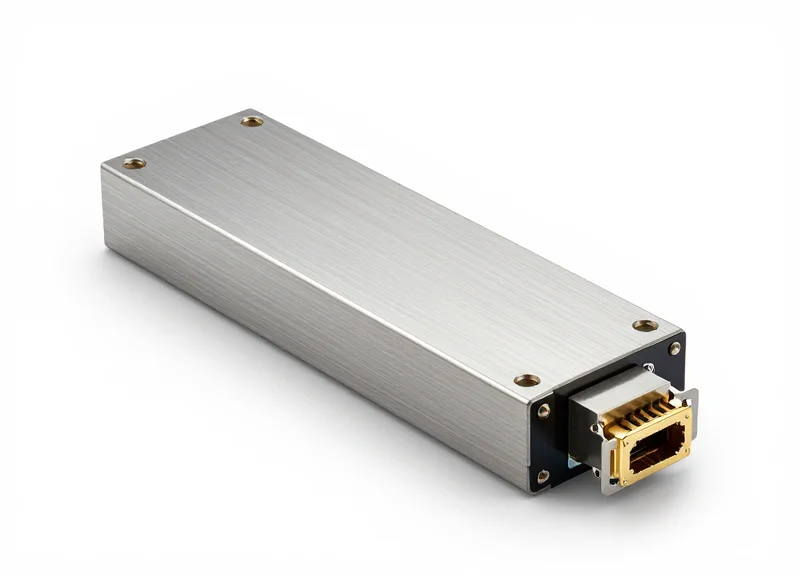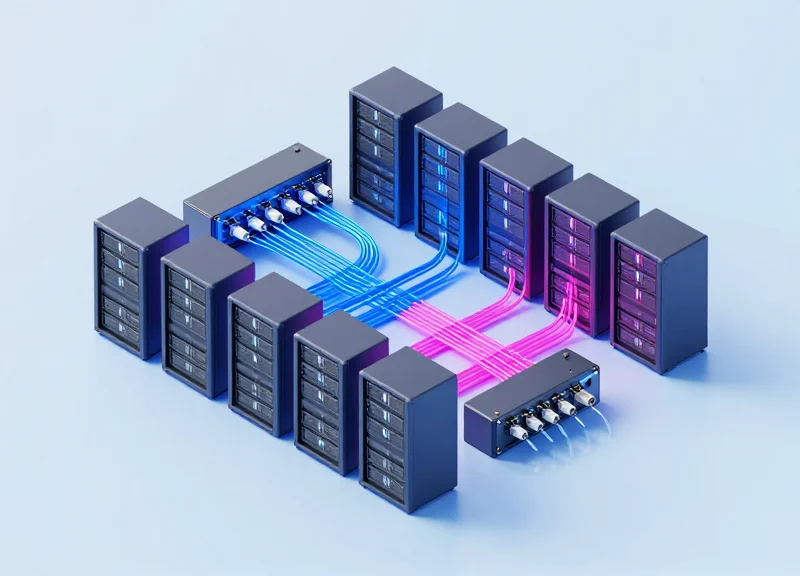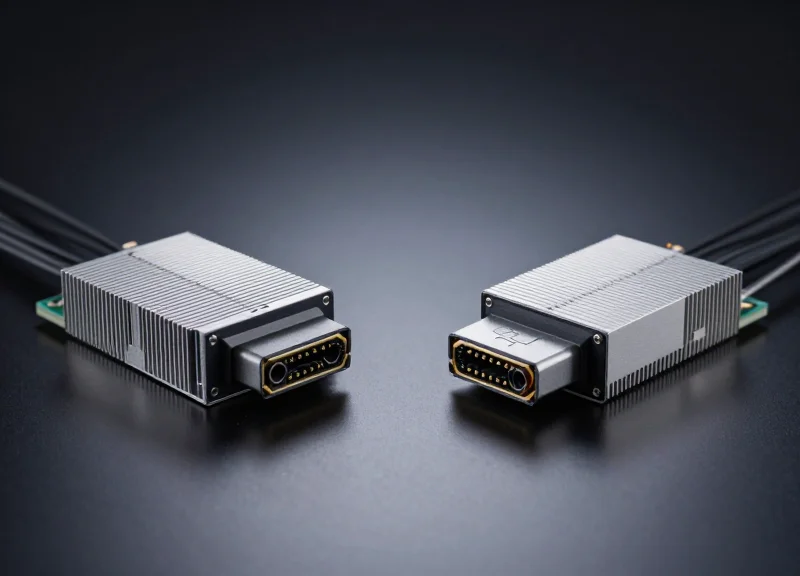
As data centers and enterprise networks expand geographically, the demand for 100G connectivity over extended distances has shifted from a niche requirement to a core infrastructure necessity. Selecting between 100G ER4, ZR4, and alternatives like coherent optics involves balancing signal integrity, physical distance, and economic feasibility. This guide provides a professional engineering perspective on how these ultra-long reach solutions stack up against the competition in critical performance metrics.
The Evolution of 100G Long-Haul Optics
The Shift from Legacy 10G/40G to High-Density 100G
The evolution to 100G optics represents a pivotal shift in telecommunications, moving beyond the bandwidth bottlenecks of 10G and 40G to accommodate global data traffic growth. As networks expanded, the industry faced the 'distance barrier'—the point where standard fiber transmission suffers from excessive attenuation and dispersion. Engineers developed 100G ER4 and ZR4 solutions to bridge this gap, utilizing sophisticated LAN-WDM laser technologies and signal processing to ensure reliable data delivery over distances exceeding 40km without the need for frequent active regeneration.
Comparing Optical Generations for Long-Haul Spans
| Generation | Standard Reach | Modulation Scheme | Core Challenge |
|---|---|---|---|
| 10G ER | 40km | NRZ | Limited throughput for modern backbones |
| 40G ER4 | 40km | CWDM | High power consumption per bit |
| 100G ER4 | 40km | LAN-WDM | Chromatic dispersion management |
| 100G ZR4 | 80km | NRZ/PAM4 + SOA | Signal-to-noise ratio at 80km |
Overcoming Technical Hurdles in the 80km Reach
Maintaining signal quality at 100G over an 80km span (ZR4) is significantly more difficult than at 40km (ER4). The increase in baud rate makes the signal more susceptible to Chromatic Dispersion (CD) and Polarization Mode Dispersion (PMD). While 10G could rely on simple NRZ modulation, 100G long-haul optics often incorporate integrated Semiconductor Optical Amplifiers (SOA) and advanced Forward Error Correction (FEC) algorithms to maintain the required Bit Error Rate (BER) without requiring external inline amplification.
Evolutionary Dynamics FAQ
- Why was the transition from 40G to 100G so rapid?
40G utilized four 10G lanes but faced scalability issues; 100G offered a better cost-per-bit and a more sustainable path for the rapid growth of cloud and data center interconnects. - What role does LAN-WDM play in 100G ER4?
LAN-WDM uses a tighter 800GHz channel spacing compared to CWDM, allowing for better performance in the O-band where chromatic dispersion is minimized, which is critical for 40km reaches. - How does ZR4 achieve 80km without external amps?
ZR4 transceivers typically include an internal SOA to boost the transmit signal or sensitive APD receivers combined with high-gain FEC to overcome the path loss inherent in 80km of fiber.
Technical Deep Dive: 100G ER4 vs. ZR4 Architecture
Technical Deep Dive: 100G ER4 vs. ZR4 Architecture
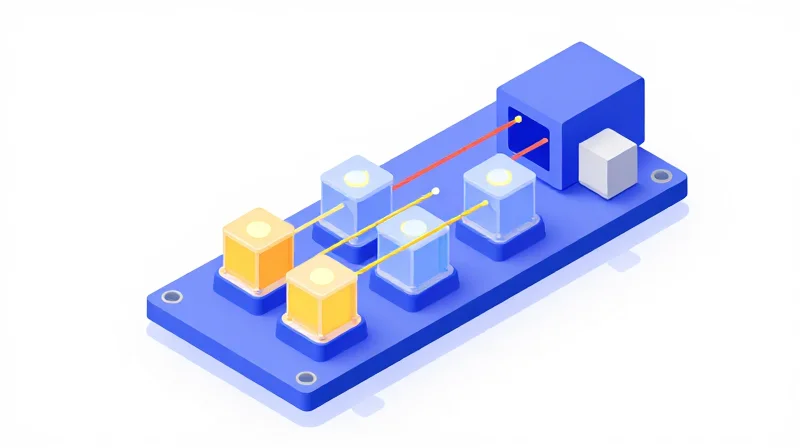
The primary architectural distinction between 100G ER4 and ZR4 lies in their optical power budget management and signal amplification strategies. While both utilize a 4-channel Local Area Network Wavelength Division Multiplexing (LAN-WDM) grid, the ZR4 architecture incorporates a Semiconductor Optical Amplifier (SOA) to achieve the 80km reach, whereas the ER4 relies on high-sensitivity Avalanche Photodiodes (APD) to bridge the 40km gap without integrated amplification.
The LAN-WDM Optical Engine and EML Lasers
Both ER4 and ZR4 modules utilize the IEEE 802.3ba defined LAN-WDM grid, operating in the O-band (1295nm to 1310nm). This spectrum is chosen specifically because it sits near the zero-dispersion point of G.652 single-mode fiber, minimizing the need for complex dispersion compensation. To drive these signals over long distances, both architectures employ Electro-absorption Modulated Lasers (EML). Unlike cheaper Direct Modulated Lasers (DML), EMLs provide a stable, narrow linewidth and significantly lower 'chirp,' which is critical for maintaining signal integrity over 40km or 80km spans.
SOA and Receiver Sensitivity: The 80km Leap
To extend the reach from the 40km ER4 standard to the 80km ZR4 standard, the power budget must account for approximately 10-12dB of additional fiber loss. The ZR4 architecture solves this by integrating an SOA within the transceiver module. The SOA acts as a pre-amplifier, boosting the incoming weak optical signals before they reach the ROSA (Receiver Optical Sub-Assembly). This integration allows the ZR4 to maintain a high Signal-to-Noise Ratio (SNR) even after the signal has traversed 80km of glass.
| Feature | 100G ER4 (40km) | 100G ZR4 (80km) |
|---|---|---|
| Wavelength Grid | 4-Lane LAN-WDM | 4-Lane LAN-WDM |
| Transmitter Type | EML (4x25G) | EML (4x25G) |
| Receiver Type | APD | APD with Integrated SOA |
| Optical Power Budget | ~18 dB | ~28 dB |
| Typical Power Consumption | < 4.5W | < 6.0W |
- Why is LAN-WDM used instead of CWDM for these reaches?
LAN-WDM features narrower channel spacing (800GHz) compared to CWDM (20nm). This tighter grouping stays within the O-band's low-dispersion window, preventing signal spreading that would occur with the wider CWDM spectrum over 40-80km. - What is the specific benefit of the SOA in ZR4?
The Semiconductor Optical Amplifier provides the necessary gain to compensate for the high insertion loss of long-distance fiber. Without it, the signal would fall below the sensitivity threshold of even the best APD receivers. - Do these modules require Forward Error Correction (FEC)?
Yes, both ER4 and ZR4 architectures typically rely on Host-side FEC (such as KR4 FEC) to meet the required Bit Error Rate (BER) of 1E-12 at their maximum rated distances.
Latency Benchmarking: Why Physical Layer Choice Matters
Latency Benchmarking: Why Physical Layer Choice Matters
In the realm of ultra-long-distance 100G transmission, latency is determined primarily by the physical layer's signal processing architecture rather than just the speed of light through fiber. 100G ER4 and ZR4 modules utilize Intensity Modulation Direct Detection (IMDD) with minimal Digital Signal Processing (DSP), offering nanosecond-level latency that significantly outperforms coherent optical alternatives which rely on complex, compute-intensive signal reconstruction.
The DSP Penalty: Coherent vs. Direct Detect
Coherent optics are designed to overcome massive chromatic dispersion and polarization mode dispersion, which requires a heavy-duty DSP to perform Analog-to-Digital Conversion (ADC) and complex Forward Error Correction (FEC). While this allows for longer reaches, the 'DSP penalty' typically adds 50 to 200 microseconds of latency. In contrast, 100G ER4 and ZR4 modules operate on a simpler architectural path. Because they use LAN-WDM grids and Optical Amplifiers (like SOA) to maintain signal integrity, they bypass the need for heavy electronic processing, making them the preferred choice for latency-critical paths.
| Feature | 100G ER4/ZR4 (IMDD) | 100G Coherent (DCO/ACO) |
|---|---|---|
| Processing Type | Simple CDR / Minimal FEC | Full DSP / Heavy FEC |
| Processing Latency | < 100 Nanoseconds | 50 - 250 Microseconds |
| Power Consumption | Low (approx. 3.5W - 5.5W) | High (approx. 15W - 25W) |
| Best Use Case | HFT, Real-time Sync | Metro-Regional (>80km) |
Critical Applications for Low-Latency ER4/ZR4
For High-Frequency Trading (HFT) and financial services, a difference of 100 microseconds can equate to millions of dollars in missed opportunities. Similarly, in 5G fronthaul and distributed data centers, the round-trip time (RTT) must be kept at an absolute minimum to support real-time edge computing. Choosing ER4 or ZR4 over coherent modules in these 40km-80km spans ensures that the network hardware does not become the bottleneck.
- Does the use of FEC in ZR4 increase latency?
Yes, but only marginally. The KR4 FEC typically used in ZR4 modules is much lighter than the Soft-Decision FEC (SD-FEC) used in coherent optics, resulting in significantly lower overhead. - Is the latency difference noticeable over 80km?
While fiber propagation delay is ~5 microseconds per kilometer, the fixed DSP latency of coherent optics remains a constant 'tax' that makes ER4/ZR4 faster regardless of the distance within their rated range. - Can I use ER4 for low-latency DCIs?
Absolutely. ER4 is the industry standard for 40km spans where the highest priority is speed and the lowest possible packet delay variation.
Power Consumption Profiles: Opex at Scale
In high-density networking environments, power consumption is a primary driver of Total Cost of Ownership (TCO), influencing both direct electricity costs and the cooling infrastructure required to maintain equipment stability. For 40km to 80km spans, 100G ER4 and ZR4 modules offer a superior power-to-performance ratio compared to coherent alternatives. By utilizing direct-detect technology rather than complex Digital Signal Processing (DSP), these modules provide the necessary reach while remaining within the thermal and power envelopes of standard QSFP28 ports.
Benchmarking Power Draw: ER4/ZR4 vs. Coherent
| Module Type | Typical Power (Watts) | Max Reach | Detection Method | Watts per Gbps |
|---|---|---|---|---|
| 100G LR4 | 3.5W | 10km | Direct Detect | 0.035W |
| 100G ER4 | 4.5W | 40km | Direct Detect + SOA | 0.045W |
| 100G ZR4 | 5.5W - 6.0W | 80km | Direct Detect + SOA | 0.055W - 0.060W |
| 100G Coherent (DCO) | 15W - 22W | 1000km+ | Coherent + DSP | 0.150W - 0.220W |
The Efficiency of the Direct-Detect Architecture
The stark contrast in power consumption between ZR4 and coherent optics—often a 3x to 4x difference—stems from the presence of a Digital Signal Processor (DSP). Coherent optics require massive computational power to compensate for chromatic and polarization mode dispersion in real-time. In contrast, ER4 and ZR4 utilize a simpler architecture consisting of EML lasers and a Semiconductor Optical Amplifier (SOA). This hardware-based amplification is significantly more energy-efficient than the software-defined compensation found in coherent systems, making them the logical choice for links under 80km.
Operational Impact: Rack Density and Thermal Loads
Thermal management becomes a bottleneck when scaling to 48-port or 128-port leaf/spine switches. A switch fully populated with 100G ZR4 modules will draw approximately 288 Watts for the optics alone. If that same switch were populated with coherent 100G DCO modules, the optics power draw would jump to nearly 1,000 Watts. This higher load often forces network engineers to leave adjacent ports empty to prevent overheating, effectively reducing the usable port density of the hardware and increasing the cost-per-link.
Common Questions on Power and Opex
- Does the SOA in ZR4 modules significantly increase heat compared to ER4?
The SOA adds roughly 1W to 1.5W of power draw compared to standard ER4 modules, which is manageable within standard air-cooled environments without specialized thermal mitigation. - Can ZR4 modules be used in standard QSFP28 ports without exceeding power limits?
Yes, most modern QSFP28 ports are designed for Power Class 4 or higher (up to 6W), making them fully compatible with ZR4 power requirements. - How does lower power consumption impact long-term reliability?
Lower power draw results in lower junction temperatures for the internal components, which typically correlates to a higher Mean Time Between Failures (MTBF) and fewer thermal-related link drops.
TCO Analysis: Capex and Long-Term Value

The 100G ER4 and ZR4 modules provide a superior TCO for 40km to 80km spans by eliminating the need for external Erbium-Doped Fiber Amplifiers (EDFAs) and Dispersion Compensation Modules (DCMs), reducing initial capital investment by approximately 30-50% compared to coherent deployments. By utilizing internal Semiconductor Optical Amplifiers (SOA), these optics provide a 'plug-and-play' solution that fits standard QSFP28 ports, avoiding the high costs of specialized line cards and the operational complexity of active optical line systems.
Capex Comparison: Hardware and Infrastructure
When calculating capital expenditure, operators must look beyond the individual transceiver price to the total link cost. Standard 100G LR4 optics are cheaper as units but require expensive external amplification and compensation to reach beyond 25km. Coherent 100G optics (DCO) are versatile but carry a significant premium due to the Digital Signal Processor (DSP) and high-power lasers. ER4 and ZR4 occupy the economic 'sweet spot' for regional and metro spans.
| Cost Component | 100G ER4 (40km) | 100G ZR4 (80km) | 100G Coherent (80km+) |
|---|---|---|---|
| Transceiver Unit Cost | Moderate | Mid-High | Premium |
| External Amp (EDFA) | Not Required | Not Required | Integrated/Optional |
| Dispersion Management | Passive/Internal | Passive/Internal | Electronic (DSP) |
| Port Density Cost | Standard QSFP28 | Standard QSFP28 | Often Limited by TDP |
Five-Year Opex: Power, Cooling, and Reliability
Operational expenditure is where the ultra-long 100G modules truly excel. Over a five-year lifecycle, the power consumption of a ZR4 module is typically 5.5W to 6W, whereas a coherent alternative can exceed 15W to 20W depending on the generation. This difference translates into thousands of dollars in electricity and cooling savings per rack. Furthermore, the simplified architecture of ER4/ZR4 optics—lacking the heat-intensive DSP—results in a higher Mean Time Between Failures (MTBF) and reduced maintenance overhead.
TCO Analysis & Long-Term Value FAQ
- Is ZR4 more cost-effective than 100G Coherent for all 80km links?
Generally, yes. For point-to-point links up to 80km, ZR4 is significantly cheaper because it avoids the silicon licensing and power costs associated with coherent DSPs. - How does maintenance differ between ER4 and amplified LR4 links?
ER4 links have fewer active components. An amplified LR4 link requires monitoring and powering an external EDFA chassis, whereas an ER4 link is self-contained within the switch ports, reducing points of failure. - What is the primary factor driving long-term value in ZR4 deployments?
Space and power efficiency. By fitting into standard high-density switches without requiring additional rack units for amplifiers, ZR4 maximizes the value of existing data center real estate. - Does the lack of DSP affect the lifespan of these modules?
Indirectly, yes. Lower power consumption leads to lower operating temperatures, which typically extends the lifespan of the optical components compared to high-heat coherent modules.
Reliability and Error Correction (FEC) Requirements
Reliability and Error Correction (FEC) Requirements
Reliability in ultra-long-reach 100G optics is fundamentally tied to the efficiency of Forward Error Correction (FEC), specifically the use of Host-FEC (KP4) to overcome the optical signal-to-noise ratio (OSNR) penalties inherent in 80km spans. While standard 100G LR4 modules can often achieve error-free transmission with lower FEC overhead, the 100G ZR4 standard mandates robust error correction to ensure a post-FEC Bit Error Rate (BER) of less than 1E-12, effectively transforming a degraded long-haul signal into a reliable carrier-grade link.
Host-FEC (KP4) vs. No-FEC Operations
The distinction between ER4 and ZR4 often lies in the sensitivity requirements of the receiver. 100G ZR4 modules typically require KP4 FEC (defined in IEEE 802.3bj) to be enabled on the host switch port. Without this correction, the high dispersion and attenuation encountered over 80km would result in a BER that exceeds the threshold for stable link operation. In contrast, legacy 100G ER4 modules were designed to operate without FEC over 40km, but the industry has shifted toward 'ER4-Lite' variants that utilize FEC to achieve similar distances with more cost-effective optical components.
| Standard | Primary Reach | FEC Requirement | Pre-FEC BER Threshold |
|---|---|---|---|
| 100G SR4 | 100m | RS-FEC (Optional) | 5E-5 |
| 100G LR4 | 10km | None/Optional | 1E-12 (Raw) |
| 100G ER4 | 40km | None/Optional | 1E-12 (Raw) |
| 100G ZR4 | 80km | Mandatory KP4 FEC | 2E-4 |
Impact on Network Latency and System Overhead
Implementing KP4 FEC introduces a marginal amount of latency—typically in the nanosecond range—which is negligible for standard data center interconnects (DCI) but must be accounted for in specialized high-frequency trading environments. From a reliability perspective, the reliance on Host-FEC means the transceiver can maintain a stable link even as the fiber ages or connector losses increase over time. This provides a 'link margin' safety net that traditional FEC-free modules lack, ensuring that 80km ZR4 spans remain resilient against physical layer degradation.
- Does 100G ZR4 work on switches without FEC support?
No. Most 100G ZR4 modules require the host equipment to support IEEE 802.3bj RS-FEC (KP4) to achieve the rated 80km distance with a stable Bit Error Rate. - What is the difference between Pre-FEC and Post-FEC BER?
Pre-FEC BER measures the raw error rate of the optical signal before correction, while Post-FEC BER is the final error rate after the host processor corrects the bit errors to a clean state. - Can FEC improve the reach of an ER4 module?
Yes, using FEC with ER4-Lite modules can often extend their reliable reach from 30km to 40km or improve the link margin on older fiber plants by correcting errors caused by increased attenuation.
Interoperability and Multi-Vendor Environments
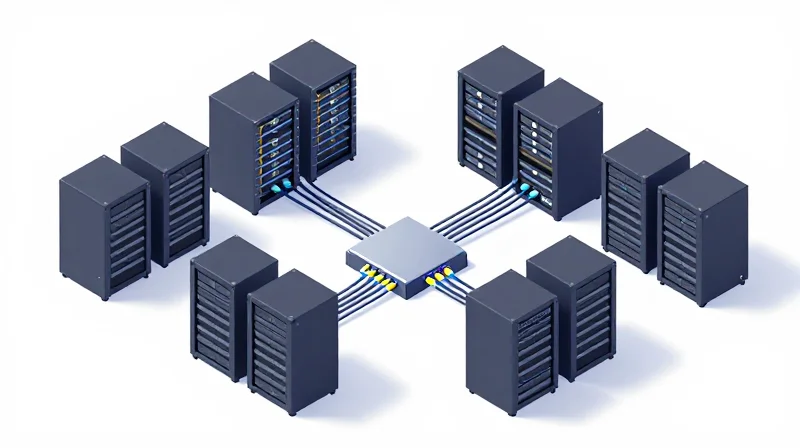
Ensuring Interoperability in Multi-Vendor 100G Long-Haul Links
Successful multi-vendor interoperability for 100G ER4 and ZR4 modules is predicated on two pillars: strict adherence to the physical layer specifications defined by IEEE and Multi-Source Agreements (MSAs), and the consistent implementation of Host-FEC (Forward Error Correction) on the network equipment. While standard 100G LR4 optics are highly commoditized and interchangeable, the narrow optical margins of 40km (ER4) and 80km (ZR4) reaches mean that even minor deviations in transmit power or wavelength stability between brands can lead to link instability or complete signal loss.
Standardization Framework: IEEE vs. MSA
The 100G ER4 specification is formalized under IEEE 802.3ba, which provides a rigid set of parameters for LAN-WDM wavelength grids and receiver sensitivity. This makes ER4 modules from different vendors relatively easy to mix. In contrast, 100G ZR4 is not a formal IEEE standard but is governed by various MSAs. These agreements ensure that the four-channel LAN-WDM architecture remains consistent, allowing modules from different manufacturers to communicate as long as they utilize the same amplification and filtering characteristics.
| Parameter | 100G ER4 (IEEE 802.3ba) | 100G ZR4 (MSA Based) | Coherent Alternatives |
|---|---|---|---|
| Grid Type | LAN-WDM | LAN-WDM | DWDM (ITU Grid) |
| Standardization | High (IEEE) | Moderate (MSA) | Variable (Proprietary/OIF) |
| FEC Requirement | Optional/Host-Based | Mandatory (Host-FEC) | Integrated (Internal DSP) |
| Vendor Mixability | Excellent | Good (Requires Validation) | Complex (DSP Matching) |
Interoperability and Multi-Vendor FAQ
- Can I use an ER4 module from Vendor A with an ER4 from Vendor B?
Yes. Because 100G ER4 follows the IEEE 802.3ba standard, as long as both modules adhere to the LAN-WDM wavelength specifications and power requirements, they will interoperate seamlessly. - Why does Host-FEC matter for ZR4 interoperability?
100G ZR4 relies on the host switch to provide KR4-FEC to achieve its 80km reach. If Vendor A’s switch uses a different FEC implementation than Vendor B’s switch, the modules will not be able to correct errors, resulting in a down link. - Are there power consumption risks in multi-vendor environments?
Yes. ZR4 modules often draw more power (up to 5.5W-6W) than standard LR4 modules. You must ensure the port on your third-party switch is rated for these higher power classes to avoid thermal shutdowns.
To minimize risks in a heterogeneous environment, network architects should prioritize modules that provide comprehensive Digital Optical Monitoring (DOM) data. This allows for real-time tracking of transmit and receive power levels across different hardware, making it easier to identify if a specific vendor's module is underperforming relative to the link's power budget. Always validate that the Host-FEC is enabled on both sides of the link when deploying ZR4 to ensure the required bit error rate (BER) thresholds are met.
Strategic Selection: Choosing the Right Module for Your Use Case

Strategic Selection: Choosing the Right Module for Your Use Case
Selecting the optimal 100G transceiver is no longer a simple matter of matching distance ratings; it requires a nuanced evaluation of fiber characterization, power budgets, and existing switch capabilities. While 100G ER4 remains the standard for campus backbones, the 100G ZR4 has emerged as a disruptive force for regional links, offering 80km reach without the massive capital expenditure of coherent systems. Architects must weigh the 'plug-and-play' simplicity of fixed-wavelength modules against the long-term scalability of tunable coherent optics.
Decision Matrix: 100G Optics Comparison
| Feature | 100G ER4 | 100G ZR4 | Coherent DWDM |
|---|---|---|---|
| Max Distance | 40km | 80km (with FEC) | 1,000km+ |
| Typical Latency | Ultra-Low (Direct) | Low (FEC processing) | Higher (DSP/FEC) |
| Power Draw | ~3.5W - 4.5W | ~5.5W - 6.5W | 15W - 25W+ |
| Relative Cost | 1.0x (Baseline) | 1.5x - 2.0x | 5.0x - 10.0x |
| Equipment Requirement | Standard Switch Port | Standard Port (w/ FEC) | OTN/Coherent Hardware |
Deployment Scenarios and Recommendations
- Campus & Metro Access (Under 40km)
Use 100G ER4. It is the most stable and cost-effective choice for links where fiber attenuation is low. Since it does not require Host-FEC, it is compatible with older legacy hardware that cannot support the processing overhead of ZR4. - Regional Interconnects (40km - 80km)
Deploy 100G ZR4. This is the 'sweet spot' for point-to-point links between cities or data center clusters. It eliminates the need for expensive optical amplifiers, provided the host switch supports RS(544,514) FEC to meet the required Bit Error Rate (BER). - High-Loss or Aged Fiber Routes
Opt for Coherent DWDM. If your fiber plant is characterized by high polarization mode dispersion (PMD) or high attenuation (above 0.25 dB/km), the superior sensitivity and digital signal processing (DSP) of coherent modules are necessary to maintain link stability.
Strategic FAQ
- Can I use a 100G ZR4 for a 10km link to save on inventory?
Yes, but you must use optical attenuators (typically 10dB to 15dB). The high-power SOA (Semiconductor Optical Amplifier) in the ZR4 receiver will saturate or sustain damage if exposed to high input power at short distances. - Does 100G ZR4 work with all QSFP28 ports?
Physically, yes; logically, it depends. The switch must support 'Host-FEC.' Without the error correction performed by the switch's ASIC, a ZR4 module will typically fail to link up at distances beyond 30-40km. - Is Coherent DWDM always the better long-term investment?
Only if you require tunability and massive scale. For simple point-to-point links, the lower power consumption and significantly lower unit cost of ZR4 provide a much faster ROI for 100G services.
Navigating the complexities of high-speed, long-distance networking requires a data-driven approach to hardware selection. While 100G ER4 and ZR4 offer superior TCO for specific distances, your unique fiber plant conditions will ultimately dictate the best path forward. For a customized network audit or to source high-performance optical solutions that fit your budget, contact our technical consulting team today.