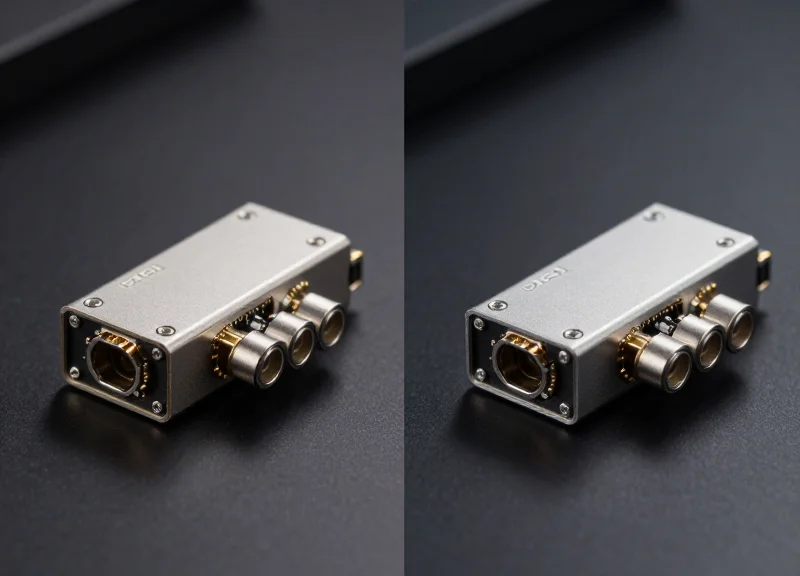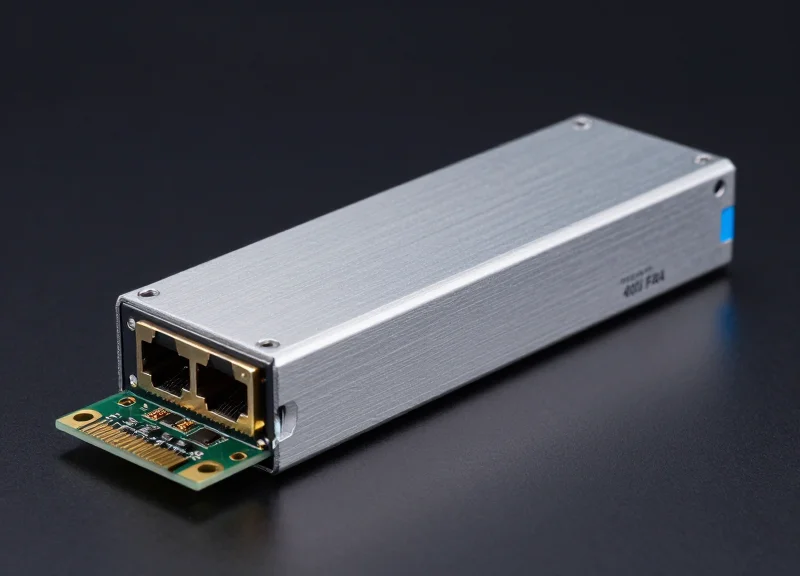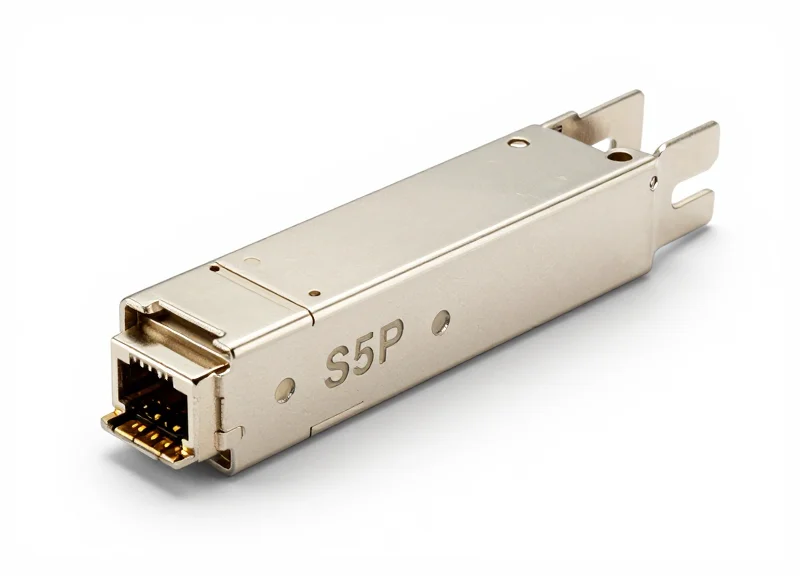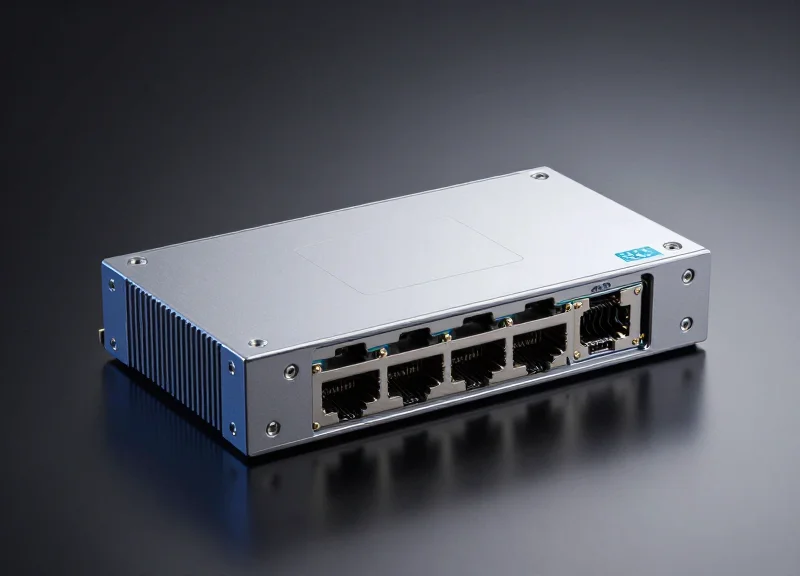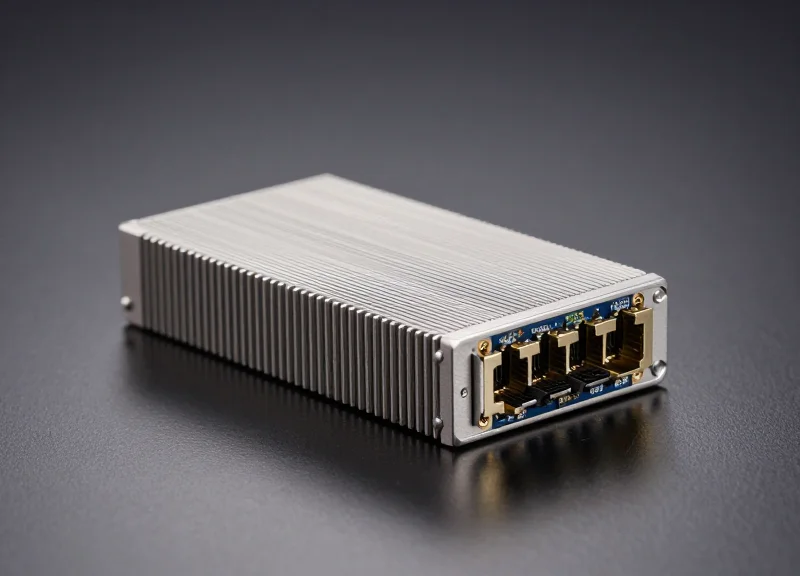
As AI workloads and hyperscale data centers push the limits of existing infrastructure, the transition to 800G has become a strategic imperative. However, technical performance and cost-efficiency must go hand-in-hand. This article provides a comprehensive look at sourcing low latency 800G modules, navigating wholesale markets, and leveraging OEM/ODM services to gain a competitive edge in 2026.
The Rise of 800G: Meeting the Demands of AI and Machine Learning

The Rise of 800G: Meeting the Demands of AI and Machine Learning
As Large Language Models (LLMs) and Generative AI continue to scale, the underlying network infrastructure has reached a tipping point where 400G throughput is no longer sufficient for peak efficiency. 800G optical modules have emerged as the standard for high-performance computing (HPC) clusters, doubling the bandwidth of their predecessors to alleviate data bottlenecks between GPU nodes. In 2026, the transition to 800G is driven by the need to maximize the ROI of expensive silicon investments by ensuring that compute power is never throttled by network congestion.
Latency: The Silent Killer of Training Performance
In distributed machine learning, thousands of GPUs work in parallel. The speed at which these nodes exchange gradients—often referred to as all-reduce operations—directly dictates the training time. High latency introduces tail latency issues, where the entire cluster waits for the slowest packet. Low-latency 800G modules, particularly those utilizing OSFP or QSFP-DD form factors with advanced DSP or LPO technologies, are critical for maintaining the tight synchronization required for massive scale-out architectures.
| Metric | 400G (Legacy) | 800G (Next-Gen AI) |
|---|---|---|
| Throughput | 400 Gbps | 800 Gbps |
| Symbol Rate | 53 GBaud (PAM4) | 106 GBaud (PAM4) |
| Power Efficiency | Standard | 2x Throughput per Watt Improvement |
| Primary Application | Standard Cloud Data Centers | AI/ML Training & HPC Clusters |
Strategic Advantages of 800G for ML Infrastructure
- How does 800G improve AI model training cycles?
By doubling the data transfer rate between server nodes, 800G reduces the idle time for GPUs during collective communication phases, resulting in faster epoch completion and shorter overall training windows. - Is low latency more important than raw bandwidth for ML?
Both are critical, but for highly synchronized tasks like deep learning, low latency is the primary factor in preventing 'bottlenecking' where compute resources remain underutilized while waiting for network updates. - Should I choose LPO or DSP-based 800G modules for AI?
LPO (Linear-drive Pluggable Optics) offers lower latency and power consumption, making it ideal for short-reach intra-rack connections, while DSP-based modules provide the signal integrity needed for longer reaches.
For enterprises and data center operators, securing 800G modules wholesale is no longer just about capacity; it is a strategic move to future-proof hardware against the exponential growth of data-intensive AI applications.
Understanding 800G Form Factors: OSFP vs. QSFP-DD800
Understanding 800G Form Factors: OSFP vs. QSFP-DD800
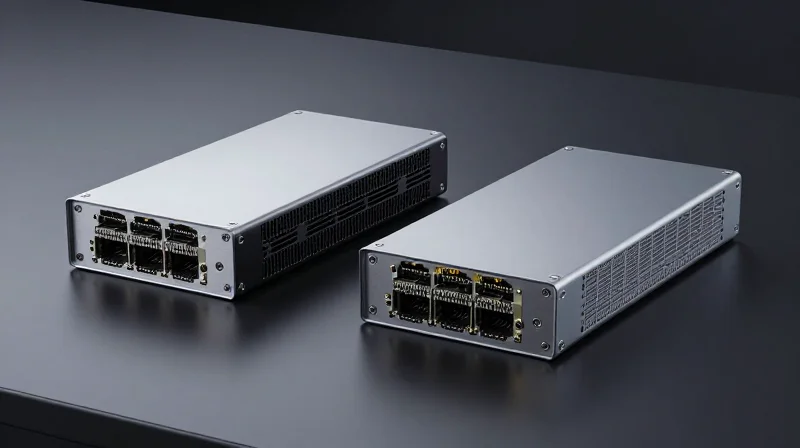
Choosing the right 800G form factor is a pivotal decision for data center operators, as it dictates the long-term viability of cooling infrastructure and hardware interoperability. While both OSFP (Octal Small Form-factor Pluggable) and QSFP-DD800 (Quad Small Form-factor Pluggable Double Density) support 800Gbps throughput using 8 lanes of 100G-PAM4, they cater to different architectural priorities: OSFP excels in thermal management for high-wattage AI clusters, whereas QSFP-DD800 offers seamless backward compatibility for existing network upgrades.
Thermal Management and Power Dissipation
As 800G modules push power consumption toward 15W to 20W per transceiver, heat dissipation becomes the primary constraint. OSFP modules are physically larger and often feature an integrated heatsink, which significantly improves thermal resistance. This design allows for more efficient cooling in high-density environments. In contrast, QSFP-DD800 relies on the switch chassis cage for cooling, which can be a limiting factor for low-latency AI applications that require consistent performance under heavy thermal loads.
| Feature | OSFP | QSFP-DD800 |
|---|---|---|
| Width | 22.58 mm | 18.35 mm |
| Integrated Heatsink | Yes | No (Cage-dependent) |
| Max Power Capacity | Up to 18W-20W | Up to 14W-16W |
| Backward Compatibility | Via Adapter Only | Native (QSFP28/QSFP56) |
| Best Use Case | New AI/ML Fabric Builds | Legacy Data Center Upgrades |
Port Density and Infrastructure Interoperability
Wholesale buyers must evaluate port density against the total cost of ownership (TCO). QSFP-DD800 allows for 36 ports in a 1U chassis, maintaining the same density as previous 400G generations while doubling the bandwidth. Because it is backward compatible with QSFP28 and QSFP56, it minimizes the need for specialized adapter cables. OSFP, while requiring adapters for legacy modules, is designed for the future 1.6T roadmap, making it a more 'future-proof' investment for organizations planning to scale rapidly beyond 800G.
- Which form factor is better for AI training clusters?
OSFP is generally preferred for AI clusters due to its superior thermal efficiency, which is critical for the high-duty cycles and low-latency requirements of GPU-to-GPU communication. - Is QSFP-DD800 cheaper to implement?
In the short term, QSFP-DD800 may reduce costs by allowing the reuse of existing patch panels and fiber infrastructure, whereas OSFP might require new cabling strategies or adapters. - Can OSFP and QSFP-DD800 coexist in the same network?
Yes, via breakout cables or specific switch hardware that supports multiple cage types, though standardizing on one form factor simplifies wholesale procurement and spare parts inventory.
Why Low Latency is the Critical Metric for Next-Gen Networks

In the era of 800G networking, low latency is the primary differentiator for performance because raw bandwidth alone cannot resolve the synchronization bottlenecks inherent in massive AI training clusters and high-frequency trading environments. While 800G provides the necessary 'pipe' size, the speed at which data enters and exits that pipe determines the overall efficiency of the distributed computing fabric. Minimizing micro-delays at the transceiver level ensures that GPU-to-GPU communication remains fluid, preventing idle cycles in expensive hardware.
The Impact of DSP and Signal Processing on Micro-Delays
Digital Signal Processing (DSP) chips are the heart of 800G modules, responsible for compensating for signal impairments like chromatic dispersion. However, traditional DSP architectures introduce latency through multiple stages of quantization, equalization, and decoding. To combat this, next-generation 800G modules often utilize advanced 5nm or 7nm DSPs with optimized pipelines designed specifically to reduce processing time. In some niche applications, Linear-drive Pluggable Optics (LPO) are emerging as a 'zero-DSP' alternative to eliminate this processing delay entirely, though they require more robust host-side equalization.
Navigating the FEC (Forward Error Correction) Trade-off
Forward Error Correction is vital for maintaining bit-error rate (BER) integrity at high speeds, but it is a major source of latency. The deeper the error correction, the longer the data must be buffered before it can be processed. Modern 800G deployments must balance the need for signal reliability with the demand for speed.
| FEC Type | Correction Capability | Typical Latency Impact | Ideal Use Case |
|---|---|---|---|
| Standard KP4 FEC | High | ~100-150ns | Long-reach Data Center Interconnects |
| Low-Latency FEC | Moderate | ~50-80ns | Intra-rack AI Clusters |
| No FEC / Passthrough | Zero | <5ns | Short-reach Direct Attach Links |
Ubytelink Optimization for Wholesale 800G Modules
At Ubytelink, we optimize our 800G wholesale inventory by selecting modules with superior ASIC integration and high-performance laser drivers. Our custom-quoted solutions allow enterprise buyers to specify latency tolerances, ensuring that the bulk hardware purchased is perfectly matched to the specific network topology, whether it be an InfiniBand-based AI fabric or a traditional Ethernet-based spine-leaf architecture.
Frequently Asked Questions Regarding 800G Latency
- How does 800G latency compare to 400G?
While the per-bit transmission time is halved, the overhead of advanced DSP and FEC in 800G can actually increase absolute latency unless the module utilizes specialized low-latency chipsets. - Can I get custom FEC settings on bulk orders?
Yes, Ubytelink offers custom firmware configurations for wholesale orders, allowing clients to toggle between high-gain and low-latency FEC modes depending on their link budget requirements. - Why is latency critical for AI training?
AI training relies on 'All-Reduce' operations where every GPU must wait for data from every other GPU. Even a 50ns delay at the transceiver level can scale to milliseconds of wasted processing time across a cluster of 10,000 nodes.
The Economics of Wholesale: Navigating 800G Bulk Pricing
The Economics of Wholesale: Navigating 800G Bulk Pricing
Navigating the 800G wholesale market requires a deep understanding of the transition from initial R&D-heavy costs to the current phase of industrial scaling. In 2026, the pricing for low-latency 800G modules is increasingly driven by manufacturing yields, the maturation of 5nm and 7nm DSP (Digital Signal Processing) chipsets, and the global demand for AI-optimized data centers. Procurement teams can significantly lower their Total Cost of Ownership (TCO) by leveraging bulk acquisition strategies that account for long-term power consumption and heat dissipation rather than just the initial unit price.
Key Drivers of 800G Wholesale Pricing
Several variables dictate the final quote for 800G transceivers. Volume remains the most significant lever, as manufacturers offer steep discounts for tier-1 hyperscalers and large enterprises. However, technical specifications such as transmission distance (reach) and the complexity of the optical components—ranging from Silicon Photonics (SiPh) to Indium Phosphide (InP)—also play critical roles in price determination.
| Module Type | Typical Reach | Primary Cost Driver | Wholesale Pricing Tier |
|---|---|---|---|
| 800G DR8 (OSFP/QSFP-DD) | 500m | High-volume DSP & Silicon Photonics | Entry-level / High Volume |
| 800G 2xFR4 / FR8 | 2km | EML Lasers & Multiplexing Complexity | Mid-range |
| 800G LR8 | 10km | High-power lasers & stringent FEC | Premium / Specialized |
Strategic Procurement: Reducing Total Cost of Ownership (TCO)
A successful procurement strategy for 800G modules looks beyond the 'Per-Port' cost. To achieve true economic efficiency, data center operators must evaluate power efficiency (Watts per Gigabit). Lower power consumption reduces cooling overhead, which often constitutes a larger portion of the operational budget than the hardware itself over a five-year lifecycle. Furthermore, choosing vendor-neutral, high-compatibility modules prevents proprietary lock-in, allowing for more flexible future upgrades and better leverage during contract renewals.
- How does 800G pricing compare to 400G on a per-gigabit basis?
In 2026, 800G modules have reached a price-per-gigabit parity or even a slight advantage over 400G in high-density environments, primarily due to the reduction in cabling and switch port usage. - What is the typical lead time for wholesale 800G orders?
Standard wholesale lead times currently range from 4 to 8 weeks, though custom configurations or ultra-low latency specific DSPs may extend this to 12 weeks depending on component availability. - Do bulk quotes include technical support and warranties?
Most professional wholesale quotes include a multi-year hardware warranty and tiered technical support, which is essential for troubleshooting complex 800G signal integrity issues.
Custom OEM/ODM Services: Tailoring Hardware to Your Specifications
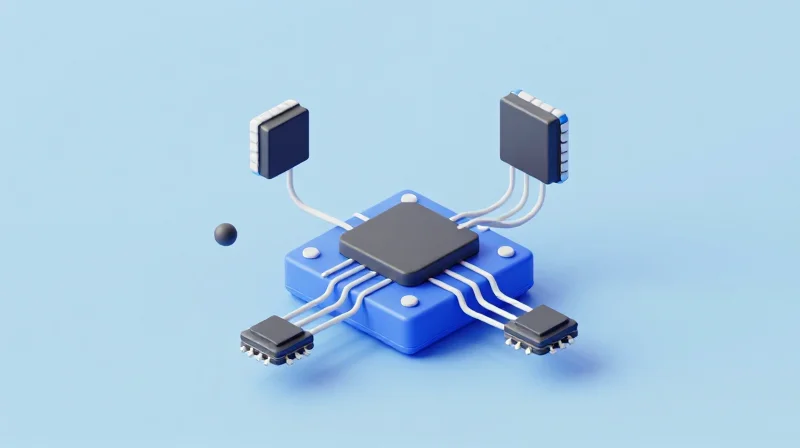
Custom OEM/ODM services bridge the gap between generic high-speed hardware and the specialized requirements of hyperscale data centers and AI clusters. By tailoring firmware for specific Forward Error Correction (FEC) algorithms or modifying physical thermal dissipation designs, organizations can ensure their 800G modules operate at peak efficiency within their unique architectural constraints, all while maintaining competitive wholesale pricing and brand integrity.
Firmware Optimization: Precision Tuning for Low Latency
One of the most significant advantages of ODM services is the ability to tweak internal firmware to prioritize latency over other metrics. In standard modules, generic signal processing can introduce nanoseconds of delay that aggregate across massive fabrics. Custom firmware can optimize DSP (Digital Signal Processing) routines, adjust power consumption profiles, and ensure seamless handshakes with specific switch chipsets, such as Broadcom Tomahawk or NVIDIA Spectrum platforms, effectively reducing the signal processing overhead.
Comparison: Standard vs. Custom 800G Modules
| Feature | Standard Off-the-Shelf | Custom OEM/ODM Solution |
|---|---|---|
| Firmware | Fixed generic code | Optimized for specific switch OS |
| Branding | Manufacturer label | White-label or custom customer branding |
| Compatibility | Broad/General | Verified 100% host-specific integration |
| Latency Profile | Fixed standard | Tuned for minimum micro-delays |
| Thermal Design | Standard heat sink | Enhanced or custom fins for high-density racks |
Breaking Vendor Lock-in via Multi-Vendor Interoperability
Wholesale buyers often face the 'walled garden' approach of major network equipment manufacturers. Custom ODM services allow for the creation of 800G modules that are bit-for-bit compatible with proprietary systems but at a fraction of the cost. This enables procurement teams to diversify their supply chain and significantly reduce the Total Cost of Ownership (TCO) without sacrificing performance or risking port-blocking from the host device software.
Common Inquiries Regarding 800G Customization
- What is the typical Minimum Order Quantity (MOQ) for custom 800G modules?
MOQs for deep hardware customization usually start at 50 to 100 units, though firmware-only adjustments for compatibility may be offered for smaller bulk batches. - Can you provide custom EEPROM coding for specific system recognition?
Yes, ODM services include writing custom EEPROM data to ensure the modules are correctly identified and accepted by Cisco, Arista, Juniper, or NVIDIA OS environments without error messages. - How does customization affect production lead times?
Firmware-only customizations typically add 1-2 weeks to the production cycle, while physical hardware modifications may add 4-6 weeks for prototyping and rigorous validation.
Evaluating Reliability: Testing and Quality Assurance Standards
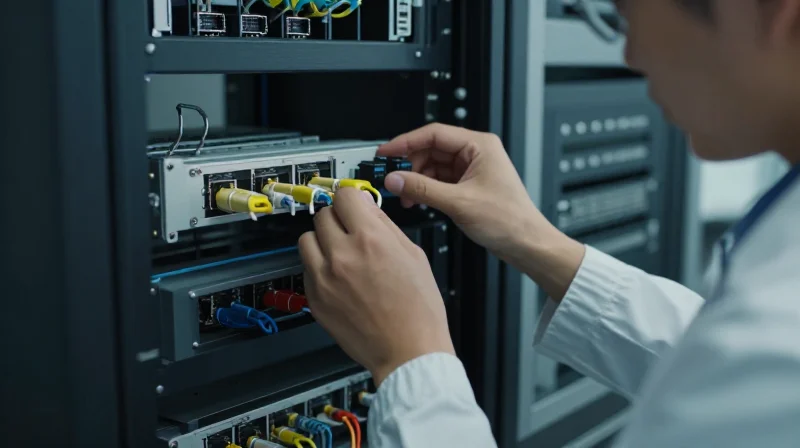
The Critical Role of Quality Assurance in 800G Networking
At 800G speeds, the margin for error is significantly smaller than in previous generations due to the shift to 112G SerDes and PAM4 signaling. Rigorous testing is the only way to ensure that wholesale modules maintain signal integrity across their full life cycle. High-quality 800G transceivers must undergo a battery of automated tests to verify that they meet or exceed IEEE 802.3ck standards, specifically focusing on pre-FEC (Forward Error Correction) Bit Error Rates. If a module operates too close to the FEC limit, it creates a risk of packet loss and link instability as the hardware ages or temperatures fluctuate. Therefore, enterprise-grade reliability requires a 'zero-compromise' approach to hardware validation before shipment.
Core Testing Metrics for 800G Modules
| Test Category | Key Metric | Operational Standard |
|---|---|---|
| Signal Integrity | Bit Error Rate (BER) | Pre-FEC < 2.4E-4; Post-FEC < 1E-12 |
| Thermal Stability | Case Temperature Range | 0°C to 70°C (Commercial Grade) |
| Optical Performance | TDECQ (Transmitter Eye) | < 3.4 dB for SMF interfaces |
| Power Efficiency | Max Power Dissipation | < 16W for DR8/2xFR4 configurations |
Navigating Multi-Vendor Interoperability
Interoperability is a major concern for procurement teams managing heterogeneous data centers. A 800G OSFP or QSFP-DD module must not only talk to a switch of the same brand but must also maintain low latency and high throughput when connected to equipment from Cisco, Arista, NVIDIA (Mellanox), or Juniper. Reliability testing includes 'Golden Switch' validation, where modules are tested against the latest OSNR (Optical Signal-to-Noise Ratio) requirements of major switch manufacturers. This ensures that the module’s EEPROM/DOM (Digital Optical Monitoring) data is correctly read by the host system, preventing port-lock issues or false alarms that can disrupt automated orchestration tools.
- How does FEC impact 800G reliability testing?
800G relies on KP4 FEC to correct errors caused by high-speed PAM4 signals. Testing monitors the 'FEC Margin'—the gap between the raw BER and the correction limit—to ensure the module isn't on the verge of failure under load. - What is the importance of Burn-in testing?
Wholesale modules undergo high-temperature burn-in for 24 to 72 hours. This process identifies 'infant mortality' failures in laser diodes or ICs, ensuring only the most resilient units reach the customer. - Are wholesale 800G modules compatible with open-source SONiC?
Yes, provided they strictly adhere to MSA (Multi-Source Agreement) standards. Reliability testing includes verifying the I2C interface response times to ensure compatibility with the Redis database and syncd components of the SONiC NOS.
Supply Chain Resilience: Securing Inventory for Large-Scale Deployments
Supply Chain Resilience: Securing Inventory for Large-Scale Deployments
Securing a reliable supply of low-latency 800G modules in 2026 requires a fundamental shift from transactional, just-in-time purchasing to a resilience-first procurement model that anticipates the inherent volatility of the high-end semiconductor market. For hyperscale operators and enterprise data centers, maintaining strict deployment schedules depends on establishing multi-layered sourcing agreements and rolling 12-month forecasts that prioritize production slot visibility over short-term price fluctuations.
Comparative Sourcing Models and Lead Time Realities
| Procurement Model | Estimated Lead Time | Supply Stability | Best For |
|---|---|---|---|
| Tier-1 OEM Direct | 18-26 Weeks | Moderate | Standardized global infrastructure rollouts |
| Authorized Wholesale | 8-14 Weeks | High | Rapid capacity scaling and agile maintenance |
| Custom ODM Services | 12-20 Weeks | High | Specialized hardware and niche architectures |
| Spot Market Sourcing | 1-3 Weeks | Low | Emergency replacements and immediate shortfalls |
Strategic Diversification and Geographic Redundancy
To insulate large-scale deployments from regional disruptions, organizations should adopt a multi-regional manufacturing strategy. This involves sourcing modules from vendors with production facilities across varied geographies—such as Southeast Asia, North America, and Central Europe—to mitigate regional geopolitical or logistical bottlenecks. Furthermore, maintaining a strategic buffer stock, typically 10% to 15% of the total projected deployment, allows for continuous operation during unexpected shifts in component demand or shipping delays.
Supply Chain & Inventory Management FAQ
- How do DSP availability cycles impact 800G wholesale pricing?
The 800G market is highly sensitive to the production yields of 7nm and 5nm Digital Signal Processors (DSPs). When foundry capacity is tight, wholesale prices may stabilize at a higher floor, and lead times can double as vendors prioritize established long-term contracts over spot buyers. - What are the advantages of regional warehousing for 800G modules?
Regional warehousing reduces 'Last Mile' delivery risks and allows for same-day or next-day hardware replacement. This is critical for 800G deployments where the cost of network downtime far exceeds the carrying cost of holding local inventory. - How can custom firmware requirements affect the supply chain?
While custom firmware through ODM partners provides better architectural control, it adds a layer of testing and validation to the supply chain. This can increase initial lead times by 4-6 weeks but often results in higher long-term reliability and fewer field replacements in multi-vendor environments.
Future-Proofing Your Data Center: Beyond 800G and Towards 1.6T

Preparing for the Next Leap: The Road to 1.6T
Future-proofing a data center in 2026 requires looking past the immediate performance gains of 800G to the emerging 1.6T standard, ensuring that current hardware deployments can integrate seamlessly with next-generation 200G-per-lane SerDes technology. By prioritizing modules and switches that support high-density form factors like OSFP1600, operators can protect their capital expenditure (CAPEX) while preparing for the bandwidth demands of hyper-scale AI training clusters and large-language model (LLM) processing.
Technical Comparison: 800G vs. 1.6T Architectures
| Feature | 800G Standard | 1.6T Standard (Emerging) |
|---|---|---|
| Lane Speed | 100G or 200G per lane | 200G per lane |
| Typical Form Factors | OSFP, QSFP-DD | OSFP1600, OSFP-XD |
| Modulation | PAM4 | PAM4 (with higher baud rates) |
| Power Consumption | ~14W to 18W | ~25W to 30W+ |
| Application Scope | Standard Cloud & Early AI | Next-Gen AI & Terabit Routing |
Maximizing Lifecycle Value in Optical Procurement
The transition to 1.6T is not merely a speed upgrade but a fundamental change in optical density and thermal management. Organizations purchasing 800G modules in bulk should favor OSFP form factors where possible, as they offer a clearer thermal path for the higher-wattage 1.6T optics. Furthermore, investing in infrastructure that supports 200G/lane electrical interfaces today will simplify the migration to 1.6T, as it minimizes the need for complex gearboxing or total hardware replacement as the network matures.
- When is 1.6T expected to reach mass deployment?
While early samples and laboratory testing are occurring in 2026, broad commercial adoption and volume wholesale availability are projected for late 2025 and early 2026. - Will my 800G infrastructure become obsolete quickly?
No. 800G is expected to be the primary workhorse for high-speed data centers for the next 3-5 years. The key is ensuring your physical layer (cabling and racks) can handle the increased power and cooling required for 1.6T upgrades later. - Does 1.6T require different fiber types?
1.6T will continue to utilize Single Mode Fiber (SMF) for long-reach applications, but the use of parallel optics and multi-fiber push-on (MPO) connectors will likely increase to handle the additional lanes.
Navigating the 800G landscape requires more than just a vendor; it requires a strategic partner capable of delivering performance at scale. Whether you need off-the-shelf bulk orders or highly customized OEM solutions, Ubytelink provides the expertise and pricing to power your expansion. Ready to scale your network with the industry's best low latency 800G modules? Contact Ubytelink today for a custom quote and expert consultation.