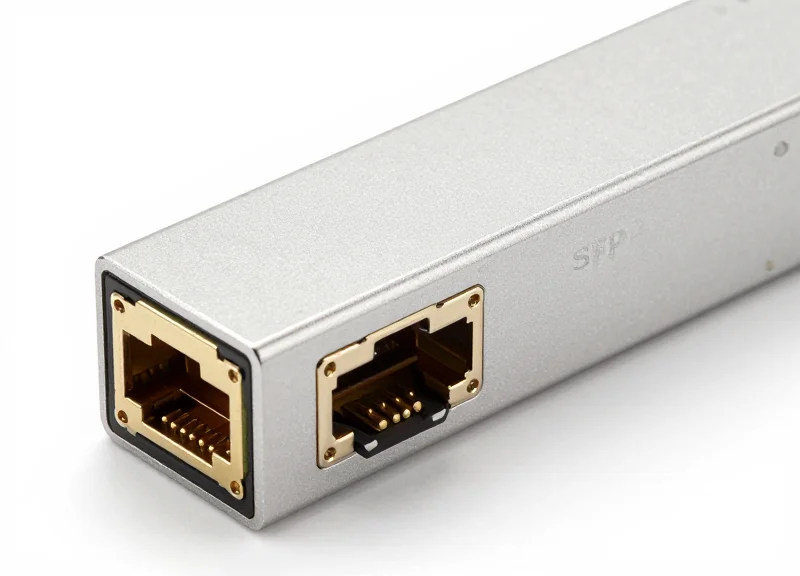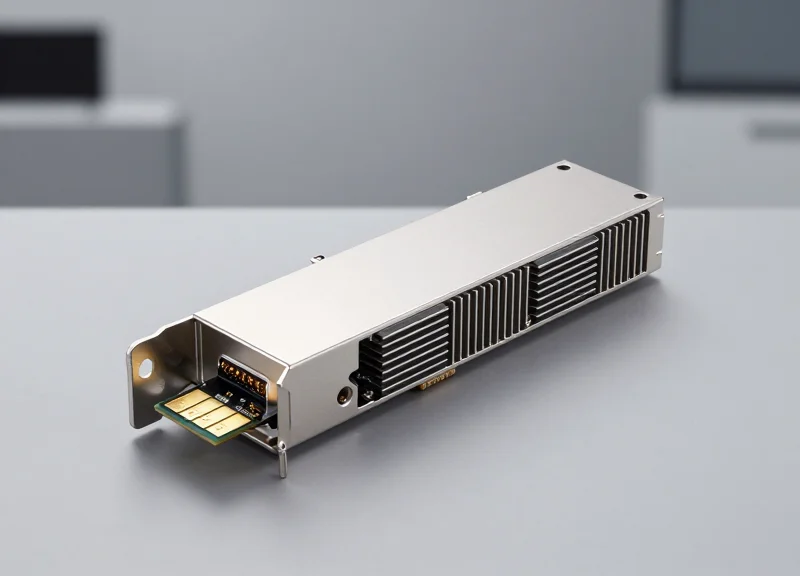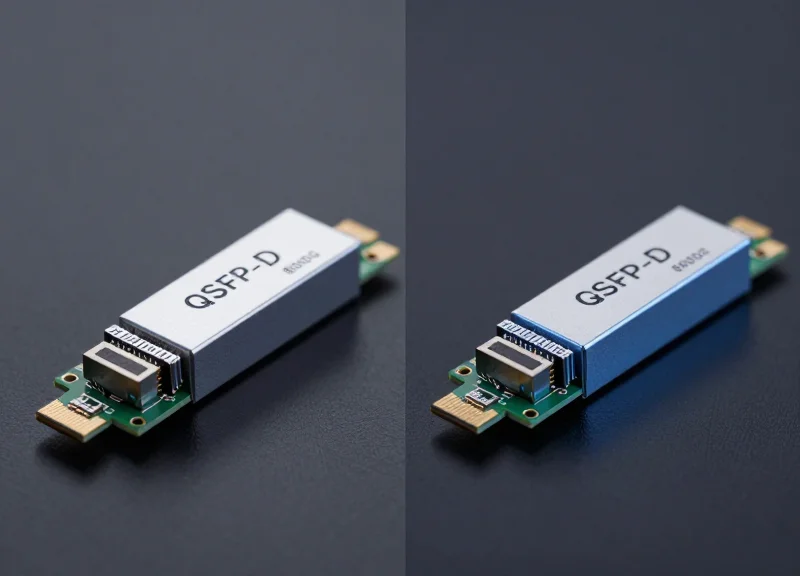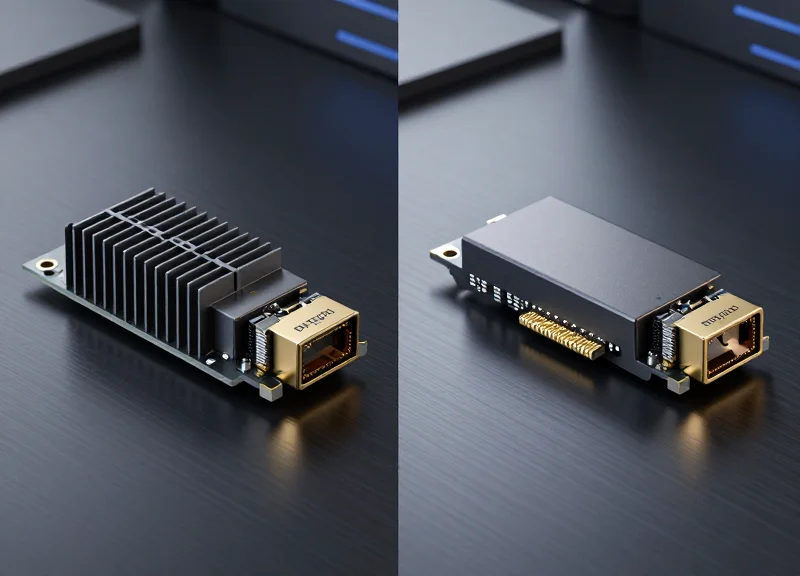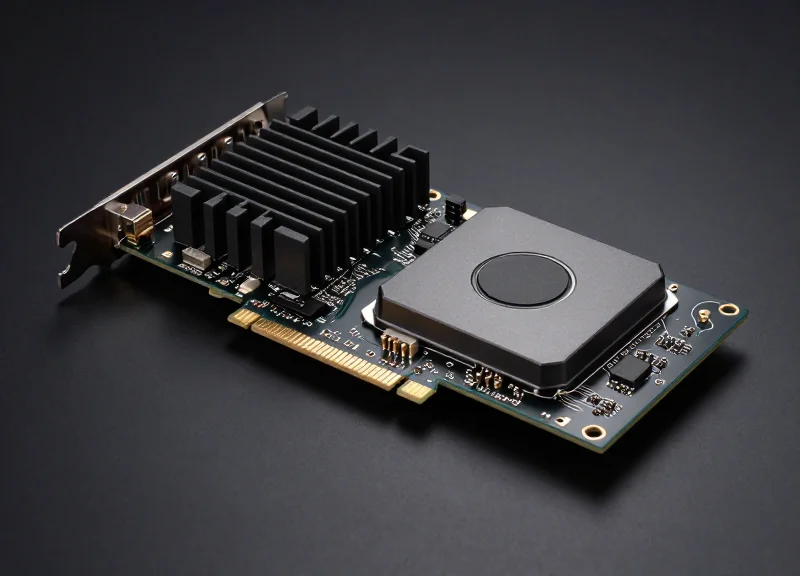
As the AI revolution accelerates, the bottleneck for most enterprises isn't just GPU availability, but the interconnect fabric that binds them. Scaling NVIDIA H100 clusters requires a robust, high-speed networking infrastructure that is both cost-effective and reliable. This guide explores how wholesale procurement and OEM/ODM solutions can streamline your data center expansion and optimize your total cost of ownership.
The Strategic Importance of H100 Interconnects in AI Infrastructure

The NVIDIA H100 GPU represents the pinnacle of AI compute, but its true power is unlocked only when multiple units function as a singular, cohesive machine. Interconnects—such as NVLink, NVSwitch, and InfiniBand—act as the 'nervous system' of this infrastructure, facilitating the ultra-high-speed data exchange necessary to prevent computational idling. Without robust interconnect strategies, even the most expensive GPU clusters suffer from severe latency bottlenecks, significantly degrading the ROI on H100 investments.
Eliminating Communication Bottlenecks in LLM Training
When training Large Language Models (LLMs) or complex neural networks, the workload is distributed across thousands of GPUs. The 'All-Reduce' operations required to synchronize gradients between nodes demand massive bandwidth. Standard Ethernet often falls short, leading to 'tail latency' where faster GPUs wait for slower network packets. H100-specific interconnects like the 5th Generation NVLink provide up to 900 GB/s of bidirectional bandwidth per GPU, ensuring that data movement never becomes a drag on the Tensor Core processing speed.
| Interconnect Type | Target Use Case | Bandwidth (H100) | Latency Profile |
|---|---|---|---|
| NVLink (Gen 5) | Intra-node (GPU to GPU) | Up to 900 GB/s | Ultra-Low (Nanoseconds) |
| InfiniBand (NDR) | Inter-node (Server to Server) | 400 Gb/s per port | Extremely Low (Microseconds) |
| RoCE v2 | Enterprise Networking | 100-400 Gb/s | Moderate to Low |
Scaling Performance: Why Bulk Procurement Includes Networking
Strategic AI infrastructure planning requires looking beyond the raw chip count. Wholesale procurement of NVIDIA H100 systems must account for the matching network fabric. A lack of high-quality InfiniBand switches or specialized cables can result in a 30-50% performance drop-off in multi-node clusters. For 2026, enterprises are prioritizing 'Full-Stack' builds where interconnect hardware is matched one-to-one with GPU capacity to ensure linear scaling.
- Why is NVLink critical for H100 clusters?
NVLink allows for memory pooling and direct GPU-to-GPU communication at speeds far exceeding PCIe, which is vital for real-time model inferencing and training synchronization. - Can I use standard Ethernet with H100s?
While possible, standard Ethernet introduces high latency and overhead. For production-grade AI, NVIDIA Spectrum-X or InfiniBand are the recommended standards to maintain H100 efficiency. - How does interconnect impact bulk pricing?
Wholesale quotes often include bundled networking hardware (cables, transceivers, and switches). Buying these components alongside GPUs ensures compatibility and lower total cost of ownership (TCO) compared to piecemeal sourcing.
Wholesale Procurement: Reducing Capex for Large-Scale AI Deployments
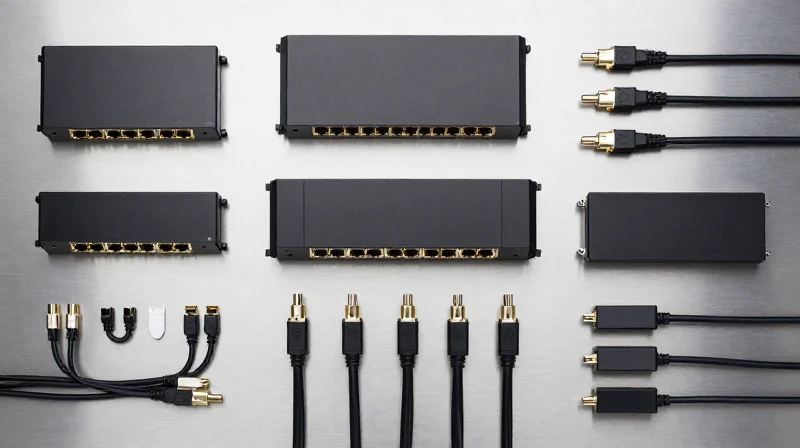
For organizations deploying clusters of NVIDIA H100 GPUs, the cost of interconnectivity—comprising transceivers, Active Optical Cables (AOCs), and Direct Attach Cables (DACs)—can account for 10% to 15% of the total hardware budget. Shifting from transactional, piecemeal purchasing to wholesale procurement allows enterprises to leverage volume-based pricing, significantly reducing the Capex required to stand up InfiniBand or Ethernet fabrics capable of supporting 800Gbps per node. In 2026, custom quotes for bulk orders are the primary mechanism for aligning technical requirements with fiscal constraints, ensuring that the 'nervous system' of the AI cluster does not become a financial bottleneck.
The Economics of Scale in High-Speed AI Networking
In the current market, the price per gigabit drops sharply as procurement volume increases. Bulk orders for 800G OSFP modules, which are essential for the H100’s peak performance, unlock tiered discounts that are simply unavailable to smaller buyers. By committing to larger quantities, enterprises can secure lower per-unit costs and mitigate the premium pricing often associated with high-demand 400G QSFP112 and 800G optics.
| Procurement Volume | Estimated Discount Range | Primary Advantage |
|---|---|---|
| 1-50 Units | MSRP / Standard | Immediate Availability for Testing |
| 51-250 Units | 12% - 18% off MSRP | Project-Based Pricing Tiers |
| 250-1000+ Units | 25% - 40% off MSRP | Custom Quotes & Priority Supply Chain |
Budget Optimization and Lead-Time Security
Maximizing a 2026 AI budget requires more than just finding the lowest unit price; it involves strategic supply chain management. Wholesale agreements often include staged delivery schedules, allowing firms to lock in 2026 pricing while receiving hardware in phases as data center capacity expands. This approach protects the organization against market volatility and ensures that the interconnect fabric is ready the moment the GPU nodes are racked.
Wholesale Procurement FAQ
- How do custom quotes impact delivery lead times?
Custom wholesale quotes usually include a dedicated allocation from the manufacturer's production queue, which can reduce total lead time compared to multiple small, independent orders. - Is there a difference in quality for bulk-purchased modules?
No. Wholesale modules are manufactured to the same rigorous standards as retail units and include full enterprise warranties, often with batch-testing documentation to ensure consistency across the fabric. - Can we mix 400G and 800G components in a single wholesale quote?
Yes. Most wholesale agreements are structured to accommodate the entire bill of materials (BOM), including mixed-speed optics, AOCs for top-of-rack links, and long-reach transceivers for spine-leaf connections. - What is the threshold for 'Bulk Pricing' in 2026?
While it varies by vendor, bulk pricing typically begins at 50 units, with significant 'Tier 1' discounts appearing at the 200-unit threshold for 800G components.
InfiniBand vs. Ethernet: Choosing the Right Fabric for H100 Clusters
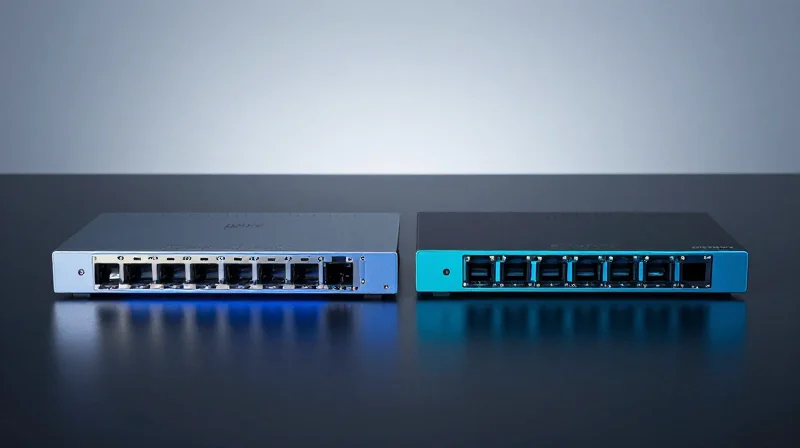
InfiniBand vs. Ethernet: Choosing the Right Fabric for H100 Clusters
The choice between InfiniBand and Ethernet for NVIDIA H100 clusters is no longer a simple matter of speed, as both now support 400Gb/s and 800Gb/s throughput; rather, it is a strategic decision based on workload characteristics and architectural philosophy. NVIDIA Quantum-2 InfiniBand remains the gold standard for large-scale, tightly-coupled AI training due to its lossless nature and sub-microsecond latency. Conversely, NVIDIA Spectrum-X Ethernet is the premier choice for AI service providers and multi-tenant environments where compatibility, congestion control, and existing network skillsets are paramount.
NVIDIA Quantum-2 InfiniBand: Purpose-Built for AI Scale
Quantum-2 InfiniBand is an offload-centric architecture designed to minimize CPU overhead and maximize GPU utilization. By utilizing In-Network Computing (SHARPv3), the fabric performs collective operations—such as All-Reduce—within the switch itself. This drastically reduces data movement and is the primary reason why InfiniBand is the preferred interconnect for monolithic LLM training tasks where every millisecond of synchronization latency translates to millions of dollars in idle compute time.
NVIDIA Spectrum-X: Bridging the Gap for Ethernet
Traditional Ethernet often suffers from 'tail latency' and packet loss under heavy AI workloads. NVIDIA Spectrum-X addresses these flaws by combining the Spectrum-4 switch with BlueField-3 DPUs to enable RoCEv2 (RDMA over Converged Ethernet). This platform offers 'lossless-like' performance and advanced congestion management, making it the superior choice for organizations that need to run diverse workloads—ranging from traditional microservices to AI inference—on a unified, standards-based fabric.
| Feature | NVIDIA Quantum-2 InfiniBand | NVIDIA Spectrum-X Ethernet |
|---|---|---|
| Primary Use Case | Large-scale LLM Training & HPC | AI Cloud, Multi-tenant, Inference |
| Protocol | Native InfiniBand (Lossless) | RoCEv2 (Optimized Ethernet) |
| Latency | Lowest (sub-0.5 µs) | Low (approx. 1.0 µs) |
| Management | NVIDIA UFM | Standard Ethernet Tools / NetQ |
| Offload Capability | SHARPv3 (In-Network Computing) | BlueField-3 DPU Acceleration |
Fabric Selection FAQ
- Can I mix InfiniBand and Ethernet in the same H100 cluster?
While not within a single compute fabric layer, many architects use InfiniBand for the 'backend' (GPU-to-GPU) and Ethernet for the 'frontend' (Storage and Client access). - Which fabric is more cost-effective for wholesale procurement?
Ethernet often has a lower total cost of ownership (TCO) due to broader availability of compatible optics and familiar management overhead, though InfiniBand offers better price-to-performance for pure AI training. - Does the H100 support both fabrics natively?
Yes, the H100 GPU connects via ConnectX-7 or BlueField-3 adapters, which are designed to support both InfiniBand and high-speed Ethernet protocols.
OEM/ODM Customization: Tailoring Networking Modules to Specific Needs
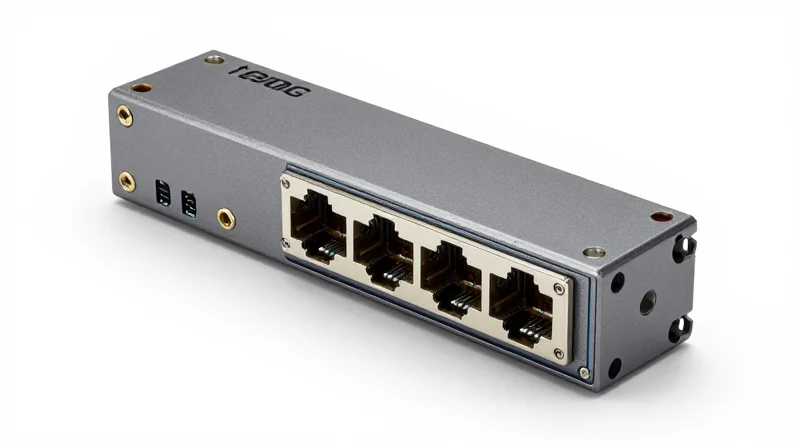
OEM/ODM Customization: Tailoring Networking Modules to Specific Needs
For enterprise AI deployments using NVIDIA H100 GPUs, standard off-the-shelf interconnects may not always align with specific architectural constraints or branding requirements. Ubytelink’s OEM/ODM services bridge this gap by offering tailored networking hardware—including custom-programmed 400G/800G transceivers, bespoke cable lengths, and private-label branding—ensuring that every component is optimized for the unique power, thermal, and logical demands of a high-performance compute fabric.
Technical Customization and Specialized Form Factors
Modern data centers often utilize high-density cooling solutions or non-standard rack layouts that require specialized physical specifications. Through our ODM services, we can modify the thermal dissipation characteristics of OSFP and QSFP-DD modules, such as utilizing enhanced heatsinks or specialized fin designs to prevent thermal throttling in tightly packed H100 clusters. Furthermore, firmware can be customized to ensure seamless handshakes between NVIDIA BlueField-3 DPUs and third-party switches, bypassing the interoperability hurdles often found in generic modules.
| Feature | Standard Wholesale Modules | OEM/ODM Custom Solutions |
|---|---|---|
| Labeling & Branding | Generic or Manufacturer Label | Private Labeling & Serialized Asset Tags |
| Firmware | Universal/Default Stack | Optimized for Specific NIC/Switch Vendors |
| Thermal Management | Standard Heatsink | Extended Fins or Custom Thermal Interfaces |
| Cable Lengths | Fixed Increments (e.g., 1m, 2m) | Bespoke Precision Lengths for Cable Mgmt |
| Packaging | Bulk Generic | Custom Multi-packs or Kitted Solutions |
Private Labeling and Managed Service Provider (MSP) Integration
For Managed Service Providers (MSPs) and Cloud Service Providers (CSPs), the ability to white-label networking hardware is essential for brand consistency and inventory management. Our OEM program allows partners to apply their own branding and custom serial numbers to 800G transceivers and Active Optical Cables (AOCs). This level of customization extends to the internal EEPROM coding, allowing the module to report as a proprietary brand to the network operating system (NOS), which simplifies support workflows and validates the hardware within the provider's ecosystem.
Frequently Asked Questions: Custom H100 Interconnects
- Can I request custom firmware for 800G OSFP modules?
Yes. We can provide custom-coded firmware to ensure compatibility with specific NVIDIA Spectrum-X switches or specific high-radix InfiniBand topologies, ensuring optimal Link Layer performance. - What are the minimum order quantities (MOQ) for ODM branding?
MOQs for private labeling typically start at moderate wholesale volumes, allowing smaller data centers or regional MSPs to access professional branding services without massive capital outlays. - Are custom-length DAC cables available for H100 clusters?
Absolutely. We offer precision-cut Direct Attach Copper (DAC) and Active Copper Cables (ACC) to minimize slack in high-density racks, improving airflow and reducing signal attenuation. - Do custom modules maintain warranty and performance standards?
Every OEM/ODM module undergoes the same rigorous 100% testing protocol as our standard products, including BER (Bit Error Rate) testing and interoperability verification within H100 reference architectures.
Technical Deep Dive: 800G OSFP and QSFP-DD Transceivers for H100
Technical Deep Dive: 800G OSFP and QSFP-DD Transceivers for H100
The NVIDIA H100 Tensor Core GPU utilizes the 800Gbps bandwidth standard to ensure that data transfer rates match the massive compute power of the Hopper architecture. To achieve this, data centers must deploy either OSFP (Octal Small Form-factor Pluggable) or QSFP-DD (Quad Small Form-factor Pluggable Double Density) transceivers. While both support 800G throughput via 8 lanes of 100G PAM4 signaling, the choice between them impacts cooling efficiency, power overhead, and long-term hardware scalability in InfiniBand and Ethernet fabrics.
Comparative Specifications: OSFP vs. QSFP-DD
| Feature | 800G OSFP | 800G QSFP-DD |
|---|---|---|
| Thermal Management | Integrated Heat Sink; Superior cooling | Relies on cage/heatsink; higher density |
| Power Consumption | Typical 14W - 16W | Typical 12W - 15W |
| Backward Compatibility | Requires adapter for QSFP | Native backward compatibility |
| Preferred Use Case | NVIDIA Quantum-2 InfiniBand | Spectrum-4 / General Ethernet |
| Max Port Density | 32 ports per 1U | 36 ports per 1U |
Signal Integrity and Thermal Management
Signal integrity at 800G is highly sensitive to heat. The OSFP form factor is physically larger and features an integrated heat sink, allowing it to handle higher thermal loads—up to 15W or more—without throttling. This is critical for H100 clusters where GPUs run at peak utilization for extended periods. The QSFP-DD, while offering slightly higher port density and easier backward compatibility for legacy 400G systems, requires more sophisticated chassis-level cooling to maintain the same signal stability under high-load AI workloads.
Frequently Asked Questions: H100 Transceivers
- Can I use QSFP-DD transceivers with NVIDIA Quantum-2 InfiniBand switches?
Most Quantum-2 (QM9700/9790) switches are natively designed for OSFP. While adapters exist, using OSFP is the recommended standard for maintaining the signal integrity required by InfiniBand NDR speeds. - What is the typical power draw for an 800G SR8 module?
An 800G SR8 (Short Reach) transceiver typically draws between 12W and 15W depending on the manufacturer and form factor, making efficient airflow design essential for the rack. - Which module is better for long-distance H100 clusters?
For distances up to 2km or 10km (LR8 or DR8), OSFP is generally preferred due to its ability to dissipate the extra heat generated by high-power optical lasers used in long-reach applications.
Ensuring Interoperability and EEAT Compliance in Hardware Sourcing

Ensuring seamless interoperability within the NVIDIA H100 ecosystem requires more than just physical matching of form factors; it demands a rigorous validation process where third-party and OEM modules are tested against the specific firmware and signal integrity requirements of NVIDIA Quantum-2 InfiniBand and Spectrum-4 Ethernet platforms. To maintain the high-performance throughput of 800G clusters, sourcing must move beyond price-point comparisons to focus on validated performance metrics and supply chain transparency.
The Necessity of Protocol-Level Validation
When deploying H100 GPUs at scale, even a minor variance in Bit Error Rate (BER) or signal attenuation can lead to massive packet loss and training job failures. Interoperability is verified through multi-stage testing that includes environmental stress tests, protocol compliance checks, and cross-platform compatibility with Mellanox/NVIDIA firmware versions.
| Sourcing Category | Interoperability Risk | EEAT Compliance Level | Wholesale Value Proposition |
|---|---|---|---|
| NVIDIA Original (Direct) | Near Zero | Highest (Standard-setter) | Premium Pricing; Potential Lead Time Delays |
| Certified OEM/Third-Party | Low (Tested against NVIDIA SDKs) | High (Verified Provenance) | Optimized Cost; Flexible Lead Times; High Availability |
| Uncertified Generic | High (Firmware Mismatch) | Low (Unknown Supply Chain) | Lowest Price; High Failure Risk in Production |
EEAT in Hardware: Building Trust in Sourcing
In the wholesale interconnect market, EEAT (Experience, Expertise, Authoritativeness, and Trustworthiness) is demonstrated through industry certifications and technical transparency. This includes adhering to ISO standards for manufacturing, providing detailed serialized test reports for every 800G module, and maintaining a robust technical support team capable of resolving complex networking bottlenecks within the H100 fabric.
Key Interoperability FAQ
- Will using third-party interconnects void my H100 system warranty?
Standardized modules like OSFP and QSFP-DD are designed to MSA standards. While NVIDIA may only support their own hardware, using certified third-party modules does not legally void system-level hardware warranties, provided they meet the technical specifications of the port. - How is 800G signal integrity verified for long-distance runs?
We utilize high-performance BERT (Bit Error Rate Testers) and Oscilloscopes to ensure that PAM4 modulation remains stable and within eye-diagram tolerances required for H100 interconnectivity. - What certifications should I look for in wholesale sourcing?
Look for vendors providing CE, FCC, RoHS, and TUV certifications, alongside evidence of participation in Ethernet Alliance or InfiniBand Trade Association interoperability plugfests.
Navigating the 2026 Supply Chain for High-Performance Networking
Strategic Sourcing in a High-Demand AI Ecosystem
In 2026, navigating the supply chain for NVIDIA H100 interconnects requires a departure from traditional 'just-in-time' procurement toward a strategic, forward-looking wholesale model. The unprecedented demand for AI compute has created a ripple effect across the networking layer, where the availability of 800G transceivers, InfiniBand switches, and high-speed DAC cables often dictates the actual 'go-live' date of a GPU cluster. Successfully securing these components involves understanding that lead times are no longer static but are influenced by silicon fabrication cycles and global logistics bottlenecks.
2026 Market Trends and Lead Time Projections
| Component Category | Average Lead Time (Q1-Q2 2026) | Supply Stability | Market Driver |
|---|---|---|---|
| InfiniBand Quantum-2 Switches | 16 - 24 Weeks | Low | High-density AI Cluster builds |
| 800G OSFP/QSFP-DD Optics | 8 - 12 Weeks | Moderate | Fiber-optic raw material supply |
| Active Copper Cables (ACC) | 4 - 6 Weeks | High | Standardized manufacturing |
| Spectrum-4 Ethernet Switches | 12 - 18 Weeks | Moderate | Enterprise Cloud transition |
While GPU availability has seen slight improvements, the networking fabric remains a critical pinch point. Wholesale partners like Ubytelink mitigate these delays by maintaining deep buffer stocks and direct relationships with tier-one manufacturers. By bypassing the traditional retail-heavy distribution layers, wholesale buyers can lock in allocation for upcoming quarters, shielding their projects from mid-year price hikes or sudden stock depletions caused by hyperscaler 'land grab' orders.
Risk Mitigation via Wholesale Partnerships
- Inventory Buffering
Wholesale partners maintain ready-to-ship stock of essential 800G modules, reducing deployment delays from months to days. - Price Lock Guarantees
Bulk procurement allows for fixed-price contracts, protecting budgets against the inflationary pressures of the high-performance networking market. - Multi-Vendor Interoperability Testing
Partners like Ubytelink provide pre-vetted, third-party alternatives that meet NVIDIA's strict performance specs when OEM brand-name stock is unavailable.
FAQ: Supply Chain & Bulk Sourcing
- How does wholesale pricing differ for H100 interconnects in 2026?
Wholesale pricing typically offers a 15-30% reduction compared to retail list prices, contingent on volume commitments and contract duration. - Can I get custom quotes for mixed InfiniBand and Ethernet environments?
Yes, wholesale partners provide custom-tailored quotes that account for hybrid architectures, ensuring optimal pricing for both high-speed backends and management networks. - What is the impact of current silicon shortages on 800G optics?
The DSP (Digital Signal Processor) chips used in 800G optics are currently the primary bottleneck; wholesale providers often pre-order these components months in advance to secure supply.
Evaluating Total Cost of Ownership (TCO) in AI Networking
The Multi-Faceted Reality of H100 Interconnect TCO
Evaluating the TCO for NVIDIA H100 interconnect solutions requires a shift from viewing networking as a commodity to seeing it as a critical pillar of AI performance. While the wholesale purchase price represents the immediate CapEx, the true cost is determined by the interconnect's ability to maintain maximum GPU utilization (MGU), minimize latency-induced idle time, and optimize power consumption over a 3-to-5-year lifecycle. High-quality InfiniBand or Ethernet optics and cables reduce the frequency of link failures, which, in a massive H100 cluster, can cost tens of thousands of dollars in lost compute time for every hour of downtime.
CapEx vs. OpEx: A 3-Year Projection
| Cost Category | Initial Investment (CapEx) | Ongoing Operations (OpEx) |
|---|---|---|
| Hardware Sourcing | Direct bulk purchase of NDR 400G/800G transceivers and cables. | N/A |
| Energy Consumption | N/A | Electricity costs for high-wattage active optical cables and optics. |
| Thermal Management | Cooling infrastructure for high-density racks. | Constant power draw for fans and CRAC units to dissipate heat. |
| Maintenance & Support | Standard warranty or service level agreements. | Labor for cable management, link testing, and replacement of failed modules. |
| Scalability | Provisioning for future H200 or Blackwell upgrades. | Cost of re-cabling or upgrading switches if initial design is rigid. |
Energy Efficiency and Thermal Dynamics
As clusters scale, the power density of 800G interconnects becomes a significant OpEx factor. Utilizing Linear Drive Optics (LPO) or high-quality Direct Attach Copper (DAC) cables for short-reach connections can significantly reduce the power envelope compared to traditional Retimed optics. For wholesale buyers, selecting energy-efficient interconnects is not just about sustainability; it is a direct strategy to lower the monthly utility overhead and reduce the strain on data center cooling systems, which often operate on thin margins in high-density AI environments.
- How does signal integrity affect TCO?
Poor signal integrity leads to packet loss and retransmissions, forcing GPUs to wait for data. This idle time represents a massive hidden cost, as expensive H100 resources are underutilized due to cheap or low-spec cabling. - Is it cheaper to use DAC or AOC for H100 clusters?
DAC cables have the lowest TCO for short distances (under 3-5 meters) because they consume zero power and have lower failure rates. For longer runs, Active Optical Cables (AOCs) are necessary but require higher OpEx for power and cooling. - What is the impact of wholesale procurement on TCO?
Buying wholesale reduces the initial CapEx by 15-30% compared to retail pricing, allowing organizations to allocate more budget toward redundancy and higher-grade components that further lower long-term OpEx.
Ultimately, the lowest TCO is achieved by sourcing interconnects that match the expected lifespan of the GPU hardware. For 2026, this means investing in 800G-ready infrastructure that can handle the throughput of H100 clusters today while providing a clear path to the next generation of AI accelerators without requiring a complete structural overhaul of the physical layer.
Optimizing your H100 cluster starts with a reliable hardware partner who understands the nuances of high-performance networking. Whether you need standard modules or custom OEM/ODM designs, Ubytelink offers the expertise and wholesale pricing to keep your project on track. Contact our engineering team today for a custom quote and secure your 2026 infrastructure needs.