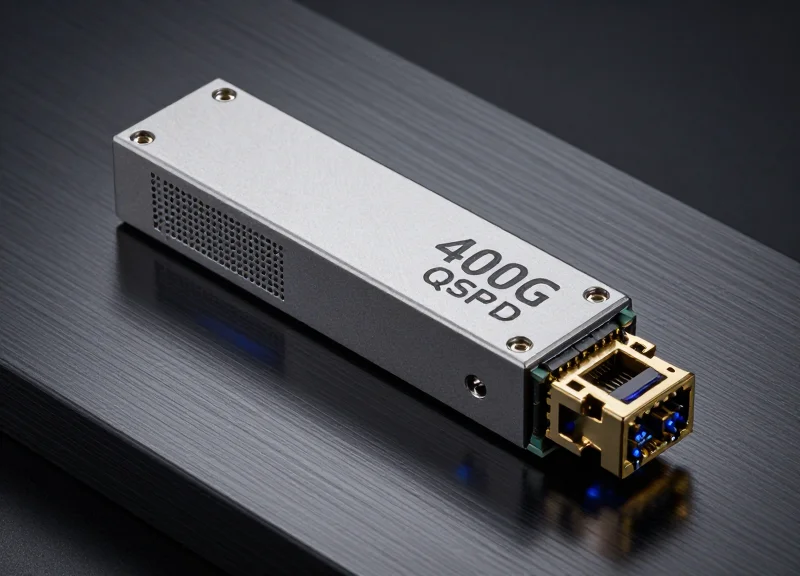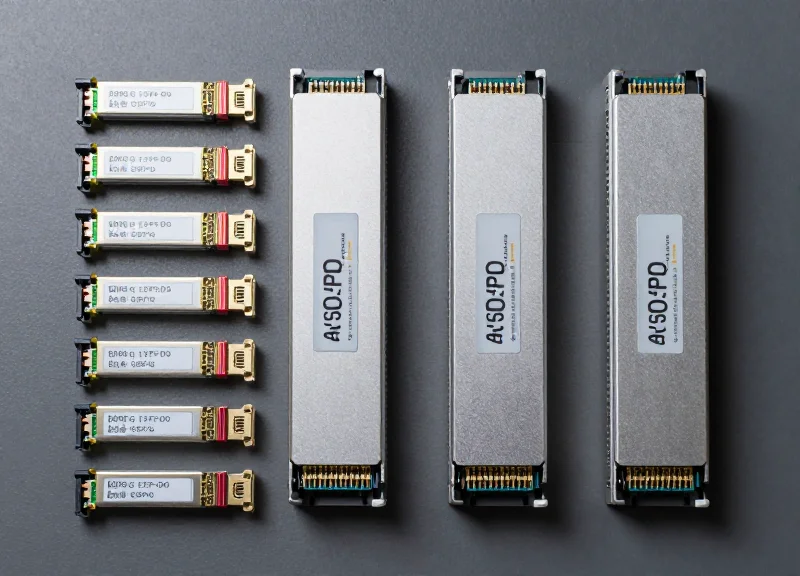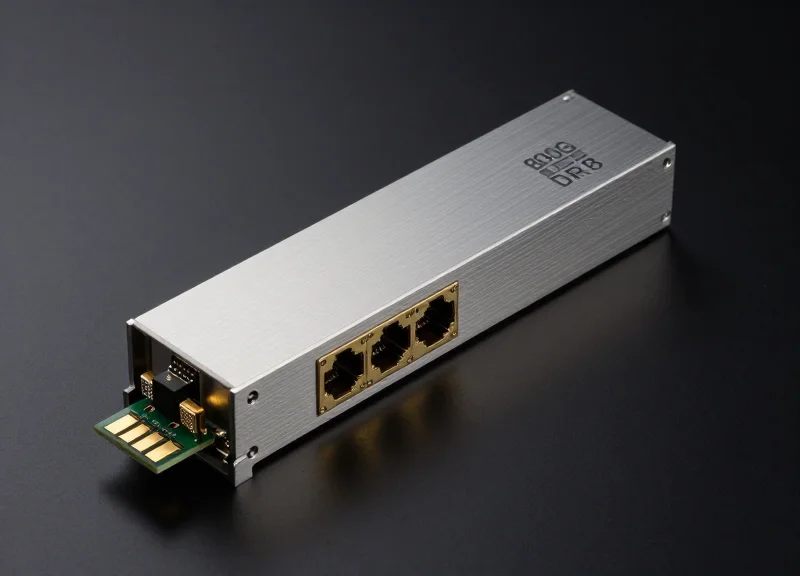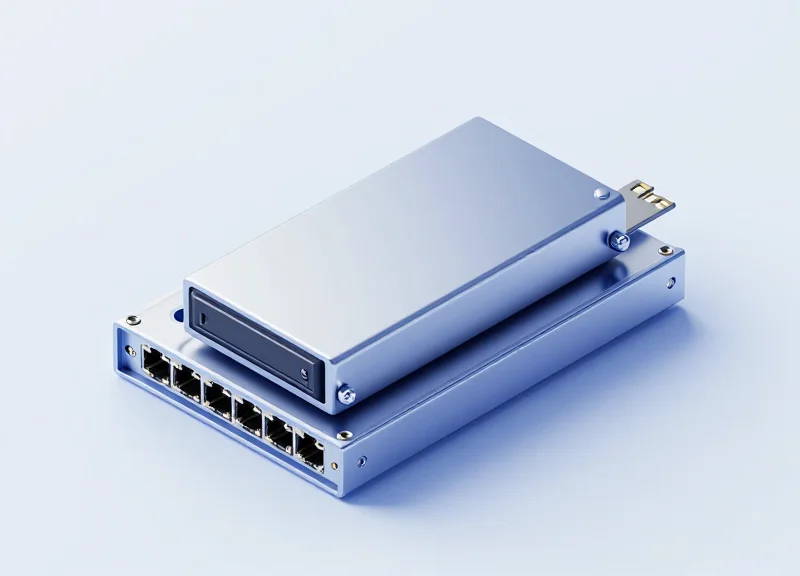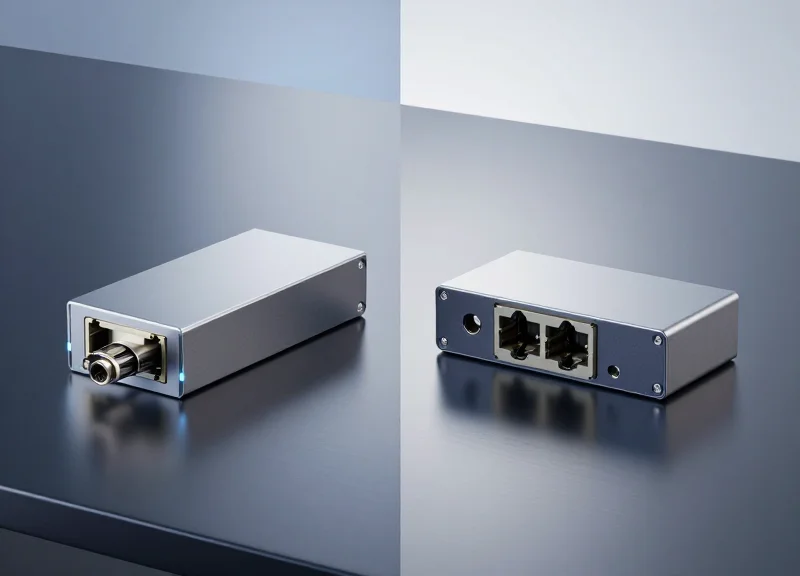
As data centers and enterprise networks face increasing pressure to scale bandwidth while minimizing physical footprint, the choice of optical transceivers has become a critical strategic decision. Traditionally, duplex fiber has been the industry standard, but Bi-Directional (BIDI) technology offers a compelling alternative by allowing data transmission over a single fiber strand. This article provides an expert analysis of how BIDI stacks up against traditional alternatives in terms of performance, energy efficiency, and long-term financial impact.
The Mechanics of Optics: BIDI vs. Traditional Duplex Transceivers
The Mechanics of Optics: BIDI vs. Traditional Duplex Transceivers
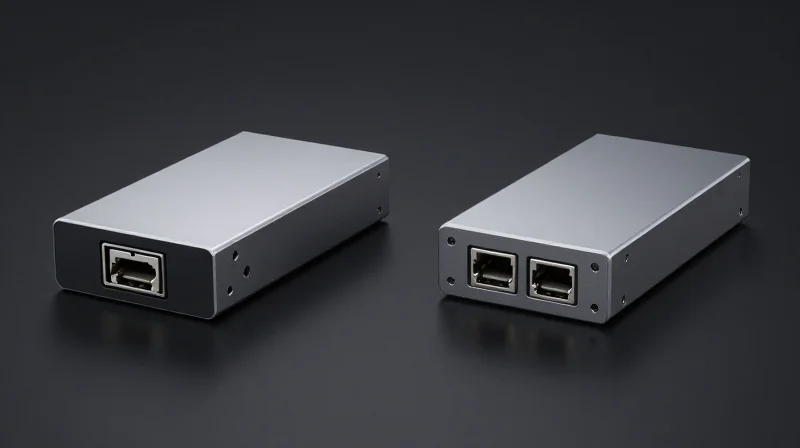
The fundamental difference between BIDI and traditional duplex transceivers lies in how they manage the physical layer of data transmission: while duplex optics require two distinct fibers to create a complete circuit, BIDI transceivers leverage Wavelength Division Multiplexing (WDM) to transmit and receive data over a single optical strand. This technological leap allows network engineers to double the capacity of their existing fiber plant without the capital expenditure associated with laying new cable, effectively bypassing the physical limitations of legacy 'one-way-per-strand' architectures.
Traditional Duplex: The Dual-Lane Approach
Standard duplex transceivers, such as the common SFP+ or QSFP variants, utilize two separate ports connected to two strands of fiber. One strand is dedicated to transmitting (TX) data, while the other is dedicated to receiving (RX). In this configuration, both paths typically use the same wavelength (e.g., 1310nm for 10G LR). This is a simple, effective method, but it is physically inefficient as it consumes twice the fiber resources for every single link established.
BIDI Transceivers: The Single-Strand Innovation
BIDI (Bidirectional) optics revolutionize this process by integrating a specialized component known as a BIDI diplexer or WDM coupler. This allows the transceiver to combine two different wavelengths onto one fiber. For instance, a BIDI module might transmit at 1270nm and receive at 1330nm. By using two different 'colors' of light for the upstream and downstream traffic, the signals do not interfere with each other despite sharing the same physical glass medium.
| Feature | Traditional Duplex | BIDI Transceiver |
|---|---|---|
| Fiber Strands Required | 2 Strands | 1 Strand |
| Transmission Method | Physical separation (TX/RX strands) | Wavelength separation (WDM) |
| Wavelength Usage | Identical wavelengths for TX and RX | Different wavelengths for TX and RX |
| Hardware Pairing | Identical modules on both ends | Must use complementary pairs (e.g., A and B) |
| Cost of Fiber Plant | Higher (Requires more cabling) | Lower (Maximizes existing fiber) |
Critical Implementation Considerations
- Must BIDI transceivers be used in specific pairs?
Yes. Because BIDI optics transmit and receive on different wavelengths, you must use a 'matching' pair. If Side A transmits at 1270nm and receives at 1330nm, Side B must transmit at 1330nm and receive at 1270nm. - Is BIDI compatible with standard Patch Panels?
BIDI optics use standard LC or SC connectors, but they only require one port. This often requires a change in patch cable strategy (using simplex cables instead of duplex cables). - Does BIDI affect signal distance or quality?
Generally, no. BIDI optics are available for various distances (from 10km up to 80km+). However, because they rely on WDM filters, there is a very slight additional insertion loss compared to high-end duplex optics, though this is rarely a factor in standard enterprise deployments.
Capacity Multiplication: Solving the Fiber Scarcity Problem
Capacity Multiplication: Solving the Fiber Scarcity Problem
BIDI (Bidirectional) transceivers act as a capacity multiplier by allowing two independent data streams to travel over a single fiber strand where traditional duplex optics would require two. This shift effectively doubles the return on investment (ROI) of installed fiber plants and addresses the physical limitations of saturated conduit systems without the prohibitive costs of new construction.
Overcoming Physical Constraints and High Deployment Costs
In metropolitan environments and data centers, conduits often reach maximum physical capacity, leaving no room for additional cable pulls. The process of laying new fiber—involving municipal permitting, trenching, and high labor costs—can run into thousands of dollars per kilometer. BIDI optics bypass these logistical hurdles by reclaiming the second strand of an existing duplex pair, creating two independent channels where only one existed before.
| Metric | Traditional Fiber Expansion | BIDI Upgrade Approach |
|---|---|---|
| Infrastructure Cost | High (Trenching, Permits, Labor) | Low (Transceiver Hardware Only) |
| Deployment Time | Weeks to Months | Minutes (Plug-and-Play) |
| Space Utilization | Consumes Physical Conduit Space | Optimizes Existing Strands |
| Scalability | Limited by Physical Duct Size | Doubles Density Instantly |
The Economic Logic of Single-Fiber Networking
By leveraging Wavelength Division Multiplexing (WDM), BIDI transceivers provide what is effectively a 'virtual' fiber expansion. This is particularly critical in leased fiber scenarios where dark fiber providers charge per strand; utilizing BIDI can halve monthly recurring costs (MRC) while maintaining the same bandwidth profile. For enterprise campus backbones, it allows for a 100% increase in port density without any modification to the existing passive patch panels or cable management systems.
- How does BIDI solve the 'exhausted fiber' problem?
By using two different wavelengths for transmit and receive on the same strand, BIDI frees up the second strand of a standard duplex pair for an entirely separate connection. - Is BIDI preferred over CWDM/DWDM for capacity?
BIDI is the most cost-effective solution for a 2x capacity boost. If the network requires more than 2x multiplication, CWDM or DWDM multiplexing is the more appropriate, albeit complex, alternative. - Does single-fiber use increase signal interference?
No. Because the transmit and receive signals operate on distinct wavelengths (e.g., 1310nm and 1550nm), they do not interfere with each other, maintaining signal integrity identical to duplex fibers.
Latency Benchmarks: Is Single Fiber Faster?
Technically, BIDI transceivers do not offer a raw speed advantage in terms of light propagation through the glass, but they introduce unique architectural variables—such as internal filtering delays and wavelength-specific dispersion—that distinguish them from traditional duplex optics in latency-sensitive environments like High-Frequency Trading (HFT).
Breaking Down Latency: Propagation vs. Processing
In any fiber optic system, latency is the sum of propagation delay (the time it takes for light to travel through the fiber) and processing delay (the time spent inside the transceiver and switch). Because BIDI transceivers use the same G.652 or G.657 fiber as duplex systems, the propagation delay remains constant at approximately 4.9 to 5 microseconds per kilometer. However, the internal mechanisms used to facilitate single-fiber communication introduce microscopic differences in signal processing.
The Impact of WDM Filters and Diplexers
Standard duplex transceivers utilize a direct optical path for both the transmitter and receiver. In contrast, BIDI optics utilize integrated Wavelength Division Multiplexing (WDM) filters to separate the transmit (TX) and receive (RX) wavelengths on the same strand. The signal must pass through these passive filters and a diplexer. While these components are incredibly efficient, they technically add a fractional amount of latency—measured in picoseconds—due to the additional optical interfaces the light must traverse before entering the fiber core.
| Metric | BIDI Transceiver | Duplex Transceiver | Performance Impact |
|---|---|---|---|
| Propagation Speed | ~200,000 km/s | ~200,000 km/s | Identical |
| Internal Processing | WDM Filter/Diplexer | Direct Optical Path | Negligible (Picoseconds) |
| Dispersion Sensitivity | Wavelength Dependent | Uniform (Usually) | Low |
| HFT Suitability | High | Ultra-High | Context Dependent |
Real-Time Suitability: Is BIDI Viable for HFT?
For the vast majority of data center and enterprise applications, the latency difference between BIDI and duplex is statistically insignificant. In High-Frequency Trading (HFT), however, the use of two different wavelengths (e.g., 1270nm and 1330nm) can introduce a minor asymmetry in latency because light travels at slightly different speeds through glass depending on the wavelength (chromatic dispersion). While this asymmetry is minute, ultra-low latency architects must account for it when synchronizing clocks across long-distance single-fiber links.
- Does BIDI reduce network ping?
No, BIDI does not reduce ping. Ping is primarily determined by the physical distance of the fiber and the switching logic. BIDI's primary benefit is capacity, not a reduction in round-trip time. - Is there a latency difference between the TX and RX side of a BIDI link?
Slightly. Because BIDI uses two different wavelengths, and index of refraction varies with wavelength, one direction may be technically faster by a matter of nanoseconds over long distances. - Are BIDI transceivers recommended for real-time 5G fronthaul?
Yes. BIDI is frequently used in 5G C-RAN architectures because the latency is well within the strict requirements of 5G URLLC (Ultra-Reliable Low Latency Communications) standards.
Power Consumption Analysis: Sustainability and Thermal Management
BIDI transceivers offer a power consumption profile that is nearly identical to traditional duplex optics, typically ranging from 1.0W to 1.5W for 10G modules, yet they provide superior sustainability benefits by reducing the physical infrastructure required per link. While the electrical power draw at the port remains consistent, the transition to single-fiber technology significantly lowers the total thermal load on the facility by optimizing airflow and reducing the material footprint of the cabling plant.
Power Consumption Benchmarks: BIDI vs. Duplex
The internal architecture of a BIDI transceiver—using a single laser and a photodiode combined with a WDM coupler—does not inherently draw more current than the two-laser or two-fiber configurations of standard optics. In most high-density deployments, the power delta between a BIDI SFP+ and a standard SFP+ is negligible, often falling within a margin of ±0.1 Watts. This allows network architects to swap duplex modules for BIDI equivalents without upgrading power distribution units (PDUs) or calculating new breaker capacities.
| Module Specification | Standard Duplex (Watts) | BIDI Single-Fiber (Watts) | Thermal Impact |
|---|---|---|---|
| 10G SFP+ (10km) | 1.0W - 1.2W | 1.0W - 1.3W | Neutral |
| 25G SFP28 (10km) | 1.5W - 1.8W | 1.5W - 2.0W | Minimal |
| 10G SFP+ (40km ER) | 1.5W - 1.7W | 1.6W - 1.8W | Neutral |
Thermal Management and Airflow Optimization
The primary thermal advantage of BIDI technology is indirect: cable density. In a typical 48-port Top-of-Rack (ToR) switch, using duplex fiber results in 96 individual fiber strands and connectors. Switching to BIDI reduces this to 48 strands. This 50% reduction in cable bulk significantly decreases airflow impedance at the front of the switch chassis. Improved airflow allows the switch's internal fans to operate more efficiently, reducing the energy spent on active cooling and preventing localized 'hot spots' that can lead to transceiver desensing or hardware failure.
Contribution to Data Center PUE
Power Usage Effectiveness (PUE) is a key metric for modern green data centers. By enabling higher port density with less physical obstruction, BIDI transceivers contribute to a lower PUE. The reduction in plastic and glass consumption for cabling, combined with the lower energy requirement for rack-level cooling, aligns BIDI deployment with corporate ESG (Environmental, Social, and Governance) goals while maintaining the high-performance requirements of 10G and 25G networks.
Sustainability FAQ
- Do BIDI transceivers run hotter than standard modules?
No. BIDI modules operate within the same standard temperature ranges (0°C to 70°C for commercial grade) as duplex modules. The integrated WDM coupler does not generate significant additional heat. - Can BIDI optics reduce my electricity bill?
While the direct electrical savings per module are small, the indirect savings from reduced cooling requirements in high-density environments can lead to measurable reductions in operational expenditure (OPEX). - Are there specialized low-power BIDI modules?
Yes, some vendors offer 'Green' or 'Low-Power' BIDI variants specifically designed for edge computing where power budgets are extremely tight and passive cooling is used.
TCO Breakdown: Evaluating CAPEX vs. OPEX
TCO Breakdown: Evaluating CAPEX vs. OPEX
The Total Cost of Ownership (TCO) for BIDI transceivers presents a paradox: while individual modules often command a price premium over standard duplex optics, the net financial impact is overwhelmingly positive in scenarios where fiber infrastructure is a constrained resource. By utilizing Wavelength Division Multiplexing (WDM) to transmit and receive on a single strand, BIDI optics effectively halve the physical cabling requirements, transforming the economic model of network expansion from a hardware-centric cost to an infrastructure-savings benefit.
CAPEX Comparison: Hardware vs. Infrastructure
| Cost Component | Duplex Architecture | BIDI (Single Fiber) Architecture |
|---|---|---|
| Transceiver Unit Price | Lower (Standardized volume) | Moderate to High (Specialized optics) |
| Fiber Cabling Costs | 100% Base Cost (2 strands/link) | 50% Cost (1 strand/link) |
| Patch Panel Density | Standard port consumption | Doubled density per fiber tray |
| Initial Installation Labor | High (Terminating/testing 2 strands) | Lower (Terminating/testing 1 strand) |
In greenfield deployments, the CAPEX advantage of BIDI is realized through the procurement of smaller-diameter cable bundles and fewer patch panels. In brownfield environments, the value proposition is even more stark: BIDI optics allow for a 100% capacity increase without the exorbitant costs of trenching new outdoor fiber or pulling additional indoor risers through congested conduits.
OPEX and Lifecycle Management
- Does BIDI reduce ongoing maintenance costs?
Yes. With 50% fewer fiber connections to clean, inspect, and troubleshoot, technicians spend significantly less time on physical layer maintenance. This reduces the hourly labor expenditure for network upkeep. - How does single-fiber architecture impact scalability costs?
BIDI enables 'pay-as-you-grow' scaling. Instead of paying for massive dark fiber installs upfront, organizations can maximize existing single strands, deferring the multi-thousand dollar costs of new fiber construction for years. - What about the cost of spares and inventory?
One minor OPEX disadvantage is that BIDI requires matching pairs (e.g., 1270nm/1330nm). This can slightly increase inventory complexity and the cost of maintaining backup stock compared to uniform duplex optics.
When calculating ROI, the primary differentiator is the 'Cost per Link.' While a duplex 10G or 25G link might look cheaper on a bill of materials for the optics alone, once the price of the fiber strand, the labor to pull it, and the rack space to house it are factored in, BIDI solutions typically achieve break-even within the first year of deployment, particularly in data center interconnects (DCI) and campus backbones.
Deployment Scenarios: Enterprise, Service Provider, and Edge
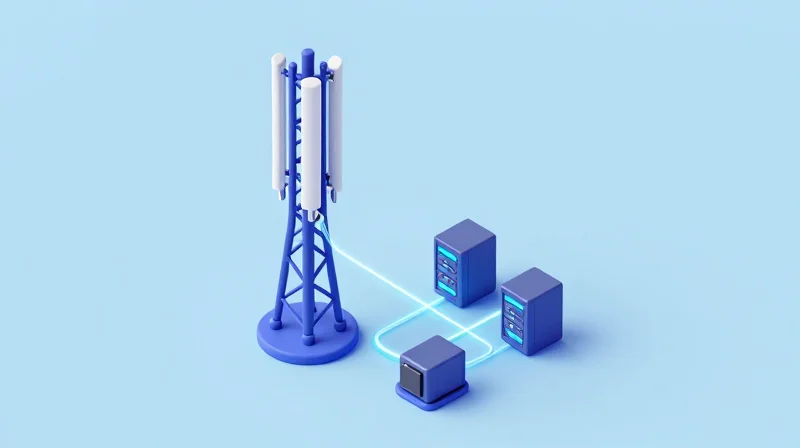
BIDI transceivers are most effective in scenarios where physical fiber resources are either exhausted or prohibitively expensive to expand, allowing network architects to double throughput over existing single-strand infrastructure without the need for additional trenching or cabling. By utilizing Wavelength Division Multiplexing (WDM) to transmit and receive on different wavelengths over a single fiber, these optics solve the density challenges inherent in modern 5G deployments and aging enterprise facilities.
5G Front-Haul and X-Haul Architectures
In 5G New Radio (NR) deployments, the density of Remote Radio Units (RRUs) requires massive fiber connectivity back to the Building Baseband Units (BBUs). Utilizing BIDI transceivers—specifically 25G SFP28 BIDI—allows service providers to support more sectors per cell site using half the physical fiber of traditional dual-strand SFP optics. This is critical for 5G front-haul, where fiber availability is often the primary bottleneck for scaling network capacity in urban areas.
Enterprise Campus and Vertical Riser Expansion
Within enterprise environments, especially in older multi-story buildings, vertical risers are often saturated with legacy fiber runs. Replacing existing 1G or 10G dual-fiber links with 10G or 25G BIDI optics allows IT departments to repurpose a single existing strand for a full-duplex high-speed link, effectively freeing up the second strand for redundancy or a separate network segment. This avoids the disruptive and costly process of pulling new fiber through congested conduits.
| Deployment Scenario | Key Challenge | BIDI Strategic Value |
|---|---|---|
| 5G Front-haul | High fiber density requirements | Halves fiber strands required per RRU |
| Metro Ethernet | High cost of dark fiber leasing | Reduces OPEX by requiring only one leased strand |
| Campus Backbone | Congested physical conduits | Enables 2x capacity on existing fiber plant |
| Edge Data Centers | Limited space and port density | Optimizes patch panel and tray management |
Service Provider Access and Metro Networks
For Service Providers (SPs) offering Fiber-to-the-Business (FTTB) or Metro Ethernet services, the ability to deliver point-to-point services over a single fiber strand directly impacts the bottom line. Using BIDI transceivers reduces the inventory of leased dark fiber required to connect a customer site to a Point of Presence (PoP). In these long-reach scenarios (up to 40km or 80km), the cost savings of using one strand versus two significantly outweighs the slightly higher cost of BIDI hardware.
Common Deployment Questions
- Can BIDI transceivers be used with existing patch panels?
Yes, but it requires a mapping adjustment. Since BIDI uses a single LC or SC connector, you will only use one port on the patch panel for a full link, requiring a clear labeling strategy to avoid confusion with dual-fiber ports. - Is there a distance limitation compared to dual-fiber?
Modern BIDI optics match the reach of standard optics, with versions available for 10km (SR), 20km (LR), and up to 80km (ER/ZR) applications. - Are BIDI optics compatible with all switches?
BIDI transceivers are generally compatible with any switch that supports standard SFP/SFP+/SFP28 form factors, provided the EEPROM is coded correctly for the host equipment.
Compatibility and Reliability Considerations
Compatibility and Reliability Considerations
While BIDI transceivers offer significant fiber density advantages, their reliability and successful deployment hinge on managing the directional nature of light transmission and ensuring that active components are perfectly synchronized across the single strand. Unlike dual-fiber systems where optical paths are physically separated, BIDI systems rely on Wavelength Division Multiplexing (WDM) to isolate signals on the same glass, making wavelength accuracy and port compatibility paramount.
The Mandatory Pairing Requirement
The most critical operational difference with BIDI technology is the requirement for matched pairs. Because BIDI optics transmit and receive at different wavelengths on the same port, a link cannot be established using two identical transceivers. An 'Upstream' (U) module must be paired with a 'Downstream' (D) module to create a functional circuit.
| Specification | Upstream (U) Transceiver | Downstream (D) Transceiver |
|---|---|---|
| Transmit Wavelength (TX) | 1270nm | 1330nm |
| Receive Wavelength (RX) | 1330nm | 1270nm |
| Standard Application | 10G/25G SFP+ BIDI | 10G/25G SFP+ BIDI |
Legacy Infrastructure and Hardware Interoperability
Integrating BIDI into existing environments requires verifying that host switches and routers support the specific digital diagnostic monitoring (DDM) and EEPROM signatures of BIDI modules. Some legacy equipment may fail to recognize a single-fiber module or misinterpret the optical power levels due to the internal WDM filters. Furthermore, physical layer compatibility must be addressed, as existing LC-duplex patch panels may require 'Y-cables' or simplex adapters to facilitate the transition from dual-fiber cabling to single-fiber transceiver ports.
- Can I use two 'Upstream' modules to create a link?
No. Both modules would transmit at the same wavelength and expect to receive at a different one, resulting in a 'Link Down' status and potential optical interference. - Does BIDI affect the optical link budget?
Modern BIDI transceivers are designed to match the link budgets of their dual-fiber counterparts; however, the internal WDM diplexers introduce a nominal insertion loss (typically 0.5dB to 1.0dB) that should be accounted for in ultra-long-distance spans. - Are BIDI transceivers more prone to hardware failure?
No. Mean Time Between Failures (MTBF) data indicates that BIDI modules are as reliable as standard optics, provided they are operated within their rated temperature and power ranges.
The Future of Single-Fiber Tech: Moving Toward 100G and Beyond
The Evolution Toward High-Speed Single-Fiber Connectivity
The transition from 10G and 25G BIDI to 100G and beyond is driven by the urgent need to maximize existing fiber plants in environments where installing new cables is cost-prohibitive. As network operators face the densification of 5G small cells and the expansion of edge computing, single-fiber technology is evolving from a niche solution into a primary architectural strategy for high-bandwidth, long-distance transmission. By utilizing sophisticated wavelength division, operators can double capacity without digging new trenches.
50G and 100G BIDI: Enabling the 5G Frontier
Current innovations in 50G and 100G BIDI transceivers leverage PAM4 (Pulse Amplitude Modulation 4-level) signaling to double the data rate without requiring higher-frequency optical components. By utilizing distinct wavelengths such as 1271nm and 1331nm, these modules provide a seamless upgrade path for 5G front-haul and mid-haul networks, where fiber availability is often limited to a single strand per node. This transition is essential for supporting the low-latency and high-throughput requirements of next-generation mobile services.
| Speed | Technology | Common Wavelengths | Primary Use Case |
|---|---|---|---|
| 10G / 25G | NRZ | 1270 / 1330nm | Campus / FTTH |
| 50G / 100G | PAM4 | 1271 / 1331nm | 5G Front-haul / Aggregation |
| 400G / 800G | Coherent / PAM4 | Tunable C-Band / O-Band | Hyperscale / Metro Core |
Scaling to 400G and the Role of Coherent Optics
Moving toward 400G BIDI requires a shift from direct detection to coherent optical technology. Coherent BIDI leverages advanced digital signal processing (DSP) to manage polarization and phase, allowing 400G streams to travel over 80km on a single fiber. This eliminates the need for expensive dispersion compensation and positions BIDI as a critical component in metro-ethernet and data center interconnects (DCI), where physical space and fiber count are at a premium.
- Will 400G BIDI require new fiber infrastructure?
No, most high-speed BIDI solutions are designed to run on standard G.652 single-mode fiber (SMF), protecting existing infrastructure investments. - How does PAM4 affect BIDI performance in 100G links?
PAM4 increases spectral efficiency but requires Forward Error Correction (FEC) to manage the signal-to-noise ratio, which is now standard in 100G optics. - Is interoperability guaranteed for future BIDI standards?
Interoperability depends on industry adherence to MSA (Multi-Source Agreement) standards, which ensure that different vendors' upstream and downstream pairs function together.
In conclusion, while traditional duplex transceivers remain a staple, BIDI technology offers a superior ROI for organizations looking to maximize fiber efficiency without compromising performance. By carefully weighing the TCO and power benefits, IT leaders can future-proof their networks. Ready to optimize your infrastructure? Contact our engineering team today for a custom fiber audit and transceiver compatibility roadmap.