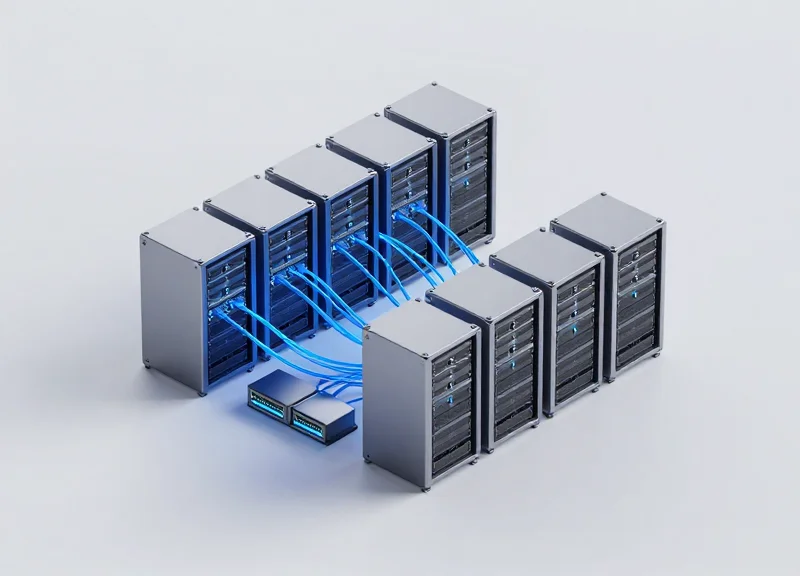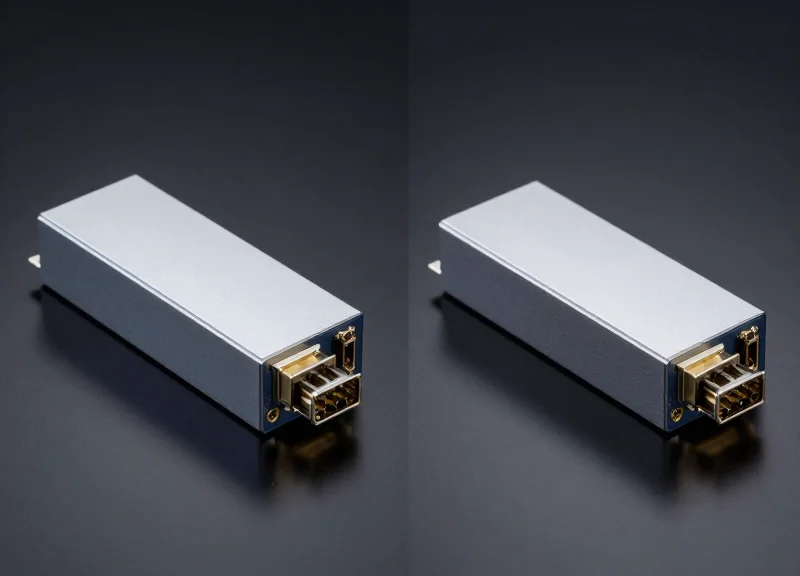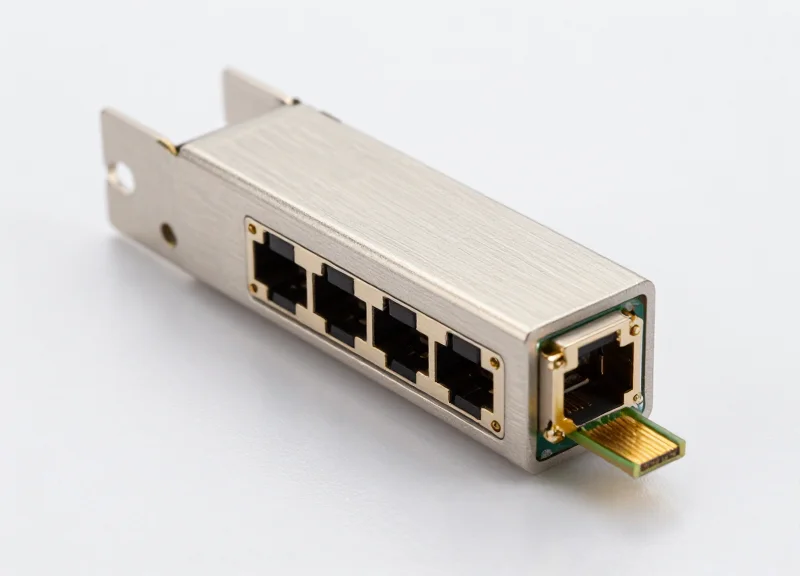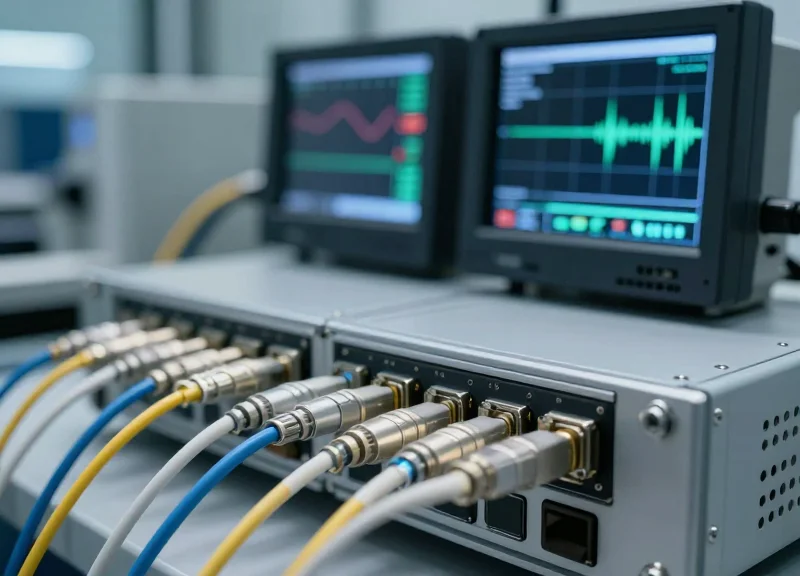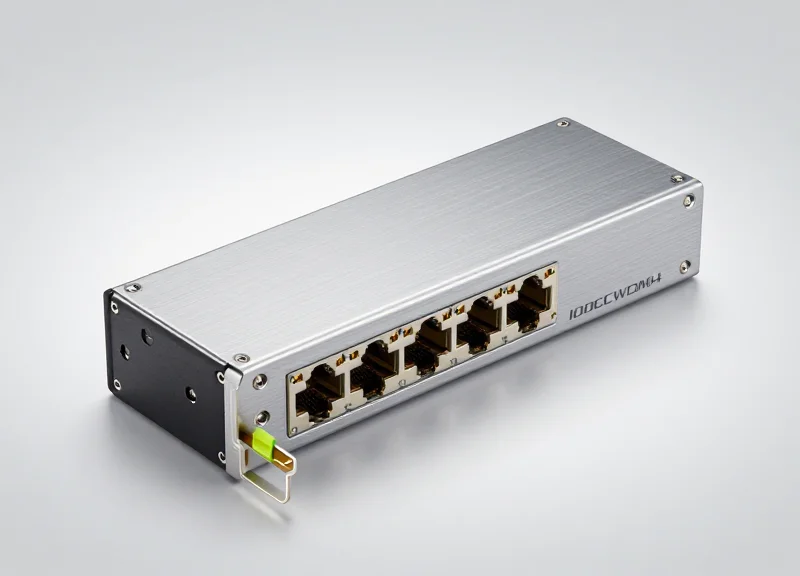
In an era where data demands are skyrocketing, network architects face the ultimate challenge: scaling bandwidth without compromising reliability or breaking the budget. Ubytelink's 100G CWDM4 Economy modules offer the perfect synthesis of Silicon Valley engineering and cost-effective manufacturing, providing a robust solution for global infrastructure needs. This article explores how these modules maintain industry-leading standards while optimizing total cost of ownership.
Understanding the 100G CWDM4 Standard: Technical Fundamentals
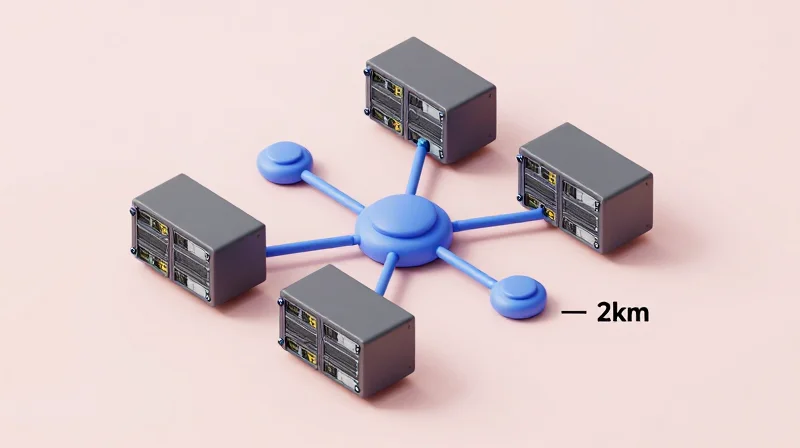
The 100G CWDM4 standard represents a pivotal balance between distance, density, and cost, specifically designed to bridge the gap between short-reach VCSEL-based optics and expensive long-haul single-mode solutions. By utilizing Coarse Wavelength Division Multiplexing (CWDM), it enables the transmission of 100Gbps traffic over two kilometers of single-mode fiber (SMF) using four distinct wavelengths. This approach allows network operators to maximize existing fiber infrastructure without the thermal and financial overhead associated with the 10km LR4 standard, making it the preferred choice for modern leaf-spine architectures in hyper-scale environments.
The Wavelength Architecture of CWDM4
The CWDM4 MSA (Multi-Source Agreement) defines a grid of four optical channels, each operating at 25.78125 Gbps. Unlike PSM4, which requires eight fibers (four for transmit and four for receive), CWDM4 multiplexes these four signals onto a single pair of single-mode fibers. This is achieved through an optical mux/demux, reducing cabling complexity and physical footprint.
| Channel | Wavelength (nm) | Data Rate per Lane |
|---|---|---|
| L0 | 1271 nm | 25 Gbps |
| L1 | 1291 nm | 25 Gbps |
| L2 | 1311 nm | 25 Gbps |
| L3 | 1331 nm | 25 Gbps |
CWDM4 vs. PSM4 and LR4: The 2km Sweet Spot
Choosing the right 100G transceiver often depends on the distance requirements and fiber availability. CWDM4 occupies the mid-range 'sweet spot' for intra-data center connectivity. While PSM4 is often cheaper for distances under 500 meters, it consumes significantly more fiber. Conversely, while LR4 supports 10km, its use of cooled EML lasers makes it prohibitively expensive for 2km links where the CWDM4's uncooled DML lasers suffice.
| Specification | 100G PSM4 | 100G CWDM4 | 100G LR4 |
|---|---|---|---|
| Reach | 500m | 2km | 10km |
| Fiber Type | SMF (8 strands) | SMF (2 strands) | SMF (2 strands) |
| Laser Type | Uncooled DML | Uncooled DML | Cooled EML |
| Relative Cost | Low | Moderate | High |
The Critical Role of the MSA
The 100G CWDM4 standard is governed by a Multi-Source Agreement rather than an IEEE standard like LR4. This industry-led specification was developed to accelerate the adoption of cost-optimized 100G modules. Ubytelink's adherence to these MSA guidelines ensures that our CWDM4 modules are fully interoperable with third-party switches and routers, providing a reliable, vendor-neutral solution for global network expansion.
- Does CWDM4 require Forward Error Correction (FEC)?
Yes, the CWDM4 standard requires the use of RS-FEC (Reed-Solomon Forward Error Correction) on the host system to ensure a bit error rate (BER) better than 5E-5 for stable 2km transmission. - Can CWDM4 modules be used for shorter distances?
Absolutely. While optimized for 2km, CWDM4 modules function perfectly for shorter spans, though they may require an attenuator if the link is exceptionally short to prevent receiver saturation. - What is the power consumption of a typical CWDM4 module?
Most high-quality CWDM4 modules, including Ubytelink economy solutions, operate with a power consumption of less than 3.5W, aligning with the QSFP28 thermal requirements.
The Economy Advantage: Balancing Cost and Performance
The Philosophy of Value: Efficiency Without Compromise
The core of the Ubytelink Economy philosophy lies in the rejection of the false compromise between affordability and reliability. By optimizing every stage of the product lifecycle—from raw material acquisition to final automated testing—Ubytelink achieves a cost structure that allows for premium CWDM4 performance without the 'brand tax' typically associated with traditional networking vendors. This approach ensures that global networks can scale their bandwidth capacity 4x over 25G alternatives while maintaining a sustainable budget.
Strategic Sourcing and Manufacturing Excellence
Ubytelink maintains a robust supply chain by sourcing Tier-1 optical components directly from silicon photonics leaders. This vertical alignment eliminates middle-man markups and ensures that the core chipsets used in the Economy line are identical to those found in high-end enterprise modules. Furthermore, efficiency is gained through the use of advanced automated optical assembly platforms that reduce manual labor errors and increase throughput.
| Feature | Standard Industry CWDM4 | Ubytelink Economy Advantage |
|---|---|---|
| Optical Reach | 2km over SMF | 2km over SMF (Equal Performance) |
| Cost Structure | High R&D and Brand Overhead | Lean Manufacturing Efficiency |
| Testing Protocol | Sample-based Batch Testing | 100% Full-Traffic Verification |
| Component Sourcing | Multi-tier Distributors | Direct Tier-1 Silicon Sourcing |
Quality Assurance in the Economy Line
Every module in the Economy series undergoes rigorous thermal cycling and bit-error rate (BER) testing to ensure it meets or exceeds MSA standards. By focusing on the essential technical requirements of the 2km reach specification, Ubytelink removes unnecessary features that bloat costs for standard data center applications, focusing instead on the stability and interoperability required for high-density environments.
Frequently Asked Questions
- Does 'Economy' imply a reduction in transceiver reliability?
No. The 'Economy' designation refers to the efficiency of the manufacturing and distribution model. The modules utilize high-grade lasers and internal components equivalent to standard-tier optics. - How does Ubytelink ensure host device compatibility?
Each 100G CWDM4 module is programmed and tested in-house on targeted switch and router platforms to ensure 100% interoperability and seamless recognition by the host NOS. - Is the performance identical to more expensive alternatives?
Yes, Ubytelink Economy solutions adhere strictly to the CWDM4 MSA, providing the same 100Gbps throughput and latency characteristics required for modern leaf-spine architectures.
Architectural Deep-Dive: QSFP28 Form Factor and Optical Design
Architectural Deep-Dive: QSFP28 Form Factor and Optical Design
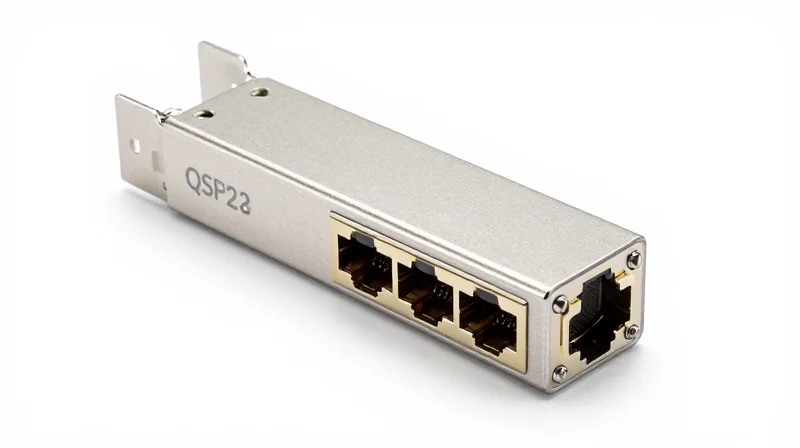
The architectural excellence of Ubytelink 100G CWDM4 Economy solutions lies in the seamless integration of high-speed electronics and precision optics within the compact QSFP28 form factor. By utilizing a 4x25Gbps electrical interface (CAUI-4), these modules eliminate the need for complex gearbox chips, reducing both power consumption and thermal output. This design ensures that despite the economy classification, the internal signal path maintains the strict jitter and bit-error rate (BER) tolerances required for 2km reach over single-mode fiber.
Internal Component Synergy and Lane Management
At the heart of the Ubytelink CWDM4 design is an optical engine that combines four uncooled Distributed Feedback (DFB) lasers. These lasers operate at the 1271, 1291, 1311, and 1331nm center wavelengths. The integration of a high-performance TOSA (Transmitter Optical Sub-Assembly) and ROSA (Receiver Optical Sub-Assembly) allows the device to manage high-speed data streams with minimal crosstalk. The economy advantage is realized through automated high-precision alignment processes during manufacturing, which ensures consistent coupling efficiency without the overhead of manual tuning.
| Component | Specification | Role in Performance |
|---|---|---|
| Form Factor | QSFP28 | High-density port utilization and hot-swappability |
| Electrical Interface | 4x25G (CAUI-4) | Direct host-to-module communication reducing latency |
| Optical Wavelengths | 1271-1331nm (CWDM) | Four-channel multiplexing for 100G throughput |
| Laser Type | Uncooled DFB | Cost-effective, reliable light source for 2km reach |
Signal Integrity and Thermal Engineering
To maintain premium quality, Ubytelink employs advanced thermal management within the QSFP28 housing. Efficient heat dissipation is critical for maintaining wavelength stability across the four CWDM channels. By optimizing the internal layout of the Printed Circuit Board (PCB) and using high-thermal-conductivity materials, these modules prevent frequency drift, ensuring that signal integrity remains robust even in high-density switch environments where airflow may be restricted.
- How does Ubytelink ensure compatibility across different vendor platforms?
Ubytelink transceivers are programmed with optimized EEPROM data that complies with the QSFP28 MSA, ensuring seamless recognition and DOM (Digital Optical Monitoring) functionality across major OEM switches. - What is the power consumption of these economy modules?
Despite the high performance, these modules typically consume less than 3.5W, meeting the Class 4 power requirements of the QSFP28 standard and reducing overall OpEx. - Does the economy design affect the 2km reach capability?
No, the economy designation refers to manufacturing efficiencies; the optical budget and sensitivity levels strictly adhere to the CWDM4 MSA, guaranteeing a 2km transmission distance.
Mission-Critical Reliability: Ubytelink’s Advanced Testing Protocols
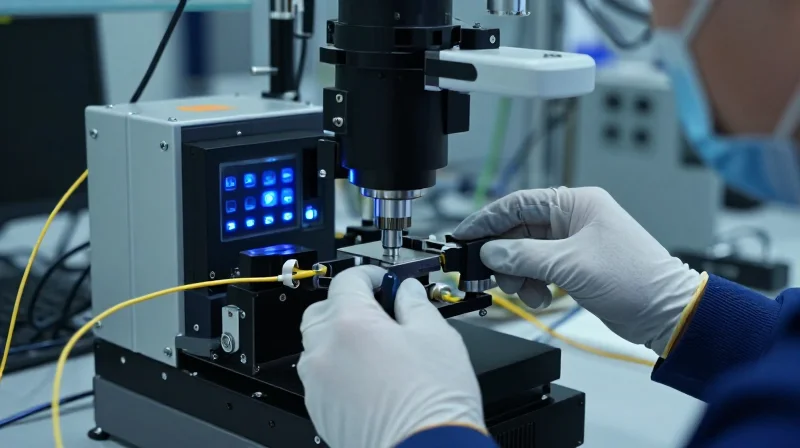
Mission-critical reliability is the cornerstone of Ubytelink’s manufacturing philosophy, ensuring that the 'Economy' designation never translates to a compromise in network uptime. By integrating advanced diagnostic protocols at both the component and assembly levels, Ubytelink identifies potential failure points before they ever reach the data center floor. This commitment to quality is validated by a Bit Error Rate (BER) that consistently outperforms IEEE 802.3bm standards, providing a robust foundation for error-free transmission over the 2km distances required by modern CWDM4 specifications.
The Four Pillars of Ubytelink Quality Assurance
| Testing Phase | Key Metric | Network Impact |
|---|---|---|
| Optical Eye Diagram | Mask Margin > 15% | Minimized jitter and superior signal clarity |
| Bit Error Rate (BER) | < 5E-15 (Pre-FEC) | Reduced latency and retransmission overhead |
| Environmental Stress | -40°C to +85°C Storage | Stable performance in varied thermal zones |
| Switch Compatibility | Multi-vendor Interop | Plug-and-play reliability with major OEM hardware |
Optical Eye Diagram: Visualizing Signal Integrity
A clear optical eye diagram is the gold standard for high-speed signal quality. Ubytelink utilizes high-bandwidth sampling oscilloscopes to analyze the four 25Gbps lanes of the CWDM4 module. By maintaining a significant 'mask margin'—the clear space between the signal transitions and the prohibited boundaries—Ubytelink ensures that even in environments with high electromagnetic interference or minor connector degradation, the transceiver maintains a clear, readable pulse for the receiving equipment. This precision prevents CRC errors that can plague lower-quality transceivers.
Environmental Stress Screening (ESS) and Longevity
To simulate years of operation in just a few days, every 100G CWDM4 module undergoes rigorous Environmental Stress Screening (ESS). This process includes rapid thermal cycling and power-on/off testing under high-temperature loads. These stress tests are designed to force 'infant mortality' failures in weak components during the factory phase rather than in a production environment. For data center operators, this translates to a lower Total Cost of Ownership (TCO) through reduced field replacements and maintenance windows.
Quality and Reliability FAQ
- Does Ubytelink test every individual module?
Yes, unlike some budget providers that use batch sampling, Ubytelink performs 100% full-functional testing on every 100G CWDM4 module to ensure zero-defect delivery. - How does BER testing improve network efficiency?
A lower Bit Error Rate means the Forward Error Correction (FEC) engine on the switch has less work to do, which can reduce overall processing latency and maximize effective bandwidth throughput. - Are these modules compatible with third-party monitoring tools?
Absolutely. Ubytelink modules fully support Digital Optical Monitoring (DOM/DDM), allowing network administrators to track real-time temperature, voltage, and laser bias current for proactive maintenance.
Thermal Management and Power Efficiency in High-Density Environments

Thermal Management and Power Efficiency in High-Density Environments
Ubytelink 100G CWDM4 Economy Solutions address the critical challenge of thermal loading in modern data centers by delivering a power consumption profile of less than 3.5W per module. This low-power architecture is fundamental to preventing the localized heat accumulation that typically plagues high-density server racks and top-of-rack switches. By optimizing the electrical-to-optical conversion process, Ubytelink ensures that high-speed data transmission does not come at the cost of environmental instability or hardware longevity.
Optimizing the Power Envelope for Hyperscale Infrastructure
In a fully populated 48-port switch, the cumulative heat generated by transceivers can exceed the design limits of standard cooling systems. Ubytelink’s CWDM4 modules utilize uncooled DML (Directly Modulated Laser) technology and highly integrated DSPs to keep energy usage at a minimum. This focus on efficiency not only lowers the thermal footprint but also reduces the stress on the switch's internal power supply units (PSUs), enabling more predictable performance across the entire network fabric.
| Feature | Ubytelink 100G CWDM4 | Industry Standard Benchmark |
|---|---|---|
| Max Power Consumption | 3.5 Watts | 4.5 Watts |
| Laser Technology | Uncooled DML | Standard EML/DML |
| Thermal Dissipation | Enhanced Shell Conduction | Standard Airflow |
| Energy Efficiency Ratio | Superior | Baseline |
Reducing Total Cost of Ownership (TCO) Through Thermal Stability
Thermal management is a direct driver of Total Cost of Ownership. When transceivers operate at cooler temperatures, the cooling fans in network equipment can run at lower RPMs, reducing both noise and secondary energy consumption. Furthermore, Ubytelink’s strict adherence to thermal standards ensures that the internal components—specifically the optical sub-assemblies (TOSA/ROSA)—stay within their optimal temperature range, effectively extending the Mean Time Between Failures (MTBF) and protecting the capital investment of the global enterprise.
- How does Ubytelink manage heat in congested switches?
Ubytelink modules feature high-thermal-conductivity materials in their housing to move heat away from internal components efficiently, paired with low-power circuit designs that generate less heat to begin with. - Will these modules work in fanless or restricted airflow environments?
While they are significantly more efficient than standard modules, they still require the minimum airflow specified by the QSFP28 MSA. However, their lower heat output provides a much larger safety margin in environments with sub-optimal cooling. - Does low power consumption affect signal reach?
No, Ubytelink maintains a full 2km reach for CWDM4 standards. The efficiency is gained through advanced silicon integration and laser driver optimization, not by sacrificing optical output power.
Seamless Interoperability: Multi-Vendor Compatibility Standards

The Foundation of Multi-Vendor Interoperability
Ubytelink 100G CWDM4 modules are engineered to dissolve the barriers of proprietary lock-in by adhering strictly to the CWDM4 MSA (Multi-Source Agreement) while utilizing sophisticated firmware adaptation. By integrating a versatile EEPROM architecture, Ubytelink ensures that each transceiver is recognized natively by host hardware from industry leaders like Cisco, Juniper, and Arista, delivering 'plug-and-play' simplicity without the premium cost of OEM-branded optics.
MSA Compliance: The Universal Language of Networking
At the core of Ubytelink’s interoperability strategy is a rigorous commitment to the CWDM4 MSA standards. These standards define the electrical interface, mechanical dimensions, and optical characteristics required for 100G transmission over 2km of single-mode fiber. By following these industry-wide specifications, Ubytelink ensures that its modules provide the exact voltage levels and timing requirements needed to communicate with any MSA-compliant switch port, regardless of the brand logo on the chassis.
Comparison of Ubytelink Compatibility vs. Generic Optics
| Feature | Ubytelink Economy Solutions | Generic No-Name Optics |
|---|---|---|
| EEPROM Coding | Brand-specific serialization and DDM tuning | Fixed, generic coding strings |
| OS Recognition | Native recognition (No 'unsupported' errors) | Often requires CLI overrides or fails |
| Diagnostic Monitoring | Full Real-time DDM/DOM support | Inconsistent or missing telemetry |
| Vendor Verification | Tested on Cisco, Arista, Juniper, and Dell | Limited lab testing environments |
EEPROM Customization and Hardware Emulation
Interoperability involves more than just physical fit; it requires digital handshake synchronization. Ubytelink utilizes an advanced firmware flash process that replicates the specific identification codes required by modern Network Operating Systems (NOS). Whether it is Cisco’s Algorithm-S identification or Arista’s specific diagnostic thresholds, Ubytelink modules are pre-programmed to satisfy the security and identification checks of the host system, ensuring zero-latency recognition upon insertion.
Frequently Asked Questions: Interoperability and Standards
- Will Ubytelink 100G CWDM4 modules void my switch warranty?
No. In the United States, the Magnuson-Moss Warranty Act protects consumers from being forced to use OEM-only parts. Using high-quality, MSA-compliant third-party optics like Ubytelink does not void the hardware warranty of your switch or router. - Can I mix Ubytelink modules with OEM modules in the same link?
Yes. Because Ubytelink adheres to the CWDM4 MSA standard for optical wavelengths and signaling, they are fully interoperable with OEM modules on the opposite end of the fiber link. - How does Ubytelink handle proprietary 'Unsupported Transceiver' errors?
Our modules are coded with specific vendor signatures (ID, Serial, and Checksum) so that the host OS identifies them as compatible, typically eliminating the need for 'service unsupported-transceiver' commands.
Real-World Deployment: From Hyperscale Data Centers to Enterprise Cores

Ubytelink 100G CWDM4 Economy Solutions serve as the critical architectural bridge for organizations that have outgrown the 100-meter limitation of SR4 multi-mode fiber but do not require the costly 10km reach of LR4 optics. By utilizing Coarse Wavelength Division Multiplexing over duplex single-mode fiber, these modules provide a high-density, low-power path to 100G connectivity that balances capital expenditure with the rigorous performance demands of modern traffic loads.
Hyperscale Leaf-Spine Optimization
In hyperscale environments, the transition to 100G is often bottlenecked by the physical constraints of the data center footprint. Ubytelink CWDM4 modules are specifically engineered for the 'sweet spot' of 2km transmission, making them the primary choice for leaf-to-spine interconnects in massive Tier 1 and Tier 2 facilities. Because these modules operate on duplex SMF rather than the 8-fiber MPO cables required by SR4, they significantly reduce cable management complexity and improve airflow within high-density racks.
Modernizing the Enterprise Core
Enterprise networks are increasingly adopting hyperscale topologies to support private cloud initiatives and high-bandwidth applications. Ubytelink's Economy Solutions allow enterprise IT departments to upgrade their core switch-to-switch links to 100G without the premium pricing typically associated with long-haul optics. This is particularly valuable for campus environments where links between buildings often exceed the 100m or 300m limits of traditional multi-mode solutions but remain well within the 2km CWDM4 envelope.
| Deployment Metric | Hyperscale Data Center | Enterprise Core |
|---|---|---|
| Primary Distance | 500m - 2km (Intra-DC) | 1km - 2km (Inter-building) |
| Fiber Type | Duplex SMF (G.652) | Legacy/New Duplex SMF |
| Primary Driver | Power Efficiency & Port Density | CapEx Reduction & 100G Migration |
| Typical Topology | Clos / Leaf-Spine | Collapsed Core / Hub-and-Spoke |
Deployment FAQ
- Can Ubytelink CWDM4 modules be used for shorter distances than 2km?
Yes, CWDM4 is highly effective for any distance from 2 meters up to 2 kilometers. Unlike some high-power optics, it generally does not require attenuators for short-reach links within the same rack. - Why choose the Economy Solution over standard CWDM4?
The Economy Solution is tailored for commercial temperature ranges (0-70°C), providing identical performance and reliability to 'standard' modules but at a price point optimized for indoor data center environments where extreme temperature fluctuations are managed. - Is FEC (Forward Error Correction) required for these modules?
Yes, the 100G CWDM4 standard requires the host system to support and enable KR4 FEC to ensure a bit error rate (BER) of better than 5x10^-5.
The Strategic Value of Ubytelink Support and Lifecycle Management
The Strategic Value of Ubytelink Support and Lifecycle Management
The true value of a 100G CWDM4 optical transceiver is not found solely in its initial purchase price, but in its ability to maintain peak performance throughout its operational lifespan. Ubytelink differentiates its Economy Solutions by offering a comprehensive support framework that bridges the gap between high-cost OEM services and the often-unreliable support found with generic third-party vendors. By providing dedicated technical expertise and robust lifecycle management, Ubytelink ensures that global networks remain resilient, adaptable, and cost-effective from installation to decommissioning.
Risk Mitigation Through Comprehensive Service Levels
While generic providers often view the sale as the end of the relationship, Ubytelink treats it as the beginning. Our support model is designed to mitigate the risks associated with high-speed network upgrades, such as firmware mismatches during switch OS updates or physical layer troubleshooting in dense data center environments. With a 5-year warranty as standard on our 100G CWDM4 modules, we provide a level of financial and operational security that empowers network architects to deploy with confidence.
| Feature | Ubytelink Economy | Generic Third-Party | OEM (Standard) |
|---|---|---|---|
| Warranty Period | 5 Years | 1 Year or Limited | 1-3 Years |
| Tech Support | Expert Engineer Level | General Sales Rep | Tiered/Contractual |
| OS Compatibility Updates | Proactive / Guaranteed | Reactive / None | Guaranteed |
| Cost Efficiency | High (Optimized ROI) | Variable (Risk of Failure) | Low (Premium Pricing) |
Proactive Firmware and Compatibility Management
Data center environments are dynamic, with frequent software-defined networking (SDN) updates and switch firmware patches. Ubytelink maintains a laboratory of the latest hardware from Cisco, Arista, and Juniper to pre-test our 100G CWDM4 modules against new OS releases. This proactive approach ensures that when a client updates their network core, their optical layer remains transparent and functional, eliminating the dreaded 'unsupported transceiver' errors that plague lesser-quality modules.
Support & Reliability FAQ
- How does Ubytelink handle compatibility if we upgrade our switch OS?
We provide ongoing firmware support. If a new OS version introduces strict coding requirements, Ubytelink offers re-coding services or updated modules to ensure continued interoperability. - What is the typical RMA turnaround time for 100G CWDM4 modules?
Ubytelink maintains strategic inventory buffers to facilitate rapid replacement. Standard RMA processing usually involves shipping a replacement unit within 24-48 hours of verification. - Can Ubytelink assist with remote troubleshooting for connectivity issues?
Yes, our senior technical engineers are available to review DOM/DDM data and switch logs to help identify whether an issue lies in the optics, the cabling, or the port configuration. - Does the 'Economy' label mean lower reliability?
No. The Economy Solutions utilize the same high-grade manufacturing lines as our standard products; the cost savings come from supply chain optimization and high-volume production, not a reduction in support or quality.
Ubytelink 100G CWDM4 Economy modules represent the pinnacle of accessible high-speed networking technology. By combining rigorous quality control with an optimized cost structure, we empower organizations to build resilient, scalable global networks without financial strain. Ready to upgrade your infrastructure with a partner you can trust? Explore our full range of 100G solutions or contact our engineering team today for a custom consultation.