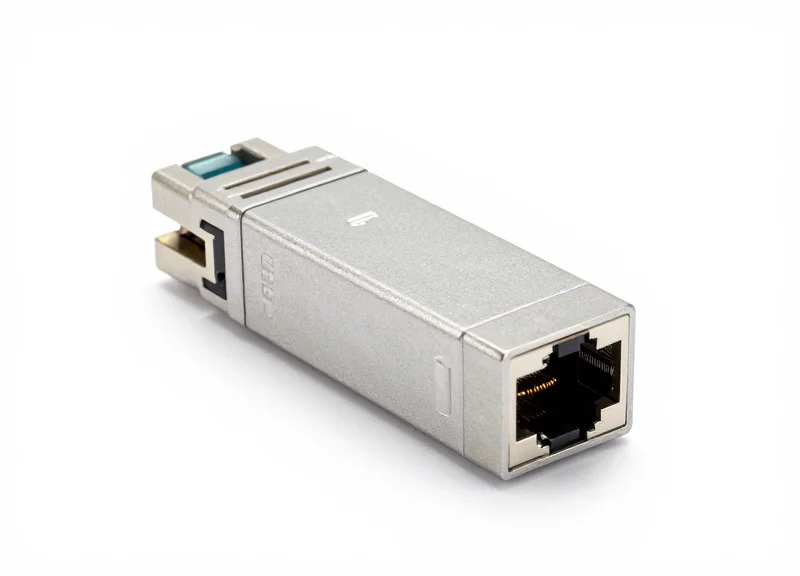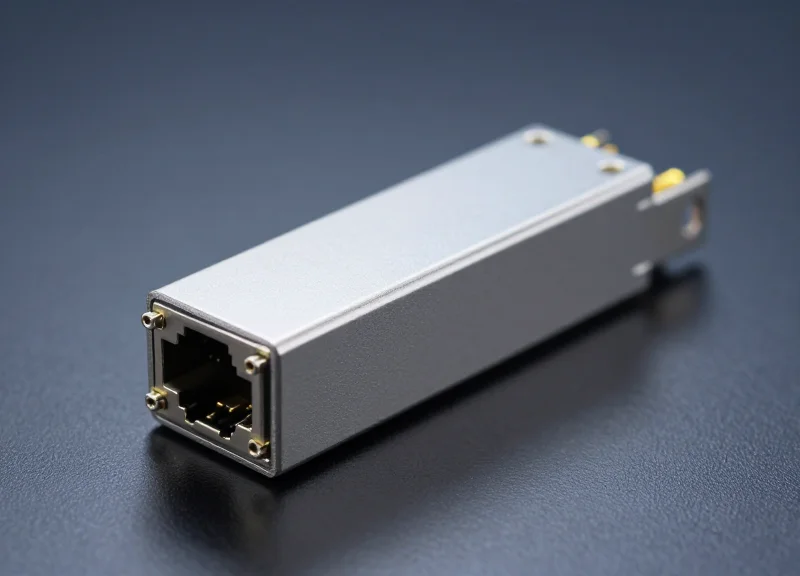
As 5G deployment accelerates globally, the demand for high-bandwidth, low-latency transport in fronthaul networks has moved beyond the capabilities of legacy 10G SFP+ modules. The 25G SFP28 has emerged as the industry standard, providing a cost-effective and power-efficient solution for the eCPRI requirements of 5G. This deep dive explores how this small form-factor pluggable transceiver powers modern wireless infrastructure.
The Evolution of Fronthaul: From CPRI to eCPRI
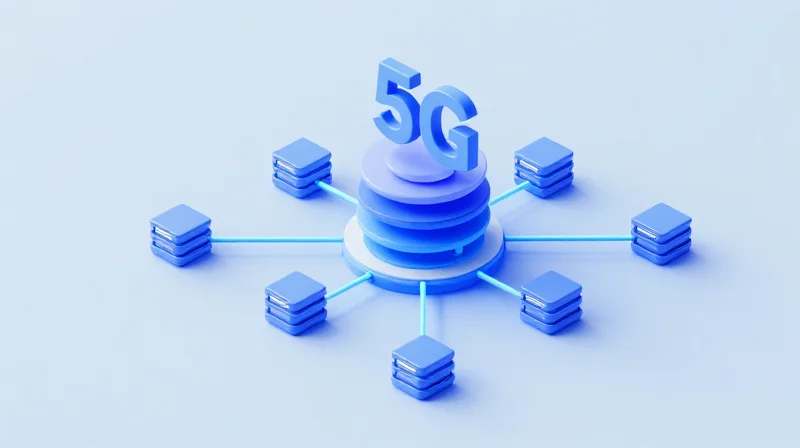
The Shift from CPRI to eCPRI in 5G Networks
The transition from 4G LTE to 5G New Radio (NR) demanded a fundamental paradigm shift in fronthaul architecture, moving from the synchronous Common Public Radio Interface (CPRI) to the packet-based Enhanced CPRI (eCPRI). While CPRI served as the backbone for 4G connectivity between Baseband Units (BBU) and Remote Radio Heads (RRH), its rigid, constant bit rate nature made it unsuitable for the massive data loads of 5G. The adoption of 25G SFP28 transceivers directly addresses the requirement for higher throughput while maintaining the cost-effective small form factor necessary for dense urban deployments.
The Bandwidth Bottleneck of Traditional CPRI
In traditional 4G networks, CPRI transmits raw digitized radio signals (IQ data). This data rate scales linearly with the number of antennas and the signal bandwidth. As 5G introduces Massive MIMO (Multiple-Input Multiple-Output) and wider frequency bands (e.g., 100MHz), using traditional CPRI would require hundreds of gigabits per second for a single cell site. This would lead to an unsustainable explosion in the number of required fiber strands and optical transceivers. eCPRI was developed to solve this by moving the functional split between the Radio Unit (RU) and Distributed Unit (DU), significantly reducing the volume of traffic sent over the fronthaul.
| Feature | CPRI (4G) | eCPRI (5G) |
|---|---|---|
| Transmission Type | Constant Bit Rate (Sync) | Packet-based (Ethernet/IP) |
| Bandwidth Efficiency | Low (Scales with Antennas) | High (Traffic-dependent) |
| Typical Port Speed | 2.5G / 6G / 10G | 25G / 50G |
| Functional Split | Physical Layer at BBU | Split Physical Layer (Split 7.2x) |
Why 25Gbps is the Baseline for 5G
The industry standardized on 25Gbps as the baseline for 5G fronthaul because it represents the 'sweet spot' for current optical technology. By utilizing the eCPRI Split 7.2x, the fronthaul requirement for a 100MHz 64T64R Massive MIMO sector is compressed into approximately 25Gbps. This allows operators to leverage the SFP28 form factor, which is physically identical to the 10G SFP+ used in 4G, ensuring backward compatibility and simplified hardware upgrades in existing cabinets.
- Why can't we use 10G SFP+ for 5G fronthaul?
10Gbps is insufficient for the peak data rates required by 5G NR carriers. Even with eCPRI compression, the overhead and high-order MIMO configurations of 5G exceed the capacity of 10G links, making 25G the minimum viable speed. - Does eCPRI require a different fiber infrastructure?
No, eCPRI can run over the same single-mode or multi-mode fiber used for CPRI. However, it requires higher-specification transceivers (SFP28) and Ethernet-switched networking equipment to handle the packetized traffic. - What is the primary benefit of the eCPRI split?
The primary benefit is a bandwidth reduction of approximately 10:1 compared to traditional CPRI. This allows 25Gbps links to carry data that would otherwise require 250Gbps of raw capacity.
Technical Core: What Defines a 25G SFP28?
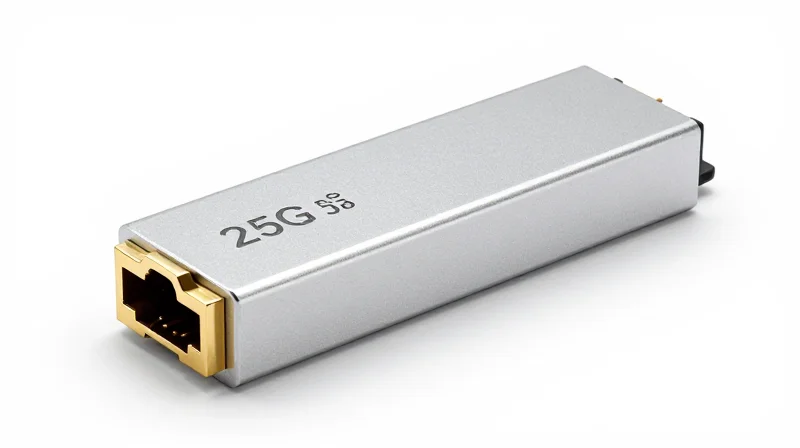
Technical Core: What Defines a 25G SFP28?
The 25G SFP28 (Small Form-factor Pluggable 28) represents the refined evolution of the SFP+ standard, specifically engineered to handle the 25.78125 Gbps data rates required by 5G eCPRI and 25G Ethernet. Unlike its predecessors, which often required multiple lanes to achieve higher bandwidth, the SFP28 achieves its performance via a single-lane electrical interface, significantly reducing power consumption and port density constraints in 5G RAN (Radio Access Network) hardware.
Physical Specifications and Design
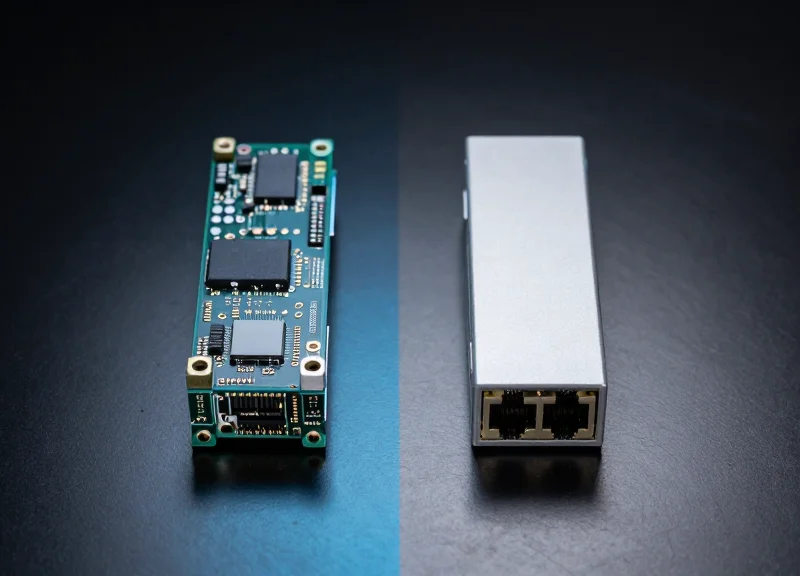
Mechanically, the SFP28 maintains the same dimensions as the 10G SFP+ module, ensuring physical compatibility with existing cage designs. However, the internal electrical components are upgraded to manage higher signal integrity at 25GHz frequencies. This includes enhanced electromagnetic interference (EMI) shielding and improved thermal dissipation capabilities to handle the increased heat generated by high-speed signal processing.
The 25G SFI Electrical Interface
The technical core of the SFP28 is the high-speed electrical interface known as 25G SFI. This interface utilizes a single differential pair for transmission and reception. By operating at a higher Nyquist frequency than 10G SFP+, it eliminates the need for the overhead inefficiencies found in older standards, providing a direct mapping for 25G Ethernet signals and enabling lower latency—a non-negotiable requirement for 5G fronthaul applications.
| Feature | 10G SFP+ | 25G SFP28 |
|---|---|---|
| Data Rate | 10.3125 Gbps | 25.78125 Gbps |
| Electrical Interface | SFI (10G) | SFI (25G) |
| Lane Count | 1 Lane | 1 Lane |
| Typical Power | ~1.0W | ~1.5W - 2.0W |
| Encoding | 64b/66b | 64b/66b with optional RS-FEC |
Backward Compatibility and Port Versatility
A critical advantage of the SFP28 is its backward compatibility path. While an SFP28 module typically cannot operate in a legacy 10G port unless specifically supported by the hardware's clocking architecture, most modern 25G SFP28 switch and RU (Radio Unit) ports are dual-rate. This allows them to accept 10G SFP+ modules, providing a seamless migration path for operators transitioning from 4G LTE to 5G NR without replacing entire chassis.
- Can SFP28 work in SFP+ ports?
Generally no, as the SFP+ port lacks the clocking and SerDes capability to handle 25Gbps. However, the physical fit is identical. - What is the role of RS-FEC in SFP28?
Reed-Solomon Forward Error Correction (RS-FEC) is often used to ensure data integrity over longer fiber distances, though it adds slight latency. - Why is it called '28'?
The '28' refers to the fact that the interface can handle up to 28 Gbps to account for engineering overhead and various protocol rates.
Wavelength Strategies: CWDM, DWDM, and LWDM

Wavelength Strategies: CWDM, DWDM, and LWDM
To satisfy the high-density requirements of 5G New Radio (NR), 25G SFP28 transceivers employ Wavelength Division Multiplexing (WDM) to consolidate multiple data streams onto a single fiber strand or pair. This strategy is essential for 5G fronthaul—the link between the Building Baseband Unit (BBU/DU) and the Remote Radio Head (RRU/AAU)—as it allows operators to scale bandwidth capacity without the prohibitive expense of laying new physical fiber cables. By assigning specific 'colors' or wavelengths to each 25G signal, WDM enables a massive increase in the logical capacity of existing optical infrastructure.
CWDM: Coarse Wavelength Division Multiplexing
25G CWDM SFP28 modules are the most cost-effective solution for short-to-medium distance fronthaul. They typically operate on a 20nm grid within the 1271nm to 1371nm range. Because the channel spacing is wide, these modules can utilize uncooled Directly Modulated Lasers (DML), which significantly reduces power consumption and manufacturing costs. However, the wide spacing limits the total number of channels (usually 6 or 12 for 25G applications) and makes them more susceptible to fiber attenuation at certain wavelengths.
DWDM: Dense Wavelength Division Multiplexing
For high-capacity 5G sites requiring 40 or more channels over a single fiber, Dense Wavelength Division Multiplexing (DWDM) is the preferred choice. 25G DWDM SFP28 transceivers operate in the C-band (1530nm to 1565nm) with much tighter spacing, typically 100GHz (0.8nm). This density requires cooled lasers (EML) to maintain frequency stability, leading to higher power requirements but enabling long-reach transmission (up to 10km or 20km) and superior spectral efficiency in fiber-constrained urban environments.
LWDM: LAN Wavelength Division Multiplexing
LAN-WDM (LWDM) is a specialized standard frequently used in 25G/100G networks. It operates in the O-band (1269nm to 1310nm) with 800GHz spacing. LWDM is particularly effective for 5G fronthaul because it sits near the zero-dispersion point of G.652 fiber. This allows for 25Gbps transmission over 10km to 20km without the need for complex dispersion compensation, offering a performance middle ground between the low cost of CWDM and the high density of DWDM.
| Feature | 25G CWDM | 25G DWDM | 25G LWDM |
|---|---|---|---|
| Wavelength Range | 1271nm - 1371nm | C-Band (1530-1565nm) | 1269nm - 1310nm |
| Channel Spacing | 20 nm | 0.8 nm (100GHz) | ~4.5 nm (800GHz) |
| Max Channels | 6 or 12 | 40 - 80 | 8 - 12 |
| Laser Type | Uncooled DML | Cooled EML | Cooled DML/EML |
| Best Use Case | Low-cost, short range | High density, long range | Balanced performance/cost |
- Why is LWDM becoming popular for 5G fronthaul?
LWDM operates in the O-band where chromatic dispersion is minimal. This allows 25G signals to travel longer distances (up to 20km) with higher signal integrity than CWDM, while being more affordable than DWDM. - Can I use 10G CWDM filters with 25G CWDM SFP28?
Generally, yes. Since the 20nm wavelength grid remains the same, existing passive CWDM MUX/DEMUX hardware can often be reused, though the link budget must be recalculated for 25G sensitivities. - What is the role of tunable SFP28 in these strategies?
Tunable SFP28 modules are typically DWDM-based and allow the technician to set the wavelength on-site. This significantly reduces the need to stock dozens of different fixed-wavelength spares.
BiDi SFP28: Solving Fiber Scarcity in 5G Deployments
BiDi SFP28: Solving Fiber Scarcity in 5G Deployments
BiDi (Bidirectional) SFP28 transceivers represent a paradigm shift in 5G network architecture by enabling simultaneous transmit and receive functions over a single fiber strand. By utilizing Wavelength Division Multiplexing (WDM) to separate the upstream and downstream signals, BiDi modules effectively double the capacity of existing fiber infrastructure, making them indispensable for urban 5G rollouts where physical fiber availability is often limited and expensive to expand.
The Mechanics of Single-Strand Communication
Unlike traditional SFP28 modules that require a dedicated transmit (TX) fiber and a separate receive (RX) fiber, BiDi modules integrate an optical diplexer. This component allows the module to send data at one wavelength (e.g., 1270nm) and receive it at another (e.g., 1330nm) on the same glass core. This requires the modules to be deployed in matching pairs: a 'Head-End' (U-type) and a 'Tail-End' (D-type). The use of different wavelengths prevents optical crosstalk and ensures signal integrity over distances typically reaching 10km or 20km, which covers the majority of 5G fronthaul reach requirements.
| Feature | Standard Dual-Fiber SFP28 | BiDi SFP28 |
|---|---|---|
| Fiber Requirement | 2 Strands (TX/RX) | 1 Strand (TX/RX) |
| Wavelength Management | Uniform (e.g., 1310nm) | Paired (e.g., 1270nm-TX/1330nm-RX) |
| Network Capacity | Baseline | 2x Capacity |
| Deployment Cost | Higher (Fiber intensive) | Lower (Optimized for existing fiber) |
| Hardware Pairing | Identical modules on both ends | Must use matching U and D pairs |
Strategic Advantages for 5G Infrastructure
- Fiber Resource Optimization
In dense urban centers, laying new fiber is often prohibited by cost or municipal regulations. BiDi SFP28 allows operators to support two 5G cells using the same fiber footprint previously required for a single 4G cell. - Reduced OpEx and CapEx
By halving the number of required fiber patches and connectors, maintenance complexity is reduced and the cost of leasing dark fiber is cut by 50%. - Simplified Cable Management
Lower fiber counts lead to less congestion in high-density distribution frames and cell site cabinets, improving airflow and physical accessibility.
Common Implementation Questions
- Do BiDi SFP28 modules require special ports?
No, BiDi SFP28 modules use the same SFI electrical interface as standard SFP28 modules and are compatible with any standard SFP28 port on 5G Baseband Units (BBUs) or Remote Radio Units (RRUs). - What is the typical distance limitation for BiDi in fronthaul?
Most 5G fronthaul BiDi modules are rated for 10km (LR) or 20km (ER-Lite), which aligns with the latency requirements of the eCPRI protocol. - Can BiDi transceivers interoperate with standard SFP28?
No. Because BiDi uses different wavelengths for TX and RX and single-strand connectors (usually LC Simplex), they can only communicate with another BiDi transceiver of the opposite wavelength pair.
Transmission Reach: SR, LR, and ER Classifications
The 25G SFP28 ecosystem utilizes three primary reach classifications—Short Range (SR), Long Reach (LR), and Extended Reach (ER)—to bridge the gap between Remote Radio Units (RRU/AAU) and Distributed Units (DU) across varying geographical landscapes. These classifications are defined by the IEEE 802.3by and 802.3cc standards, specifying the optical power budget and fiber type necessary to maintain signal integrity over distances ranging from 70 meters to 40 kilometers.
25G SFP28 SR: High-Speed Multi-mode for Intra-Site Connectivity
The SR (Short Range) classification is designed for high-density environments where equipment is co-located. Utilizing an 850nm Vertical-Cavity Surface-Emitting Laser (VCSEL), these modules operate over Multi-Mode Fiber (MMF). While the reach is limited to 70m on OM3 or 100m on OM4 fiber, SR optics offer the lowest power consumption and cost. In 5G architectures, SR modules are predominantly found within centralized RAN (C-RAN) hubs to interconnect BBUs or to link switches within a data center environment.
25G SFP28 LR and ER: Single-mode Solutions for Macro Cells
For the majority of 5G fronthaul links, Single-Mode Fiber (SMF) is required to handle the kilometers of distance between the cell tower and the central office. LR (Long Reach) modules use 1310nm DFB lasers to achieve a standard 10km reach, which satisfies most urban macro-cell requirements. For rural deployments or large-scale C-RAN topologies, ER (Extended Reach) modules utilize 1550nm or LWDM EML lasers to overcome attenuation and dispersion, extending the transmission reach to 30km or 40km without the need for mid-span amplification.
| Classification | Max Reach | Fiber Type | Wavelength | Laser Source |
|---|---|---|---|---|
| SR | 70m (OM3) / 100m (OM4) | Multi-mode (MMF) | 850nm | VCSEL |
| LR | 10km | Single-mode (SMF) | 1310nm | DFB |
| ER | 30km / 40km | Single-mode (SMF) | 1550nm / LWDM | EML |
Reach Constraints and Link Budget Considerations
When selecting a reach classification, network engineers must calculate the total optical link loss budget. This includes fiber attenuation—typically 0.35 dB/km for LR and 0.25 dB/km for ER—alongside connector losses (approx. 0.5 dB to 0.75 dB per pair) and splice losses. Because 25G signals are more sensitive to chromatic dispersion than 10G signals, achieving the full 40km reach with ER modules often requires Forward Error Correction (FEC) to be enabled on the host equipment ports.
- Can I use an LR module for a 100m link?
Yes, but if the transmitter power is too high, it may saturate the receiver. In very short SMF spans, an optical attenuator may be required to protect the receiver diode. - Does 25G SR support OM5 fiber?
Yes, 25G SFP28 SR is compatible with OM5, which may provide slightly better performance margins, though the official rated reach remains similar to OM4 for 850nm signals. - Why is ER reach typically capped at 40km for 25G?
Beyond 40km, chromatic dispersion at 25Gbps becomes significant enough that standard intensity-modulation direct-detection (IM-DD) optics require complex dispersion compensation or a shift to coherent technology.
Industrial Temperature (I-Temp) vs. Commercial Temperature
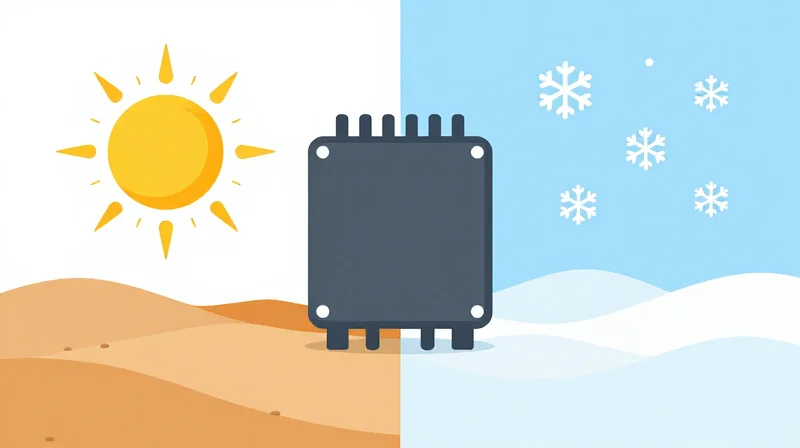
Industrial Temperature (I-Temp) vs. Commercial Temperature Ratings
In 5G fronthaul architectures, 25G SFP28 transceivers serve as the vital link between the Distributed Unit (DU) and the Active Antenna Unit (AAU), often operating in harsh, unconditioned environments. The primary differentiator between transceiver grades is their thermal operating range: Commercial Temperature (C-Temp) modules are designed for the controlled climates of data centers, while Industrial Temperature (I-Temp) modules are engineered to withstand the extreme fluctuations of outdoor deployments. Choosing the correct thermal rating is not merely a performance preference but a requirement for preventing premature hardware failure and maintaining network uptime.
| Feature | Commercial Temperature (C-Temp) | Industrial Temperature (I-Temp) |
|---|---|---|
| Operating Range | 0°C to 70°C (32°F to 158°F) - Standard data center environments. | -40°C to 85°C (-40°F to 185°F) - Outdoor/Uncontrolled environments. |
| Typical Deployment | Indoor enterprise switches, climate-controlled server rooms. | Outdoor 5G base stations, pole-mounted AAUs, industrial IoT. |
| Thermal Design | Standard components and heat dissipation logic. | Hardened components, specialized thermal management, and rigorous testing. |
| Cost | Lower initial cost due to standard testing. | Higher cost due to premium components and burn-in testing cycles. |
Why I-Temp is Mandatory for 5G Outdoor Base Stations
5G deployments utilize Massive MIMO technology, which requires high-power AAUs that generate significant internal heat within compact, fanless housings. Because these units are frequently installed on rooftops or poles without HVAC systems, the ambient temperature inside the equipment housing can easily surpass the 70°C limit of C-Temp modules. Industrial-rated 25G SFP28 modules utilize specialized laser drivers and clock-data recovery (CDR) chips that maintain wavelength stability and low Bit Error Rates (BER) even at 85°C. Furthermore, in cold climates, I-Temp modules are guaranteed to initialize at -40°C, whereas C-Temp modules may fail to boot or experience significant signal drift until they warm up.
- Can I use C-Temp SFP28 modules in a 5G RRU to save costs?
It is highly discouraged. While they may work initially, the high thermal stress in outdoor enclosures will lead to laser degradation, increased link errors, and eventually a total hardware shutdown, leading to expensive field maintenance. - What is 'Extended Temperature' (E-Temp)?
E-Temp usually refers to a range of -20°C to 85°C. While better than C-Temp, it still lacks the cold-start reliability required for 5G sites in northern latitudes where temperatures frequently drop below -20°C. - How does heat affect the 25G signal?
Excessive heat causes the laser's center wavelength to drift and increases thermal noise. In 25G SFP28 modules, this can lead to synchronization issues between the DU and AAU, significantly reducing the effective range and throughput of the 5G cell.
Power Consumption and Thermal Management Challenges
In 5G fronthaul deployments, 25G SFP28 modules must deliver significantly higher bandwidth than legacy 10G components while adhering to strict power consumption limits—typically below 1.5W per port—to prevent thermal runaway in high-density, passively cooled outdoor equipment. Managing the heat generated by these modules is essential to maintaining link stability, preventing laser wavelength drift, and ensuring the long-term reliability of Active Antenna Units (AAUs) and Remote Radio Units (RRUs).
Power Consumption Profiles for 25G SFP28 Modules
The power efficiency of an SFP28 module is determined by its internal components, including the laser driver, the Clock and Data Recovery (CDR) chips, and the optical engine (TOSA/ROSA). While 25G SFP28 modules provide 2.5 times the data rate of 10G SFP+ modules, they are engineered to maintain a similar power footprint to simplify the transition for network operators and hardware designers.
| SFP28 Module Type | Typical Power Consumption | Max Power (Standard) | Notes |
|---|---|---|---|
| 25G SFP28 SR | 0.8W - 1.0W | 1.2W | Short reach, lowest power consumption due to VCSEL laser. |
| 25G SFP28 LR | 1.0W - 1.2W | 1.5W | Standard long-reach; utilizes DFB lasers. |
| 25G SFP28 BiDi | 1.1W - 1.3W | 1.5W | Single-fiber solution; power varies by reach (10km to 20km). |
| 25G SFP28 ER | 1.5W - 1.8W | 2.0W | Extended reach (40km); requires more power for EML lasers. |
Thermal Management Challenges in High-Density 5G Environments
5G cell sites often utilize high-density port configurations where multiple SFP28 transceivers are packed into a compact RRU. Because many of these units are sealed to protect against environmental ingress (IP67/IP68 ratings) and rely on passive convection cooling rather than fans, the heat density becomes a major design bottleneck.
Impact of Heat on Optical Performance
Excessive heat leads to two primary issues: decreased Mean Time Between Failures (MTBF) and optical signal degradation. As temperatures rise, the central wavelength of the laser can shift, potentially causing increased bit error rates (BER) or total link loss. This is particularly problematic for WDM-based fronthaul where precise wavelength stability is mandatory.
Mitigation Strategies and Design Considerations
- Advanced Heat Sinks
Using high-conductivity thermal interface materials (TIMs) and integrated heat sinks on the SFP28 cage to pull heat away from the transceiver module. - Digital Diagnostic Monitoring (DDM)
Utilizing real-time temperature monitoring to trigger system-level alerts or fan speed adjustments (where applicable) before critical thresholds are reached. - I-Temp Rated Components
Specifying Industrial Temperature rated modules (-40°C to 85°C) that are stress-tested to operate in unconditioned outdoor cabinets.
Thermal and Power FAQs
- How does power consumption affect 5G OPEX?
Lower power consumption per module reduces the total electricity demand of the 5G base station and minimizes the cooling requirements, leading to lower long-term operating costs. - Why do BiDi and ER modules consume more power than SR modules?
BiDi and ER modules use more complex laser types (like DFB or EML) and require more sophisticated amplification and filtering to maintain signal integrity over longer distances. - What happens if an SFP28 module exceeds its rated temperature?
Most modules will automatically enter a protection mode, reducing optical output power or shutting down completely to prevent permanent hardware damage.
Interoperability and Vendor Compatibility in Open RAN
Interoperability and Vendor Compatibility in Open RAN
The transition toward Open RAN (O-RAN) architectures fundamentally transforms the procurement of 25G SFP28 modules by decoupling hardware from proprietary software stacks. In traditional Radio Access Networks (RAN), the Baseband Unit (BBU) and Remote Radio Head (RRH) often required closed, single-vendor optical solutions to ensure link stability. O-RAN breaks this cycle by utilizing the open eCPRI interface, which allows operators to integrate best-of-breed 25G SFP28 transceivers from various manufacturers into a unified 5G fronthaul ecosystem.
Breaking Vendor Lock-in with O-RAN Standards
By adhering to O-RAN Alliance specifications, mobile network operators (MNOs) are no longer tethered to a specific radio vendor's ecosystem for their optical transport needs. This shift enables the use of Commercial Off-The-Shelf (COTS) hardware and third-party SFP28 optics, which significantly drives down CAPEX. However, this flexibility necessitates rigorous adherence to Multi-Source Agreement (MSA) standards to ensure that modules are electrically and mechanically compatible with host equipment from different vendors.
| Feature | Traditional RAN | Open RAN (O-RAN) |
|---|---|---|
| Transceiver Sourcing | Proprietary/Vendor-Specific | Multi-Vendor/Third-Party |
| Fronthaul Protocol | Closed CPRI | Open eCPRI / RoE |
| Cost Structure | Premium Pricing | Competitive Commodity Pricing |
| Deployment Strategy | Vertical Integration | Horizontal Disaggregation |
Integration Challenges and Multi-Vendor FAQ
- How is EEPROM coding handled in multi-vendor O-RAN environments?
Host devices from different vendors often perform a 'handshake' check; third-party 25G SFP28 modules must be coded with compatible firmware strings to ensure the O-DU or O-RU identifies the module as authorized hardware. - Does O-RAN support standardized Digital Optical Monitoring (DOM)?
Yes. Standardized DOM is critical for remote telemetry in O-RAN. Third-party SFP28 modules provide real-time data on temperature, laser bias, and power levels, which must be readable by the network's Service Management and Orchestration (SMO) layer. - Are there physical layer risks when mixing SFP28 vendors?
The primary risk is signal integrity. While MSA compliance ensures mechanical fit, high-quality 25G SFP28 modules must also pass interoperability testing to ensure the Bit Error Rate (BER) remains within 5G's strict latency and reliability tolerances.
Ultimately, the success of 25G SFP28 in 5G fronthaul depends on the ability of third-party modules to provide 'plug-and-play' functionality. As the industry moves toward more disaggregated models, the focus shifts from proprietary hardware to ensuring that all optical components strictly follow IEEE 802.3 and O-RAN Fronthaul Working Group specifications.
Future-Proofing Your Network: Beyond 25G SFP28

Scaling Beyond 25G: The Future of Optical Fronthaul
Future-proofing 5G networks requires a strategic shift toward 50G SFP56 and 100G SFP-DD or DSFP technologies as Massive MIMO and carrier aggregation push the limits of the standard 25Gbps SFP28 interface. While 25G remains the current global standard for fronthaul, the industry is already pivoting toward higher-capacity modules to support the increased spectral efficiency and data throughput requirements of 3GPP Release 18 and beyond.
50G SFP56: Doubling Capacity via PAM4
The SFP56 form factor represents the immediate evolutionary step for 5G-Advanced. By utilizing Pulse Amplitude Modulation (PAM4) signaling rather than the traditional Non-Return to Zero (NRZ) modulation found in SFP28, SFP56 can transmit 50Gbps within the same physical footprint. This allows operators to double their capacity without requiring new rack space or extensive fiber re-cabling, making it an ideal choice for expanding capacity in established urban cell sites.
| Interface Type | Signaling Method | Max Data Rate | Primary Use Case |
|---|---|---|---|
| SFP28 | NRZ | 25.78 Gbps | Standard 5G Fronthaul / eCPRI |
| SFP56 | PAM4 | 53.125 Gbps | 5G-Advanced Mid-haul and Aggregation |
| SFP-DD / DSFP | PAM4 | 100 Gbps | High-Capacity 5G-Advanced & Early 6G |
| QSFP28 | NRZ / PAM4 | 100 Gbps | Core Network & Data Center Interconnects |
The 100G Roadmap: SFP-DD and 100G Lambda
As we approach the 6G era, 100G in the fronthaul is becoming a necessity for ultra-dense deployments and mmWave applications. Technologies such as SFP-DD (Double Density) utilize two lanes of 50G to achieve 100G, while '100G Lambda' modules utilize a single 100G wavelength to reduce component count and power consumption. These advancements are critical for supporting Integrated Sensing and Communication (ISAC), a key feature expected in future 5G-Advanced and 6G architectures.
- Is SFP56 backward compatible with SFP28?
In most hardware implementations, SFP56 ports are designed to be backward compatible with SFP28 and SFP+ modules, though the signaling will drop to the lower speed supported by the module. - Why is PAM4 preferred over NRZ for higher speeds?
PAM4 carries two bits per symbol, effectively doubling the data rate over the same bandwidth compared to NRZ, which only carries one bit per symbol, though it requires more advanced Digital Signal Processing (DSP). - When will 100G become the standard for fronthaul?
100G is currently being deployed in high-capacity aggregation points and is expected to move closer to the cell site as 5G-Advanced rolls out between 2026 and 2026.
Investing in hardware that supports multi-rate capabilities (10G/25G/50G) is the most effective way for operators to future-proof their infrastructure. By selecting optics that can scale with software-defined radio (SDR) updates, carriers can ensure their fronthaul remains viable as traffic demands continue to surge.
Selecting the right 25G SFP28 transceiver is pivotal for ensuring 5G network reliability and scalability. By understanding the nuances of wavelength, distance, and temperature ratings, network engineers can optimize fronthaul performance while minimizing OpEx. Ready to upgrade your infrastructure? Contact our technical experts today for a personalized consultation on high-speed optical solutions.