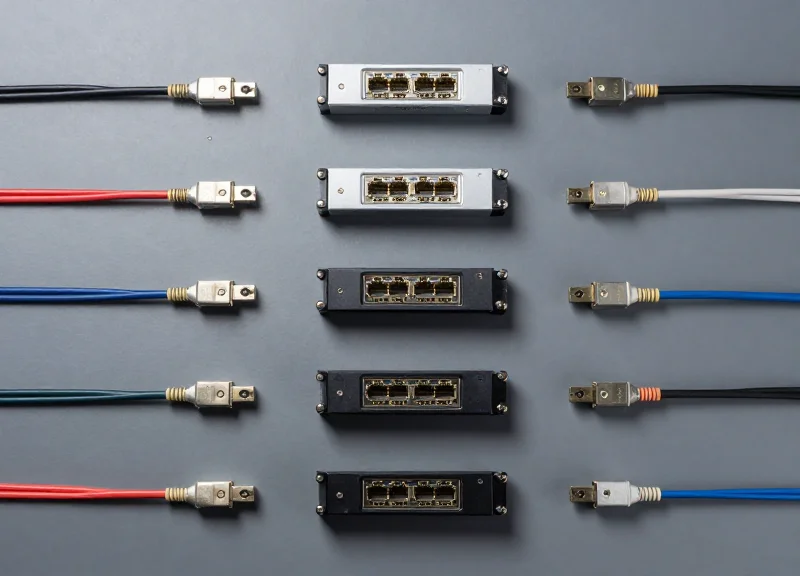
As data centers transition toward 800G architectures, the need for efficient, high-density connectivity has never been greater. 2x400G breakout solutions represent the cutting edge of this transition, allowing operators to maximize port density while maintaining backward compatibility. However, procurement at scale requires more than just hardware—it requires a strategic partner. This article outlines how wholesale procurement and custom manufacturing through Ubytelink can help you overcome scaling hurdles and optimize your total cost of ownership.
Understanding the Role of 2x400G Breakout Solutions in 800G Networks

2x400G breakout solutions serve as a critical bridge in modern networking, allowing operators to leverage 800G switch capacity while maintaining compatibility with 400G infrastructure. By utilizing advanced form factors like OSFP and QSFP-DD800, these optics effectively double the port density of top-of-rack (ToR) switches, enabling a seamless transition to 800G without requiring a full rip-and-replace of existing 400G server and storage connections. This architecture allows for a phased upgrade path, ensuring that legacy 400G hardware can coexist with next-generation 800G fabrics.
The Technical Mechanics of 2x400G Breakouts
At its core, a 2x400G module utilizes eight lanes of 100G PAM4 electrical signals to provide 800G of total bandwidth. Rather than presenting this as a single 800G pipe, the transceiver is engineered to split these signals into two discrete 400G optical interfaces. This is typically achieved through dual internal sub-assemblies, such as 2xFR4 or 2xDR4 configurations. This logical separation is vital for high-radix switch architectures where maximizing the number of downstream 400G endpoints is more prioritized than establishing a single 800G point-to-point link.
| Feature | Standard 800G Direct | 2x400G Breakout Solution |
|---|---|---|
| Primary Application | Core-to-Core high-speed links | Switch-to-Switch or Switch-to-NIC |
| Connectivity Type | Single 800G path | Dual independent 400G paths |
| Optical Interface | e.g., 800G-DR8 / 2xDR4 | e.g., 2xFR4 / 2xDR4 / 2xSR4 |
| Port Efficiency | Standard density | Double 400G port density |
Optimizing Top-of-Rack (ToR) Density and Cost
In 25.6T and 51.2T switching fabrics, the 2x400G approach allows for a 'pay-as-you-grow' scalability model. By deploying 2x400G optics in an 800G slot, data center architects can connect two separate 400G switches or Network Interface Cards (NICs) via a single physical transceiver port. This minimizes the physical footprint of patch panels and structured cabling while significantly lowering the cost per bit. When purchasing wholesale, the economy of scale for these high-density modules becomes a primary driver for reducing total cost of ownership (TCO) in 2026 infrastructure refreshes.
- Can I use 2x400G modules in standard 400G ports?
No, 2x400G modules require 800G-capable ports (QSFP-DD800 or OSFP) that support 8-lane electrical interfaces to function correctly. - What cable types support 2x400G breakouts?
Common options include MPO-12 or MPO-16 for parallel fiber (DR8/SR8) or Dual LC connectors for duplex fiber (FR4) breakouts. - Does using 2x400G increase power consumption?
While a 2x400G module consumes more power than a single 400G optic, the power-per-gigabit is significantly lower due to the efficiencies of 800G DSP technology.
The Economic Impact of Wholesale Procurement
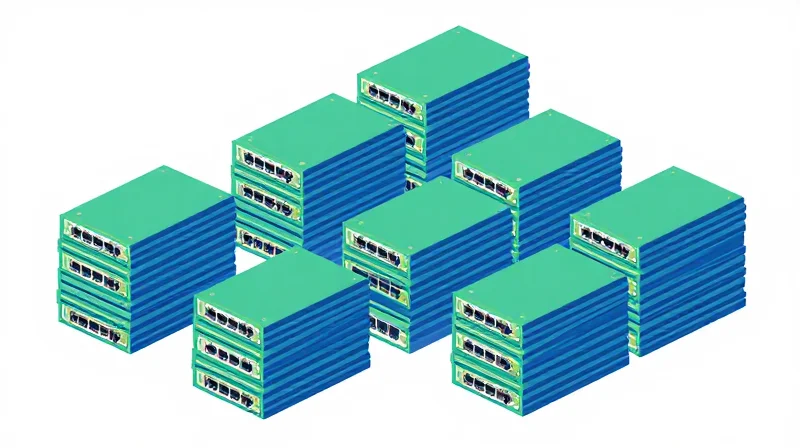
The Financial Logic of Wholesale 2x400G Procurement
Wholesale procurement of 2x400G breakout solutions serves as a critical fiscal strategy for enterprises scaling toward 800G capacities without incurring exponential budget increases. By leveraging volume discounts and securing custom quotes, organizations can effectively lower their cost-per-bit by up to 30% compared to standard retail acquisition. This approach not only stabilizes the supply chain against market volatility but also ensures that the high-density infrastructure required for AI and cloud computing remains economically viable over its entire lifecycle.
CAPEX Optimization through Bulk Pricing Models
In the 2026 landscape, capital expenditure (CAPEX) for network upgrades is heavily influenced by the volume of optical transceivers. 2x400G modules allow for a consolidation of hardware, where a single QSFP-DD or OSFP port does the work of multiple legacy connections. When purchased in bulk, the initial investment per port drops significantly, allowing data center operators to allocate remaining funds toward higher-tier switching fabric or improved thermal management systems.
| Procurement Metric | Single Unit Purchase | Wholesale/Bulk (50+ Units) |
|---|---|---|
| Average Discount Range | MSRP (Base) | 15% - 35% Reduction |
| Cost per Gigabit | Highest | Optimized / Minimum |
| Lead Time Security | Market Dependent | Priority Allocation |
| ROI Timeline | Standard (18-24 Months) | Accelerated (12-15 Months) |
Long-Term OPEX and Infrastructure Efficiency
The economic impact of 2x400G breakout solutions extends far beyond the point of purchase. By utilizing high-density modules, enterprises can reduce their total rack space requirement and lower power consumption per gigabit transferred. These operational savings (OPEX) are compounded when wholesale agreements include unified support and maintenance terms, reducing the administrative overhead associated with managing diverse hardware vendors.
- How does wholesale procurement affect the total cost of ownership (TCO)?
Wholesale procurement lowers TCO by reducing the initial acquisition cost and simplifying the replacement cycle. Bulk orders typically come with standardized firmware and testing protocols, which decreases the cost of deployment and troubleshooting. - Why are custom quotes necessary for 2x400G breakout solutions?
Custom quotes allow for tailored configurations, such as specific fiber lengths or connector types (e.g., SN or MDC), ensuring that you only pay for the exact specifications your network architecture requires without over-provisioning. - What is the expected ROI for transitioning to bulk 2x400G modules?
Enterprises generally see an ROI within 12 to 15 months due to the immediate reduction in energy consumption and the ability to defer expensive chassis upgrades by maximizing current port density.
Technical Specifications: What to Look for in High-Quality Modules
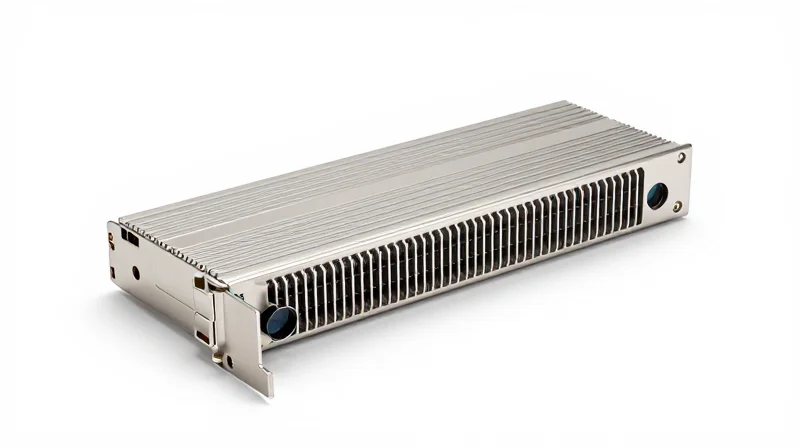
When sourcing 2x400G breakout solutions wholesale, technical specifications must go beyond mere compatibility to ensure long-term stability and energy efficiency within the high-density 800G fabric. The reliability of these modules depends on a synergy between high-speed signal integrity, rigorous thermal management, and adherence to Multi-Source Agreements (MSAs) that prevent vendor lock-in and performance bottlenecks.
Form Factor Architecture: QSFP-DD800 vs. OSFP
The choice between QSFP-DD800 and OSFP is the most critical architectural decision when planning a wholesale purchase. QSFP-DD800 is favored for its backward compatibility with legacy QSFP modules, while OSFP is often chosen for its superior heat dissipation capabilities in maximum-density environments.
| Feature | QSFP-DD800 | OSFP |
|---|---|---|
| Physical Size | Smaller (Higher density) | Slightly larger |
| Thermal Management | Depends on switch cooling | Integrated heat sink |
| Max Power Envelope | Up to 25W | Up to 30W |
| Backward Compatibility | Native with QSFP56/28 | Requires adapters |
Power Consumption and Thermal Mitigation
Efficiency in power consumption is a primary metric for evaluating 2x400G modules, as high power draw correlates directly with increased heat and operational costs. Wholesale buyers should prioritize modules that maintain a low power profile (typically 14W to 17W for DR8/FR8 variants) while utilizing advanced Digital Signal Processing (DSP) to minimize signal noise.
Technical Quality Assessment FAQ
- What is the acceptable Bit Error Rate (BER) for 2x400G modules?
A high-quality module should maintain a pre-FEC (Forward Error Correction) BER better than 1E-4, ensuring that the system can achieve a post-FEC BER of 1E-15 for error-free transmission. - Why is CMIS compliance important in wholesale procurement?
Compliance with Common Management Interface Specification (CMIS) version 4.0 or 5.0 ensures the modules can be monitored and managed consistently across different switch vendors. - How does laser type affect module longevity?
EML (Electro-absorption Modulated Laser) is preferred for long-reach 2x400G applications due to its higher stability and signal quality compared to standard DML lasers. - Are there specific requirements for the optical interface?
For 2x400G breakouts, MPO-16 or dual MPO-12 connectors are standard. Ensuring high-precision ferrules is essential to minimize insertion loss across bulk deployments.
Customization via OEM/ODM Services

Customization via OEM/ODM Services
For enterprise networks and hyperscale providers, the standard 2x400G breakout module may not always align with proprietary network operating systems or specific rack geometries. OEM (Original Equipment Manufacturer) and ODM (Original Design Manufacturer) services bridge this gap by allowing buyers to specify hardware and software parameters that go beyond the basic Multi-Source Agreement (MSA) standards. This level of customization ensures that wholesale purchases are fully optimized for the end-user's unique environment, reducing integration friction and maximizing long-term hardware reliability.
Firmware Tuning and System Compatibility
Firmware customization is the most critical aspect of OEM services for 2x400G optics. Different switch vendors often employ strict validation checks that can reject generic modules. By utilizing custom coding services, wholesale buyers can ensure that 2x400G QSFP-DD or OSFP modules are recognized correctly by the Host OS, providing accurate Digital Optical Monitoring (DOM) data and preventing port-lock issues that can occur during high-bandwidth 800G-to-400G breakout operations.
Hardware Modifications and Branding
Physical hardware tweaks are another cornerstone of ODM services. This includes modifying heat sink designs to accommodate specific airflow directions (front-to-back or back-to-front) or selecting specific cable jacket materials like Plenum (OFNP) or Low Smoke Zero Halogen (LSZH) for breakout DACs and AOCs. Additionally, private labeling and custom serial numbering allow organizations to maintain consistent asset tracking and brand identity across their infrastructure.
| Feature | Standard Wholesale Solution | OEM/ODM Customized Solution |
|---|---|---|
| Firmware | Generic MSA Compliant | Vendor-Specific (e.g., Cisco, Arista, Juniper) |
| Labeling | Standard Manufacturer Label | Private Label / Custom Part Numbers |
| Thermal Management | Standard Integrated Heat Sink | Optimized Fin Design for Specific Airflow |
| Cable Lengths | Standard (1m, 2m, 3m) | Precision Custom Lengths (e.g., 1.25m) |
| Pull-Tab Color | Standard Manufacturer Color | Color-Coded for Port Mapping Efficiency |
OEM/ODM Service FAQ
- What is the typical Minimum Order Quantity (MOQ) for custom 2x400G firmware?
Most custom firmware requests require a minimum batch of 50 to 100 units to offset the engineering and validation costs associated with specific vendor coding. - Can I customize the breakout leg lengths on a 2x400G to 2x400G DAC?
Yes, ODM services allow for asymmetrical or specific leg lengths to accommodate non-standard rack layouts, helping to improve airflow and cable management. - Does custom labeling affect the certification of the modules?
No, Ubytelink ensures that all OEM/ODM products maintain their CE, FCC, and RoHS certifications regardless of the branding or physical housing modifications. - How does customization impact lead times for bulk orders?
While standard units are often in stock, custom OEM/ODM orders typically add 2-4 weeks to the lead time for engineering, sample validation, and production.
Interoperability and Compatibility Testing
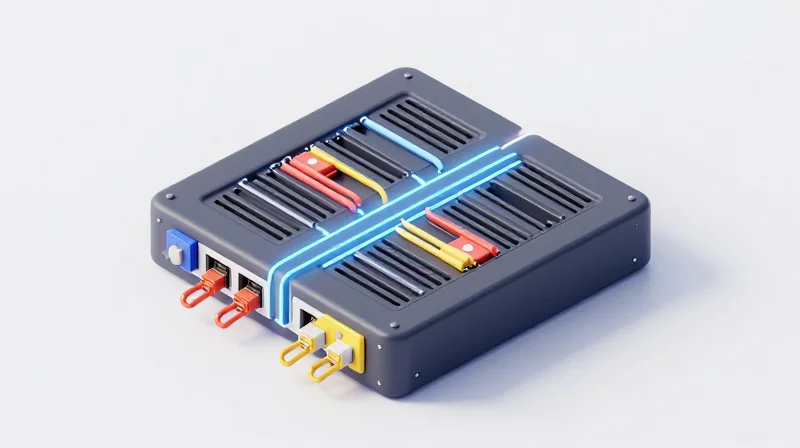
The Critical Role of Interoperability in 2x400G Architectures
When you buy 2x400G breakout solutions wholesale, the primary technical risk is not raw speed, but whether the modules will communicate effectively with your existing fabric of switches, routers, and network interface cards (NICs). Interoperability ensures that high-density optical transceivers, such as QSFP-DD800 or OSFP units, can negotiate links correctly across hardware from different manufacturers. In 2026, the push toward disaggregated networking means that a single data center may utilize Arista switches for the spine, NVIDIA/Mellanox for the leaf, and white-box solutions for the edge. Ubytelink addresses this complexity by providing modules that are specifically coded and verified to bypass vendor lock-in while maintaining 100% functional parity with expensive branded optics.
Ubytelink’s Multi-Vendor Compatibility Matrix
To guarantee plug-and-play performance, our wholesale 2x400G modules undergo a multi-stage validation process. This involves testing each unit against a massive library of host platforms to ensure the EEPROM data and firmware match the expectations of the host system's operating system (e.g., Cisco NX-OS, Arista EOS, or Juniper Junos).
| Testing Parameter | Verification Metric | Significance for 2x400G |
|---|---|---|
| EEPROM Content Verification | Checksum & Vendor ID Matching | Prevents 'Unsupported Transceiver' errors in host OS. |
| Bit Error Rate (BER) Testing | Pre-FEC & Post-FEC Analysis | Ensures signal integrity over maximum cable distances. |
| Eye Diagram Analysis | IEEE 802.3ck Compliance | Confirms optical signal quality and low jitter at 112G PAM4 speeds. |
| Thermal Stress Testing | Operational Range 0°C to 70°C | Guarantees stability in high-density, hot-aisle environments. |
Compatibility Testing for Major Switch Brands
For enterprise and service provider networks, the cost savings of bulk pricing in 2026 are only realized if the optics provide the same reliability as the original equipment. Ubytelink utilizes an in-house lab equipped with the latest 800G-capable switches to simulate real-world traffic patterns. This rigorous testing protocol covers I2C communication stability, power-on sequence timing, and lane-by-lane signal validation for breakout configurations (e.g., 2x400G to 8x100G).
Common Compatibility FAQs
- Can I mix Ubytelink 2x400G modules with original Cisco or Arista modules in the same switch?
Yes. Our modules are designed to be fully transparent to the host system, allowing for side-by-side operation with branded optics without causing system instability or link flapping. - How does Ubytelink handle proprietary vendor encryption or 'lock' codes?
Our engineering team specializes in reverse-engineering vendor-specific coding requirements. We provide custom-coded EEPROMs that satisfy the handshake protocols of even the most restrictive hardware platforms. - Is support provided if a future firmware update from a switch vendor breaks compatibility?
We offer ongoing firmware support. If a major vendor releases an OS update that impacts transceiver recognition, we can provide updated firmware for our modules to restore full functionality. - Do you support white-box switches running SONiC or Cumulus Linux?
Absolutely. Our 2x400G solutions are highly optimized for Open Networking environments, ensuring seamless integration with SONiC, Cumulus, and other Linux-based NOS deployments.
By prioritizing interoperability and rigorous testing, Ubytelink allows procurement teams to focus on scaling their infrastructure with confidence. When requesting custom quotes for bulk pricing in 2026, our technical staff will work with you to specify the exact hardware environment your modules will inhabit, ensuring that every 2x400G breakout solution is optimized for your specific network stack.
Streamlining Your Supply Chain for 2026

Streamlining Your Supply Chain for 2026
In 2026, the explosion of AI-driven demand and hyperscale data center expansions has made the procurement of 2x400G breakout solutions a critical operational hurdle. To effectively streamline your supply chain, organizations must move away from 'just-in-time' ordering toward a strategic model that prioritizes early forecasting and wholesale volume commitments. By securing custom quotes and bulk pricing early in the fiscal cycle, businesses can lock in manufacturing priority and stabilize their hardware costs against market fluctuations.
Strategies for Managing High-Performance Optics Lead Times
- Rolling 12-Month Forecasts
Providing vendors with a rolling forecast allows them to reserve raw materials and production capacity, reducing the risk of sudden shortages during peak demand periods. - Safety Stock Buffering
Maintain a localized inventory of critical 2x400G modules to cover unexpected failures or rapid-response network scaling, ensuring zero downtime. - Consolidated Batch Shipping
Instead of multiple small orders, consolidating into bulk shipments reduces logistics overhead and simplifies the customs and receiving process.
Procurement Model Comparison
| Feature | Spot Buying | Wholesale/Contract |
|---|---|---|
| Unit Cost | Market-dependent (High) | Volume-Discounted (Stable) |
| Lead Time | Unpredictable | Priority Scheduling |
| Inventory Risk | High (Stock-out hazard) | Low (Reserved stock) |
| Customization | Standard Off-the-shelf | Full OEM/ODM Support |
FAQ: Bulk Ordering and Supply Chain Logistics
- How do custom quotes improve 2026 budget planning?
Custom quotes provide price protection against the rising costs of raw materials and semi-conductors, allowing for more accurate long-term CAPEX forecasting. - What are the typical lead times for wholesale 2x400G orders?
Standard wholesale lead times currently average 6-10 weeks, though these can be significantly shortened for clients with established long-term supply agreements. - Can Ubytelink manage staged deliveries for large projects?
Yes, we support scheduled releases where bulk orders are manufactured at once to ensure consistency but shipped in batches according to your project milestones.
Future-Proofing Your Infrastructure with 2x400G
Investing in 2x400G breakout solutions today is a proactive strategy that secures your infrastructure against the rapidly evolving demands of AI-driven traffic and hyperscale data growth. By utilizing the OSFP or QSFP-DD800 form factors, these optics allow operators to maximize existing switch port density while establishing a hardware baseline that is natively compatible with the next generation of 800G networking equipment. This approach minimizes the need for disruptive 'rip-and-replace' upgrades, ensuring that your fiber plant and transceiver investments remain viable well into the late 2020s.
Why 2x400G is the Logical Step Toward 800G
The shift to 800G Ethernet is primarily driven by the transition from 50G SerDes to 100G (and eventually 200G) per lane. A 2x400G transceiver effectively operates as an 8-lane 800G interface logically split to support two independent 400G links. This configuration provides the flexibility to connect to existing 400G switches while preparing the physical layer for 800G switch deployments. When you buy 2x400G breakout solutions wholesale in 2026, you are essentially deploying 800G-capable hardware at a fraction of the initial premium cost.
| Feature | Standard 400G (QSFP-DD) | 2x400G (QSFP-DD800/OSFP) | Future 800G/1.6T |
|---|---|---|---|
| Max Throughput | 400 Gbps | 800 Gbps (Aggregated) | 800 Gbps - 1.6 Tbps |
| Lane Speed | 50G PAM4 | 100G PAM4 | 100G / 200G PAM4 |
| Port Density | Standard | Double (via Breakout) | Maximum |
| Upgrade Path | Limited | Direct to 800G | Native |
Strategic Benefits of Bulk 2x400G Acquisition
Acquiring these solutions through bulk pricing in 2026 allows organizations to standardize their optical layer. This standardization simplifies inventory management and reduces the operational complexity of maintaining multiple generations of transceivers. Furthermore, wholesale custom quotes allow for the integration of specific firmware that ensures these 2x400G modules can communicate effectively across legacy 400G hardware and nascent 800G fabrics.
- Will 2x400G optics be compatible with future 800G switches?
Yes, 2x400G modules using QSFP-DD800 or OSFP form factors are designed to be mechanically and electrically compatible with 800G ports, allowing for easy migration as you upgrade your switching fabric. - Does 2x400G require new fiber infrastructure?
No, 2x400G breakout solutions are designed to utilize existing Single-Mode Fiber (SMF) or Multi-Mode Fiber (MMF) via MPO/MTP connectors, protecting your investment in structured cabling. - How does 2x400G improve cooling and power efficiency?
By consolidating two 400G links into a single 800G-capable port, you reduce the overall power consumption per gigabit and optimize the airflow within high-density racks.
Securing Your 2026 Supply Chain
As the industry moves toward 1.6T, the demand for 100G-per-lane components will skyrocket. Securing wholesale pricing for 2x400G solutions now ensures that your infrastructure project remains on schedule and under budget, avoiding the price volatility expected as the market fully transitions to 800G standards.
The Ubytelink Advantage: Why We Are Your Ideal Networking Partner
Choosing Ubytelink as your wholesale partner for 2x400G breakout solutions ensures your network infrastructure is built on a foundation of carrier-grade reliability, cost-efficiency, and technical excellence. We bridge the gap between high-volume manufacturing and precision engineering, providing customized quotes that align with the specific budgetary and performance requirements of hyperscale data centers and enterprise networks.
Rigorous Quality Assurance and EEAT-Compliant Manufacturing
Our commitment to quality is rooted in a zero-failure philosophy. Every 2x400G optical module and breakout cable undergoes a 100% testing cycle in our state-of-the-art labs, simulating real-world traffic loads across diverse hardware environments. By adhering to strict IEEE and MSA standards, we ensure that every component meets the Experience, Expertise, Authoritativeness, and Trustworthiness (EEAT) expected by modern network engineers.
| Feature | Ubytelink Wholesale | Generic Market Options |
|---|---|---|
| Testing Protocol | 100% Application-Specific Testing | Batch or Sample Testing Only |
| Vendor Compatibility | Full Multi-Vendor Support (Cisco, Arista, etc.) | Limited or Single-Vendor Only |
| Warranty & Longevity | Comprehensive Lifetime Warranty | Standard 1-Year Limited |
| Lead Time Management | Priority Buffer Stock for Bulk Clients | Variable Subject to Market Fluctuations |
Dedicated Support for Wholesale Partners
We understand that large-scale deployments require more than just hardware; they require a reliable supply chain partner. Our 2026 wholesale program is designed to mitigate risks through personalized account management, flexible shipping terms, and deep technical consultation. Whether you are upgrading an existing spine-leaf architecture or building a greenfield AI cluster, our engineers work alongside your team to ensure every 2x400G solution is optimized for your specific power and thermal constraints.
- Can Ubytelink provide custom coding for specific switch vendors?
Yes, we specialize in multi-vendor interoperability. We can provide custom firmware for brands like Arista, Cisco, Juniper, and Mellanox to ensure seamless 'plug-and-play' integration with 2x400G ports. - What are the typical lead times for bulk 2x400G orders in 2026?
Standard wholesale orders typically ship within 2 to 4 weeks. However, for established partners, we maintain buffer stock to allow for same-week shipping on critical infrastructure components. - Do you offer tiered pricing for recurring wholesale clients?
Absolutely. Our pricing model is volume-sensitive, and we offer aggressive discounts and locked-in rates for long-term supply agreements and high-volume quarterly purchases.
Ready to take your data center to the next level? Scaling with 2x400G breakout solutions is the most efficient way to handle increasing traffic demands while controlling costs. Ubytelink offers the technical expertise, wholesale flexibility, and custom OEM/ODM services needed to succeed in a competitive landscape. Contact our team today for a personalized consultation and a custom quote tailored to your bulk networking needs.