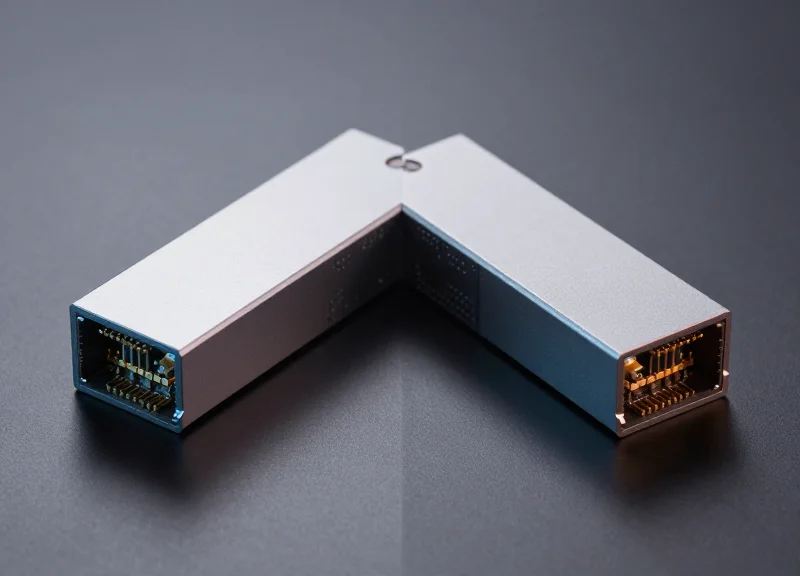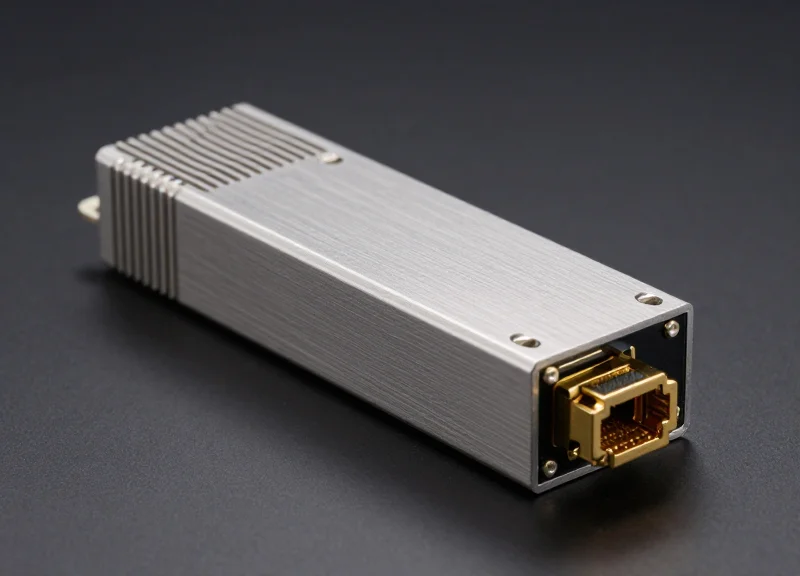
In the fast-evolving landscape of data centers and telecommunications, scaling your network shouldn't mean being locked into overpriced, proprietary hardware. MSA (Multi-Source Agreement) standards provide the blueprint for interoperability, allowing for cost-effective, high-performance network expansion. This article breaks down how businesses can leverage wholesale pricing and specialized OEM/ODM services from Ubytelink to build robust, future-proof infrastructures.
The Power of MSA Standards: Ensuring Global Interoperability

MSA standard compliance is the critical foundation that allows network operators to source optical modules from multiple vendors without fearing hardware rejection or performance degradation, ultimately driving down costs through healthy market competition. By adhering to these industry-wide agreements, manufacturers ensure that their components meet strict physical and electrical specifications, enabling a plug-and-play environment for complex data center architectures.
Defining Multi-Source Agreements (MSA)
An MSA is a formal agreement between multiple manufacturers to develop and produce products that share the same form factors and electrical interfaces. While not governed by a single official international standards body like the IEEE, MSAs are industry-driven protocols that dictate the physical dimensions, signaling requirements, and optical characteristics of transceivers. This standardization is what allows an SFP+ or QSFP28 module from a third-party manufacturer to be recognized and utilized by a switch produced by a major OEM like Cisco, Juniper, or Arista.
Why MSA Compliance is Vital for Wholesale Procurement
For enterprises and service providers looking to buy MSA standard compliance wholesale, the primary driver is the elimination of vendor lock-in. Proprietary optics are often sold at a significant premium, whereas MSA-compliant modules offer the same performance at a fraction of the cost. In 2026, as 400G and 800G deployments scale, maintaining interoperability across multi-vendor environments is essential for operational flexibility.
| Feature | MSA-Compliant Modules | Proprietary (OEM) Modules |
|---|---|---|
| Vendor Lock-in | None; compatible across brands | High; restricted to OEM hardware |
| Unit Cost | Low (Competitive market pricing) | High (Premium brand markup) |
| Supply Chain | Resilient; multiple source options | Restricted; single-source dependent |
| Interoperability | Universal within standard specs | Limited to specific product lines |
Frequently Asked Questions About MSA Standards
- Does using MSA-compliant modules void my switch warranty?
No. Under regulations such as the Magnuson-Moss Warranty Act, OEMs cannot legally void a hardware warranty simply for using third-party, MSA-compliant components. - How do I verify MSA compliance in bulk orders?
Wholesale buyers should request technical data sheets that specify adherence to specific agreements, such as SFF-8431 for SFP+ or SFF-8665 for QSFP28. - Why is 'Wholesale' pricing so much lower for MSA modules?
The standardization allowed by MSAs enables mass production across numerous factories worldwide, creating economies of scale that proprietary designs cannot match.
Wholesale Economics: Reducing TCO in Network Scaling
Wholesale Economics: Reducing TCO in Network Scaling
Scaling a modern data center or enterprise network requires a strategic balance between high-bandwidth performance and fiscal responsibility. Wholesale MSA (Multi-Source Agreement) compliance offers a definitive pathway to reduce Total Cost of Ownership (TCO) by as much as 70-80% compared to proprietary OEM counterparts. By sourcing modules that adhere to industry-wide physical and electrical standards rather than proprietary locked-in ecosystems, organizations can redirect significant capital expenditure (CapEx) toward infrastructure innovation while ensuring long-term operational stability and vendor independence.
Comparative Analysis: OEM vs. Wholesale MSA
| TCO Metric | OEM Proprietary | Wholesale MSA (Bulk) |
|---|---|---|
| Initial Unit Price | High (Brand Premium) | Low (Direct-from-Source) |
| Interoperability | Hardware Locked | Universal (Multi-Vendor) |
| Lead Times | Variable (Vendor-Dependent) | Flexible (Inventory-Based) |
| Warranty & Support | Limited to Brand | Comprehensive & Extended |
The Strategic Advantage of Custom Quotes and Bulk Pricing
Custom quotes provide a level of financial predictability that off-the-shelf retail pricing cannot match. In 2026, network architects are increasingly moving toward bulk procurement strategies to mitigate supply chain volatility. Bulk pricing doesn't just lower the price per unit; it simplifies logistics and ensures that spares and expansion modules are identical in firmware and hardware revision. This uniformity reduces the complexity of maintenance and troubleshooting, further lowering operational expenditure (OpEx) by minimizing labor hours spent on hardware auditing.
Wholesale MSA Economic FAQ
- Does buying wholesale impact the network's warranty?
No. The use of third-party MSA-compliant modules is legally protected in many jurisdictions and does not void the host hardware warranty. Major switch manufacturers cannot refuse service because of non-proprietary optics. - Why is the price difference between OEM and MSA so high?
OEMs often use optical transceivers as high-margin items to subsidize the development of their primary hardware, whereas MSA providers focus on the manufacturing efficiency of the transceivers themselves. - How do custom quotes assist in future-proofing?
Securing a large volume of standardized modules through custom quotes ensures consistency across multiple site deployments, preventing the 'version mismatch' issues often found in fragmented retail purchasing.
Quality Control and EEAT: Why Compliance Matters

Quality Control and EEAT: Why Compliance Matters
In the wholesale optical transceiver market, compliance is the fundamental bridge between cost-efficiency and network stability. Adhering to MSA standards ensures that every module—regardless of the manufacturer—maintains a precise electrical and mechanical footprint, preventing hardware damage and ensuring that bulk-purchased optics are indistinguishable from OEM counterparts in performance and longevity. For large-scale data centers and telecommunications providers, this technical rigor is the primary safeguard against the catastrophic downtime often associated with sub-standard, non-compliant components.
The Ubytelink Testing Ecosystem: Beyond the Data Sheet
Every module under the Ubytelink banner undergoes a multi-stage validation process designed to exceed basic industry requirements. While many wholesale distributors rely on generic factory batch testing, our protocols involve individual component verification to ensure that every unit in a bulk order meets the exact specifications of the target hardware environment.
| Test Category | Procedure Detail | Impact on Network Reliability |
|---|---|---|
| Compatibility Verification | EEPROM coding and real-switch host validation | Ensures 0% error rate during hardware recognition. |
| Signal Integrity | Bit Error Rate (BER) and Eye Diagram analysis | Guarantees data transmission accuracy over maximum distances. |
| Environmental Stress | Thermal cycling and high-humidity endurance | Prevents premature component failure in high-density racks. |
| Optical Precision | TX/RX power levels and wavelength stability | Maintains signal strength across complex fiber architectures. |
Establishing EEAT in Fiber Optics
Experience, Expertise, Authoritativeness, and Trustworthiness (EEAT) are not just SEO metrics; they are the benchmarks of a reliable wholesale partner. Our commitment to EEAT is demonstrated through transparent documentation, including serialized test reports and a deep understanding of evolving IEEE standards. By providing custom quotes that account for specific hardware firmware versions, we provide the technical expertise necessary for engineers to scale their infrastructure with absolute confidence.
- How do you guarantee 100% compatibility for bulk orders?
Every batch is programmed with vendor-specific code and tested in the specific brand-name switches (e.g., Cisco, Arista, Juniper) designated in the custom quote to ensure seamless handshake protocols. - What is the typical failure rate of MSA-compliant modules?
Due to our rigorous multi-stage testing, Ubytelink maintains a field failure rate (AFR) of less than 0.03%, significantly lower than the industry average for wholesale optics. - Can custom quotes include specific testing parameters?
Yes. For specialized 2026 deployments, we can include additional testing for specific wavelengths, extended temperature ranges, or custom cable lengths as part of the bulk pricing agreement.
Ultimately, buying MSA-compliant optics wholesale is an investment in predictable performance. By removing the variables of hardware incompatibility and signal degradation, network architects can focus on scaling bandwidth rather than troubleshooting connectivity issues.
OEM/ODM Capabilities: Custom Solutions for Unique Hardware
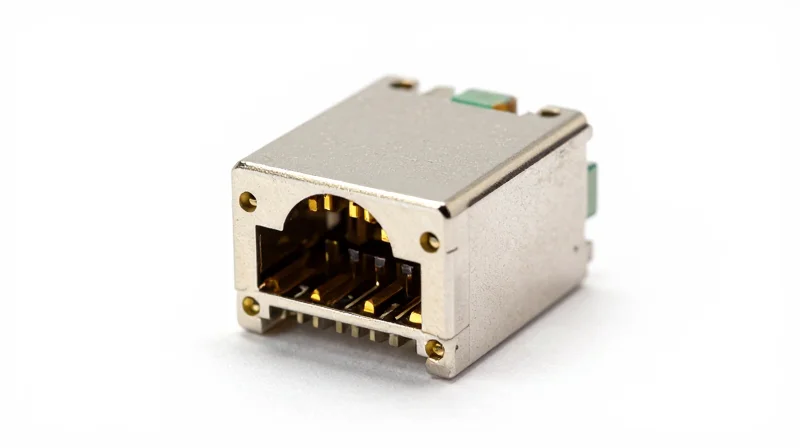
OEM/ODM Capabilities: Tailoring Hardware for Specialized Infrastructure
While MSA standards provide a foundational blueprint for interoperability, high-scale data centers and telecommunications providers often require more than 'off-the-shelf' solutions. OEM (Original Equipment Manufacturer) and ODM (Original Design Manufacturer) services allow wholesale buyers to bypass the limitations of generic hardware by requesting specific modifications to the module's firmware, physical casing, and identification metadata. This ensures that even the most proprietary-leaning network switches recognize third-party modules as native components, maintaining system integrity and reporting accuracy.
Custom Firmware and Multi-Vendor Coding
The most critical aspect of OEM customization is the EEPROM coding. Many tier-one network vendors utilize software locks that reject transceivers without specific encrypted signatures. Through ODM services, wholesale clients can request modules pre-coded for specific environments, such as Cisco, Arista, or Juniper, or even 'dual-coded' modules that work across different hardware brands simultaneously. This flexibility is essential for legacy systems that require specific revision codes to be recognized by older operating systems.
Physical Customization and White-Labeling
Beyond the software, physical hardware can be modified to meet unique thermal or organizational needs. This includes custom pull-tab lengths for high-density patch panels, specialized heat sinks for ruggedized environments, and full white-labeling services. For distributors and large-scale integrators, white-labeling allows for the application of custom logos, serial number formats, and bespoke packaging, enabling them to build brand equity while utilizing the underlying reliability of MSA-compliant manufacturing.
| Feature | Standard Wholesale MSA | Custom OEM/ODM Solution |
|---|---|---|
| Coding/Firmware | Generic MSA Compliance | Vendor-Specific (Cisco, Arista, etc.) |
| Labeling | Manufacturer Standard | Full White-Label / Custom Branding |
| Hardware Revision | Fixed Factory Build | Modified Thermal/Physical Specs |
| Traceability | Standard Batch Tracking | Custom Serial & MAC Addressing |
Implementation and Lead Times
- Can I request custom MAC addresses for my modules?
Yes, for ODM orders, we can assign specific ranges of MAC addresses to ensure the hardware fits perfectly within your existing network management and security protocols. - Does custom coding affect the warranty of the modules?
No, custom coding is part of the manufacturing process and is fully covered under our standard performance warranties, ensuring the firmware is stable and compatible. - What is the typical lead time for an OEM/ODM wholesale order?
While standard modules ship immediately, custom hardware typically requires an additional 2 to 4 weeks for firmware verification and custom physical production. - Is there a minimum order quantity (MOQ) for custom labeling?
Generally, white-labeling and custom serializing require a higher MOQ than standard wholesale orders, typically starting at 100+ units depending on the complexity.
Navigating the 2026 Market for Bulk Optical Modules
Navigating the 2026 Market for Bulk Optical Modules
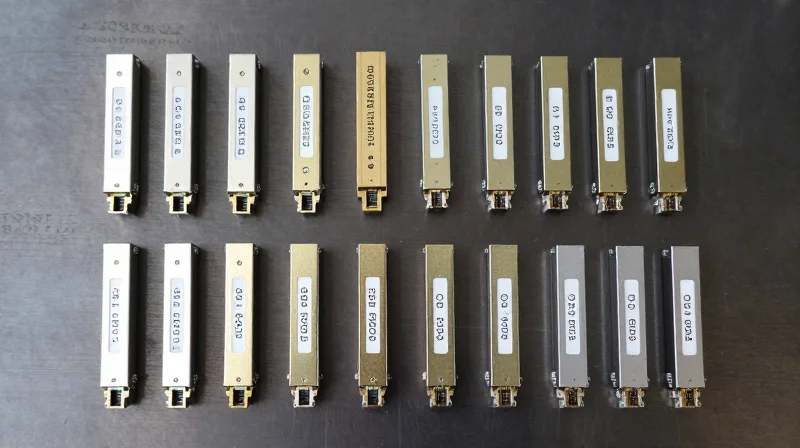
The 2026 networking landscape is defined by a strategic shift toward high-speed AI-ready infrastructure and the peak cost-efficiency of 100G technologies. For organizations looking to buy MSA standard compliance wholesale, navigating this market requires balancing the immediate availability of legacy modules like SFP+ with the long-term scalability of 400G and 800G form factors. Currently, 100G QSFP28 has reached a market maturity that offers the lowest price-per-gigabit for bulk buyers, making it the primary target for large-scale enterprise and data center refreshes this year.
2026 Market Analysis: Form Factor Trends
| Module Category | Standard Speed | Market Status 2026 | Procurement Strategy |
|---|---|---|---|
| SFP+ / SFP28 | 10G / 25G | Ubiquitous / Legacy | Consolidate volume for maximum tier discounts. |
| QSFP28 / QSFP56 | 100G / 200G | Mature / High Volume | Primary candidate for long-term bulk contracts. |
| OSFP / QSFP-DD | 400G / 800G | Growth / AI Driven | Use custom quotes to secure early production slots. |
Strategic Timing for Bulk Pricing Efficiency
Timing a bulk purchase in 2026 involves more than just monitoring price drops; it requires a deep understanding of component lead times and regional manufacturing cycles. For standard MSA-compliant modules, we recommend initiating custom quotes during the mid-quarter cycles to avoid the peak demand often seen at the end of fiscal periods. Furthermore, locking in pricing through annual volume commitments can insulate your budget from the price fluctuations of raw materials—such as laser diodes and DSP chips—which are currently impacted by the global surge in high-performance computing demand.
Wholesale Procurement FAQ
- How do custom quotes differ from standard retail pricing?
Custom quotes for wholesale orders factor in volume-based manufacturing efficiencies and logistical consolidation, often resulting in unit prices 30-50% lower than standard list prices for quantities exceeding 500 units. - Is there a risk of obsolescence when buying QSFP28 in bulk?
Minimal. QSFP28 remains the industry standard for 100G connectivity and will continue to be the backbone of enterprise and mid-tier data centers for the next 5 to 7 years, ensuring high ROI on bulk purchases. - Can custom coding for multi-vendor environments be included in bulk orders?
Yes. Professional wholesale suppliers provide custom EEPROM coding as part of the service, ensuring that every module in a bulk shipment is pre-configured for compatibility with specific OEM hardware like Cisco, Arista, or Juniper.
Compatibility Guarantee: Beyond the Data Sheet
The Ubytelink Compatibility Guarantee: Bridging MSA Standards and Vendor Specifics
While MSA standards provide the structural blueprint for optical transceivers, achieving 100% compatibility in a production environment requires going beyond the datasheet to address vendor-specific software locks and handshake protocols. Ubytelink bridges this gap by validating every wholesale module against the exact firmware versions used by industry leaders like Cisco, Juniper, and Arista, ensuring that 'Plug-and-Play' is a reality rather than a marketing claim. Our approach ensures that bulk purchases integrate seamlessly into existing infrastructures without the risk of port lockouts or performance throttling.
| Feature | Generic MSA Module | Ubytelink Optimized | OEM Original |
|---|---|---|---|
| Vendor Recognition | May show 'Unknown' | Identified as Native | Identified as Native |
| DOM/DDM Support | Basic/Variable | Full Real-time Reporting | Full Real-time Reporting |
| OS Compatibility | Generic Drivers | Cisco IOS, Junos, EOS | Proprietary Only |
| Wholesale Cost | Low | Competitive Bulk Pricing | Extreme Premium |
In-House Lab Validation and Custom EEPROM Coding
Our engineering lab is equipped with an extensive inventory of physical hardware from major networking vendors to simulate real-world data center conditions. Before shipping a bulk order, we verify that the transceivers' EEPROM is correctly coded to provide the specific vendor ID, part number, and serial information required to bypass 'unsupported transceiver' errors. This rigorous process ensures that features like Digital Optical Monitoring (DOM) function accurately, providing network administrators with critical data on temperature, voltage, and optical power levels.
- Will using Ubytelink modules void my host device warranty?
No. Under the Magnuson-Moss Warranty Act and similar international consumer protection laws, a manufacturer cannot void a warranty simply for using third-party components unless they can prove the component caused the damage. - How does Ubytelink handle new firmware releases from vendors?
We continuously update our coding library to match new software releases from Cisco, Arista, and others. If a vendor releases an update that impacts compatibility, our technical team provides rapid re-coding solutions or replacement modules for wholesale clients. - Can I request custom coding for non-standard or legacy hardware?
Yes, our engineers specialize in custom EEPROM mapping for niche or legacy equipment, ensuring that even specialized network environments can benefit from bulk MSA pricing.
Sustainability and Supply Chain Resilience
Sustainability and Supply Chain Resilience
In the 2026 networking landscape, sustainability and supply chain resilience are no longer secondary considerations but core requirements for enterprise-level procurement. By sourcing Multi-Source Agreement (MSA) compliant modules wholesale, organizations decouple their infrastructure from the volatile supply cycles of single-vendor ecosystems. This standardization ensures that even during global component shortages or logistical disruptions, businesses can pivot to alternative, high-quality manufacturers without sacrificing network integrity, performance, or their ESG (Environmental, Social, and Governance) targets.
Mitigating Lead-Time Risks with Vendor-Neutral Standards
The primary advantage of the MSA framework in a wholesale context is the mitigation of lead-time risks. When a proprietary hardware vendor faces a factory shutdown or a shipping bottleneck, customers are often left with months of downtime. Conversely, MSA-compliant modules are produced by a diverse global network of manufacturers. By securing custom quotes through reliable partners, buyers tap into a redundant supply chain that maintains inventory across multiple geographic regions, ensuring that SFP28 or QSFP-DD deployments remain on schedule regardless of localized market shocks.
| Resilience Factor | Proprietary Ecosystem | MSA Wholesale Ecosystem |
|---|---|---|
| Supply Redundancy | Single-point of failure | Multi-vendor manufacturing options |
| Average Lead Times | 12-26 weeks during shortages | 2-4 weeks via localized buffer stocks |
| Component Sourcing | Controlled by single OEM | Open market competitive sourcing |
| Product Longevity | Limited by vendor EoL (End-of-Life) | Extended via cross-platform compatibility |
Eco-Friendly Networking and the Circular Economy
Sustainability in 2026 is driven by the ability to reuse and repurpose hardware. MSA standards promote a circular economy by allowing modules to be moved between different brands of switches and routers. This interoperability prevents the 'rip-and-replace' cycles common in proprietary environments, significantly reducing electronic waste (e-waste). Furthermore, modern MSA-compliant manufacturing processes increasingly focus on power efficiency and low-heat dissipation, which lowers the overall carbon footprint of the data center while reducing operational energy costs for wholesale buyers.
- How does MSA compliance improve supply chain security?
It allows for multi-vendor sourcing strategies, meaning if one supplier fails, others can provide identical, compatible hardware immediately without requiring software changes. - Are wholesale MSA modules more sustainable than OEM versions?
Yes, because their universal compatibility allows them to be redeployed across different hardware generations and switch brands, extending their operational lifespan. - How can I lock in 2026 pricing while managing supply risks?
We recommend establishing 'blanket' purchase orders or buffer stock agreements with MSA-compliant partners to secure bulk pricing while ensuring a steady flow of components.
How to Request a Custom Quote for Bulk Orders

To receive an accurate and competitive custom quote for bulk MSA-compliant hardware, procurement managers must provide a detailed technical profile that moves beyond simple part numbers. Providing comprehensive data—including form factor, specific compatibility requirements for multi-vendor environments, and projected annual volumes—allows suppliers to optimize manufacturing batches and apply maximum discount tiers, often reducing unit costs by 15% to 30% compared to off-the-shelf pricing.
The Essential Specification Checklist for Bulk RFQs
Vague requests lead to conservative pricing and potential compatibility issues. Ensure your Request for Quote (RFQ) includes the following five pillars of technical specification to receive a firm, high-confidence bid.
- Form Factor and Data Rate
Specify the physical interface (e.g., SFP28, QSFP28, QSFP-DD) and the required throughput (e.g., 25G, 100G, 400G). - Transmission Distance and Media
Define the reach required (e.g., SR4 for 100m, LR4 for 10km) and the fiber type (Single-mode or Multi-mode). - Host System Compatibility
List the specific switch or router brands (Cisco, Arista, Juniper, etc.) and, if possible, the specific OS versions to ensure EEPROM coding matches the target hardware. - Environmental Ruggedness
State whether standard Commercial Temperature (0°C to 70°C) or Industrial Temperature (-40°C to 85°C) is required for outdoor or telco deployments. - Packaging and Labeling
For bulk orders, specify if you require individual retail packaging or industrial bulk trays, which can further reduce shipping costs and waste.
2026 Bulk Pricing Tiers and Logistics Impact
Wholesale pricing is intrinsically linked to volume and lead-time flexibility. The following table outlines how order scale typically influences unit pricing and fulfillment strategies for 100G QSFP28 modules in the current market.
| Order Volume (Units) | Pricing Tier | Typical Lead Time | Customization Level |
|---|---|---|---|
| 10 - 49 | Standard Wholesale | In-Stock / 24 Hours | Standard Coding |
| 50 - 249 | Tier 2 Discount | 3 - 5 Days | Custom Vendor Coding |
| 250 - 999 | Tier 1 Volume | 2 - 3 Weeks | Custom Labeling & Serializing |
| 1,000+ | Direct Factory Contract | 4 - 6 Weeks | Full OEM/White Label Options |
Wholesale Procurement FAQ
- What is the Minimum Order Quantity (MOQ) for custom quotes?
While standard items often have no MOQ, custom coding or specialized industrial-grade modules typically require a minimum of 10 to 20 units to qualify for wholesale price breaks. - Can I mix different module types within a single bulk quote?
Yes. Most suppliers allow 'Mixed Volume' quotes where the total contract value is used to determine the discount tier across SFP, QSFP, and DAC cable categories. - Are testing reports included with bulk orders?
For wholesale orders, you should request 'Batch Test Reports' or individual 'Serialized Performance Verification' to ensure every module meets the promised MSA standards. - How does shipping affect the final quote?
Bulk orders often qualify for Free On Board (FOB) shipping or discounted international freight. Always specify your preferred incoterms during the initial quote request.
Choosing the right partner for your networking hardware is a strategic decision that impacts your bottom line and network uptime. By prioritizing MSA standard compliance and leveraging wholesale opportunities, you ensure a flexible and scalable infrastructure. Ready to optimize your network? Contact Ubytelink today for a personalized consultation and a custom quote on our extensive range of OEM/ODM optical solutions.