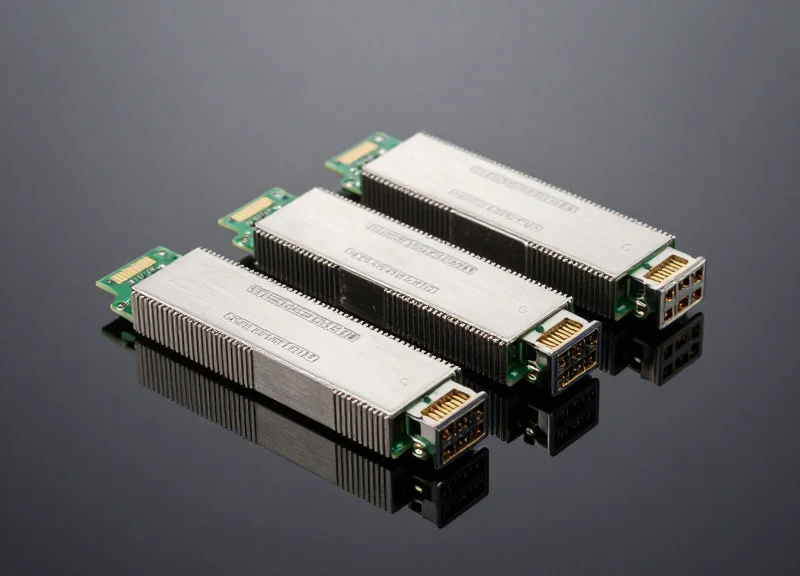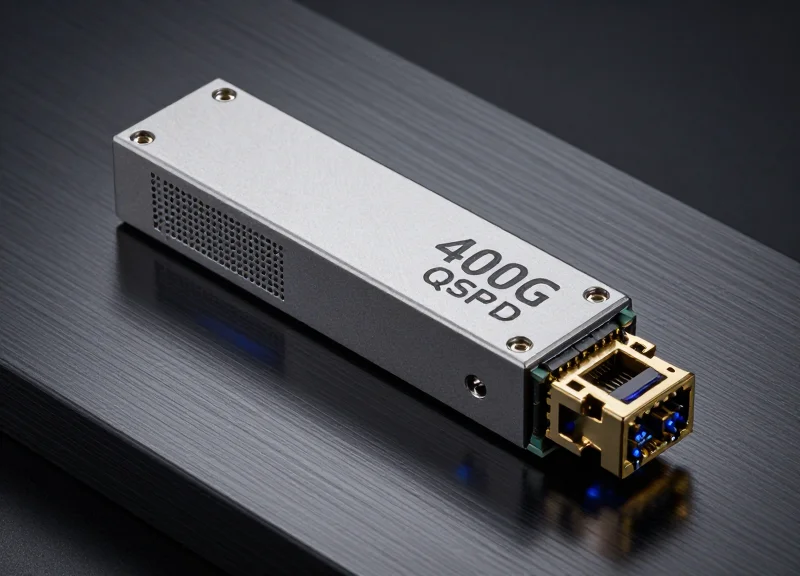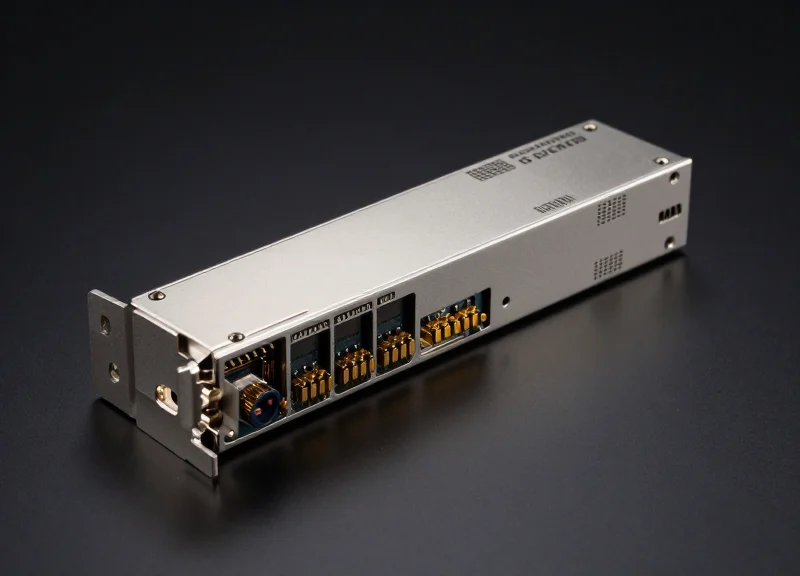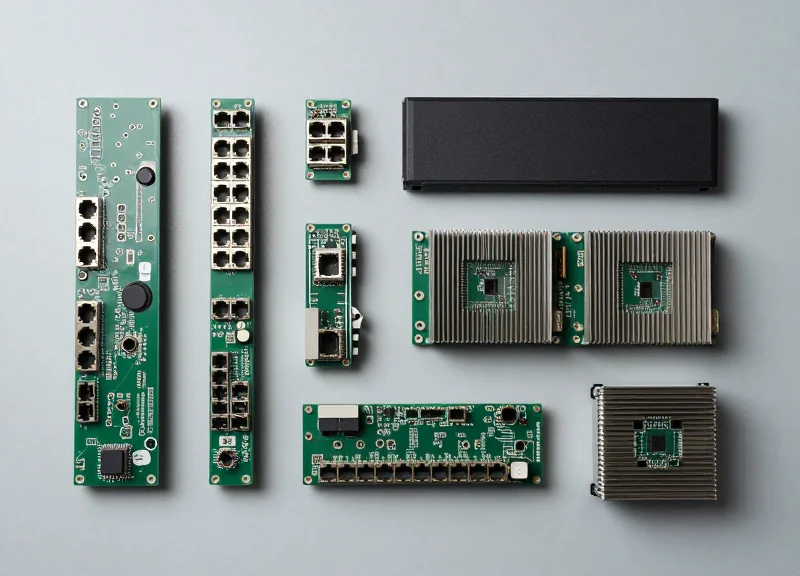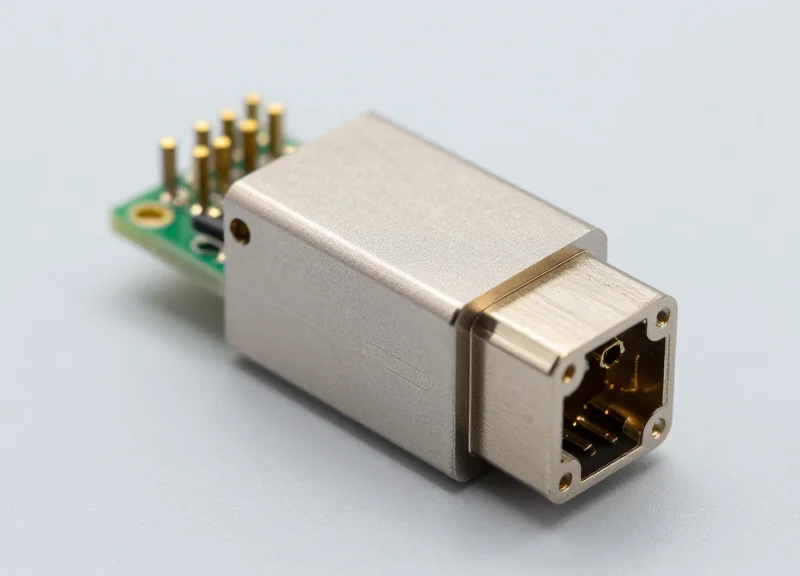
In the rapidly evolving landscape of hyperscale data centers and AI-driven workloads, the transition to 400G connectivity is no longer optional—it is a necessity. However, as speeds increase, so do the challenges of power consumption and thermal management. Ubytelink's Silicon Photonics platform provides a sophisticated answer to these hurdles, delivering a reliable, high-performance foundation for the world's most demanding global networks.
The Rise of 400G: Navigating the Next Era of Connectivity

The Rise of 400G: Navigating the Next Era of Connectivity
The migration to 400G Ethernet represents a fundamental shift in network architecture, moving beyond simple bandwidth increments to meet the demands of a data-saturated world. As hyperscale data centers and global enterprises hit the physical and economic limits of 100G infrastructure, 400G has emerged as the standard for maintaining competitive low-latency performance and high-density throughput in modern cloud environments.
Catalysts for the 400G Evolution
The surge in data traffic is primarily fueled by the explosion of Generative AI, machine learning clusters, and the proliferation of 5G-edge computing. These technologies demand a massive increase in 'East-West' traffic—data moving between servers within a data center—which necessitates a more efficient pipe than legacy 100G systems can provide. By adopting 400G, operators can consolidate their physical footprint while significantly increasing their total switching capacity.
| Metric | 100G Standard (QSFP28) | 400G Standard (QSFP-DD/OSFP) |
|---|---|---|
| Max Throughput | 100 Gbps | 400 Gbps |
| Modulation Type | NRZ | PAM4 |
| Power Efficiency | Higher Watts per Gbps | Lower Watts per Gbps |
| Port Density | Standard | Ultra-High Density |
The Critical Role of Silicon Photonics
Traditional optical manufacturing reaches its thermal and density limits at 400G speeds. Silicon Photonics (SiPh) solves this by integrating optical components—such as modulators and detectors—directly onto a silicon substrate using CMOS manufacturing processes. Ubytelink's 400G SiPh solutions leverage this integration to provide superior reliability, lower power consumption, and better thermal management compared to traditional discrete optics, making them essential for sustainable high-speed network growth.
- Why is 400G more cost-effective than multiple 100G links?
400G reduces the total number of optical interfaces and cables required, lowering both the initial CAPEX for hardware and the ongoing OPEX related to power and cooling. - What is the significance of PAM4 in 400G networks?
PAM4 (Pulse Amplitude Modulation 4-level) allows for doubling the bit rate within the same bandwidth compared to traditional NRZ, enabling the 400G speeds necessary for modern high-performance computing. - How does Ubytelink ensure compatibility in 400G environments?
Ubytelink 400G modules follow strict MSA (Multi-Source Agreement) standards, ensuring seamless interoperability with major switch and router vendors globally.
Silicon Photonics vs. Traditional Optics: The Ubytelink Edge
Silicon Photonics vs. Traditional Optics: The Ubytelink Edge
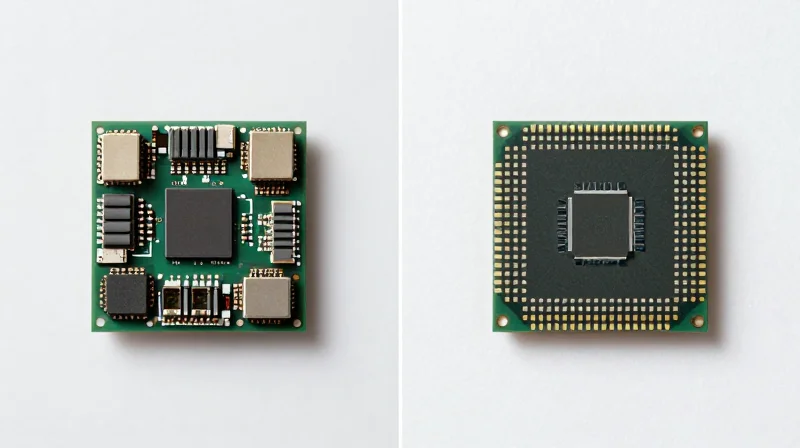
Ubytelink’s 400G Silicon Photonics solutions redefine optical networking by replacing the complex, multi-component assembly of traditional discrete optics with a highly integrated Photonic Integrated Circuit (PIC). While traditional optical transceivers rely on dozens of separate components—including lasers, modulators, and detectors that must be manually aligned and hermetically sealed—Ubytelink leverages the precision of silicon-based CMOS fabrication. This shift results in a more robust, power-efficient, and scalable architecture designed to meet the extreme demands of modern hyperscale data centers.
The Architecture of Integration
The core differentiator for Ubytelink lies in the reduction of the physical bill of materials (BOM). In traditional discrete designs, each component represents a potential point of failure and a source of signal loss. By integrating these functions onto a single silicon chip, Ubytelink eliminates the need for complex lens assemblies and gold-wire bonding. This high level of integration not only shrinks the physical footprint but also drastically reduces the electrical power required to drive signals between components, as the high-speed pathways are etched directly into the silicon wafer.
| Feature | Traditional Discrete Optics | Ubytelink Silicon Photonics |
|---|---|---|
| Component Count | High (Dozens of discrete parts) | Low (Integrated PIC) |
| Manufacturing Process | Labor-intensive manual alignment | Automated CMOS wafer fabrication |
| Long-term Reliability | Susceptible to mechanical shifts | Solid-state stability |
| Power Consumption | Higher due to component interconnects | Optimized for low-power operation |
| Scalability | Limited by assembly capacity | High-volume semiconductor yield |
Reliability and Manufacturing Scalability
One of the most significant advantages of Ubytelink's approach is the transition from 'boutique' assembly to mass semiconductor manufacturing. Traditional optics often face consistency issues across different production batches due to the variables inherent in manual micro-assembly. In contrast, Ubytelink utilizes standardized 200mm or 300mm silicon wafers. This ensures that every 400G transceiver is identical at the circuit level, providing predictable performance across thousands of nodes. Furthermore, the solid-state nature of silicon photonics makes these modules significantly more resilient to the thermal fluctuations and vibrations common in high-density server racks.
- How does Ubytelink reduce the cost of 400G optics?
By leveraging existing CMOS foundries, Ubytelink reduces the need for specialized optical assembly equipment and labor, passing those savings to the customer while maintaining higher yields. - Does silicon photonics affect signal reach?
No. In fact, Ubytelink's integration allows for tighter control over signal integrity, ensuring that 400G DR4 and FR4 solutions meet or exceed industry standards for reach and bit-error rate (BER). - Is silicon photonics more reliable than legacy optics?
Yes. By eliminating numerous physical connections and fiber pigtails inside the module, Ubytelink minimizes the risk of mechanical failure and environmental degradation.
Unmatched Energy Efficiency: Slashing Power Consumption

Ubytelink 400G Silicon Photonics (SiPh) modules provide a transformative approach to energy efficiency, delivering up to 20% lower power consumption than traditional discrete optical solutions. By integrating modulators and passive components onto a single silicon chip, Ubytelink minimizes electrical-to-optical conversion losses and simplifies the thermal management required for high-density networking environments.
The Architecture of Efficiency: How Silicon Photonics Saves Power
The primary driver behind Ubytelink's efficiency is the consolidation of the optical engine. Traditional 400G transceivers often rely on multiple discrete components, such as Electro-absorption Modulated Lasers (EMLs), which require significant power to maintain stable operating temperatures and high-frequency performance. In contrast, Ubytelink’s SiPh architecture utilizes high-efficiency silicon modulators that require less drive voltage and generate significantly less waste heat.
Comparison of Power Metrics: SiPh vs. Traditional Optics
| Feature | Traditional 400G (EML/DML) | Ubytelink 400G SiPh |
|---|---|---|
| Typical Power Consumption (DR4) | 10.5W - 12.0W | 8.0W - 9.0W |
| Typical Power Consumption (FR4) | 11.5W - 13.0W | 9.0W - 10.5W |
| Thermal Dissipation Needs | High (Requires robust cooling) | Optimized (Lower cooling overhead) |
| Power-per-Gigabit | ~30mW/Gbps | ~22mW/Gbps |
Operational Benefits: Slashing OPEX and Carbon Footprint
Reducing the power draw of individual modules has a compounding effect on the entire data center ecosystem. Lower power consumption at the transceiver level reduces the total load on the Power Distribution Units (PDUs) and significantly decreases the demand on cooling infrastructure. This 'cooling multiplier' effect means that every watt saved at the optical module translates into additional savings in Chiller and HVAC operations, directly improving the facility's Power Usage Effectiveness (PUE) and supporting ESG (Environmental, Social, and Governance) mandates.
Energy Efficiency FAQ
- How does low power consumption impact module lifespan?
Lower power consumption results in lower operating temperatures. This reduced thermal stress significantly increases the Mean Time Between Failures (MTBF) for the internal components, enhancing overall network reliability. - Do Ubytelink SiPh modules require special cooling?
No, they are designed to be compatible with standard air-cooled and liquid-cooled data center environments, often performing better than traditional optics in high-density airflow scenarios. - Is the power saving consistent across all 400G form factors?
Yes, whether using QSFP-DD or OSFP form factors, the silicon photonics integration provides a consistent power advantage over discrete laser-based alternatives.
Engineered for Reliability: Mission-Critical Performance
Engineered for Reliability: Mission-Critical Performance
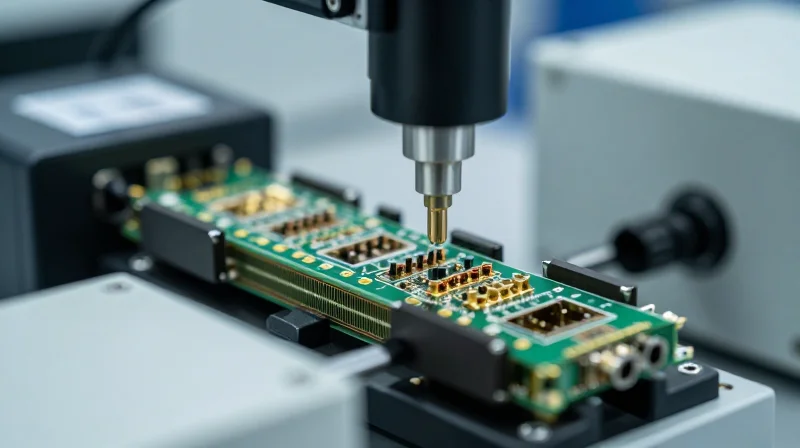
Ubytelink's 400G Silicon Photonics solutions address the industry's most pressing challenge: maintaining zero-downtime infrastructure in increasingly complex global networks. Unlike traditional optical modules that rely on dozens of discrete components, Ubytelink leverages the high integration of Silicon Photonics (SiPh) to consolidate optical functions onto a single CMOS-compatible die. This monolithic integration inherently eliminates numerous failure points associated with manual fiber alignment and component aging, resulting in a robust hardware foundation that exceeds the stability requirements of tier-1 cloud service providers and enterprise data centers.
Rigorous Testing Protocols and Quality Standards
To ensure peak performance under the harshest operational conditions, every Ubytelink 400G module undergoes a comprehensive testing regimen that spans from the wafer level to the finished product. We utilize automated optoelectronic probing at the wafer scale to weed out defects early, followed by intensive 'burn-in' cycles that simulate years of operation in high-heat environments. This 'zero-defect' manufacturing mindset ensures that our modules maintain superior Bit Error Rate (BER) performance even when subjected to the thermal fluctuations typical of high-density server racks.
| Reliability Metric | Ubytelink 400G SiPh Target | Industry Standard (Min) |
|---|---|---|
| MTBF (Mean Time Between Failures) | > 15,000,000 Hours | 10,000,000 Hours |
| FIT (Failures In Time) | < 65 | 100 |
| Compliance Standard | Telcordia GR-468-CORE | Standard MSA |
| Burn-in Duration | 168 Hours @ Full Load | 72 Hours |
Intelligent Diagnostics and Proactive Monitoring
Reliability at Ubytelink is not just about hardware longevity; it is about visibility. Our 400G modules are fully compliant with the Common Management Interface Specification (CMIS), providing network administrators with real-time telemetry data. This allows for proactive maintenance by monitoring parameters such as optical launch power, receive sensitivity, and laser bias current. By identifying degradation before it leads to a link failure, Ubytelink enables a self-healing network posture that is vital for mission-critical applications.
- How does Ubytelink ensure the longevity of the laser source in 400G modules?
We utilize high-grade External Cavity Lasers (ECL) or integrated laser sources that are isolated from high-heat zones on the PCB, significantly reducing thermal aging and improving wavelength stability over time. - What environmental testing do the modules undergo?
Modules are subjected to thermal shock testing, damp heat exposure, and mechanical vibration tests as per Telcordia standards to ensure they survive global shipping and harsh data center environments. - Does Ubytelink provide interoperability guarantees?
Yes, our modules are rigorously tested for interoperability with major switch and router vendors (Cisco, Arista, Juniper, etc.) to ensure that reliability is maintained across heterogeneous network fabrics.
Thermal Management in High-Density Deployments
Thermal Management in High-Density Deployments
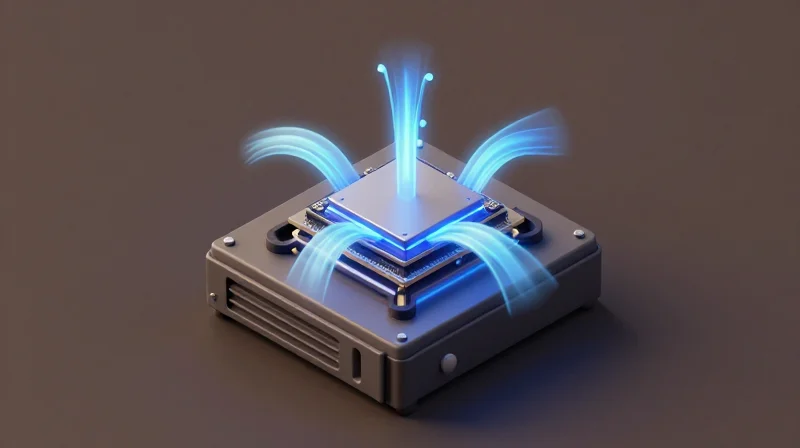
Ubytelink 400G Silicon Photonics Solutions address the critical challenge of thermal runaway by integrating optical components directly onto a silicon substrate, which inherently provides higher thermal stability and lower power dissipation compared to traditional discrete laser assemblies. By reducing the heat generated at the chip level, these modules prevent the cumulative thermal build-up that often plagues high-density switch ports, ensuring consistent bit-error-rate (BER) performance even in crowded, airflow-restricted rack environments.
The Physics of Cooler Connectivity
In traditional 400G transceivers, multiple electro-absorption modulated lasers (EMLs) generate significant localized heat, necessitating aggressive cooling cycles that consume additional power. Ubytelink’s Silicon Photonics (SiPh) approach utilizes a simplified light source and highly efficient integrated modulators. This streamlined architecture results in a significantly lower thermal footprint per gigabit of data transferred, which is vital for modern data centers where cooling costs can account for up to 40% of total operational expenditure.
| Thermal Metric | Traditional EML Modules | Ubytelink SiPh Solutions |
|---|---|---|
| Typical Power Consumption | 10W - 12W | 8W - 9W |
| Heat Dissipation Density | High (Localized) | Low (Distributed) |
| Wavelength Stability | Temperature Sensitive | Inherent Silicon Stability |
| Cooling Requirement | Active / Aggressive | Passive / Standard |
Mitigating Signal Degradation and Jitter
Excessive heat is the primary catalyst for signal jitter and wavelength shifting. Ubytelink's modules are engineered with specialized heat-spreading geometries and high-conductivity thermal interface materials (TIMs) that draw heat away from the Photonic Integrated Circuit (PIC). This thermal engineering ensures that the Extinction Ratio (ER) remains stable and the Transmitter Dispersion and Eye Closure Quaternary (TDECQ) values stay well within IEEE specifications, even during peak traffic loads in ambient temperatures up to 70°C.
- How does silicon photonics improve reliability in hot aisles?
Silicon photonics reduces the number of temperature-sensitive components and bond wires, leading to a more robust physical structure that resists thermal expansion and mechanical stress better than traditional assemblies. - Does Ubytelink support industrial temperature ranges?
Yes, our silicon photonics platform is designed to maintain signal integrity across a wide range of temperatures, making it suitable for both controlled data center environments and more demanding edge computing deployments. - What is the impact on fan speed and noise?
By operating with lower power-to-heat conversion, Ubytelink modules allow switch fans to run at lower RPMs, reducing both acoustic noise and the overall energy overhead of the chassis cooling system.
Seamless Interoperability: Compliance and Standardization
Ubytelink 400G Silicon Photonics solutions are engineered to eliminate the friction typically associated with multi-vendor environments, providing guaranteed compatibility through rigorous adherence to international standardization protocols.
The Foundation of Universal Connectivity: MSA and IEEE Compliance
Interoperability is the bedrock of modern hyperscale infrastructure. Ubytelink ensures that every 400G module complies with the Institute of Electrical and Electronics Engineers (IEEE) 802.3bs and 802.3cd specifications, as well as the Multi-Source Agreements (MSA) for QSFP-DD and OSFP form factors. By following these blueprints, Ubytelink enables network architects to mix and match hardware without the risk of physical or electrical mismatches.
| Standard or Body | Focus Area | Operational Benefit |
|---|---|---|
| IEEE 802.3bs | 400GbE Physical Layer | Maintains signal integrity across different fiber types and distances. |
| QSFP-DD MSA | Form Factor and Electrical Interface | Guarantees mechanical fit and power-class compatibility across brands. |
| CMIS 4.0/5.0 | Common Management Interface | Enables consistent module monitoring and control across software platforms. |
Eliminating Vendor Lock-In through Open Interoperability
The proprietary nature of legacy networking equipment often forced enterprises into restrictive single-vendor ecosystems. Ubytelink disrupts this model by offering 'Plug-and-Play' solutions that are validated against major switch and router manufacturers. This open approach not only simplifies the supply chain but also empowers operators to optimize their total cost of ownership (TCO) by selecting the best-in-class optics for their specific bandwidth requirements without worrying about proprietary compatibility keys.
Interoperability and Standards FAQs
- How does Ubytelink ensure compatibility with legacy brands?
We perform extensive interoperability testing and offer custom firmware coding to match the specific EEPROM requirements of major OEMs like Cisco, Arista, and Juniper. - Why is Silicon Photonics preferred for standardized 400G deployments?
Silicon Photonics offers superior scalability and manufacturing consistency, making it easier to meet tight IEEE tolerance specifications compared to traditional TOSA/ROSA designs. - Are these modules compliant with future 800G transitions?
While these specific modules are 400G, their adherence to CMIS and QSFP-DD standards ensures the infrastructure is architecturally aligned for future high-speed upgrades.
Future-Proofing the Network: The Path to 800G and 1.6T

Strategic Scalability: Preparing for the 800G and 1.6T Era
Investing in Ubytelink’s 400G Silicon Photonics solutions provides a future-ready foundation that allows network operators to meet current demands while building the infrastructure necessary for the inevitable shift to 800G and 1.6T. By leveraging the inherent efficiency of silicon integration, Ubytelink ensures that the transition to higher bandwidths is characterized by incremental upgrades rather than disruptive hardware overhauls, maintaining consistency in form factors and power management.
The Silicon Photonics Advantage in Roadmap Planning
Silicon Photonics (SiPh) is the primary enabler for the next generation of high-speed interconnects. Unlike traditional optics that rely on discrete components, Ubytelink’s SiPh platform integrates multiple optical functions onto a single silicon die. This integration is critical for scaling to 800G and 1.6T because it minimizes signal loss and reduces the physical footprint, allowing for higher port density without exceeding the thermal limits of standard data center environments.
| Metric | 400G Generation | 800G Generation | 1.6T Generation |
|---|---|---|---|
| Throughput | 400 Gbps | 800 Gbps | 1.6 Tbps |
| Modulation | PAM4 | PAM4 / Coherent | Next-Gen PAM4 / Coherent |
| Form Factor | QSFP-DD / OSFP | QSFP-DD800 / OSFP800 | OSFP1600 / CPO |
| Core Technology | Silicon Photonics | Integrated SiPh | Co-Packaged Optics (CPO) |
Protecting Infrastructure Investment
A key component of Ubytelink's philosophy is investment protection through standardization. By adhering strictly to IEEE and MSA standards, Ubytelink’s 400G modules ensure that current fiber plants and switch architectures remain compatible with upcoming 800G and 1.6T iterations. This backward and forward compatibility allows for a phased migration, where high-bandwidth clusters can be introduced into existing environments without requiring a complete redesign of the network fabric.
- Is 400G equipment compatible with 800G modules?
Most 800G modules utilize the OSFP or QSFP-DD800 form factors, which are physically compatible with many 400G-ready switch cages, though the underlying ASIC must support the higher throughput. - How does Silicon Photonics reduce the cost of 1.6T upgrades?
By utilizing CMOS-compatible manufacturing, Silicon Photonics benefits from economies of scale and higher yields, making the leap to 1.6T more cost-effective compared to traditional TOSA/ROSA designs. - What is the role of Co-Packaged Optics (CPO) in future networks?
As we approach 1.6T, CPO moves the optical engine closer to the switch ASIC to drastically reduce power consumption, a transition that Ubytelink’s current SiPh research is actively facilitating.
Optimizing TCO with Ubytelink Optical Solutions
Strategic TCO Optimization with Ubytelink 400G Silicon Photonics
Optimizing Total Cost of Ownership (TCO) with Ubytelink 400G solutions is achieved by shifting the focus from initial procurement price to the lifecycle value of the hardware. While lower-tier modules may offer a smaller upfront investment, Ubytelink’s premium Silicon Photonics (SiPh) platform delivers substantial savings through superior energy efficiency, lower heat dissipation, and industry-leading reliability. By minimizing the frequency of hardware replacements and reducing the energy footprint of the data center, Ubytelink ensures that the long-term operational expenditure (OPEX) remains predictable and significantly lower than traditional alternatives.
Energy Efficiency and Operational Savings
Ubytelink 400G DR4 and FR4 modules utilize highly integrated silicon photonics circuits that require fewer discrete components than traditional EML-based optics. This integration translates directly into lower power consumption per gigabit of data transmitted. In large-scale deployments, even a small saving per module can result in thousands of dollars in annual electricity savings and reduced requirements for cooling infrastructure, which is often the largest hidden cost in modern data centers.
| Metric | Generic 400G Module | Ubytelink 400G SiPh Solution |
|---|---|---|
| Average Power Consumption | 10W - 12W | 8W - 9.5W |
| Annual Energy Cost (Est.) | High Operational Cost | Lower Operational Cost |
| Annual Failure Rate (AFR) | 1.5% - 3% | <0.5% |
| Thermal Management Needs | High (Active Cooling) | Moderate (Passive/Standard) |
| Projected Lifecycle | 3-4 Years | 5-7+ Years |
Minimizing Maintenance and Downtime Costs
The hidden cost of optical failures extends far beyond the price of a replacement module. Network downtime can lead to service-level agreement (SLA) penalties, lost revenue, and high labor costs for onsite technician troubleshooting. Ubytelink's rigorous quality control and use of high-reliability silicon photonics ensure a significantly higher Mean Time Between Failures (MTBF). By investing in premium components, global network operators can move from a reactive maintenance posture to a proactive, stable deployment cycle, ensuring that the infrastructure remains robust throughout its intended service life.
TCO Analysis FAQ
- Why does energy efficiency impact TCO so significantly?
Energy costs include both the power to run the module and the power required for cooling systems to dissipate the heat. Silicon photonics modules run cooler, lowering the burden on the entire facility's cooling system. - Can Ubytelink modules reduce the cost of future upgrades?
Yes. By maintaining high signal integrity and adhering to strict IEEE standards, Ubytelink modules provide a stable physical layer that supports seamless transitions to higher-speed switches without requiring a complete overhaul of the optical fiber infrastructure. - How does reliability contribute to ROI?
Reliability ensures that the initial capital expenditure is amortized over a longer period. A module that lasts significantly longer effectively reduces the hardware cost per year while avoiding the labor costs associated with frequent replacements.
Ubytelink is dedicated to powering the next generation of global networks with 400G Silicon Photonics that offer a perfect balance of performance and sustainability. By prioritizing engineering excellence and rigorous quality control, we ensure your mission-critical infrastructure remains resilient. Ready to upgrade your network? Contact Ubytelink's specialist team today for a technical consultation or a quote.