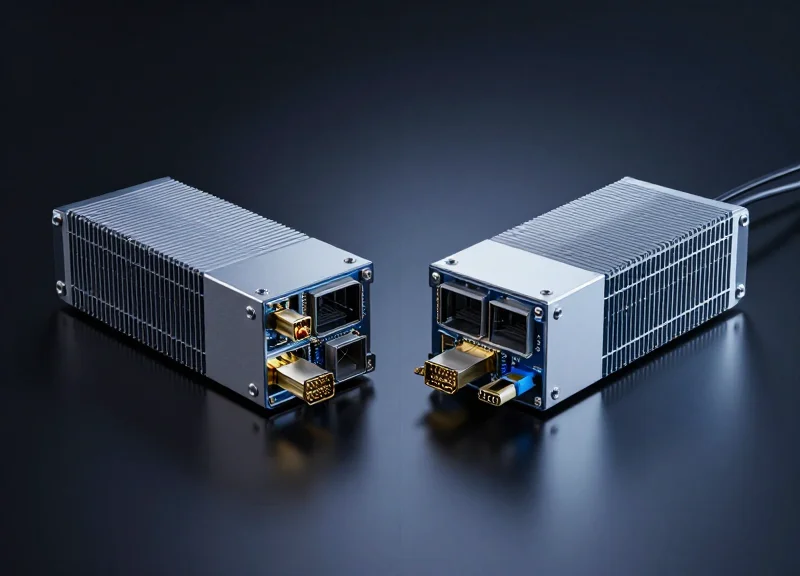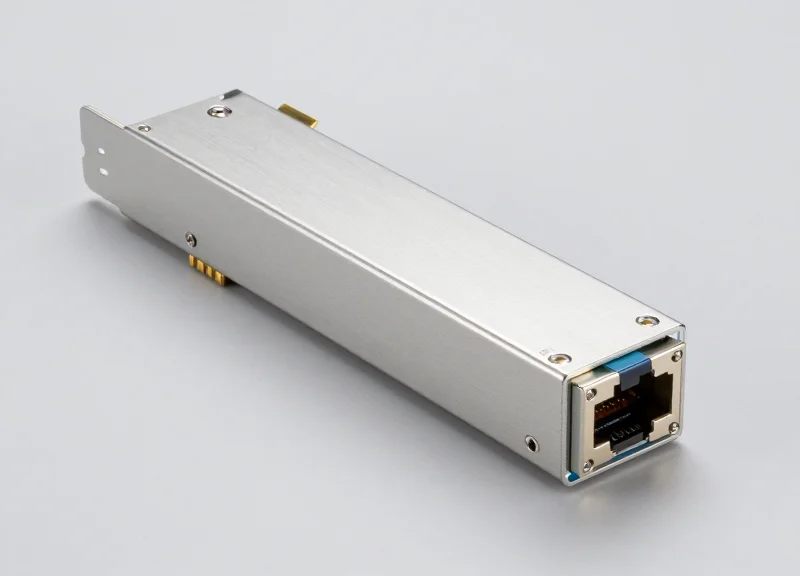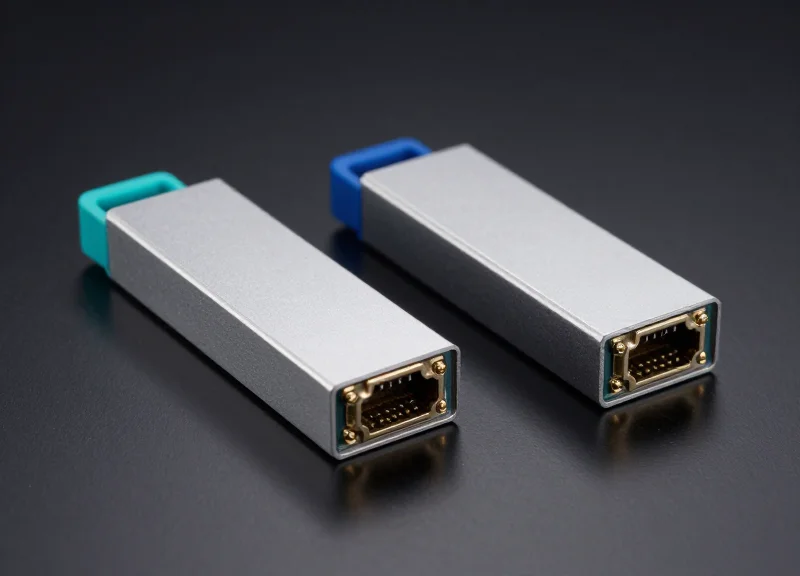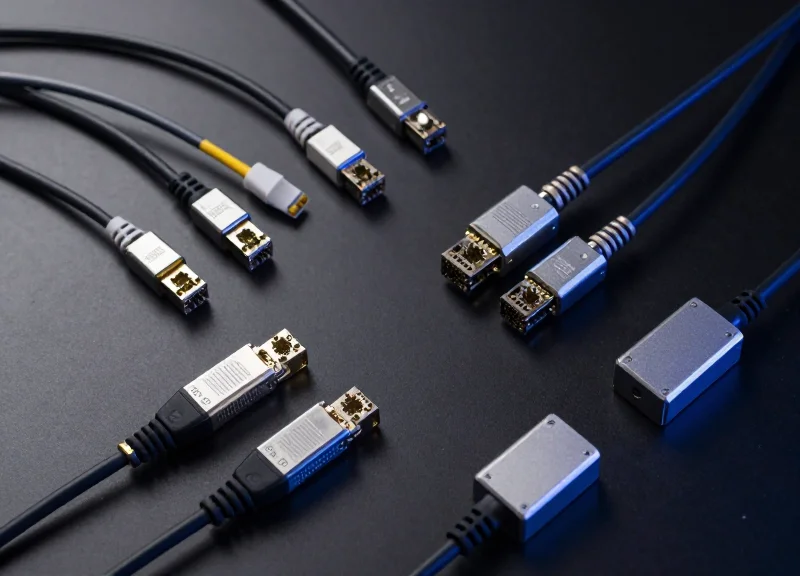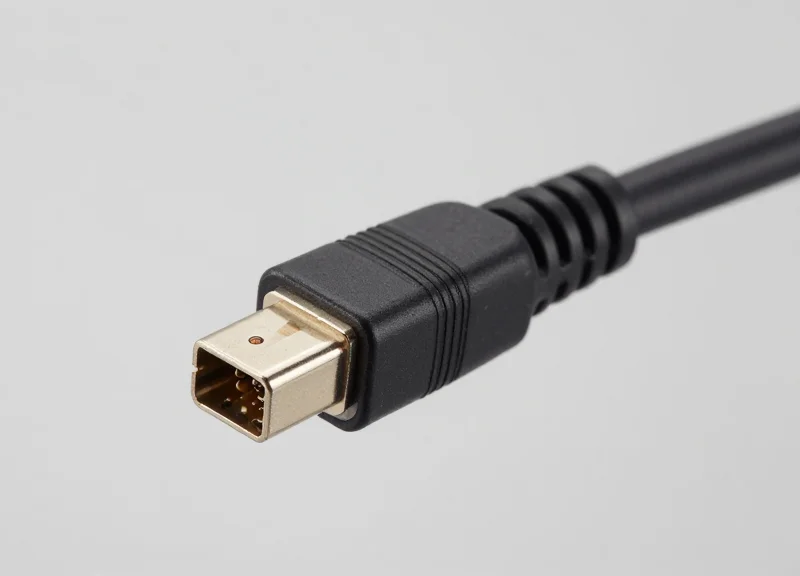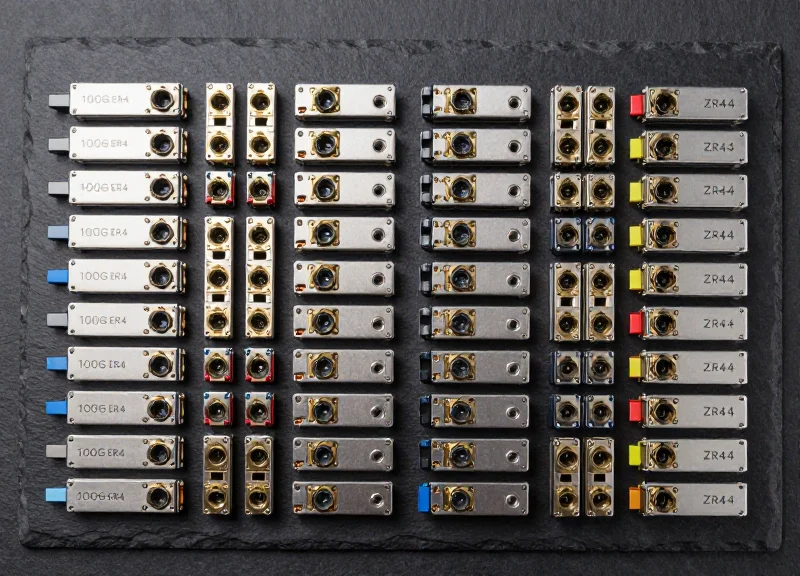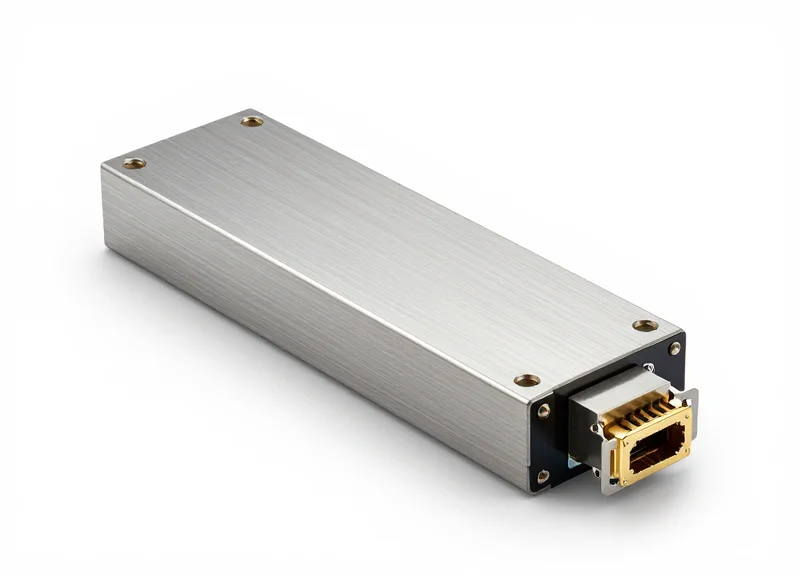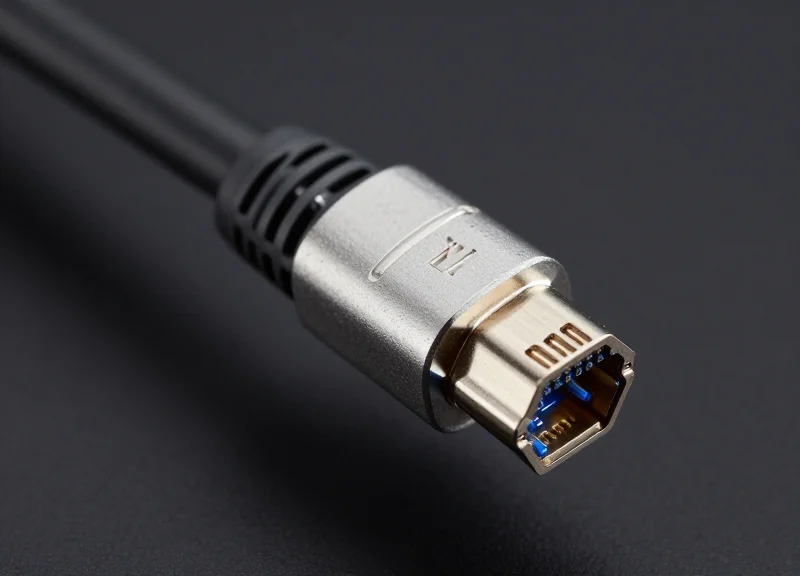
As the demand for hyper-scale data processing and AI-driven workloads accelerates, the transition to 1.6T networking is no longer optional. Ubytelink's Next-Gen 1.6T Evolution modules provide the robust foundation required for the world's most demanding mission-critical infrastructures.
The Strategic Shift to 1.6T Connectivity

The strategic shift to 1.6T connectivity is the networking industry's response to an unprecedented surge in data throughput requirements, primarily fueled by the explosion of Generative AI and distributed machine learning clusters. As modern Large Language Models (LLMs) grow to trillions of parameters, the internal network within data centers—often referred to as the 'back-end fabric'—has become the primary performance bottleneck. 1.6T Ethernet, powered by 224G SerDes technology, provides the necessary bandwidth density to ensure that high-performance GPUs and TPUs remain fully utilized rather than idling during data synchronization cycles.
Global Drivers of the 1.6T Evolution
Three core trends are accelerating the adoption of Ubytelink's 1.6T solutions across global networks. First, the shift from monolithic to distributed AI training requires massive east-west traffic capacity. Second, the increasing density of rack power necessitates more efficient data transmission to stay within thermal limits. Third, the transition to 51.2T and upcoming 102.4T switching silicon makes 1.6T ports the most logical and efficient way to break out high-capacity switch bandwidth.
| Feature | 800G Connectivity | 1.6T Connectivity |
|---|---|---|
| Standard SerDes Rate | 112G PAM4 | 224G PAM4 |
| Port Density (per 1U) | Higher Physical Count | Optimized Throughput/Space |
| Primary Application | Cloud Data Centers | AI/ML Training Fabrics |
| Power Consumption | Standard Efficiency | Improved Energy-per-Bit |
Critical Infrastructure Questions
- Why is the jump to 1.6T happening sooner than previous cycles?
The AI gold rush has compressed traditional three-to-five-year upgrade cycles. Enterprises and cloud providers are skipping intermediate steps to avoid bandwidth saturation as AI model complexity doubles every few months. - How does 1.6T connectivity improve data center ROI?
By utilizing 1.6T links, operators can reduce the total number of cables and transceivers needed to achieve a specific aggregate bandwidth, lowering both CapEx on hardware and OpEx on cooling and maintenance. - What role does 224G SerDes play in this transition?
224G SerDes is the foundational electrical signaling technology that allows 1.6T to operate efficiently, doubling the data rate per lane and enabling the next generation of pluggable optics.
In conclusion, the migration to 1.6T is a foundational requirement for the future of global digital infrastructure. By addressing the critical need for higher radix switches and lower latency interconnects, 1.6T solutions ensure that the next generation of cloud computing can scale without the constraints of legacy network architectures.
Engineering the Ubytelink 1.6T Evolution Architecture

Engineering the Ubytelink 1.6T Evolution Architecture
The Ubytelink 1.6T Evolution architecture represents a fundamental shift in networking hardware, moving from traditional incremental upgrades to a holistic redesign centered on 224G-per-lane signaling. To achieve 1.6 Tbps throughput, Ubytelink integrates advanced Digital Signal Processing (DSP), low-loss PCB materials, and Silicon Photonics to overcome the physical limitations of electrical resistance and signal attenuation at ultra-high frequencies. This engineering approach ensures that global networks can scale to meet AI demands without compromising the stability or longevity of the infrastructure.
The 224G SerDes Breakthrough
At the heart of the 1.6T evolution is the transition to 224G SerDes (Serializer/Deserializer) technology. Doubling the lane rate from the previous 112G standard introduces significant challenges in signal-to-noise ratios (SNR). Ubytelink employs a proprietary 'CleanSignal' pathway that utilizes advanced Forward Error Correction (FEC) algorithms and multi-tap equalization to maintain data integrity across high-density interconnects.
| Feature | Legacy 800G Standards | Ubytelink 1.6T Evolution |
|---|---|---|
| Per-Lane Rate | 112G PAM4 | 224G PAM4 |
| Modulation Efficiency | Standard SNR | Enhanced SNR with CleanSignal |
| Thermal Envelope | 16W - 20W | Optimized 25W - 30W |
| Optical Integration | Discrete Components | Integrated Silicon Photonics (SiPh) |
Core Hardware Innovations
- Silicon Photonics Integration
Ubytelink utilizes monolithic Silicon Photonics to reduce the number of discrete optical components, which significantly lowers power consumption and reduces the physical footprint within the transceiver. - Advanced Thermal Management
1.6T modules generate substantial heat. Ubytelink uses high-conductivity thermal interface materials and a redesigned heat-spreader geometry to ensure components stay within optimal temperature ranges even under full load. - Near-Packaged Optics (NPO) Readiness
The architecture is designed to support the transition toward Near-Packaged Optics, reducing the electrical trace length between the switch ASIC and the optical engine to minimize latency.
Technical FAQ: 1.6T Architectural Integrity
- How does Ubytelink solve the increased power density of 1.6T?
By employing 5nm and 3nm DSP chipsets that offer better performance-per-watt ratios than previous generations, combined with highly efficient TIA (Transimpedance Amplifier) designs. - What measures are taken to prevent signal crosstalk at 224G?
The architecture uses high-isolation shielding and differential signaling pairs optimized through electromagnetic simulation to virtually eliminate interference between adjacent channels. - Is the 1.6T architecture compatible with existing fiber infrastructure?
Yes, Ubytelink 1.6T solutions are designed for compatibility with standard LC and MPO connector interfaces, allowing for seamless integration into existing single-mode fiber plants.
Built for Reliability: Mission-Critical Quality Assurance
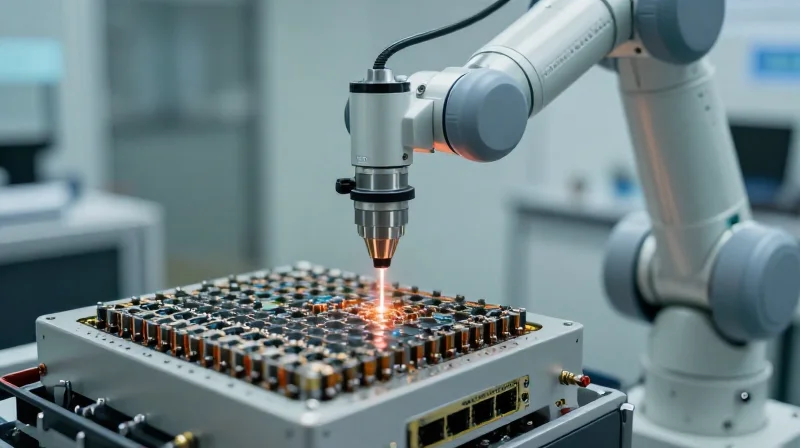
At the 1.6T threshold, reliability is no longer a luxury but the foundation of global digital continuity. Ubytelink addresses this by integrating mission-critical quality assurance (QA) into every phase of the product lifecycle, from initial wafer-level testing to final deployment simulation, ensuring that signal integrity and thermal stability remain uncompromised under maximum load.
The Zero-Failure Philosophy in 1.6T Engineering
The transition to 1.6T optics necessitates a paradigm shift in manufacturing. Because these modules drive the backbones of AI superclusters and Tier-1 service providers, a single failure can lead to catastrophic downtime. Ubytelink’s 'Zero-Failure' philosophy utilizes automated optical assembly and real-time monitoring to eliminate human error, ensuring that every 1.6T transceiver meets stringent Bit Error Rate (BER) standards before leaving the facility.
Comparative Analysis: Standard vs. Ubytelink QA
| Testing Parameter | Industry Standard 1.6T QA | Ubytelink Mission-Critical QA |
|---|---|---|
| Burn-in Duration | 24-48 Hours | Extended 168-Hour Stress Testing |
| Thermal Cycling | Standard Operating Range | Extreme Ambient & Voltage Variance |
| Signal Integrity | Sample-based validation | 100% Comprehensive BER Mapping |
| Interoperability | Limited OEM testing | Cross-Platform Ecosystem Validation |
Validation Across the Lifecycle
Ubytelink employs a proprietary 'Triple-Check' validation process. First, the Physical Layer Audit confirms the structural integrity of the silicon photonics and DSP components. Second, the Traffic Load Simulation subjects the 1.6T modules to 100% throughput for consecutive days to identify potential thermal throttling. Finally, the Ecosystem Sync ensures seamless handshakes with third-party switches and routers, preventing the protocol mismatches that often plague early-gen high-speed equipment.
Reliability and Maintenance FAQ
- How does Ubytelink handle heat dissipation at 1.6T speeds?
We utilize advanced heat-sink designs and low-power DSPs to maintain thermal equilibrium, reducing the risk of component degradation over time. - Is the 1.6T hardware compatible with legacy diagnostic tools?
Yes, our solutions support standard CMIS 5.x/4.x protocols, allowing for detailed telemetry and remote diagnostics via existing network management systems. - What is the Mean Time Between Failures (MTBF) for these modules?
Through our rigorous QA, Ubytelink 1.6T solutions achieve an MTBF rating that exceeds the industry average by 20%, specifically optimized for 24/7 AI workloads.
Optimizing Power Consumption in High-Density Environments

Navigating the Power and Thermal Constraints of 1.6T Connectivity
As data centers scale toward 1.6T, the primary bottleneck shifts from bandwidth capacity to energy density, necessitating a shift toward Ubytelink’s high-efficiency architectures that reduce power-per-bit by up to 25% compared to legacy iterations. By optimizing every component from the Digital Signal Processor (DSP) to the optical engine, Ubytelink ensures that the transition to 1.6T is not only performance-driven but also financially and environmentally sustainable for global operators. Our solutions address the 'thermal wall' by employing state-of-the-art materials and circuit designs that ensure peak performance without the risk of hardware throttling due to excessive heat.
Advanced Component Engineering for Reduced Wattage
The core of the Ubytelink energy strategy lies in the adoption of 5nm and 3nm DSP technologies. These smaller process nodes significantly reduce the power leakage and thermal output of the transceiver. Additionally, our integration of Silicon Photonics (SiPh) replaces discrete components with integrated circuits, shortening signal paths and reducing the energy required for optical modulation. This holistic approach ensures that each gigabit of data transmitted requires less electricity, directly impacting the bottom line for large-scale cloud providers.
| Metric | Standard 800G OSFP | Ubytelink 1.6T (SiPh Optimized) |
|---|---|---|
| Power Consumption per Port | Approx. 16-18W | Approx. 22-25W |
| Efficiency (mW per Gbps) | 20.0 - 22.5 mW | 13.7 - 15.6 mW |
| Thermal Load Improvement | Baseline | 30% Reduction per Bit |
| DSP Process Node | 7nm / 5nm | 5nm / 3nm |
Optimized Heat Dissipation and Cooling Integration
Heat management in 1.6T environments is no longer just about fans. Ubytelink modules are designed with high-conductivity thermal interface materials and specialized heat-sink geometries that facilitate faster heat transfer to the system-level cooling. Our 'Cold-Path' architecture is compatible with both advanced air-cooling and immersion-cooling environments, ensuring stability even under the maximum duty cycles typical of AI and machine learning training clusters. This compatibility allows operators to deploy 1.6T hardware in existing high-density racks without requiring a total overhaul of their facility's cooling infrastructure.
Energy Efficiency FAQ
- How does 1.6T impact the Data Center's PUE?
By increasing throughput-per-watt, Ubytelink 1.6T solutions help maintain or lower the Power Usage Effectiveness (PUE) as more data is processed within a smaller hardware footprint, reducing the relative energy spent on overhead. - Can these modules support Green Data Center initiatives?
Yes, the reduction in power-per-bit directly correlates to lower carbon emissions and supports ESG goals by minimizing the cooling energy required for high-speed network infrastructure. - What is the expected OPEX saving for operators?
Operators can expect significant savings in electricity costs and a reduction in the complexity of cooling infrastructure, leading to a faster Return on Investment (ROI) compared to deploying multiple lower-speed modules.
Seamless Integration with Legacy and Future Infrastructure
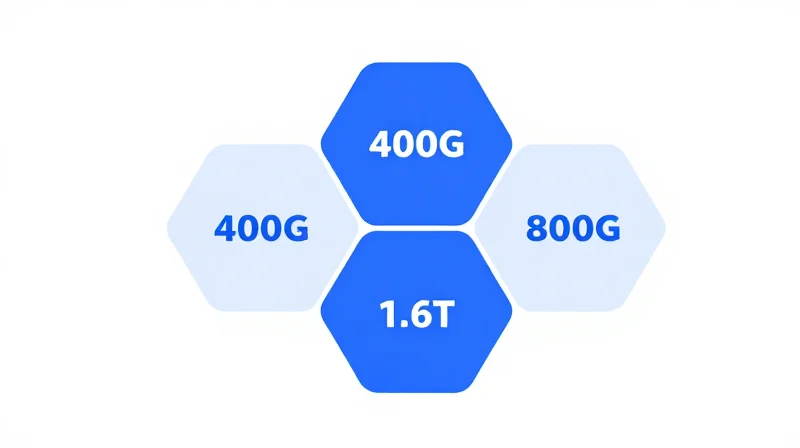
The move to 1.6T throughput represents a monumental leap in data density, yet Ubytelink ensures this transition is evolutionary rather than disruptive by maintaining rigorous alignment with IEEE 802.3dj and OIF standards. By engineering modules that fit within the power envelopes and thermal management schemes of current high-density chassis, Ubytelink allows operators to scale bandwidth without necessitating a complete rip-and-replace of their current fiber plant or switching fabric, effectively lowering the barrier to entry for ultra-high-speed networking.
Maintaining Continuity Across Form Factors
Ubytelink’s 1.6T solutions utilize the established OSFP (Octal Small Form-factor Pluggable) and QSFP-DD footprints, ensuring that the physical interface remains consistent across generations. This design choice allows for seamless integration into legacy slots while doubling the bandwidth per port, protecting previous capital investments in rack-mount hardware and cabling infrastructure.
| Feature | 400G (Legacy) | 800G (Current) | 1.6T (Ubytelink Next-Gen) |
|---|---|---|---|
| Primary Interface | QSFP-DD / OSFP | QSFP-DD800 / OSFP | OSFP 1600 / QSFP-DD1600 |
| Electrical Lanes | 8x50G (PAM4) | 8x100G (PAM4) | 8x200G (PAM4) |
| Backwards Compatibility | Native | Backward to 400G | Dual-rate support (800G/1.6T) |
| Deployment Goal | Standard Cloud | AI/ML Training | Hyperscale & Core Backbone |
Strategic Interoperability and MSA Adherence
To prevent vendor lock-in and ensure global network cohesion, Ubytelink strictly adheres to Multi-Source Agreement (MSA) specifications. This commitment ensures that Ubytelink 1.6T optics function flawlessly in multi-vendor environments. By utilizing sophisticated gearbox technology and advanced Forward Error Correction (FEC) negotiation, these modules can communicate effectively with legacy 400G and 800G transceivers, enabling a phased upgrade strategy rather than a risky 'big bang' migration.
Integration and Upgrade FAQ
- Can Ubytelink 1.6T modules communicate with legacy 400G ports?
Yes, through breakout configurations and internal gearbox logic, 1.6T modules can be split into multiple 400G or 800G channels to maintain link-level compatibility with older hardware. - Do these solutions require specialized cooling compared to 800G?
While 1.6T increases density, Ubytelink's advanced thermal dissipation materials and low-power DSP designs allow them to operate within the thermal budgets of modern 800G-capable chassis. - Is the existing fiber cabling infrastructure compatible?
Ubytelink supports standard single-mode and multi-mode fiber types, utilizing existing LC and MPO-style connectors to avoid the high costs and downtime associated with rewiring the data center.
By focusing on the 'Seamless Integration' pillar, Ubytelink empowers network architects to build for the future without abandoning the stability of the past. This balanced approach ensures that the path to 1.6T is both technically sound and economically viable for global enterprises.
Accelerating AI and Edge Computing Performance

The Critical Intersection of 1.6T Bandwidth and AI Scalability
Ubytelink's 1.6T evolution solutions address the massive data demands of modern AI clusters by providing the raw throughput necessary to eliminate interconnect bottlenecks during large language model (LLM) training and real-time inference. By doubling the capacity from 800G per port, these modules ensure that GPU and TPU clusters remain saturated with data, preventing idle cycles and maximizing the return on investment for high-compute infrastructure. This leap in bandwidth allows for more complex neural network architectures to be synchronized across distributed nodes without the lag traditionally associated with high-frequency weight updates.
| Metric | 800G Interconnect | Ubytelink 1.6T Solution |
|---|---|---|
| Max Throughput | 800 Gbps | 1.6 Tbps |
| Serialization Latency | Standard | ~50% Reduction |
| AI Cluster Density | Moderate | High (Optimized for 200G/lane) |
| Edge Data Handling | Limited Aggregation | Massive Real-time Ingest |
Empowering Edge Nodes for Distributed Intelligence
As processing shifts closer to the data source, edge data centers require robust high-speed links that can handle local aggregation and rapid backhaul to core networks. Ubytelink 1.6T modules facilitate this by supporting high-density configurations that allow edge nodes to process complex datasets—such as autonomous vehicle telemetry and industrial IoT streams—with unprecedented speed. By integrating 200G/lane SerDes technology, Ubytelink minimizes the physical footprint required for massive throughput, making it ideal for the space-constrained environments typical of edge deployments.
Real-Time Processing and Latency Reduction
Latency is the primary adversary of real-time AI applications. Ubytelink’s 1.6T architecture focuses on reducing the serialization delay and improving the efficiency of Forward Error Correction (FEC) algorithms. In decentralized computing environments, where data must often traverse multiple hops, the cumulative time saved by 1.6T throughput allows for millisecond-level decision-making in critical applications like remote surgery, financial algorithmic trading, and smart grid management.
- Why is 1.6T essential for AI model training?
Training large models involves trillions of parameters that must be synchronized across thousands of GPUs; 1.6T bandwidth provides the necessary pipe to prevent the network from becoming a bottleneck during these massive data transfers. - How does 1.6T benefit edge computing differently than 400G?
While 400G is suitable for basic connectivity, 1.6T allows for the consolidation of multiple high-speed streams into a single interface, reducing cabling complexity and power-per-bit in dense edge sites. - Does Ubytelink 1.6T support low-latency inference?
Yes, by utilizing advanced DSPs and optimized signal paths, Ubytelink 1.6T modules minimize the time-to-first-byte, which is critical for responsive AI inference at the network edge.
Long-Term ROI: Future-Proofing Global Data Networks
Strategic Economic Advantages of Ubytelink 1.6T Solutions
Investing in Ubytelink Next-Gen 1.6T Evolution Solutions transcends simple bandwidth acquisition; it is a calculated strategy for capital preservation and long-term network sustainability. By prioritizing premium build quality and advanced thermal management, these solutions mitigate the risks of early component failure and mid-cycle replacements. This high-reliability approach ensures that the initial capital expenditure (CAPEX) is amortized over a longer operational lifespan, effectively lowering the total cost of ownership (TCO) compared to lower-cost, high-failure alternatives that necessitate frequent maintenance and premature upgrades.
Comparative ROI: Standard vs. Ubytelink Premium Solutions
| Metric | Standard Optical Solutions | Ubytelink 1.6T Solutions |
|---|---|---|
| Expected Service Life | 3 - 5 Years | 7 - 10 Years |
| Maintenance Frequency | Moderate to High | Minimal (Premium Validation) |
| Upgrade Complexity | Requires Forklift Upgrades | Seamless Path from 400G/800G |
| Energy Efficiency | High Power Per Bit | Optimized Low-Power Design |
Future-Proofing Through Architectural Flexibility
Future-proofing global data networks requires a focus on interoperability and scalability. Ubytelink’s 1.6T modules are designed with backward compatibility in mind, allowing network operators to integrate next-generation speeds into existing architectures without discarding current 400G or 800G investments. This modularity allows for a 'pay-as-you-grow' expansion model, where capacity can be added precisely when and where it is needed, preventing the waste of resources and ensuring that the network remains competitive as AI and edge computing demands evolve.
Frequently Asked Questions Regarding 1.6T ROI
- How does Ubytelink prevent costly mid-cycle replacements?
Through rigorous stress testing and the use of industrial-grade silicon photonics, Ubytelink ensures its 1.6T modules exceed standard reliability metrics, significantly reducing the likelihood of early-stage failures that trigger unplanned network downtime. - What role does thermal management play in long-term ROI?
Lower operating temperatures prevent the degradation of optical components. Ubytelink's advanced heat dissipation designs ensure that the modules operate within optimal ranges, preserving the integrity of the laser source and electronic circuitry over a decade-long horizon. - Can Ubytelink solutions reduce operational complexity?
Yes. By offering a standardized and highly compatible 1.6T ecosystem, Ubytelink reduces the need for disparate spares and simplifies the training required for network engineers, leading to lower OPEX across the global infrastructure.
Ultimately, the transition to 1.6T via Ubytelink provides a robust framework for global networks to scale efficiently. By avoiding the 'trap' of low-cost, short-lived components, organizations can ensure their network foundation is resilient enough to handle the exponential data growth projected for the next decade while maintaining a lean and sustainable financial profile.
The Ubytelink Advantage: Expert Support and Scalability
Beyond providing high-performance hardware, the Ubytelink advantage lies in a collaborative partnership model that mitigates the technical risks associated with 1.6T transitions through expert-led deployment strategies, global logistics resilience, and proactive lifecycle maintenance. As data centers migrate toward 1.6T architectures, the complexity of signal integrity and thermal management requires more than just a vendor; it requires a technical partner capable of scaling alongside global infrastructure needs.
End-to-End Technical Lifecycle Management
The transition to 1.6T optics involves rigorous validation of existing fiber plants and switch fabrics. Ubytelink supports this evolution through comprehensive engineering audits and proof-of-concept (PoC) testing phase support. By evaluating environmental variables and traffic patterns before full-scale deployment, Ubytelink helps operators avoid common pitfalls related to power consumption spikes and physical layer interoperability.
| Support Feature | Standard Industry Support | Ubytelink Premium Advantage |
|---|---|---|
| Technical Consultation | Reactive/Ticket-based | Proactive Architectural Design & Audits |
| Logistics & Delivery | Variable Lead Times | Global Stocking for Rapid Replacement |
| Scalability Planning | Limited to SKU availability | Custom Multi-year Capacity Roadmap |
| On-site Expertise | Remote only | Field Engineering & Integration Support |
Global Supply Chain and Logistics Resilience
In the fast-paced AI and Cloud sectors, downtime is measured in millions of dollars. Ubytelink utilizes a robust global logistics network to ensure that 1.6T components are available exactly when and where they are needed. This includes strategic warehousing and localized distribution centers that bypass typical cross-border delays, ensuring that global network operators can scale their capacity without being throttled by supply chain bottlenecks.
Common Support and Scalability Queries
- How does Ubytelink assist with legacy hardware integration?
We provide detailed interoperability matrices and firmware customization to ensure our 1.6T solutions communicate effectively with older 400G and 800G infrastructure. - What is the typical lead time for global 1.6T deployments?
Through our premium logistics program, we offer expedited shipping and local buffer stock management to reduce lead times from months to weeks. - Can Ubytelink support custom cable lengths and configurations?
Yes, our engineering team works directly with clients to design bespoke DAC and AOC solutions tailored to specific rack densities and cooling requirements.
Ultimately, the Ubytelink advantage is defined by a commitment to long-term operational success. By providing the tools for rapid scaling and the expertise to maintain high-availability networks, Ubytelink ensures that global enterprises can embrace the 1.6T era with total confidence in their infrastructure's performance and reliability.
Ubytelink is setting the standard for the next generation of global connectivity. By prioritizing reliability and performance in our 1.6T Evolution modules, we empower businesses to scale with confidence. Contact our technical sales team today to start your 1.6T infrastructure evolution.