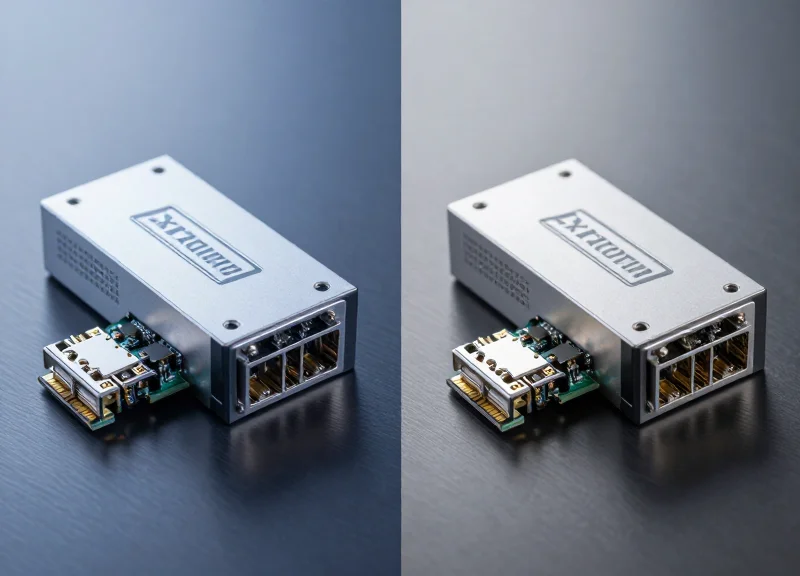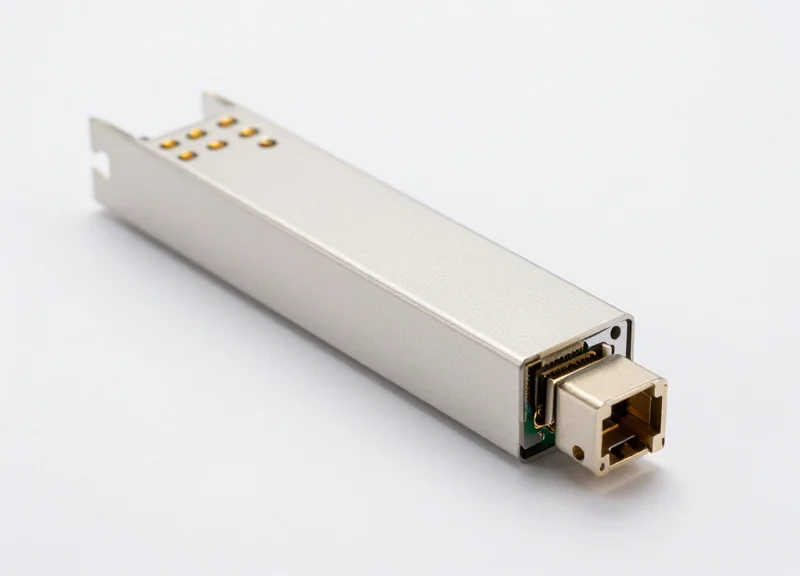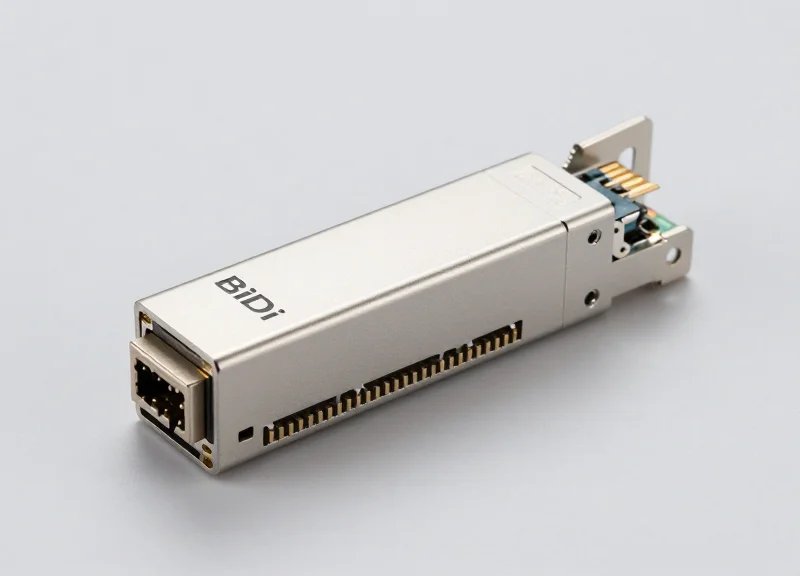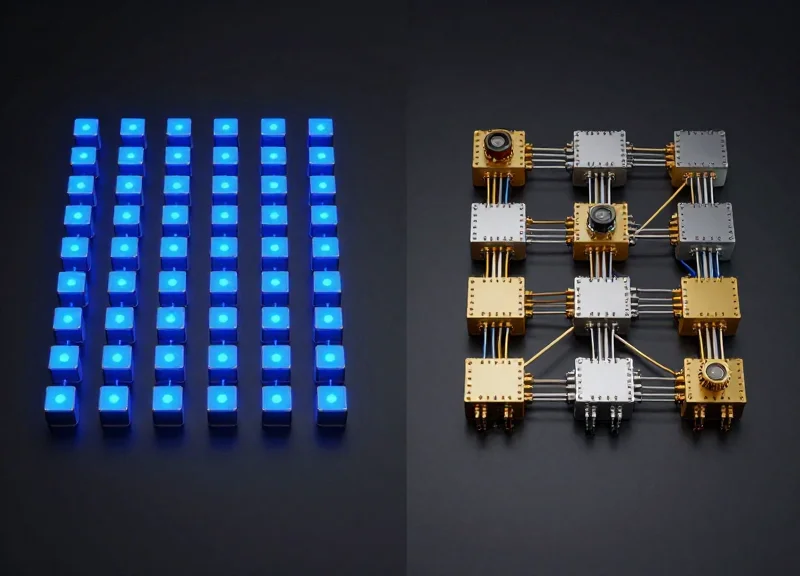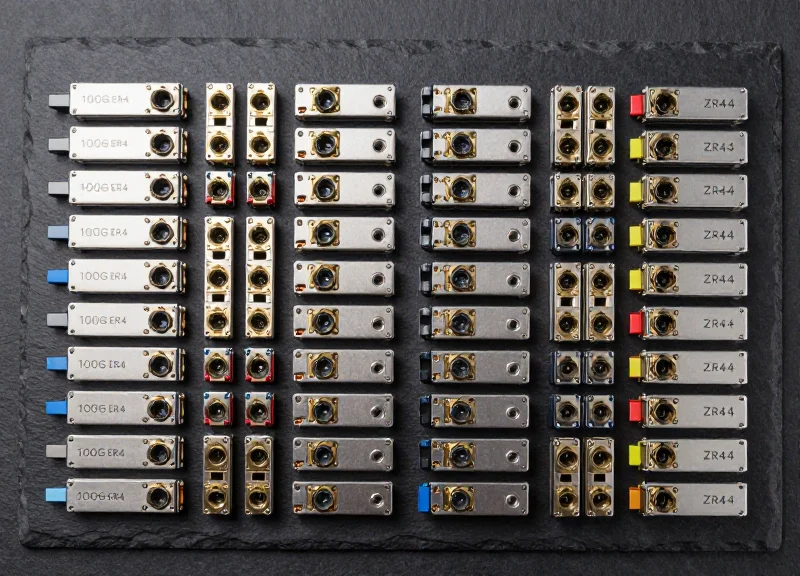
As modern data centers and telecommunications networks expand across greater distances, the demand for reliable, high-speed connectivity over 40km and 80km spans has never been higher. Navigating the complexities of 100G ER4 and ZR4 optical modules requires a balance of technical precision and cost-efficiency. This guide explores how wholesale procurement and customized OEM/ODM solutions can help your business scale its infrastructure while maintaining peak performance and budget integrity.
The Evolution of 100G Long-Haul Connectivity

The Evolution of 100G Long-Haul Connectivity
The landscape of 100G networking has fundamentally shifted from short-reach intra-data center links to sophisticated, ultra-long-distance architectures. As data demands surged between regional hubs, the industry moved beyond the 10km limits of standard LR4 optics, developing 100G ER4 and ZR4 technologies. These solutions provide a high-density, low-power alternative to traditional coherent transponders, enabling ISPs and enterprises to bridge 40km to 80km spans over existing single-mode fiber (SMF) without the need for costly mid-span amplification or complex dispersion compensation.
Bridging the Gap: ER4 vs. ZR4 Technologies
The primary driver for the adoption of ER4 and ZR4 is the simplification of the optical layer. While coherent optics are necessary for multi-hundred kilometer spans, they often introduce excessive cost and latency for regional metro rings. By utilizing Semiconductor Optical Amplifiers (SOA) and high-sensitivity Avalanche Photodiodes (APD), 100G ER4 and ZR4 modules achieve extended reaches while maintaining the standard QSFP28 form factor, allowing for seamless integration into existing wholesale hardware inventories.
| Feature | 100G ER4 (Extended) | 100G ZR4 (Ultra-Long) |
|---|---|---|
| Typical Reach | 40km (30km without FEC) | 80km (with Host FEC) |
| Optical Components | LAN-WDM EML Laser + SOA | LAN-WDM EML + SOA/APD |
| Power Consumption | < 4.5W | < 6.0W |
| Best Use Case | Campus Interconnects | Regional ISP Backhaul |
Wholesale Market Dynamics in 2026
In 2026, the wholesale market for 100G ultra-long-reach optics is maturing, leading to more competitive bulk pricing. Organizations are moving away from single-unit spot purchases toward custom-quoted volume contracts to secure supply chain stability for 5G backhaul and edge computing rollouts. The ability to source consistent, vendor-coded ER4 and ZR4 modules at scale is now a prerequisite for maintaining predictable performance across multi-site infrastructures.
- Can 100G ZR4 be used without an external amplifier?
Yes, 100G ZR4 is designed with internal SOA and high-sensitivity receivers to achieve 80km reaches over G.652 SMF without requiring external line amplifiers, provided the host equipment supports the necessary Forward Error Correction (FEC). - Why is bulk procurement preferred for ER4/ZR4 modules?
Wholesale buying allows for rigorous batch testing and consistent firmware coding across all units, which minimizes the risk of link instability in heterogeneous network environments. - Is 100G ZR4 compatible with legacy 100G ports?
Generally, ZR4 modules are compatible with standard QSFP28 ports, but buyers must verify that the port power budget and heat dissipation capabilities can support the slightly higher power draw of ultra-long-reach optics.
100G ER4 vs. ZR4: Choosing the Right Module for Your Distance
100G ER4 vs. ZR4: Choosing the Right Module for Your Distance
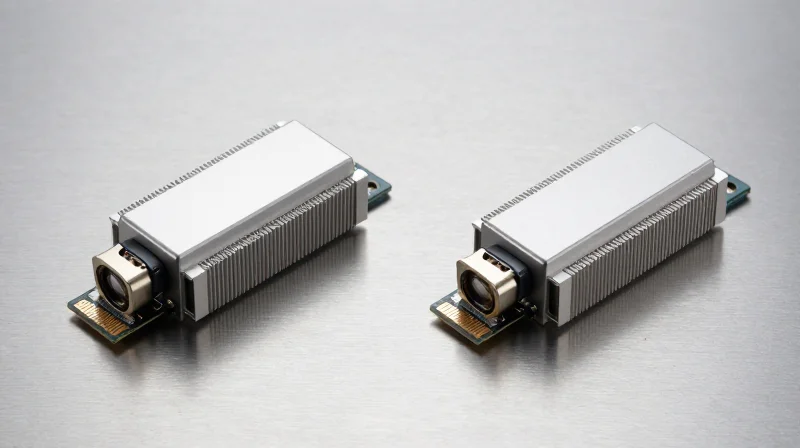
The primary differentiator between 100G ER4 and ZR4 modules is the optical power budget required to overcome signal attenuation over long-distance fiber spans. While both utilize WDM (Wavelength Division Multiplexing) technology to transmit over a single pair of single-mode fiber, the ER4 is engineered for 40km metro-scale distances using an APD receiver, whereas the ZR4 is purpose-built for 80km reaches, often integrating internal Semiconductor Optical Amplifiers (SOA) to maintain signal integrity without the need for external amplification infrastructure.
Technical Specification Comparison
| Specification | 100G QSFP28 ER4 | 100G QSFP28 ZR4 |
|---|---|---|
| Max Transmission Distance | 40km (with FEC) | 80km (with FEC) |
| Wavelength | 1295nm, 1300nm, 1304nm, 1309nm | 1295nm, 1300nm, 1304nm, 1309nm |
| Receiver Type | APD (Avalanche Photodiode) | SOA + PIN or High-Sensitivity APD |
| Optical Power Budget | Approx. 18dB | Approx. 27dB to 30dB |
| Typical Power Consumption | < 4.5W | < 6W |
Link loss is the most critical metric when choosing between these two modules. For a standard G.652 single-mode fiber, the average loss is roughly 0.25dB/km. When accounting for patch cables, splices, and aging margins, an ER4 module with an 18dB budget comfortably covers 30-40km. However, once the link loss exceeds 20dB, the ZR4 becomes necessary. The ZR4's significantly higher power budget (up to 30dB) allows it to bypass the need for expensive EDFA (Erbium-Doped Fiber Amplifier) mid-span sites, making it a cost-effective choice for point-to-point 80km links.
FEC and Amplification Considerations
Both ER4 and ZR4 modules generally require Forward Error Correction (FEC) enabled on the host equipment to reach their maximum rated distances. For ER4 modules, the reach is typically limited to 30km without FEC; enabling KR4 FEC allows the signal to push to the full 40km. For ZR4, FEC is mandatory to achieve the 80km rating. It is important to note that while ZR4 modules are designed to be 'plug-and-play' for 80km, users must ensure their switches support the higher power draw of ZR4 modules, which can be 1-2 watts higher than standard ER4 optics.
- Can I use a ZR4 module for a 20km link?
It is not recommended without heavy attenuation. Because ZR4 uses high-power transmitters and sensitive receivers (often with SOA), short distances can saturate or damage the receiver. At least 10dB to 15dB of fixed attenuation should be added. - Do these modules support OTN protocols?
Most 100G ER4 and ZR4 wholesale modules support both Ethernet and OTN (OTU4) rates, but it is essential to verify firmware compatibility with your specific transport hardware. - What is the impact of fiber quality on ZR4?
Older fiber with high polarization mode dispersion (PMD) or high splice loss can reduce the effective reach of a ZR4 module to 60-70km. A fiber characterization test is recommended for all ultra-long-haul deployments.
The Strategic Value of Wholesale Procurement
The Strategic Value of Wholesale Procurement
Procuring 100G ER4 and ZR4 modules through wholesale channels is a critical strategic lever for network operators looking to balance high-performance connectivity with fiscal discipline. By shifting from opportunistic, small-batch purchasing to structured bulk agreements, enterprises can drastically reduce their cost-per-gigabit while insulating their infrastructure projects from the volatility of the global optical component market. This approach transforms a simple hardware transaction into a long-term operational advantage.
Optimizing Total Cost of Ownership (TCO)
Total Cost of Ownership for 100G ultra-long-haul optics extends far beyond the initial purchase price. Bulk procurement models allow operators to amortize the costs of testing, validation, and logistics across a larger volume of units. Furthermore, standardizing on a single batch of ER4 or ZR4 modules via wholesale helps minimize the overhead of heterogeneous inventory management, leading to lower OPEX through simplified maintenance and fewer compatibility issues during field deployments.
| Procurement Metric | Retail/Spot Buying | Wholesale/Bulk Contract |
|---|---|---|
| Unit Pricing | Premium/List Price | Volume-Discounted/Tiered |
| Inventory Risk | High (Stockout Potential) | Low (Reserved Inventory) |
| Testing/QA | Standard/Variable | Uniform/Batch-Certified |
| Customization | Rarely Available | Custom Coding & Labeling |
Supply Chain Resilience and Predictability
The production of 100G ZR4 modules, which utilize sophisticated optical amplification and specialized lasers, often faces manufacturing bottlenecks. In a high-demand environment, spot buyers are the first to experience shipment delays. In contrast, wholesale quotes often include Service Level Agreements (SLAs) regarding lead times and delivery schedules. By locking in a 2026 bulk pricing agreement, operators ensure a steady pipeline of hardware, allowing them to meet project milestones for regional and metro expansion without the risk of equipment-induced downtime.
- How do custom quotes impact long-term ROI?
Custom quotes allow for technical alignment, such as specific EEPROM coding for vendor-specific switches, which eliminates the need for expensive third-party adapters and reduces deployment labor costs. - What is the typical volume for 100G wholesale pricing?
Wholesale benefits typically begin at 50 units, though the most significant price breaks for ER4 and ZR4 modules are often seen at the 200 to 500 unit threshold. - Can wholesale agreements include phased delivery?
Yes, many wholesale contracts allow for 'blanket orders' where pricing is locked for a high volume, but shipments are released in smaller batches to align with project rollouts and cash flow management.
Custom OEM/ODM Solutions for Specialized Requirements

Custom OEM/ODM Solutions for Specialized Requirements
In the complex landscape of ultra-long-haul networking, off-the-shelf optical modules often fall short of meeting unique environmental or logical requirements. Custom OEM (Original Equipment Manufacturer) and ODM (Original Design Manufacturer) services allow wholesale purchasers to receive 100G ER4 and ZR4 transceivers that are precision-engineered for specific link budgets, proprietary hardware ecosystems, and extreme deployment conditions.
Tailored Engineering for Extreme Environments
Standard commercial transceivers are typically rated for 0°C to 70°C. However, for telecommunications providers managing remote outdoor cabinets or edge data centers, industrial-grade temperature hardening (-40°C to +85°C) is often a necessity. Custom ODM solutions involve internal component selection and heat dissipation designs that ensure the 100G ZR4's 80km reach remains stable even under severe thermal stress.
| Customization Category | Technical Adaptation | Operational Benefit |
|---|---|---|
| Physical Layer | Industrial Temperature Hardening | Reliability in non-climate-controlled edge sites. |
| Firmware/Software | Multi-Vendor EEPROM Coding | Seamless interoperability across Cisco, Arista, and Juniper. |
| Optical Performance | Enhanced Power Budget Tuning | Compensation for high-loss connectors on aging fiber plants. |
| Branding | Private Labeling & Serialization | Consistent asset tracking and brand identity for integrators. |
Bypassing Vendor Lock-in with Custom Coding
One of the primary drivers for custom wholesale procurement is the need for multi-vendor compatibility. Proprietary network equipment often uses 'vendor check' protocols that reject generic transceivers. Custom ODM solutions utilize specialized EEPROM coding to emulate original manufacturer signatures. This allows organizations to deploy high-performance 100G ER4 modules across a heterogeneous network fabric without the exorbitant costs associated with 'official' optics, while still maintaining full diagnostic visibility (DOM).
- Can custom 100G ZR4 modules be optimized for specific fiber types?
Yes, ODM manufacturers can tune the internal optical components to better align with specific fiber profiles, such as G.652 or G.655, ensuring maximum signal integrity over 80km spans. - What is the typical lead time for custom OEM batches?
While standard orders are often immediate, custom hardware modifications typically require a 4-6 week lead time for engineering validation and production. - Is private labeling available for wholesale orders?
Most wholesale manufacturers provide white-labeling or private labeling services, including custom pull-tab colors and laser-engraved serial numbers for large-scale deployments.
Ensuring Reliability: Quality Control and Compliance
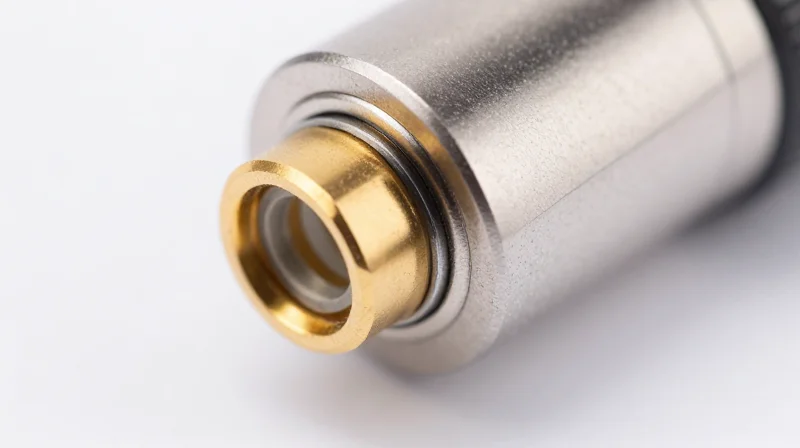
When sourcing 100G ER4 and ZR4 modules for ultra-long-reach applications, reliability is the primary determinant of long-term ROI. Because these modules often bridge critical 40km to 80km spans where physical intervention is difficult and expensive, the manufacturing process must adhere to zero-defect principles. High-quality wholesale procurement ensures that every unit undergoes rigorous characterization—ranging from BER (Bit Error Rate) testing to thermal stress cycles—guaranteeing that the optics exceed the standards set by the IEEE 802.3ba and 802.3bm specifications.
The Multi-Stage Quality Control Protocol
Quality control for ultra-long-haul transceivers begins at the component level. Given the sensitivity of the APD (Avalanche Photodiode) receivers used in ER4/ZR4 optics, even minor manufacturing deviations can lead to link failure over extended distances. Reliable vendors implement a three-tier testing strategy: incoming material inspection, in-process monitoring, and final outgoing quality assurance (OQA).
| Testing Phase | Key Metrics | Purpose |
|---|---|---|
| Signal Integrity | Eye Diagram & BER | Ensures clean signal transmission and minimal jitter. |
| Environmental | Thermal Cycling (-40°C to 85°C) | Verifies performance stability in harsh environments. |
| Compatibility | Multi-Vendor Switch Testing | Confirms interoperability with Cisco, Arista, Juniper, etc. |
| Optical Stress | Receiver Sensitivity | Validates the module's ability to decode signals at -28dBm. |
Regulatory Compliance and Industry Standards
Compliance is the bedrock of trust in wholesale fiber optics. For 2026, buyers should prioritize modules that carry recognized international certifications. These certifications ensure that the products are not only performant but also safe and environmentally responsible. Key standards include ISO 9001 for quality management, CE and FCC for electromagnetic interference (EMI) control, and RoHS for hazardous substance restriction. Furthermore, strict adherence to MSA (Multi-Source Agreement) guidelines ensures that the 100G ER4/ZR4 modules will function seamlessly across different hardware ecosystems without vendor lock-in.
- Why is 'Burn-in' testing critical for 100G ZR4 modules?
Burn-in testing involves running the modules at high temperatures for extended periods to accelerate potential 'infant mortality' failures, ensuring only the most robust units reach the customer. - What role does the EEPROM play in compliance?
The EEPROM must be correctly coded to MSA standards to ensure the host switch can monitor real-time diagnostics (DOM/DDM) such as temperature, voltage, and optical power. - How does wholesale quality differ from retail quality?
Wholesale quality control often includes batch-level reporting and serialized tracking, allowing network operators to manage large-scale deployments with precise data on every installed link.
Optimizing Power Consumption in Ultra-Long-Haul Optics

Optimizing Power Consumption in Ultra-Long-Haul Optics
Reducing power consumption in ultra-long-haul optics like 100G ER4 and ZR4 is a multi-faceted engineering challenge that directly impacts a network's Total Cost of Ownership (TCO) and environmental footprint. By transitioning to smaller process nodes for Digital Signal Processors (DSPs) and utilizing high-efficiency EML (Electro-absorption Modulated Lasers) combined with integrated Semiconductor Optical Amplifiers (SOA), manufacturers can deliver modules that consume significantly less power while maintaining the signal integrity required for distances up to 80km.
Advanced DSP Architectures and Silicon Photonics
The primary driver of power efficiency in modern 100G QSFP28 modules is the integration of 7nm or 5nm DSP technology. These chips perform complex clock and data recovery (CDR) and equalization tasks with a fraction of the energy required by older 16nm or 28nm variants. Furthermore, the move toward Silicon Photonics (SiPh) allows for the integration of multiple optical components onto a single silicon chip, reducing the number of electrical-to-optical interfaces and lowering parasitic power losses throughout the module's circuitry.
| Module Type | Typical Power Consumption (W) | Max Power Rating (W) | Reach Capability |
|---|---|---|---|
| 100G QSFP28 ER4 (Lite) | 3.5W | 4.5W | 30km - 40km |
| 100G QSFP28 ZR4 | 5.0W | 6.0W | 80km |
| Legacy 100G CFP/CFP2 | 12W - 20W | 24W | 40km - 80km |
Thermal Management and Green Data Center Operations
Efficient power usage is intrinsically linked to heat dissipation. In high-density switching environments, 100G ZR4 modules can create localized hot spots due to their necessary amplification stages. Manufacturers optimize these modules using high-thermal-conductivity materials for the transceiver shell and specialized internal thermal pads. This reduces the burden on data center cooling systems, contributing to a lower Power Usage Effectiveness (PUE) ratio and supporting 'green' sustainability initiatives.
- Why do 100G ZR4 modules consume more power than LR4?
ZR4 modules require higher power to drive signals over 80km, often incorporating an internal Semiconductor Optical Amplifier (SOA) and more aggressive equalization in the DSP to overcome fiber attenuation. - Does lower power consumption affect the lifespan of the module?
Yes, lower power consumption leads to lower operating temperatures. This reduces the thermal degradation of the laser diode and other sensitive components, effectively increasing the Mean Time Between Failures (MTBF). - How does wholesale bulk pricing reflect power efficiency?
While highly efficient 5nm DSP-based modules may have a higher initial wholesale price, the long-term savings in electricity and cooling costs usually result in a lower total lifecycle cost for large-scale deployments.
Interoperability and Multi-Vendor Compatibility
Achieving seamless interoperability with 100G ER4 and ZR4 ultra-long-haul optics requires a dual-layered approach: strict adherence to Multi-Source Agreements (MSAs) for physical and electrical consistency, and precision EEPROM coding to satisfy the proprietary software handshakes of specific hardware vendors. By utilizing third-party modules that are specifically programmed and tested for diverse environments, network operators can bypass the restrictive pricing of 'original' brand transceivers while maintaining 100% performance parity and system recognition.
The Importance of MSA Compliance in Wholesale Optics
The Multi-Source Agreement (MSA) is the backbone of interoperability for 100G QSFP28 modules. These industry standards define everything from the mechanical dimensions and pin layouts to the management interface (I2C). For wholesale buyers, ensuring that 100G ER4 and ZR4 modules are MSA-compliant is the first step in guaranteeing that the hardware will physically fit and electrically communicate with any standard-compliant switch or router port, regardless of whether the host device is a Cisco Nexus or a Juniper MX-series router.
Vendor-Specific Coding and Software Handshaking
Beyond physical standards, most Tier-1 networking vendors implement software-level verification. This process involves the host system reading the module's EEPROM to check for a specific vendor signature. If the signature is missing or incorrect, the system may flag the module as 'unsupported' or disable the port entirely. High-quality wholesale providers offer custom-coded optics that emulate these signatures, ensuring that features like Digital Optical Monitoring (DOM) and real-time diagnostic reporting function perfectly within the native OS environment.
| Vendor Platform | Operating System | Compatibility Requirement | DOM Support |
|---|---|---|---|
| Cisco | IOS-XE / NX-OS | Service Unsupported-Transceiver Command | Full Support |
| Juniper | Junos OS | MSA Standard Compliance | Full Support |
| Arista | EOS | Standard EEPROM Coding | Full Support |
| Dell | OS10 | Vendor-Specific Coding | Full Support |
Multi-Vendor Compatibility FAQ
- Can I mix different brands of 100G ER4/ZR4 modules on the same link?
Yes. As long as both modules adhere to the same IEEE standards (like 802.3ba for ER4) and use the same wavelength specifications, they can communicate effectively even if one end is a Cisco-coded module and the other is Juniper-coded. - Will using third-party modules void my switch warranty?
No. In most jurisdictions, including the US under the Magnuson-Moss Warranty Act, hardware manufacturers cannot void a warranty simply for using third-party peripherals unless the peripheral itself causes direct damage to the equipment. - How is compatibility verified during wholesale production?
Reliable suppliers use 'original host testing,' where modules are plugged into actual Cisco, Arista, and Juniper switches in a lab environment to verify packet loss, latency, and DOM reporting before bulk shipping.
When sourcing 100G ER4/ZR4 modules in bulk for 2026 deployments, it is vital to request custom quotes that specify your hardware environment. This ensures the modules arrive pre-coded for your specific fleet, eliminating the need for manual configuration or troubleshooting during high-stakes network expansions.
Future-Proofing Your Network with Ubytelink

Future-Proofing Your Network with Ubytelink
Selecting a wholesale partner for 100G ER4 and ZR4 modules is a strategic decision that impacts the long-term viability and operational efficiency of your optical transport network. Ubytelink distinguishes itself by bridging the gap between high-end manufacturing precision and the flexible commercial needs of modern service providers and data center operators. Our commitment to future-proofing involves not only providing the optics of today but ensuring they are compatible with the hardware evolution of tomorrow.
The Ubytelink Advantage: Why Wholesale Buyers Choose Us
Our approach to 100G optics centers on three pillars: technical compliance, economic scalability, and lifecycle support. By leveraging advanced TOSA/ROSA components and proprietary testing environments, we ensure that every ER4 and ZR4 module exceeds IEEE 802.3ba and 802.3bm standards, providing the link budget headroom necessary for challenging fiber environments. This technical rigor reduces the Total Cost of Ownership (TCO) by decreasing failure rates and simplifying network maintenance.
| Service Pillar | Ubytelink Wholesale Benefit | Impact on Network ROI |
|---|---|---|
| Custom Coding | Multi-vendor compatibility for Cisco, Arista, and Juniper | Reduces CAPEX by eliminating vendor lock-in |
| Quality Assurance | 100% testing on specific target hardware platforms | Lowers OPEX by minimizing site visits and RMAs |
| Supply Chain | Global logistics with prioritized bulk lead times | Accelerates project deployment and revenue generation |
Wholesale Procurement FAQ
- How do I request a custom quote for bulk 100G orders?
Ubytelink provides a streamlined quotation portal where enterprise clients can specify distance requirements, hardware compatibility, and volume thresholds to receive tiered pricing structures within 24 hours. - Does Ubytelink support legacy integration for 100G ZR4?
Yes, our modules are designed with backward compatibility in mind, ensuring that our long-reach 80km plus solutions work seamlessly with both legacy and next-generation high-density line cards. - What testing protocols are used for ultra-long-haul optics?
Every wholesale batch undergoes rigorous BER (Bit Error Rate) testing, optical eye diagram analysis, and temperature cycling to ensure stability over the module's entire lifecycle.
In an era where bandwidth demands are non-negotiable, Ubytelink serves as a vital partner for organizations requiring 100G ER4 and ZR4 solutions. Our focus on bulk accessibility and custom engineering ensures that your network remains resilient, scalable, and cost-effective throughout 2026 and beyond.
Scaling your network infrastructure for the demands of tomorrow requires high-performance optics today. Whether you need 40km ER4 reach or 80km ZR4 capacity, Ubytelink provides the quality, customization, and wholesale pricing you need to stay ahead. Contact our expert team today for a custom quote and discover how our OEM/ODM capabilities can power your next project.