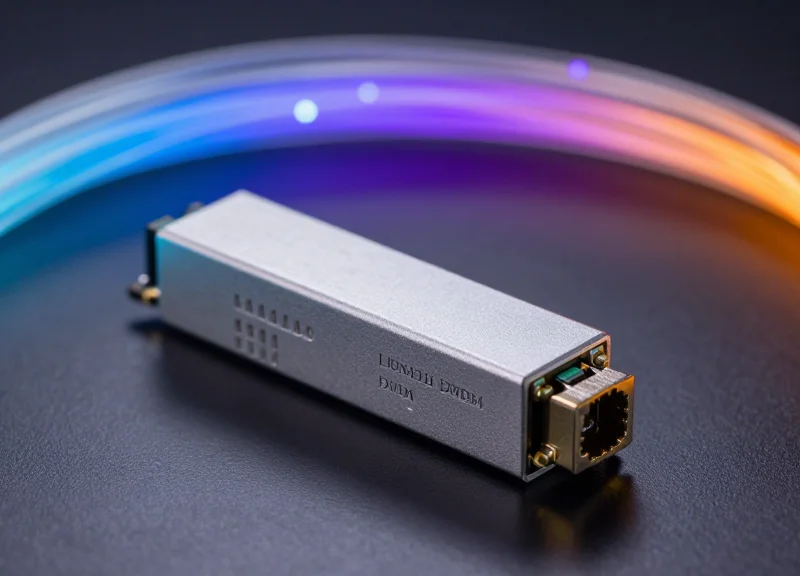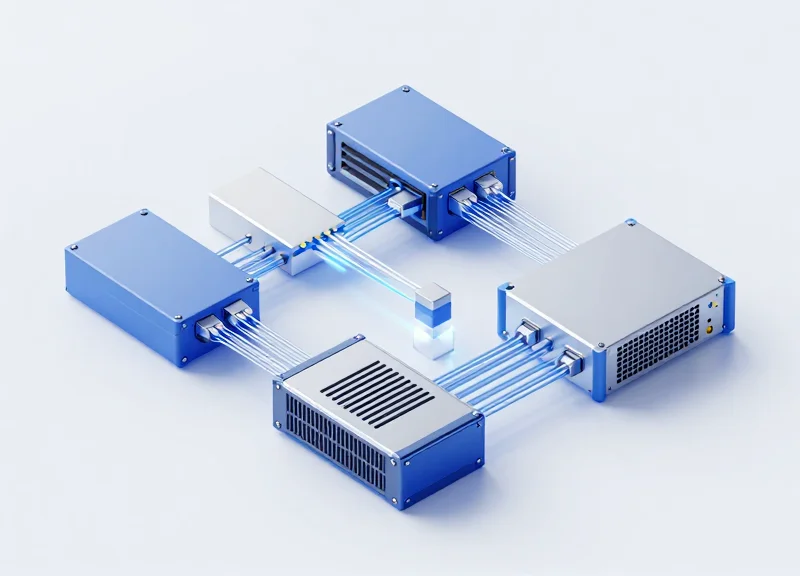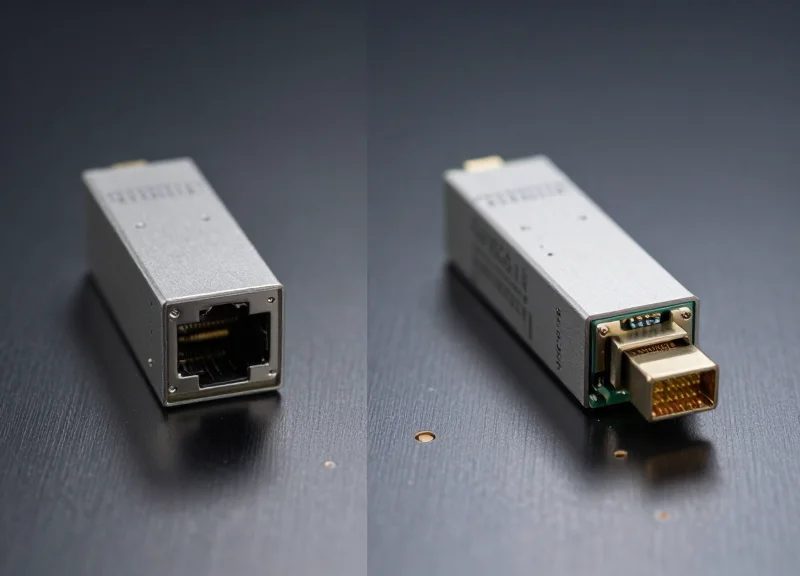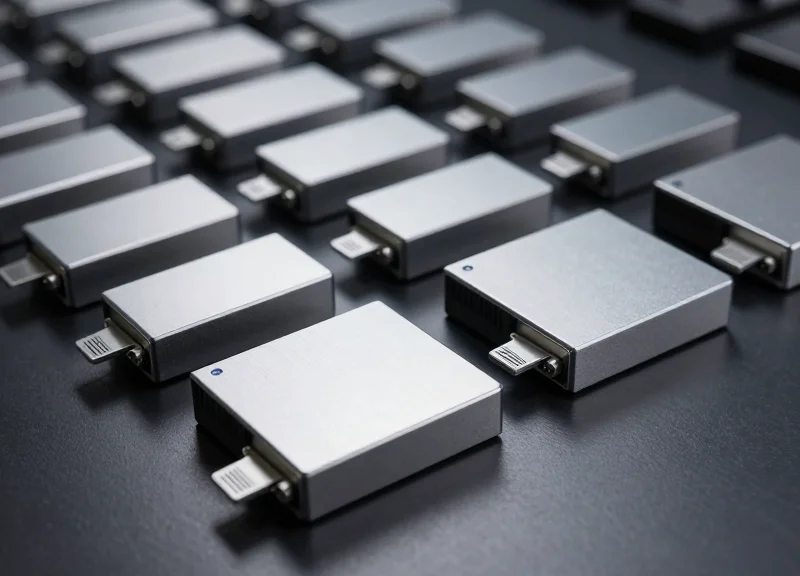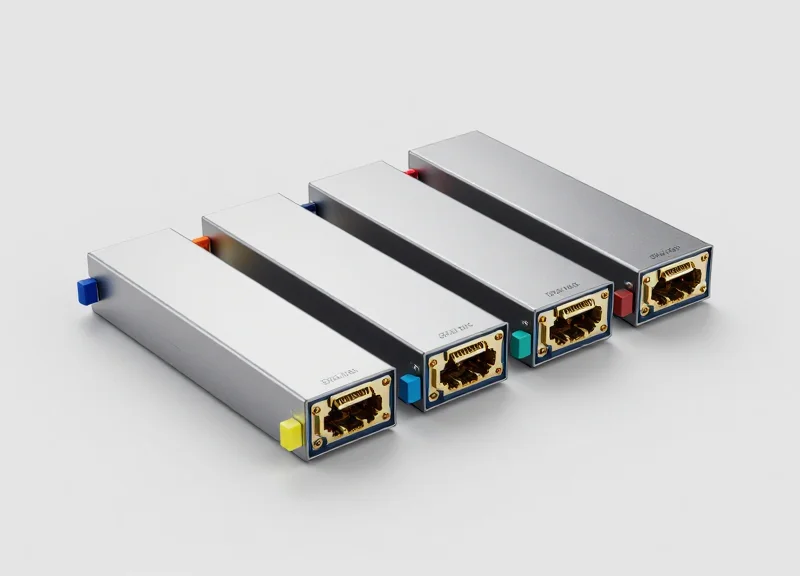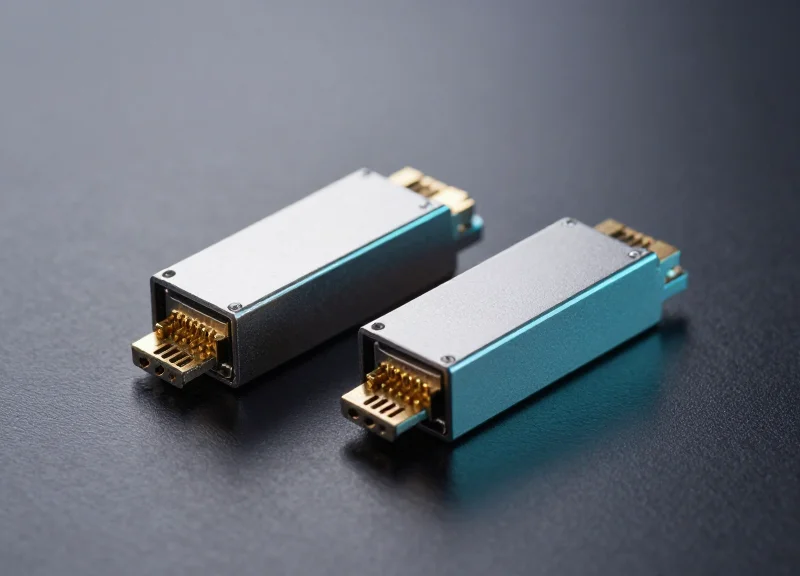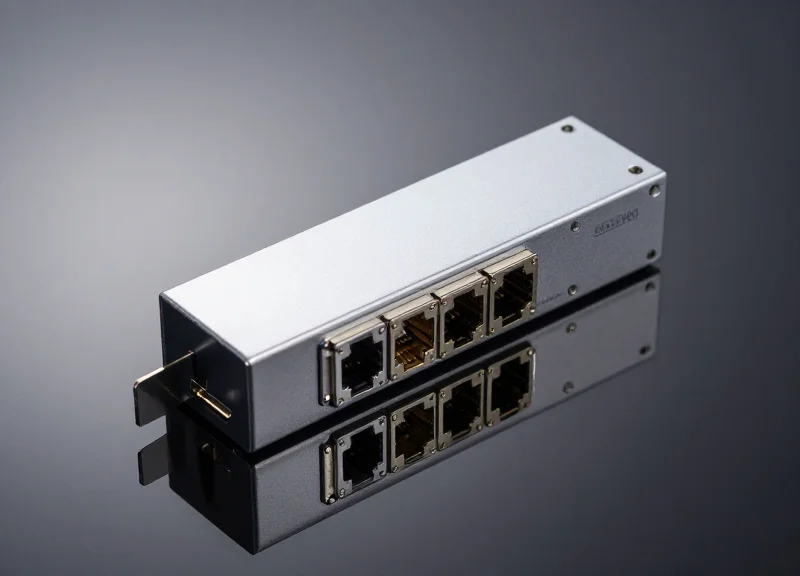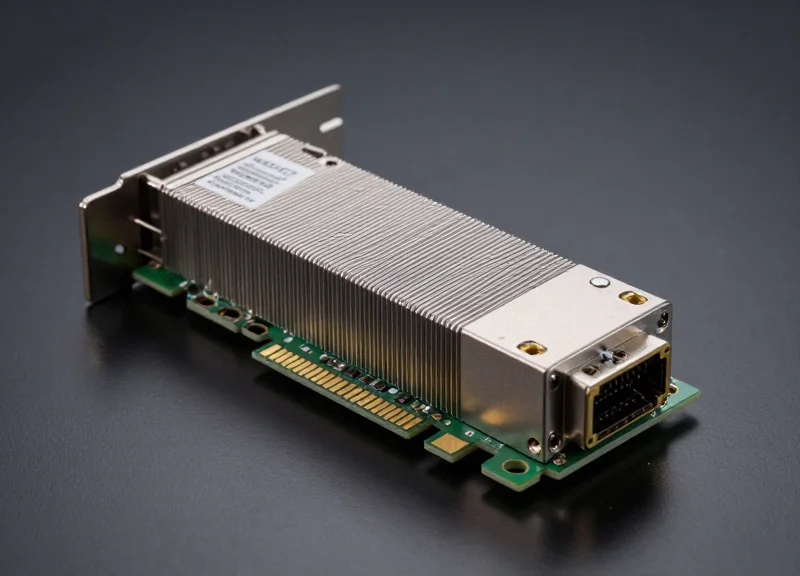
In an era where data-driven enterprises demand unprecedented bandwidth, the transition to 800G connectivity is the cornerstone of future-proof infrastructure. Ubytelink's 800G OSFP 2xFR4 modules address the core challenges of latency and signal integrity, providing a robust solution for mission-critical global networks.
The Strategic Shift to 800G Networking

The migration from 400G to 800G is not merely an incremental speed update; it is a strategic response to the massive computational requirements of generative AI, large language models (LLMs), and high-frequency cloud services. By doubling the bandwidth density, 800G interfaces like the OSFP 2xFR4 allow network operators to scale their infrastructure without a proportional increase in physical footprint or power consumption per bit. This evolution ensures that global networks can sustain the throughput required for the next decade of digital innovation.
Fundamental Drivers of the 800G Landscape
Today's global networks are under unprecedented pressure. Machine learning clusters require massive east-west traffic throughput, often outpacing the capabilities of traditional 400G fabrics. 800G provides the necessary headroom to manage these bursts of data while optimizing the cost-to-performance ratio for Tier-1 service providers and enterprises. The move to 800G is primarily driven by three factors: the rise of AI/ML workloads, the expansion of 5G edge computing, and the consolidation of hyperscale data centers.
| Metric | 400G QSFP-DD/OSFP | 800G OSFP (2xFR4) |
|---|---|---|
| Aggregate Bandwidth | 400 Gbps | 800 Gbps |
| Electrical Interface | 8x50G PAM4 | 8x100G PAM4 |
| Optical Lane Rate | 100G per lane | 100G per lane (Dual Carrier) |
| Port Density | Standard | Double density via 2xFR4 |
| Primary Use Case | Standard Cloud Traffic | AI Clusters & Hyperscale Core |
The Role of OSFP 2xFR4 in Network Evolution
The 800G OSFP 2xFR4 solution specifically addresses the need for high-density interconnects. By utilizing two sets of 4-wavelength CWDM lanes (2x400G FR4), it provides a seamless path for 400G interoperability while enabling a full 800G pipe. This dual-carrier approach is essential for modern leaf-spine architectures where flexibility and backward compatibility with 400G infrastructure are as important as raw speed.
Strategic Advantages of the 800G Shift
- Why skip straight to 800G?
The cost-per-bit efficiency and reduced power consumption per gigabit make 800G more sustainable and economically viable for AI training compared to aggregating multiple legacy 400G links. - What makes OSFP the preferred form factor?
OSFP modules offer superior thermal management and heat dissipation capabilities, which are critical for maintaining the stability of 800G optics operating at higher power envelopes. - How does 2xFR4 help with migration?
It allows a single 800G port to be broken out into two 400G FR4 connections, enabling data centers to upgrade their switches while still connecting to existing 400G servers or storage arrays.
Deep Dive: The 800G OSFP 2xFR4 Architecture
The 800G OSFP 2xFR4 architecture is a high-density 'dual-engine' solution that integrates two independent 400G FR4 optical pipelines into a single OSFP module, utilizing Coarse Wavelength Division Multiplexing (CWDM4) to transmit 800Gbps over single-mode fiber with a reach of up to 2km.
The Dual-Engine Advantage: 2x400G Logic
Unlike parallel designs that require a separate fiber for every lane, the 2xFR4 architecture employs two distinct internal optical engines. The electrical interface consists of 8 lanes of 106.25Gbps PAM4 (8x100G). These lanes are processed by a high-performance Digital Signal Processor (DSP) and bifurcated into two groups of four. Each group is then modulated onto four CWDM wavelengths—1271nm, 1291nm, 1311nm, and 1331nm. This allows the module to act as two virtual 400G FR4 transceivers, providing immense flexibility for data centers transitioning from 400G to 800G fabric without replacing existing fiber infrastructure.
CWDM4 Technology and Spectral Efficiency
At the heart of Ubytelink's 800G 2xFR4 solution is the CWDM4 optical assembly. By multiplexing four wavelengths onto a single fiber pair, the architecture reduces the physical fiber count by a factor of four compared to PSM (Parallel Single Mode) solutions like DR8. This spectral efficiency is critical for hyper-scale environments where duct space and cable management are at a premium. The use of the 1310nm window ensures low dispersion and attenuation across the 2km range, making it the ideal choice for leaf-to-spine interconnects.
Architecture Comparison: 2xFR4 vs. DR8
| Feature | 800G OSFP 2xFR4 | 800G OSFP DR8 |
|---|---|---|
| Optical Wavelength | CWDM (1271, 1291, 1311, 1331nm) | 1310nm Parallel |
| Max Reach | 2km | 500m (standard) / 2km (enhanced) |
| Fiber Type | Single Mode (SMF) | Single Mode (SMF) |
| Fiber Count | 4 Fibers (2x LC Duplex or MPO-12) | 16 Fibers (MPO-16) |
| Main Benefit | Spectral Efficiency/Breakout | Lower Latency/Simple Modulation |
Technical FAQs: Understanding 2xFR4 Deployment
- Can the 800G 2xFR4 module breakout into 400G links?
Yes, the dual-engine design specifically supports 2x400G breakout. It can connect directly to two 400G FR4 transceivers using a breakout cable, facilitating high-density radix in spine switches. - What connector types are available for Ubytelink 2xFR4?
Ubytelink 800G OSFP 2xFR4 solutions are typically available with Dual LC, CS, or MPO-12 connectors, depending on the specific patch panel and density requirements of the network. - Is the OSFP form factor backward compatible with QSFP-DD?
While they are different physical form factors, OSFP ports can support QSFP modules via an adapter; however, Ubytelink's OSFP modules are specifically optimized for the superior thermal performance required by 800G optics.
OSFP vs. QSFP-DD: Why OSFP Leads in 800G Efficiency
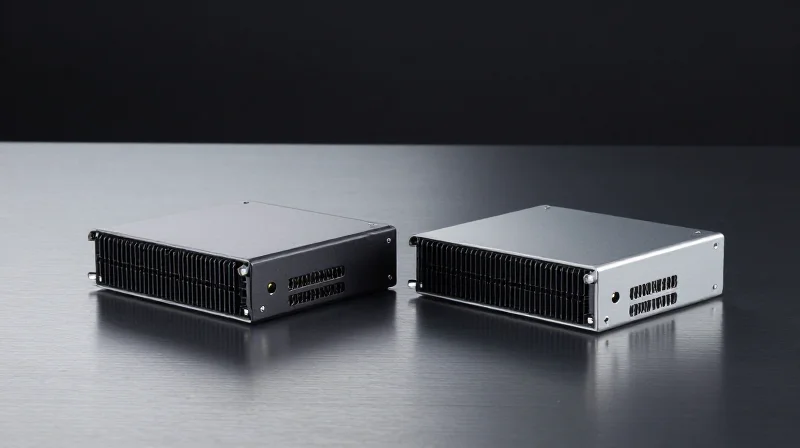
OSFP vs. QSFP-DD: Why OSFP Leads in 800G Efficiency
While both OSFP and QSFP-DD support 800G data rates, the OSFP (Octal Small Form-factor Pluggable) architecture has emerged as the definitive leader for high-performance data centers due to its superior thermal handling and power capacity. As transceivers reach the 800G threshold, power consumption increases significantly; OSFP's physical design allows it to dissipate heat far more effectively than the more compact QSFP-DD, ensuring that Ubytelink 800G OSFP 2xFR4 solutions maintain peak performance without thermal throttling.
The Thermal Advantage: Integrated Heat Sinks
The primary differentiator lies in the physical construction. OSFP modules are slightly wider and deeper than QSFP-DD modules, and more importantly, they feature an integrated heat sink. This design allows for a direct path for airflow across the most heat-intensive components. In contrast, QSFP-DD relies on 'riding' heat sinks integrated into the cage, which adds thermal resistance. At 800G, where power consumption can exceed 15W to 20W per module, the OSFP’s ability to manage a higher thermal load—up to 30W—is critical for system stability.
| Feature | OSFP Form Factor | QSFP-DD Form Factor |
|---|---|---|
| Max Power Consumption | Up to 30W (Superior) | Up to 15W-25W (Limited) |
| Thermal Management | Integrated Heat Sink | Riding Heat Sink (Cage-based) |
| Physical Size | Slightly Larger (Better Airflow) | Smaller (High Density) |
| Backward Compatibility | Requires Adapter | Native for QSFP28/56 |
| Future Scalability | Optimized for 1.6T | Facing Thermal Challenges at 1.6T |
Scalability and Future-Proofing for AI Workloads
As hyperscale data centers transition toward AI-driven workloads, the demand for sustained, high-bandwidth throughput is relentless. OSFP is not just an 800G solution; it is built with the 1.6T roadmap in mind. By choosing Ubytelink 800G OSFP 2xFR4 modules, operators are investing in a form factor that offers more 'thermal headroom.' This means less cooling energy is required at the rack level, leading to a more favorable Power Usage Effectiveness (PUE) and lower long-term operational costs compared to pushed-to-the-limit QSFP-DD deployments.
- Can OSFP modules fit into QSFP-DD ports?
No, they are physically different sizes. However, OSFP-to-QSFP adapters exist, and many modern switches offer dedicated OSFP slots to maximize cooling efficiency. - Why does thermal management matter for signal integrity?
Excessive heat can cause wavelength drift and increase bit error rates (BER). OSFP’s superior cooling ensures the 2xFR4 CWDM lasers remain within their optimal operating temperature, preserving signal quality. - Is QSFP-DD becoming obsolete?
Not necessarily. QSFP-DD remains popular for legacy compatibility in 400G environments, but for new 800G and future 1.6T AI clusters, OSFP is becoming the industry standard.
Ubytelink's Engineering Excellence: Built for Reliability
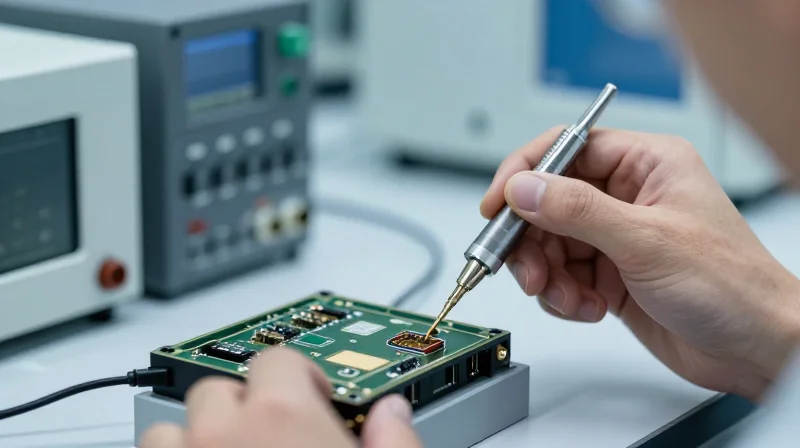
Engineering excellence at Ubytelink is defined by a vertically integrated design approach that bridges the gap between raw component performance and real-world network stability. By implementing a 'Zero-Defect' methodology, our 800G OSFP 2xFR4 solutions are engineered to withstand the extreme thermal and electrical stresses of modern hyperscale data centers, ensuring that every module delivers consistent performance from the moment of deployment.
Tier-1 Component Selection: The Foundation of Longevity
Reliability begins at the wafer level. Ubytelink sources only the highest-grade EML (Electro-absorption Modulated Laser) transmitters and high-sensitivity PIN photodiodes. Unlike budget-tier alternatives that may suffer from early laser degradation or spectral drift, our components are selected for their tight tolerance and long-term stability. This meticulous selection process reduces the Bit Error Rate (BER) before Digital Signal Processing (DSP) even begins, minimizing the workload on the transceiver’s internal components and extending the overall lifespan of the module.
| Parameter | Industry Standard | Ubytelink Engineering Target |
|---|---|---|
| Pre-FEC BER Threshold | 2.4E-4 | < 1.0E-5 (Optimized Margin) |
| Temperature Cycling | Standard GR-468 | Extended Industrial Stress (24-hour) |
| Power Consumption | 16W - 18W | Sub-15.5W (Enhanced Thermal Design) |
| Link Distance Verification | 2km rated | 2km + 15% Safety Headroom |
Automated Validation and Mass Customization
To eliminate human error, Ubytelink utilizes a fully automated production line for its 800G solutions. Every module passes through a proprietary 'Test Bed' that simulates worst-case network scenarios, including high-traffic bursts and fluctuating ambient temperatures. This data-driven manufacturing process allows us to maintain a high yield while ensuring that each 800G OSFP 2xFR4 unit meets the exact firmware requirements of various switch architectures, providing seamless plug-and-play compatibility across Cisco, Arista, and NVIDIA platforms.
Quality Control FAQ
- How does Ubytelink ensure compatibility across different vendor platforms?
We employ a comprehensive firmware library and hardware-level EEPROM coding that adheres to MSA standards, followed by real-port testing on the specific host hardware of major networking vendors. - What is the Mean Time Between Failures (MTBF) for these modules?
Ubytelink's 800G OSFP units are rated for a MTBF of over 1.5 million hours, achieved through low-power design and high-efficiency thermal dissipation paths. - Is every module tested before shipping?
Yes, Ubytelink performs 100% full-load traffic testing on every single unit, rather than batch sampling, to guarantee that no defective module ever reaches a customer site.
In an era where network downtime can cost millions per minute, Ubytelink's commitment to engineering excellence provides the technical insurance necessary for global digital infrastructure. Our 800G OSFP 2xFR4 solutions are not just transceivers; they are the result of rigorous discipline and a refusal to settle for 'good enough' in the pursuit of premium network quality.
Power Consumption and Operational Sustainability
Maximizing Efficiency in High-Density Environments
Ubytelink 800G OSFP 2xFR4 modules address the critical challenge of escalating power demands in modern data centers by integrating low-power Digital Signal Processors (DSPs) and optimized silicon photonics. By reducing the wattage required per gigabit of data transmitted, these solutions enable network operators to scale bandwidth without exceeding the thermal or electrical limits of their existing infrastructure. This efficiency is paramount as facilities move toward 51.2T and 102.4T switching capacities where every watt saved correlates to lower Total Cost of Ownership (TCO).
The Direct Impact on Total Cost of Ownership (TCO)
The operational cost of a data center is heavily influenced by the 'power-to-cooling' ratio. Ubytelink’s 2xFR4 modules leverage a streamlined internal architecture that minimizes electrical resistance and signal loss. When deployed at scale, the reduction in power consumption leads to a compounded saving in cooling costs, as less heat needs to be dissipated from the rack. This allows for higher port density and delays the need for expensive facility-wide cooling upgrades.
| Performance Metric | Standard 800G Transceiver | Ubytelink 800G OSFP 2xFR4 |
|---|---|---|
| Typical Power Consumption | 16W - 18W | 14.2W - 15.5W |
| Thermal Management | External Heatsink Dependent | Integrated High-Efficiency Heatsink |
| Energy Efficiency Improvement | Baseline | Up to 15% Reduction |
| TCO Contribution | Standard OPEX | Optimized via Lower Utility/Cooling Draw |
Sustainability and Green Networking
Beyond financial metrics, Ubytelink’s engineering focuses on environmental sustainability. By utilizing cutting-edge 7nm and 5nm DSP processes, these modules contribute to lower carbon emissions per terabit of data. This alignment with 'Green Data Center' initiatives helps global enterprises meet their ESG (Environmental, Social, and Governance) targets while maintaining peak network performance.
- How does lower power consumption improve reliability?
Lower power draw results in less internal heat generation. This reduces thermal stress on sensitive optoelectronic components, leading to a higher Mean Time Between Failures (MTBF) and long-term signal stability. - Does the 2xFR4 design require specialized cooling?
No, the OSFP form factor’s integrated heatsink is designed to utilize standard airflow patterns in modern switch chassis, making it more efficient than QSFP-DD in high-wattage scenarios. - Is the power saving significant for small deployments?
While the per-module saving is measured in watts, for a standard 32-port 800G switch, the total power reduction can exceed 60-80 watts per unit, which adds up significantly across multiple racks and rows.
Seamless Interoperability with Tier-1 Switching Hardware
Interoperability: The Key to Multi-Vendor Data Center Success
Ubytelink 800G OSFP 2xFR4 solutions are engineered to eliminate the proprietary barriers that often hinder network expansion, offering full compliance with IEEE 802.3ck and OSFP Management Interface Specification (MIS) standards. This rigorous adherence to industry-wide protocols ensures that Ubytelink modules are recognized immediately by the host operating systems of leading Tier-1 switches. By prioritizing open standards and broad compatibility, Ubytelink enables network architects to deploy high-density 800G links across diverse hardware environments without the risk of port lock-outs or performance degradation.
Validated Compatibility with Industry Leaders
Each Ubytelink 800G OSFP 2xFR4 module undergoes exhaustive cross-platform validation in a state-of-the-art testing environment. This process mimics real-world traffic scenarios on flagship switches from NVIDIA Mellanox, Arista, and Cisco to ensure that Digital Optical Monitoring (DOM) data is accurate and that firmware handshakes are instantaneous. This level of validation guarantees that Ubytelink transceivers deliver the same reliability and visibility as original equipment manufacturer (OEM) optics at a significantly more competitive total cost of ownership.
| Hardware Vendor | Supported Platforms | Key Compatibility Feature |
|---|---|---|
| NVIDIA Mellanox | Quantum-2 (InfiniBand), Spectrum-4 | NDR link parity & full NDR-compliance |
| Arista Networks | 7060X5, 7800R3 Series | EOS-compliant DOM & real-time telemetry |
| Cisco Systems | Nexus 9000 & Catalyst 9000 | Native NX-OS/IOS-XE recognition |
| Juniper Networks | PTX & QFX Series | Junos OS hardware abstraction layer support |
Hardware Integration FAQ
- Will using Ubytelink 800G modules void my switch warranty?
No. Under the Magnuson-Moss Warranty Act and similar international consumer protections, hardware manufacturers cannot void a warranty simply for using third-party transceivers. Ubytelink modules are designed to match or exceed OEM specifications to ensure zero risk to the host hardware. - How does Ubytelink ensure CMIS 5.0 compatibility?
Our modules utilize advanced firmware that strictly follows the Common Management Interface Specification (CMIS) version 5.0 and above, which is critical for 800G modules to manage complex features like Forward Error Correction (FEC) and power levels across different switch vendors. - Can these modules be used in breakout configurations with 400G switches?
Yes. The 2xFR4 architecture effectively functions as two 400G FR4 engines in a single OSFP housing, allowing for seamless breakout to two 400G FR4 interfaces using standard MPO-16 or LC breakout cables, depending on the specific module variant.
Deploying 800G OSFP 2xFR4 in AI and Machine Learning Clusters

Scaling AI Fabrics with 800G Connectivity
AI and Machine Learning (ML) workloads demand unprecedented throughput to handle the massive data exchanges required during model training and inference. Ubytelink 800G OSFP 2xFR4 Solutions: Premium Quality for Global Networks address these needs by enabling 800Gbps of total throughput via dual 400G FR4 interfaces. This architecture is specifically designed for 'East-West' traffic patterns within data center fabrics, where GPUs must communicate with minimal delay to prevent computational bottlenecks during collective communication operations.
Performance Comparison in AI Environments
| Metric | Standard 400G FR4 | Ubytelink 800G OSFP 2xFR4 |
|---|---|---|
| Aggregate Bandwidth | 400 Gbps | 800 Gbps (Dual 400G) |
| Rack Density | Standard | Doubled via 2xFR4 Design |
| Interface Type | Single LC/MPO | Dual LC/CS Connectors |
| Deployment Use-Case | Traditional Cloud | High-Performance AI/HPC |
Optimizing Latency for Large-Scale Training
In Large Language Model (LLM) training, synchronization between thousands of GPUs is governed by collective communication primitives like All-Reduce. Any jitter or packet loss in the physical layer can lead to significant 'tail latency' issues, stalling the entire training job. Ubytelink’s 800G OSFP 2xFR4 modules utilize advanced Digital Signal Processors (DSPs) and high-quality EML lasers to ensure a stable Signal-to-Noise Ratio (SNR). This precision engineering drastically reduces the reliance on heavy Forward Error Correction (FEC) cycles, maintaining the ultra-low latency required for real-time AI processing.
AI Cluster Deployment FAQ
- How does 2xFR4 simplify leaf-spine architectures?
By offering dual 400G ports in a single 800G OSFP form factor, network architects can break out a single 800G switch port into two 400G FR4 connections, effectively doubling the radix of the spine without increasing the physical rack footprint. - Is it compatible with high-speed AI NICs?
Yes, Ubytelink modules are designed to meet the rigorous physical layer requirements of both Ethernet and InfiniBand-ready AI fabrics, ensuring seamless interoperability with the latest generation of GPU-optimized network interface cards. - Does the 2xFR4 configuration affect thermal management in AI racks?
Ubytelink optimizes the DSP power consumption to remain within the strict thermal envelopes of modern AI server racks. The OSFP design further enhances heat dissipation, preventing thermal throttling during sustained high-load training sessions.
Future-Proofing Your Infrastructure with Ubytelink
Investing in Ubytelink 800G OSFP 2xFR4 solutions today is a strategic maneuver to eliminate the friction associated with rapid technological cycles. By prioritizing high-signal integrity and superior thermal management, Ubytelink ensures that current deployments can handle the increased thermal loads and tighter link budgets of future 1.6T and 3.2T ecosystems. This forward-thinking approach allows network architects to build high-density environments that remain viable through multiple hardware refresh cycles, effectively lowering the long-term total cost of ownership (TCO) by avoiding premature infrastructure obsolescence.
The Strategic Advantage of Premium 800G Architectures
| Feature | Generic 800G Solutions | Ubytelink 2xFR4 Solutions |
|---|---|---|
| Reliability | Variable MTBF | High-Stability Industrial Grade |
| Migration Path | Manual Re-cabling | Seamless 400G/800G/1.6T Interop |
| Power Overhead | High Heat Signature | Optimized Low-Power DSPs |
| Signal Integrity | Marginal Link Budgets | High FEC Margin Compliance |
Maximizing Lifecycle Value and Deployment Flexibility
The 2x400G breakout capability inherent in the 2xFR4 design provides a bridge between current 400G legacy systems and the 800G core. This flexibility is critical for organizations that cannot perform a 'forklift upgrade' of their entire infrastructure at once. Ubytelink modules allow for phased migrations, where 800G ports can interface with existing 400G FR4 nodes without requiring specialized adapters or complex mid-span conversion hardware.
Future-Proofing FAQ
- How does 2xFR4 simplify future 1.6T migrations?
By utilizing dual 400G interfaces, the 2xFR4 design allows for breakout configurations that align perfectly with emerging high-radix switches and upcoming 1.6T OSFP-XD standards, ensuring the cabling infrastructure remains relevant. - Can these modules handle the bandwidth demands of 2026 and beyond?
Yes, the use of premium EML lasers and high-quality DSPs ensures a low Bit Error Rate (BER), providing enough margin for the intensified data throughput required by future AI training models and large-scale LLMs. - What is the impact on cooling requirements for future upgrades?
Ubytelink's OSFP 2xFR4 is engineered for optimal heat dissipation. As port densities increase in future switch generations, these modules help maintain a manageable thermal envelope, preventing localized hotspots.
As the industry shifts toward more complex modulation schemes and higher lane rates, the physical layer becomes the most critical bottleneck. Choosing Ubytelink’s premium 800G solutions means that users are not just buying a component that works today, but an insurance policy against the unpredictable demands of tomorrow’s global network traffic.
Ubytelink is committed to delivering the reliability and performance that global network operators demand. By choosing our 800G OSFP 2xFR4 modules, you are investing in a stable, high-performance future. Contact our engineering team today for a technical consultation or to request evaluation samples for your next deployment.