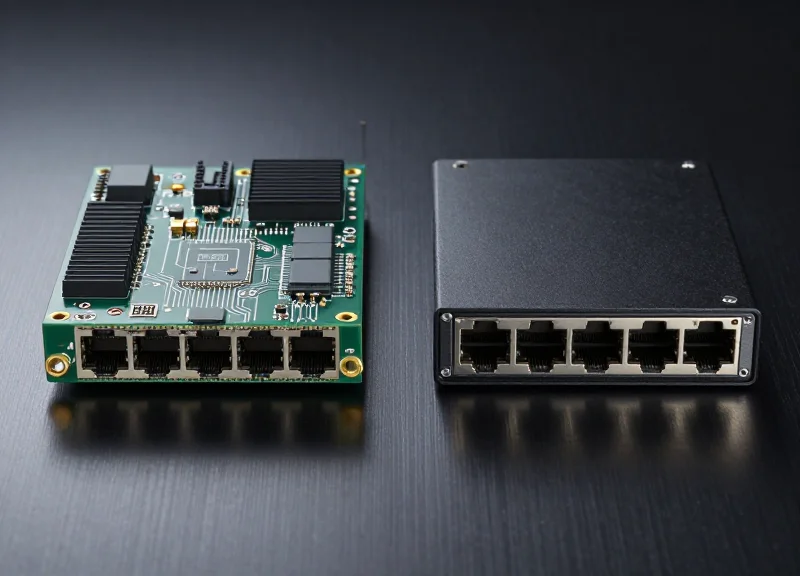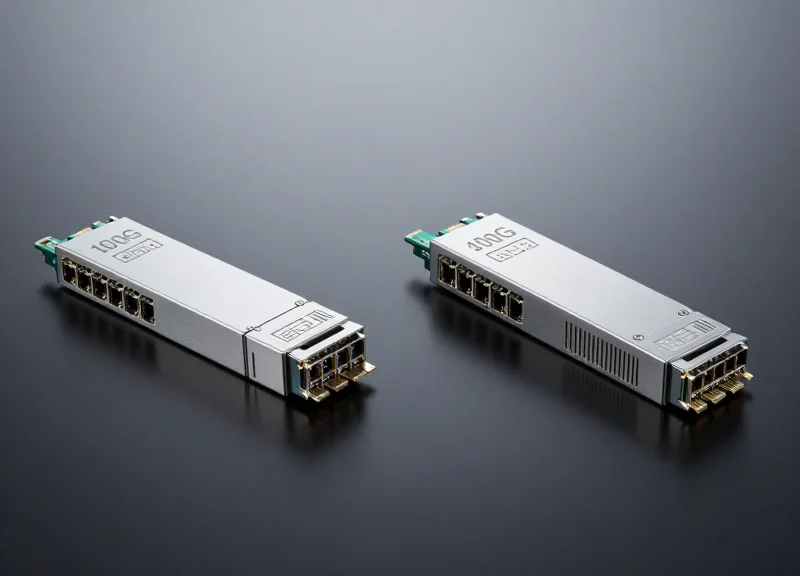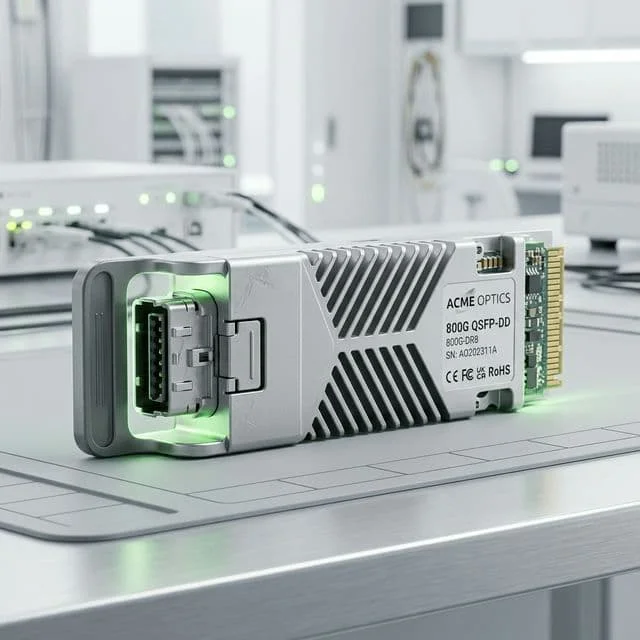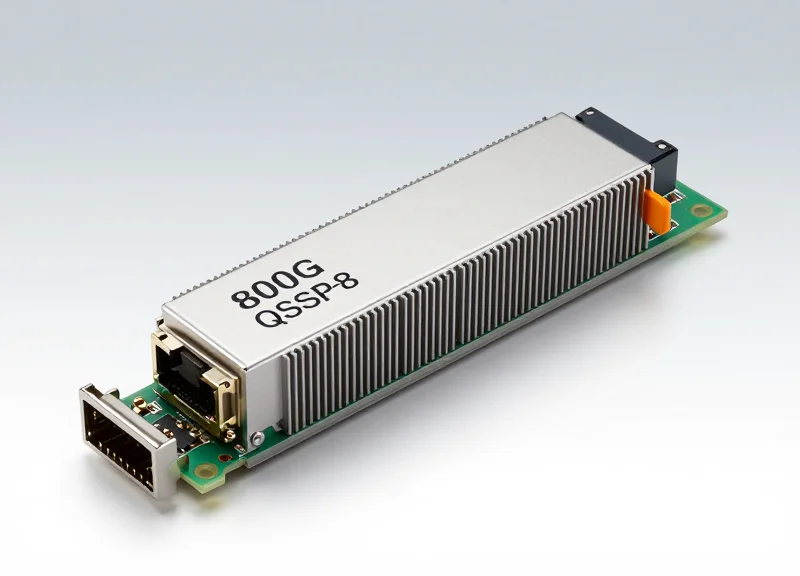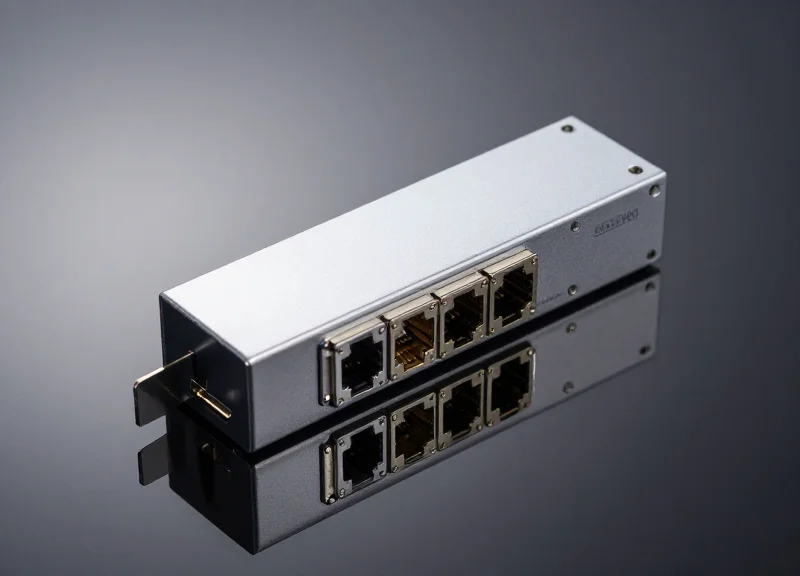
In an era where data-intensive applications like AI and cloud computing dominate, the underlying hardware must be flawless. Ubytelink’s 400G QSFP-DD DR4 modules are designed to solve the critical challenges of bandwidth density and signal integrity, providing a robust solution for the world's most demanding networks.
The Strategic Shift to 400G Ethernet

The Drivers of the 400G Ethernet Transformation
The migration to 400G Ethernet is driven by the relentless growth of data-intensive applications, including artificial intelligence (AI) training, 5G edge computing, and hyperscale cloud services. As 100G infrastructures reach their physical and economic limits, 400G provides the necessary fourfold increase in throughput. This shift allows network operators to significantly lower the cost-per-bit while reducing the complexity of cabling and the power footprint required to transport massive data volumes across the global network fabric.
The Strategic Value of the QSFP-DD Form Factor
The Quad Small Form-factor Pluggable Double Density (QSFP-DD) has established itself as the premier choice for 400G deployments. By utilizing an 8-lane electrical interface—double that of the traditional QSFP28—the QSFP-DD standard achieves higher density without increasing the physical size of the module. This architectural decision enables a massive increase in port density on a standard 1RU switch chassis, effectively doubling the bandwidth capacity of the rack without expanding its footprint.
| Feature | 100G QSFP28 | 400G QSFP-DD |
|---|---|---|
| Max Throughput | 100 Gbps | 400 Gbps |
| Electrical Lanes | 4 x 25G (NRZ) | 8 x 50G (PAM4) |
| Density per 1RU | Standard | Double Capacity |
| Backward Compatibility | None | Supports QSFP28/QSFP56 |
Maintaining Backward Compatibility
One of the most critical advantages of the QSFP-DD specification is its physical and electrical backward compatibility. A QSFP-DD port on a modern switch can accept legacy QSFP28 (100G) and QSFP56 (200G) modules. This allows enterprises and service providers to protect their current hardware investments and migrate to 400G at their own pace, replacing older optics only as the demand for higher bandwidth necessitates the upgrade.
- Why is the 400G DR4 solution significant for data centers?
The 400G DR4 solution uses four parallel lanes of single-mode fiber to transmit data over distances up to 500m. It is a cost-effective alternative to higher-reach optics for internal data center fabric, providing a direct path to break out 400G ports into four 100G links. - How does PAM4 signaling enable 400G?
Unlike the binary NRZ signaling used in 100G, PAM4 (Pulse Amplitude Modulation 4-level) carries two bits per clock cycle, doubling the data rate over the same physical frequency and enabling the 50G-per-lane speeds required for 400G.
Technical Deep Dive: Understanding the DR4 Standard
The Architecture of 400G DR4
The 400G QSFP-DD DR4 standard represents the primary evolutionary step for intra-data center connectivity, utilizing four parallel lanes of 100Gbps PAM4 modulation to achieve an aggregate 400Gbps throughput over a 500-meter reach on single-mode fiber (SMF). This architecture is specifically engineered to facilitate high-bandwidth leaf-to-spine interconnections by offering a fourfold increase in density over traditional 100G modules while maintaining a power-efficient profile. By utilizing parallel single-mode fiber (PSM4), the DR4 standard allows for seamless breakout capabilities, enabling a single 400G port to connect directly to four 100G DR transceivers, which is critical for tiered network architectures.
Technical Specifications and Signal Integrity
The shift from NRZ (Non-Return-to-Zero) to PAM4 (4-level Pulse Amplitude Modulation) is the cornerstone of the DR4 standard. While NRZ transmits one bit per symbol, PAM4 transmits two, effectively doubling the data rate without requiring a doubling of the optical bandwidth. This efficiency is vital for maintaining signal integrity over the 1310nm wavelength.
| Parameter | DR4 Specification |
|---|---|
| Modulation | PAM4 |
| Wavelength | 1310nm |
| Connector Type | MPO-12/MTP-12 (APC) |
| Maximum Reach | 500m over OS2 SMF |
| Data Rate per Lane | 106.25 Gbps (53.125 GBaud) |
| Fiber Type | Parallel Single-mode Fiber (8 or 12 fibers) |
Deployment Advantages for Global Networks
For global enterprises and hyperscale providers, the choice of DR4 is driven by the necessity for low-latency, high-radix switching. Because DR4 utilizes single-mode fiber, it avoids the distance limitations of multi-mode solutions while providing a lower cost-per-bit than longer-reach standards like FR4 or LR4.
- Why is the MPO-12 APC connector used for DR4?
The Angled Physical Contact (APC) polish is required to minimize back-reflection (return loss) in single-mode parallel fiber systems, which is essential for maintaining the high signal-to-noise ratio required by PAM4 signaling. - How does DR4 support legacy 100G infrastructure?
Through the use of breakout cables, a 400G DR4 transceiver can interface with four 100G DR modules. This allows network operators to upgrade their spine switches to 400G while maintaining existing 100G leaf switches, protecting hardware investments. - What makes DR4 more power-efficient than 100G modules?
By integrating four 100G channels into a single QSFP-DD form factor, DR4 solutions significantly reduce the per-port power consumption and cooling requirements compared to using four discrete 100G QSFP28 transceivers.
The Ubytelink Engineering Advantage
Precision Engineering for Mission-Critical Connectivity
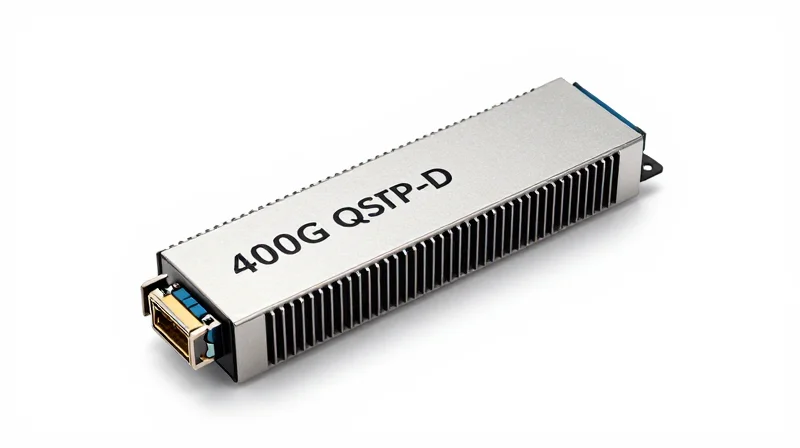
The Ubytelink engineering advantage is rooted in a 'performance-first' philosophy that prioritizes signal purity and hardware longevity over the cost-cutting measures common in generic white-box modules. By utilizing tier-one semiconductor components and high-stability optical sub-assemblies, Ubytelink 400G QSFP-DD DR4 transceivers deliver a robust link budget that exceeds IEEE 802.3bs standards, ensuring seamless operation even in complex, high-density leaf-spine architectures.
High-Performance TOSA and ROSA Assemblies
At the heart of every Ubytelink 400G DR4 module are the Transmitter Optical Sub-Assembly (TOSA) and Receiver Optical Sub-Assembly (ROSA). While standard modules may use generic lasers that are prone to wavelength drift, Ubytelink integrates high-linearity EML (Electro-absorption Modulated Lasers) and high-sensitivity PIN photodiode arrays. This precision selection ensures that the four 100G PAM4 lanes maintain exceptional linearity and minimal chromatic dispersion over the full 500m reach.
Comparative Performance Metrics
| Feature | Ubytelink Premium DR4 | Generic/Standard DR4 |
|---|---|---|
| Bit Error Rate (Pre-FEC) | < 1E-12 (typical) | < 2.4E-4 (standard) |
| TOSA/ROSA Source | Tier-1 Semiconductor Only | Varies/Mixed Grade |
| Operating Temperature | 0°C to 70°C (Stable) | Narrower stable range |
| Mean Time Between Failures | High (Optimized Heat Dissipation) | Standard/Variable |
Optimizing Bit Error Rate (BER) Performance
In 400G networking, the Bit Error Rate (BER) is the ultimate metric of signal health. Because 400G relies on PAM4 (4-level Pulse Amplitude Modulation), the signal-to-noise ratio is significantly tighter than older NRZ-based systems. Ubytelink's engineering advantage lies in its specialized DSP (Digital Signal Processing) tuning, which works in tandem with the premium optical components to provide a wider margin before Forward Error Correction (FEC) is required. This results in lower latency and fewer retransmissions at the switch level.
Engineering and Quality Assurance FAQ
- How does Ubytelink ensure compatibility across different vendor platforms?
Each module undergoes rigorous multi-vendor interoperability testing in a dedicated lab environment, simulating real-world traffic on Cisco, Arista, Juniper, and Mellanox platforms to ensure 100% EEPROM coding accuracy. - Why is TOSA/ROSA quality so critical for 400G DR4?
Since DR4 uses four parallel fibers, any inconsistency in TOSA output can lead to lane-to-lane skew. Ubytelink's high-grade assemblies ensure uniform power output across all four channels. - Does premium engineering affect the power envelope?
On the contrary, higher-quality components often operate more efficiently. Ubytelink modules are engineered for optimized power consumption, typically staying well within the Class 8 power specification for QSFP-DD.
Thermal Management and Power Consumption
Thermal Management and Power Consumption
Ubytelink 400G QSFP-DD DR4 solutions address the critical challenge of heat generation in next-generation networks by integrating high-efficiency Digital Signal Processors (DSPs) and low-power silicon photonics, effectively reducing the energy footprint per bit transmitted while maintaining peak signal integrity.
Driving Down Total Cost of Ownership (TCO)
In a 400G ecosystem, power consumption is a primary driver of operational expenses. Ubytelink's engineering focuses on minimizing power draw through the use of advanced 7nm DSP technology and high-efficiency laser drivers. By keeping power consumption consistently below the industry average, these modules allow for higher port density in leaf-and-spine architectures without exceeding the cooling capacity of standard rack configurations. This energy efficiency translates directly into lower electricity costs and a reduced demand on data center HVAC systems.
| Parameter | Ubytelink 400G DR4 | Generic DR4 Module | MSA/IEEE Limit |
|---|---|---|---|
| Max Power Consumption | < 9.5W (Typical) | 11W - 12W | 12W (Class 7) |
| Thermal Dissipation | High-Efficiency Fin Design | Standard Smooth Shell | Standard QSFP-DD |
| Operating Case Temp | 0°C to 70°C | 0°C to 70°C | 0°C to 70°C |
| DSP Node Efficiency | 7nm Process | 12nm / 16nm Legacy | N/A |
Advanced Heat Dissipation Engineering
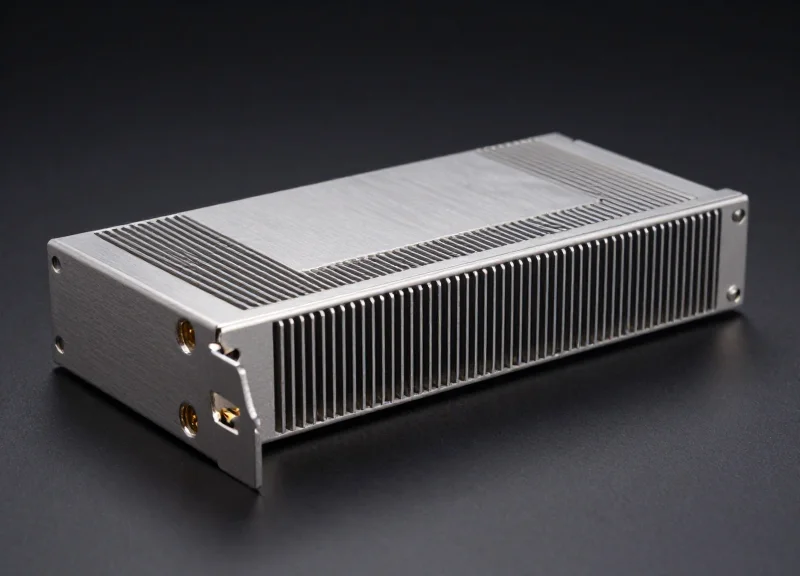
Beyond internal component efficiency, the physical design of the Ubytelink QSFP-DD housing is optimized for airflow. The module utilizes premium thermally conductive materials and a precision-engineered shell that maximizes the surface area available for heat exchange. This thermal structural integrity ensures that the module maintains a stable internal temperature even during high-load traffic bursts, preventing thermal throttling and significantly extending the Mean Time Between Failures (MTBF).
- How does lower power consumption directly impact network reliability?
Excessive heat is the primary cause of optical component degradation. By operating at lower wattages, Ubytelink modules reduce the thermal stress on the TOSA and ROSA assemblies, ensuring long-term stability and a lower Bit Error Rate (BER). - Are these modules compatible with legacy cooling systems?
Yes. Ubytelink's DR4 solutions are designed to work within the existing airflow patterns of standard 1U and 2U switches, requiring no specialized cooling modifications for high-density 400G deployments. - What role does the DSP play in thermal management?
The DSP is the most power-hungry component. Ubytelink utilizes state-of-the-art silicon that provides high-performance PAM4 equalization while drawing significantly less current than older generation chipsets.
Seamless Interoperability and Ecosystem Compatibility
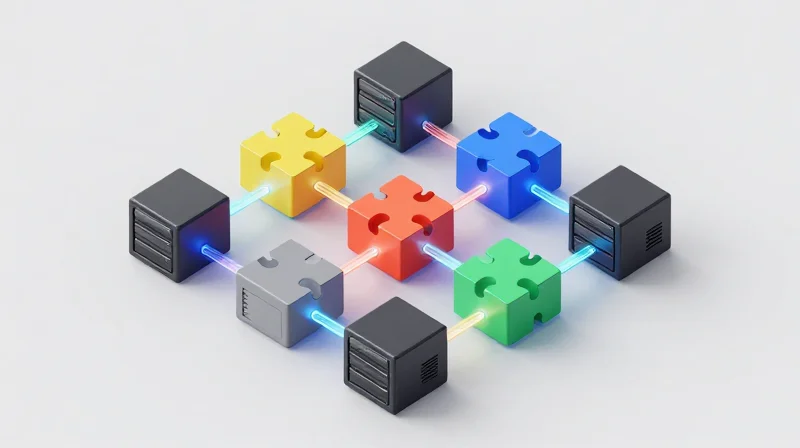
Ubytelink’s 400G QSFP-DD DR4 modules are engineered to eliminate the risks associated with proprietary vendor lock-in, offering a plug-and-play experience across heterogeneous network infrastructures. By prioritizing strict protocol compliance and physical interface consistency, these solutions empower network architects to deploy high-performance optics in mixed-vendor environments while maintaining full telemetry accuracy and system stability.
The Foundation of Compatibility: MSA and IEEE Compliance
The cornerstone of Ubytelink's interoperability strategy is an absolute commitment to Multi-Source Agreements (MSA) and IEEE 802.3bs standards. The QSFP-DD (Quad Small Form-factor Pluggable Double Density) form factor requires precise mechanical and electrical synchronization to function across different platforms. Ubytelink ensures that every DR4 module meets the QSFP-DD MSA Hardware Specification, which governs the physical dimensions, pin mapping, and the I2C management interface. This adherence guarantees that the hardware is physically and electrically compatible with any compliant 400G port, regardless of the chassis manufacturer.
Rigorous Multi-Vendor Validation
To ensure 'day-one' reliability, Ubytelink modules undergo an intensive verification process within our interoperability lab. We test our 400G DR4 optics against the latest operating systems—such as Cisco NX-OS/IOS-XR, Arista EOS, and Juniper Junos. This testing goes beyond simple link-up verification; it includes stress-testing the CMIS (Common Management Interface Specification) to ensure that Digital Optical Monitoring (DOM) data, including temperature, voltage, and laser bias current, is reported accurately to the host system software.
| Vendor Platform | OS Compatibility | EEPROM Customization | DOM Support |
|---|---|---|---|
| Cisco Nexus/ASR | NX-OS / IOS-XR | Cisco-Specific Coding | Full Support |
| Arista 7000 Series | EOS | Standard MSA / Custom | Full Support |
| Juniper PTX/QFX | Junos OS | Juniper-Specific Coding | Full Support |
| White Box Switches | SONiC / Cumulus | Generic MSA | Full Support |
Future-Proofing Through Ecosystem Versatility
Ubytelink 400G DR4 solutions are designed with the entire ecosystem in mind, including breakout capabilities and backward compatibility logic. Because the DR4 interface uses four parallel lanes of 100G PAM4, it is inherently compatible with 100G DR1 modules in a 4x100G breakout configuration. This allows for a staged migration path where legacy 100G spine or leaf switches can communicate directly with newer 400G infrastructure, ensuring that your investment in Ubytelink optics remains relevant as the network evolves.
Common Interoperability Questions
- Will using Ubytelink modules void my host equipment warranty?
No. Under international trade laws and regulations like the Magnuson-Moss Warranty Act, manufacturers cannot void a hardware warranty simply for using third-party components. Ubytelink modules are fully MSA-compliant, ensuring they meet the same specifications as OEM optics. - How does Ubytelink handle proprietary vendor software locks?
We utilize platform-specific EEPROM coding that mimics the behavior of original modules. This ensures the switch recognizes the module as a native part, avoiding 'unsupported transceiver' warnings and enabling all advanced telemetry features. - Are these modules compatible with all MPO-12 connectors?
Yes, Ubytelink 400G DR4 modules utilize the standard MPO-12/APC interface, which is the industry standard for 500m parallel fiber applications, ensuring compatibility with your existing fiber plant.
Rigorous Testing: The Backbone of Reliability

Rigorous Testing: The Backbone of Reliability
In the high-stakes environment of 400G networking, reliability is the primary differentiator between seamless operation and costly downtime; Ubytelink guarantees this reliability through an exhaustive testing methodology that treats every module as a mission-critical component rather than a commodity. By integrating automated optical testing with manual verification, we eliminate the 'Dead on Arrival' (DOA) scenarios that plague lesser-tier optics, ensuring that our QSFP-DD DR4 solutions maintain peak performance throughout their intended lifecycle.
Comprehensive Testing Methodologies
Our quality control (QC) pipeline is divided into three distinct phases: signal integrity verification, environmental stress screening (ESS), and hardware compatibility validation. Each phase is designed to push the Silicon Photonics engine and internal circuitry to their limits.
- Thermal Cycling and Environmental Stress
Modules are subjected to rapid temperature fluctuations between -40°C and +85°C to identify potential solder joint failures or optical misalignment caused by thermal expansion. - Dynamic Aging Tests
Every DR4 module undergoes a 48 to 72-hour burn-in period under maximum load to trigger any early-life infant mortality failures before shipment. - 100% Full-Traffic Verification
Unlike competitors who rely on statistical sampling, Ubytelink tests every single unit at full 400G line rate to ensure zero bit errors across all four 100G lanes.
| Test Parameter | Standard Industry Practice | Ubytelink Premium Protocol |
|---|---|---|
| Sampling Rate | 10-20% Batch Testing | 100% Individual Unit Testing |
| Burn-In Duration | 2-4 Hours | 48-72 Hours Dynamic Aging |
| BER Verification | 1E-12 (Statistical) | 1E-15 (Confirmed for each lane) |
| Temp Cycling | Room Temperature Stable | Extreme Range Ramp-and-Soak |
Frequently Asked Questions Regarding Reliability
- What is Ubytelink's strategy for eliminating DOA units?
We utilize a 'Total Quality' mandate where every module must pass a final traffic test on major vendor switches to confirm interoperability and performance before being boxed. - How does aging testing benefit the end-user?
Aging tests accelerate the lifecycle of internal components. This ensures any component prone to premature failure is identified early, resulting in a drastically lower failure rate in the field. - Are these tests compliant with international standards?
Yes, all testing procedures meet or exceed GR-468-CORE standards for optoelectronic devices and Telcordia reliability requirements.
Application Scenarios: From AI to 5G Edge

Application Scenarios: Powering Next-Generation Infrastructure
Ubytelink 400G QSFP-DD DR4 modules provide the high-density backbone for AI clusters and hyperscale cloud environments, delivering 400Gbps of bandwidth over 500 meters of single-mode fiber with exceptional signal integrity. As global networks transition from 100G to 400G, the DR4 form factor stands out as the primary choice for short-reach intra-data center connectivity, offering a perfect balance between power efficiency and the massive throughput required for modern data-intensive workloads.
AI and Machine Learning Training Clusters
Modern Artificial Intelligence models, particularly Large Language Models (LLMs), rely on massive parallel processing across thousands of GPUs. Ubytelink 400G DR4 modules facilitate the high-speed 'east-west' traffic flow required for these clusters. By providing low-latency interconnects with 500-meter reach, these modules ensure that data transfer between compute nodes does not become a bottleneck, maximizing the efficiency of deep learning training cycles and reducing overall time-to-market for AI services.
Hyperscale Cloud Storage and CDN Distribution
For cloud service providers and Content Delivery Networks (CDNs), managing petabytes of data requires a highly scalable spine-leaf architecture. The DR4 module is uniquely suited for this role because of its breakout capability; a single 400G port can be split into four 100G DR links. This allows for seamless integration with existing 100G infrastructure while preparing the network core for full 400G saturation, ensuring that high-definition video streaming and cloud-based applications remain lag-free for global users.
| Scenario | Key Requirement | Ubytelink DR4 Advantage |
|---|---|---|
| AI Training Clusters | Extreme Bandwidth & Low Latency | Parallel 4-lane design reduces serialization delay. |
| Financial Trading (HFT) | Signal Integrity & Jitter Control | Rigorous 100% traffic testing ensures zero frame loss. |
| 5G Edge Computing | Power Efficiency & Compact Size | QSFP-DD form factor offers highest density for edge sites. |
| Hyperscale Cloud | Scalability & Breakout Support | Supports 4x100G breakout to optimize port utilization. |
FAQ: Practical Application of 400G DR4 Solutions
- Why is DR4 preferred over FR4 for short-range data center links?
DR4 uses a parallel fiber architecture that allows for 4x100G breakout, which is highly beneficial for connecting 400G switches to 100G servers or storage arrays. It is typically more cost-effective for distances under 500 meters compared to the duplex-fiber FR4. - Can Ubytelink 400G DR4 modules be used in 5G Edge environments?
Yes. Their low power consumption per gigabit and compact QSFP-DD form factor make them ideal for space-constrained edge data centers that require high-speed backhaul to the core network. - What makes Ubytelink DR4 suitable for High-Frequency Trading (HFT)?
In HFT, every microsecond counts. Ubytelink's modules undergo strict temperature cycling and aging tests to ensure consistent performance and minimal jitter, providing the stable environment necessary for millisecond-level trade executions.
Future-Proofing Your Fiber Infrastructure
Future-Proofing Your Fiber Infrastructure
Adopting Ubytelink 400G QSFP-DD DR4 modules is a strategic move that extends beyond immediate capacity upgrades, as the parallel single-mode fiber (PSM4) architecture provides the physical layer readiness required for the next decade of data center evolution. By standardizing on MPO-based parallel single-mode infrastructure today, organizations create a direct migration path to 800G and 1.6T without the need for costly and disruptive cable replacements.
The Strategic Shift to Parallel Single-Mode Fiber (PSM)
Unlike duplex solutions that rely on complex Wavelength Division Multiplexing (WDM) to combine signals, the DR4 architecture uses four distinct parallel lanes over eight fibers (4 Tx and 4 Rx). This approach simplifies the optical design by removing internal multiplexing components, which in turn reduces heat generation and power consumption—two critical factors for sustaining high-density 800G environments.
| Infrastructure Feature | 400G DR4 (Current) | 800G DR8 / 2xDR4 (Future) |
|---|---|---|
| Fiber Type | Parallel Single-Mode | Parallel Single-Mode |
| Connector Type | MPO-12 / MPO-16 | MPO-12 / MPO-16 / MPO-24 |
| Lane Speed | 100Gbps PAM4 | 100Gbps or 200Gbps PAM4 |
| Optical Complexity | Low (No Mux/Demux) | Low (No Mux/Demux) |
Enabling Seamless 800G Breakout and Aggregation
One of the most significant advantages of Ubytelink's 400G DR4 solution is its inherent support for breakout configurations. As networks transition to 800G, the same MPO cabling used for 400G DR4 can be utilized to aggregate multiple 100G or 400G nodes into a single 800G port. This flexibility allows for a granular upgrade cycle where only the active electronics (switches and transceivers) are updated, while the passive fiber plant remains untouched, maximizing the return on investment (ROI) for the physical layer.
- How does 400G DR4 support breakout applications?
DR4 is specifically designed to break out into four 100G-DR streams, allowing high-capacity 400G switch ports to connect directly to four legacy 100G servers or switches without the need for additional signal conversion. - Will my MPO-12 cabling work for 800G upgrades?
Yes. The MPO-12 parallel single-mode infrastructure deployed for 400G DR4 is the primary physical plant recommended for 800G DR8 and 2x400G DR4 applications, ensuring your cabling survives multiple hardware generations. - Why is the lack of WDM components an advantage?
By avoiding internal multiplexers/demultiplexers, DR4 modules are less complex and more reliable. This simplicity translates to lower latency and lower power per bit, which is essential as data centers scale to higher speeds.
Ubytelink's commitment to MSA compliance and rigorous testing ensures that every 400G DR4 module performs reliably within these complex, parallel architectures. By choosing premium quality components today, you are not just solving for current bandwidth bottlenecks—you are laying the groundwork for a scalable, high-performance future.
Choosing the right optical modules is a strategic decision that affects the uptime and efficiency of your entire network. Ubytelink's 400G QSFP-DD DR4 solutions provide the premium quality needed for global operations. Contact our technical team today to discuss your infrastructure requirements and request a sample for testing.