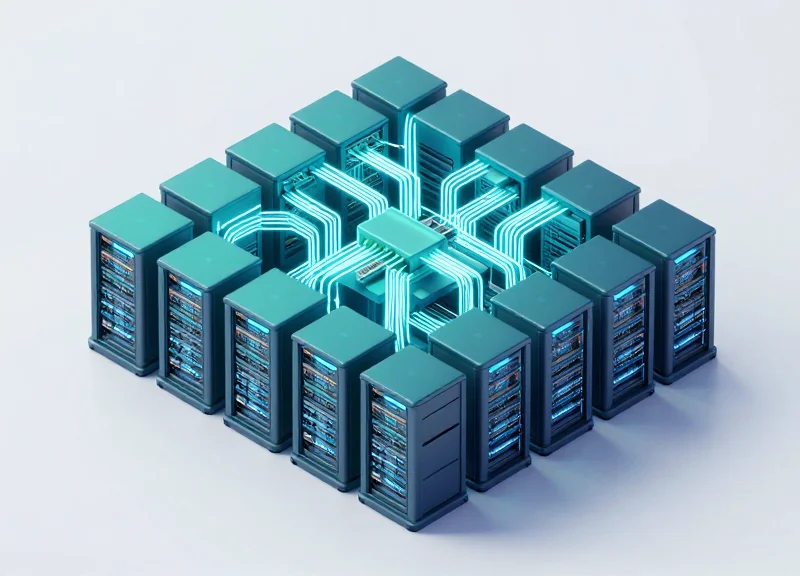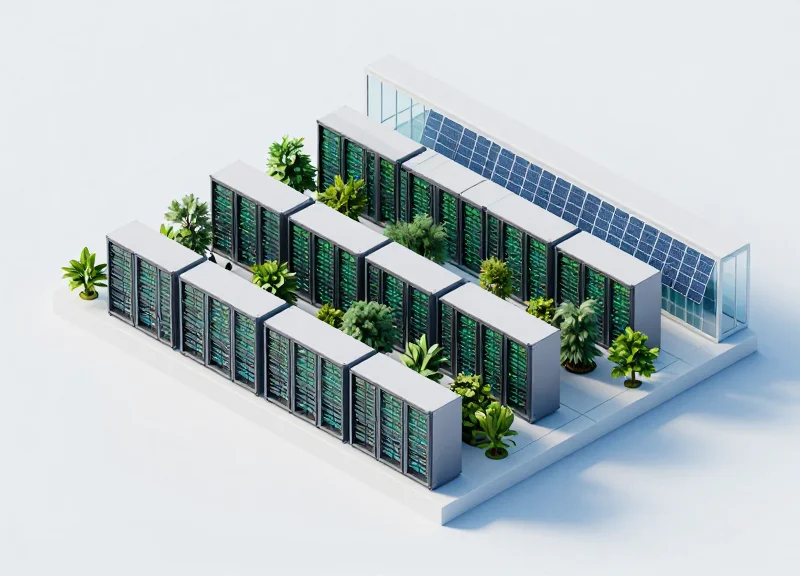
In an era where environmental responsibility and operational efficiency are paramount, the shift toward sustainable data centers is no longer optional. Ubytelink provides the high-performance, modular green solutions needed to scale your network while reducing your carbon footprint and energy costs.
The Rise of Sustainable Green Data Centers in 2026
The Evolution of Wholesale Data Center Infrastructure in 2026
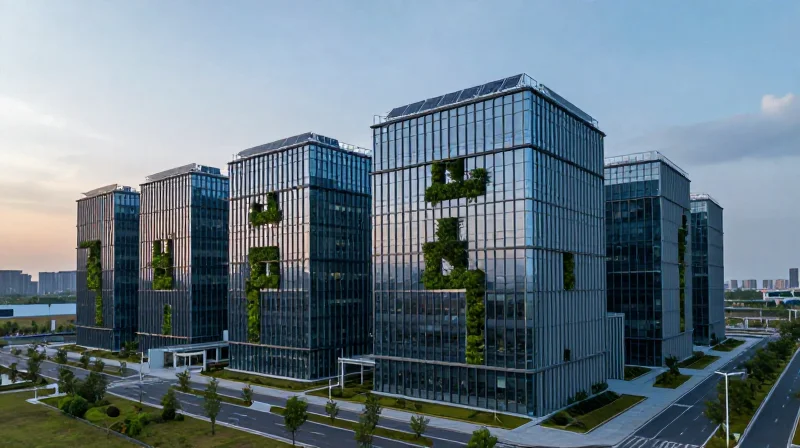
The year 2026 represents a critical tipping point where sustainable green data centers have transitioned from niche experimental projects to the primary standard for wholesale infrastructure. As artificial intelligence and high-performance computing demand unprecedented levels of power, the industry is moving away from traditional carbon-heavy facilities toward modular, energy-efficient solutions. Buying wholesale green data centers allows enterprises to secure future-proof capacity while significantly lowering their Power Usage Effectiveness (PUE) and meeting stringent ESG (Environmental, Social, and Governance) requirements. This shift is fueled by a convergence of technological advancements in liquid cooling, renewable energy integration, and pre-fabricated modular construction that reduces both the carbon footprint and the Total Cost of Ownership (TCO).
Comparative Analysis: Traditional vs. Green Infrastructure
| Feature | Traditional Data Center | Green Data Center (2026) |
|---|---|---|
| Average PUE | 1.6 - 2.0 | 1.1 - 1.25 |
| Cooling Technology | Air-based HVAC | Liquid Cooling / Immersion |
| Power Source | Grid-dependent (Mixed) | Renewable (Solar/Wind/Hydro) |
| Construction | Custom Build (24+ months) | Modular/Prefab (6-9 months) |
| Operational Cost | High (Volatility in Energy) | Low (Optimized Efficiency) |
Strategic Advantages of Bulk Procurement
Bulk purchasing of green data center modules offers significant capital expenditure (CAPEX) advantages for hyperscalers and large enterprises. By securing custom quotes for multiple units, organizations can leverage economies of scale that are unavailable in the retail colocation market. Wholesale procurement ensures consistency in hardware specifications across global sites, simplifying maintenance and operational management while providing a predictable path toward net-zero emissions targets. Furthermore, manufacturers of green modules often provide tiered pricing models that reward larger commitments to sustainable infrastructure.
Industry Insights & FAQ
- What makes a data center 'green' in 2026?
A data center is considered green if it achieves a PUE below 1.3, utilizes renewable energy, employs carbon-neutral building materials, and uses advanced cooling techniques like direct-to-chip or liquid immersion to minimize waste. - How does wholesale pricing affect the ROI of green initiatives?
Wholesale pricing reduces the initial acquisition cost of high-efficiency hardware, allowing the energy savings (OPEX) to pay back the investment significantly faster than retail-priced, standard-efficiency equipment. - Can custom quotes include specific renewable energy offsets?
Yes, modern wholesale custom quotes often integrate Power Purchase Agreements (PPAs) or onsite microgrid solutions tailored to the specific geographical and energy requirements of the enterprise.
Why Buying Wholesale is Critical for Network Scaling
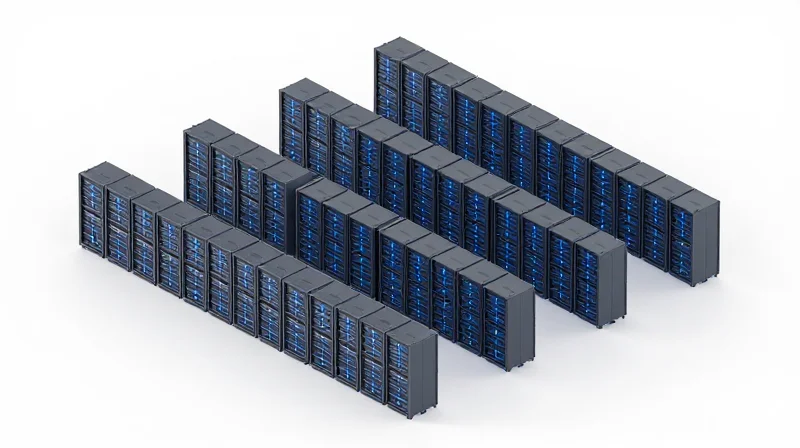
Buying sustainable green data centers at wholesale scale is critical because it bridges the gap between high-performance infrastructure requirements and the fiscal necessity of minimizing capital expenditure (CAPEX). For enterprises and hyperscalers, the shift toward sustainability is often met with the 'green premium'—the higher upfront cost of eco-friendly components. Wholesale procurement effectively neutralizes this premium through economies of scale, allowing organizations to deploy energy-efficient liquid cooling systems, high-density racks, and renewable energy integrations at a unit cost that rivals or beats traditional legacy hardware.
The Economic Impact of Bulk Procurement on TCO
Total Cost of Ownership is the most vital metric in data center management. By moving to a wholesale model, companies unlock significant savings not only in hardware but in the long-term operational costs (OPEX) associated with energy consumption. Sustainable modules purchased in bulk are engineered for uniformity, which simplifies maintenance cycles and reduces the spare parts inventory required to keep the network operational. When you scale with a single, sustainable architecture, the labor costs for deployment and management drop exponentially.
| Feature | Retail/Modular Unit | Wholesale/Bulk Portfolio |
|---|---|---|
| Price per Kilowatt (kW) | Standard Market Rate | 15-25% Volume Discount |
| Logistics & Shipping | Individual Freight Costs | Consolidated Global Logistics |
| Customization Level | Off-the-shelf limits | Bespoke Engineering Included |
| Deployment Velocity | Staggered/Phased | Synchronized Global Rollout |
| Energy Efficiency ROI | Linear Progression | Accelerated via Lower CAPEX |
Standardization and Predictable Scaling
Beyond the financial benefits, wholesale purchasing enforces a level of technical standardization that is impossible with piecemeal procurement. A uniform fleet of green data centers ensures that Power Usage Effectiveness (PUE) ratings remain consistent across all nodes. This predictability is essential for meeting ESG (Environmental, Social, and Governance) targets and for optimizing the software layer—such as AI-driven cooling management—which performs best when the underlying hardware is consistent.
Wholesale Scaling FAQ
- Does wholesale buying limit sustainability options?
No, wholesale contracts for 2026 allow for deep integration of sustainable features like immersion cooling and hydrogen fuel cell backups at a lower per-unit cost than individual orders. - What is the typical lead time for bulk green data centers?
While orders are larger, wholesale manufacturers prioritize these production runs, often resulting in lead times comparable to single units (approx. 12-20 weeks depending on customization). - How does wholesale pricing affect tax incentives?
Larger capital investments in green infrastructure often qualify for more substantial federal and regional energy credits, further lowering the effective TCO.
Custom Engineering: Leveraging OEM/ODM for Modular Excellence
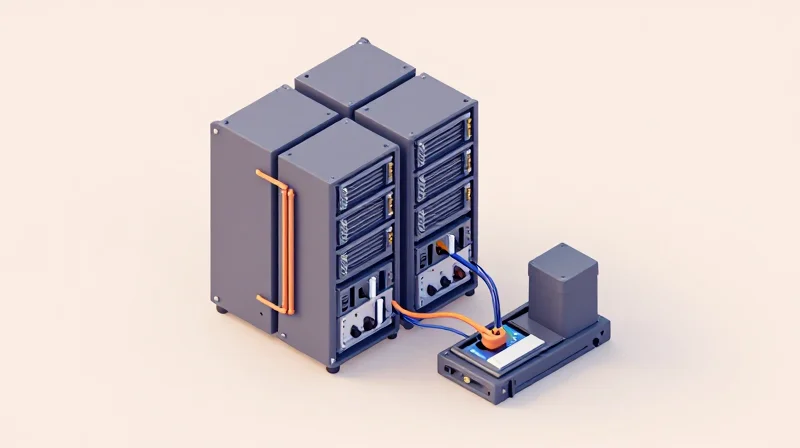
Custom Engineering: Leveraging OEM/ODM for Modular Excellence
Custom engineering via Original Equipment Manufacturer (OEM) and Original Design Manufacturer (ODM) models transforms generic data center hardware into high-performance, purpose-built infrastructure. By leveraging Ubytelink’s manufacturing expertise, organizations can move beyond 'off-the-shelf' limitations to design modular units that satisfy stringent Power Usage Effectiveness (PUE) targets and unique spatial constraints. This bespoke approach ensures that every watt consumed is optimized for the specific workload, whether it be AI-driven high-density computing or edge-based low-latency applications.
Precision Specification for Green Infrastructure
The primary advantage of the ODM model is the ability to influence the design at the component level. For green data centers, this means integrating advanced cooling technologies—such as liquid immersion or rear-door heat exchangers—directly into the module's architecture from the start. Wholesale buyers benefit from this by receiving a turnkey solution that reduces onsite installation time and eliminates the inefficiencies of retrofitting standard containers.
| Feature | Standard Modular Units | Ubytelink Custom OEM/ODM |
|---|---|---|
| Cooling Systems | Traditional Forced Air | Liquid, Immersion, or Hybrid Options |
| Power Density | Fixed (Typically 10-15kW/Rack) | Variable (Up to 50kW+ Per Rack) |
| Structural Layout | Fixed ISO Container Sizes | Flexible Footprints & Stackable Designs |
| PUE Optimization | General Performance (~1.4) | Aggressive Optimization (<1.15) |
The Ubytelink Advantage: Integrated ODM Solutions
- Bespoke Power Distribution
Design custom busways and UPS configurations that match your local utility standards and redundancy requirements (N+1, 2N). - Adaptive Environmental Controls
Implement AI-driven sensors and controls tailored to the specific humidity and temperature needs of your hardware. - Material Sustainability
Select recycled or low-carbon footprint materials for the structural shell to align with corporate ESG goals.
Frequently Asked Questions: Custom Engineering
- What is the minimum order quantity (MOQ) for custom ODM modules?
While wholesale pricing typically applies to bulk orders, Ubytelink offers custom engineering paths for single-module prototypes and large-scale deployments of 10+ units. - How does custom engineering affect lead times?
The design phase adds 4-6 weeks to the front end, but because the manufacturing is integrated, the total delivery time for a fleet of custom modules is often faster than sourcing and assembling separate components. - Can I integrate my own proprietary software into the ODM hardware?
Yes. Our ODM services include the pre-installation of client-specified DCIM (Data Center Infrastructure Management) tools and firmware at the factory level.
Energy Efficiency and PUE: The Core of Green Infrastructure

Energy efficiency in sustainable data centers is primarily defined by Power Usage Effectiveness (PUE), a metric that compares the total power entering the facility to the power actually used by the IT equipment. In the context of wholesale procurement, achieving a PUE close to 1.0 is the benchmark for green infrastructure, as it signifies that nearly all energy is directed toward computing rather than wasted on auxiliary systems like lighting or inefficient cooling. By utilizing advanced modular engineering and liquid-based thermal management, modern sustainable modules reduce energy overhead by up to 40% compared to traditional facilities, directly lowering the Total Cost of Ownership (TCO) for bulk buyers.
PUE Benchmarks and Wholesale Cost Efficiency
For enterprises purchasing data center capacity at scale, PUE is not just a sustainability metric but a financial one. A facility with a PUE of 1.2 consumes significantly less power for the same compute load than one with a PUE of 1.7. In bulk pricing models, these energy savings are often passed directly to the client through lower utility pass-through costs or reduced 'all-in' monthly recurring charges. Sustainable modules achieve these lower ratios through integrated power distribution units (PDUs) and high-efficiency transformers that minimize line loss before the electricity even reaches the server rack.
| Cooling Method | Avg. PUE Rating | Energy Efficiency | Density Capability |
|---|---|---|---|
| Traditional DX Air Cooling | 1.6 - 1.8 | Low | Up to 10kW/Rack |
| Hot/Cold Aisle Containment | 1.3 - 1.4 | Medium | Up to 20kW/Rack |
| Rear Door Heat Exchangers | 1.15 - 1.25 | High | Up to 40kW/Rack |
| Direct-to-Chip / Immersion | 1.05 - 1.15 | Ultra-High | 100kW+ /Rack |
Next-Generation Cooling: Liquid and Immersion Technologies
The shift toward High-Performance Computing (HPC) and AI workloads has necessitated a move away from traditional air cooling. Sustainable wholesale data centers now frequently incorporate liquid cooling loops, which use water or dielectric fluids to remove heat more effectively than air. Because liquids have a much higher thermal conductivity, these systems can maintain optimal operating temperatures with significantly less mechanical work. This allows for higher rack densities, meaning enterprises can fit more compute power into a smaller physical wholesale footprint, further optimizing the cost per square foot.
- How does a lower PUE impact wholesale bulk pricing?
Lower PUE reduces the 'non-IT' energy consumption, leading to lower monthly utility bills and often qualifying the project for green energy rebates that further decrease the net contract price. - Are modular green data centers compatible with existing liquid cooling setups?
Yes, most modern sustainable modules are designed with 'hybrid' cooling manifolds, allowing for a mix of air and liquid cooling to support varied hardware generations within a single wholesale deployment. - What is the impact of PUE on equipment longevity?
Efficient cooling and stable power delivery associated with low-PUE designs reduce thermal stress on server components, extending the lifecycle of wholesale-purchased hardware and reducing replacement CAPEX.
The Strategic Benefits of Modular Construction
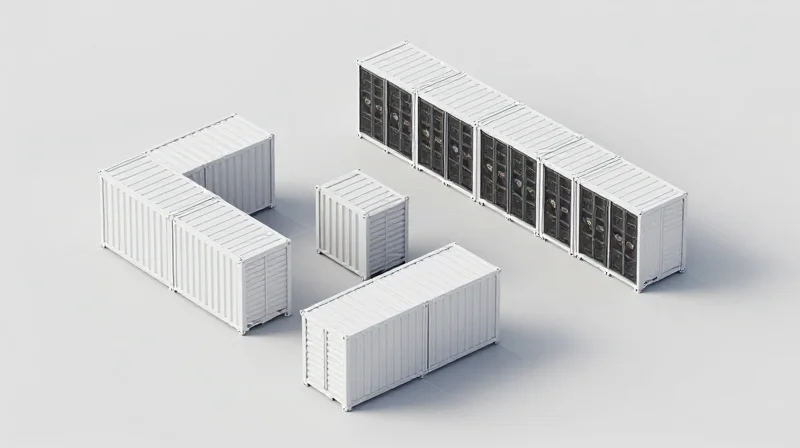
Strategic Advantages of Modular Infrastructure
Modular construction represents a fundamental shift in data center architecture, moving away from slow, sequential site-builds toward a 'productized' delivery model that prioritizes speed, precision, and financial flexibility. By utilizing prefabricated units, enterprises can bypass the typical hurdles of on-site labor shortages and weather delays, ensuring that critical capacity is brought online exactly when the business demands it.
Compressing Time-to-Market via Parallel Workflows
In traditional construction, the project timeline is strictly linear: site excavation must precede structural work, which must precede electrical and mechanical installation. Modular construction bifurcates this process. While the data center site is being prepared, the modules themselves are being manufactured, integrated, and load-tested in a controlled factory environment. This parallel processing typically reduces deployment timelines by up to 50%, allowing wholesale buyers to realize revenue or support internal workloads months ahead of schedule.
| Metric | Traditional Brick-and-Mortar | Modular Green Data Centers |
|---|---|---|
| Deployment Speed | 18 to 24 Months | 4 to 9 Months |
| Predictability | Low (Subject to local site conditions) | High (Standardized factory assembly) |
| Scalability | Capital-intensive 'Day One' sizing | Granular 'Pay-as-you-grow' expansion |
| Waste Reduction | Higher (On-site debris and inefficiency) | Lower (Optimized material usage in factory) |
| Testing | Sequential on-site commissioning | Pre-shipment full-load testing |
Seamless Scalability and Risk Mitigation
One of the primary risks of wholesale data center investment is 'over-provisioning'—building more capacity than is needed and letting it sit idle. Modular designs mitigate this by allowing for incremental expansion. Organizations can deploy a 'starter' footprint and add standardized pods or modules as power and cooling needs increase. This just-in-time scalability ensures capital is preserved and the infrastructure remains lean and efficient.
Modular Construction FAQ
- Does modular construction compromise structural integrity?
No. Modular units are engineered to exceed local building codes and are structurally reinforced to withstand the stresses of transportation and crane-lifting, often resulting in more robust structures than site-built equivalents. - How does prefabrication impact total cost of ownership (TCO)?
By reducing on-site labor and shortening the construction schedule, modular builds significantly lower indirect costs. Furthermore, the high precision of factory assembly leads to better PUE and lower long-term operational expenses. - Can modular units be customized for high-density AI workloads?
Yes. Wholesale modular providers like Ubytelink offer ODM services to integrate liquid cooling and high-amperage power distribution directly into the module design during the factory phase.
Navigating Regulatory Compliance and ESG Goals
Navigating Regulatory Compliance and ESG Goals
Wholesale procurement of sustainable green data centers has become a primary driver for organizations seeking to align their digital infrastructure with stringent global environmental mandates and internal Environmental, Social, and Governance (ESG) targets. By securing energy-efficient modular assets at scale, enterprises can ensure their operations comply with evolving regulations like the EU's Corporate Sustainability Reporting Directive (CSRD) and the SEC’s climate disclosure requirements. Ubytelink’s solutions provide the granular data transparency and low-carbon operational profiles necessary to satisfy auditors and stakeholders alike, transforming compliance from a cost center into a competitive advantage.
Aligning Infrastructure with Global Standards
Adopting a wholesale green strategy allows companies to standardize their sustainability efforts across multiple regions. This standardization is critical for achieving recognized certifications and maintaining a consistent ESG narrative. The following table highlights how specific regulatory frameworks interact with green data center procurement.
| Framework/Standard | Primary Focus | Compliance Impact |
|---|---|---|
| ISO 50001 | Energy Management | Ensures systematic energy performance improvement via efficient modular design. |
| LEED/BREEAM | Sustainable Building | Wholesale modules built with eco-friendly materials contribute to high-tier building credits. |
| EU Code of Conduct | Data Center Efficiency | Ubytelink's low PUE designs meet and exceed voluntary and mandatory efficiency benchmarks. |
| GHG Protocol | Carbon Reporting | Simplified Scope 2 and Scope 3 reporting through verifiable renewable energy integration. |
Wholesale Procurement and Carbon Neutrality
Large-scale procurement allows for the direct integration of Power Purchase Agreements (PPAs) and renewable energy credits (RECs) at the point of origin. For organizations aiming for 'Net Zero' status, custom-quoted green data centers provide the physical architecture—such as solar-ready roofing and hydrogen fuel cell compatibility—required to eliminate reliance on fossil-fuel-heavy grids. This proactive approach mitigates the risk of future carbon taxes and operational penalties.
Common Compliance & ESG Questions
- How do green data centers improve my corporate ESG score?
Green data centers directly reduce the environmental impact component of ESG by lowering Power Usage Effectiveness (PUE) and total carbon emissions. This is often the most weighted factor for technology-heavy enterprises in their annual sustainability reports. - Can Ubytelink provide the documentation needed for SEC climate disclosures?
Yes. Our wholesale solutions include detailed technical specifications regarding energy consumption and cooling efficiency, which provide the quantitative data required for rigorous financial and climate-related reporting. - Does modular construction help with 'Social' and 'Governance' goals?
Absolutely. By utilizing off-site construction, we minimize local community disruption and noise pollution. Furthermore, standardized modules facilitate better governance through predictable maintenance schedules and enhanced safety protocols for staff.
Future-Proofing for AI and High-Density Computing

Future-Proofing for AI and High-Density Computing
Sustainable green data centers are no longer just about energy efficiency; they are now the primary vehicle for hosting high-density artificial intelligence (AI) and machine learning (ML) workloads. By integrating advanced liquid cooling technologies and flexible power distribution at the design phase, these facilities ensure that wholesale buyers can scale compute-intensive operations without hitting thermal or environmental ceilings. As AI models grow in complexity, the infrastructure must provide consistent, reliable cooling that traditional brick-and-mortar facilities often struggle to retrofit.
The Thermal Challenge: Transitioning from Air to Liquid
Traditional air cooling systems are generally effective up to 15-20kW per rack, but AI-driven hardware—such as NVIDIA's latest H100 and B200 GPUs—can push rack densities toward 100kW. Green data centers solve this by utilizing closed-loop liquid cooling systems, which are significantly more efficient at heat transfer than air. This transition is critical for wholesale buyers who need to ensure their 2026 investments remain viable for the next decade of hardware evolution.
| Cooling Metric | Traditional Air Cooling | Green Liquid Cooling (Wholesale) |
|---|---|---|
| Max Density per Rack | 10-20kW | 50kW - 120kW+ |
| Energy Overhead | High (large fans/chillers) | Low (pumps/heat exchangers) |
| Water Usage Effectiveness | Moderate to High | Low (Closed-loop systems) |
| Heat Recovery Potential | Very Low | High (District heating ready) |
Modular Infrastructure for AI Scalability
One of the greatest advantages of wholesale sustainable modules is the ability to deploy 'high-density zones' within a broader data center footprint. Rather than over-engineering an entire facility, operators can utilize modular pods specifically outfitted for liquid cooling and high-amperage power delivery. This 'pay-as-you-grow' approach minimizes initial capital expenditure while providing a clear path to supporting future generations of AI silicon.
- Can green data centers support the latest NVIDIA GPU clusters?
Yes, these facilities are engineered with the high-capacity busbars and liquid-to-chip manifolds necessary to sustain the power and thermal requirements of H100 and Blackwell architectures. - How does AI affect the PUE of a sustainable facility?
Because liquid cooling is more efficient than air, high-density AI workloads can actually improve the Power Usage Effectiveness (PUE) of a green data center, often achieving ratios as low as 1.05 to 1.1. - Is the power supply for AI workloads also green?
Wholesale providers typically pair high-density infrastructure with renewable energy PPA (Power Purchase Agreements) and on-site battery storage to ensure that the massive energy consumption of AI training is carbon-neutral.
How to Get a Custom Wholesale Quote from Ubytelink
Obtaining a custom wholesale quote from Ubytelink is a consultative process that translates your technical requirements into a cost-effective, sustainable infrastructure plan. We prioritize direct communication between your engineering teams and our modular data center specialists to ensure that every quote reflects the latest in energy-efficient technology and bulk-purchase incentives for 2026.
The Five-Step Wholesale Procurement Path
- Initial Consultation
Connect with a Ubytelink account manager to discuss your high-level project goals, timeline, and preliminary power requirements. - Technical Specification Audit
Our engineers review your cooling needs (Liquid vs. Air), PUE targets, and geographic constraints to determine the optimal modular configuration. - Custom Solution Design
We draft a schematic proposal including rack density layouts, power distribution architectures, and sustainable cooling integrations. - Wholesale Pricing Analysis
Based on the volume of units and the complexity of the build, we apply wholesale tier discounts and provide a transparent, itemized quote. - Final Review and MSA
Upon approval of the quote, we finalize the Master Service Agreement (MSA) and lock in the manufacturing and delivery schedule.
Data Required for Accurate Quoting
| Requirement Category | Key Data Points | Why It Matters |
|---|---|---|
| Power Load | Total MW and kW per rack | Determines the scale of the electrical switchgear and transformer needs. |
| Cooling Tech | Immersion, DLC, or Free-air | Directly impacts the module's PUE and overall capital expenditure (CAPEX). |
| Deployment Site | Climatic data and connectivity | Affects the structural rating of the modular housing and transport logistics. |
| Order Volume | Number of modular units | The primary driver for wholesale pricing tiers and bulk manufacturing discounts. |
Procurement Frequently Asked Questions
- What is the typical turnaround time for a custom quote?
Standard wholesale quotes are delivered within 3 to 5 business days after the technical specification audit is complete. - Are there minimum order quantities for wholesale pricing?
Wholesale tiers typically begin at 5+ modular units, though custom pricing is available for large-scale single-site deployments exceeding 2MW. - Does the quote include delivery and on-site integration?
Yes, Ubytelink provides comprehensive quotes that include logistics, site preparation guidance, and technical commissioning services.
Sustainable infrastructure is the backbone of the future digital economy. By choosing Ubytelink for your wholesale green data center needs, you secure both technological excellence and environmental leadership. Contact us today to request your custom quote and start scaling your network with our premier OEM/ODM modules.