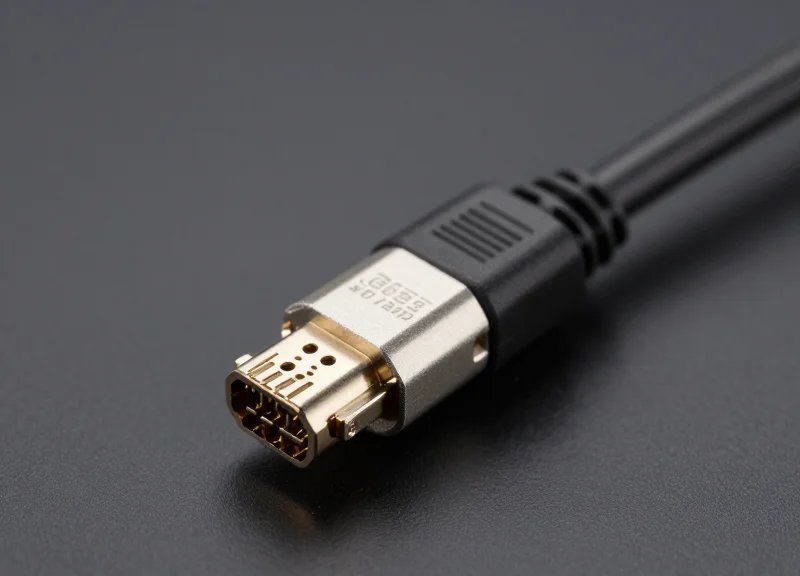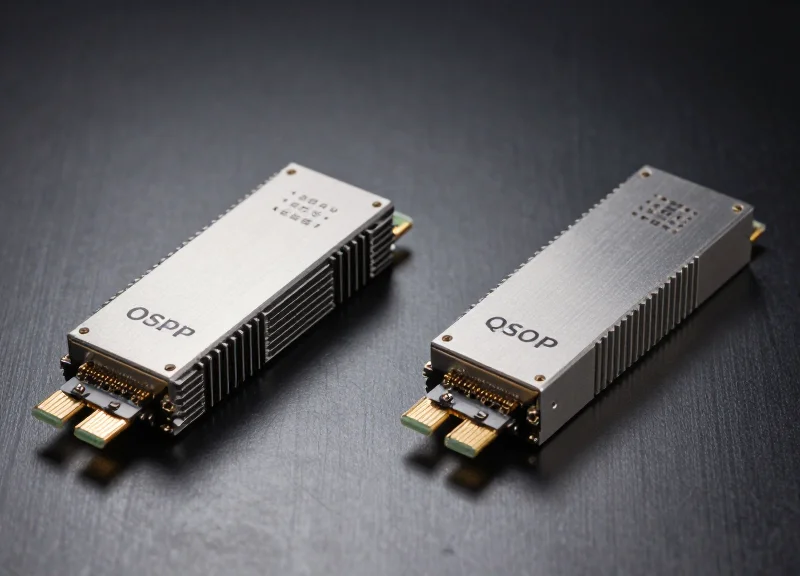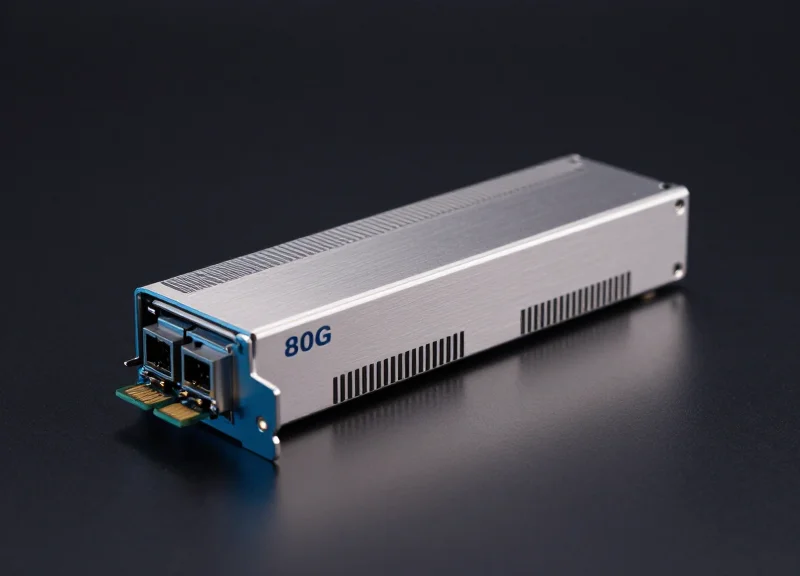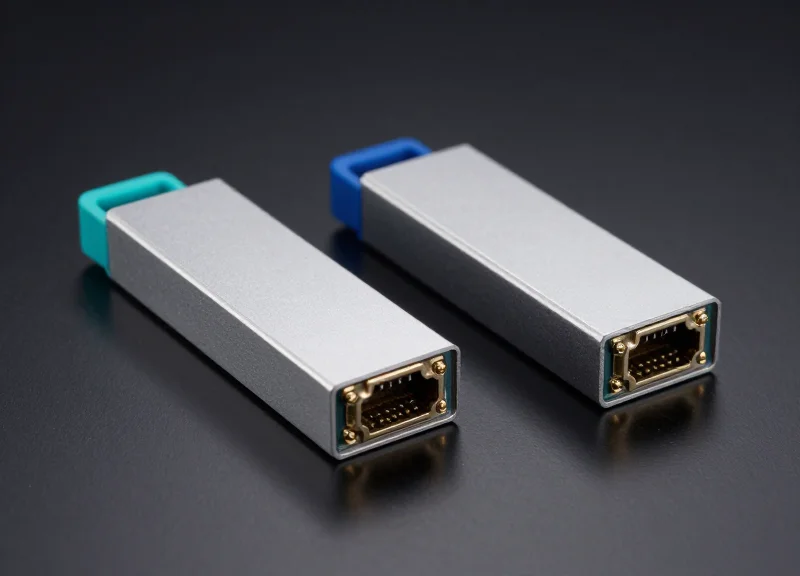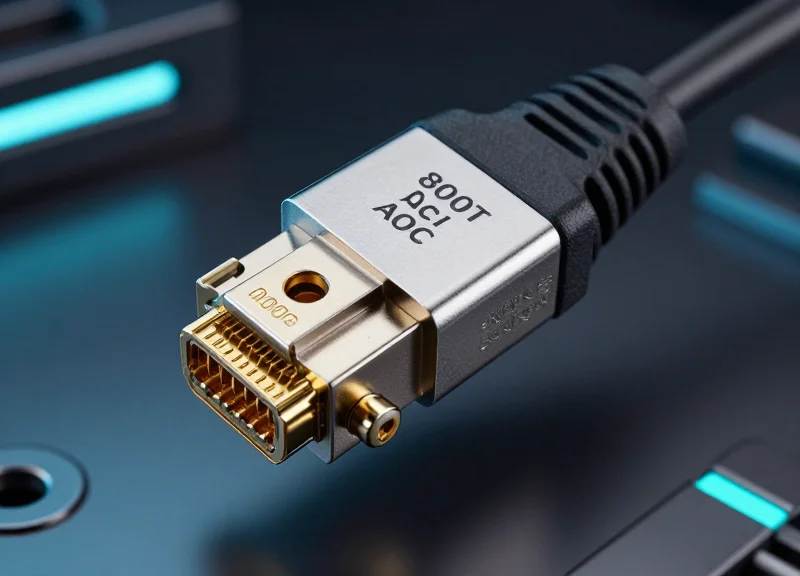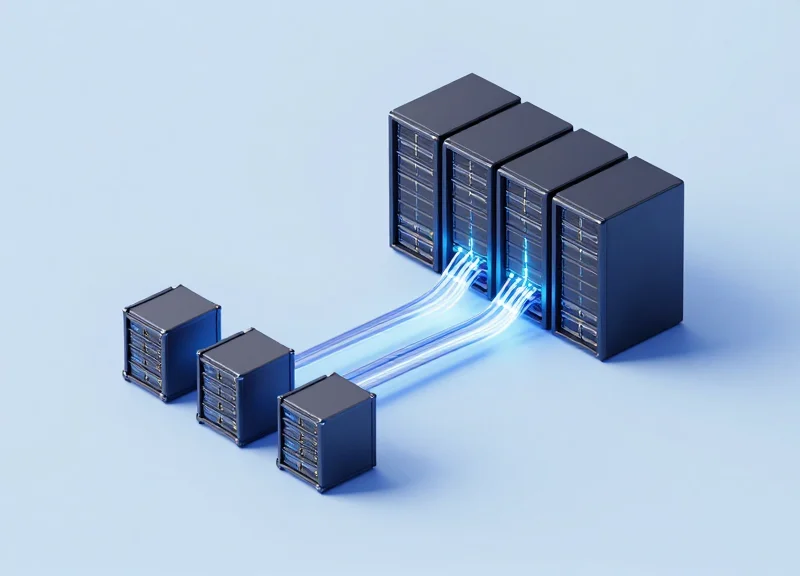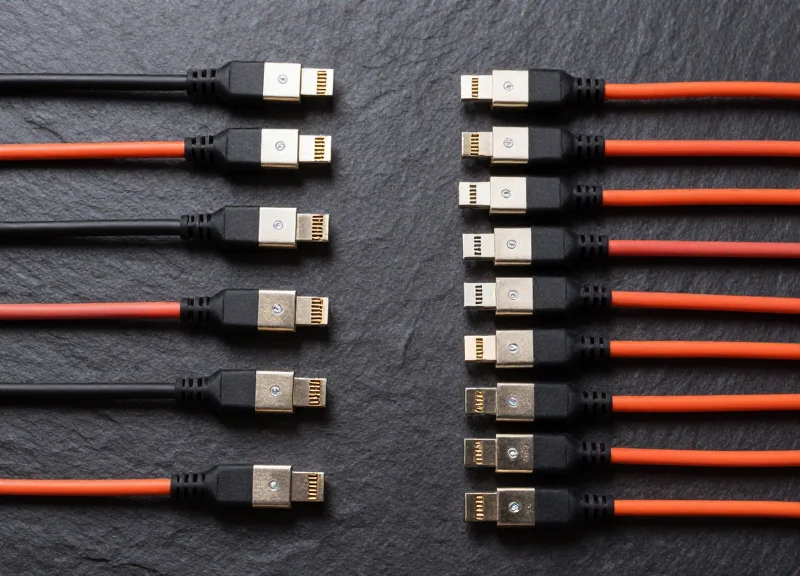
In the rapidly evolving landscape of high-speed networking, off-the-shelf cable lengths often lead to inefficient rack management and unnecessary signal degradation. Custom length Direct Attach Cables (DAC) and Active Optical Cables (AOC) have emerged as the gold standard for architects seeking to maximize performance and thermal efficiency. This article provides a comprehensive technical breakdown of these solutions and their strategic importance in modern data centers.
The Evolution of Interconnects: Defining DAC and AOC
The Evolution of Interconnects: Defining DAC and AOC
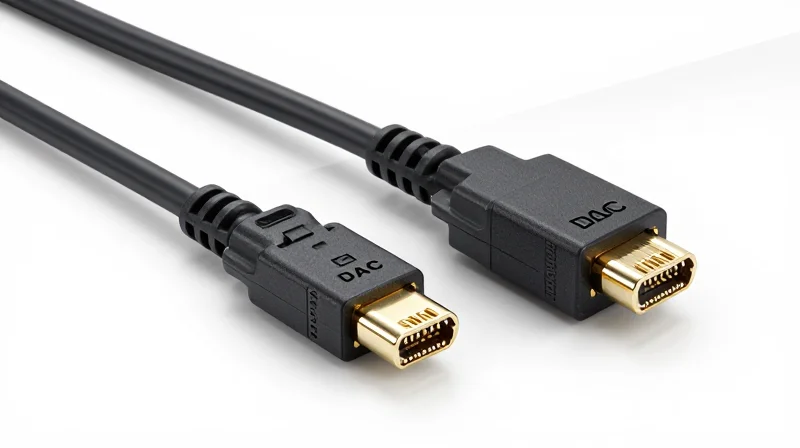
Direct Attach Copper (DAC) and Active Optical Cables (AOC) represent the two primary pillars of short-range data center interconnects, serving as the high-speed physical layer links that enable seamless communication between switches, servers, and storage arrays. While both technologies utilize the same pluggable form factors, such as SFP, QSFP, and OSFP, they differ fundamentally in their transmission medium and performance characteristics, leading to an industry-wide shift toward custom-length configurations to meet specific rack-level requirements.
Direct Attach Copper (DAC): The Copper Workhorse
DAC cables utilize twinaxial copper wiring to transmit electrical signals directly between two ports. They are available in passive and active variants; passive DACs lack signal amplification circuitry and are prized for their near-zero power consumption and ultra-low latency. However, as data rates increase to 400G and 800G, copper's inherent physical limitations—specifically signal attenuation and cable thickness—make cable length a critical variable. Custom-length DACs allow engineers to optimize for the shortest possible path, minimizing signal degradation and reducing the bulk that can impede airflow.
Active Optical Cables (AOC): Bridging the Distance with Fiber
AOCs serve as a high-performance alternative to copper by integrating optical transceivers with fiber optic cabling into a single, permanent assembly. Inside the connector housing, electrical signals are converted into light pulses via VCSELs (Vertical-Cavity Surface-Emitting Lasers) and transmitted over multimode fiber. This conversion allows AOCs to reach distances up to 100 meters while remaining immune to electromagnetic interference (EMI). Because the fiber is significantly thinner and more flexible than copper, AOCs are the preferred choice for complex cable routing in high-density environments where space is at a premium.
| Parameter | Direct Attach Copper (DAC) | Active Optical Cable (AOC) |
|---|---|---|
| Transmission Medium | Twinaxial Copper | Multimode Fiber |
| Max Typical Distance | Up to 7m (Passive) | Up to 100m+ |
| Power Consumption | < 0.1W (Passive) | 1.5W - 2.0W per end |
| EMI Immunity | Low | High (Immune) |
| Weight and Bulk | Heavy / Stiff | Light / Flexible |
The Strategic Move to Customization
The shift from 'off-the-shelf' to custom-length DAC and AOC solutions is driven by the need for precision in modern network architecture. In a hyperscale environment, even a few inches of excess cable slack can lead to increased thermal load and cable management complexity. By defining custom lengths, operators can ensure that each link is tuned to the exact physical distance between ports, which is essential for maintaining signal integrity at the edge of the physical layer's operational limits.
- Why is DAC preferred for top-of-rack (ToR) switching?
DAC is preferred because it offers the lowest cost and power profile for connections under 3 meters, which covers the majority of server-to-switch links within a single rack. - Does a custom-length AOC affect latency?
No, custom lengths in AOCs actually help maintain consistent latency profiles by eliminating excess fiber loops, though the primary latency is introduced by the O-E (Optical-to-Electrical) conversion process itself. - Are custom-length cables compatible with standard hardware?
Yes, custom-length solutions use standard MSA-compliant connectors (SFP28, QSFP28, etc.), ensuring they are fully compatible with any hardware designed for those interfaces.
Technical Specifications: SFF Standards and Form Factors

Technical Specifications: SFF Standards and Form Factors
Custom-length DAC and AOC solutions are not merely physical cables cut to size; they are precision-engineered components that must adhere to Small Form Factor (SFF) multi-source agreements (MSAs). These standards define the electrical, mechanical, and thermal management interfaces required to ensure that a cable—whether 0.5 meters or 10.5 meters—interoperates seamlessly with enterprise-grade switches, routers, and network interface cards (NICs). Without strict adherence to these specifications, custom lengths could introduce signal attenuation or impedance mismatches that compromise the entire data center fabric.
Core SFF Standards Governing Custom Interconnects
The architecture of high-speed interconnects is governed by several key documents. SFF-8431 is the foundational specification for SFP+ (10Gbps) and SFP28 (25Gbps) modules, outlining the high-speed electrical interface. For higher density, SFF-8665 defines the QSFP28 (100Gbps) solution, focusing on the mechanical and signal integrity requirements of the 4-channel interface. These standards ensure that custom DACs maintain the necessary 'eye diagram' clarity even at non-standard lengths where copper resistance might typically degrade the signal.
| Form Factor | Primary SFF Standard | Channels | Max Data Rate (Per Channel) | Key Application |
|---|---|---|---|---|
| SFP28 | SFF-8431 / SFF-8402 | 1 | 25 Gbps | Server-to-Top-of-Rack |
| QSFP28 | SFF-8665 | 4 | 25-28 Gbps | 100G Ethernet Switching |
| QSFP-DD | SFF-8665 / MIS | 8 | 25-50 Gbps (PAM4) | 400G High-Density Fabric |
| OSFP | OSFP MSA | 8 | 50-100 Gbps (PAM4) | 800G AI/ML Clusters |
The Role of SFF-8636 in Custom Logic
While SFF-8665 handles the physical shell and high-speed lanes, SFF-8636 defines the Management Interface. This is critical for custom solutions because it governs the EEPROM memory map within the transceiver head. For custom DAC/AOC assemblies, this memory must be programmed to reflect specific cable lengths, power requirements, and vendor IDs. Modern switches query this data to optimize their equalization settings (pre-emphasis and post-emphasis), ensuring that the electrical drive is perfectly matched to the unique length of the custom cable.
- How does length affect SFF compliance?
As cable length increases, signal attenuation increases. Custom DACs must use thicker American Wire Gauge (AWG) sizes to stay within the SFF-defined insertion loss limits, while custom AOCs must manage the timing jitter of the optical engines. - Why is the EEPROM/SFF-8636 mapping vital for custom lengths?
The EEPROM provides the host system with the cable's characteristics. If a custom 7.5-meter cable is misidentified as a 1-meter cable, the switch may not apply enough power to overcome signal loss, leading to bit errors. - Do custom lengths require different form factors?
No, the form factors (SFP, QSFP, OSFP) remain identical to standard versions to ensure physical fit; only the internal cable construction and firmware are modified.
The Engineering Impact of Precision Cable Lengths
The Engineering Impact of Precision Cable Lengths
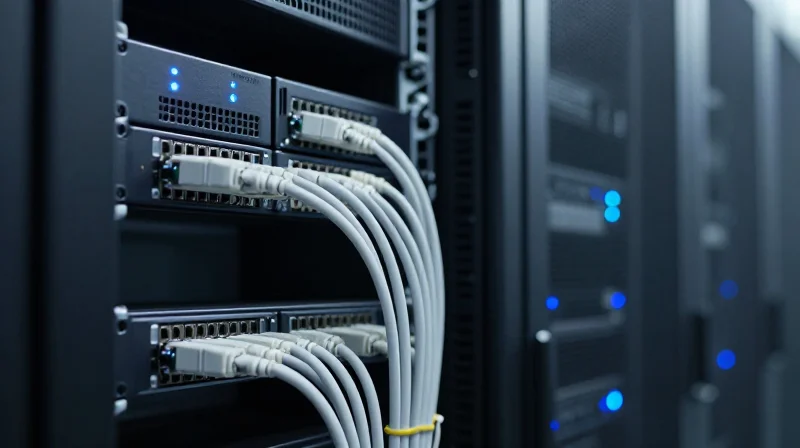
Precision cable lengths in DAC and AOC solutions are not merely a matter of aesthetic organization; they represent a fundamental engineering strategy for high-density computing environments. In these architectures, every millimeter of excess material contributes to thermal resistance, mechanical strain, and potential signal degradation, making customization a necessity for operational stability.
Thermal Dynamics and Airflow Optimization
In modern 400G and 800G clusters, airflow is the primary cooling mechanism. Standard fixed-length cables often result in 'cable nests' or excessive loops that block the exhaust paths of server fans. These obstructions create localized hotspots and force cooling systems to operate at higher RPMs, negatively impacting the facility's Power Usage Effectiveness (PUE). Custom-length solutions ensure a direct path from port to port, maintaining the laminar flow required for efficient heat dissipation.
| Engineering Metric | Standard Fixed Lengths | Custom Precision Lengths |
|---|---|---|
| Airflow Impedance | High (due to slack loops/bundling) | Minimal (streamlined routing) |
| Thermal Management | Increases risk of hotspots | Optimizes exhaust efficiency |
| EMI Susceptibility | Higher (excess length acts as antenna) | Lower (optimized shielding path) |
| Mechanical Stress | Higher weight load on connectors | Balanced tension and load |
Mitigating EMI and Signal Integrity Issues
Passive copper DACs are particularly sensitive to their environment. Excess cable length can act as a parasitic antenna, harvesting electromagnetic interference (EMI) from neighboring power supplies and high-frequency components. By utilizing the exact length required, engineers minimize the surface area vulnerable to external noise. Furthermore, reducing length directly lowers Insertion Loss (IL), which is critical for maintaining the tight signal margins required by 112G SerDes specifications.
Technical FAQ: Precision Cable Engineering
- Does reducing cable length improve data latency?
While the reduction in signal propagation time (approximately 5ns per meter) is negligible for most applications, the improvement in signal-to-noise ratio (SNR) leads to fewer retransmissions and more stable high-speed links. - How does custom length affect the Bit Error Rate (BER)?
Shorter, precision-cut cables reduce the overall attenuation of the signal. This provides a better 'eye opening' in signal analysis, resulting in a lower BER and more overhead for the Forward Error Correction (FEC) algorithms. - What are the mechanical benefits of custom lengths?
Custom lengths eliminate the need for heavy cable management arms and excessive zip-tying, which reduces the physical weight on rack rails and prevents 'connector sag' that can lead to intermittent port connectivity.
Signal Integrity and Latency Benchmarks

Signal Integrity and Latency Benchmarks
Precision-engineered cable lengths are critical for maintaining high-speed signal integrity, particularly as data centers transition to 400G and 800G architectures. In these high-frequency environments, every centimeter of copper or fiber directly influences the Bit Error Rate (BER) and the overall timing budget of the network link. Custom lengths ensure that the physical medium matches the electrical requirements of the transceiver and switch port, minimizing the need for active signal compensation.
The Impact of Cable Slack on Signal Quality
When standard-length cables are deployed in dense racks, the inevitable 'excess slack' is often coiled or bundled. For Direct Attach Copper (DAC) cables, these loops can create inductive effects and increase electromagnetic interference (EMI) crosstalk between adjacent cables. Furthermore, tight bends in excess cabling can cause impedance discontinuities. Custom-length solutions eliminate these loops, providing a clean, direct path that preserves signal amplitude and reduces jitter.
| Performance Metric | Standard Cable (3.0m Coiled) | Custom Cable (1.2m Direct) |
|---|---|---|
| Insertion Loss (at 25GHz) | -12.5 dB | -6.2 dB |
| Bit Error Rate (BER) | 1E-12 (Pre-FEC) | 1E-15 (Pre-FEC) |
| Signal-to-Noise Ratio (SNR) | Lower (due to EMI) | Optimal (Maximized) |
| Differential Impedance | Variable (90-110 Ω) | Stable (100 ± 5 Ω) |
Latency Benchmarks in High-Performance Computing
Latency in DACs is almost entirely a function of physical length, with signals traveling at approximately 4.5 to 5.0 nanoseconds per meter. In High-Frequency Trading (HFT) and AI training clusters, where every nanosecond counts, reducing a cable from a standard 3-meter length to a custom 1.2-meter length saves nearly 9 nanoseconds of round-trip time. While Active Optical Cables (AOCs) introduce slight delays due to electrical-to-optical conversion, custom lengths still reduce the overall 'flight time' of photons, minimizing chromatic dispersion over the link.
- Does reducing DAC length improve the Bit Error Rate?
Yes. Shorter custom lengths reduce the total attenuation of the copper medium, which provides a higher signal-to-noise ratio and allows the receiver to interpret data bits more accurately, leading to a lower BER. - How does custom cabling affect Forward Error Correction (FEC)?
By improving signal integrity, custom-length cables reduce the number of errors the FEC engine must correct. This can lead to more stable link performance and prevents the CPU overhead associated with excessive error handling. - Is the latency difference between DAC and AOC significant at custom lengths?
DACs generally offer lower latency than AOCs because they lack the O-E-O conversion step. However, a custom-length AOC will always outperform a longer standard AOC by reducing the time spent in the fiber medium.
Application Scenarios: From ToR to EoR Architectures

Custom length DAC and AOC solutions are the primary architectural tools used to eliminate cable slack, which is a major contributor to thermal congestion and signal interference in high-density data centers. By tailoring cable spans to the exact physical distance between switches and servers, network engineers can transition from generic 'one-size-fits-all' cabling to optimized Top-of-Rack (ToR), Middle-of-Row (MoR), and End-of-Row (EoR) configurations that support higher port densities and lower cooling costs.
Top-of-Rack (ToR): Maximizing Airflow with Precision DACs
In a ToR architecture, switches are located at the top of each rack, requiring very short interconnects to the servers below. Standard DAC lengths of 1, 2, or 3 meters often result in 'cable loops' that block the hot-aisle exhaust. Custom DAC lengths, such as 0.65m or 1.2m, allow for direct, point-to-point connections with zero slack. This precision is critical for 400G and 800G environments where airflow obstruction can lead to thermal throttling and hardware failure.
Middle-of-Row (MoR) and End-of-Row (EoR): The Role of Custom AOCs
MoR and EoR designs consolidate switching hardware, requiring cables to span across multiple racks. While DACs are suitable for adjacent racks, Active Optical Cables (AOCs) are preferred for longer spans due to their thinner diameter and lighter weight. Custom length AOCs (e.g., 14.5m instead of a standard 20m) are vital here; they prevent the buildup of heavy cable bundles in overhead trays or underfloor plenums, which otherwise impede air circulation and complicate maintenance.
| Architecture | Primary Media | Typical Custom Range | Key Engineering Benefit |
|---|---|---|---|
| Top-of-Rack (ToR) | DAC (Passive) | 0.5m - 2.5m | Eliminates rack-level airflow blockages |
| Middle-of-Row (MoR) | DAC/AOC Mix | 3.0m - 7.0m | Reduces weight in overhead cable trays |
| End-of-Row (EoR) | AOC (Active) | 10.0m - 30.0m+ | Prevents cable 'spaghetti' in patch panels |
Architecture Implementation FAQ
- Why is slack management more critical in ToR than EoR?
In ToR, the cable density is concentrated within a single rack's exhaust path. Even a small amount of slack across 48 ports can create a significant thermal barrier, whereas EoR slack is often distributed across larger overhead trays. - Can custom DACs replace AOCs in MoR configurations?
Only if the distance is under 7 meters (for 100G) or 3 meters (for 400G). Beyond these lengths, signal integrity issues in copper necessitate the move to custom-length AOCs. - How does custom length affect cable bend radius in these architectures?
Custom lengths eliminate the need to 'coil' excess cable. Coiling often forces cables into a tighter bend radius than specified, which can cause micro-fractures in AOC fibers or impedance mismatches in DAC copper.
Customization Parameters: Beyond Just Length
Customization Parameters: Beyond Just Length
While precision length is the cornerstone of custom DAC and AOC solutions, true optimization requires a holistic approach that addresses physical breakout configurations, environmental safety through specialized jacketing, and seamless software integration via vendor-specific EEPROM coding. These parameters allow network engineers to bridge the gap between generic hardware and a highly efficient, purpose-built data center fabric that meets both regulatory and performance standards.
Breakout Configurations: 1-to-N Connectivity
Custom solutions often involve 'breakout' or 'fan-out' designs. Instead of a simple point-to-point connection, a single high-bandwidth port (e.g., 100G QSFP28) can be customized to split into multiple lower-bandwidth connectors (e.g., 4x 25G SFP28 or 2x 50G QSFP28). This customization is vital for connecting high-speed core switches to lower-speed access servers without requiring additional adapters, thereby reducing point-of-failure risks and simplifying cable management in leaf-spine architectures.
Environmental and Safety Compliance: Jacket Materials
Selecting the correct outer jacket material is a critical customization step often dictated by local building codes and cooling strategies. For cables running through air plenums or vertical risers, specific fire-retardant materials are mandatory.
| Jacket Type | Full Name | Primary Application | Safety Profile |
|---|---|---|---|
| OFNP | Optical Fiber Nonconductive Plenum | Air handling spaces and plenums | Highest fire resistance; produces minimal smoke. |
| LSZH | Low Smoke Zero Halogen | Confined spaces with poor ventilation | Does not emit toxic halogen gases when burned. |
| PVC/OFNR | Optical Fiber Nonconductive Riser | General floor-to-floor vertical runs | Standard fire resistance; cost-effective for non-plenum. |
Software-Level Customization: Vendor EEPROM Coding
A technical hurdle in custom cabling is 'vendor lock-in.' Custom DACs and AOCs can be programmed with specific EEPROM (Electrically Erasable Programmable Read-Only Memory) signatures. This allows the cable to 'identify' itself as a native component to switches from manufacturers like Cisco, Arista, or Juniper. This customization ensures that the host equipment does not trigger 'unsupported transceiver' errors and allows for full Digital Optical Monitoring (DOM) data to be reported to the network management system.
Customization FAQ
- Can a custom cable have different brands on each end?
Yes, this is known as dual-vendor coding. You can customize a DAC to have Cisco-compatible coding on one end and Arista-compatible coding on the other, facilitating seamless multi-vendor interoperability. - Why choose LSZH over OFNP?
LSZH is often preferred in European markets and shipboard/subway applications where the reduction of toxic fumes during a fire is the primary life-safety concern. - Does custom EEPROM coding affect cable performance?
No, it only affects how the switch identifies and interacts with the cable firmware; it has no impact on the physical layer signal integrity or data throughput.
Cost-Benefit Analysis: CAPEX vs. OPEX
Cost-Benefit Analysis: CAPEX vs. OPEX
Evaluating custom length DAC and AOC solutions requires a shift in perspective from simple unit-price procurement to a comprehensive Total Cost of Ownership (TCO) model. While standard-length cables often carry lower initial price tags due to mass-market economies of scale, they frequently introduce hidden operational costs—such as airflow obstruction and cable management complexity—that erode financial margins over the lifecycle of the data center hardware.
The CAPEX Premium: Upfront Investment Realities
The Capital Expenditure (CAPEX) for custom solutions is typically 10% to 25% higher than off-the-shelf alternatives. This premium covers the engineering precision required for bespoke lengths, specialized small-batch manufacturing runs, and rigorous signal integrity testing for non-standard distances. However, this upfront investment is partially offset by the elimination of unnecessary materials and a reduced requirement for external cable management hardware like secondary trays, Velcro ties, and slack storage spools.
OPEX Efficiencies: Long-term Operational ROI
Operational Expenditure (OPEX) is where custom solutions demonstrate their true value. By eliminating 'cable spaghetti,' these solutions optimize airflow within the rack, directly reducing the energy consumption of server fans and cooling units. Furthermore, precise lengths simplify maintenance cycles; technicians can identify and replace cables significantly faster without navigating a labyrinth of loops, which dramatically lowers labor costs during emergency troubleshooting or large-scale hardware refreshes.
| Financial Metric | Standard Length Solutions | Custom Length Solutions |
|---|---|---|
| Procurement Cost (CAPEX) | Lower - High volume production | Higher - Bespoke engineering |
| Cooling & Power (OPEX) | Higher - Airflow obstruction | Lower - Optimal thermal paths |
| Labor & Maintenance | High - Complex cable management | Low - Streamlined installation |
| Physical Footprint | High - Requires storage for slack | Minimal - Exact fit for density |
Strategic Financial Considerations
- Does custom length justify the cost for small deployments?
In small-scale labs, the ROI may be slower. However, in high-density environments where every watt and square inch matters, the efficiency gains usually pay for the customization premium within 12 to 18 months. - How does customization impact warranty and lifecycle costs?
Custom cables are often built with higher-grade materials to maintain signal integrity at specific lengths, resulting in lower failure rates and extended lifecycles compared to generic cables stressed by tight bend radii. - Can custom cables reduce insurance or compliance costs?
Yes. By reducing clutter and improving airflow, they minimize fire hazards and cooling failures, which can positively impact data center safety audits and insurance premiums.
Quality Assurance and Compatibility Testing
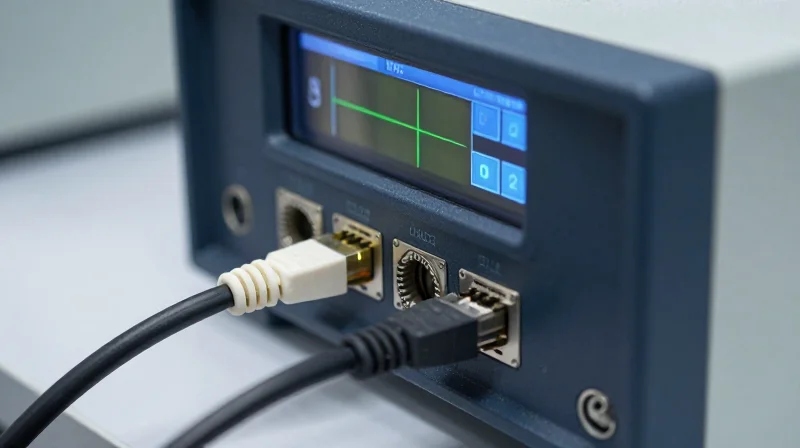
Quality assurance (QA) for custom-length DAC and AOC solutions is a non-negotiable phase of the manufacturing process, as non-standard lengths can introduce unique variables such as signal attenuation, impedance mismatches, and timing skews. Unlike standard cables, custom builds require a more rigorous validation framework to ensure that the physical modifications do not compromise the integrity of high-speed data transmission in complex network environments.
Signal Integrity and Bit Error Rate (BER) Testing
The primary objective of signal integrity testing is to ensure that the data sent from the transmitter reaches the receiver without corruption. For custom length cables, Bit Error Rate (BER) testing is the industry-standard benchmark. It measures the ratio of bits that have errors relative to the total number of bits received. A high-quality custom DAC or AOC must typically achieve a BER of 10^-12 or 10^-15 to be considered enterprise-grade. Additionally, Eye Diagram analysis is used to visualize the signal quality, ensuring that jitter and noise levels remain within the 'eye' mask defined by IEEE and MSA specifications.
Multi-Vendor Interoperability and EEPROM Verification
One of the greatest advantages of custom cables is the ability to bridge hardware from different manufacturers. However, this requires precise EEPROM coding. Quality assurance protocols include checking the cable's internal firmware against various host devices (e.g., Cisco, Arista, Juniper) to ensure that the host OS recognizes the transceiver module. Without this 'handshake' validation, even a physically perfect cable may be rejected by the switch as 'unsupported' or 'third-party,' potentially leading to port deactivation.
| Test Metric | Target Objective | Critical Value |
|---|---|---|
| BER (Bit Error Rate) | Data transmission accuracy | ≤ 1.0E-12 |
| Eye Pattern Analysis | Signal noise and jitter margin | Compliant with MSA Mask |
| TDR (Time Domain Reflectometry) | Impedance consistency for DACs | 100Ω ± 10% |
| Host Interoperability | Vendor-specific recognition | 100% Identification |
Quality Control FAQ
- Why is TDR testing important for custom DACs?
TDR (Time Domain Reflectometry) identifies impedance discontinuities along the copper wire. For custom lengths, it ensures that the cable hasn't been over-crimped or improperly terminated, which would cause signal reflections. - Do custom AOCs require different testing than DACs?
Yes. While DACs focus on electrical impedance, AOCs require optical power testing, including Tx/Rx power levels and wavelength stability, to ensure the integrated optical engines are performing correctly. - How is 'vendor-locked' firmware handled in custom solutions?
Professional labs use specialized coding rigs to flash the EEPROM with specific vendor identifiers (VID) and product IDs (PID) to emulate original equipment manufacturer (OEM) specifications.
Custom length DAC and AOC solutions are no longer a luxury but a technical necessity for high-performance computing environments. By aligning cable physical properties with precise rack requirements, engineers can achieve superior thermal profiles and network reliability. Ready to optimize your infrastructure? Contact our technical team today for a consultation on your custom interconnect needs.