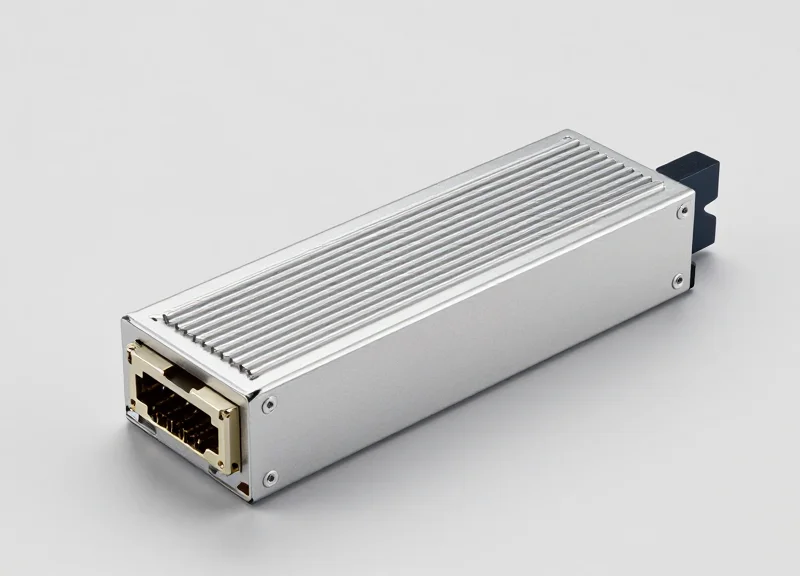
As cities evolve into data-driven hubs, the demand for high-capacity, low-latency network infrastructure has never been higher. Building a smart city requires a robust fiber backbone that can handle everything from IoT sensors to public Wi-Fi and critical emergency services. For project managers and infrastructure developers, the challenge lies in balancing cutting-edge technology with budget constraints. Ubytelink provides the bridge, offering premium wholesale fiber backbone modules and deep customization through OEM/ODM services to ensure your network scales as fast as your city.
The Strategic Importance of Fiber Backbones in Smart Cities

A robust fiber-optic backbone acts as the central nervous system of a modern smart city, providing the high-speed, low-latency connectivity required to process massive data streams from urban sensors, public safety systems, and automated infrastructure. As municipalities transition toward data-driven governance, wholesale fiber procurement has evolved from a simple utility upgrade into a critical strategic investment that determines a city's capacity for technological growth and economic resilience.
Enabling the 5G and IoT Ecosystem
The deployment of 5G networks is heavily dependent on 'deep fiber' architectures. Unlike previous generations, 5G requires a dense network of small cells, each necessitating a high-bandwidth backhaul connection. A wholesale fiber backbone allows cities to provide the necessary 'fronthaul' and 'backhaul' to support ultra-reliable low-latency communication (URLLC), which is essential for autonomous vehicles, remote healthcare, and real-time traffic management.
Fiber vs. Legacy Infrastructure for Smart City Applications
| Feature | Legacy Copper/Coax | Modern Fiber Backbone |
|---|---|---|
| Bandwidth Capacity | Limited (Mbps to low Gbps) | Near-infinite (Tbps with DWDM) |
| Latency | High (20ms - 50ms+) | Ultra-low (<1ms - 5ms) |
| Scalability | Requires physical replacement | Scalable via lighting 'dark' fiber |
| Lifespan | 15-20 years (corrosion prone) | 30-40+ years (highly durable) |
Strategic Procurement: Why Wholesale Matters in 2026
Procuring fiber through wholesale channels allows municipalities and private developers to achieve economies of scale that are impossible through retail or piecemeal contracts. By securing custom quotes for bulk pricing, city planners can future-proof their digital infrastructure, ensuring they have the excess capacity (dark fiber) needed to meet the exponential growth of data consumption over the next two decades.
- Why is bulk fiber better than incremental leasing?
Bulk wholesale procurement reduces the total cost of ownership by locking in lower per-mile rates and providing full control over the network architecture, avoiding the recurring high costs of retail lease agreements. - How does fiber improve municipal service efficiency?
It enables real-time monitoring of utilities (water, grid, waste), leading to predictive maintenance and reduced operational waste, often paying for the infrastructure through long-term savings. - Can wholesale fiber support private-public partnerships (PPP)?
Yes, cities often buy wholesale fiber to lease out the excess capacity to private ISPs, creating a new revenue stream while simultaneously improving broadband access for citizens.
Why Buying Wholesale is Essential for Urban Scaling
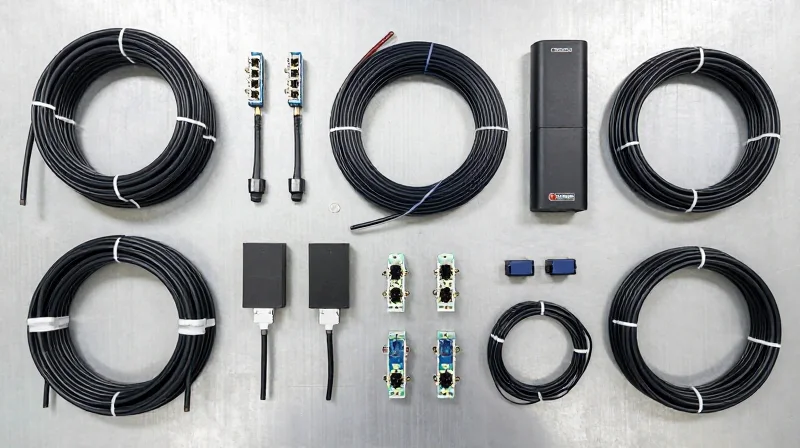
Wholesale fiber backbone acquisition is not merely a procurement choice but a strategic necessity for urban scaling; it provides the massive bandwidth required for IoT and 5G at a price point that makes city-wide deployment financially viable. By securing high-capacity infrastructure in bulk, municipalities and private developers can bypass the volatility of retail pricing and ensure their network capacity grows in lockstep with urban density.
The Economics of Scale in Fiber Deployment
When municipalities or developers purchase fiber at wholesale rates, the cost per fiber strand decreases exponentially compared to piecemeal retail leases. This reduction in capital expenditure (CapEx) allows for a denser network of sensors and nodes, ensuring that the city's 'nervous system' can handle future traffic surges without requiring constant, expensive upgrades. By locking in 2026 pricing for long-term expansions, planners can protect their budgets against inflation and construction cost spikes.
| Feature | Retail/Lease Model | Wholesale Bulk Model |
|---|---|---|
| Cost per Strand | High (Variable) | Low (Fixed/Bulk) |
| Asset Control | Limited/Service-based | Full/Infrastructure-based |
| Procurement Cycle | Frequent/Recurring | One-time/Scalable |
| Long-term ROI | Low (Operating Expense) | High (Capital Asset) |
Simplifying Complex Procurement Cycles
Urban scaling often involves navigating layers of bureaucracy and multiple vendors across different districts. Wholesale agreements consolidate these interactions into a unified master service agreement (MSA). This centralization significantly reduces the administrative burden on city IT departments. By securing a large-scale backbone upfront, cities avoid the technical fragmentation that occurs when different neighborhoods are serviced by disparate, non-interoperable infrastructure blocks.
Maximizing Future-Proof Capacity
The primary advantage of wholesale fiber is the ability to acquire 'dark fiber' capacity that exceeds current needs. This allows for immediate activation of new services—such as autonomous vehicle corridors or smart grid management—without the need for new trenching or permitting, which are the most expensive aspects of urban fiber deployment.
- How does wholesale pricing affect project timelines?
Bulk purchasing streamlines delivery by ensuring a consistent supply of dark or lit fiber, preventing delays caused by incremental bidding processes and vendor shortages. - What is the impact on 5G densification?
Wholesale fiber provides the high-count strand capacity necessary for 5G small cells, allowing for rapid rollout without individual site lease costs spiraling. - Can wholesale quotes be customized for specific urban geographies?
Yes, 2026 pricing models allow for custom route mapping that prioritizes high-density zones while maintaining a lower overall price-per-meter through volume discounts.
OEM/ODM Customization: Tailoring Hardware to Municipal Requirements

Beyond Off-the-Shelf: The Power of Municipal Customization
When purchasing smart city fiber backbones at wholesale scale, the ability to specify technical parameters through OEM (Original Equipment Manufacturer) and ODM (Original Design Manufacturer) channels is a strategic necessity rather than a luxury. Customization bridges the critical gap between generic hardware and the rigorous demands of urban infrastructure, allowing cities to request purpose-built components that maximize network longevity, reduce maintenance overhead, and ensure seamless integration with legacy systems. By bypassing 'one-size-fits-all' solutions, municipalities can procure hardware that is specifically hardened against local environmental variables while maintaining strict compliance with regional telecommunications standards.
Environmental and Technical Adaptation
Standard commercial fiber components are often designed for climate-controlled data centers, yet smart city backbones must survive in harsh outdoor conditions. Custom OEM solutions allow for the integration of specialized housings and internal components that address these challenges directly. Whether it is enhanced heat dissipation for desert climates or anti-corrosive coatings for coastal deployments, customization ensures the hardware outlasts its projected lifecycle.
| Feature | Off-the-Shelf Hardware | Custom OEM/ODM Solution |
|---|---|---|
| Temperature Range | 0°C to 70°C (Standard) | -40°C to 85°C (Industrial Grade) |
| Ingress Protection | IP54 (Basic Dust/Water) | IP67/IP68 (Full Submersion/Extreme Dust) |
| Branding & Labeling | Manufacturer Standard | Municipal Asset Tagging & Custom Logo |
| Form Factor | Fixed Dimensions | Tailored for Existing Small-Cell Enclosures |
| Firmware | Locked/Proprietary | Custom Open-Source or Municipal-Secured |
Branding, Logistics, and Asset Management
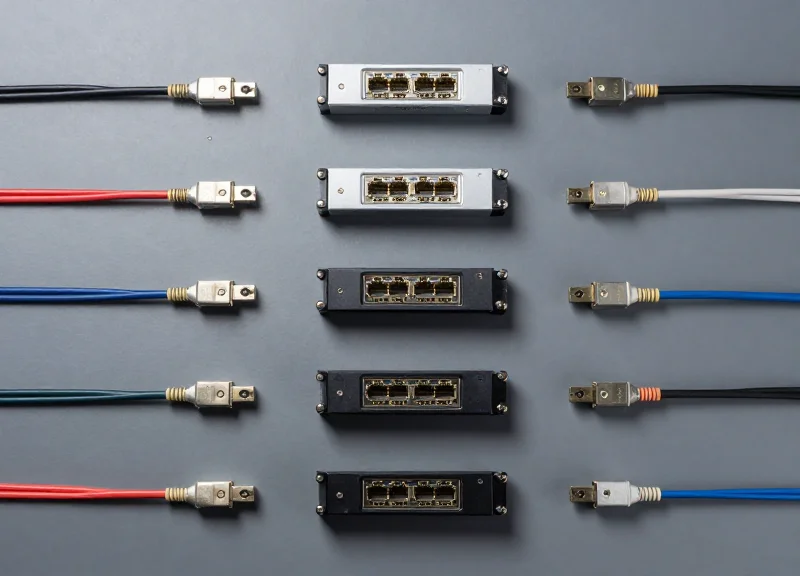
Beyond physical durability, ODM services offer significant advantages for the operational management of a smart city. Wholesale buyers can specify custom cable jacket colors for rapid identification (e.g., orange for public safety, blue for traffic management) and request factory-applied asset tags or QR codes. These logistical customizations drastically reduce the labor hours required for installation and long-term troubleshooting, as technicians can identify and verify hardware specs at a glance without consulting complex paper records.
- What is the typical Minimum Order Quantity (MOQ) for custom OEM fiber modules?
While MOQs vary by manufacturer, wholesale municipal projects typically meet these thresholds easily. Most vendors require orders of 500 to 1,000 units for custom firmware or branding, and higher volumes for unique physical casing designs. - Can custom hardware be certified to meet specific city safety regulations?
Yes. One of the primary benefits of ODM is that the manufacturer can conduct specific testing (such as UL, CE, or NEBS Level 3) during the production phase to ensure the hardware meets local regulatory and safety codes. - Does customization extend to the optical specifications of the fiber?
Absolutely. Cities can specify custom wavelengths, transmission distances (up to 120km+), and connector types (LC/UPC, SC/APC) to match their specific network architecture requirements.
Key Technical Specifications for Smart City Optical Modules
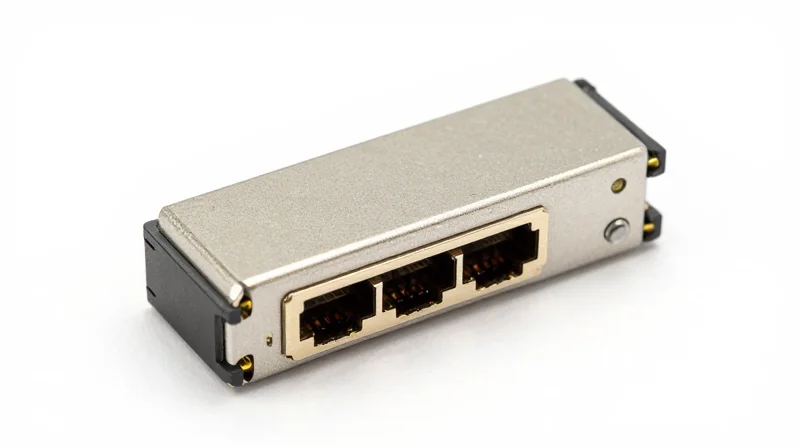
Defining Technical Benchmarks for Urban Fiber Infrastructure
To sustain the massive data throughput of a smart city, optical modules must provide a reliable intersection of high-speed performance and environmental resilience. Unlike standard data center environments, urban fiber backbones operate across varied distances and in uncontrolled outdoor settings, making specifications like Industrial Temperature (I-temp) support and wavelength stability non-negotiable for municipal reliability.
Data Rates and Form Factors for Scalable Growth
As cities transition from simple connectivity to real-time AI processing at the edge, the demand for higher bandwidth is shifting the baseline from 10G to 25G for access layers, while core backbones are increasingly adopting 100G and 400G architectures. Selecting the right form factor ensures compatibility with existing hardware while providing a path for future upgrades.
| Module Type | Common Data Rate | Typical Application | Max Reach |
|---|---|---|---|
| SFP28 | 25Gbps | 5G Fronthaul / IoT Aggregation | 10km - 40km |
| QSFP28 | 100Gbps | Core Metro Backbone | 2km - 80km |
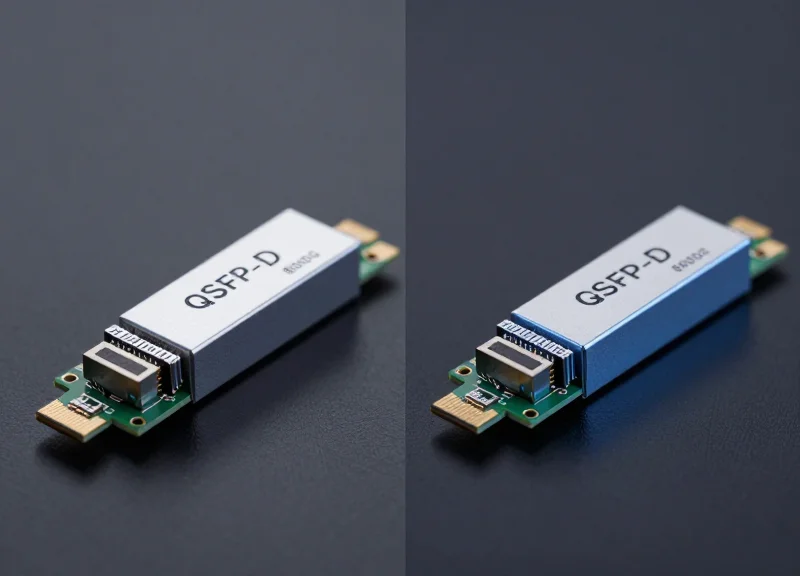
| QSFP-DD | 400Gbps | Data Center Interconnect (DCI) | Up to 120km (ZR) |
| SFP-EDM | 10Gbps | Legacy Surveillance & Traffic Control | 80km - 100km |
Environmental Resilience and Distance Considerations
Smart city deployments often place active equipment in unconditioned street cabinets. Therefore, modules must be rated for Industrial Temperature ranges (-40°C to +85°C). Furthermore, link budget planning must account for the high loss associated with multiple patch points in complex urban topologies, often requiring high-sensitivity receivers or DWDM amplification.
- Why is I-Temp support critical for smart cities?
Street-side enclosures experience extreme temperature fluctuations that would cause standard commercial modules to fail, leading to network downtime for critical services like emergency response systems. - How does Wavelength Division Multiplexing (WDM) benefit urban networks?
CWDM and DWDM allow municipalities to multiply the capacity of existing fiber strands by sending multiple data signals at different wavelengths, deferring the high cost of trenching new fiber. - What is the significance of DOM/DDM in wholesale modules?
Digital Optical Monitoring (DOM) allows network administrators to remotely monitor real-time parameters like laser bias and optical power, enabling predictive maintenance before a link fails.
Ensuring Long-Term Reliability in Harsh Urban Environments
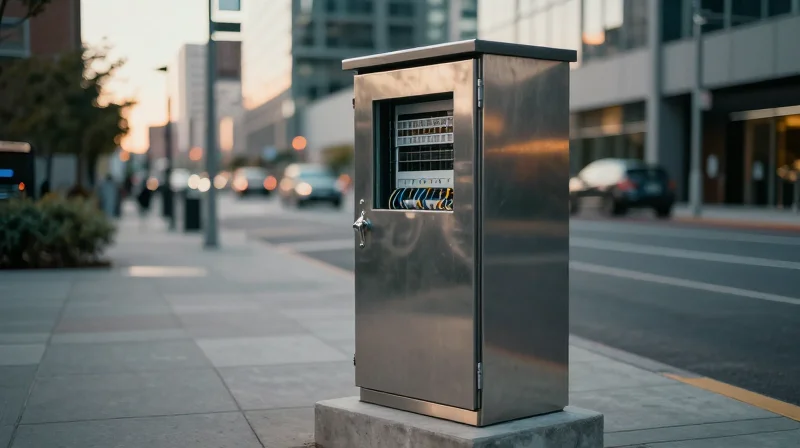
Long-term reliability in urban fiber backbones is a structural necessity rather than a luxury; hardware installed in street cabinets, utility poles, and underground vaults must endure thermal extremes and physical stressors that standard data center equipment is not built to handle. By investing in industrial-hardened wholesale components, municipalities and contractors can prevent expensive network outages and drastically reduce the long-term total cost of ownership (TCO) associated with field repairs in dense urban environments.
The Necessity of Industrial Temperature (I-Temp) Specifications
Outdoor smart city infrastructure is frequently subject to the 'urban heat island' effect, where internal cabinet temperatures can exceed 70°C during summer peaks. Conversely, winter conditions in many regions can drop well below freezing. Standard commercial-grade modules fail under these conditions, leading to laser degradation and signal instability. Industrial-grade modules are engineered with high-tolerance lasers and internal components specifically rated for a much wider operating range.
| Feature | Commercial Grade (C-Temp) | Industrial Grade (I-Temp) |
|---|---|---|
| Operating Temperature Range | 0°C to 70°C | -40°C to 85°C |
| Laser Component | VCSEL / DFB Standard | Hardened DFB / EML |
| Failure Rate in Outdoor Cabinets | Moderate to High | Near Zero |
| Housing Material | Standard Zinc Alloy | Corrosion-Resistant Hardened Alloy |
Environmental Sealing and Protection Standards
Beyond temperature, urban environments introduce unique pollutants such as sulfur dioxide from traffic emissions and high humidity levels in coastal cities. Reliability is maintained through advanced environmental sealing and ingress protection. This includes moisture-resistant coatings on PCBs and hermetically sealed optical sub-assemblies (TOSA/ROSA). Furthermore, components must be designed to resist mechanical vibrations caused by constant heavy traffic or nearby rail systems, which can otherwise lead to micro-fractures in fiber connectors over time.
- How does moisture impact smart city fiber modules?
Humidity can lead to corrosion of electrical contacts and internal fogging of optical lenses; industrial modules utilize specialized gaskets and internal moisture barriers to prevent this ingress. - What is the role of MTBF in wholesale procurement?
Mean Time Between Failures (MTBF) should be at least 100,000+ hours for smart city components to ensure that the infrastructure remains operational for a full 10-to-15-year lifecycle without mass replacement. - Why is vibration resistance critical in urban settings?
Fiber hardware mounted on bridges or utility poles experiences constant vibration; ruggedized modules use secure locking mechanisms to prevent optical misalignment and signal loss.
Future-Proofing Your Infrastructure with 2026 Technology Trends

Strategic Scalability: Integrating 400G and Beyond into Urban Backbone Design
Future-proofing a smart city fiber backbone in 2026 requires transitioning from reactive capacity management to a proactive architecture centered on 400G and 800G optical standards. By integrating these high-bandwidth technologies during the initial wholesale procurement phase, municipalities can ensure their infrastructure supports the exponential data growth driven by autonomous systems, AI-powered public safety, and dense 5G/6G small cell deployments without requiring frequent and disruptive physical upgrades. Choosing the right optical modules today determines whether a city can scale its digital services over the next decade or face expensive 'rip-and-replace' cycles as data traffic hits current limitations.
Comparison of Next-Generation Optical Standards
| Standard | Max Throughput | 2026 Application | Longevity Rating |
|---|---|---|---|
| 100G QSFP28 | 100 Gbps | Standard Edge Aggregation | Moderate - May require upgrade by 2027 |
| 400G QSFP-DD | 400 Gbps | Core Backbone & Data Centers | High - Current industry gold standard |
| 800G OSFP | 800 Gbps | AI Hubs & Hyperscale Interconnects | Very High - Emerging for high-density nodes |
The shift toward 400G is not merely about raw speed; it is about optimizing the cost-per-bit and reducing the power footprint of urban data centers. Utilizing technologies like Coherent Optics allows cities to extend these high speeds over longer distances without signal degradation, effectively turning legacy fiber routes into high-capacity digital superhighways. This spectral efficiency is critical for cities with limited conduit space who must maximize the utility of every existing fiber strand.
Key Trends Shaping Wholesale Fiber Procurement
- Transition to Coherent 400G ZR/ZRPlus
Enables high-bandwidth transmission over 100km+ without expensive amplification, ideal for connecting distant municipal districts and regional hubs. - Adoption of High-Density Fiber
Using rollable ribbon cables to maximize the number of strands in existing conduits, preparing for 800G and 1.6T transitions. - Edge-First Architecture
Shifting processing power closer to sensors to reduce latency for AI applications, requiring robust fiber backhaul at every urban node.
Future-Proofing Infrastructure FAQ
- Does upgrading to 400G require replacing existing single-mode fiber?
No, most modern 400G and 800G transceivers are designed to work over standard OS2 single-mode fiber, provided the fiber characterization meets current attenuation and dispersion standards. - How does 400G impact the power efficiency of a smart city?
400G modules provide significantly better performance-per-watt compared to running multiple 100G links, reducing the overall energy consumption and cooling requirements of the city's networking hardware. - When should a city consider moving to 800G?
800G is currently recommended for core data hubs and locations where centralized AI data processing occurs; for most municipal backbones, 400G remains the most cost-effective balance of capacity and availability for 2026.
Navigating the Procurement Process for Custom Quotes
Navigating the procurement process for high-density fiber components requires a strategic approach that balances technical specifications with fiscal constraints, ensuring that the wholesale fiber backbone supports the long-term demands of urban connectivity. Unlike off-the-shelf purchases, custom quotes for smart city projects involve detailed compatibility assessments and volume-tiered pricing structures designed to optimize the Total Cost of Ownership (TCO) and ensure seamless integration with municipal network architectures.
The Step-by-Step Custom Quote Workflow
A structured procurement process mitigates risks associated with lead times and technical misalignment. By following a standardized sequence, city planners and private contractors can secure the best possible rates while ensuring hardware reliability.
| Step | Action | Objective |
|---|---|---|
| 1. Technical Discovery | Submission of BOM (Bill of Materials) and network specs. | Validate compatibility with existing infrastructure. |
| 2. Volume Assessment | Determining total unit counts and delivery schedules. | Establish bulk pricing tiers and logistics. |
| 3. Quote Generation | Issuance of formal pricing including shipping and lead times. | Internal budget approval and financial planning. |
| 4. Sample Testing | Ordering test units for field verification. | Ensure performance in specific urban environments. |
| 5. Final PO & Deployment | Issuance of Purchase Order and batch manufacturing. | Initiation of high-volume supply chain logistics. |
Essential Data Points for Fiber Procurement
To expedite the quoting process, clients should be prepared to provide information regarding transceiver form factors (e.g., SFP+, QSFP28, QSFP-DD), distance requirements (ranging from 10km to 80km+), and fiber types (Single-Mode vs. Multi-Mode). Providing granular data regarding the host equipment (switch/router brands) at the outset prevents costly revision cycles and ensures 100% interoperability.
Procurement FAQ for Smart City Projects
- What is the typical lead time for bulk wholesale orders?
Standard lead times range from 2-4 weeks for existing inventory, while custom-manufactured modules for 400G backbones or specialized wavelengths may require 6-8 weeks depending on raw material availability. - Are volume discounts tiered based on total spend or unit count?
Discounts are primarily tiered by unit count per SKU to reflect manufacturing efficiencies, though project-wide volume incentives are often available for comprehensive smart city builds involving multiple hardware categories. - Does Ubytelink offer compatibility guarantees for third-party switches?
Yes, all custom quotes include a compatibility guarantee. We code and test optics to match the specific requirements of over 200 major brands, including Cisco, Juniper, Arista, and Nokia. - Can shipping be staggered to match construction phases?
Absolutely. We offer scheduled delivery programs where batches are manufactured and shipped to coincide with specific infrastructure rollout milestones, reducing your on-site storage requirements.
The Ubytelink Advantage: Quality Control and Global Logistics

The Ubytelink Advantage: Quality Control and Global Logistics
Choosing Ubytelink for your smart city fiber backbone ensures that every component—from high-density SFP28 modules to ruggedized trunk cables—meets industrial-grade performance standards before reaching the site. In the high-stakes environment of municipal infrastructure, where downtime can affect public safety and city services, our dual focus on manufacturing precision and logistical efficiency provides the reliability needed to scale urban networks effectively and economically.
Rigorous Testing and Infrastructure-Grade Assurance
To mitigate the risks associated with bulk procurement, Ubytelink employs a zero-defect quality control policy. Unlike generic wholesale providers that rely on batch sampling, we subject every critical backbone component to signal integrity audits and thermal stress testing to simulate harsh outdoor urban environments.
| Quality Metric | Standard Wholesale Market | Ubytelink Tier-1 Standards |
|---|---|---|
| Testing Frequency | Random batch sampling (1-5%) | 100% individual component verification |
| Thermal Tolerance | Standard commercial range | Industrial-hardened (-40°C to +85°C) |
| Traceability | Limited to batch level | Full serialized tracking for every unit |
| Longevity Guarantee | Standard 1-year warranty | Extended 5-year infrastructure warranty |
Global Supply Chain and Timely Project Fulfillment
Successfully executing a smart city fiber deployment in 2026 requires a logistics partner capable of navigating complex international trade regulations and supply chain fluctuations. Ubytelink utilizes a global network of distribution centers to minimize lead times and provide real-time visibility into shipping status, ensuring that bulk orders arrive in sync with your project’s installation phases.
- How does Ubytelink maintain consistent quality in massive wholesale orders?
Every order undergoes a multi-point inspection at our centralized facility, checking for optical power consistency, physical connector integrity, and firmware compatibility with your specific network hardware. - What are the estimated delivery windows for bulk fiber backbone orders?
Standard inventory items typically ship within 3-5 business days, while custom-engineered cables and high-volume custom quotes generally have a lead time of 4 to 6 weeks, depending on the complexity of the requirements. - How does Ubytelink handle international compliance for government-funded projects?
We provide comprehensive documentation for TAA, RoHS, and REACH compliance, ensuring that all components used in your fiber backbone meet the strict legal requirements often found in municipal and federal smart city contracts.
Overcoming Common Implementation Challenges in Smart City Networks
Successfully deploying a smart city fiber backbone involves more than just sourcing high-quality materials; it requires a comprehensive strategy to mitigate the complexities of dense urban environments. Project managers must navigate the friction between cutting-edge fiber technology and aging legacy infrastructure, ensuring that the new backbone facilitates seamless data flow across disparate municipal departments while remaining physically manageable within limited underground or aerial space.
Bridging the Gap: Legacy Integration and Interoperability
The most significant technical challenge in smart city implementation is often the requirement to interface new high-capacity fiber networks with existing legacy systems. Whether it is connecting to older traffic management sensors or legacy utility monitoring equipment, interoperability is key. Utilizing open-standard hardware and high-quality optical transceivers that support multi-vendor environments allows municipalities to avoid vendor lock-in. By selecting wholesale fiber solutions that adhere to ITU-T standards, cities ensure that their physical layer remains compatible with both current and future generations of active networking equipment.
Overcoming Urban Implementation Constraints
| Implementation Challenge | Strategic Mitigation Solution |
|---|---|
| Limited Conduit Space | Deployment of high-density micro-cables and ribbon fiber to maximize strand count in small diameters. |
| Legacy Infrastructure Interference | Detailed site surveys and the use of armored fiber to prevent damage from existing metallic utilities. |
| Permitting and Disruption | Utilizing micro-trenching techniques and existing utility rights-of-way to minimize surface excavation. |
| Signal Degradation | Strict adherence to bend-radius management and the use of G.657.A2 bend-insensitive fiber in tight urban corners. |
Advanced Cable Management in Dense Networks
As fiber density increases to support 5G small cells and IoT sensors, physical cable management becomes a critical failure point. Utilizing modular patch panels and clear labeling protocols during the wholesale installation phase prevents 'cable spaghetti' in central offices and street-side cabinets. This organization is vital for reducing mean time to repair (MTTR) and ensuring that future expansions do not require a complete overhaul of the existing cable management system.
Implementation FAQ
- How do we ensure new fiber works with existing copper-based systems?
Industrial-grade media converters and hybrid switches are deployed at the network edge to translate signals between legacy copper infrastructure and the new fiber backbone. - What is the impact of fiber quality on interoperability?
Standardizing on G.652.D or G.657.A1 fiber ensures that the physical medium provides the low attenuation and high bandwidth required by all major hardware manufacturers. - Why is micro-trenching preferred for smart city fiber?
Micro-trenching allows for faster deployment with significantly less impact on traffic and local business compared to traditional deep-trenching methods.
Building the cities of tomorrow starts with the infrastructure of today. By choosing Ubytelink for your smart city fiber backbone needs, you gain access to factory-direct wholesale pricing, industry-leading technical support, and the flexibility of OEM/ODM solutions. Ready to take your project to the next level? Contact Ubytelink today for a personalized quote and expert guidance on scaling your city's network.