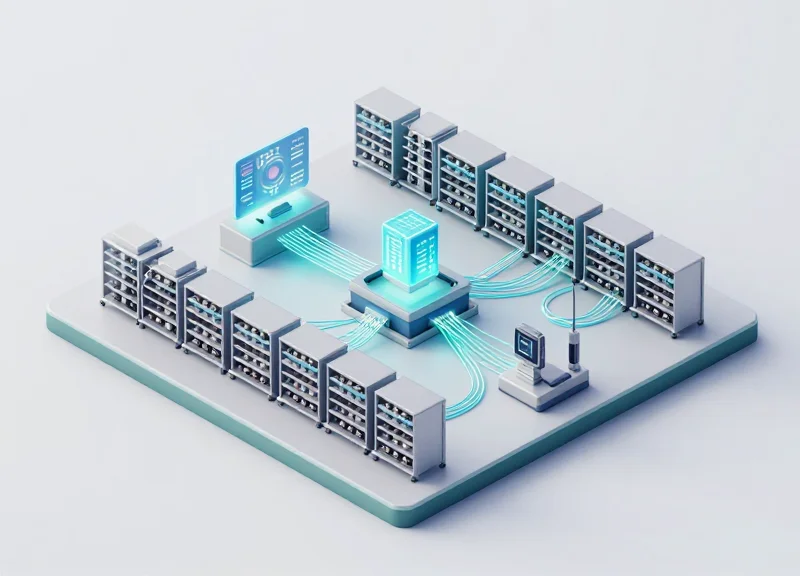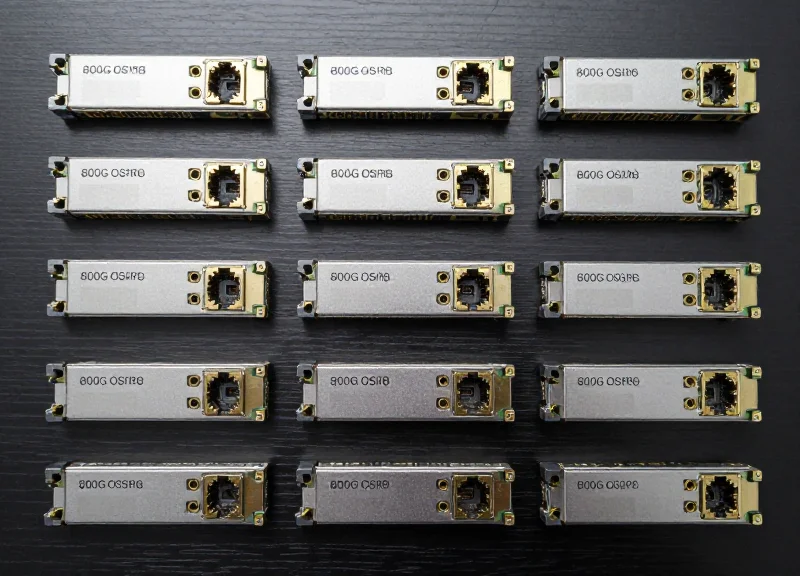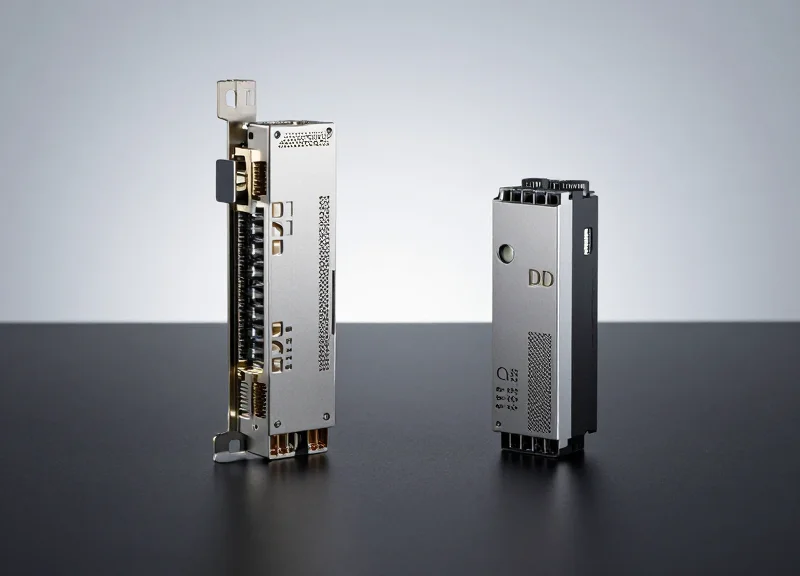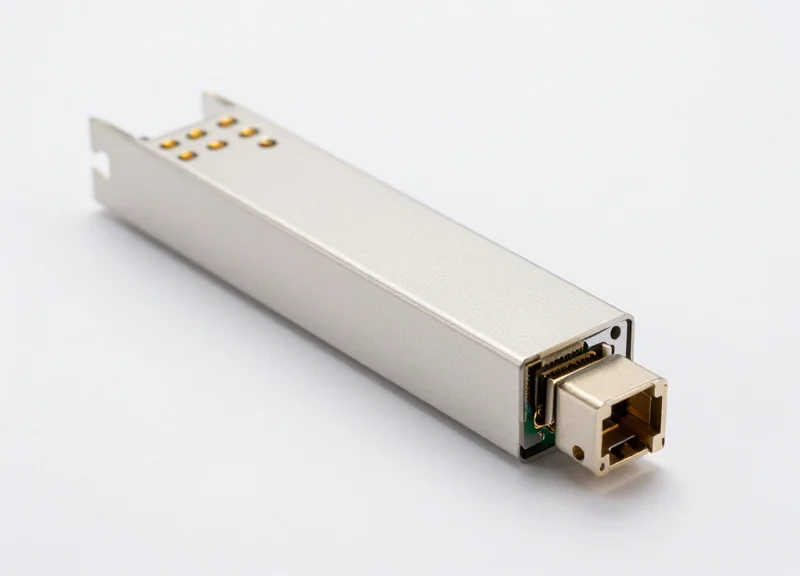
Scaling a modern network infrastructure requires more than just high-speed hardware; it requires a procurement strategy that balances performance with budget. As Juniper switches continue to power global data centers, the demand for cost-effective, high-quality optics has never been higher. At Ubytelink, we bridge the gap between expensive OEM optics and generic alternatives by providing carrier-grade wholesale solutions tailored specifically for Juniper environments.
The Economic Case for Wholesale Juniper Switch Optics

The Economic Impact of Wholesale Procurement on Juniper Networks
In the landscape of modern networking, the economic case for buying Juniper switch optics wholesale is built on the principle of aggressive capital expenditure optimization. For large-scale data centers and enterprise backbones, the optical interconnect often represents a disproportionate slice of the total hardware budget. By moving from transactional, small-batch purchasing to wholesale procurement, organizations can collapse the per-unit cost of 10G, 100G, and 400G modules. This shift doesn't just save money on the hardware itself; it transforms the financial feasibility of high-density port architectures, allowing for greater bandwidth overhead without a linear increase in budget.
Wholesale vs. Retail: A Cost Comparison
| Optic Type | Single Unit Price (Est.) | Wholesale Unit Price (50+) | Potential Cost Reduction |
|---|---|---|---|
| QFX-SFP-10G-SR (10G) | USD 150 | USD 55 | 63% |
| JNP-QSFP-100G-SR4 (100G) | USD 950 | USD 380 | 60% |
| JNP-QSFP-400G-DR4 (400G) | USD 2,800 | USD 1,450 | 48% |
Analyzing Total Cost of Ownership (TCO)
The Total Cost of Ownership (TCO) for optical modules extends far beyond the initial invoice. Wholesale purchasing strategies impact TCO through three primary channels: procurement efficiency, sparing strategies, and lifecycle management. When optics are sourced in bulk, the administrative overhead per unit drops significantly. More importantly, wholesale pricing enables a robust 'on-site sparing' model. Instead of relying on expensive, same-day shipping for emergency replacements, organizations can afford to maintain a local inventory of critical optics, drastically reducing the cost of network downtime and the reliance on premium support contracts for commodity hardware.
Reducing Per-Port Costs for 2026 Deployments
As Juniper users transition toward the QFX and PTX series for 400G and 800G ready environments, the cost of the optic can sometimes equal or exceed the cost of the switch port itself. Bulk pricing in 2026 is increasingly essential because it allows network architects to utilize all available ports on a high-density line card. Without wholesale pricing, many organizations are forced to leave ports 'dark' to manage costs, which wastes the potential of the underlying switching fabric. Wholesale custom quotes ensure that every port is active and generating value for the enterprise.
- Why are custom quotes necessary for wholesale Juniper optics?
Custom quotes allow for project-specific pricing that accounts for global supply chain fluctuations and specific shipping logistics, ensuring the lowest possible landed cost per unit. - How does bulk purchasing affect warranty and support?
Reputable wholesale suppliers offer comprehensive replacement warranties that mirror or exceed standard retail terms, ensuring that the lower price point does not introduce operational risk. - Does wholesale pricing apply to compatible Juniper optics?
Yes, wholesale pricing is most effective when applied to high-quality third-party compatible optics, where the margin for volume discounts is significantly wider than with OEM-labeled modules.
Navigating Juniper Optics Compatibility: SFP+ to QSFP28
The Juniper Compatibility Matrix: Mastering Interface Evolution
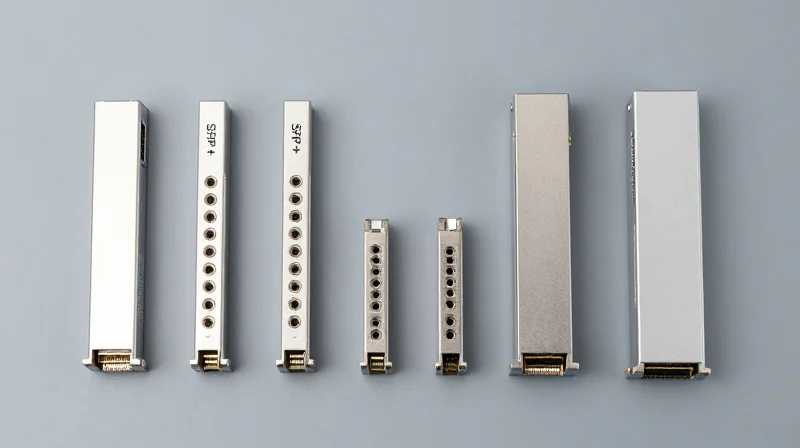
Navigating Juniper optics compatibility requires matching the specific PHY requirements of the Junos OS version with the physical limitations of the EX or QFX hardware architecture. While most modern Juniper switches offer backward compatibility, ensuring optimal performance involves a deep dive into data rates, wavelength specifications, and the ability of high-density ports to support breakout cabling for legacy 10G and 40G infrastructure. Mastering this matrix is essential for bulk procurement, as it prevents costly mismatches in fiber type and transceiver reach.
Comparing Juniper Form Factors: From Edge to Core
| Form Factor | Data Rate | Typical Reach | Common Juniper Hardware |
|---|---|---|---|
| SFP+ | 10GbE | Up to 80km (ZR) | EX2300, EX3400, QFX5100 |
| SFP28 | 25GbE | Up to 10km (LR) | EX4650, QFX5120 |
| QSFP+ | 40GbE | Up to 40km (ER4) | QFX5100, QFX5200 |
| QSFP28 | 100GbE | Up to 80km (ZR4) | QFX5200, QFX10000 Series |
Breakout Modes and Port Channelization
For wholesale buyers looking to future-proof their network, Juniper's support for port channelization is a critical feature. A single 100G QSFP28 port on a QFX5120 can often be configured as 4x25GbE or 4x10GbE via breakout cables. This flexibility allows for high-density aggregations and gradual migrations without replacing the underlying switch chassis, significantly lowering long-term capital expenditure when purchasing optics in volume.
Common Compatibility Questions
- Can I plug an SFP+ module into an SFP28 port?
Yes, Juniper SFP28 ports are generally backward compatible with 10G SFP+ modules, though manual speed configuration via the 'set interfaces' command in Junos may be required. - Does Juniper support third-party optics without locking the port?
While Juniper issues a warning for non-Juniper coded optics, they do not typically 'hard-lock' the port, provided the optic meets the MSA standards for voltage and power consumption. - What is the primary difference between SR4 and LR4 in a Juniper environment?
SR4 uses multimode fiber for short-range deployments (up to 100m), whereas LR4 uses single-mode fiber for long-haul distances (up to 10km), often required for data center interconnects (DCI).
The Strategic Value of OEM/ODM Customization
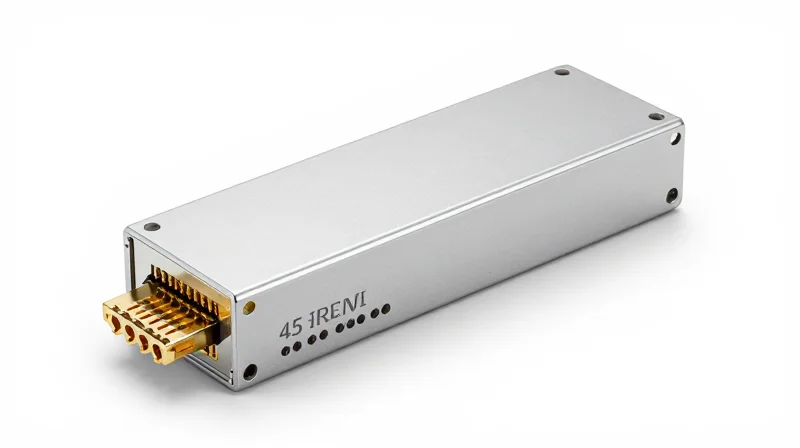
Strategic customization in Juniper optics transcends simple branding; it involves technical engineering that allows a single transceiver to function across various hardware platforms while maintaining 100% compatibility with Juniper’s Junos OS. By leveraging OEM/ODM services, enterprises can bypass the traditional constraints of vendor-locked hardware, ensuring that bulk-purchased optics are optimized for specific throughput, distance, and environmental requirements unique to their infrastructure.
Solving Complexity with Custom EEPROM Coding
One of the primary challenges in large-scale deployments is the 'vendor lock-in' paradigm, which often leads to inflated procurement costs. Ubytelink’s OEM services provide custom-coded EEPROMs that ensure optics are recognized as native Juniper modules by the operating system. This precision engineering eliminates the risk of 'unsupported transceiver' errors and allows for full DOM (Digital Optical Monitoring) capabilities, which are essential for proactive network health monitoring.
Streamlining Inventory Management through Multi-Coding
For organizations running hybrid environments—such as Juniper QFX series in the core and other brands at the edge—customization offers a unified solution. Ubytelink can provide multi-coded optics that function seamlessly across different hardware vendors. This capability significantly reduces the 'Total Cost of Ownership' (TCO) by minimizing the volume of safety stock required in the warehouse, as a single SKU can serve multiple hardware roles.
| Feature | Generic Third-Party | Ubytelink Custom OEM |
|---|---|---|
| Junos Compatibility | Variable/Basic | 100% Native Recognition |
| Inventory Strategy | High SKU Count | Simplified/Multi-Code |
| DOM/DDM Support | Limited | Full Real-time Monitoring |
| Branding | None | Custom Labels/Serials |
Branding and Lifecycle Management for MSPs
For Managed Service Providers (MSPs) and large-scale data center operators, custom branding is a tool for both professional presentation and logistical control. Wholesale orders can include custom-printed labels, specific serial number sequences for asset tracking, and specialized packaging. This level of customization ensures that during a hardware refresh or troubleshooting event, technicians can immediately identify the origin and specifications of the component, accelerating Mean Time to Repair (MTTR).
- Can custom-coded optics void my Juniper hardware warranty?
No. Under the Magnuson-Moss Warranty Act and similar international laws, a manufacturer cannot void a hardware warranty simply for using third-party components unless the component is proven to have caused the damage. - What is the minimum order quantity (MOQ) for custom branding?
MOQs vary based on the level of customization; however, for wholesale orders in 2026, custom labeling and coding can often be integrated into bulk quotes for as few as 50 to 100 units. - Are custom-coded optics firmware-upgradeable?
Yes, high-quality OEM optics like those from Ubytelink can be field-reprogrammed using specialized coding boxes to adapt to new firmware releases from Juniper.
Rigorous Quality Assurance: Why Reliability Matters
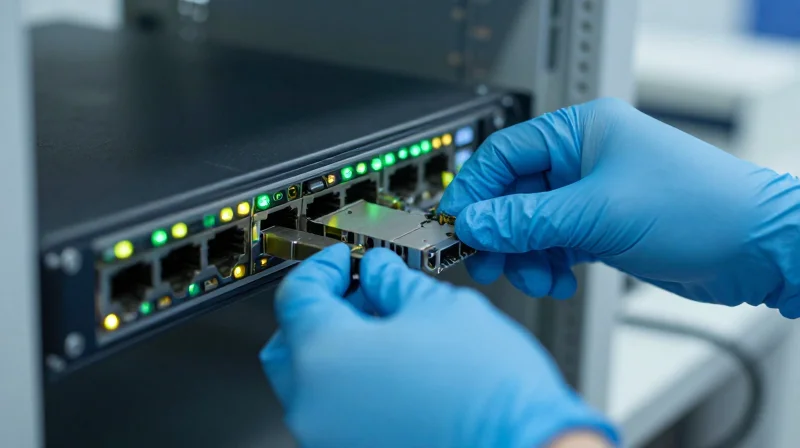
Rigorous Quality Assurance: Why Reliability Matters
In the high-performance ecosystem of Juniper EX and QFX series switches, the transceiver is more than a passive component; it is an active participant in the Junos OS telemetry and control plane. Wholesale buyers must prioritize rigorous quality assurance (QA) because even a minor variance in EEPROM coding or signal calibration can trigger system-level alerts, port flapping, or complete link failure. Reliability in this context means ensuring that third-party optics are indistinguishable from OEM modules in terms of performance, reporting, and long-term thermal stability.
The Four-Stage Protocol for Juniper Stability
To guarantee 100% compatibility, professional wholesale optics must undergo a specialized testing lifecycle designed specifically for the nuances of Juniper hardware. This process goes beyond simple 'light-on' testing.
- EEPROM Precision Coding
Verification that the vendor-specific data, serial numbers, and checksums match the expectations of Junos OS to prevent 'unsupported transceiver' warnings. - Live-Host Interoperability
Testing modules within actual Juniper chassis, such as the QFX5120 or EX4400, to confirm physical fit and immediate recognition by the system. - Full-Load Traffic Stressing
Running the optics at 100% capacity for extended periods to ensure zero bit-error rates (BER) and stable latency under heavy data congestion. - DOM/DDM Calibration
Ensuring Digital Optical Monitoring provides accurate real-time data for temperature, voltage, and bias current within the Juniper management console.
| Feature | Generic Wholesale Optics | Juniper-Optimized Premium Optics |
|---|---|---|
| Junos OS Compatibility | Variable; may require CLI overrides | Native Plug-and-Play (Zero CLI errors) |
| Failure Rate (MTBF) | Higher due to batch testing only | Ultra-low (<0.1%) due to unit-level testing |
| DOM Support | Inconsistent telemetry data | Fully accurate real-time monitoring |
| Thermal Thresholds | Standard commercial grade | Industrial/Extended grade options available |
Common Compatibility Concerns and FAQ
- Will using these optics void my Juniper hardware warranty?
No. Under the Magnuson-Moss Warranty Act in the US and similar global regulations, a manufacturer cannot void a hardware warranty simply for using third-party components unless those components directly cause damage. - How do you handle Junos OS firmware updates?
Our optics are coded with current firmware signatures that are tested against the latest Junos releases. Because we replicate the OEM's EEPROM structure, the optics remain stable even after system software upgrades. - Why is DOM/DDM so important for bulk deployments?
Digital Optical Monitoring allows network admins to proactively identify failing links before they go down. In wholesale deployments, this visibility is crucial for maintaining Service Level Agreements (SLAs) across large-scale infrastructure.
By adhering to these stringent QA standards, wholesale purchasers can achieve the economic benefits of third-party optics without sacrificing the mission-critical reliability associated with the Juniper brand. This balance is the cornerstone of modern, cost-effective data center scaling.
Wholesale Procurement Strategies for 2026
Wholesale Procurement Strategies for 2026
In 2026, successful wholesale procurement for Juniper-compatible optics is defined by a shift from reactive 'spot' purchasing to proactive, data-driven demand planning. To secure the best pricing for high-density EX and QFX series deployments, organizations must leverage volume-based custom quotes that account for the transition toward 400G architectures and the increasing complexity of global supply chains.
Transitioning to Contractual Wholesale Models
As data centers scale, the volatility of raw material costs (such as lasers and DSP chips) makes spot buying risky. Implementing a contractual wholesale strategy allows enterprises to lock in lower price-per-port rates and ensures a prioritized supply during market shortages.
| Procurement Metric | Spot Market Buying | Strategic Wholesale / Contractual |
|---|---|---|
| Pricing Stability | High Volatility | Fixed Long-Term Pricing |
| Unit Cost | Standard Retail | Deep Tiered Discounts (30-70% Off) |
| Inventory Risk | Limited to Stock on Hand | Reserved Buffer Stock |
| Technical Customization | Generic / Off-the-Shelf | Batch-Specific EEPROM Coding |
Maximizing Value through Volume and Aggregation
To achieve the most competitive custom quotes, procurement teams should consolidate optics requirements across multiple regional data centers. By aggregating demand into a single wholesale RFQ, buyers reach higher discount tiers that are unattainable through fragmented purchasing. Furthermore, focusing on interoperable third-party optics that provide 100% compatibility with Junos OS can reduce capital expenditure by up to 70% compared to Juniper-branded originals without sacrificing performance.
Common Wholesale Procurement Inquiries
- What is the typical Minimum Order Quantity (MOQ) for wholesale pricing?
Wholesale discount tiers generally begin at 50 units for standard 10G/25G optics and 10 to 20 units for high-performance 100G/400G modules. - How are lead times managed for large-scale custom orders?
Wholesale partners like Ubytelink prioritize production lanes for bulk orders, typically maintaining a 2-4 week lead time even for custom-coded modules. - Can custom quotes include mixed form factors?
Yes, comprehensive quotes often combine SFP+, QSFP28, and DAC cables to ensure the entire rack interconnect strategy is cost-optimized simultaneously. - How is reliability ensured in bulk shipments?
Every wholesale batch undergoes rigorous 'burn-in' testing and batch-specific validation in actual Juniper QFX and EX switches to ensure 100% compatibility before dispatch.
Overcoming the Challenges of High-Density Data Centers

Overcoming the Challenges of High-Density Data Centers
The primary challenge in modernizing Juniper-based data centers lies in balancing the massive bandwidth requirements of Large Language Models (LLMs) and cloud-scale traffic with the physical limitations of power delivery and cooling. Overcoming these hurdles requires a strategic transition to 400G (QSFP-DD) and 800G standards that utilize PAM4 signaling and advanced Digital Signal Processors (DSPs) to maximize throughput per rack unit. By integrating these high-density optics into Juniper PTX and QFX series switches, operators can achieve the necessary spectral efficiency to support AI-driven workloads without exceeding the thermal envelopes of their existing facilities.
The Evolution of 400G and 800G Optics in Juniper Networks
Juniper's high-performance platforms, such as the QFX5220 and the PTX10000 series, are engineered to leverage the bandwidth of 400G optics. These modules provide four times the capacity of standard 100G links in the same physical footprint. However, this density introduces 'thermal hotspots' at the faceplate. To combat this, newer optics are designed with specialized heatsinks and lower power-consumption profiles to ensure signal integrity across all ports simultaneously.
| Optics Standard | Data Rate | Form Factor | Max Power Consumption | Primary Use Case |
|---|---|---|---|---|
| 100G Base-SR4 | 100 Gbps | QSFP28 | 3.5W | Enterprise Core / Aggregation |
| 400G Base-DR4 | 400 Gbps | QSFP-DD | 12W | AI Training / Hyperscale Spine |
| 800G Base-2xDR4 | 800 Gbps | QSFP-DD800 | 16W-20W | Next-Gen Cloud Data Centers |
Strategic Considerations for High-Density Scaling
- How does cabling change with 400G density?
The shift to 400G often necessitates moving from LC duplex to MPO-12, MPO-16, or SN/CS connectors, which support the higher fiber counts required for breakout and parallel transmission. - Why is signal integrity a challenge at 400G?
Higher baud rates use PAM4 signaling, which is more susceptible to noise than NRZ; therefore, high-quality optics with robust Forward Error Correction (FEC) support are mandatory for Juniper compatibility. - What is the impact of DSP efficiency on wholesale procurement?
Wholesale buyers must prioritize optics with low-power DSPs. Reducing power by even 1-2 watts per module can result in thousands of dollars in annual savings per rack in cooling and electricity costs.
To successfully navigate the 2026 landscape, procurement teams must look beyond simple price-per-bit metrics and evaluate the long-term reliability and thermal performance of high-density modules. Selecting optics that are specifically validated for Juniper's Junos OS ensures that the diagnostic features—such as Digital Optical Monitoring (DOM)—provide accurate real-time data to prevent downtime in these high-stakes environments.
Environmental and Power Efficiency in Optical Modules
In the landscape of 2026 enterprise networking, power efficiency in optical transceivers has transitioned from a niche concern to a primary procurement driver. As data centers scale to support power-hungry AI and cloud workloads on Juniper hardware, the cumulative energy consumption of thousands of optics becomes a significant operational burden. Transitioning to low-power transceivers directly addresses this by reducing the heat load on cooling systems and lowering the 'Watts per Gigabit' ratio across the infrastructure.
The Critical Link Between Optical Power and Data Center OPEX
Every watt consumed by an optical module generates heat that requires additional energy for cooling, creating a compounding effect on electricity bills. For high-density Juniper switch deployments, such as those utilizing the QFX or PTX series, the aggregate power savings from switching to optimized 100G or 400G modules can amount to thousands of dollars annually. Beyond direct utility costs, lower power consumption reduces the strain on Power Distribution Units (PDUs) and Uninterruptible Power Supplies (UPS), potentially extending the life of the entire power chain.
| Module Type | Standard Power Consumption | High-Efficiency Target | Estimated Energy Reduction |
|---|---|---|---|
| 100G QSFP28 (LR4) | 3.5W - 4.5W | 2.5W - 3.0W | Up to 33% |
| 400G QSFP-DD (DR4) | 10W - 12W | 8W - 9W | Up to 25% |
| 10G SFP+ (SR) | 1.0W - 1.2W | 0.6W - 0.8W | Up to 40% |
Technological Advancements: Silicon Photonics and Low-Power DSPs
Modern Juniper-compatible optics leverage Silicon Photonics and advanced 7nm or 5nm Digital Signal Processors (DSPs) to achieve higher data rates without a proportional increase in power draw. By integrating laser sources and modulators onto a single silicon chip, manufacturers reduce the number of discrete components, which minimizes electrical resistance and energy loss. These innovations allow enterprises to meet their ESG (Environmental, Social, and Governance) targets without compromising on the high-speed connectivity required by modern Juniper architectures.
- How does low-power consumption impact module longevity?
Lower power consumption results in reduced heat generation. Since heat is the primary cause of component degradation in optics, these modules often exhibit a longer Mean Time Between Failures (MTBF) and higher overall reliability. - Are energy-efficient optics fully compatible with legacy Juniper switches?
Yes. As long as the modules adhere to the relevant MSA (Multi-Source Agreement) standards and are coded for the specific Juniper OS (Junos), they will operate efficiently in older hardware while consuming less power than original legacy modules. - Does choosing green optics affect network performance or latency?
No. High-efficiency transceivers are designed to meet the same IEEE and industry performance specifications as standard units. The improvements are strictly in the physical layer and power management components, ensuring zero impact on data integrity or latency.
Partnering with Ubytelink for Global Supply Needs
The Ubytelink Advantage: Reliability at Scale
Partnering with Ubytelink for your Juniper switch optics needs ensures that your infrastructure is supported by carrier-grade hardware, precise technical compatibility, and a supply chain designed to minimize downtime. As global networks transition toward 400G and 800G architectures, having a wholesale partner that understands the nuances of EEPROM coding and multi-vendor interoperability is essential for maintaining network integrity and reducing total cost of ownership (TCO).
Global Logistics and Rapid Fulfillment
We understand that in the high-stakes environment of data centers and ISP backbones, lead times are a critical metric. Ubytelink maintains extensive inventory across strategic hubs to facilitate rapid shipping on high-demand Juniper-compatible modules, including SFP+, QSFP28, and QSFP-DD form factors. Our dedicated logistics team manages international customs compliance and export documentation, ensuring that wholesale orders arrive at their destination without administrative delays.
| Service Metric | Ubytelink Wholesale Partnership | Standard Retail Distributors |
|---|---|---|
| Custom Coding | Precision-matched to specific Junos versions | Generic or fixed-vendor coding |
| Lead Times | 1-3 business days for stocked items | 2-6 weeks depending on manufacturer |
| Technical Support | Direct access to L3 network engineers | General customer service queues |
| Pricing Structure | Tiered wholesale and project-based quotes | Fixed retail MSRP with minimal discounts |
Engineering Support and Carrier-Grade Testing
Every optical module provided by Ubytelink undergoes a multi-stage validation process. We utilize actual Juniper hardware—ranging from EX Series switches to high-density MX and PTX routers—to verify that Digital Optical Monitoring (DOM) and transceiver performance metrics meet or exceed OEM specifications. Our engineering team is available to assist with custom coding requirements for unique software revisions, ensuring 'plug-and-play' reliability for large-scale deployments.
Wholesale Partnership FAQs
- What is the minimum order quantity for wholesale pricing?
While we provide samples for compatibility testing, our wholesale discount tiers typically begin at 50 units. We also provide custom project-based pricing for large-scale data center builds. - Do you provide warranty support for compatible optics?
Yes, all Ubytelink Juniper-compatible optics include a lifetime warranty and a compatibility guarantee. We offer advanced replacement services to ensure zero downtime. - Can you handle global drop-shipping for distributed networks?
Absolutely. We specialize in multi-point logistics, allowing enterprises to manage a single procurement contract while we ship hardware directly to various international branch offices.
Upgrading and scaling your Juniper infrastructure shouldn't be restricted by OEM pricing. By leveraging wholesale optics and custom OEM/ODM solutions, you gain the performance and reliability your network demands at a fraction of the cost. Ready to optimize your network? Contact Ubytelink today for a custom quote and experience the best in bulk networking components.