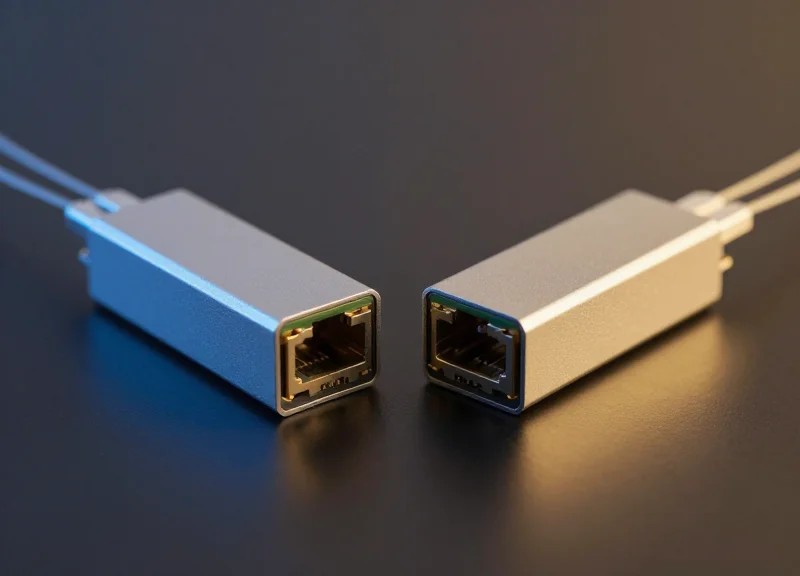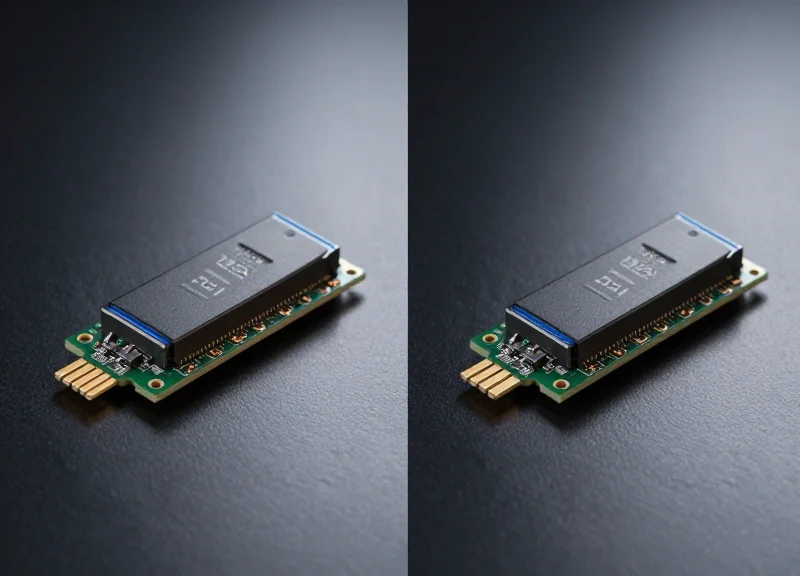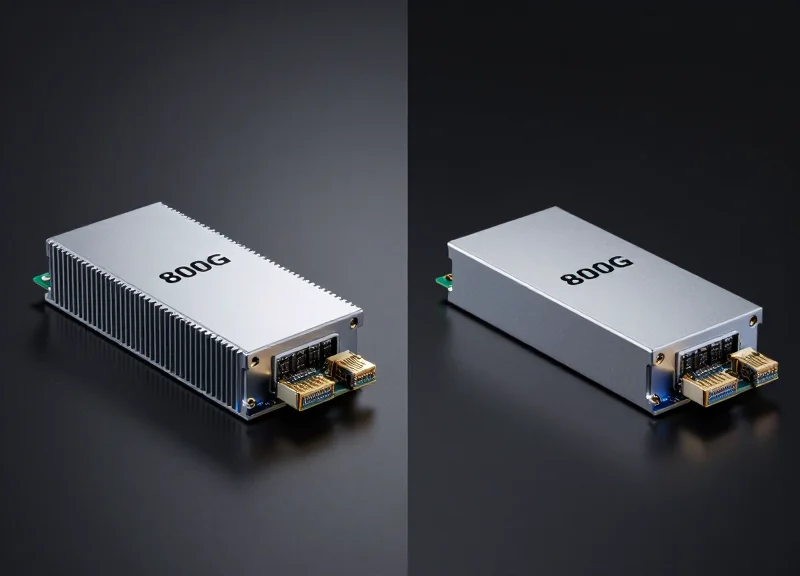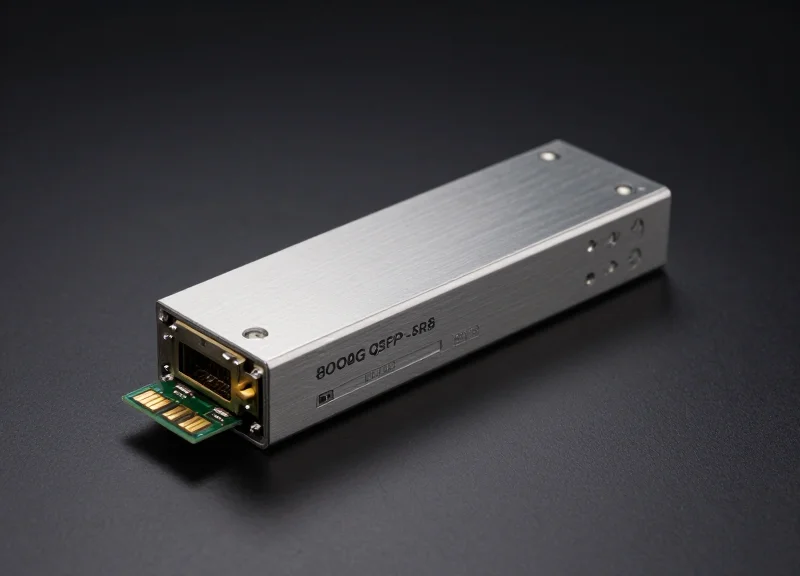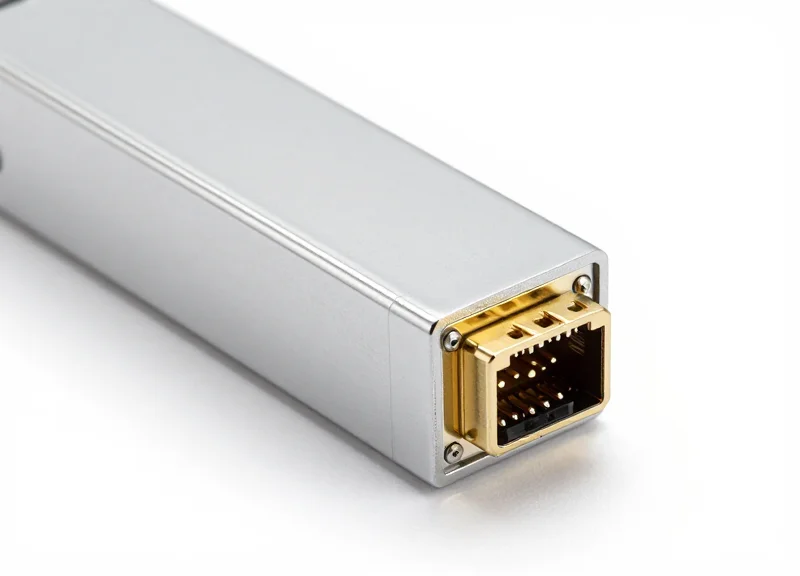
In the era of rapid digital transformation, network infrastructure is the backbone of business success. Selecting the right 10G SFP+ modules—whether Short Range (SR) or Long Range (LR)—is critical to ensuring zero-latency communication and 99.999% uptime. Ubytelink delivers the precision engineering required for today's mission-critical data environments, solving the pain points of hardware failure and compatibility issues.
The Evolution of 10G Connectivity: Why SFP+ Remains the Industry Standard
The Evolution of 10G Connectivity: Why SFP+ Remains the Industry Standard
SFP+ (Small Form-factor Pluggable Plus) has secured its position as the industry standard because it offers the optimal balance of port density, power efficiency, and cost-effectiveness. By offloading functions like clock and data recovery (CDR) to the host board, SFP+ achieves a significantly smaller footprint than its predecessors. Ubytelink 10G SFP+ SR/LR solutions leverage this architecture to provide a high-performance interconnect that meets the rigorous demands of modern enterprise data centers and telecommunications infrastructures.
Comparative Analysis: SFP+ vs. Legacy 10G Form Factors
| Form Factor | Relative Size | Avg. Power Consumption | Standard Use Case |
|---|---|---|---|
| XENPAK | Very Large | 8W - 10W | Early 10G Core Switches |
| XFP | Medium | 2.5W - 3.5W | Protocol-independent links |
| SFP+ | Small | < 1.5W | High-density data centers |
The shift toward SFP+ was driven by the need for higher port density. In a standard 1U rack space, a switch can support up to 48 SFP+ ports, a feat impossible with the bulkier XFP or XENPAK designs. This scalability is a cornerstone of Ubytelink's premium quality promise, ensuring that global networks can grow without requiring excessive physical space or massive power budget increases. Furthermore, the standardization of the SFP+ interface allows for seamless interoperability across diverse hardware environments.
Strategic Implementation FAQ
- Why is power efficiency critical for 10G SFP+ modules?
Lower power consumption, typically under 1.5W for Ubytelink SR/LR modules, reduces the thermal load on switches and prevents overheating in high-density deployments, which extends hardware lifespan and lowers operational costs. - How does SFP+ support both Short Range (SR) and Long Range (LR) needs?
The SFP+ standard defines different optical transceivers for varying distances: SR uses multi-mode fiber for reaches up to 300m, while LR utilizes single-mode fiber for distances up to 10km, allowing one form factor to serve the entire network. - Is SFP+ backward compatible with 1G SFP ports?
While SFP+ ports on switches can often accept 1G SFP modules, 1G SFP ports cannot support the 10Gbps data rates required by SFP+ modules. Ubytelink solutions are engineered to ensure maximum compatibility where the host hardware allows.
Ubytelink 10G SFP+ SR: Optimized for Data Center Efficiency
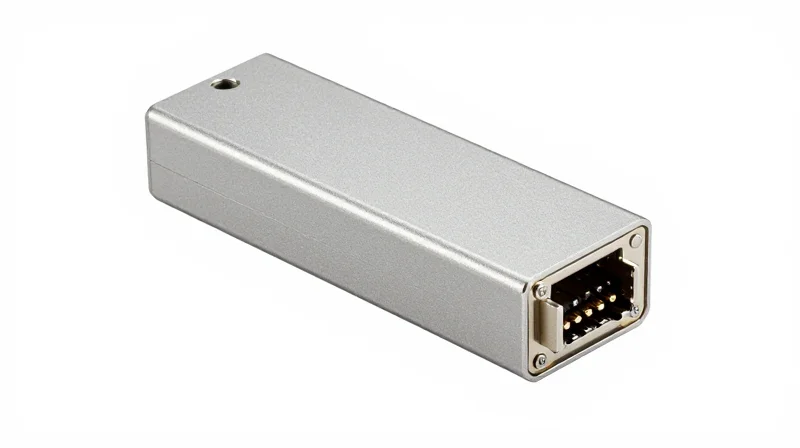
Ubytelink 10G SFP+ SR transceivers are engineered to meet the rigorous demands of high-density data center environments, offering a seamless balance between low power consumption and high-speed data integrity. By utilizing 850nm Vertical-Cavity Surface-Emitting Laser (VCSEL) technology, these modules achieve reliable 10Gbps transmission over multi-mode fiber (MMF), making them the industry-standard choice for Top-of-Rack (ToR) and End-of-Row (EoR) switching architectures where distance requirements typically remain under 300 meters.
Technical Specifications and Fiber Compatibility
| Parameter | Ubytelink 10G SFP+ SR Details |
|---|---|
| Wavelength | 850nm |
| Connector Type | Duplex LC |
| Fiber Type | Multi-mode Fiber (MMF) |
| Max Transmission Distance | 300m (OM3) / 400m (OM4) |
| Power Consumption | < 1W (Typical) |
| Data Rate | 10.3125 Gbps |
Economic and Operational Advantages
The primary advantage of the Ubytelink 10G SFP+ SR lies in its economic efficiency. Compared to long-range counterparts, SR modules utilize less complex optics, resulting in a lower price point and reduced power overhead. In large-scale deployments featuring thousands of links, the sub-1W power profile of each SR module contributes significantly to lower cooling requirements and a reduced total cost of ownership (TCO). Furthermore, Ubytelink ensures broad compatibility with major network hardware vendors, providing a plug-and-play experience that eliminates the complexities of proprietary hardware lock-in.
FAQ: Maximizing SR Module Performance
- What fiber grade is required for maximum distance?
To achieve the full 300-meter reach, OM3 multi-mode fiber is recommended, while OM4 or OM5 can extend the reach up to 400 meters. - Is the Ubytelink 10G SR module hot-swappable?
Yes, these modules are fully hot-swappable, allowing network administrators to perform maintenance and upgrades without powering down the host switch or router. - Does it support Digital Optical Monitoring (DOM)?
Yes, Ubytelink 10G SFP+ SR modules include DOM support, enabling real-time monitoring of parameters such as optical output power, input power, temperature, and supply voltage.
Ubytelink 10G SFP+ LR: Bridging Distances with Laser Precision
Ubytelink 10G SFP+ LR: Bridging Distances with Laser Precision
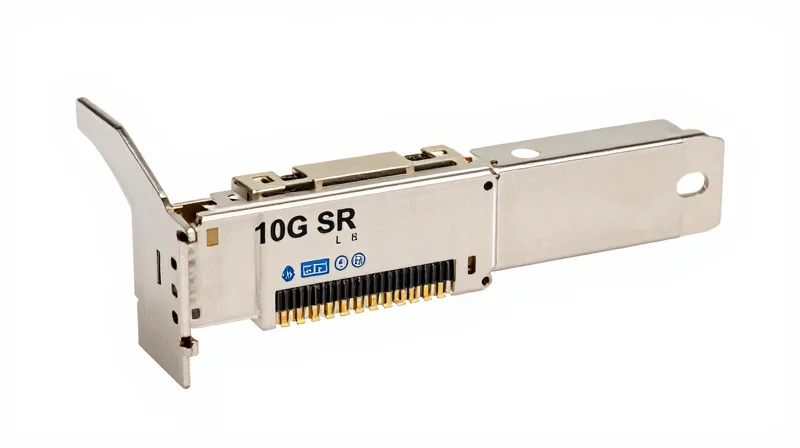
The Ubytelink 10G SFP+ LR transceiver serves as the critical bridge for enterprise and service provider networks that require high-bandwidth connectivity beyond the reach of short-range optics. While multi-mode solutions are confined to intra-rack or intra-room cabling, the LR (Long Range) module utilizes a 1310nm Distributed Feedback (DFB) laser to transmit data across single-mode fiber (SMF) with exceptional clarity. This allows for reliable 10Gbps throughput over distances reaching up to 10 kilometers, making it the industry standard for connecting disparate buildings in a campus environment or linking regional data centers.
Technical Specifications and Performance Metrics
| Parameter | Specification |
|---|---|
| Wavelength | 1310 nm |
| Fiber Type | Single-mode Fiber (SMF) |
| Maximum Distance | 10 km (6.2 miles) |
| Data Rate | 10.3125 Gbps |
| Laser Component | DFB Laser |
| Optical Connector | Duplex LC |
| Power Consumption | < 1.0W |
The precision of the 1310nm wavelength is specifically chosen to align with the low-attenuation window of single-mode fiber. Unlike the vertical-cavity surface-emitting lasers (VCSELs) found in SR modules, the DFB lasers used in Ubytelink LR modules produce a narrower spectral width. This characteristic minimizes chromatic dispersion, ensuring that the light signal remains coherent over kilometers of glass, which is essential for maintaining the low bit-error rates required in mission-critical 10G Ethernet deployments.
Optimizing Metropolitan and Campus Architectures
Deploying Ubytelink 10G SFP+ LR modules allows network architects to simplify their infrastructure by reducing the need for intermediate signal repeaters. In Metropolitan Area Networks (MANs), these transceivers facilitate high-speed handoffs between local ISPs and enterprise hubs. Furthermore, because single-mode fiber infrastructure is often 'future-proof,' installing LR optics today ensures that the underlying cabling can support even higher speeds, such as 40G or 100G, with simple hardware upgrades in the future.
LR Module Implementation FAQ
- Can Ubytelink 10G LR modules work over multi-mode fiber?
While technically possible over very short distances with a mode-conditioning patch cord, it is not recommended. LR modules are designed for single-mode fiber (9/125µm) to achieve their rated 10km distance and performance stability. - Do these modules support real-time diagnostics?
Yes, all Ubytelink 10G SFP+ LR modules are equipped with Digital Optical Monitoring (DOM/DDM) capabilities, allowing administrators to monitor temperature, laser bias current, and optical power levels. - Is an optical attenuator required for short distances?
Generally, no. The receiver saturation point of a standard 10km LR module is high enough that an attenuator is typically unnecessary for links longer than a few meters, though checking power levels via DOM is always best practice.
SR vs. LR: A Technical Comparison for Infrastructure Planning
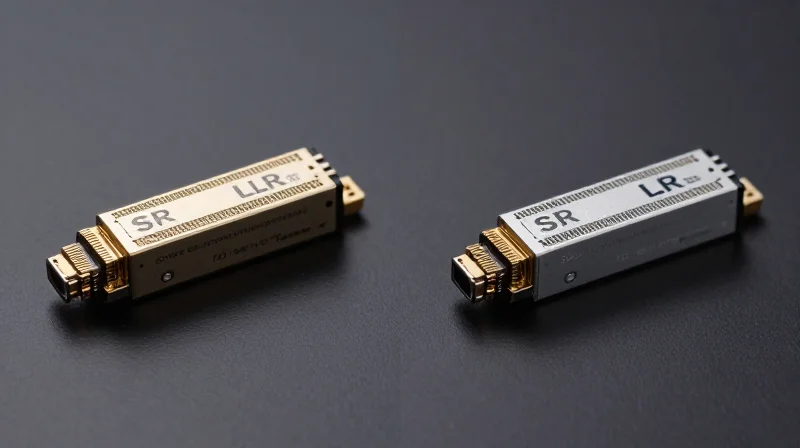
The choice between Ubytelink 10G SFP+ SR and LR transceivers is primarily dictated by the physical distance of the link and the type of fiber optic cabling already deployed or planned for the facility. While both modules deliver high-performance 10Gbps throughput, they utilize different laser technologies and light wavelengths, making them incompatible with one another but essential for specific network architectures.
Comparative Technical Specifications
| Feature | 10G SFP+ SR (Short Range) | 10G SFP+ LR (Long Range) |
|---|---|---|
| Wavelength | 850 nm | 1310 nm |
| Fiber Type | Multi-mode (MMF) | Single-mode (SMF) |
| Typical Reach | Up to 300m (OM3) / 400m (OM4) | Up to 10 km |
| Laser Source | VCSEL | DFB Laser |
| Power Consumption | < 1.0 W | < 1.2 W |
| Connector Type | LC Duplex | LC Duplex |
Critical Planning Considerations
When planning infrastructure, engineers must balance initial hardware costs against long-term scalability. Ubytelink's SR modules are generally more cost-effective for intra-rack and short-distance connections within a single data hall. However, single-mode fiber (SMF) used by LR modules offers significantly higher bandwidth potential over time, making LR the superior choice for campus backbones and interconnecting disparate facilities where signal integrity over kilometers is paramount.
FAQ: SR and LR Implementation
- Can I connect an SR module to an LR module directly?
No. SR and LR modules use different wavelengths (850nm vs 1310nm) and different fiber types (multi-mode vs single-mode). They are not interoperable, and attempting to connect them will result in a link failure. - Do I need an attenuator for Ubytelink LR modules?
Generally, for the standard 10km LR module, an attenuator is not required for short-distance testing. However, always check the receiver power levels via Digital Optical Monitoring (DOM) to ensure the signal is not saturating the receiver. - Which module is more energy efficient?
SR modules typically consume less power (often under 0.8W to 1W) compared to LR modules (approx 1.2W) due to the lower power requirements of VCSEL lasers versus DFB lasers.
The Ubytelink Quality Advantage: Beyond Industry Standards
The Ubytelink Quality Advantage: Beyond Industry Standards
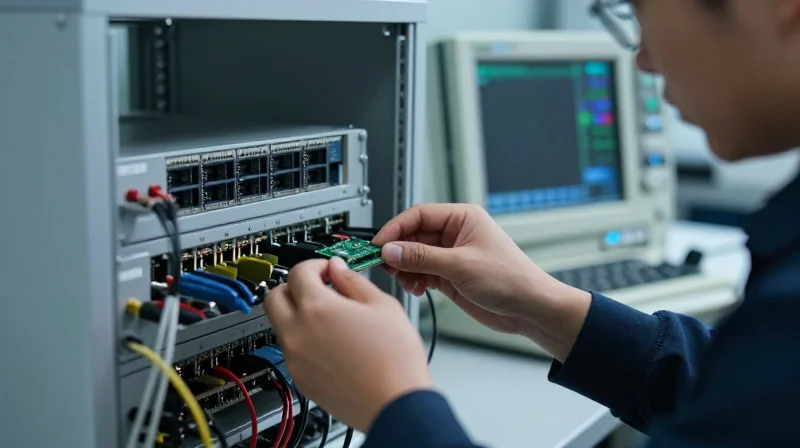
The Ubytelink quality advantage is rooted in a zero-tolerance policy for hardware failure, achieved by implementing a testing regimen that treats industry standards as a minimum baseline rather than a final goal. While standard SFP+ modules often undergo batch sampling, Ubytelink subjects every individual 10G SR and LR module to rigorous performance validation, including environmental stress screening and real-world switch interoperability tests. This meticulous approach ensures that global data centers and enterprise networks receive components capable of maintaining high-speed throughput and low latency under the most demanding thermal and electromagnetic conditions.
Comparative Reliability Metrics
| Quality Feature | Industry Baseline | Ubytelink Protocol |
|---|---|---|
| Testing Scope | Statistical Batch Sampling | 100% Individual Unit Validation |
| Thermal Cycling | Standard Operating Range | Extensive Stress Testing (-40°C to +85°C) |
| Signal Integrity | Estimated BER (Bit Error Rate) | Verified BER < 10^-12 across all distances |
| Switch Interoperability | Major Vendor Compliance | Multi-vendor Lab Validation (Cisco, Arista, Juniper, etc.) |
Engineering for Long-Term Signal Integrity
To achieve EEAT-compliant reliability, Ubytelink focuses heavily on signal integrity and thermal management. Our 10G SFP+ modules utilize premium TOSA (Transmitter Optical Sub-Assembly) and ROSA (Receiver Optical Sub-Assembly) components that are screened for wavelength stability. Thermal cycling tests simulate years of operational wear by rapidly oscillating temperatures, identifying potential solder joint weaknesses or laser diode degradation before a product ever reaches the field. This ensures that the 1310nm lasers in LR modules and the 850nm VCSELs in SR modules maintain precise focal points and power levels over their entire lifespan.
- Why does Ubytelink perform 100% testing instead of batch sampling?
Batch sampling can miss 'infant mortality' defects in individual components. By testing every unit, we guarantee that each module meets its power consumption and signal quality specifications out of the box. - What is the significance of the 10^-12 Bit Error Rate (BER)?
A lower BER means fewer packet retransmissions and higher effective bandwidth. Ubytelink ensures that even at maximum cable lengths (300m for SR, 10km for LR), the data integrity remains flawless. - How does thermal cycling impact network uptime?
In dense racks, heat buildup is common. Our thermal cycling ensures that the transceiver's internal clock and laser driver do not drift as temperatures rise, preventing link drops and CRC errors.
Universal Compatibility: Solving the OEM Lock-in Challenge

Breaking the Proprietary Barrier with Advanced EEPROM Coding
Many network administrators face 'unsupported transceiver' errors when using third-party modules, a tactic used by original equipment manufacturers (OEMs) to enforce high-margin proprietary hardware purchases. Ubytelink resolves this challenge by employing advanced EEPROM (Electrically Erasable Programmable Read-Only Memory) programming that precisely matches the identification strings and checksums required by major networking platforms. By emulating the internal signatures of native hardware, Ubytelink 10G SFP+ SR/LR modules ensure seamless integration with host switch operating systems, eliminating the need for manual overrides or 'service unsupported-transceiver' commands.
Seamless Multi-Vendor Interoperability
In modern data centers, heterogeneous environments are the norm rather than the exception. A single rack might contain a Cisco core switch, Arista leaf switches, and Dell servers. Maintaining a separate inventory of transceivers for each vendor is an operational nightmare. Ubytelink's compatibility lab rigorously tests every module across a massive matrix of network hardware to guarantee that our SR and LR solutions perform identically to OEM counterparts in terms of diagnostic monitoring (DOM) and signal reliability.
| Vendor Platform | Compatibility Status | Supported OS Environments |
|---|---|---|
| Cisco | 100% Tested | Catalyst (IOS-XE), Nexus (NX-OS), Meraki |
| Juniper | 100% Tested | EX Series, QFX Series (Junos OS) |
| Arista | 100% Tested | 7000 Series (EOS) |
| Dell | 100% Tested | PowerEdge, PowerConnect (OS9, OS10) |
| HP / Aruba | 100% Tested | ProCurve, AOS-S, AOS-CX |
Common Compatibility Concerns
- Will using Ubytelink modules void my hardware warranty?
No. Under the Magnuson-Moss Warranty Act in the US and similar consumer protection laws globally, OEMs cannot legally void a hardware warranty simply for using third-party components unless they can prove the component caused the damage. - Do Ubytelink modules support Digital Optical Monitoring (DOM)?
Yes, all Ubytelink 10G SFP+ modules include DOM support, allowing engineers to monitor real-time parameters such as optical output power, input power, temperature, and laser bias current through the switch CLI. - What happens if I update my switch firmware?
Ubytelink tracks OEM firmware updates closely. Our modules are programmed to maintain compatibility even after major OS revisions, ensuring your network remains stable through scheduled maintenance cycles.
By eliminating the compatibility hurdles often associated with third-party optics, Ubytelink allows organizations to regain control over their procurement strategy. This flexibility reduces Total Cost of Ownership (TCO) without sacrificing the 'plug-and-play' experience that network engineers demand.
Maximizing ROI: Reducing Total Cost of Ownership (TCO)
Maximizing ROI: Reducing Total Cost of Ownership (TCO)
Choosing Ubytelink 10G SFP+ SR/LR solutions is a strategic financial decision that prioritizes long-term network stability over the false economy of low-cost generic alternatives. While generic modules may offer lower upfront acquisition costs, premium-grade transceivers significantly reduce the Total Cost of Ownership (TCO) by providing superior reliability, minimizing expensive manual troubleshooting, and preventing the catastrophic revenue loss associated with unplanned network downtime.
The Hidden Costs of Low-Quality Transceivers
Operational Expenses (OpEx) often outweigh Capital Expenditures (CapEx) in enterprise networking. When a low-quality module fails, the cost is not simply the price of a replacement; it includes the technician's labor, shipping logistics, and the productivity loss of every service relying on that link. Ubytelink mitigates these risks through rigorous component selection and signal integrity verification.
| Cost Factor | Generic 10G Transceivers | Ubytelink 10G SFP+ Solutions |
|---|---|---|
| Failure Rate (MTBF) | Higher and unpredictable | Extremely low (Industrial grade) |
| Labor & Maintenance | Frequent 'truck rolls' and swaps | Set-and-forget reliability |
| Network Downtime Risk | Significant risk of link drops | Negligible risk |
| Power Consumption | Variable; often higher heat | Optimized for efficiency |
| Hardware Longevity | 1-3 years average | Full lifecycle (5-10+ years) |
Long-Term Value Through Engineering Excellence
By utilizing high-quality lasers and advanced EEPROM programming, Ubytelink modules ensure seamless integration with host hardware. This precision prevents 'soft failures'—intermittent issues like CRC errors or port flapping—that are notoriously difficult to diagnose and contribute heavily to inflated OpEx. Furthermore, the high power efficiency of Ubytelink 10G SR/LR modules reduces the thermal load on data center cooling systems, yielding measurable savings in energy costs over time.
- What is the primary driver of TCO in fiber networks?
Maintenance labor and downtime-related revenue losses are the primary drivers, often exceeding the initial hardware cost by a factor of ten over the product's life. - How does Ubytelink improve energy efficiency?
Our 10G SFP+ modules are engineered for low power consumption (typically <1W), which reduces heat dissipation and lowers electricity costs in high-density environments. - Can premium transceivers extend the life of existing switches?
Yes, by maintaining stable signal integrity and reducing thermal stress on the switch's internal power supply, high-quality modules help preserve the host hardware's lifespan.
Sustainability and Heat Dissipation in Modern Transceivers
Sustainability and Heat Dissipation in Modern Transceivers
Ubytelink 10G SFP+ SR and LR transceivers are engineered to meet the dual challenges of increasing bandwidth demands and the critical need for energy efficiency. By utilizing state-of-the-art silicon and optimized circuitry, these modules significantly reduce power consumption—often operating at less than 1.0W—which directly translates to lower heat dissipation and enhanced long-term reliability for global network infrastructures.
The Green Data Center: Energy Efficiency as a Priority
In modern enterprise and service provider data centers, where thousands of transceivers operate simultaneously, the cumulative energy savings of high-efficiency modules are substantial. Lower power draw per module reduces the total load on Power Distribution Units (PDUs) and, more importantly, decreases the thermal load on cooling systems. This 'cascading efficiency' allows operators to lower their Power Usage Effectiveness (PUE) ratios, contributing to corporate ESG (Environmental, Social, and Governance) goals while reducing operational expenditure.
| Metric | Generic 10G SFP+ Modules | Ubytelink 10G SFP+ Solutions |
|---|---|---|
| Typical Power Consumption | 1.2W - 1.5W | < 1.0W |
| Heat Dissipation (BTU/hr) | 4.1 - 5.1 | < 3.4 |
| Thermal Throttling Risk | Moderate in High-Density | Minimal |
| Operational Life Span | Standard | Extended (Low Thermal Stress) |
Engineering for High-Density Switch Environments
High-density switches face the 'hot spot' phenomenon, where tightly packed ports generate localized heat that can lead to transceiver failure or signal degradation. Ubytelink addresses this with high-conductivity zinc-alloy housings and precision-fit interfaces that facilitate efficient heat transfer to the switch chassis's airflow path. This thermal engineering ensures that even in fully loaded 48-port or 96-port configurations, the internal components of the SFP+ module remain within the optimal temperature range.
- How does heat affect transceiver lifespan?
Excessive heat accelerates the degradation of the laser diode and internal ICs. By maintaining lower operating temperatures, Ubytelink modules experience less component fatigue, leading to a higher Mean Time Between Failures (MTBF). - Do Ubytelink modules support real-time thermal monitoring?
Yes, all Ubytelink 10G SFP+ modules feature Digital Optical Monitoring (DOM/DDM), allowing network administrators to monitor internal temperature, voltage, and bias current in real-time to prevent overheating before it occurs. - Does low power consumption affect signal reach?
Not at all. Ubytelink uses high-efficiency internal components that maintain full signal integrity and reach (up to 300m for SR and 10km for LR) while consuming less power than traditional designs.
Upgrade your network infrastructure with the reliability and performance of Ubytelink 10G SFP+ solutions. Whether you are scaling a local data center or connecting a sprawling campus, our SR and LR modules provide the stability your business demands. Contact our technical team today for a compatibility consultation or to request a quote for your next global deployment.