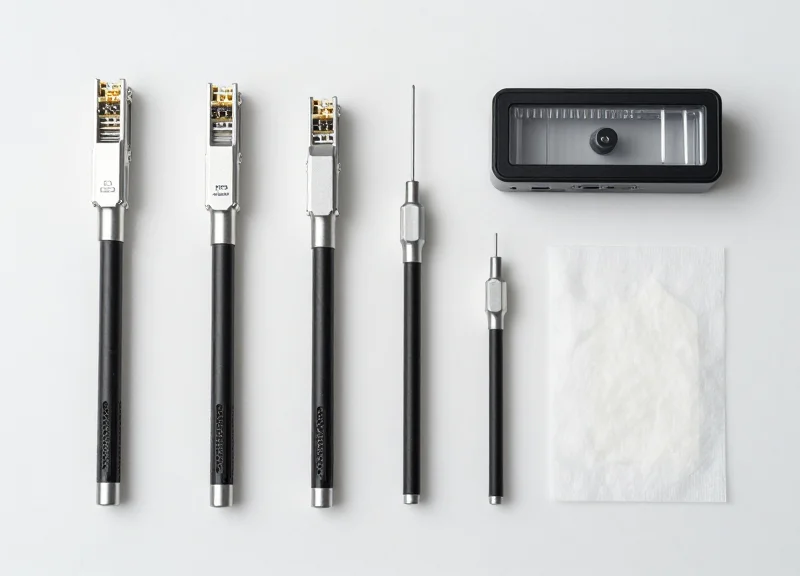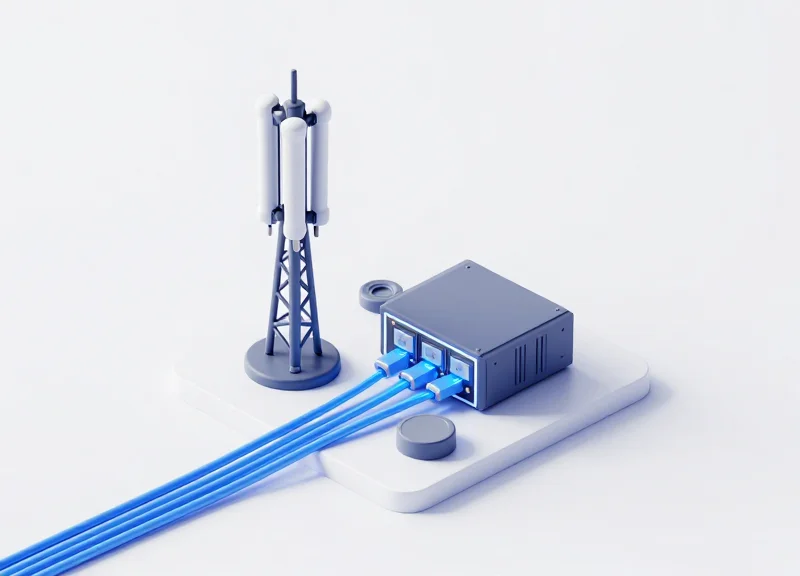
As 5G deployment moves from vision to reality, the architecture of the Radio Access Network (RAN) has undergone a radical transformation. Traditional fronthaul protocols like CPRI, while robust for 4G, face significant scaling challenges in the era of Massive MIMO and ultra-low latency. This deep dive explores how eCPRI (enhanced CPRI) solves these bottlenecks, enabling the high-speed optical networks that define modern 5G connectivity.
Understanding the Fundamentals: What is CPRI?
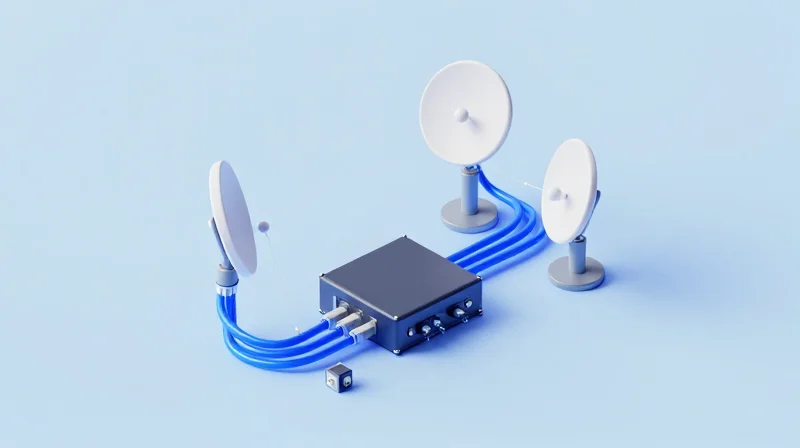
The Common Public Radio Interface (CPRI) is a standardized industry specification that defines the key internal interface of radio base stations between the Radio Equipment Control (REC), typically known as the Baseband Unit (BBU), and the Radio Equipment (RE), referred to as the Remote Radio Head (RRH). Established by a consortium of industry leaders including Ericsson, Huawei, NEC, and Nokia, CPRI was designed to digitize the radio signal transmission, replacing heavy and lossy coaxial cables with high-speed fiber optic links.
The Evolution from Traditional to Distributed Architecture
Before the widespread adoption of CPRI, traditional base station architectures required the entire radio unit to be located in a single cabinet at the base of the tower. This necessitated long runs of coaxial cable to reach the antennas at the top, leading to significant signal attenuation and power loss. CPRI enabled the 'Distributed Base Station' model, where the BBU remains in a climate-controlled shelter or a centralized hub, while the RRH is mounted directly next to the antenna. This 'fronthaul' connection uses the CPRI protocol to transmit digitized In-phase and Quadrature (IQ) data over optical fiber, ensuring near-zero signal loss over several kilometers.
Key Characteristics of CPRI
CPRI is fundamentally a synchronous protocol designed for constant bit rate (CBR) traffic. It requires extremely precise timing and frequency synchronization to maintain the integrity of the radio signal. Because it carries raw IQ data, the bandwidth requirements are substantial and scale linearly with the number of antenna ports and the width of the radio spectrum.
| Feature | Technical Specification |
|---|---|
| Transmission Type | Synchronous, Constant Bit Rate (CBR) |
| Data Carried | Digitized IQ samples, Control & Management (C&M), Sync |
| Physical Layer | Optical Fiber (SFP/SFP+) or Copper |
| Topologies | Star, Chain, Tree, and Ring |
| Line Rates | Option 1 (614 Mbps) to Option 10 (24.3 Gbps) |
Common Questions Regarding CPRI Fundamentals
- Is CPRI an open standard?
While CPRI is a published specification, it is often referred to as a 'cooperative' standard. In practice, many vendors implemented proprietary variations, which frequently prevented the use of a BBU from one manufacturer with an RRH from another. - Why is synchronization so critical in CPRI?
Since CPRI transmits raw radio samples that are reconstructed into analog waves at the antenna, any jitter or wander in the timing can cause phase errors and interference, significantly degrading the mobile user's connection quality. - What are the limitations of traditional CPRI?
The primary limitations are its high bandwidth consumption and lack of scalability. Because it sends constant data even when there is no user traffic, it is inefficient for the massive bandwidth demands of 5G New Radio (NR).
The Shift to eCPRI: Why 5G Demands a New Standard
The shift to eCPRI is fundamentally a response to the 'bandwidth wall' created by 5G New Radio (NR). While traditional CPRI served 3G and 4G well by providing a simple, synchronous link between the BBU and RRH, its constant bit rate (CBR) nature means that throughput requirements scale linearly with bandwidth and antenna count. In a 5G environment characterized by 100MHz channels and 64T64R Massive MIMO, the legacy CPRI approach would require fronthaul capacities exceeding 150 Gbps per cell site—a requirement that is both economically and technically unfeasible for most operators.
The Linear Scaling Problem of Legacy CPRI
In the CPRI era, the interface carries digitized RF signals (In-phase and Quadrature data) at the Physical Layer (PHY) level. Because CPRI is a bit-oriented protocol, it must maintain a constant connection regardless of actual user traffic. As operators transition from 20MHz LTE carriers to 100MHz or 400MHz 5G carriers, the data rate jump is five to twenty-fold. When combined with Massive MIMO—where the number of antenna elements increases from 2 or 4 to 64 or 128—the legacy CPRI model breaks down because it cannot compress the traffic based on actual load.
| Feature | Legacy CPRI (CPRI 7.0) | Enhanced CPRI (eCPRI) |
|---|---|---|
| Bandwidth Scaling | Linear (Scales with Antennas/MHz) | Load-Dependent (Scales with Traffic) |
| Transport Protocol | Synchronous / Dedicated Fiber | Ethernet / IP (Packet-based) |
| Typical Efficiency | Low (Always transmits at max rate) | High (Statistical multiplexing support) |
| Fronthaul Capacity | 10x to 50x higher required | Optimized via Functional Split |
Functional Split: The Engine of eCPRI Efficiency
The core innovation of eCPRI lies in the 'Functional Split.' While CPRI traditionally kept almost all PHY processing in the BBU, eCPRI moves the split point (often referred to as Split 7-2x). By moving certain processing tasks—such as Fast Fourier Transform (FFT) and beamforming—into the Radio Unit (RU), eCPRI significantly reduces the amount of data that must be sent over the fronthaul. This shift allows the network to carry only the user-plane data and control signals, rather than the raw digitized radio waves, resulting in a bandwidth reduction of up to 90% compared to CPRI for the same 5G configuration.
Common Questions on the CPRI to eCPRI Transition
- Can eCPRI run over existing CPRI fiber?
Yes, eCPRI is designed to leverage standard Ethernet transport, meaning it can run over the same physical fiber assets, provided the networking equipment (switches/routers) supports the required timing and synchronization (like PTP/SyncE). - Why is packet-based transport better for 5G?
Packet-based transport (Ethernet) allows for statistical multiplexing. Unlike CPRI's dedicated lanes, eCPRI allows multiple radios to share the same physical link, utilizing bandwidth only when active traffic is present. - Does eCPRI replace CPRI entirely?
In 5G NR deployments, eCPRI is the preferred standard. However, many 'C-RAN' sites use both: CPRI for legacy 4G/LTE layers and eCPRI for the new 5G layers, often over the same converged transport network.
Architectural Evolution: From BBU/RRH to CU/DU/AAU
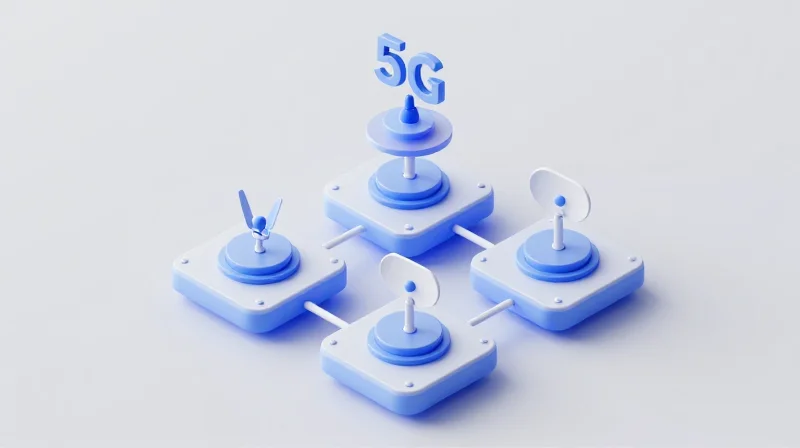
The architectural evolution from the legacy Baseband Unit (BBU) and Remote Radio Head (RRH) model to the 5G Centralized Unit (CU), Distributed Unit (DU), and Active Antenna Unit (AAU) represents a fundamental shift toward virtualization and functional disaggregation. This transition is driven by the need for massive scalability, low-latency processing, and the efficient transport of high-bandwidth data streams that traditional CPRI architectures could no longer sustain.
The Legacy Paradigm: BBU and RRH
In 4G LTE networks, the Radio Access Network (RAN) typically utilized a two-tier architecture. The BBU handled the entirety of the baseband processing, while the RRH managed the RF conversion and transmission. These two units were connected via the Common Public Radio Interface (CPRI), a synchronous protocol that required dedicated fiber links. Because CPRI carries digitized RF samples (IQ data) at a constant bit rate, it becomes prohibitively expensive and bandwidth-intensive when scaled for 5G's massive MIMO and wider channel bandwidths.
The 5G Disaggregated Model: CU, DU, and AAU
To address the limitations of 4G, 3GPP introduced a three-tier functional split for 5G New Radio (NR). This disaggregation allows operators to place processing power where it is most efficient, facilitating the use of eCPRI and Ethernet-based fronthaul.
- Centralized Unit (CU)
The CU manages non-real-time protocols such as RRC (Radio Resource Control) and PDCP (Packet Data Convergence Protocol). It can be virtualized on standard servers and located hundreds of kilometers away from the radio site. - Distributed Unit (DU)
The DU handles real-time Physical (PHY), MAC, and RLC layer functions. It is placed closer to the radio to meet strict latency requirements and is the primary interface for eCPRI fronthaul. - Active Antenna Unit (AAU)
The AAU integrates the traditional RRH with the antenna array. In 5G, parts of the PHY layer (Low-PHY) are moved into the AAU to reduce the fronthaul bandwidth load, a configuration known as the '7-2x split'.
| Feature | 4G Architecture (CPRI) | 5G Architecture (eCPRI) |
|---|---|---|
| Components | BBU + RRH | CU + DU + AAU |
| Interface | CPRI (Point-to-Point) | eCPRI (Packet-based/Ethernet) |
| Functional Split | Fixed (Full Baseband in BBU) | Flexible (Split 7-2x common) |
| Bandwidth Efficiency | Low (Constant bit rate) | High (Traffic-dependent) |
| Scalability | Limited by physical fiber | High (Cloud-native/Virtualizable) |
Mapping the Network: Backhaul, Midhaul, and Fronthaul
The transition to a CU/DU/AAU model introduces new segments into the transport network. The connection between the Core Network and the CU is the Backhaul. The connection between the CU and the DU is known as the Midhaul (using the F1 interface). The connection between the DU and the AAU is the Fronthaul, where eCPRI operates. By moving the split point from the BBU/RRH boundary to the DU/AAU boundary, 5G networks can carry significantly more data over the same fiber infrastructure using packet-based switching.
Architectural FAQs
- Can a 4G BBU be upgraded to a 5G DU?
While some modern 'Baseband Units' are software-definable to support 5G, the hardware must support eCPRI interfaces and the higher processing requirements of the 5G PHY layer to function as a DU. - Why is the 7-2x split important?
The 7-2x split, defined by the O-RAN Alliance, is the industry-standard split that balances processing complexity in the AAU with bandwidth efficiency on the eCPRI fronthaul link. - What happens to CPRI in this new model?
CPRI is still used in legacy and 'thin' 5G deployments, but it is being phased out in favor of eCPRI for any Massive MIMO or high-capacity 5G sites due to its rigid bandwidth constraints.
Technical Comparison: CPRI vs. eCPRI
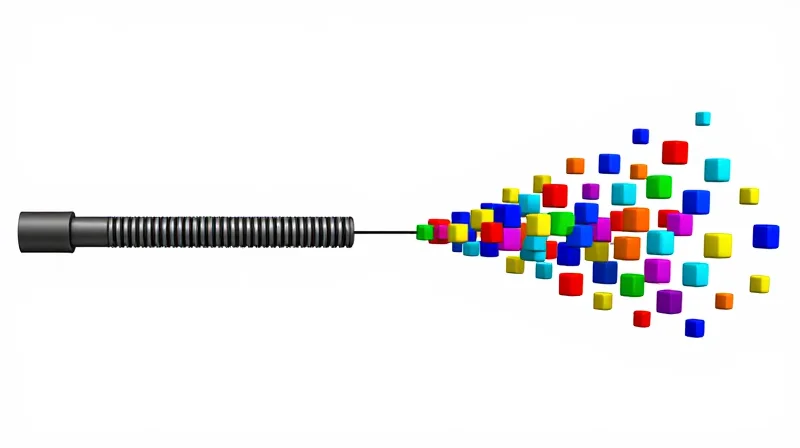
Technical Comparison: CPRI vs. eCPRI
The fundamental distinction between CPRI and eCPRI lies in their transport philosophy: CPRI is a synchronous, Constant Bit Rate (CBR) protocol that operates at the physical layer (Layer 1), while eCPRI is a packet-based protocol that utilizes standard Ethernet or IP (Layer 2/3). This transition allows 5G networks to move away from dedicated, point-to-point fiber links toward shared, switched fronthaul networks that can dynamically allocate bandwidth based on real-time traffic demand.
| Technical Feature | CPRI (Legacy) | eCPRI (5G Standard) |
|---|---|---|
| Transport Protocol | Synchronous Layer 1 (TDM-like) | Packet-based (Ethernet/UDP/IP) |
| Bandwidth Utilization | Fixed (CBR), independent of traffic | Variable, dependent on user traffic |
| Functional Split | Fixed (Radio/PHY split) | Flexible (typically PHY-High/PHY-Low) |
| Massive MIMO Support | Poor (Bandwidth scales linearly) | Excellent (Optimization via Split 7-2x) |
| Network Topology | Point-to-Point / Daisy Chain | Mesh / Ring / Tree (Switched) |
| Reliability/Latency | High Determinism (Strict Timing) | Statistical (Requires TSN/PTP) |
Frame Structure and Efficiency Gains
CPRI frames are bit-oriented and transmitted continuously, even when no user data is present, leading to massive inefficiencies in 5G’s wide-channel environments. In contrast, eCPRI encapsulates IQ data into Ethernet frames. By moving the functional split point—specifically to the 7-2x split—eCPRI reduces the data rate on the fronthaul by performing tasks like beamforming and Fast Fourier Transforms (FFT) at the radio unit (AAU) rather than the baseband (DU). This shift allows eCPRI to support 100MHz carriers and 64T64R Massive MIMO configurations with a fraction of the bandwidth required by traditional CPRI.
Transport Layer and Synchronization
Because CPRI is synchronous, it carries clocking information inherently within the bitstream. Moving to the asynchronous nature of Ethernet in eCPRI introduces challenges like packet jitter and delay. To mitigate this, eCPRI relies on advanced synchronization standards such as Precision Time Protocol (PTP/IEEE 1588v2) and Synchronous Ethernet (SyncE). This allows the fronthaul to leverage commodity hardware—like standard white-box switches—greatly reducing the Capital Expenditure (CAPEX) associated with proprietary transport equipment.
- Can CPRI and eCPRI coexist on the same fiber?
Yes, through Wavelength Division Multiplexing (WDM), operators can run CPRI for 4G/LTE and eCPRI for 5G over the same physical fiber strand using different wavelengths. - Is eCPRI backward compatible?
No, eCPRI is not natively backward compatible with CPRI hardware due to the shift from Layer 1 to packet-based transport. However, 'Interworking Functions' (IWF) or multi-mode radio units can bridge the two. - Why is eCPRI essential for Massive MIMO?
CPRI bandwidth scales linearly with the number of antennas; a 64x64 MIMO array would require hundreds of Gbps. eCPRI optimizes this by moving antenna-specific processing to the radio, keeping fronthaul rates manageable.
The Concept of Functional Splitting
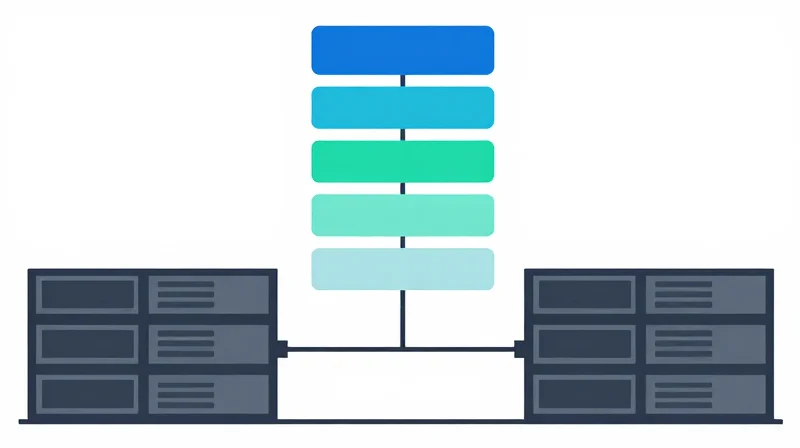
The Logic of Functional Splitting in 5G
Functional splitting is the architectural practice of dividing the cellular protocol stack into distinct segments distributed across different physical hardware units—specifically the Centralized Unit (CU), Distributed Unit (DU), and Radio Unit (RU). Unlike the legacy CPRI approach, which transported digitized RF samples in a constant stream (Split 8), functional splitting allows for a more granular division of labor. This flexibility is essential for 5G because it enables the fronthaul network to handle the massive data rates required by Massive MIMO and wide-channel bandwidths without requiring prohibitively expensive fiber-optic infrastructure. By moving certain processing tasks closer to the antenna, operators can significantly reduce the amount of raw data that must be transported across the network.
Comparing 3GPP Split Options
The 3GPP has defined eight primary split options, ranging from Option 1 (RRC/PDCP split) to Option 8 (the legacy CPRI model). Selecting the right split involves a trade-off between centralization benefits and fronthaul performance requirements.
| Split Option | Boundary Location | Bandwidth Requirement | Ideal Use Case |
|---|---|---|---|
| Option 2 | PDCP / RLC | Low (1-10 Gbps) | Centralized Unit (CU) to DU (Midhaul) |
| Option 6 | MAC / PHY | Medium | Small Cells / Low-cost RU |
| Option 7-2x | Intra-PHY | Moderate / Scalable | Mainstream 5G (eCPRI / O-RAN) |
| Option 8 | PHY / RF | Extremely High | Legacy 4G LTE (CPRI) |
The Dominance of Split 7-2x in eCPRI
The 7-2x split, widely adopted by the O-RAN Alliance and supported by eCPRI, represents the 'low-layer split' (LLS) sweet spot. In this configuration, the Physical Layer (PHY) is divided: functions like the Fast Fourier Transform (FFT), cyclic prefix removal, and digital beamforming are relocated to the Radio Unit (RU). The remaining PHY functions, such as modulation and coding, remain in the Distributed Unit (DU). By performing the FFT at the RU, the system transmits frequency-domain signals rather than time-domain signals, which dramatically reduces the fronthaul bitrate—often by a factor of 10 or more compared to CPRI. This split also makes the bandwidth requirement independent of the number of antenna elements, a critical factor for the commercial viability of 64T64R Massive MIMO arrays.
Key Advantages of the 7-2x Functional Split
- Reduced Fronthaul Capacity
By moving PHY functions to the RU, only data for active resource blocks is transmitted, preventing the waste of bandwidth on empty sub-carriers and reducing overall throughput requirements. - Massive MIMO Scalability
7-2x allows beamforming to occur at the RU, meaning the fronthaul bandwidth scales with the number of spatial layers rather than the number of physical antenna elements. - Interoperability and Vendor Neutrality
As a standardized interface, Split 7-2x enables the mixing of DUs and RUs from different vendors, a core tenet of the Open RAN movement.
Functional Splitting FAQs
- Why is Split 8 considered inefficient for 5G?
Split 8 (used in legacy CPRI) requires a constant bit rate regardless of actual user traffic. For a 100MHz 5G sector with Massive MIMO, this would require bandwidth exceeding 100 Gbps, which is economically unfeasible. - Does functional splitting increase latency?
While it introduces processing at the RU, the overall impact on latency is minimal compared to the massive gains in bandwidth efficiency. eCPRI is designed to maintain the sub-millisecond requirements of 5G URLLC. - What is the difference between Category A and Category B in Split 7-2x?
Category A moves the precoding function to the DU to keep the RU simple, while Category B performs precoding in the RU, which further reduces fronthaul bandwidth for high-order MIMO systems.
Bandwidth and Latency Requirements in 5G Fronthaul
Bandwidth and Latency Requirements in 5G Fronthaul
The migration from CPRI to eCPRI in 5G is driven by the need to handle massive increases in throughput while maintaining strict deterministic performance. Unlike traditional CPRI, which uses constant bit rate (CBR) streaming, eCPRI leverages packet-based Ethernet, introducing challenges such as Packet Delay Variation (PDV) and jitter. To maintain 5G performance standards, fronthaul links must typically achieve one-way latencies of less than 100 microseconds and provide multi-gigabit capacity that scales dynamically based on user traffic and functional split configurations.
Synchronization Protocols: PTP and SyncE
In a packet-switched 5G fronthaul, traditional physical layer clocking is insufficient. Precision Time Protocol (PTP), defined by IEEE 1588v2, is essential for delivering phase and time-of-day (ToD) synchronization across the network. For 5G Time Division Duplex (TDD) and Massive MIMO, phase synchronization must be accurate to within +/- 1.5 microseconds. Synchronous Ethernet (SyncE) often works in tandem with PTP to provide frequency stability, ensuring that the radio units remain locked to the network clock even during high traffic congestion.
| Metric | Target Requirement | Primary Protocol/Mechanism |
|---|---|---|
| One-Way Latency | Maximum 100 microseconds | eCPRI / Time-Sensitive Networking (TSN) |
| Phase/Time Sync | +/- 1.5 microseconds | IEEE 1588v2 (PTP) Profile G.8275.1 |
| Frequency Sync | 16 parts per billion (ppb) | Synchronous Ethernet (SyncE) |
| Jitter (PDV) | Minimal (sub-microsecond) | Priority Tagging (VLAN/DSCP) |
Mitigating Jitter and Packet Loss
Because eCPRI runs over Ethernet, it is susceptible to queuing delays and packet loss which can degrade the air interface quality. Service providers utilize Time-Sensitive Networking (TSN) standards or strict Quality of Service (QoS) markings (Layer 2 PCP or Layer 3 DSCP) to prioritize fronthaul traffic over background management traffic. Buffering at the Radio Unit (RU) can compensate for Packet Delay Variation, but excessive buffering increases overall latency, creating a delicate trade-off that network engineers must manage through rigorous link characterization.
Fronthaul Performance FAQ
- Why is PTP critical for eCPRI?
PTP provides the high-precision timing necessary for TDD networks to prevent interference between uplink and downlink transmissions and to enable synchronized beamforming in Massive MIMO. - Does eCPRI require dedicated fiber?
While dedicated fiber is preferred for the lowest latency, eCPRI is designed to run over shared Ethernet transport, provided the switches support the necessary timing and QoS protocols. - How does jitter affect 5G performance?
High jitter causes timing offsets in the Radio Unit. If the RU cannot reconstruct the synchronized stream, it leads to dropped packets, reduced throughput, and potential cell site failure.
Hardware Requirements: SFP28 and Optical Transceivers
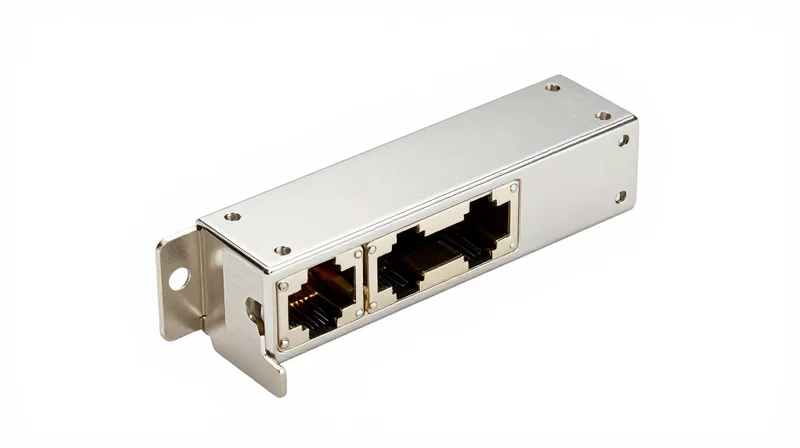
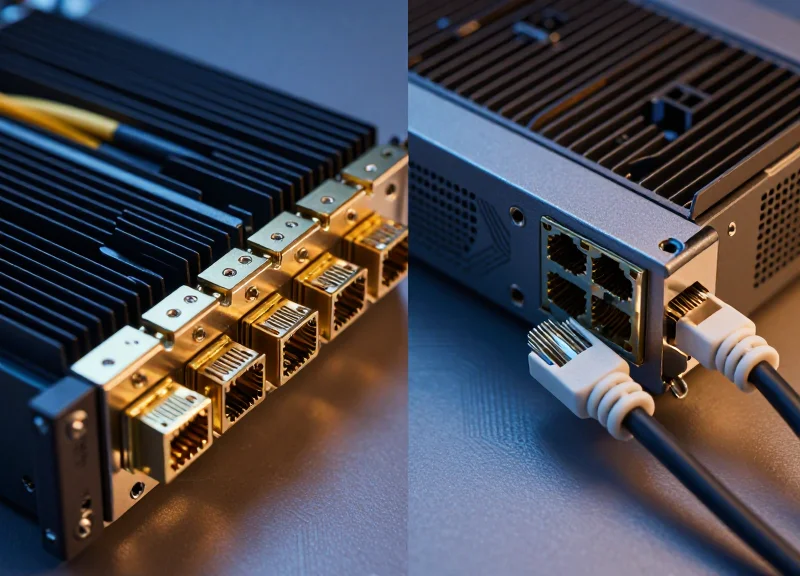
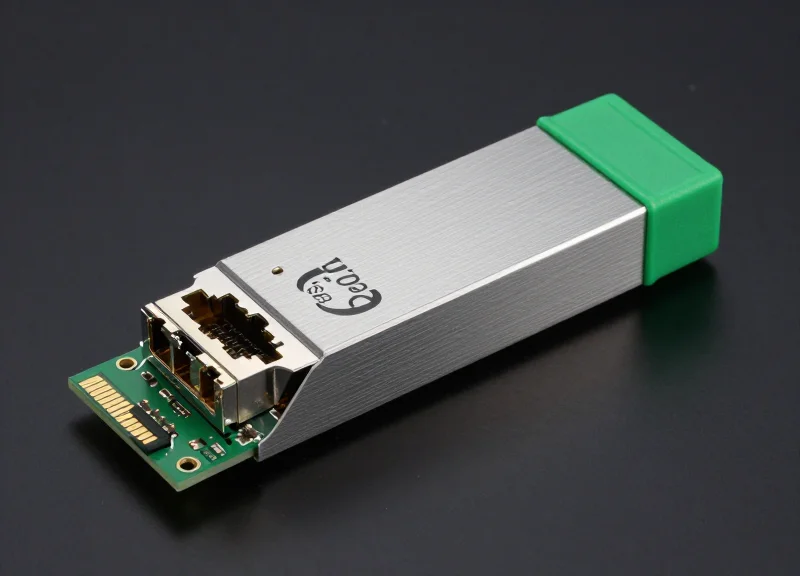
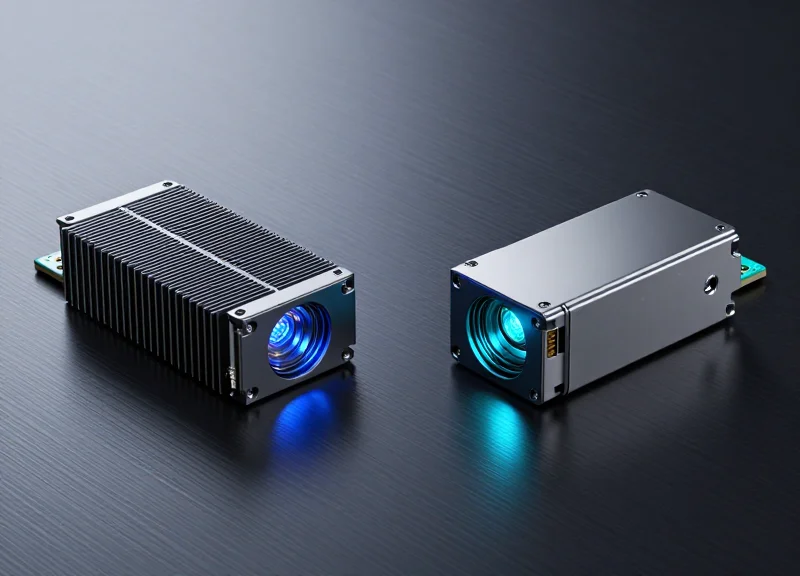
Hardware requirements for 5G eCPRI revolve around increasing the capacity of the physical link while maintaining strict latency and synchronization standards. While legacy CPRI often utilized 10G SFP+ modules, eCPRI typically demands a baseline of 25Gbps per link using SFP28 (Small Form-factor Pluggable 28) technology to support the wider bandwidths of 5G New Radio (NR) and Massive MIMO configurations.
The Role of SFP28 in 5G Fronthaul
SFP28 is the primary interface for 5G fronthaul because it offers the optimal balance between power consumption, port density, and cost. It is designed to run at 25 Gbps, which aligns perfectly with the data rates produced by the 7-2x functional split in a typical 100MHz 64T64R Massive MIMO deployment.
| Module Type | Max Throughput | Standard Application | Primary Usage |
|---|---|---|---|
| SFP28 | 25 Gbps | 5G eCPRI Fronthaul | RU to DU Connection |
| QSFP28 | 100 Gbps | Aggregation / Midhaul | Hub to CU/DU Connection |
| SFP+ (Legacy) | 10 Gbps | 4G CPRI Fronthaul | LTE RRU to BBU |
| BiDi SFP28 | 25 Gbps | Single Fiber Fronthaul | Fiber-Constrained Sites |
Key Technical Requirements for eCPRI Transceivers
Not all optical modules are suitable for eCPRI environments. The hardware must meet specific carrier-grade criteria to ensure network stability and timing accuracy across the fronthaul.
- Industrial Temperature Range (I-Temp)
Since Radio Units (RUs) are often located outdoors in uncontrolled environments, transceivers must support operating temperatures from -40°C to +85°C. - Wavelength Division Multiplexing (WDM)
To save on fiber costs, many eCPRI links use DWDM or CWDM SFP28 modules, allowing multiple signals to be multiplexed over a single fiber pair. - Low Latency and Jitter
eCPRI modules must introduce minimal internal latency and phase noise to stay within the tight 100-nanosecond timing budgets required for 5G synchronization. - FEC Support
Forward Error Correction (FEC) is often required on 25G links to maintain signal integrity over longer distances, and the hardware must be compatible with the DU/RU's FEC implementation.
100G QSFP28 and Aggregation
In scenarios where multiple 25G eCPRI streams from different sectors are concentrated, 100G QSFP28 modules are utilized. These modules act as high-capacity pipes, aggregating traffic from the Distributed Unit (DU) toward the Centralized Unit (CU) or the core network. This aggregation is vital in Cloud-RAN (C-RAN) architectures where processing is centralized.
- Can eCPRI run over existing 10G fiber?
While technically possible for low-bandwidth scenarios, 10G is generally insufficient for 5G Massive MIMO; 25G SFP28 is the recommended baseline. - Is SFP28 backward compatible?
Yes, most SFP28 ports can accept 10G SFP+ modules, but they will operate at the lower speed, which may bottleneck eCPRI performance. - What is the maximum distance for eCPRI transceivers?
Standard 25G LR (Long Reach) modules support up to 10km, while ER (Extended Reach) versions can reach up to 40km for remote cell sites.
The Role of eCPRI in Open RAN (O-RAN)
The Role of eCPRI in Open RAN (O-RAN)
eCPRI is the critical enabler of the O-RAN Alliance’s vision for a disaggregated and open radio access network. By utilizing Ethernet-based packet transport, eCPRI provides the protocol framework necessary for the O-RAN 7.2x split, allowing for standardized communication between the O-RU (Radio Unit) and O-DU (Distributed Unit) regardless of the hardware manufacturer. This shift effectively dismantles the proprietary 'black box' approach common in 4G deployments.
Standardizing the Open Fronthaul Interface
The O-RAN Alliance chose eCPRI as the foundation for its 'Open Fronthaul' specification because it natively supports the required Control, User, Management, and Synchronization planes (C/U/M/S-Plane). While traditional CPRI often included vendor-specific extensions that forced operators to buy BBUs and RRHs from the same provider, O-RAN eCPRI implementations use a common profile. This ensures that the messaging for beamforming, IQ data compression, and packet scheduling remains consistent across different vendors.
| Feature | Legacy CPRI | O-RAN Open Fronthaul (eCPRI) |
|---|---|---|
| Interoperability | Proprietary / Vendor-Locked | Open / Multi-Vendor Compatible |
| Network Layer | Layer 1 (Physical) | Layer 2 (Ethernet) or Layer 3 (IP) |
| Standard Split | N/A (Full RF processing at RRH) | O-RAN 7.2x Functional Split |
| Resource Efficiency | Fixed Bandwidth (Always On) | Dynamic (Scales with Traffic) |
Facilitating Multi-Vendor Interoperability
By standardizing how IQ data is framed and compressed over eCPRI, O-RAN enables a mix-and-match ecosystem. An operator can deploy a high-performance O-DU from an established telecommunications giant and pair it with specialized, low-cost O-RUs from a smaller niche manufacturer. The eCPRI protocol acts as the 'common language' that allows these disparate components to exchange time-sensitive 5G signals without compatibility issues, provided they adhere to the O-RAN 7.2x specification.
- How does eCPRI support the O-RAN 7.2x split?
It provides a packet-based transport mechanism that can handle the specific message types defined by O-RAN for offloading PHY layer functions from the DU to the RU. - Can O-RAN work without eCPRI?
While O-RAN technically supports other transport options, eCPRI is the industry-standard choice for the Open Fronthaul due to its efficiency and alignment with Ethernet hardware. - Does eCPRI improve the O-RAN supply chain?
Yes, by moving to a standardized eCPRI interface, the market becomes more competitive, allowing new vendors to enter the space with interoperable hardware.
Deployment Challenges and Best Practices
Deploying 5G fronthaul is a complex engineering task that shifts the focus from simple point-to-point physical links to managed packet-switched networks. The primary challenge lies in maintaining the strict timing and latency requirements of the Radio Link Control (RLC) layer while operating over Ethernet, which is inherently non-deterministic. Engineers must balance the high bandwidth demands of eCPRI with the physical constraints of existing fiber plants, often necessitating the use of advanced multiplexing and precise synchronization protocols.
Overcoming Fiber Scarcity with WDM Technology
The densification of 5G Small Cells and Massive MIMO arrays puts immense pressure on available fiber assets. To maximize ROI on existing fiber, Wavelength Division Multiplexing (WDM) is utilized to carry multiple eCPRI streams over a single fiber pair. Choosing the right WDM technology is critical for balancing cost, power consumption, and capacity.
| WDM Technology | Typical Capacity | Application in 5G | Pros/Cons |
|---|---|---|---|
| CWDM (Coarse) | Up to 18 channels | Short-range fronthaul (<10km) | Low cost, passive, but limited channel count. |
| DWDM (Dense) | Up to 80+ channels | Long-distance or high-density hubs | High capacity and reach, but higher cost and power. |
| MWDM (Medium) | 12 channels | O-RAN / China Mobile Standard | Optimized for 5G SFP28, uses TEC for stability. |
| LWDM (LAN) | 8-12 channels | High-speed 25G/50G links | Fine-tuned for IEEE 802.3 intervals, very low dispersion. |
Testing, Validation, and Synchronization
Unlike legacy CPRI, where a link was either 'up' or 'down,' eCPRI requires deep packet inspection and jitter analysis. Testing must be performed at the Ethernet layer to ensure that Frame Loss Ratio (FLR) and One-Way Latency (OWL) stay within the 100-microsecond threshold required for URLLC services.
- Fiber Characterization
Perform OTDR and chromatic dispersion testing before deployment to ensure the physical path can support 25G/100G signals without excessive signal degradation. - PTP/SyncE Validation
Verify that Class C or Class D T-BC (Telecom Boundary Clocks) are maintaining synchronization within +/- 130ns to prevent inter-cell interference. - Throughput Stress Testing
Utilize eCPRI traffic generators to simulate peak-load scenarios, ensuring the Fronthaul Gateway (FHG) can handle packet prioritization (QoS) without dropping high-priority IQ data.
Common Deployment Questions
- Can we reuse 4G fiber for 5G eCPRI?
Yes, but it typically requires upgrading the transceivers from SFP+ (10G) to SFP28 (25G) and ensuring the fiber quality meets the higher baud rate requirements. - What is the biggest cause of eCPRI link failure?
Timing synchronization errors and excessive jitter caused by incorrectly configured VLAN tagging or low-grade Ethernet switches in the transport path. - How do we mitigate latency in multi-vendor O-RAN?
By strictly adhering to the O-RAN Alliance’s Control, User, and Synchronization (CUS) plane specifications and using interoperability testing (IOT) during the staging phase.
Navigating the transition from CPRI to eCPRI is a cornerstone of building a scalable and cost-effective 5G network. By leveraging functional splits and packet-based transport, operators can achieve the throughput required for the next generation of mobile services. Ready to optimize your 5G fronthaul? Contact our technical engineering team for high-performance optical transceiver solutions tailored for eCPRI compliance.