As modern data centers push the boundaries of bandwidth, the choice between 200G QSFP56 and 400G QSFP56-DD becomes a pivotal decision for infrastructure ROI. This comprehensive analysis explores the technical architecture, performance metrics, and procurement strategies necessary to scale your network in 2026.
The Evolution of QSFP: From 200G to 400G
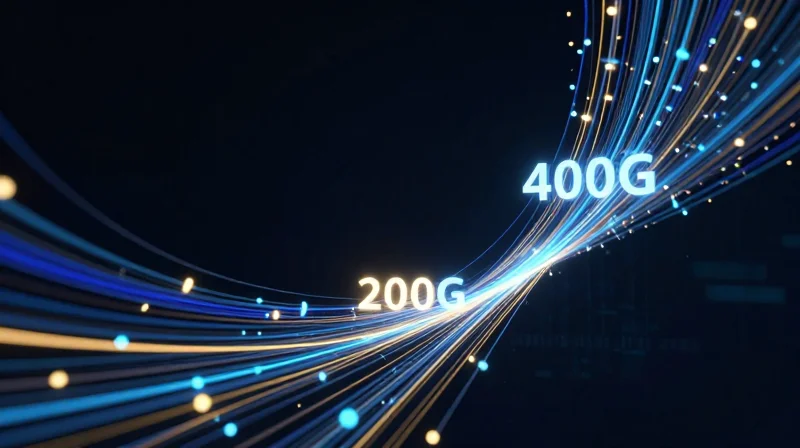
The Shift in Data Center Architecture: 200G to 400G
The transition from QSFP56 to QSFP-DD (Double Density) represents a critical architectural evolution designed to solve the bandwidth bottlenecks inherent in hyperscale and AI environments. While QSFP56 provides 200G throughput using four 50G PAM4 lanes, the QSFP-DD form factor doubles this capacity to 400G by utilizing eight lanes of 50G PAM4. This innovation allows network operators to maintain the same faceplate density while doubling the total aggregate bandwidth of a single rack unit, making it the preferred choice for AI-driven workloads and cloud computing clusters in 2026. By doubling the number of electrical interfaces without increasing the module size, the industry has successfully scaled performance without requiring a complete redesign of physical rack layouts.
Technical Comparison: QSFP56 vs. QSFP56-DD
| Feature | QSFP56 (200G) | QSFP56-DD (400G) |
|---|---|---|
| Max Data Rate | 200 Gbps | 400 Gbps |
| Electrical Lanes | 4 x 50G PAM4 | 8 x 50G PAM4 |
| Connector Pins | 38 Pins | 76 Pins (Two-row design) |
| Backward Compatibility | QSFP28, QSFP+ | QSFP56, QSFP28, QSFP+ |
| Power Consumption | Lower (Up to 5W-7W) | Higher (Up to 12W-15W+) |
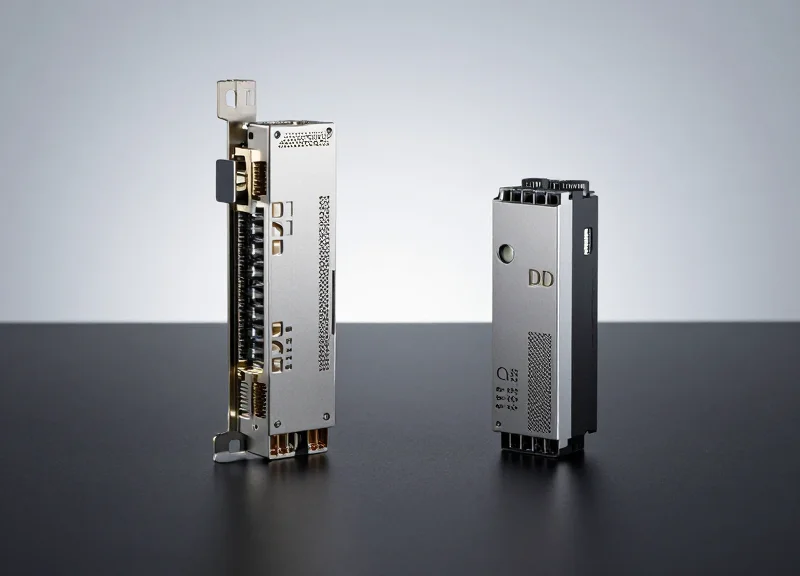
The primary differentiator in this evolution is the 'Double Density' aspect of the QSFP-DD. By adding a second row of electrical contacts, the module can support eight lanes of communication. This design was specifically engineered to ensure backward compatibility; a standard QSFP56 or QSFP28 module can be plugged into a QSFP-DD port and function normally, albeit at its native lower speed. For wholesale buyers, this means that investing in 400G-ready switches provides a future-proof foundation, as they can support current 200G inventory while preparing for a full 400G transition as AI demands increase.
Key Drivers for 400G Wholesale Adoption
- Why did the industry move to 8 lanes for 400G?
To achieve 400G without exponentially increasing the clock speed or complexity of a single lane, the industry expanded the 4-lane QSFP architecture to 8 lanes. This allowed for the continued use of established 50G PAM4 signaling technology across a wider path. - How does QSFP-DD impact cooling and power?
The increased density and double the lanes result in higher heat dissipation requirements. 400G modules often require advanced thermal management features like integrated heatsinks to maintain stability in high-density wholesale deployments. - Is 200G still relevant for bulk purchasing?
Yes, 200G QSFP56 remains a cost-effective solution for mid-tier data centers and enterprise networks that require higher speeds than 100G but are not yet ready for the power and cost overhead of a full 400G ecosystem.
Technical Architecture: QSFP56 vs. QSFP56-DD
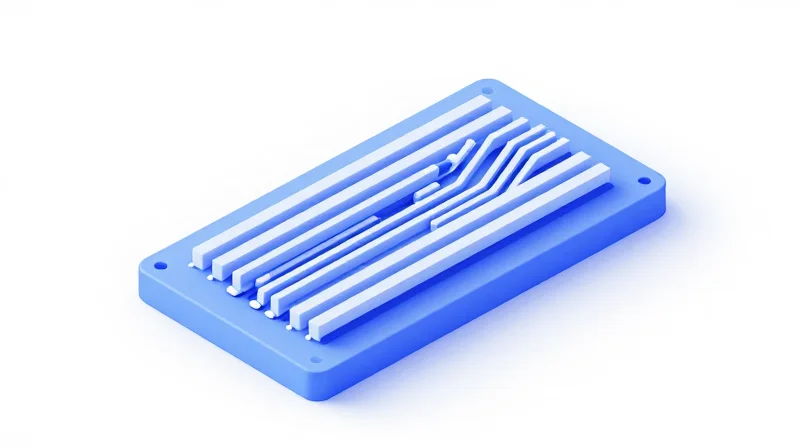
Technical Architecture: QSFP56 vs. QSFP56-DD
The fundamental distinction between QSFP56 and QSFP56-DD lies in lane density and electrical interface capacity: QSFP56 utilizes four 50Gb/s lanes to reach 200G, whereas QSFP56-DD (Double Density) employs an eight-lane interface to achieve 400G while maintaining a form factor compatible with previous generations.
QSFP56: 200G via 4-Lane PAM4 Modulation
QSFP56 is the direct successor to the 100G QSFP28 standard. While it retains the same physical dimensions and four-lane structure, it upgrades the modulation from NRZ (Non-Return to Zero) to PAM4 (4-level Pulse Amplitude Modulation). This transition allows each of the four lanes to carry 50Gb/s of data, resulting in a total aggregate bandwidth of 200Gb/s. This architecture is highly efficient for data center operators looking to double their bandwidth without increasing the physical footprint of their switching infrastructure.
QSFP56-DD: Scaling to 400G through Double Density
The QSFP56-DD specification represents a significant leap in high-speed engineering by adding a second row of electrical contacts to the module's internal PCB. This 'Double Density' approach increases the number of electrical lanes from four to eight. By running eight lanes of 50Gb/s PAM4 modulation, the module delivers an aggregate 400Gb/s. Crucially, the physical external dimensions remain consistent with the QSFP family, allowing 400G switches to maintain high port density while offering backward compatibility for legacy modules via the first row of contacts.
| Feature | QSFP56 | QSFP56-DD |
|---|---|---|
| Aggregate Data Rate | 200 Gbps | 400 Gbps |
| Electrical Lanes | 4 Lanes | 8 Lanes |
| Modulation Type | 50G PAM4 | 50G PAM4 |
| Electrical Contact Rows | Single Row | Double Row |
| Backward Compatibility | QSFP+, QSFP28 | QSFP+, QSFP28, QSFP56 |
Key Structural and Compatibility FAQs
- Can I use a QSFP56 module in a QSFP56-DD port?
Yes. One of the primary advantages of the DD architecture is backward compatibility. A QSFP56-DD cage is designed to support standard QSFP modules by utilizing only the primary four lanes of the eight-lane interface. - Does QSFP56-DD require specialized cooling compared to QSFP56?
Due to the increased power consumption required to drive 400G throughput (often 12W or more), many QSFP56-DD modules feature an extended 'heatsink' or 'snout' to improve thermal dissipation, whereas QSFP56 modules typically follow standard flat-top designs. - Are the fiber connectors different for 400G?
The electrical interface is the main change. For the optical side, both can use various connectors like LC duplex or MPO-12/MPO-16 depending on the specific optical reach (e.g., DR4, FR4, or LR4) and the fiber infrastructure used.
Bandwidth and Data Rates: Choosing the Right Speed
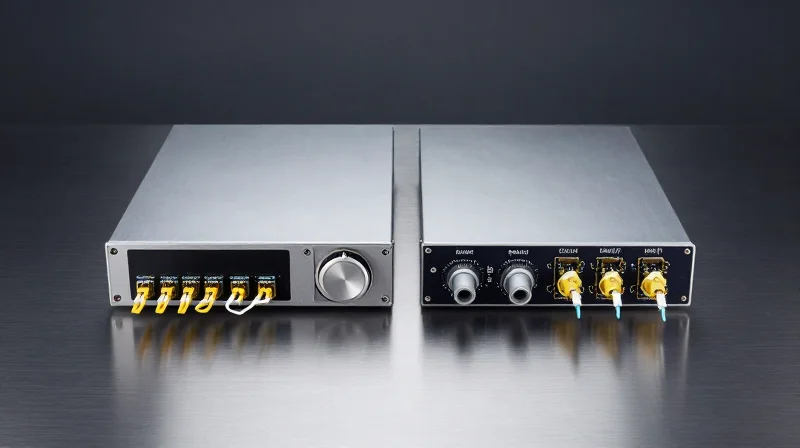
The primary distinction between QSFP56 and QSFP56-DD lies in their aggregate data rate: QSFP56 supports up to 200Gbps through a four-lane electrical interface, whereas QSFP56-DD provides a 400Gbps path by doubling the lane count to eight. For most enterprise and high-performance computing (HPC) environments, the choice is dictated by the existing switch hardware and the specific demands of the workload, such as AI processing or cloud-scale data distribution.
Analyzing Throughput: 200G vs. 400G Infrastructure
While both modules utilize 50G PAM4 modulation technology, the Double Density architecture of the QSFP56-DD allows it to transmit twice as much data per port. This makes the 400G standard indispensable for core data center backbones where space is at a premium and maximum bandwidth density is required. Conversely, QSFP56 remains a cost-effective solution for mid-tier aggregation layers and large enterprise networks that have not yet fully transitioned to 400G fabrics.
| Specification | QSFP56 | QSFP56-DD |
|---|---|---|
| Maximum Throughput | 200 Gbps | 400 Gbps |
| Electrical Interface | 4 Lanes (4x50G) | 8 Lanes (8x50G) |
| Modulation | PAM4 | PAM4 |
| Common Use Case | HPC Clusters, 200G Ethernet | Hyperscale Cloud, 400G Spine-Leaf |
| Backward Compatibility | QSFP28 | QSFP56, QSFP28 |
Optimal Use Cases for 200G QSFP56
QSFP56 is the ideal choice for organizations looking to double their bandwidth from 100G without the significantly higher power draw and heat generation typically associated with 400G optics. It excels in supercomputing environments and high-frequency trading (HFT) platforms where 200G per-link performance provides the necessary low-latency headroom without necessitating a complete overhaul of the cooling infrastructure.
Future-Proofing with 400G QSFP56-DD
For wholesale buyers focused on long-term scalability, QSFP56-DD is the superior investment. By supporting 400Gbps, these modules enable massive data transfers required by large-scale AI training models and 8K video streaming platforms. The density advantage allows data centers to maximize the ROI of their rack space by fitting more bandwidth into the same physical footprint as 100G or 200G solutions.
- Can I use a QSFP56 module in a QSFP56-DD port?
Yes, QSFP56-DD ports are designed to be backward compatible with QSFP56 modules. The module will fit and function, but the throughput will be limited to 200Gbps. - Is the power consumption significantly different between these two speeds?
Yes, while QSFP56 modules generally consume between 5W and 7W, QSFP56-DD modules can consume 10W to 12W or more, depending on the reach (SR8 vs. DR4/FR4). - Which speed is more cost-effective for 2026 wholesale bulk orders?
QSFP56 currently offers a lower price per unit, but QSFP56-DD provides a lower cost-per-bit, making it more economical for high-traffic environments over a multi-year period.
Backwards Compatibility and Port Density
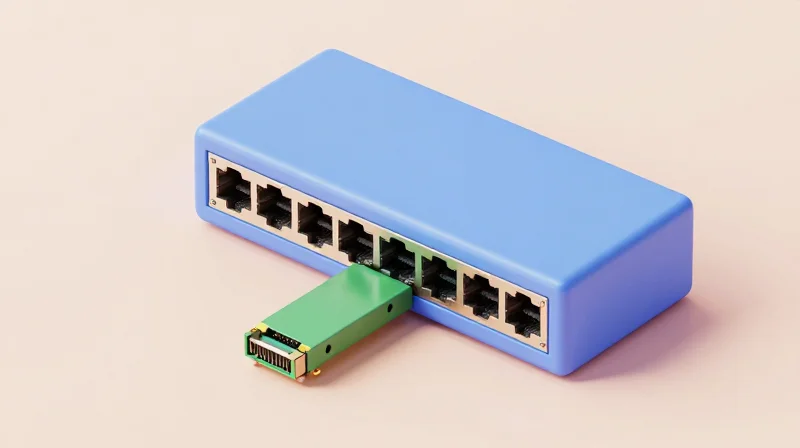
The Strategic Edge: Backwards Compatibility in QSFP56-DD
The QSFP56-DD (Double Density) form factor is engineered to provide a seamless upgrade path by utilizing an 8-lane electrical interface that remains physically compatible with existing 4-lane QSFP modules. This architectural choice allows network operators to double their bandwidth capacity to 400G while maintaining the ability to plug in legacy QSFP28 (100G) and QSFP56 (200G) optics into the same ports. This backward compatibility is a critical factor for wholesale buyers looking to protect their existing hardware investments during a phased network migration.
Comparative Density and Physical Architecture
While both form factors occupy a similar footprint on the switch faceplate, the 'Double Density' nomenclature refers to the additional row of electrical contacts. This allows the QSFP56-DD to support 8 lanes of 50G PAM4 signal, whereas the standard QSFP56 is limited to 4 lanes. This shift enables a massive increase in aggregate bandwidth per rack unit (RU) without requiring a complete redesign of the data center's physical layout.
| Feature | QSFP56 (200G) | QSFP56-DD (400G) |
|---|---|---|
| Electrical Lanes | 4 Lanes (PAM4) | 8 Lanes (PAM4) |
| Physical Compatibility | QSFP+, QSFP28 | QSFP+, QSFP28, QSFP56 |
| Max Bandwidth per 1U | 6.4 Tbps (typical 32-port) | 14.4+ Tbps (typical 36-port) |
| Connector Depth | Standard QSFP Depth | Slightly extended for 2nd row contacts |
Optimizing Rack Space and Power Efficiency
In high-density environments like hyperscale data centers and AI clusters, port density is directly tied to Total Cost of Ownership (TCO). By utilizing QSFP56-DD, organizations can achieve 400G throughput in the same space previously required for 200G. This reduction in the number of required switches leads to lower power consumption per gigabit and simplified cable management. Furthermore, the ability to use breakout cables (e.g., 400G to 4x100G) allows for extremely granular control over port allocation across the rack.
- Can I use a QSFP56 module in a QSFP56-DD slot?
Yes, the QSFP56-DD cage is designed to be backward compatible with QSFP56, QSFP28, and QSFP+ modules, allowing for mixed-speed deployments. - How does QSFP56-DD handle the increased heat of higher density?
The standard includes improved thermal management specifications, and many modules feature integrated or 'riding' heat sinks to maintain stable operating temperatures at 400G speeds. - Is the cabling different for QSFP56-DD?
While the external fiber connectors (like LC or MPO) may remain the same, the internal electrical interface is upgraded; however, existing fiber plants can often be reused depending on the reach requirements.
Power Consumption and Thermal Management
Transitioning from QSFP56 to QSFP56-DD represents a significant jump in power density, as 400G modules often consume double or triple the energy of their 200G counterparts. While a standard QSFP56 module typically operates within a 5W power envelope, high-performance QSFP56-DD modules can reach 12W to 15W, necessitating advanced cooling infrastructure and precise thermal modeling to prevent port throttling or hardware failure.
Comparative Power Profiles: 200G vs. 400G
The 'Double Density' of the QSFP56-DD is not just about the pin count; it also involves managing the heat generated by the additional DSP (Digital Signal Processor) lanes required for 400G throughput. This increased power draw impacts the Total Cost of Ownership (TCO) when buying wholesale, as energy costs for both the modules and the cooling systems scale linearly with port density.
| Module Type | Typical Power Consumption | Maximum Power Class | Thermal Management Level |
|---|---|---|---|
| QSFP56 (SR4/DR4) | 3.5W - 5.0W | Class 4 | Standard Airflow |
| QSFP56-DD (DR4/FR4) | 10.0W - 12.0W | Class 7 | Enhanced Heat Sink |
| QSFP56-DD (ZR/ZR+) | 15.0W - 22.0W | Class 8 | Liquid or High-CFM Airflow |
Strategies for Data Center Thermal Efficiency
To mitigate the thermal risks associated with 400G deployments, manufacturers have optimized the physical design of the QSFP56-DD cage. This includes integrated heat sinks with optimized fin geometries and improved Thermal Interface Materials (TIM). When sourcing wholesale optics, it is critical to verify that the modules meet the CMIS (Common Management Interface Specification) requirements, which allow the switch to dynamically monitor temperature and adjust fan speeds accordingly.
- Does QSFP56-DD require different cooling than QSFP56?
Yes, QSFP56-DD modules generate significantly more heat per cubic inch. They require cages with better thermal coupling and often necessitate higher CFM (Cubic Feet per Minute) airflow patterns across the faceplate. - How does power consumption affect bulk pricing?
Modules with lower power consumption ratings often command a premium in wholesale markets because they reduce long-term operational expenses (OPEX) related to data center cooling and power delivery. - What happens if a QSFP56-DD module exceeds its thermal threshold?
Modern 400G transceivers feature 'soft-shutdown' or thermal throttling mechanisms that reduce the data rate or shut down the laser to prevent permanent hardware damage if cooling is insufficient.
When requesting custom quotes for bulk 400G hardware, network architects must account for the power budget of the switch chassis. A fully populated 32-port 400G switch can draw over 400W just from the transceivers alone, making thermal efficiency a primary selection criterion alongside price and reach.
Total Cost of Ownership (TCO) Comparison
Total Cost of Ownership (TCO) Comparison
Calculating the true TCO for QSFP56-DD versus QSFP56 requires a nuanced analysis that extends beyond the sticker price of individual transceivers. While the capital expenditure (CapEx) for 400G infrastructure is higher upfront, the operational expenditure (OpEx) is significantly reduced when measured on a 'per-gigabit' basis. For enterprises and service providers, the transition to QSFP56-DD often becomes the more economical choice over a three-to-five-year lifecycle due to its ability to handle double the bandwidth within the same physical footprint, thereby deferring the need for costly data center expansions.
CapEx: Procurement and Infrastructure Hardware
The initial investment for QSFP56-DD is undeniably higher because it requires 400G-capable switches and specialized cooling solutions. However, when buying wholesale, the price gap between 200G and 400G modules has narrowed considerably in 2026. Choosing QSFP56-DD can actually lower CapEx for new deployments because it reduces the number of switch ports, cables, and rack units required to achieve a specific aggregate bandwidth target.
| Metric | QSFP56 (200G) | QSFP56-DD (400G) |
|---|---|---|
| Wholesale Unit Cost | Lower (Economic Entry) | Higher (Premium Technology) |
| Cost per Gigabit | Higher | Lower (Better Value at Scale) |
| Cabling Density | Moderate | Excellent (Half the cables for same BW) |
| Switch Port Utilization | High consumption | Efficient (Consolidates traffic) |
OpEx: Power, Cooling, and Maintenance
Operational costs are where QSFP56-DD demonstrates its long-term financial superiority. While a single 400G module consumes more power than a 200G module, it consumes less power than the *two* 200G modules required to provide the same throughput. This energy efficiency scales across thousands of ports, leading to substantial savings on electricity and cooling infrastructure. Furthermore, fewer physical links mean simplified troubleshooting and lower maintenance labor costs over time.
TCO FAQ: Maximizing Investment
- Is QSFP56-DD worth the investment for small-scale labs?
Generally, no. For small-scale environments where 200G provides sufficient headroom, the lower CapEx of QSFP56 is more attractive. 400G TCO benefits are most visible in high-density production environments. - How does backwards compatibility affect TCO?
QSFP56-DD’s backwards compatibility with QSFP56/QSFP28 significantly lowers TCO by allowing for phased upgrades, preventing the need for a total 'rip-and-replace' of existing legacy optics. - Do custom wholesale quotes significantly impact the TCO calculation?
Yes. Bulk pricing for 400G modules often includes tiered discounts that bring the price-per-gigabit well below that of 200G, accelerating the Return on Investment (ROI) for large deployments.
Why Buy Wholesale? Navigating the 2026 Market
Why Buy Wholesale? Navigating the 2026 Market
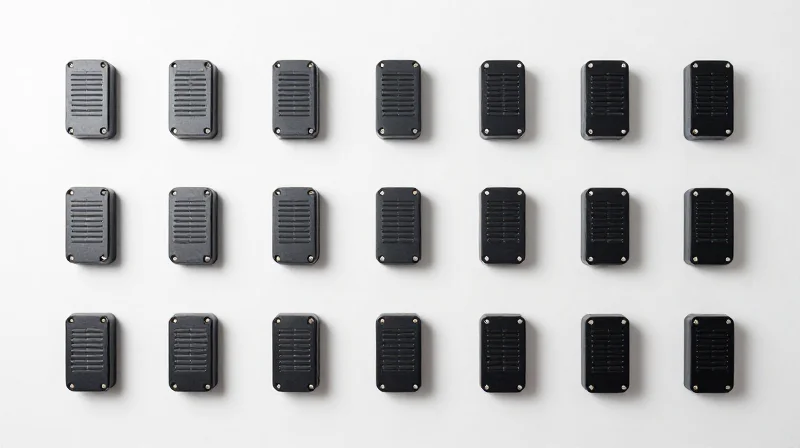
In the 2026 networking landscape, wholesale procurement of QSFP56 and QSFP56-DD optics has transitioned from a simple cost-saving measure to a critical requirement for infrastructure resilience. As data centers scale to meet AI and machine learning demands, the volume of transceivers required makes retail purchasing economically unviable. Wholesale acquisition allows organizations to lock in pricing, ensure hardware consistency across massive leaf-spine architectures, and bypass the intermittent lead-time delays that continue to affect the global semiconductor and optical component markets.
Economic Advantages of Bulk Procurement
The primary driver for wholesale investment is the dramatic reduction in cost-per-port. By bypassing the margins associated with individual retail packaging and tiered distribution, large-scale buyers can often see a 20% to 40% reduction in unit price. This capital efficiency is vital when deploying 400G QSFP56-DD modules, where the high initial investment can otherwise strain quarterly budgets.
| Procurement Metric | Retail / Small Batch | Wholesale / Bulk (2026) |
|---|---|---|
| Unit Price | Premium MSRP | Deeply Discounted Custom Quotes |
| Supply Security | Stock-on-hand dependent | Allocated inventory & staggered delivery |
| Price Protection | Subject to market fluctuation | Fixed pricing for contract duration |
| Testing/Validation | Generic batch testing | Custom serialized validation reports |
Supply Chain Stability and Price Protection
The 2026 market remains sensitive to geopolitical shifts and raw material costs. Wholesale agreements typically include price protection clauses that shield buyers from sudden inflationary spikes. Furthermore, bulk ordering facilitates a 'staggered deployment' strategy, where inventory is secured upfront but delivered in phases to align with data center build-outs, ensuring that hardware is available the moment the racks are powered on.
Wholesale Procurement FAQ
- What is the typical Minimum Order Quantity (MOQ) for custom quotes?
While it varies by manufacturer, wholesale pricing generally triggers at quantities of 50 to 100 units for QSFP56-DD. High-volume enterprise projects often negotiate at the 500+ unit tier for maximum leverage. - Can wholesale orders be customized for specific OEM compatibility?
Yes. One of the major benefits of wholesale is the ability to request custom EEPROM coding for multi-vendor environments, ensuring the modules work seamlessly with Cisco, Arista, or Juniper switches. - How does buying bulk affect warranty and support?
Wholesale contracts usually include prioritized RMA (Return Merchandise Authorization) processes and dedicated technical support engineers, providing faster resolution times than standard retail channels.
Custom OEM/ODM Options with Ubytelink
Custom OEM/ODM Options with Ubytelink
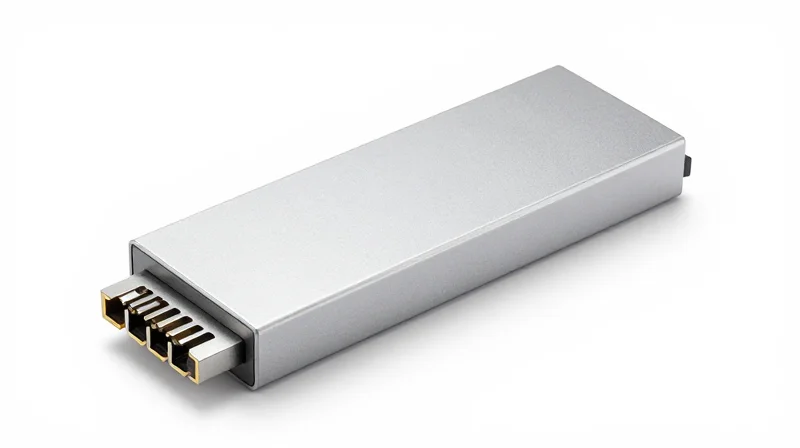
Ubytelink provides a strategic advantage for data centers and ISPs by offering tailored OEM (Original Equipment Manufacturer) and ODM (Original Design Manufacturer) solutions for 200G and 400G optical modules. This flexibility ensures that while the underlying hardware meets industry standards, the specific configuration, firmware, and aesthetics are optimized for the client’s unique network architecture and operational requirements.
Specialized Firmware Coding and Vendor Compatibility
One of the primary barriers in wholesale procurement is the risk of vendor lock-in. Ubytelink’s ODM services mitigate this by providing multi-code firmware. We can flash modules to be 100% compatible with major switch manufacturers like Cisco, Mellanox (NVIDIA), Arista, and Juniper, often enabling proprietary features and monitoring diagnostics that generic modules cannot access.
| Customization Category | Details | Primary Benefit |
|---|---|---|
| Firmware Coding | EEPROM/A0 coding for multi-vendor support | Eliminates vendor lock-in and 'unsupported' error messages |
| Labeling/Branding | Laser etching and custom PVC labels | Professional brand consistency for resellers |
| Pull-Tab Color | Custom color-coded pull-tabs | Easier port identification and physical cable management |
| Specialized Hardware | Custom reach/wavelength tuning | Optimized for non-standard fiber spans and link budgets |
Enhancing Brand Identity with White-Label Solutions
For distributors and Value-Added Resellers (VARs), private labeling is an essential tool for market differentiation. Ubytelink supports complete white-labeling of QSFP56-DD and QSFP56 optics, including custom part numbering (P/N) and serialized tracking that integrates directly with the client’s internal inventory and support systems. This allows partners to market high-end 400G solutions under their own brand without the overhead of internal manufacturing.
- Can Ubytelink provide custom transmission distances?
Yes, we can optimize internal lasers and receiver sensitivity for specific link budgets that fall outside of standard 2km or 10km specifications for unique long-reach applications. - What is the Minimum Order Quantity (MOQ) for custom branding?
Ubytelink offers flexible MOQs for custom labeling and coding, designed to support both project-based needs and long-term distribution partnerships. - Are custom modules tested for signal integrity?
Every OEM/ODM module undergoes rigorous Bit Error Rate (BER) and eye-diagram testing using the specific firmware requested to ensure performance meets or exceeds IEEE standards.
Future-Proofing: Preparing for the 800G Transition
Transitioning to 800G is no longer a distant roadmap item but a strategic requirement for modern data centers. The primary advantage of the QSFP-DD (Double Density) ecosystem over legacy QSFP56 is its inherent scalability. By adopting QSFP-DD now for 400G deployments, network architects create a seamless migration path to 800G (QSFP-DD800) because the form factor maintains backward compatibility with previous generations. This allows for a phased hardware refresh where legacy 200G and 400G optics can coexist with next-generation 800G modules in the same high-density switch fabrics, effectively protecting initial capital expenditures.
Technological Evolution: 400G QSFP-DD vs. 800G Standards
The jump to 800G is primarily driven by the evolution of SerDes (Serializer/Deserializer) technology from 50G PAM4 to 100G/112G PAM4. While QSFP56 is capped by its 4-lane architecture, the 8-lane design of QSFP-DD is the foundation for 800G throughput.
| Feature | QSFP56-DD (400G) | QSFP-DD800 (800G) | OSFP (800G) |
|---|---|---|---|
| Electrical Lanes | 8 x 50G PAM4 | 8 x 100G PAM4 | 8 x 100G PAM4 |
| Backward Compatibility | QSFP28/QSFP56 | QSFP28/56/56-DD | Limited (Requires Adapter) |
| Typical Power Draw | 10W - 14W | 16W - 24W | 15W - 22W |
| Thermal Management | Standard | Enhanced Heat Sinks | Integrated Heat Sink |
Key Strategies for 800G Readiness
To ensure a smooth transition, wholesale buyers and engineers should focus on three critical areas: fiber density, power budgeting, and cooling capacity.
- Fiber Plant Optimization
Prioritize Singlemode Fiber (SMF) for long-reach applications and MPO-16/MPO-32 cabling for short-reach high-density links. 800G often requires more complex modulation that is highly sensitive to signal loss. - Thermal and Power Headroom
800G modules generate significantly more heat (up to 25W per port). Ensure that current rack cooling and Power Distribution Units (PDUs) can handle a 40% increase in thermal load compared to standard 400G setups. - Interoperability Testing
When purchasing wholesale, opt for modules with programmable EEPROMs. This allows for firmware adjustments to ensure compatibility between different generations of switches and transceivers during the transition phase.
Transition FAQ
- Can I use 400G QSFP-DD cables in 800G ports?
Yes, QSFP-DD800 ports are designed to be backward compatible with QSFP56-DD and QSFP56 modules, though they will operate at the lower speed of the cable/module. - When should I choose OSFP over QSFP-DD for 800G?
Choose OSFP if your roadmap includes a rapid move to 1.6T, as OSFP offers superior thermal performance for higher-wattage future modules. Choose QSFP-DD for maximum compatibility with existing 100G/200G/400G infrastructure. - Does wholesale pricing for 800G follow the 400G curve?
Initially, 800G optics carry a premium. However, on a price-per-gigabit basis, wholesale 800G is projected to reach parity with 400G by late 2026 as production yields stabilize.
Selecting the right optical modules is critical for balancing performance and budget. Whether you are optimizing for current 200G needs or future-proofing with 400G QSFP56-DD, Ubytelink offers the expertise and wholesale pricing to support your growth. Contact our engineering team today for a custom quote and explore our bespoke OEM/ODM solutions.