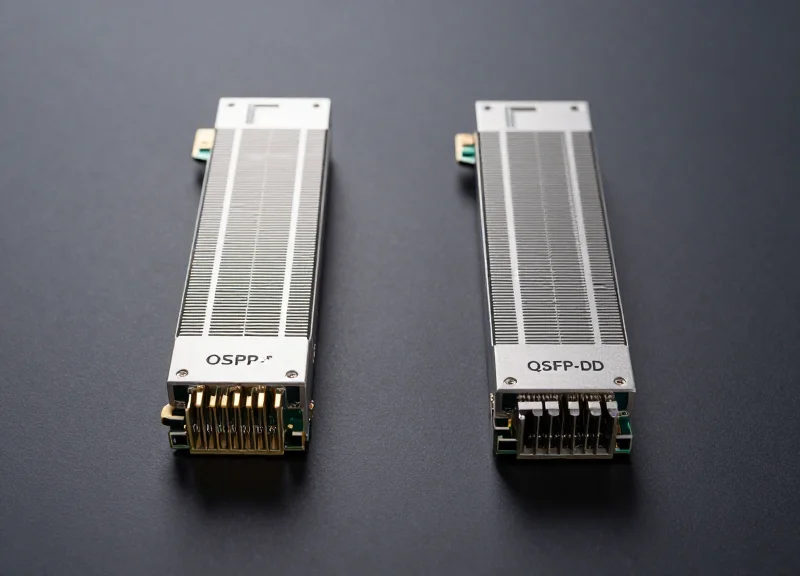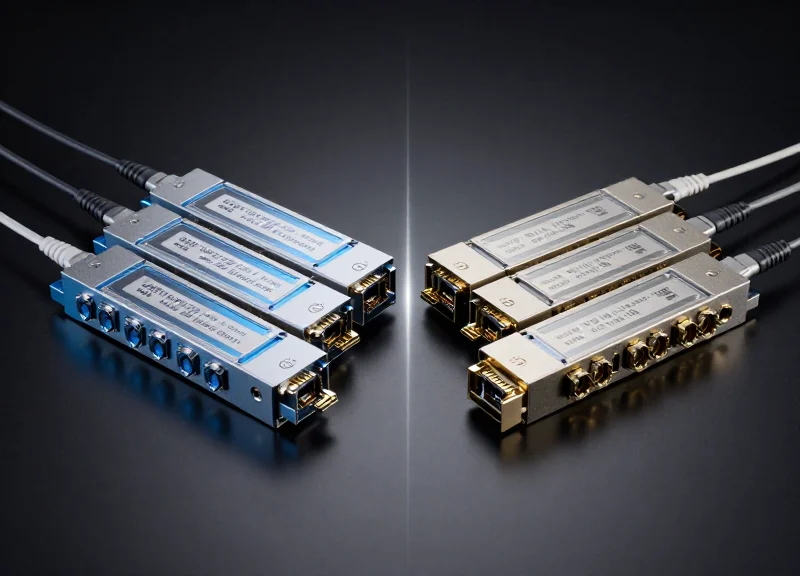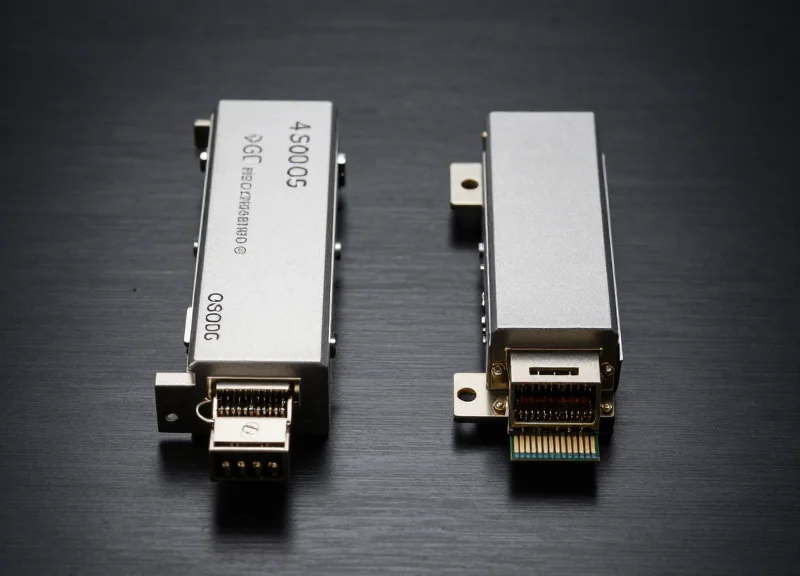
As data center traffic continues to explode, the transition to 400G is no longer a luxury but a necessity for enterprise and hyperscale environments. For network architects and procurement leads, finding a balance between extreme performance and cost-effectiveness is the ultimate challenge. This guide explores why the 400G QSFP-DD DR4 is the gold standard for modern interconnects and how wholesale sourcing can transform your infrastructure ROI.
The Evolution of 400G: Why QSFP-DD DR4 is Leading the Market
The Evolution of 400G: Why QSFP-DD DR4 is Leading the Market
The dominance of the 400G QSFP-DD DR4 in the wholesale market is primarily attributed to its dual-purpose functionality: it serves as both a high-capacity 400G link and a versatile breakout interface for 100G networks. By leveraging four lanes of 100G PAM4 modulation over single-mode fiber, the DR4 variant provides a scalable path for data centers to upgrade their throughput without the prohibitive costs associated with longer-reach optics or the distance limitations of multi-mode alternatives. Its adoption is driven by the industry's need for a form factor that supports the same port density as previous generations while delivering a fourfold increase in data rates.
Architectural Advantages: 500m Reach and Parallel Fiber Efficiency
The QSFP-DD (Quad Small Form-factor Pluggable Double Density) standard allows for 400G speeds within a footprint compatible with existing QSFP28 cages, facilitating a smoother transition for network operators. The DR4 specification specifically addresses the 500-meter distance requirement, which is the 'sweet spot' for intra-data center connectivity between leaf and spine switches. Unlike the SR8 variant, which relies on multi-mode fiber and is limited to 100 meters, or the FR4 variant, which is optimized for 2km reaches, the DR4 offers the best price-to-performance ratio for mid-range single-mode applications. Furthermore, the use of MPO-12 connectors allows for direct parallel fiber connections, significantly reducing the complexity of the optical path.
| Transceiver Type | Reach | Fiber Type | Connector Type | Primary Application |
|---|---|---|---|---|
| 400G QSFP-DD DR4 | 500m | Single-mode (SMF) | MPO-12 (APC) | Leaf-Spine / 4x100G Breakout |
| 400G QSFP-DD FR4 | 2km | Single-mode (SMF) | LC Duplex | Data Center Interconnect (DCI) |
| 400G QSFP-DD SR8 | 100m | Multi-mode (MMF) | MPO-16 | Short-reach Rack Connections |
Maximizing ROI with Breakout Capabilities
One of the most compelling reasons to buy 400G QSFP-DD DR4 in bulk is its native support for breakout configurations. A single 400G DR4 port can be split into four independent 100G channels (100G DR1). This enables data center managers to deploy 400G-ready switches while still maintaining connectivity with existing 100G infrastructure. This investment protection is vital for wholesale purchasers who must balance current operational needs with future-proof scalability. When purchasing wholesale, the versatility of the DR4 module often leads to a lower Total Cost of Ownership (TCO) because it reduces the variety of spares required in inventory.
- Is the QSFP-DD DR4 backward compatible?
Yes, the QSFP-DD form factor is designed to be backward compatible with QSFP28 and QSFP+ modules, though adapter cables or specific port configurations may be required depending on the switch vendor. - Why use DR4 instead of FR4 for internal links?
DR4 is typically more cost-effective for distances under 500m because it uses a simpler parallel fiber design, whereas FR4 uses complex Wavelength Division Multiplexing (WDM) to achieve 2km reaches. - What connector type is standard for 400G DR4?
The industry standard is the MPO-12 (or MTP-12) connector with an Angled Physical Contact (APC) polish to minimize back-reflection.
Economic Benefits of Wholesale 400G Procurement

Transitioning to 400G infrastructure via wholesale procurement transforms network capital expenditure (CAPEX) from a reactive cost into a strategic asset. By securing 400G QSFP-DD DR4 modules in bulk, enterprises and data center operators can achieve a drastically lower cost-per-bit compared to traditional 100G architectures or piecemeal 400G upgrades. This economic shift is driven by the maturation of Silicon Photonics and the manufacturing efficiencies realized when vendors fulfill large-scale, custom-quoted orders.
Cost-per-Bit Optimization and Scale Economies
The primary financial driver for 400G DR4 adoption is the efficiency of the four-lane parallel architecture. When purchased at wholesale volumes, the price gap between legacy 100G solutions and 400G narrows significantly on a per-gigabit basis. Bulk pricing allows operators to bypass the 'early adopter tax,' facilitating a faster return on investment (ROI) as the network handles increasing bandwidth demands without a linear increase in spend.
| Procurement Volume | Typical Price Reduction | Economic Impact |
|---|---|---|
| Individual (1-10 units) | Baseline MSRP | High CAPEX per port; suitable for testing only. |
| Mid-Tier (50-200 units) | 15% - 25% Discount | Significant reduction in per-rack deployment costs. |
| Wholesale (500+ units) | 35% - 50%+ Discount | Lowest cost-per-bit; optimal for hyperscale expansion. |
Reducing Total Cost of Ownership (TCO)
Beyond the initial purchase price, wholesale sourcing impacts the Total Cost of Ownership (TCO) by simplifying logistics and technical validation. Purchasing a single batch of 400G QSFP-DD DR4 modules ensures consistency in firmware versions and optical performance across the entire fabric, which reduces the labor-intensive troubleshooting often associated with heterogeneous hardware lots. Furthermore, bulk agreements often include enhanced service-level agreements (SLAs) and consolidated shipping, which lowers the operational expenditure (OPEX) involved in multi-site deployments.
The Strategic Value of Custom Quotes
In the 2026 market, 'list prices' are rarely reflective of the actual costs for large-scale projects. Custom quotes allow procurement teams to negotiate terms based on project timelines, recurring demand, and specific compatibility requirements. This tailored approach ensures that the optics are not only cost-effective but also precision-matched to the existing switch environment (e.g., Cisco, Arista, or Juniper), eliminating the risk of costly post-purchase incompatibilities.
- How much can wholesale pricing save on 400G DR4?
Depending on the volume and vendor relationship, wholesale pricing can reduce the per-unit cost by 30% to 55% compared to retail market rates. - Does bulk buying affect the warranty or support?
No, professional wholesale contracts typically include full manufacturer warranties and often provide dedicated technical account managers for large deployments. - Why is the DR4 variant specifically beneficial for cost savings?
The DR4's ability to support breakout configurations (4x100G) allows for high-density port utilization, reducing the number of expensive switch ports required and further lowering the overall network cost.
Technical Deep Dive: 400G QSFP-DD DR4 Specifications
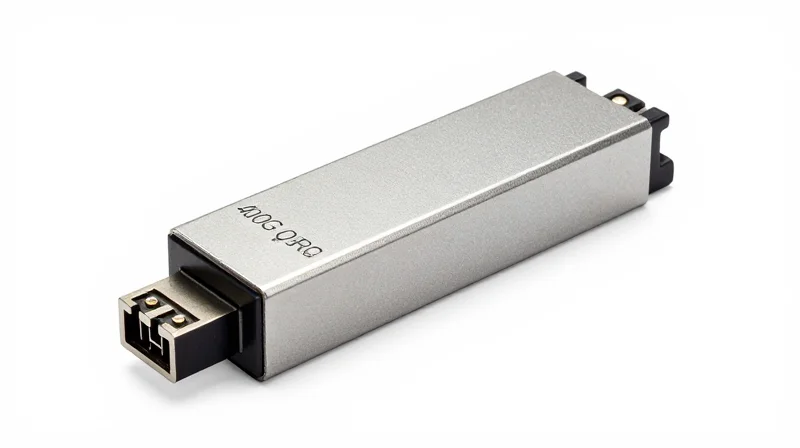
The 400G QSFP-DD DR4 (Datacenter Reach 4-lane) represents the pinnacle of short-reach optical networking, leveraging 4-level Pulse Amplitude Modulation (PAM4) to deliver 400Gbps aggregate bandwidth over 500 meters of Single-Mode Fiber (SMF). By utilizing a 4x100G parallel lane architecture, the DR4 module enables direct 400G links or breakout configurations into four separate 100G DR1 interfaces, providing unmatched flexibility for leaf-to-spine leaf layers in hyperscale environments.
Advanced Modulation and Electrical Interface
To achieve 400G throughput without exponentially increasing power consumption or physical footprint, the QSFP-DD DR4 employs an 8x50G PAM4 electrical interface (GAUI-8) on the host side. Internally, a sophisticated Digital Signal Processor (DSP) converts these signals into four 100G PAM4 optical lanes. This transition from binary NRZ (Non-Return-to-Zero) to quaternary PAM4 allows for doubling the data rate within the same bandwidth, though it requires higher signal-to-noise ratio (SNR) management, typically addressed through integrated Forward Error Correction (FEC).
Key Optical and Electrical Specifications
| Parameter | Specification Detail |
|---|---|
| Form Factor | QSFP-DD (Quad Small Form-factor Pluggable Double Density) |
| Wavelength | 1310nm Center Wavelength |
| Connector Type | MPO-12 (APC) - 8 active fibers |
| Max Distance | 500 Meters over G.652 SMF |
| Modulation | 100G PAM4 per lane |
| Power Consumption | Typical: 10W - 12W |
| Operating Temperature | 0°C to 70°C (Commercial) |
Physical Connectivity and MPO-12 Implementation
The 400G DR4 utilizes an MPO-12 (Angle Physical Contact - APC) connector interface. Unlike duplex fiber solutions, the DR4 uses eight of the twelve fibers in an MPO cable (four for transmission and four for reception). This parallel fiber approach is what facilitates the 'breakout' capability; a single 400G port can be connected to four individual 100G DR1 transceivers using an MPO-to-4xLC breakout cable. This is a critical feature for wholesale buyers looking to transition legacy 100G infrastructure to 400G fabrics gradually.
Power Efficiency and Thermal Management
Thermal efficiency is a primary concern for high-density switches. The QSFP-DD DR4 is designed with a power envelope typically falling between 10W and 12W. High-quality wholesale modules incorporate advanced silicon photonics to minimize heat dissipation, ensuring that even in fully populated 32-port 1U switches, the airflow and cooling systems can maintain stable operating temperatures, thereby extending the Mean Time Between Failures (MTBF).
- Why does DR4 use MPO-12 APC instead of UPC?
APC (Angle Physical Contact) connectors have an 8-degree end-face polish that minimizes back-reflection (Return Loss), which is vital for the sensitive PAM4 signals used in 400G transmission. - Is the 400G DR4 compatible with 400G FR4?
No, they are not optically interoperable. DR4 uses four parallel fibers at 1310nm, while FR4 uses CWDM (Coarse Wavelength Division Multiplexing) over a single pair of fibers. - Does DR4 require FEC?
Yes, 400G DR4 modules require Host-side Forward Error Correction (KP4 FEC) to ensure a bit error rate (BER) better than 1E-12, as PAM4 is more susceptible to noise than NRZ.
Maximizing Flexibility with OEM and ODM Options
When you buy 400G QSFP-DD DR4 wholesale, the value extends beyond unit price points to the flexibility of hardware customization. Ubytelink’s OEM (Original Equipment Manufacturer) and ODM (Original Design Manufacturer) options allow businesses to bridge the gap between off-the-shelf components and proprietary system requirements, ensuring seamless integration into specialized network architectures through tailored firmware and physical branding.
Firmware Optimization and Proprietary Compatibility
Modern hyperscale environments often utilize proprietary network operating systems (NOS) that require specific EEPROM coding for hardware recognition and telemetry reporting. Through our ODM services, 400G QSFP-DD DR4 modules can be pre-programmed with custom firmware to ensure full compatibility with major switch vendors, effectively bypassing restrictive vendor lock-in. This customization includes tuning PAM4 signaling thresholds and optimizing power consumption metrics to meet the thermal envelopes of specific high-density chassis.
| Service Category | Primary Focus | Customization Level | Target Use Case |
|---|---|---|---|
| OEM Services | Branding and Labeling | Medium | Value-Added Resellers and Standard Enterprises |
| ODM Services | Engineering and Design | High | Cloud Service Providers (CSPs) and AI Research Clusters |
| Firmware Coding | Compatibility and Telemetry | Deep | Multi-vendor Data Centers and Proprietary NOS Environments |
White-Labeling and Strategic Branding
For system integrators and large-scale resellers, the ability to white-label hardware is a critical competitive advantage. Wholesale 400G QSFP-DD DR4 orders can be customized with unique part numbers, custom serial sequences, and branded physical labels. This level of customization reinforces brand identity and simplifies internal logistics, as the hardware identifiers can be perfectly aligned with a client's internal ERP and inventory management systems.
Common Customization Inquiries
- Can Ubytelink provide multi-vendor compatibility in a single wholesale batch?
Yes, we can split a wholesale order into multiple sub-batches, each coded with different firmware to support a diverse hardware environment containing switches from various manufacturers. - What are the benefits of custom EEPROM coding for 400G modules?
Custom coding allows for precise monitoring of Digital Optical Monitoring (DOM) data, ensuring that your network management tools receive accurate power, temperature, and voltage readings tailored to your software's expectations. - Is there a Minimum Order Quantity (MOQ) for custom labeling?
Custom labeling typically requires a wholesale volume commitment; however, we offer flexible thresholds for long-term partners to ensure that branding is accessible for tiered deployment phases.
Ensuring Interoperability Across Major Switch Platforms

Achieving Seamless Multi-Vendor Interoperability
To successfully integrate 400G QSFP-DD DR4 transceivers into a modern data center, hardware must strictly adhere to the Multi-Source Agreement (MSA) standards while incorporating platform-specific EEPROM coding to bypass proprietary vendor locks. Interoperability is not merely about physical fit; it requires precise firmware tuning to ensure the host switch recognizes the module, monitors Digital Optical Monitoring (DOM) data correctly, and maintains link stability under heavy PAM4 signaling loads. When sourcing wholesale, the primary objective is to eliminate 'vendor lock-in' without compromising the performance metrics expected from original equipment manufacturer (OEM) optics.
Platform Compatibility Matrix for 400G QSFP-DD DR4
| Switch Vendor | Operating System | Compatibility Status | Key Requirement |
|---|---|---|---|
| Cisco | IOS-XR / NX-OS | Full Support | Requires SFP/QSFP-DD 'service unsupported-transceiver' command capability. |
| Arista | EOS | Native Support | Strict adherence to MSA thermal management and power class 3/4. |
| Juniper | Junos OS | Full Support | Optimized EEPROM mapping for seamless DOM integration. |
| Mellanox (NVIDIA) | Onyx / MLNX-OS | Native Support | Low-latency firmware profiles for InfiniBand/Ethernet hybrid environments. |
Bypassing Proprietary Restrictions through Custom Firmware
High-quality third-party transceivers are engineered with specialized microcontrollers that can be flashed with custom firmware to mimic the behavior of OEM modules. This process, often referred to as 'coding,' involves replicating the specific identifiers that switch operating systems look for during the Power-On Self-Test (POST). For bulk purchasers, this means a single batch of 400G QSFP-DD DR4 optics can be segmented and coded for different regions of the data center—for instance, 200 units for a Cisco core and 200 units for an Arista leaf—ensuring universal functionality from a single wholesale order.
Interoperability & Compatibility FAQ
- Will using third-party 400G DR4 optics void my switch warranty?
No. In the United States, the Magnuson-Moss Warranty Act protects consumers from manufacturers who would void a warranty based on the use of third-party components, provided those components do not cause direct damage to the hardware. - Can I mix different brands of DR4 transceivers on the same link?
Yes. As long as both ends of the fiber link adhere to the IEEE 802.3bs 400GBASE-DR4 standard and use MPO-12 connectors, they will interoperate regardless of the transceiver brand used at each switch port. - How is DOM/DDM support handled across different platforms?
Quality wholesale modules use universal I2C register mappings that allow real-time monitoring of temperature, voltage, and optical power levels, which are then translated by the host switch OS into readable system logs.
Quality Assurance: Why EEAT Compliance Matters in Hardware
In the high-stakes environment of hyperscale data centers, Quality Assurance (QA) is the bridge between theoretical performance and operational reality. When you buy 400G QSFP-DD DR4 wholesale, EEAT compliance—representing Experience, Expertise, Authoritativeness, and Trustworthiness—serves as a benchmark for hardware integrity. Carrier-grade reliability is achieved only through a multi-stage testing ecosystem that scrutinizes signal integrity, thermal resilience, and electrical stability, ensuring that every module can withstand the rigors of a 24/7 high-bandwidth environment without degradation.
The Standard for Carrier-Grade Testing
To guarantee that 400G modules perform reliably over their 10+ year lifespan, manufacturers must adhere to stringent testing parameters. These tests are designed to identify 'infant mortality' in components and ensure that the PAM4 modulation remains stable under various stress conditions.
| Testing Protocol | Target Metric | Significance |
|---|---|---|
| Bit Error Rate (BER) | < 1E-12 (Pre-FEC) | Ensures clean signal for FEC to achieve error-free transmission. |
| Temperature Cycling | 0°C to 70°C (Commercial) | Validates component stability across varying thermal loads. |
| Eye Diagram Analysis | Wide Mask Margin | Confirms signal clarity and minimal jitter in PAM4 lanes. |
| Supply Voltage Margin | +/- 5% Variation | Protects against power fluctuations in the network switch. |
Bit Error Rate (BER) and Signal Integrity
Bit Error Rate testing is the most critical metric for 400G optics. Unlike 100G NRZ signals, 400G PAM4 signals are more susceptible to noise. Rigorous BER testing ensures that the raw signal quality is high enough for the system's Forward Error Correction (FEC) to operate efficiently. A high pre-FEC BER can lead to excessive latency or link flapping, which is unacceptable for wholesale-grade hardware used in backbone infrastructure.
Environmental Stress Screening (ESS)
Temperature cycling is a core component of the QA process. By subjecting the 400G QSFP-DD DR4 modules to rapid temperature shifts, manufacturers can detect latent defects in the laser diode or the optical sub-assembly (OSA). This process simulates years of operational stress, ensuring that the module won't fail when the data center cooling load changes or when environmental temperatures rise.
- Why is EEAT important for hardware sourcing?
It ensures the vendor has the engineering expertise and documented testing history to provide hardware that won't fail prematurely in a production environment. - What is the impact of a high BER on 400G networks?
A high BER causes packet retransmissions and increased latency, effectively negating the throughput benefits of the 400G upgrade. - Does wholesale hardware undergo the same testing as retail?
Reputable wholesale vendors apply the same, if not more stringent, batch testing to ensure consistent quality across large-scale deployments.
Comparing DR4, FR4, and SR8: Choosing the Right 400G Path
Comparing DR4, FR4, and SR8: Choosing the Right 400G Path
Selecting the optimal 400G transceiver is a strategic decision dictated by your existing cable plant, required transmission distance, and the necessity for 4x100G breakout capabilities. While the 400G QSFP-DD DR4 is the industry standard for 500m reaches and high-density breakouts over Single Mode Fiber (SMF), alternatives like SR8 and FR4 serve distinct niches in short-range and mid-range connectivity respectively.
Technical Comparison: DR4 vs. FR4 vs. SR8
The primary differentiators between these three modules are the modulation of the light signal, the type of fiber used, and the connector interface. Understanding these variables is critical when looking to buy 400G QSFP-DD DR4 wholesale, as infrastructure compatibility directly impacts the total cost of ownership.
| Feature | 400G SR8 | 400G DR4 | 400G FR4 |
|---|---|---|---|
| Media Type | Multimode Fiber (MMF) | Single Mode Fiber (SMF) | Single Mode Fiber (SMF) |
| Max Distance | 100m (OM4) | 500m | 2km |
| Connector | MPO-16 | MPO-12 | Duplex LC |
| Breakout Support | 8 x 50G | 4 x 100G | None (Muxed) |
| Wavelength | 850nm | 1310nm | CWDM4 (1271-1331nm) |
Key Decision Factors for Network Architects
The choice often comes down to the 'Breakout vs. Reach' debate. The 400G DR4 is highly favored for leaf-spine architectures because its 4-lane parallel structure allows it to connect directly to four individual 100G DR modules. This makes it the most flexible option for heterogeneous environments. In contrast, the 400G FR4 uses wavelength division multiplexing to fit the signal onto a duplex LC fiber, making it cheaper for 2km point-to-point links but removing the possibility of simple cable breakouts.
- When should I choose DR4 over SR8?
Choose DR4 when your distance exceeds 100 meters or when you want to future-proof your facility with Single Mode Fiber, which offers significantly higher bandwidth headroom than Multimode. - Is DR4 more expensive than FR4?
In bulk pricing scenarios, DR4 is often more competitively priced than FR4 due to its simpler 1310nm internal design, though FR4 may save on cabling costs if using existing LC duplex infrastructure. - Can I use DR4 for 100G breakout?
Yes, this is the primary advantage of the DR4. It is natively designed to break out to four 100G-DR or 100G-FR transceivers using an MPO-to-LC harness. - Does 400G SR8 require special cabling?
Yes, SR8 requires MPO-16 connectors, which are less common in legacy installs compared to the MPO-12 connectors used by the 400G DR4.
For enterprises looking to Buy 400G QSFP-DD DR4 Wholesale, the 2026 market indicates that DR4 is currently the most balanced investment for internal data center fabric. While SR8 remains the lowest entry cost for very short reaches, the flexibility of the DR4's parallel SMF lanes ensures compatibility with both current 100G hardware and next-generation 400G/800G transitions. Contact our technical team for custom quotes and bulk pricing to secure the best ROI for your specific distance requirements.
Strategic Sourcing: How to Secure the Best Bulk Quotes for 2026
Securing the most competitive bulk pricing for 400G QSFP-DD DR4 transceivers in 2026 requires a shift from transactional purchasing to strategic sourcing. To unlock wholesale tiers, buyers must provide vendors with a comprehensive technical and temporal roadmap, allowing suppliers to optimize their production cycles and raw material acquisition (such as EML lasers and Silicon Photonics dies) around your specific deployment windows.
The RFQ Blueprint: What to Include for Maximum Leverage
Generic inquiries often receive generic pricing. To attract aggressive wholesale quotes, your Request for Quote (RFQ) should be data-rich. Suppliers prioritize 'low-friction' clients who clearly define their needs, as this reduces the risk of returns or compatibility disputes. Ensure your request includes your specific switch fabric environment (e.g., Cisco Nexus 9000 vs. Arista 7060X4), required reach (500m vs. shorter breakout runs), and any specialized EEPROM coding requirements.
| Sourcing Factor | Impact on Quote | Buyer Recommendation |
|---|---|---|
| Volume Commitment | High (15-25% variance) | Commit to quarterly batches rather than ad-hoc orders. |
| Coding Customization | Moderate (Unit cost & lead time) | Specify multi-vendor compatibility upfront to avoid re-coding fees. |
| Lead Time Flexibility | High (Urgency Surcharge) | Provide an 8-12 week lead time to access 'stock-fill' pricing. |
| Logistics/Incoterms | Variable (Shipping/Duties) | Request DDP (Delivered Duty Paid) for predictable landed costs. |
Evaluating Lead Times and Logistics for 2026 Rollouts
While 400G availability has stabilized compared to previous years, large-scale deployments of 400G DR4 modules still face logistical bottlenecks. When evaluating a quote, analyze the vendor's 'Safety Stock' versus 'Build-to-Order' capacity. A strategic partner should offer a staged delivery schedule, shipping modules in alignment with your data center rack population phases to minimize on-site storage risks and maintain cash flow efficiency.
Strategic Procurement FAQ
- How long are 400G bulk quotes typically valid?
Due to fluctuations in semiconductor costs, most 400G wholesale quotes are valid for 15 to 30 days. Securing a 'price lock' for a long-term rollout usually requires a formal Master Purchase Agreement (MPA). - What is the standard MOQ for custom-coded DR4 modules?
While standard modules may have no MOQ, custom-coded or private-labeled 400G DR4 transceivers typically require a minimum order of 20 to 50 units per batch to offset engineering setup costs. - How do I verify the quality of a bulk shipment?
Always request a 'Batch Test Report' that includes optical power levels and Bit Error Rate (BER) results for a randomized sample (typically 5-10%) of the total order before final payment.
Scaling your network to 400G requires a partner who understands both the technical nuances and the financial constraints of large-scale deployments. Ubytelink offers the perfect blend of high-quality engineering and competitive wholesale pricing to power your growth. Contact our technical sales team today for a custom quote on 400G QSFP-DD DR4 modules and take the first step toward a faster, more reliable network.